How Does Roof Shading Affect Solar?
One of the biggest worries homeowners have when thinking about going solar is whether their roof gets enough sun. It's a completely valid concern! After all, what’s the point of investing in solar panels if they’re constantly in the shade? The truth is, roof shading can significantly impact how much electricity your solar system produces, affecting your savings and overall return on investment. This guide will walk you through exactly how shading works, its real-world effects, and the smart solutions available to ensure your solar journey is a bright one, even if your roof isn't perfectly sun-drenched.
Understanding Solar Panel Performance and Shading
Getting a grip on how solar panels actually generate electricity is the first step to understanding why shading is such a big deal. It's not just about a little shadow; it's about disrupting a delicate electrical balance that makes your system hum efficiently. For many homeowners, the concept of solar seems simple: sun equals power. But the nuances, especially when it comes to shade, can be surprising.
The Basics of Solar Energy Production
At its heart, a solar panel is made up of many individual solar cells, typically arranged in a grid. When sunlight, or more accurately, photons from the sun, hit these photovoltaic (PV) cells, they knock electrons loose, creating an electric current. This current then flows through the panel, into an inverter, and eventually into your home's electrical system, or back to the grid. The more sunlight that hits the cells directly and consistently, the more electricity they produce. Think of it like a team effort: all the cells need to be pulling their weight for the panel to perform optimally.
This process is continuous as long as light is available, but the intensity and angle of the light make a huge difference. A panel bathed in direct, unobstructed sunlight during peak hours will generate significantly more power than one under diffused light or angled away from the sun. Understanding this fundamental principle is key to appreciating why even a small amount of shade can cause disproportionately large problems for your entire solar array.
Why Shading is a Major Concern
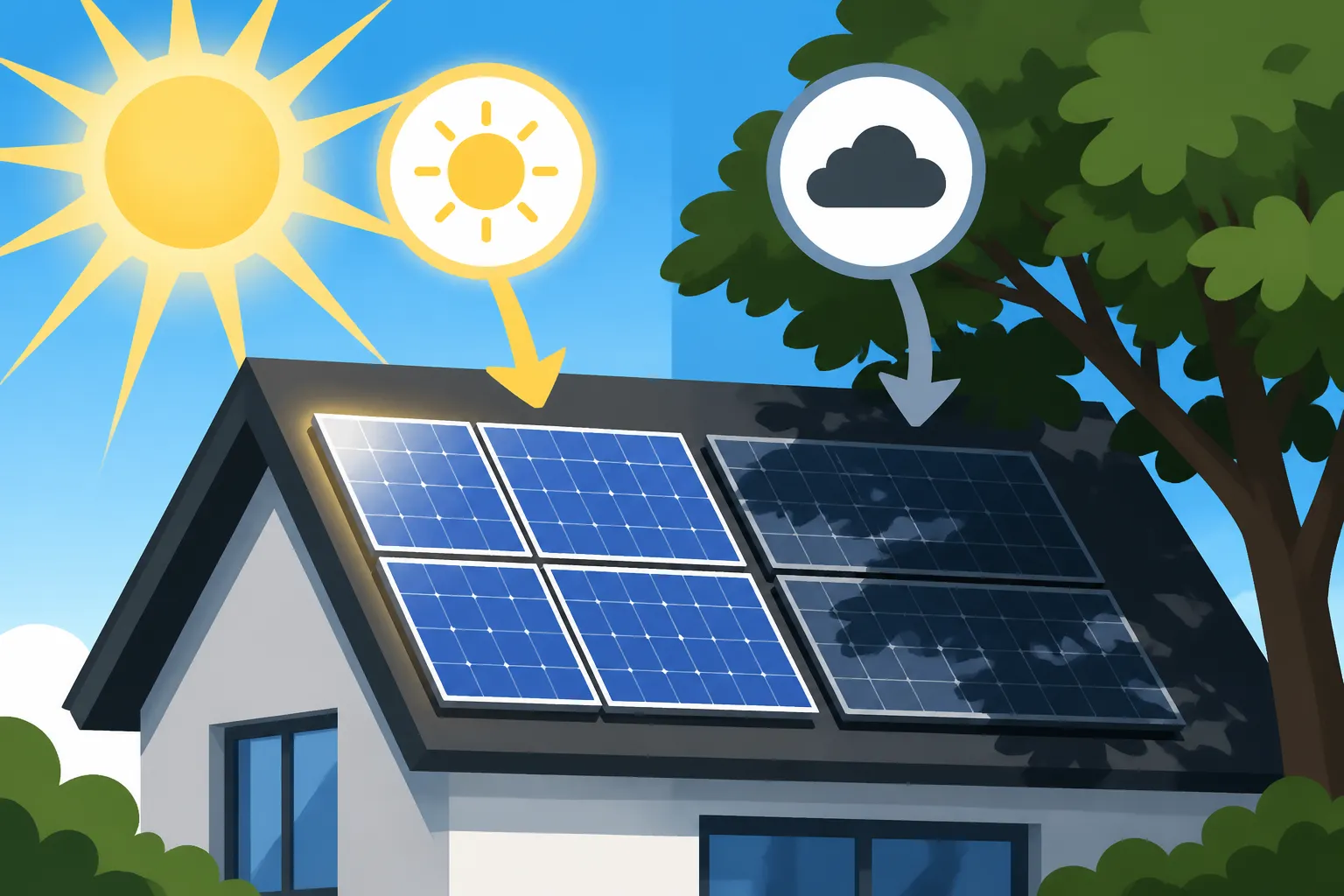
Shading isn't just about losing the light on a specific spot; it's about how that loss impacts the entire system. Most traditional solar panel systems connect panels in "strings," much like old Christmas tree lights. If one light goes out on an old string, they all go out. While modern solar systems are a bit more sophisticated, a similar principle applies to shading. When even a single cell on a single panel is shaded, its ability to produce current is reduced. Since panels in a string are designed to operate at similar currents, the shaded cell acts as a bottleneck, forcing the unshaded cells in that panel, and potentially all panels in the entire string, to reduce their output to match the weakest link.
This phenomenon is often called the "Christmas light effect" in solar circles, and it can drastically cut down on your system's overall efficiency. It's not just a minor reduction; a small patch of shade on one corner of a panel can lead to a 50% or even higher drop in output for that entire panel, and a significant drop for the entire string. This is why a thorough site assessment for solar, including a detailed shading analysis, is absolutely critical before any installation begins. You need to know what you're up against to design a system that can effectively mitigate these challenges.
Types of Shading and Their Impact
Not all shade is created equal, and understanding the different types of shading your roof might experience is crucial for designing an effective solar system. From fleeting morning shadows to dense, year-round obstructions, each kind of shade presents its own set of challenges and potential solutions.
Temporary vs. Permanent Shading
The distinction between temporary and permanent shading is a big one. Temporary shading refers to shadows that move throughout the day or occur only during certain seasons. This could be a shadow cast by a neighbor's house in the early morning or late afternoon, the seasonal shift of tree leaves, or even the brief passage of clouds. While temporary, these shadows can still reduce your system's daily energy harvest. For instance, a large oak tree that completely shades your panels for an hour each morning during the fall and winter, when its leaves have dropped, will still impact your annual production significantly. It might not be a year-round issue, but those seasonal losses add up.
Permanent shading, on the other hand, is a constant presence. This includes shadows from your own chimney, a vent pipe, an adjacent taller building that always blocks a portion of your roof, or a massive evergreen tree that never loses its leaves. These are the trickiest to deal with because they offer no reprieve. Installers must account for these immovable objects from the very beginning. Dealing with permanent shade often requires more creative panel placement or advanced equipment to minimize its impact.
Partial vs. Full Panel Shading
When we talk about shading, it’s also important to differentiate between partial and full panel shading. Full panel shading is exactly what it sounds like: the entire solar panel is covered by a shadow. This might happen if a large cloud passes over, or if an obstruction is so large it engulfs an entire panel. In this scenario, the panel's output will drop to near zero. While not ideal, modern inverters can sometimes isolate this panel's underperformance to prevent it from dragging down other panels in the array.
The real headache often comes from partial panel shading. This is where only a portion of the panel, perhaps just a few cells or a corner, is shaded. As we discussed earlier with the "Christmas light effect," this can be far more detrimental to the entire system's efficiency than full shading on one panel. When a small section is shaded, it creates a hot spot and forces the entire panel, and potentially the whole string of panels, to drop its output to the level of that shaded section. This disproportionate impact is why solar designers obsess over every potential shadow. They're not just looking for big, obvious shade, but also those sneaky little shadows from antennas or vent pipes that might only cover a few inches of a panel.
Sources of Shading (Trees, Chimneys, Adjacent Buildings)
Understanding the common culprits of shade is crucial for homeowners trying to assess their own solar potential.
- Trees: These are perhaps the most common source of shading. A beautiful, mature tree on your property or a neighbor's can cast significant shadows, especially in the mornings and evenings when the sun is lower in the sky. Deciduous trees offer some seasonal relief, but evergreens are a year-round challenge. Sometimes, a simple trim can solve the problem, but other times, the tree is too large or too far away to effectively manage. You might need to consider if you want to invest in tree removal or major pruning, which comes with its own costs and environmental considerations.
- Chimneys, Vent Pipes, and Other Roof Obstructions: These are permanent fixtures on your roof that can cause surprisingly problematic shadows. Even a small vent pipe can create a shadow that tracks across several panels throughout the day, causing significant drops in performance. Installers meticulously plan panel layouts to avoid these obstructions as much as possible, but sometimes, they're unavoidable. These types of localized, persistent shadows are prime candidates for mitigation strategies like microinverters or power optimizers.
- Adjacent Buildings and Structures: Taller houses next door, multi-story apartment buildings, or even large sheds can cast long shadows over your roof. Unlike trees, these are usually immutable and you have no control over them. This type of shading requires a very thoughtful system design, potentially optimizing for areas of your roof that remain sun-exposed for longer, or focusing on ground-mount solar vs roof-mount options if roof shading is too severe.
- Your Own Roof Features: Don't forget dormers, parapet walls, and other architectural elements on your own home. These can create self-shading issues that need to be accounted for in the system design.
The presence of these shading sources means a solar professional will conduct a detailed shading analysis using specialized tools during the site survey. This analysis maps the sun's path throughout the year relative to your roof and identifies all potential shading culprits, helping to determine the optimal panel placement and system configuration.
How Shading Affects Solar Panel Output
It's one thing to know that shading reduces output, but it's another to grasp how profoundly and specifically it impacts your solar system. The effects aren't always linear, and the consequences can extend beyond just reduced electricity generation.
The "Christmas Light Effect" and String Inverters
Let's dive a bit deeper into the notorious "Christmas light effect." Most solar panels are connected in series, forming a "string," which then connects to a central inverter. This inverter converts the direct current (DC) electricity produced by the panels into alternating current (AC) electricity usable in your home. The problem arises because the current in a series circuit is limited by the component with the lowest current.
Imagine you have ten panels in a string. If one panel is fully shaded, its current production drops significantly. Because all panels in that string must operate at the same current, the entire string's output is forced down to match the weakest, shaded panel. This isn't just a slight dip; it can be a dramatic reduction in overall power. For example, a 10% shaded area on one panel could lead to a 20-30% drop in that panel's output, and subsequently, a significant hit to the entire string's production. This is the inherent drawback of traditional string inverter systems when faced with even minor shading. It's like having a team of Olympic sprinters, but one member has to run with a lead weight – the whole team's time suffers. This crucial detail often surprises homeowners who assume shade only affects the specific panel it falls upon.
Impact on System Efficiency and Lifespan
Beyond the immediate reduction in energy production, consistent shading can also have long-term implications for your solar system's efficiency and even its lifespan.
- Reduced Overall System Efficiency: This is the most obvious impact. If your panels are consistently underperforming due to shading, your system simply won't generate as much electricity as projected. This directly translates to lower savings on your utility bill and a longer solar panel payback period. Over the 25+ year lifespan of a solar system, even small daily losses can accumulate into significant lost revenue and increased reliance on grid electricity.
- Hot Spots and Accelerated Degradation: When part of a solar panel is shaded, the unshaded cells still try to produce electricity, but the shaded cells resist the flow of current. This resistance can lead to the shaded cells consuming power from the unshaded cells, dissipating it as heat. These localized areas of intense heat are known as "hot spots." Constant hot spots can cause physical damage to the solar cells over time, leading to accelerated degradation of the panel material. While modern panels have bypass diodes to mitigate this, severe or prolonged hot-spotting can reduce the panel's lifespan and warranty coverage. This is why choosing high-quality panels with good thermal performance is critical, especially in areas prone to shading. You can learn more about how Solar Panel Efficiency & Degradation Explained affects your long-term savings.
- Warranty Concerns: Some manufacturers' warranties might be affected if panels are installed in conditions that lead to excessive hot spots or accelerated degradation due to unmitigated shading. While reputable installers will design systems to avoid these issues, it's something to be aware of when reviewing your solar panel warranties explained.
In essence, shading doesn't just block sunlight; it can actively create internal stress within your system, chipping away at both its immediate output and its long-term health.
Mitigating the Impact of Shading
Just because your roof isn't perfectly exposed to the sun doesn't mean solar is off the table. Modern solar technology and smart design strategies offer several effective ways to significantly mitigate the impact of shading, making solar a viable option for many homes that might initially seem unsuitable.
Strategic Panel Placement and System Design
The first and most cost-effective way to deal with shading is through intelligent system design and strategic panel placement. This is where the expertise of a good solar installer really shines.
- Avoiding Shaded Areas Entirely: During the initial site assessment, a solar professional will analyze your roof's sun path throughout the year. They use specialized tools to map out exactly where shadows fall at different times of the day and seasons. The goal is to avoid placing panels in areas that experience significant, persistent shading altogether. For instance, if the north side of your roof is heavily shaded by a towering neighbor's house, panels will be concentrated on the south, east, or west-facing sections that receive more sun. This might mean you need fewer panels overall, or that the array is split across different roof planes.
- Optimizing Tilt and Azimuth: While a south-facing roof with an optimal tilt is often ideal, slight adjustments to panel tilt and orientation can sometimes help them avoid early morning or late afternoon shadows. For example, angling panels slightly more towards the west might capture more valuable afternoon sun, even if it means slightly less overall production compared to a perfect south orientation. This is a balancing act that skilled designers perform based on your specific roof and shading profile.
- Gap Placement and Spacing: Sometimes, leaving strategic gaps between panels or reconfiguring their layout can prevent a single obstruction from shading an entire row or string of panels. Instead of a uniform grid, the installer might create smaller subarrays or stagger panels to maximize exposure. This level of customization is crucial for homes with complex rooflines or numerous obstructions like chimneys or dormers. A thorough roof considerations for solar panels assessment is a key step in this process.
Tree Trimming and Obstacle Removal
Sometimes, the simplest solution is the most direct. Removing or reducing the source of the shade can be a highly effective way to improve your solar system's performance.
- Professional Tree Trimming: For tree-related shading, professional tree trimming is often the first consideration. Pruning specific branches that cast shadows during peak sun hours can significantly increase your solar energy production. However, it's important to consider the health of the tree, local regulations regarding tree removal, and the ongoing maintenance cost. You'll need to re-trim trees periodically as they grow back. Your solar installer might even be able to recommend local arborists who specialize in trimming for solar optimization. Always consult with a professional arborist to ensure the tree remains healthy and to avoid any damage to your property.
- Removing or Relocating Obstacles: Smaller obstacles on your roof, like old satellite dishes, antennas, or even some vent pipes, can sometimes be removed or relocated to clear shaded areas. Of course, this needs to be done safely and by qualified professionals to ensure no damage to your roof or home systems. While some chimney removal might be an extreme measure, relocating a small exhaust vent is often a reasonable request during a solar installation project.
- Considering Neighbors' Trees/Structures: This can be trickier, as you have less control over your neighbor's property. However, if a neighbor's tree is shading your roof, a friendly conversation might open the door to a mutually beneficial solution, perhaps even sharing the cost of trimming. Some neighborhoods have specific rules or homeowners association guidelines regarding tree height or maintenance. This is where a company like Modernize can help connect you with reputable installers who can advise on these aspects and provide solutions.
Advanced Inverter Technologies
Perhaps the most impactful technological advancements for dealing with shading are modern inverter solutions that move beyond the limitations of traditional string inverters.
- Microinverters: These tiny inverters are installed directly underneath or very close to each individual solar panel. Instead of converting DC to AC at a central point for an entire string, each microinverter optimizes the output of its single panel independently. This means if one panel is shaded, it only affects that panel's performance; the other panels continue to produce at their maximum potential. This completely eliminates the "Christmas light effect" within the array, making microinverters an excellent choice for roofs with complex shading patterns. Brands like Enphase are leading the charge in microinverter technology.
- Power Optimizers: These devices offer a hybrid solution, combining aspects of both string inverters and microinverters. An optimizer is attached to each solar panel, where it "conditions" the DC power, optimizing the voltage and current before sending it to a central string inverter. Like microinverters, optimizers allow each panel to perform independently, mitigating the impact of shading on the rest of the string. However, they still rely on a central inverter for the final DC-to-AC conversion. SolarEdge is a prominent manufacturer of power optimizers. This setup can sometimes be more cost-effective than a full microinverter system while still offering significant shade mitigation benefits.
Choosing between these options depends on your specific shading profile, budget, and desired performance characteristics. A good installer will present the pros and cons of each solution tailored to your home. You can dive deeper into Solar Inverters: String vs Microinverter vs Optimizer to see which one might be right for you.
Choosing the Right Equipment for Shaded Roofs
Selecting the appropriate equipment is paramount when dealing with roofs that experience any level of shading. The right components can turn a challenging solar installation into a highly productive one, maximizing your energy harvest even under less-than-ideal conditions.
Microinverters: Maximizing Individual Panel Performance
For homes with complex or persistent shading patterns, microinverters are often the hero of the story. As we touched on, these small, smart devices are installed on each individual solar panel. Their primary superpower is "module-level power electronics" (MLPE), meaning they optimize the power output of each panel independently.
Think of it this way: with a traditional string inverter, if even a single cell on one panel is shaded, the entire string of panels has its output dragged down to match that weakest link. With microinverters, if one panel gets shaded by, say, a passing cloud or a chimney shadow, that panel's output might dip, but every other unshaded panel in your array continues producing at its absolute maximum efficiency. This means you capture far more energy overall throughout the day, especially on roofs where shading moves or is sporadic.
Beyond shading, microinverters offer other benefits. They provide real-time monitoring at the individual panel level, making it easier to pinpoint and troubleshoot any issues. They also convert DC power to AC power directly at the panel, which can be a safety advantage by reducing high-voltage DC wiring on your roof. This robust solution is often recommended for scenarios where partial shading is a frequent occurrence. For a detailed comparison, check out Enphase vs SolarEdge: Which Inverter Is Better?.
Power Optimizers: Smart Management for Strings
Power optimizers present another excellent solution for mitigating shade, often bridging the gap between traditional string inverters and microinverters in terms of cost and functionality. Like microinverters, optimizers are installed at the individual panel level, but they work in conjunction with a central string inverter.
Here's how they work: Each optimizer conditions the DC power coming from its assigned panel, essentially "optimizing" its voltage and current before sending it down to the central inverter. This optimization ensures that even if one panel is shaded and its output drops, the optimizer isolates that underperformance, preventing it from negatively affecting the output of other panels in the same string. The central inverter then takes the optimized DC power from all the panels and converts it into usable AC electricity for your home.
Power optimizers, championed by brands like SolarEdge, offer many of the benefits of microinverters in terms of shade tolerance and module-level monitoring, but often with a slightly lower overall system cost since you still have a single, larger central inverter. They are a fantastic choice for homeowners who want significant shade mitigation and panel-level control without necessarily going for a full microinverter system. The choice often boils down to the specific layout of your roof, the nature of the shading, and your budget, which a good solar installer can help you navigate. Exploring Microinverter vs String Inverter: Pros and Cons can help clarify the decision.
High-Efficiency Panels for Low-Light Conditions
While inverter technology is crucial, the solar panels themselves also play a role in optimizing performance, especially in scenarios with less-than-ideal sunlight. For shaded roofs, considering high-efficiency panels can provide an additional boost.
High-efficiency panels are designed to convert a larger percentage of the sunlight they receive into electricity. This doesn't mean they magically eliminate shade, but they can make the most of the light that does reach them. In low-light conditions, such as early mornings, late afternoons, or overcast days (which can mimic mild shading), these panels can sometimes outperform standard efficiency panels. Brands like Maxeon (formerly SunPower) or REC are known for their high-efficiency modules.
It's important to set realistic expectations: even the most efficient panel won't produce much in complete shade. However, when combined with microinverters or power optimizers, investing in high-efficiency panels for the sections of your roof that do get decent sunlight can help maximize your overall energy harvest. When deciding how many solar panels do I need for my home, considering panel efficiency alongside shading mitigation strategies will ensure you get the most out of your available roof space. Your installer can help you evaluate the trade-offs between cost and efficiency, especially for a roof with complex light profiles.
Assessing Your Roof's Shading Potential
Understanding your roof's unique shading profile is a non-negotiable step in the solar journey. Without a thorough assessment, you're essentially guessing, and that can lead to an underperforming system and unmet expectations. This isn't just about a quick glance; it requires expertise and specialized tools.
Professional Site Assessments and Shading Analysis
When you decide to get quotes for solar, one of the first things a reputable installer will do is conduct a professional site assessment. This isn't just a sales pitch; it's a critical engineering step. During this visit, they'll evaluate your roof's condition, orientation, pitch, and crucially, its shading profile.
- Sun Path Analysis Tools: Installers use specialized software and devices like a "SunEye" or "Solmetric" tool. These devices take panoramic images of your roof and the surrounding environment, then integrate that data with the sun's path at your specific geographical location throughout the entire year. This allows them to generate a detailed, hour-by-hour, day-by-day, and month-by-month shading report. This report precisely identifies where and when shadows will fall on your roof, accounting for trees, chimneys, neighboring buildings, and other obstructions. This information is critical for determining the optimal placement of panels and for accurately projecting your system's energy production. This is a far cry from just looking at your roof on a sunny afternoon!
- Energy Production Estimates: Based on the shading analysis, the installer can then create a highly accurate estimate of how much electricity your solar system will produce annually. This projection is vital for calculating your potential savings and the system's return on investment. If an installer gives you a quote without a detailed shading analysis, consider it a red flag. Companies like Modernize can connect you with experienced, local solar installers who prioritize these thorough assessments.
- Identifying "Solar Sweet Spots": The shading analysis helps identify the "solar sweet spots" on your roof—those areas that receive the most consistent, unobstructed sunlight. This may lead to an irregular panel layout, with panels concentrated in certain areas and completely omitted from heavily shaded ones. The goal is always to maximize the total energy production of the system, even if it means fewer panels or a less uniform appearance. A good installer will walk you through these findings and explain how their design maximizes your solar potential. This meticulous planning is part of how to choose a solar installer that truly works for you.
Understanding Your Home's Sun Path
While the professionals will handle the detailed analysis, it's incredibly helpful for you as a homeowner to have a basic understanding of your home's sun path. This empowers you to ask informed questions and better understand the installer's recommendations.
- Observe Your Own Roof: Take some time to simply observe your roof throughout the day and across different seasons. Notice where shadows fall in the morning, at midday, and in the late afternoon. Pay attention to how the shadows shift and change with the seasons. A tall tree that casts a shadow in summer might not be an issue in winter if it's deciduous, or vice versa if it's an evergreen.
- Consider Seasonal Changes: The sun's angle changes significantly between summer and winter. In summer, the sun is higher in the sky, causing shorter shadows. In winter, the sun is lower, resulting in longer, more pronounced shadows. A chimney that barely casts a shadow in July might block a significant portion of your roof in December. Your solar professional will use this seasonal data in their models to ensure accurate predictions for year-round performance.
- Think About Future Growth: If you have young trees on your property or a neighbor does, consider how much they might grow over the next 10-20 years. A small sapling today could become a major shading problem down the line. While solar systems are designed for long lifespans, proactive planning for potential future shade sources can save you headaches later. Sometimes, a tree that seems small now might be a problem later and require some preventative trimming.
By engaging with this process, even superficially, you'll be better equipped to understand the nuances of your solar proposal and feel confident that your installer has thoroughly considered all factors, including the challenging but manageable issue of roof shading.
Disclaimer
Please note that this guide provides general information about roof shading and solar panels. Solar technology, incentives, and regulations are constantly evolving. The information contained herein should not be taken as professional advice. Always consult with a qualified and licensed solar professional for a personalized assessment, system design, and accurate cost estimates for your specific home and energy needs.