Enphase vs SolarEdge: Which Inverter Is Better?
Deciding to go solar is a huge step, and it's easy to get overwhelmed by all the choices you have to make. One of the biggest and most confusing decisions often revolves around the heart of your solar system: the inverter. You’ve probably heard names like Enphase and SolarEdge thrown around, leaving you wondering which one is actually better for your home. This guide is here to cut through the jargon and give you a real-world comparison to help you choose the right inverter system for your unique situation.
Understanding Solar Inverters: The Brains of Your System
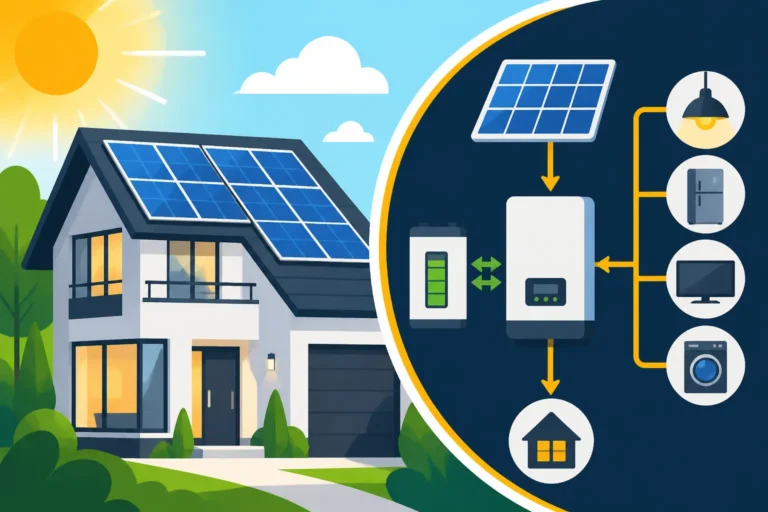
Think of your solar panels as the muscles of your home solar system, generating all that raw power from the sun. But muscles alone aren't enough; you need a brain to direct that power where it needs to go. That's precisely what a solar inverter does. It's the critical component that takes the direct current (DC) electricity produced by your panels and converts it into alternating current (AC) electricity, which is the type of power your home appliances use and what your utility grid understands. Without an inverter, all that beautiful sunshine-generated electricity would be unusable.
What is an Inverter and Why Does it Matter?
An inverter isn't just a simple conversion device; it's a sophisticated piece of technology that manages and optimizes the energy flow from your rooftop. It constantly monitors the output of your solar panels, adjusts voltage and current to maximize efficiency, and ensures that the power being fed into your home or the grid is stable and safe. When you consider that your solar panels are designed to last 25 years or more, the inverter's reliability and performance over that lifespan become incredibly important. A poorly performing inverter can bottleneck your entire system, leaving valuable solar energy on the table and diminishing your overall savings.
The inverter also acts as a safety device, shutting down power quickly in the event of a grid outage or other electrical issue, protecting both your home and utility workers. It's often where the monitoring system for your solar production lives, giving you insights into how much electricity your panels are generating hour by hour, day by day. Choosing the right inverter, therefore, isn't just about technical specifications; it’s about securing the long-term efficiency, safety, and monitoring capabilities of your entire solar investment.
Types of Inverters: A Quick Overview
Before we dive into the specifics of Enphase and SolarEdge, it's helpful to understand the main categories of inverters out there, as these two brands represent distinct approaches. Traditionally, most solar systems used a string inverter. In this setup, multiple solar panels are wired together in a "string," and the DC power from that entire string goes to a single, central inverter, usually mounted on a wall in your garage or basement. These are generally the most affordable option upfront.
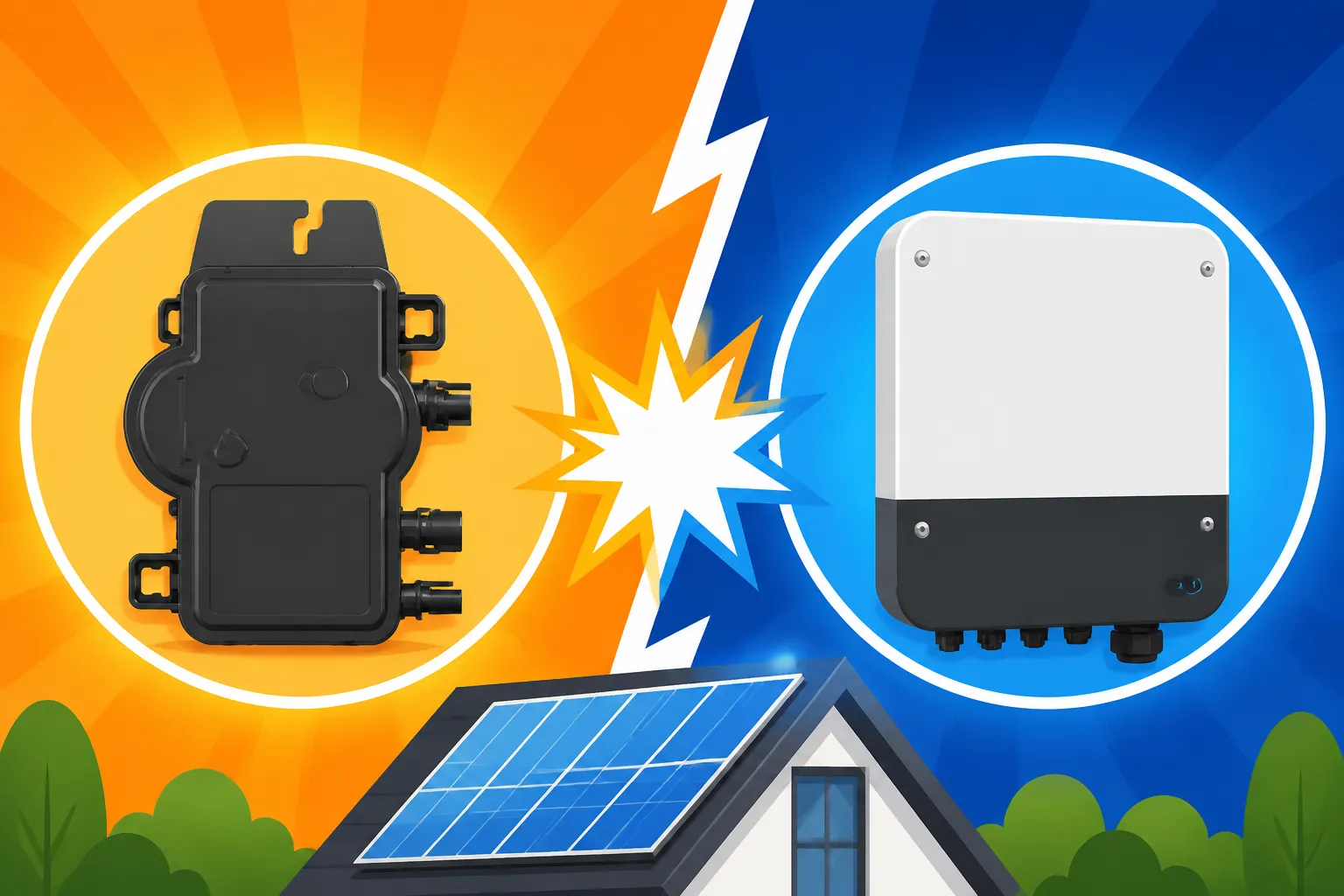
Then you have microinverters, which is the technology Enphase specializes in. With microinverters, a small inverter is installed directly under or near each individual solar panel. This means each panel's DC power is converted to AC right there on the roof, independently of the other panels.
Finally, there's the power optimizer system, pioneered by SolarEdge. This approach is a hybrid. Like microinverters, power optimizers are installed at each panel, but they don't convert DC to AC. Instead, they condition and optimize the DC power from each panel before sending it down to a single, central string inverter. This gives you some of the benefits of microinverters while still using a central inverter. Understanding these fundamental differences is key to appreciating why Enphase and SolarEdge offer such distinct experiences.
Enphase Microinverters: The Distributed Power Approach
Enphase Energy has carved out a strong niche in the solar market by championing the microinverter. Instead of having one large inverter handle all the power from your entire array, Enphase systems put a tiny, smart inverter right under each individual solar panel. It's a completely decentralized way of generating and converting power, and it comes with some really compelling advantages that resonate with many homeowners.
How Enphase Microinverters Work
Imagine each of your solar panels as its own independent power station. That's essentially how an Enphase system operates. Every panel on your roof has its own dedicated microinverter attached to its underside. As soon as the sun hits a panel, it starts producing DC electricity. That DC power immediately flows into the attached Enphase microinverter, which then converts it into AC electricity right there on the roof. This AC power is then sent down to your main electrical panel, ready to power your home or be sent to the grid. There's no single large central inverter that handles the entire array's power.
This setup means that if one panel is shaded by a tree branch, covered in leaves, or simply underperforming for any reason, it doesn't drag down the performance of the other panels in the system. Each panel and its microinverter operate independently, ensuring that your system extracts the maximum possible energy from every single panel at all times. It's a truly "plug-and-play" design that simplifies wiring and enhances overall system resilience.
Advantages of a Microinverter System
One of the most celebrated benefits of Enphase microinverters is their superior performance in shaded or complex roof layouts. If you have a roof with multiple angles, chimneys, vents, or nearby trees that cast shadows at different times of the day, microinverters can significantly increase your energy harvest. Since each panel works independently, a shaded panel only affects its own output, not the entire string of panels. This is a game-changer for many homeowners who might otherwise think solar isn't feasible due to shading concerns.
Another huge plus is enhanced monitoring capabilities. With an Enphase system, you can monitor the performance of each individual solar panel in real-time through their user-friendly app. This level of granular insight is fantastic for troubleshooting; if one panel is underperforming, you'll know exactly which one it is, rather than just seeing an overall dip in system production. For example, if you notice one panel on your monitoring dashboard is consistently producing less, you can investigate if a new branch has grown over it or if there's a specific issue with that panel or microinverter.
Safety is also a major advantage. Because DC power is converted to AC at the panel level, there are no long runs of high-voltage DC wiring across your roof or through your home. This significantly reduces the risk of arc faults and makes the system inherently safer, especially for firefighters and first responders, as panels can be quickly shut down to a safe voltage level. Finally, expandability is a breeze with microinverters. If you want to add more panels to your system in the future – maybe you get an electric car or decide to electrify more of your home – you can simply add more panels and microinverters without needing to replace your central inverter, provided your electrical panel has the capacity. This modularity offers great flexibility as your energy needs evolve.
Potential Drawbacks to Consider
While microinverters offer many advantages, they do come with a few potential downsides that are worth considering. The most common concern for many homeowners is the higher upfront cost. Because you're essentially buying an inverter for each panel, the total equipment cost for microinverters like Enphase is typically higher than a traditional string inverter system, and often a bit more than a SolarEdge system, especially for larger arrays. This higher initial investment can affect your Solar Panel Payback Period Explained, though the increased energy harvest over time can help balance this out.
Another consideration is that because these devices are located on the roof, directly under each panel, they are exposed to the elements year-round. While Enphase microinverters are designed to be extremely durable and are rigorously tested for harsh conditions, having more electronic components on the roof could theoretically lead to more points of failure, though their reliability track record is excellent. If a microinverter does fail, it usually requires a roof visit from an installer to replace it, which can be a minor inconvenience. However, the good news is that typically only the affected microinverter needs to be swapped out, not the entire system.
Finally, while installation is generally straightforward, it does involve connecting a microinverter to each panel, which adds a bit more complexity compared to simply wiring panels into long strings. This usually doesn't translate to significantly longer installation times, but it is a slightly different process for installers to learn and execute. However, for many installers, the benefits of simpler AC wiring and individual panel production monitoring often outweigh these minor complexities.
SolarEdge Power Optimizers and String Inverters: Centralized Efficiency
SolarEdge systems present a clever middle-ground solution, combining some of the best features of both traditional string inverters and individual panel-level optimization. They've become incredibly popular, especially for roofs that might have some shading but aren't entirely covered in complex obstructions. It's a different philosophy that focuses on optimizing DC power at the panel level before sending it to a more robust, centralized inverter.
How SolarEdge Systems Work Optimizers + Central Inverter
A SolarEdge system works by pairing individual power optimizers with a single, high-efficiency central inverter. Here’s the breakdown: just like with microinverters, a small device – a power optimizer – is installed on the roof under each solar panel. However, these optimizers don't convert DC to AC. Instead, they do exactly what their name implies: they optimize the DC power coming from each individual panel. They track the maximum power point for that specific panel, conditioning the voltage and current to ensure it’s performing at its peak.
Once optimized, the DC power from all the panels is sent down in a string to a single, central SolarEdge string inverter, typically located on a wall in your garage or utility room. This central inverter then converts all that optimized DC power into usable AC electricity for your home. This hybrid approach aims to capture the best of both worlds: the panel-level performance optimization of microinverters, combined with the efficiency and ease of maintenance of a single, central inverter. The inverter also acts as the central brain for monitoring and communication across the entire system.
Benefits of the SolarEdge Approach
The primary benefit of a SolarEdge system, much like Enphase, is its ability to mitigate the impact of shading and panel mismatch. Because each panel has its own power optimizer, if one panel is partially shaded, it won't reduce the output of the entire string. The optimizers ensure that each panel contributes its maximum possible power, leading to a higher overall energy harvest compared to a traditional string inverter system. This means roofs that aren't perfectly uniform or suffer from occasional shading can still be excellent candidates for solar.
Another significant advantage is the enhanced safety features. SolarEdge systems incorporate a feature called "SafeDC" or "Arc Fault Detection" (AFD). When the central inverter or the grid shuts down, the power optimizers automatically reduce the DC voltage of each panel to a safe level (typically 1V per panel). This dramatically reduces the hazard of high-voltage DC electricity on the roof and in the wiring, protecting both homeowners and emergency responders. This is a critical safety upgrade over older string inverter technologies.
Finally, while not quite as granular as Enphase, SolarEdge systems also offer panel-level monitoring. You can see the performance of each individual panel through the SolarEdge monitoring portal, which is incredibly useful for spotting issues like a dirty panel or a specific optimizer problem. The central inverter also simplifies maintenance in some ways, as it's typically located in an accessible spot, making it easier to service or replace if needed, compared to working on components spread across the roof. Furthermore, for those looking at future additions, knowing the Solar Panel Cost Per Watt Explained can help in planning for system expansion, which SolarEdge systems are generally designed to accommodate.
Factors to Weigh Before Choosing SolarEdge
While SolarEdge offers a robust and popular solution, there are a few factors to consider that might influence your decision. One key point is that while the power optimizers are on the roof, the central string inverter is a single point of failure for the entire system. If that main inverter goes down, your entire solar array stops producing power until it's repaired or replaced. This contrasts with microinverter systems, where if one microinverter fails, only that single panel's production is affected.
Another aspect to consider is that the power optimizers are still electronic components exposed to the elements on your roof, just like microinverters. While designed for durability, they are subject to similar environmental stresses. However, since they handle only DC optimization and not the full DC-to-AC conversion, their internal complexity is somewhat different from a microinverter. Failures are rare, but like with microinverters, a rooftop visit might be necessary for replacement.
Finally, system design can sometimes be a bit more constrained than with microinverters. While flexible, SolarEdge systems still require panels to be grouped into "strings" that adhere to specific voltage and panel count requirements for the central inverter. This generally isn't an issue for most residential installations, but in very complex roof layouts with tiny, disparate sections, it could theoretically present more limitations than the complete independence offered by microinverters. For example, if you have a tiny shed roof far away from your main array, integrating it might be simpler with microinverters than with a SolarEdge system.
Key Differences: Enphase vs SolarEdge in Detail
When you're trying to make a big decision like this, it’s all about understanding the nuances. Enphase and SolarEdge, while both excellent technologies that enhance solar production and safety, achieve their goals through fundamentally different architectures. Diving into these differences will help illuminate which system might align better with your specific needs and priorities.
System Architecture and Operation
The most fundamental distinction between Enphase and SolarEdge lies in their system architecture. Enphase champions a fully distributed approach with microinverters. Every single solar panel has its own dedicated microinverter, converting DC to AC right there on the roof. This means each panel operates completely independently. If one panel has an issue, the rest of the system continues to produce power without interruption. It’s like having a small, self-contained power plant for each solar panel.
SolarEdge, on the other hand, uses a hybrid approach with power optimizers at each panel and a central string inverter. The power optimizers condition and maximize the DC power from individual panels, but the actual DC-to-AC conversion happens only once, at the central inverter. Think of it as a team effort: each optimizer fine-tunes its panel's contribution, but all that finely tuned DC power then feeds into one central unit for the final conversion. This means the central inverter is a critical component for the entire system's operation. If you're looking to understand more about how different systems handle power conversion, our guide on Solar Inverters: String vs Microinverter vs Optimizer delves deeper into these distinctions.
Module-Level vs. Centralized Monitoring
Both Enphase and SolarEdge offer robust monitoring capabilities, which is a huge step up from older string inverter systems. However, there's a slight difference in how they present and manage this data, stemming directly from their architecture. With Enphase, because each microinverter is converting power independently, you get truly granular, real-time data for each individual solar panel. You can log into your Enphase Enlighten app and see exactly how much power panel #1, panel #2, and so on, are producing at any given moment. This is incredibly useful for pinpointing issues like debris on a specific panel or a microinverter that needs attention.
SolarEdge also provides module-level monitoring through its optimizers, showing you the performance of each panel in your array. However, the data flow is slightly different since all optimizers communicate with the central inverter. The information is then relayed from that central point. While you still get individual panel insights, some users find the Enphase interface slightly more intuitive for visualizing these individual outputs. Both systems are excellent for identifying performance discrepancies and ensuring your system is always running optimally, a key aspect of maximizing Solar ROI & 25-Year Savings Breakdown.
Shading and Performance Impact
This is where the architectural differences really come into play and significantly impact performance, especially for homes with less-than-ideal roof conditions.
With Enphase microinverters, partial shading has minimal impact on the overall system. If a chimney casts a shadow on just two of your twenty panels, only those two panels' production will be reduced. The other eighteen panels, each with their own microinverter, will continue to produce at their maximum potential. This makes Enphase an incredibly robust choice for roofs with multiple orientations, vent pipes, dormers, or persistent partial shading from trees or adjacent buildings. Their ability to maximize energy harvest under these conditions is a major selling point.
SolarEdge power optimizers also excel at mitigating shading effects far better than traditional string inverters. The optimizers work at the panel level to ensure each panel is operating at its peak power point, even if others in the string are shaded. This prevents the "Christmas light effect" where one underperforming panel drags down the entire string. So, if a few panels are shaded, their optimizers will still try to get the most out of them without affecting the unshaded panels. However, because the DC power still flows to a single central inverter, there's a theoretical, albeit often negligible, single point where any system-wide electrical issue could affect performance. In practical terms, both systems offer excellent shading mitigation compared to older technologies, but Enphase's complete independence per panel gives it a slight edge in the most complex shading scenarios. If you're concerned about your specific roof, checking out Best Solar Panels for Shaded Roofs might offer further insights.
Expandability and System Design
Thinking about the future is always smart when investing in solar. Both Enphase and SolarEdge offer good options for expandability, but their approaches differ.
With Enphase, adding more panels is remarkably straightforward. Since each panel and microinverter unit is independent, you simply add new panels with new microinverters. As long as you have the roof space and your main electrical panel can handle the additional capacity, scaling up your system is a modular process. You don't need to worry about the capacity limits of a central inverter you bought years ago. This makes it a great choice for homeowners who anticipate their energy needs growing over time, perhaps with the purchase of an EV or additional electric appliances. This modularity can also be beneficial if you're doing a phased installation, adding a few panels now and more later.
SolarEdge systems can also be expanded, but it involves ensuring compatibility with your existing central inverter. While SolarEdge inverters are often sized with some headroom for future expansion, there might be a limit to how many additional optimizers and panels can be added before the central inverter itself would need an upgrade or replacement. This is usually more of a concern for very large expansions or if your initial inverter was sized very precisely for your original array. However, for typical residential increases, adding a few panels is usually not an issue. The string design of SolarEdge systems does mean that if you're trying to add a single panel in a completely isolated spot, it might require more careful planning to integrate into an existing string than with an Enphase system.
Performance in Real-World Scenarios
It's one thing to talk about technical specifications, but how do these systems actually perform when the sun is shining (or not shining) on your roof? Real-world performance is where the rubber meets the road, and both Enphase and SolarEdge have proven their mettle across countless installations. However, their distinct architectures lead to subtle but important differences in how they handle various environmental challenges and maintain efficiency over time.
Handling Partial Shading and Panel Mismatch
This is arguably the most critical performance differentiator for many homeowners.
Imagine a typical suburban home in, say, Raleigh, North Carolina. In the morning, a large oak tree on a neighbor's property casts a shadow across the eastern edge of your roof for an hour or two. Later in the afternoon, the shadow of your chimney might creep across a few panels.
With Enphase microinverters, the impact is localized. The panels in the shade will produce less, but every unshaded panel will continue to operate at 100% of its potential. You might see a dip in overall production during those specific hours, but it's the minimum possible dip because each panel is an independent entity. This robustness makes Enphase particularly appealing for complex roofs or properties with significant, unavoidable partial shading, ensuring you get the most out of every single sunny spot on your roof.
A SolarEdge system with power optimizers also handles this scenario exceptionally well, far outperforming traditional string inverters. The optimizers under the shaded panels work to extract the maximum power possible from those specific panels, preventing them from dragging down the entire string. The unshaded panels continue to perform at their best. While the overall system efficiency might be slightly different in highly complex shading scenarios compared to Enphase's complete panel independence, for most residential partial shading situations, both systems provide excellent performance mitigation. The key takeaway is that both are vastly superior to systems without panel-level optimization when shading is a factor.
Efficiency and Energy Harvest
When we talk about efficiency in solar, it's a multi-layered concept. There's the efficiency of the solar panels themselves, and then there's the efficiency of the inverter system converting that DC power to AC.
Enphase microinverters boast very high conversion efficiencies for individual panels. Since each microinverter optimizes and converts power at the panel level, they are very effective at maximizing the output of each specific module. The modular nature means you're harvesting as much energy as possible from every single panel, minimizing losses due to panel mismatch (where panels have slightly different outputs due to manufacturing tolerances or uneven aging). Over the long term, this consistent, optimized energy harvest adds up. You can learn more about how Solar Panel Efficiency & Degradation Explained affects your overall system.
SolarEdge systems are known for their high overall system efficiency, often touting some of the best conversion rates in the industry for their central inverters. The power optimizers ensure that the DC power delivered to the central inverter is already optimized, allowing the central inverter to perform its conversion with very little loss. The benefit of SolarEdge's centralized inverter is that it's typically a larger, highly efficient unit designed for optimal performance under various conditions. In practical terms, both systems deliver excellent energy harvest, with total annual production often being very similar for a given array size. The differences typically arise more from specific shading conditions and individual panel performance.
Reliability and System Uptime
No one wants their solar system to go down, especially when you're counting on those energy savings. Both Enphase and SolarEdge are reputable brands with strong track records, but their architectural differences play a role in how "reliability" is experienced.
With Enphase, if a microinverter fails (which is rare), only the single panel connected to that microinverter will stop producing. Your entire array won't go dark. This distributed reliability means you'll still be generating significant power, and you'll know exactly which component needs attention thanks to the panel-level monitoring. This localized failure point contributes to higher overall system uptime. If one microinverter has a glitch, your home isn't suddenly plunged back into full reliance on grid power.
In a SolarEdge system, the power optimizers are very reliable, but if the central inverter fails, your entire system stops producing power. While these central inverters are built to be robust, they are still a single point of failure for the DC-to-AC conversion. However, SolarEdge also offers excellent monitoring, which quickly alerts you and your installer to any system issues, allowing for prompt service. Historically, central inverters tend to have a shorter lifespan than microinverters or optimizers, often needing replacement once over the typical 25-year lifespan of solar panels. For detailed information on component longevity, our article on How Long Do Solar Panels Last? offers useful context.
Cost Considerations and Long-Term Value
Let's be real: for most homeowners, the cost is a major factor in any big home improvement project, and solar is no different. It's not just about the initial price tag; it's also about the long-term value, including potential maintenance, warranty, and how it impacts your overall Solar Panel Cost Per Watt Explained. Both Enphase and SolarEdge are premium inverter solutions, and while they deliver excellent value, their pricing structures can differ.
Upfront Costs: Equipment and Installation
Generally speaking, Enphase microinverter systems tend to have a slightly higher upfront cost compared to SolarEdge. This is because you're purchasing an individual microinverter for every single solar panel, which typically adds up to more component costs than a single central inverter plus optimizers. For instance, a 20-panel system would require 20 microinverters, whereas a SolarEdge system would need 20 optimizers and just one central inverter. The installation labor for Enphase might also be marginally higher due to the individual connections under each panel, though this is often offset by simpler AC wiring runs.
SolarEdge systems often come in at a slightly lower initial price point, making them an attractive option for homeowners looking to keep upfront expenses down while still benefiting from panel-level optimization. The cost of a single central inverter, even a high-quality one, is usually less than the combined cost of many microinverters. However, these differences aren't always dramatic and can vary based on the installer, specific equipment models, and regional pricing. It's always a good idea to get multiple quotes and compare the full system costs. For a broader understanding of pricing, consider our guide on How Much Do Solar Panels Cost? 2026 Guide.
Long-Term Ownership: Maintenance and Replacements
The true cost of ownership goes beyond the initial installation. It includes how much you might spend on maintenance and potential replacements over the lifespan of your system.
Enphase systems generally have a reputation for being low-maintenance. Their distributed architecture means that if one microinverter fails, it's an isolated issue. Replacement usually involves a service call to your roof, but it's a straightforward swap for the faulty unit. The peace of mind that your entire system won't go down from a single component failure is a significant long-term benefit for many. Their robust design also aims for minimal intervention over the system's life.
With SolarEdge, the power optimizers on the roof are very durable and designed for the life of the panels, but the central inverter, like any large electronic appliance, has a finite lifespan. While SolarEdge inverters are built to last, you might expect to replace the central inverter once over the typical 25-year life of your solar panels. This replacement, while costly, is usually simpler than individual microinverter swaps as the central inverter is easily accessible, often located in a garage or utility room. The total cost of this potential replacement needs to be factored into your long-term budget projections.
Impact on Solar Panel Payback Period
The payback period is the time it takes for your solar savings to equal your initial investment. Both Enphase and SolarEdge can significantly shorten your payback period compared to older technologies, but subtle differences exist.
Because Enphase systems often have a slightly higher upfront cost, their payback period could be marginally longer if all other factors (shading, electricity rates, incentives) were identical. However, their superior performance in shaded conditions often leads to higher overall energy production throughout the year, especially for complex roofs. This increased energy harvest can quickly offset the higher initial cost, effectively shortening the actual payback period by maximizing savings over time. The increased production reliability also means fewer unexpected dips in your energy savings.
SolarEdge systems, with their often lower upfront cost, might initially appear to offer a faster payback period. Their excellent shading mitigation and high overall system efficiency ensure strong energy production. The potential for a central inverter replacement down the line is a factor to consider for the absolute longest-term calculations, but many homeowners find the initial cost savings appealing. Ultimately, the impact on your Solar Panel Payback Period Explained will depend on a combination of your specific electricity rates, local solar incentives, shading conditions, and the exact pricing from your chosen installer. It’s crucial to look at the total expected savings over 20-25 years, not just the initial cost difference.
Installation, Maintenance, and Warranties
Beyond the technical performance and cost, the practical aspects of living with a solar system – how it’s installed, how you maintain it, and what kind of protection you have – are equally important. Both Enphase and SolarEdge have strong reputations in these areas, but their distinct designs lead to different considerations for homeowners.
Installation Complexity and Time
The installation process for any solar system involves multiple steps, from planning and permitting to the actual physical mounting of panels. The inverter choice impacts a specific part of this process.
For Enphase microinverters, installation involves attaching an inverter to each panel on the roof. This means more individual connections on the roof compared to a string inverter system. However, the wiring from the microinverters down to the electrical panel is AC, which is generally simpler and safer to work with than high-voltage DC wiring for installers. Many installers are highly proficient with Enphase systems, making the process smooth. The modularity also means that if a panel or microinverter needs to be serviced, it's a self-contained unit.
SolarEdge systems require installing power optimizers under each panel, similar to microinverters. Then, DC wiring runs from these optimizers to a single, central inverter, which is typically mounted on a wall in a garage or basement. The installation of the optimizers on the roof is comparable to microinverters, but the DC wiring run to the central inverter requires careful handling of high-voltage DC, albeit optimized DC. However, the accessibility of the central inverter often simplifies the final electrical connections and commissioning. Overall, the total Solar Installation Timeline: What to Expect for both systems is quite similar, with the inverter aspect being just one piece of the puzzle.
Monitoring and Troubleshooting
Both Enphase and SolarEdge offer excellent digital monitoring platforms that allow you to track your system's performance from your computer or smartphone. This is a massive advantage over older systems where you often had to guess if things were working correctly.
Enphase's Enlighten platform provides highly detailed, panel-level monitoring. You can see the production of each individual solar panel in real-time. This level of granularity is incredibly powerful for troubleshooting. If you see a dip in your overall production, you can immediately identify if it's due to shade on a specific panel, a dirty panel, or a microinverter issue. This empowers homeowners to be proactive and helps installers diagnose problems quickly and accurately, often reducing the need for multiple service calls. If you're into smart home tech, Enphase systems integrate well with many energy management tools. For specific accessories or deeper dives into monitoring tools, sometimes you can even find supplementary components or guides on platforms like Amazon.
SolarEdge's monitoring platform also offers panel-level data, allowing you to visualize the performance of each optimizer and the overall system. While the data is comprehensive, some users report that the interface is slightly less intuitive for quickly spotting individual panel issues compared to Enphase's visual layout. However, it still provides all the necessary information for homeowners and installers to ensure the system is operating as expected. Both platforms send alerts if there's a significant drop in production or a system error, ensuring you're always in the loop. This proactive monitoring is key to maximizing your Solar ROI & 25-Year Savings Breakdown.
Warranty Coverage and Longevity
Warranties are crucial for any long-term investment like solar. Both Enphase and SolarEdge offer strong warranties that reflect their confidence in their products.
Enphase microinverters typically come with a very generous 25-year warranty, which often matches the lifespan of the solar panels themselves. This means that if a microinverter fails within 25 years, it will be replaced by the manufacturer. This long warranty period provides significant peace of mind, as you're covered for the vast majority of your system's operational life. Given that microinverters are on the roof, having such comprehensive coverage is a huge benefit.
SolarEdge generally offers a 25-year warranty on its power optimizers, similar to Enphase's microinverters. However, the central inverter, being a more complex and larger electronic component, usually comes with a shorter warranty, typically 12 years, though it can sometimes be extended to 20 or even 25 years for an additional cost. This means you might need to factor in the potential cost of replacing the central inverter somewhere around the 12-15 year mark if you don't opt for an extended warranty. While a central inverter replacement is a cost, it's often a single, straightforward event compared to potentially replacing multiple individual units. Understanding Solar Panel Warranties Explained in detail can help you compare these coverages.
Which System is Right for Your Home?
Choosing between Enphase and SolarEdge isn't about picking a "winner" because both are excellent, top-tier inverter technologies. It's truly about finding the best fit for your specific home, roof, budget, and priorities. Let's break down when each system really shines.
When Enphase Shines Brightest
Enphase microinverters are often the standout choice for homes that have complex rooflines or significant shading issues. If your roof has multiple angles, dormers, chimneys, or is partially shaded by trees or neighboring buildings at various times of the day, Enphase's individual panel optimization will ensure you're getting the absolute maximum energy harvest from every single panel. This is where the true value of their distributed architecture becomes apparent, as one shaded panel won't compromise the production of the entire array.
They are also an excellent option for homeowners who prioritize granular, panel-level monitoring and want to be able to see exactly what each module is producing. If you're a tech-savvy homeowner who likes to keep a close eye on your system's performance, the Enphase Enlighten app is incredibly satisfying. Furthermore, if you anticipate expanding your solar system in the future, Enphase's modularity makes adding more panels and microinverters a seamless process without worrying about central inverter capacity. Finally, for those who value distributed reliability and redundancy, knowing that a single component failure won't bring down your entire system is a major peace of mind factor.
When SolarEdge Offers the Better Fit
SolarEdge systems are a fantastic choice for homes with relatively uniform roof planes and less significant shading. While they still perform admirably with partial shading, if your roof is mostly unshaded and straightforward, SolarEdge offers a highly efficient and cost-effective solution. They provide much of the shading mitigation benefits of microinverters but often at a slightly lower upfront cost.
They are also ideal for homeowners who prefer a single, central inverter that is easily accessible for maintenance or replacement, typically mounted in a garage or utility room. While the optimizers are on the roof, the main brain of the system is easily reachable. If the idea of troubleshooting multiple small components on your roof seems daunting, the centralized inverter of a SolarEdge system might be more appealing. Additionally, for homeowners on a slightly tighter budget who still want panel-level optimization, SolarEdge often presents a very compelling value proposition with its blend of performance and competitive pricing.
Making the Final Decision for Your Specific Needs
Ultimately, the best way to decide between Enphase and SolarEdge is to get a detailed proposal from a reputable solar installer. They should be able to assess your specific roof conditions, energy needs, and budget to recommend the optimal solution. Don't be afraid to ask for quotes for both systems so you can compare the costs and benefits side-by-side. Look at the total system cost, the estimated annual production, and the specifics of the warranties. Many installers are proficient with both brands and can provide unbiased advice based on their experience. For broader comparisons of system components, consider our guide on Best Solar Inverters of 2026. Don't just focus on the upfront cost; consider the long-term energy harvest, warranty coverage, and how easily you can expand your system down the road. Researching different models and reading reviews on retail sites like Amazon can also give you consumer perspectives on ease of use or common issues that might arise. Your specific needs and circumstances should be the guiding factors in this important decision.
Disclaimer
The information provided in this guide is intended for general informational purposes only and does not constitute professional advice. Solar system design, costs, incentives, and performance can vary significantly based on location, specific equipment, utility policies, and individual home characteristics. It is essential to consult with qualified solar professionals and local authorities before making any decisions related to solar energy installation.