Best Solar Panels for Shaded Roofs
It’s a common frustration: you're excited about going solar, you look up at your roof, and realize a beautiful, mature oak tree or a neighboring building casts a significant shadow across a good portion of it throughout the day. Many homeowners incorrectly assume that any amount of shade instantly disqualifies them from solar, leading to missed opportunities for energy independence and significant savings. This comprehensive guide is here to debunk that myth and show you how modern solar technology and smart design can make solar panels highly effective even on shaded roofs.
Understanding the Challenge of Shaded Roofs for Solar
The idea that solar panels need constant, direct sunlight isn't wrong, but it's also not the full story. While shade certainly presents a challenge, it's one that today's advanced solar technology is increasingly adept at overcoming. Ignoring shade altogether is a recipe for disappointment, but understanding its impact allows you to make informed decisions.
The Impact of Shade on Solar Production
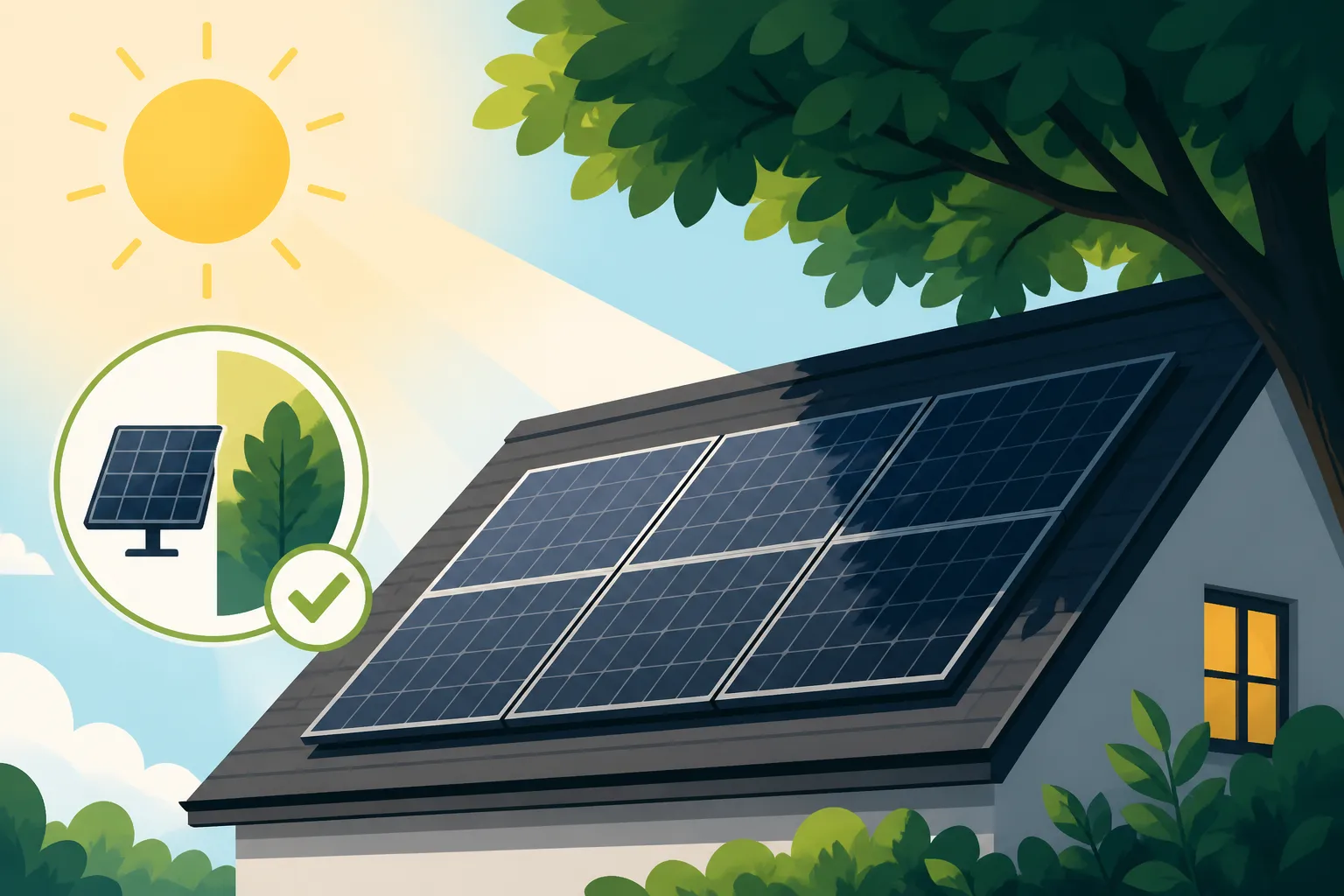
When sunlight hits a solar panel, its photovoltaic cells convert that light into electricity. This process relies on photons, tiny particles of light, exciting electrons within the panel. When shade falls across even a small part of a traditional solar panel array, it can drastically reduce the output of the entire string of panels it's connected to. Think of it like a string of old-fashioned Christmas lights: if one bulb goes out, the whole strand might go dark. This is due to how panels are wired in series in a "string" inverter system. If a single cell or panel is shaded, its resistance increases, becoming a bottleneck that limits current flow for every other panel in that string.
This "Christmas light effect" can mean a minor shadow from a chimney in the morning could reduce your system's output by 20-30% for hours, even if the rest of your panels are bathing in full sun. Over a year, these small, intermittent drops in production add up, eating away at your potential energy savings and extending your Solar Panel Payback Period Explained. It’s why simply installing panels without addressing shade is rarely the best approach.
Common Sources of Roof Shading
Shade isn't just about massive trees. While those are certainly a primary culprit, many other elements can cast problematic shadows on a roof. For instance, chimney stacks, dormer windows, satellite dishes, and even adjacent multi-story homes or commercial buildings can create significant, long-lasting shadows. These can vary throughout the day and across seasons, meaning what looks like a clear roof in summer might be quite shaded in winter when the sun is lower in the sky.
It’s crucial to conduct a thorough site assessment that maps out these shadow patterns over an entire year. Professional solar installers use specialized software and tools that can model solar access, showing how much sunlight each part of your roof receives hourly, daily, and seasonally. This detailed analysis helps determine not just if solar is viable, but also the optimal placement for panels and whether certain obstructions might need to be removed or trimmed. Without this step, you’re essentially guessing at your system’s potential.
Key Solar Panel Technologies for Shaded Conditions
The good news is that solar technology has come a long way, specifically addressing the challenges posed by shaded conditions. It’s no longer a one-size-fits-all game. Certain panel designs and cell configurations are inherently better at mitigating the effects of partial shading.
Monocrystalline Panels and Shade Tolerance
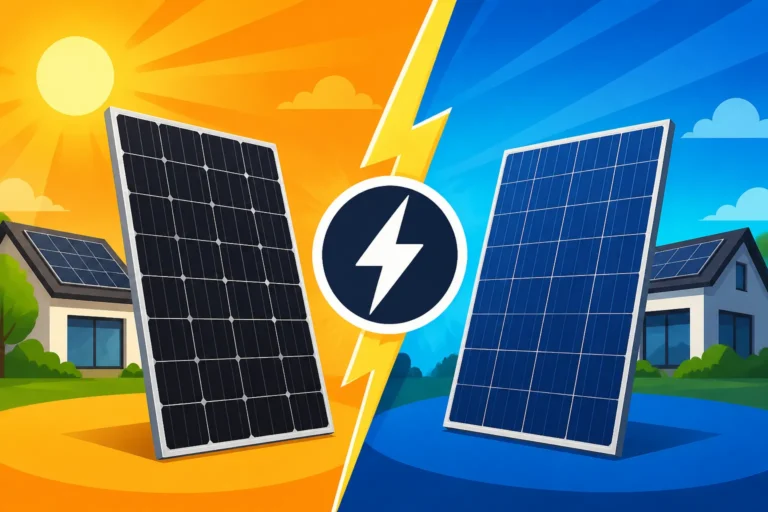
When we talk about the Best Solar Panels of 2026, monocrystalline panels often come out on top for overall efficiency and performance. These panels are made from a single, continuous silicon crystal, which allows electrons to flow more freely, resulting in higher efficiency rates – often 19-23% or more. While historically, any shade was a huge hit to any panel type, modern monocrystalline panels, especially when paired with the right inverter technology (which we'll discuss next), show better performance in low-light and diffuse light conditions compared to their older polycrystalline counterparts.
The tighter crystal structure in monocrystalline cells helps them capture a broader spectrum of light, meaning they can still generate some power even when direct sunlight isn't perfectly hitting them. However, their superior performance in shade isn't solely due to the panel itself but rather the system design, which typically includes individual panel optimization. So, while a monocrystalline panel won't magically ignore shade, its inherent efficiency means it will perform better under any light conditions, including less-than-ideal ones.
Bifacial and Half-Cut Cell Technology Benefits
Beyond the basic monocrystalline structure, innovative panel designs are further enhancing shade tolerance.
-
Half-Cut Cells: This technology literally cuts solar cells in half. Instead of 60 or 72 full cells, you get 120 or 144 half-cells per panel. This seemingly simple change has a profound effect. By reducing the size of the cells, the internal current is also halved, which significantly lowers resistive losses. More importantly, half-cut panels often divide the panel into two independent sections. If shade covers the bottom half of the panel, the top half can still produce electricity efficiently. This drastically reduces the "Christmas light effect" across the entire panel, making it much more resilient to partial shading. Many top brands like Qcells, Jinko Solar, and REC have widely adopted half-cut cell technology.
-
Bifacial Panels: While less common for residential rooftops due to mounting requirements, bifacial panels capture sunlight from both their front and rear sides. For ground-mounted systems, or even some elevated roof mounts where light can reflect off the roof surface, the ability to capture reflected light means more power generation. In shaded scenarios, diffuse light bouncing off surrounding surfaces could still contribute to energy production, offering a small but meaningful boost. This is more about overall light capture than direct shade mitigation, but it plays a role in maximizing output in varied conditions.
These advancements mean that even if a part of your roof experiences intermittent shade, the impact on your overall system's production can be minimized, making solar a viable option where it might not have been a decade ago.
The Role of Inverters and Optimizers in Shaded Systems
When it comes to overcoming the challenge of shaded roofs, the inverter technology you choose is arguably more critical than the solar panels themselves. Panels might collect the sunlight, but it's the inverter's job to convert that DC power into usable AC power for your home, and how it handles shade makes all the difference.
Microinverters for Individual Panel Optimization
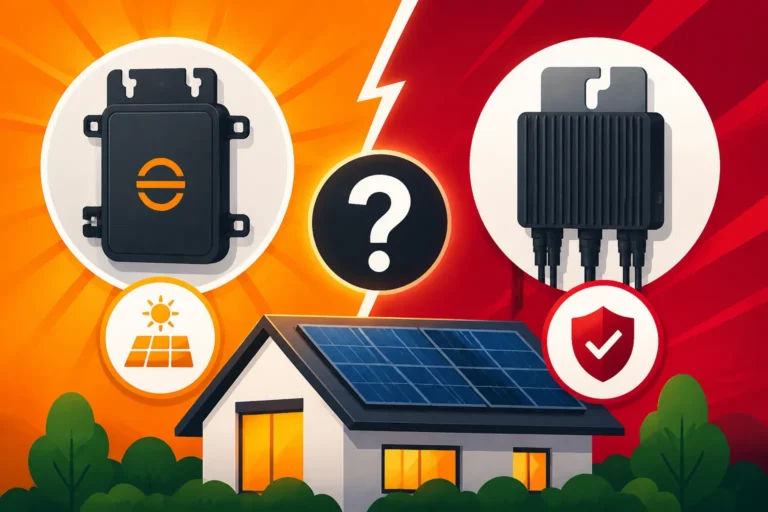
Microinverters are truly revolutionary for shaded environments. Instead of one large string inverter handling all your panels as a single unit, a microinverter is installed under each individual solar panel. This means that each panel operates independently. If one panel is shaded by a chimney or a branch, only that specific panel's output is affected. All the other panels continue to produce at their maximum capacity, unhindered.
Think about it: with traditional string inverters, if one panel drops to 50% production due to shade, the entire string might drop significantly. With microinverters, that shaded panel drops to 50%, but its neighbors, in full sun, stay at 100%. This maximizes overall system production, especially in situations with intermittent or partial shading. Companies like Enphase are leaders in microinverter technology, offering robust systems like the IQ8 series which boasts advanced capabilities and monitoring features. Their systems also simplify Solar Panel Maintenance & Cleaning by allowing you to easily identify underperforming panels. This granular control also makes monitoring your system's performance incredibly precise, allowing you to see exactly what each panel is doing at any given moment.
Power Optimizers with String Inverters
Another excellent solution for shade is using power optimizers in conjunction with a string inverter. These devices offer a middle ground between traditional string inverters and full microinverter systems. A power optimizer is installed on the back of each solar panel, similar to a microinverter. However, instead of converting DC to AC at the panel level, the optimizer "conditions" the DC power from each panel, ensuring it's operating at its peak power point (Maximum Power Point Tracking, or MPPT). This optimized DC power is then sent to a central string inverter, which converts it to AC.
Like microinverters, if one panel is shaded, its optimizer ensures that it still produces as much power as possible without dragging down the performance of the other panels in the string. This makes the entire system much more resilient to partial shading than a simple string inverter alone. SolarEdge is the dominant player in the power optimizer market, offering integrated solutions where their optimizers and inverters are designed to work seamlessly together. They provide excellent monitoring capabilities and a good balance between cost and performance for many shaded roof scenarios. When considering Enphase vs SolarEdge: Which Inverter Is Better?, homeowners with significant shade often lean towards these optimized solutions.
Top Solar Panel Brands Performing Well in Shade
While inverter technology often steals the spotlight when discussing shaded roofs, the panels themselves still matter. Some panel brands are renowned for their superior performance in less-than-ideal conditions, including low light and partial shade. This is often due to a combination of high-efficiency cell technology, advanced manufacturing processes, and robust quality control.
Brands Known for Superior Shade Performance
Several manufacturers have earned a reputation for producing panels that perform admirably even when faced with shadows. These brands often integrate technologies like half-cut cells, improved bypass diodes, and excellent temperature coefficients to maintain output.
-
Maxeon (formerly SunPower): Maxeon panels, particularly their A-Series and X-Series, are often cited for their exceptional performance in all conditions, including shade. Their unique "back-contact" cell design eliminates metal ribbons from the front of the cell, allowing more sunlight absorption and reducing internal resistance. This design, combined with robust bypass diodes, helps them minimize the impact of partial shading. Maxeon's efficiency ratings are among the highest in the industry, which translates to better production even with diffuse light from shaded areas. Check out our detailed Maxeon Solar Panel Review for more insights.
-
REC Solar: REC is another top-tier brand known for its commitment to quality and innovation. Their Alpha series, utilizing heterojunction technology (HJT) and half-cut cells, offers impressive efficiency and improved performance in shaded conditions. The HJT cells combine the best aspects of monocrystalline and thin-film technology, providing excellent low-light performance. Their twin-panel design, dividing the panel into two independent sections, further enhances shade tolerance, allowing the unshaded half to continue producing at full capacity. For a deeper dive, read our REC Solar Panel Review.
-
Qcells: Qcells panels, especially their Q.PEAK DUO series, are popular for their balance of performance, reliability, and value. They consistently rank well in independent tests for real-world performance. Qcells panels utilize their proprietary Q.ANTUM DUO Technology, which combines PERC (Passivated Emitter Rear Cell) with half-cut cells and wire interconnection, enhancing both efficiency and durability. This design is specifically engineered to minimize current loss and hot spots caused by shading, making them a solid choice for roofs with intermittent shadows. Learn more in our Qcells Solar Panel Review.
While other reputable brands like Jinko Solar and Trina Solar also offer high-performing half-cut cell panels, Maxeon, REC, and Qcells are frequently highlighted by installers for their robust shade performance.
Comparing Efficiency and Temperature Coefficients
When evaluating panels for shaded roofs, two key specifications beyond brand name are paramount:
-
Panel Efficiency: This tells you how well a panel converts sunlight into electricity under standard test conditions. Higher efficiency panels generate more power from a smaller footprint, which is crucial if you have limited unshaded roof space. While a 23% efficient panel will still be affected by shade, it will produce more power when unshaded, and often more power under partial shade, than an 18% efficient panel. Our article on Solar Panel Efficiency & Degradation Explained provides a great overview.
-
Temperature Coefficient: This metric indicates how much a panel's power output decreases as its temperature increases. Solar panels, especially dark-colored ones, get hot in direct sunlight, and heat can reduce their efficiency. A lower (closer to zero) temperature coefficient means the panel is more resistant to power loss from heat. While not directly related to shade, a panel that performs well in heat will perform better overall, maximizing production during those unshaded hours when the sun is beating down on your roof. For example, a coefficient of -0.30%/°C is better than -0.40%/°C. Panels with better temperature coefficients can maintain higher output in hot climates like Arizona or Florida, even when those unshaded areas are baking under the sun.
| Panel Characteristic | Benefit for Shaded Roofs | Why it Matters |
|---|---|---|
| Half-Cut Cells | Minimized impact of partial shading on total panel output. | If one half is shaded, the other half can still perform optimally, preventing the entire panel from underperforming. |
| High Efficiency | More power generation from available sunlight. | Even with reduced light in shaded areas, a higher efficiency panel captures more of what's available, maximizing production from limited unshaded space. |
| Low Temperature Coeff. | Less power loss due to heat. | Unshaded panels on hot days maintain better output, contributing more energy when not shaded and reducing overall losses. |
| Advanced Bypass Diodes | Directs current around shaded cell sections. | Prevents shaded cells from becoming "hot spots" that reduce the performance of the entire panel and potentially damage it. |
Looking for panels that incorporate these features, rather than just chasing the cheapest option, will pay dividends in a shaded roof scenario. Remember, a solar system is a long-term investment, and maximizing its output from day one is key to a faster Solar Panel Payback Period Explained.
Designing a Solar System for Optimal Shade Mitigation
Even with the best panels and most advanced inverter technology, careful system design is crucial for shaded roofs. It’s not just about slapping panels wherever they fit; it's about strategic placement and, sometimes, making tough decisions about your property.
Strategic Panel Placement and Layout
This is where a skilled and experienced solar installer truly shines. A good installer will perform a detailed shade analysis, often using tools like a Solmetric SunEye or specialized drone software, to map out annual sun paths and identify optimal zones on your roof. They'll consider not only current shade but also potential future shade from growing trees.
The goal is to place panels where they receive the most direct, unobstructed sunlight for the longest duration, even if it means installing fewer panels than you originally envisioned or utilizing different roof planes. For example, if your south-facing roof has significant morning shade but clears up by noon, and your west-facing roof gets excellent afternoon sun, a smart design might prioritize the west-facing section, especially if your utility rates are higher in the afternoon. Sometimes, panels might be installed in different orientations and tilts to capture maximum sunlight throughout the day. This detailed planning can help you determine How Many Solar Panels Do I Need for My Home more accurately, taking into account the unique characteristics of your roof.
It’s also important to consider spacing. While panels are generally installed close together, sometimes leaving a bit of extra space around a known obstruction can prevent a minor shadow from impacting an adjacent panel, especially if you’re using microinverters or optimizers.
When Tree Trimming or Removal is Necessary
This is often the hardest conversation to have, especially if you love your trees. However, sometimes, even with the best technology, shade from trees or other structures is simply too pervasive to make solar cost-effective without intervention.
Before investing in solar, evaluate whether trimming branches or, in some cases, removing a tree entirely, makes financial sense. For instance, a large tree consistently shading a significant portion of your roof from morning until early afternoon could reduce your system's annual production by 20-40%. Over 25 years, that's a lot of lost electricity and savings. The cost of trimming a tree every few years or removing it once might be a worthwhile investment compared to the ongoing revenue loss from shaded panels. Always consult with a certified arborist to understand the health of your trees and the best way to trim them without causing damage.
Sometimes, a compromise might be reached: trimming lower branches to clear the path for morning sun, or selectively pruning to reduce overall canopy density. For other immovable obstructions, like a neighbor's two-story house, strategic panel placement becomes even more critical. There might also be situations where a ground-mounted solar system in a sunny part of your yard is a better option than struggling with a heavily shaded roof. Don't forget to consider Roof Considerations for Solar Panels if you're exploring different mounting options.
Maximizing Your Investment with Shaded Roof Solar
Installing solar on a shaded roof doesn't mean you're settling for less. With the right strategy, you can still achieve significant long-term savings and energy independence. It's about being smart with your choices and understanding the full picture.
Evaluating Warranties and Degradation Rates
When you're dealing with potential shade, panel performance and longevity become even more critical. This is where warranties and degradation rates come into play.
-
Warranties: Most reputable solar panels come with two main warranties: a product warranty (typically 12-25 years) covering manufacturing defects, and a performance warranty (usually 25-30 years) guaranteeing that the panels will still produce a certain percentage of their original output after a specified time. For shaded roofs, a strong performance warranty is essential. Brands like Maxeon often offer 25-year comprehensive warranties that cover both product and performance, providing peace of mind. A robust warranty from a financially stable company means you're protected if your panels underperform more than expected due to hidden defects or rapid degradation. Our Solar Panel Warranties Explained article goes into greater detail on what to look for.
-
Degradation Rates: All solar panels lose a small amount of efficiency each year – this is called degradation. A typical high-quality panel degrades by about 0.5% per year. After 25 years, it's expected to still produce around 87-90% of its original capacity. For shaded roofs, minimizing this degradation is vital because you're already starting with less-than-perfect production. Panels with lower degradation rates, particularly those with advanced cell technologies, will maintain higher output over their lifespan, making your investment more secure. You want panels that promise less degradation over time to ensure that even with shade, your system continues to produce reliable power for decades. This factor is crucial when considering Do Solar Panels Lose Efficiency Over Time?.
Integrating Battery Storage for Enhanced Self-Consumption
For homeowners with shaded roofs, integrating a solar battery storage system can be a game-changer. Batteries allow you to store excess solar energy generated during peak sunlight hours and use it when your panels are shaded or when electricity rates are highest.
Consider a scenario where your panels are shaded in the morning but get full sun from noon onwards. Without a battery, any excess energy generated during those sunny afternoon hours would be sent back to the grid, possibly under a less favorable net metering policy like California's NEM 3.0 or an avoided-cost rate. With a battery, you can store that energy and use it later in the day when your panels are shaded again or at night. This significantly increases your "self-consumption" of solar power, reducing your reliance on the grid and maximizing your savings, especially if you face time-of-use (TOU) electricity rates.
Brands like Tesla Powerwall, Enphase IQ Battery, and FranklinWH offer excellent home battery solutions that integrate seamlessly with solar systems. A battery can provide Solar Plus Battery Cost benefits by turning your solar system into a resilient energy hub, ensuring you have power even during outages, and allowing you to optimize energy usage around your specific shade patterns and utility rate structures. You might even find some solar monitoring accessories or smart home energy management systems on Amazon that can help you track your battery's performance and optimize energy flows.
What Solar Panels to Look For in Shaded Conditions
Choosing the right solar panels for a shaded roof goes beyond just picking the highest efficiency number. It requires understanding how different technologies work together to mitigate the negative impacts of shade and maximize energy capture. You’re looking for resilience and smart design.
Focus on High-Performance Cells and Robust Construction
When shopping for solar panels for a shaded roof, prioritize panels built with advanced cell technologies designed for real-world conditions, not just laboratory ideal scenarios.
-
PERC (Passivated Emitter Rear Cell) Technology: Many high-quality monocrystalline panels today incorporate PERC cells. This technology adds a reflective layer to the back of the solar cell, which allows unabsorbed light to be reflected back into the cell for a second pass, increasing energy capture. This boost in efficiency can be particularly beneficial in lower light conditions or when light is diffuse, such as in partially shaded areas. Most top-tier manufacturers like Qcells, Jinko, and REC utilize advanced PERC designs.
-
Half-Cut Cell Design: As discussed earlier, half-cut cells divide the panel into two independent electrical segments. This dramatically improves performance in partial shading. If the bottom half of the panel is shaded, the top half can continue to produce power efficiently, preventing the entire panel from becoming a bottleneck. This feature is becoming standard in premium panels and is a non-negotiable for shaded roofs.
-
Multi-Busbar (MBB) Technology: This refers to the number of thin metal strips (busbars) that run across the solar cells to collect the current. More busbars (e.g., 9BB, 10BB, 12BB) mean shorter current paths, which reduces resistive losses and makes the panel more tolerant to micro-cracks or cell damage – common issues that can worsen in shaded conditions where individual cells are stressed. MBB designs also improve the panel's ability to capture light more effectively.
Beyond the cells, look for panels with strong mechanical load ratings (ability to withstand snow and wind) and excellent temperature resistance, indicated by a low temperature coefficient. These factors speak to the panel's overall durability and consistent performance over its long lifespan, which is especially important when individual panels might experience varying stresses due to shading.
Don't Forget the Bypass Diodes
While often overlooked, the quality and design of bypass diodes within a solar panel are critical for shade performance. Solar panels are typically divided into several sections, each protected by a bypass diode. When a section of the panel is shaded, the bypass diode activates, allowing electricity to "bypass" the shaded, underperforming section, thus preventing it from drastically reducing the output of the entire panel or causing damaging hot spots.
Higher quality panels often feature more bypass diodes or use advanced diode designs that activate more effectively and quickly. For instance, instead of three bypass diodes for an entire panel, some advanced designs might have six or even more, offering more granular protection against shade. This ensures that only the truly shaded portion is bypassed, leaving the rest of the panel to perform optimally. Installers can sometimes check for panels that use enhanced bypass diode configurations, which can significantly boost performance on roofs with complex or shifting shade patterns. Without good bypass diodes, even the most efficient cells can struggle when partially shaded, turning a temporary shadow into a long-term production drain. You can sometimes find detailed specifications on panel datasheets or by consulting with a knowledgeable solar professional.
Installation Best Practices for Shaded Solar Systems
Even with the best equipment, improper installation can undermine all the benefits of shade-tolerant technology. Best practices are particularly vital for shaded roofs to ensure the system performs as expected over its lifetime.
Optimizing Tilt and Azimuth
The tilt (angle) and azimuth (direction) of your solar panels are critical for maximizing energy harvest. While a perfect south-facing roof with a 30-degree tilt is ideal for most of the U.S., shaded roofs often require a more nuanced approach.
-
Azimuth Adjustments: If a south-facing roof has unavoidable morning shade from an east-side obstruction, an installer might suggest orienting panels slightly more towards the southwest to capture more intense afternoon sun. Conversely, if afternoon shade is the issue, a slightly southeast orientation might be beneficial. Modern microinverters and optimizers allow for this flexibility, as panels on different roof planes can still operate efficiently without being constrained by a single string. It’s a dynamic balancing act that aims to capture the most sunshine during the least shaded hours.
-
Tilt Adjustments: While most residential installations follow the roof's pitch, sometimes small tilt adjustments can be made with specialized mounting hardware to optimize for sun exposure, especially on low-slope or flat roofs. For example, slightly increasing the tilt might help panels shed snow more easily in winter, which can otherwise exacerbate shade issues. However, significant tilt changes on pitched roofs are often aesthetically unappealing and may come with higher installation costs. The installer should use sophisticated software to model different tilt and azimuth configurations against your specific shade profile to find the sweet spot between aesthetics, cost, and maximum energy production. Always discuss these options thoroughly during your site survey to understand the trade-offs.
Professional Site Assessment and Monitoring
A high-quality, professional site assessment is the bedrock of a successful solar installation, especially on a shaded roof. This isn't just a quick look; it's a comprehensive analysis of your roof's solar potential.
-
Advanced Shade Analysis: Reputable installers use sophisticated tools to generate detailed shade reports. These reports often include sun path diagrams, annual solar access percentages for different roof sections, and visualizations of how shadows will move across your roof throughout the day and year. This level of detail helps pinpoint the best locations for panels and quantify the impact of unavoidable shade. They might use specialized handheld devices like the Solmetric SunEye or drone-based mapping software to gather this data. This assessment should also consider Roof Age: When to Replace Before Solar to ensure your roof is ready for a long-term installation.
-
Ongoing Monitoring: Once installed, your solar system should come with an excellent monitoring platform. Microinverter systems (like Enphase) and optimizer systems (like SolarEdge) provide granular, panel-level monitoring. This means you can track the performance of each individual panel in your array from a user-friendly app or web portal. This is invaluable for shaded roofs because it allows you to quickly identify if a specific panel is underperforming due to new shade (e.g., a growing branch), dirt accumulation, or a technical issue. You can even find third-party monitoring devices on Amazon that can integrate with various systems to give you a comprehensive overview. Promptly addressing any issues ensures your system is always operating at its peak potential, minimizing the long-term impact of shade and maximizing your return on investment. This feature is key to knowing How Much Do Solar Panels Cost After the Tax Credit Expired? compared to your actual production.
Disclaimer
Please remember that this article provides general information and recommendations. The suitability and performance of solar panels on shaded roofs can vary significantly based on your specific location, roof characteristics, local climate, utility policies, and the expertise of your chosen installer. Always consult with multiple qualified solar professionals to obtain personalized advice, detailed shade analyses, and accurate system designs tailored to your unique situation before making any decisions. This information is not intended as financial or legal advice.