Is Enphase or SolarEdge Better?
Deciding to go solar is a huge step, and once you start diving into the details, it can feel like you've stumbled into a whole new language. One of the biggest head-scratchers for many homeowners often comes down to the inverter technology: specifically, whether to choose a system built around Enphase microinverters or a SolarEdge string inverter with power optimizers. This choice can significantly impact your system's performance, cost, and long-term reliability, and it's a frustration we hear all the time. This guide will meticulously break down the differences, pros, and cons of each, helping you understand which option truly aligns with your home and energy goals.
Understanding the Core Technologies
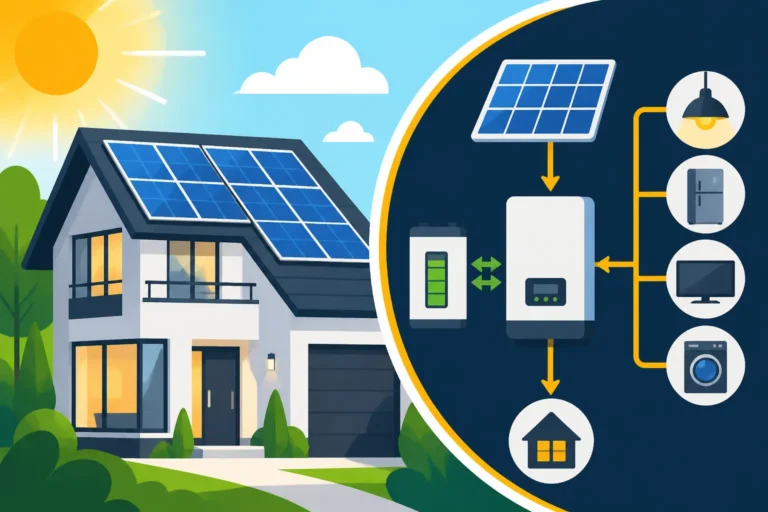
When we talk about solar energy systems, the panels themselves are only one part of the equation. The real magic, in many ways, happens with the inverters, which are responsible for converting the direct current (DC) electricity produced by your solar panels into the alternating current (AC) electricity that powers your home and feeds into the grid. Enphase and SolarEdge approach this critical conversion process in fundamentally different ways, each with its own set of advantages.
Enphase's Microinverter Philosophy
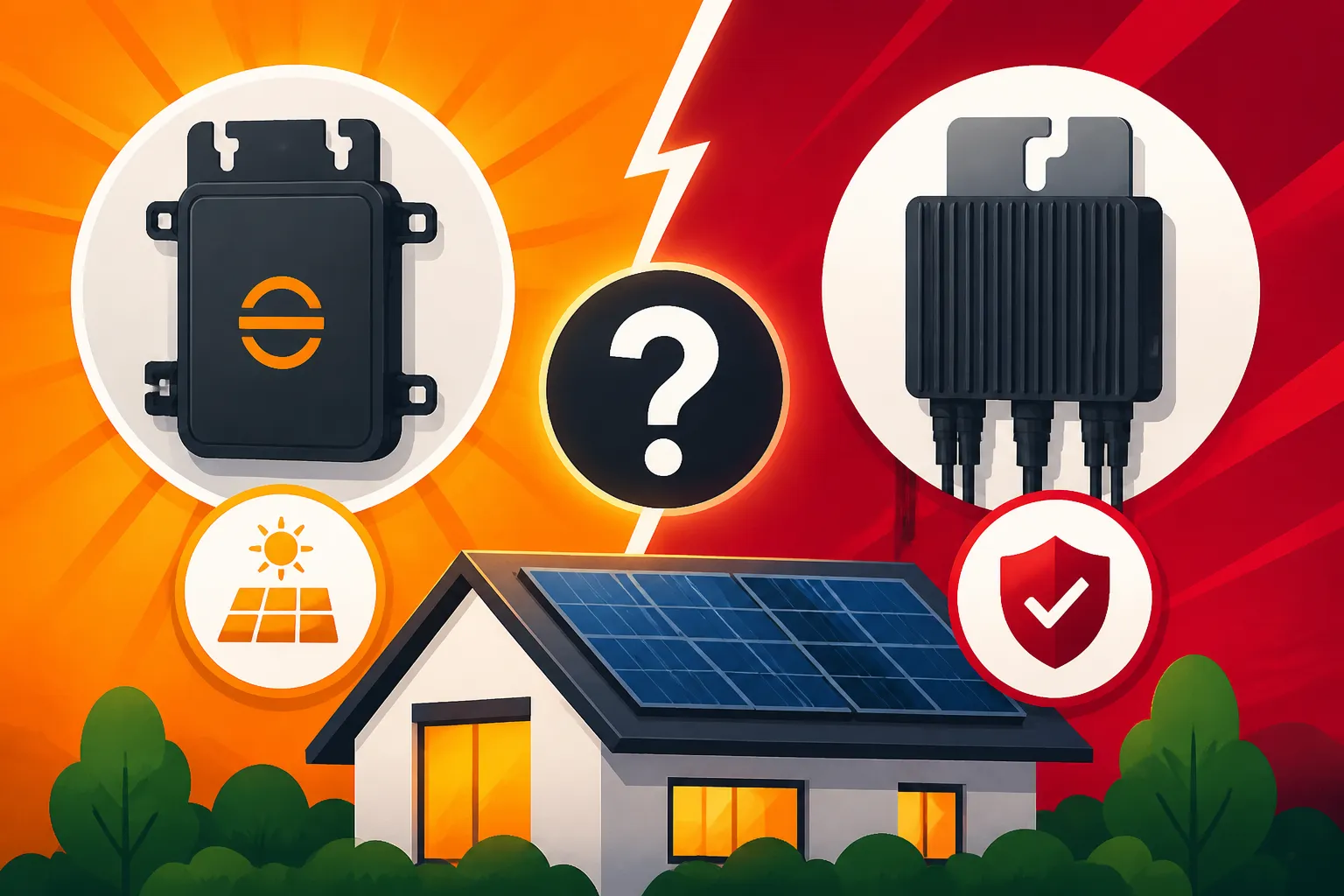
Enphase pioneered the widespread adoption of microinverters, and their technology has become a household name in the solar industry. Instead of one central inverter handling all the panels, an Enphase system uses a small, dedicated microinverter attached to each individual solar panel. This means that the DC-to-AC conversion happens right there on your roof, at the panel level, before the electricity even leaves the panel's immediate vicinity.
Imagine a team of individual chefs, each preparing their dish perfectly, rather than one head chef trying to manage all the cooking at once. With Enphase, if one panel gets shaded by a rogue tree branch or develops a minor issue, it only affects that single panel's output. The other panels continue to produce at their maximum potential, unfazed. This modularity is a huge selling point for many homeowners, especially those with complex roofs or potential shading issues throughout the day. It also means that AC wiring runs from the roof directly into your home's electrical panel, which simplifies some aspects of the installation and can offer peace of mind when it comes to high-voltage DC lines. For more on the different types of inverters, you might find our guide on Solar Inverters: String vs Microinverter vs Optimizer helpful.
SolarEdge's Optimized String Inverter System
SolarEdge takes a hybrid approach, combining elements of traditional string inverters with the benefits of module-level power electronics (MLPEs). In a SolarEdge system, you'll still have a central string inverter, typically mounted on a wall in your garage or utility room, much like a traditional setup. However, the crucial difference lies in the addition of "power optimizers." These small devices are installed on the back of each solar panel, similar to microinverters.
These power optimizers aren't full inverters; they don't convert DC to AC. Instead, their job is to condition the DC power coming from each individual panel, optimizing its voltage and current before sending it down to the central string inverter. This means that, like Enphase, if one panel is underperforming due to shade or debris, its optimizer will adjust its output independently, preventing it from dragging down the performance of other panels in the string. The central inverter then takes this optimized DC power from all the panels and converts it into AC electricity for your home. This gives you the best of both worlds: the module-level optimization benefits, but with a single, central inverter for the final conversion. Our article on Microinverter vs String Inverter: Pros and Cons delves deeper into these architectural distinctions.
Key Differences and How They Impact Your Home
The technological differences between Enphase and SolarEdge systems manifest in several practical ways that directly affect how your solar array performs, how it's maintained, and what your overall experience will be like. It's not just about what's inside the box; it's about how that technology integrates with your lifestyle and your home's specific needs.
Performance in Shaded Conditions
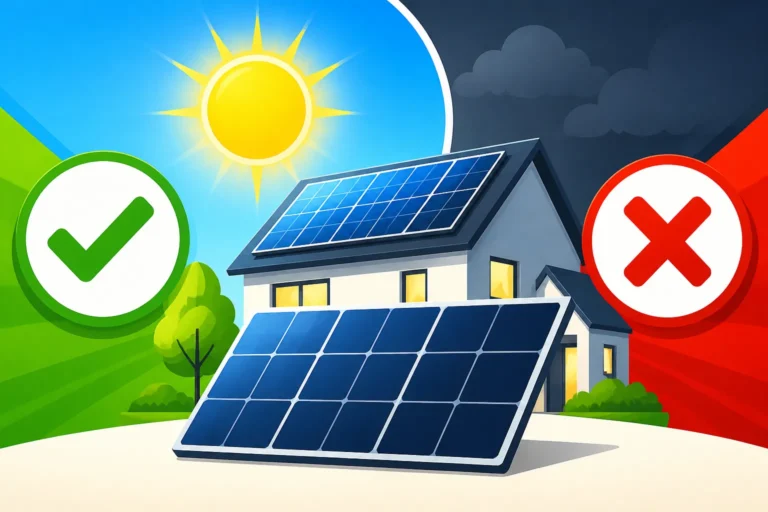
Shading is the archenemy of solar panel efficiency. Even a small amount of shade on one panel in a traditional string inverter system can significantly reduce the output of the entire string. This is because panels in a string are connected in series, and the weakest link can determine the performance of the whole chain.
Both Enphase and SolarEdge were designed to mitigate this very common problem. With Enphase microinverters, each panel operates independently. If half your roof is shaded in the morning, the unshaded panels will still produce at full capacity. The same goes for SolarEdge, where each power optimizer ensures that its individual panel contributes as much as possible, regardless of what its neighbors are doing. This is a critical advantage over older, non-optimized string inverter systems, especially for homes surrounded by tall trees or with complex rooflines that experience intermittent shading throughout the day. This enhanced performance in less-than-ideal conditions can significantly increase your overall Solar ROI & 25-Year Savings Breakdown.
System Monitoring and Troubleshooting
One of the unsung heroes of modern solar is the robust monitoring capabilities these systems offer. Both Enphase and SolarEdge provide detailed, panel-level monitoring, allowing you to track the performance of each individual solar panel in real-time. This is incredibly empowering for homeowners. You can log into an app on your phone or a web portal and see exactly how much power each panel is producing, day by day, hour by hour.
However, there's a slight difference in how this translates to troubleshooting. With Enphase, if a single panel stops producing, you know immediately which microinverter is at fault, as the DC-to-AC conversion happens right there. This can make pinpointing and replacing a faulty component straightforward. For SolarEdge, if a panel stops producing, you know the panel or its optimizer is the issue. The central inverter is still functioning, but you'd need a technician to inspect the specific panel and optimizer. Both systems offer excellent diagnostics, but Enphase's fully distributed nature can sometimes simplify the diagnostic process even further, as each component is a self-contained unit. Many monitoring systems are user-friendly, and you can even find third-party devices on platforms like Amazon that integrate with various smart home hubs to display your solar production data alongside other energy metrics.
Installation Complexity and Aesthetics
The installation process and the visual impact on your home can also differ. Enphase systems require more wiring on the roof, as each microinverter is converting DC to AC. This means more AC wiring running across your roof to the main electrical panel. While this can mean more conduit, it also eliminates high-voltage DC wiring runs, which some installers and homeowners prefer for safety reasons.
SolarEdge systems, on the other hand, have a more streamlined DC wiring run down to the central inverter. This typically results in less visible wiring on the roof. However, you do have a larger central inverter unit that needs to be mounted, usually on an exterior wall or inside a garage. These central inverters can be a bit bulky, so finding a discreet location is often a consideration for homeowners concerned with aesthetics. Conversely, Enphase's microinverters are neatly tucked away under the panels, making them practically invisible once installed. When considering Roof Considerations for Solar Panels, the placement of these components can play a role.
Expandability and Future-Proofing
Life changes, and so might your energy needs. Maybe you get an electric vehicle, or decide to add a solar battery down the line. How easily can your solar system adapt? Both Enphase and SolarEdge offer good expandability, but the approaches differ.
Adding more panels to an existing Enphase system is generally straightforward. You simply add more panels, each with its own microinverter, and connect them to your existing AC trunk cable. This modularity means you can scale up your system incrementally without having to worry about overhauling your entire inverter setup. SolarEdge also allows for expansion, but you need to ensure your central inverter has the capacity to handle additional strings of panels or a larger array. If you add a significant number of panels, you might need a second central inverter or an upgrade to a larger one, which can be a more involved process. Thinking about your long-term energy goals, like adding a future EV charger or an Is It Worth Adding a Battery to My Solar System?, is crucial when making this choice.
Here's a quick comparison table to summarize the key differences:
| Feature | Enphase Microinverters | SolarEdge Optimized String Inverter |
|---|---|---|
| Inverter Location | One per panel (on roof) | One central inverter (wall-mounted) |
| Power Optimizers | Integrated into microinverter | Separate unit on each panel |
| DC-AC Conversion | At each panel | At central inverter (after optimization) |
| Shade Tolerance | Excellent (panel-level optimization) | Excellent (panel-level optimization) |
| Monitoring | Panel-level | Panel-level |
| Troubleshooting | Easier to pinpoint faulty unit | Requires checking optimizer or panel |
| Installation | More on-roof wiring, no central box | Less on-roof wiring, central box needed |
| Expandability | Highly modular, easy incremental additions | Good, but central inverter capacity is key |
| High Voltage DC Wires | None on roof (all AC) | Short runs of optimized DC from optimizers to central inverter |
| Common Brands | Enphase Energy | SolarEdge Technologies |
When Each System Shines Brightest
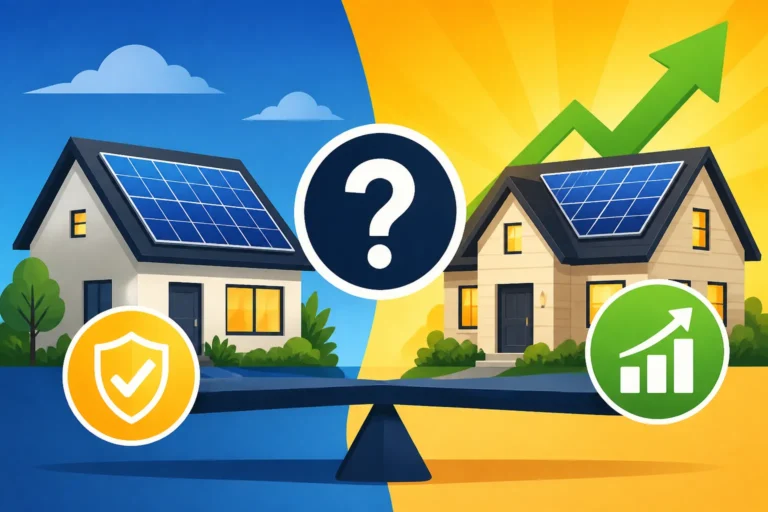
Neither Enphase nor SolarEdge is universally "better" than the other. The ideal choice truly depends on the specific characteristics of your home, your energy consumption patterns, and your personal priorities. Let's explore some scenarios where one might have a distinct edge.
Ideal Scenarios for Enphase Microinverters
Enphase systems truly excel in situations where your roof isn't a perfectly unshaded, south-facing expanse. If your home has a complex roof design with multiple orientations, dormers, or chimneys that cast shadows at different times of the day, microinverters are often the preferred solution. Their independent operation ensures that even if half your panels are shaded, the other half continues to produce at maximum capacity, maximizing your overall energy harvest. This also holds true if you have trees that might grow to shade parts of your roof in the future.
Another major benefit often cited by homeowners and installers is the enhanced safety. Since the DC power is converted to AC right at the panel, there are no long runs of high-voltage DC wiring across your roof or through your attic. This significantly reduces the risk of arc faults, which are a rare but serious safety concern with traditional DC systems. For installers, this can mean a faster and safer installation process, and for you, it means peace of mind. Moreover, the independent nature of microinverters means that if one unit fails, the rest of your system keeps running, avoiding a complete system shutdown.
Ideal Scenarios for SolarEdge Optimized String Inverters
SolarEdge systems, with their combination of optimizers and a central inverter, often become the preferred choice for homeowners with relatively uniform, unshaded roof sections. If you have a large, south-facing roof that gets consistent sunlight throughout the day, a SolarEdge system can be incredibly efficient and cost-effective. While both systems handle shade well, the slight cost advantage of a single central inverter can make SolarEdge more competitive in simpler installations.
Furthermore, SolarEdge systems are often favored for their robust Arc Fault Circuit Interrupter (AFCI) technology and rapid shutdown capabilities, which are crucial safety features. The optimizers allow for module-level voltage cutoff, which means that in an emergency (like a fire), the voltage on the DC lines can be reduced to a safe level very quickly, protecting first responders. While Enphase also offers excellent safety features, SolarEdge's centralized inverter can sometimes offer a more integrated solution for certain types of battery storage systems, though both brands are rapidly expanding their battery integration capabilities. When researching system components, looking at reviews and specifications on sites like Amazon for compatibility can be a good starting point.
Considerations for Battery Storage Integration
The world of home solar is increasingly moving towards integrated battery storage, offering energy independence and backup power during outages. Both Enphase and SolarEdge have invested heavily in their battery solutions, offering seamless integration with their inverter technologies.
Enphase offers its Enphase IQ Battery series, which are modular AC-coupled batteries designed to work perfectly with their microinverter systems. Since everything in an Enphase ecosystem is AC-based, adding batteries is often straightforward, simply connecting to the existing AC bus. This can be a huge plus for homeowners looking for a fully integrated, scalable solution where every component speaks the same electrical language. The latest generation, like the IQ Battery 5P, offers impressive power and capacity. Our guide to Best Solar Batteries of 2026 explores these options in more detail.
SolarEdge offers the SolarEdge Home Battery, designed to pair with their optimized string inverters. These batteries are DC-coupled, meaning they connect directly to the central inverter on the DC side. This can sometimes lead to slightly higher overall system efficiency because the power doesn't have to be converted from DC to AC and back again for storage. SolarEdge's "Energy Hub" inverter is designed to manage both solar production and battery charging/discharging efficiently, creating a unified home energy ecosystem. If you're pondering Do I Need a Battery With Solar?, considering how it integrates with your inverter choice is essential.
Making the Right Choice for Your Home
Choosing between Enphase and SolarEdge isn't about picking a winner; it's about picking the right fit for your unique situation. Both are top-tier manufacturers of Best Solar Inverters of 2026, and both will provide a reliable, efficient solar experience. It boils down to weighing your priorities against the strengths of each system.
Assessing Your Roof and Property
Start with an honest assessment of your roof. Is it relatively free of shade throughout the day, year-round? Do you have a single, dominant roof plane that faces south or west? If so, a SolarEdge system might offer a slightly more cost-effective solution without compromising performance. The streamlined DC wiring to a central inverter might also appeal if minimizing roof-level complexity is a priority.
However, if your roof is a patchwork of angles, pitches, and potential shading obstacles from trees, neighboring buildings, or even architectural features like dormers or skylights, then Enphase's microinverter system truly shines. The ability of each panel to operate independently can lead to significantly higher energy production over the lifetime of your system, ensuring you get the most out of every ray of sunshine. Think about any future landscaping plans too – a tree that's small now might become a shade monster in a few years. Our article on How Many Solar Panels Do I Need for My Home? can help you calculate your needs based on roof space.
Budget and Long-Term Value
The upfront cost can be a significant factor. Historically, Enphase microinverter systems have sometimes come with a slightly higher initial price tag due to having more individual components (one microinverter per panel). However, this difference has narrowed over time, and pricing can fluctuate based on the installer, system size, and current promotions. SolarEdge systems might offer a marginal upfront cost advantage for simpler installations due to the single central inverter.
When considering long-term value, think about warranties and replacement costs. Both companies offer excellent warranties on their equipment, typically 25 years for Enphase microinverters and power optimizers, and 12 years for SolarEdge central inverters (often extendable). If a single microinverter fails in an Enphase system, it's typically an individual replacement. If the central inverter in a SolarEdge system fails, it's a single, larger component to replace, but it can shut down your entire system until fixed. Conversely, if a power optimizer fails in a SolarEdge system, it only affects that individual panel. Weighing these potential future maintenance scenarios can help determine which system offers better peace of mind for you. You can often find refurbished parts or even new optimizers and microinverters on marketplaces like Amazon if you ever need to replace a component outside of a full installer service.
Installer Expertise and Support
Perhaps one of the most overlooked, yet crucial, factors is the expertise of your chosen solar installer. A poorly designed or installed system, regardless of the technology, will underperform. Many installers specialize in one or both of these leading brands. Ask prospective installers which systems they prefer, and more importantly, why. Inquire about their experience with both Enphase and SolarEdge, their warranty support process, and their post-installation monitoring services.
A knowledgeable installer can help you navigate the nuances of each system and recommend the one that is truly optimized for your specific home. They can also provide insights into local utility requirements and grid interconnection processes, which can sometimes favor one technology over another. Always get multiple quotes and ask detailed questions about the equipment being proposed. Our guide on How to Choose a Solar Installer can provide valuable tips for this critical step.
Personal Preferences and Future Goals
Finally, your personal preferences and future energy goals should play a role. Do you prioritize maximum modularity and distributed intelligence (Enphase)? Or do you prefer a hybrid system with a central inverter and optimized panel performance (SolarEdge)?
If you envision expanding your system significantly in the future, or perhaps integrating with smart home systems, it’s worth researching how each brand’s ecosystem supports those ambitions. Both Enphase and SolarEdge have robust apps and platforms for monitoring, and both are continually evolving their offerings. Consider how long How Long Do Solar Panels Last? and which inverter system aligns best with your long-term vision for sustainable living and energy independence.
Ultimately, both Enphase and SolarEdge represent the cutting edge of solar inverter technology, offering vastly improved performance and safety compared to older string inverter setups. By carefully considering your roof conditions, budget, long-term goals, and installer's expertise, you can confidently choose the system that will deliver reliable, clean energy for decades to come.
Disclaimer
The information provided in this article is for general informational purposes only and does not constitute professional advice. Solar system design and equipment recommendations should always be made by a qualified and certified solar professional after a thorough assessment of your specific property, energy needs, and local regulations. While we strive for accuracy, solar technology, incentives, and market conditions are subject to change.