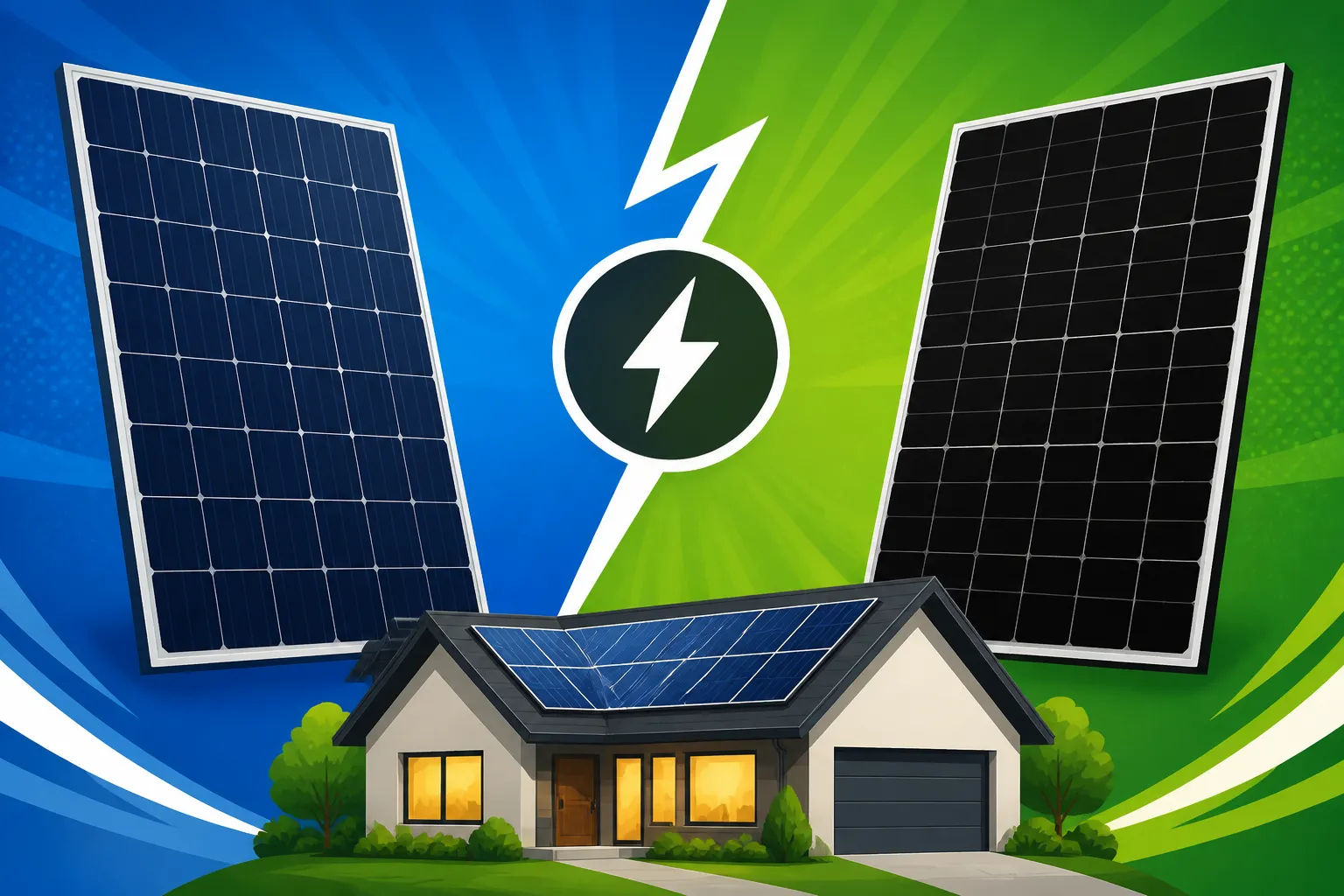
Trina Solar vs Jinko Solar Solar Panels
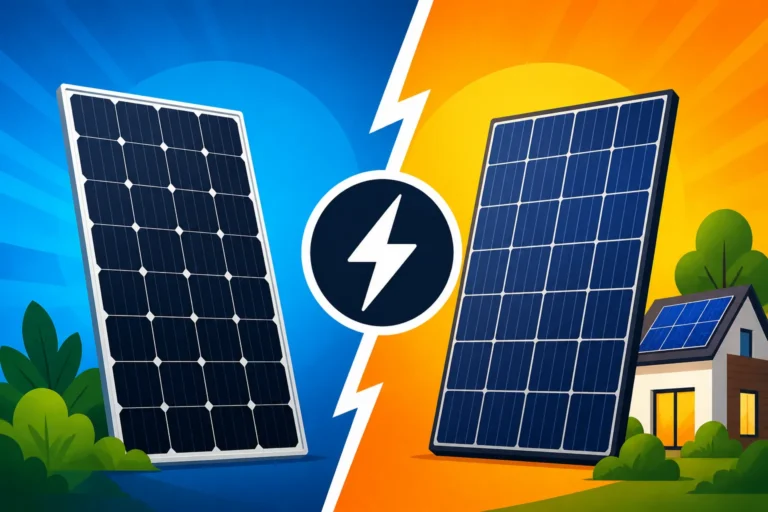
Trying to decide between solar panel brands can feel like deciphering a secret code, especially when you're faced with two major players like Trina Solar and Jinko Solar. It’s not just about picking a name; it’s about making a significant investment in your home’s future, and you want to be sure you're getting the best bang for your buck, the most reliable performance, and a system that will truly stand the test of time. This comprehensive guide will meticulously break down these two industry giants, helping you understand their strengths, weaknesses, and ultimately, which one might be the perfect fit for your specific solar needs.
Understanding Trina Solar and Jinko Solar: A Quick Overview
When you're looking into home solar, you're quickly going to encounter names that dominate the global manufacturing landscape. Trina Solar and Jinko Solar are two such names, consistently ranking among the top producers worldwide. They're not niche players; they're titans in the industry, responsible for a huge percentage of the solar panels installed globally each year. This means they have the economies of scale, the research and development budgets, and the long-term track records that smaller manufacturers simply can't match. But even among giants, there are differences that can impact your personal experience.
Trina Solar: A Global Powerhouse
Trina Solar, founded in 1997, is one of the oldest and most established solar manufacturers in the world. They've built their reputation on consistent quality, broad market reach, and a commitment to technological advancement. For years, they've been a go-to brand for large-scale solar farms and commercial projects, which speaks volumes about their reliability and ability to deliver at scale. This expertise trickles down to their residential offerings, meaning homeowners often benefit from the same robust engineering and quality control applied to massive installations.
Their product lines often feature a balance of performance and cost-effectiveness, making them a popular choice for homeowners looking for a dependable system without necessarily breaking the bank for the absolute bleeding edge of technology. They have a strong global presence, which can be reassuring when it comes to long-term warranty support, as you're dealing with a company that isn't likely to disappear overnight. Many installers across the United States, from bustling cities like Phoenix, Arizona to the quiet suburbs of Raleigh, North Carolina, regularly offer Trina Solar panels due to their proven track record and competitive pricing.
Jinko Solar: A Leader in Innovation
Jinko Solar, established in 2006, might be a bit younger than Trina, but they've rapidly risen through the ranks to become another one of the world's largest solar panel manufacturers. Jinko has earned a strong reputation for pushing the boundaries of technology, often being among the first to bring new, more efficient cell architectures to mass production. They focus heavily on research and development, aiming to squeeze every last bit of power out of each square foot of panel.
Homeowners who prioritize cutting-edge technology and maximum efficiency often gravitate towards Jinko Solar. While they might sometimes carry a slightly higher price tag than some competitors, their commitment to innovation means you're often getting panels that perform exceptionally well, especially in challenging conditions or when roof space is limited. Their panels are a common sight in tech-forward markets like California's Bay Area or the dense urban environments of New York City, where maximizing energy production from limited rooftop real estate is crucial. For those interested in understanding how these advanced panels translate into tangible savings, exploring resources like Solar Panel Cost Per Watt Explained can be incredibly insightful.
Head-to-Head: Performance, Durability, and Technology
When you're weighing your options between Trina Solar and Jinko Solar, it really comes down to the specifics of how they perform on your roof. It's not just about the name on the panel; it's about the watts it produces, how well it holds up to the elements, and what kind of tech is packed inside. Let's dig into the nitty-gritty details that truly matter for your home's energy production.
Panel Efficiency and Power Output
This is often the first thing homeowners look at, and for good reason. Higher efficiency means more power from the same amount of sunlight, which can be critical if you have limited roof space or want to maximize your energy independence.
- Trina Solar: Trina Solar offers a range of panels with varying efficiencies, but their primary residential offerings typically fall into the 20-22% efficiency range. Their Vertex series, for instance, often features monocrystalline PERC (Passivated Emitter Rear Cell) technology, which is a mature and highly reliable technology. These panels come in higher wattages, with some models exceeding 450W. This combination means you're getting a very respectable power output that performs consistently. While perhaps not always setting new records, Trina's panels consistently deliver strong, reliable performance day in and day out, which is what most homeowners truly need. If you're wondering How Many Solar Panels Do I Need for My Home?, higher wattage and efficiency can reduce the total number required.
- Jinko Solar: Jinko Solar is often at the forefront of efficiency advancements. Their Tiger Neo series, for example, utilizes N-type TOPCon (Tunnel Oxide Passivating Contact) technology, which is known for its superior efficiency, often reaching 22-23% or even higher in certain models. This N-type technology also tends to have a lower degradation rate and better performance in high temperatures compared to traditional P-type cells. This commitment to advanced cell architecture translates directly into higher power outputs, with many residential Jinko panels easily pushing past the 450W mark, with some reaching over 500W for commercial applications. If maximizing every inch of available roof space is your priority, or if you live in an area with particularly hot summers, Jinko's higher efficiency and better temperature coefficient could give them an edge.
Durability, Build Quality, and Real-World Performance
Solar panels are exposed to the elements 24/7 for decades, so durability and build quality aren't just buzzwords – they're essential. Both Trina and Jinko are Tier 1 manufacturers, meaning they meet rigorous standards for quality, reliability, and financial stability. This is a crucial starting point for any homeowner, assuring you that you're not getting a fly-by-night product.
- Trina Solar: Trina Solar panels are renowned for their robust construction. They employ advanced manufacturing processes and stringent quality control, ensuring their panels can withstand harsh weather conditions, including heavy snow loads and strong winds. Their panels are put through rigorous testing to ensure long-term reliability. Homeowners in regions prone to extreme weather, such as those experiencing heavy snowfall in Minnesota or strong coastal winds in Florida, can typically feel confident in Trina's physical durability. Their focus on proven, reliable technology contributes to predictable performance over the life of the system, minimizing unexpected issues.
- Jinko Solar: Jinko Solar panels also boast excellent build quality and durability. Their advancements in cell technology aren't just about efficiency; they also contribute to the long-term stability of the panels. N-type cells, like those used in their Tiger Neo series, generally exhibit lower light-induced degradation (LID) and potential-induced degradation (PID) compared to older P-type technologies. This means the panels tend to maintain their power output more effectively over time. Jinko also invests heavily in automation and quality control, ensuring that their panels are consistently well-made and resilient. Their innovative frame designs and sealing methods further enhance their resistance to environmental stressors. For a deeper dive into how panel quality affects long-term performance, consider reading our article on Solar Panel Efficiency & Degradation Explained.
Cutting-Edge Technologies
The solar industry is constantly evolving, and both Trina and Jinko are significant contributors to these advancements. Understanding the technologies they employ can help you appreciate the differences in their performance characteristics.
- Trina Solar's Technological Prowess: While Trina Solar might be seen as slightly more conservative in their rapid adoption of the very newest technologies compared to Jinko, they are far from stagnant. They have heavily invested in PERC technology, which is a highly effective way to increase cell efficiency by allowing more light absorption. Their multi-busbar (MBB) technology, which uses more wires to connect the solar cells, reduces resistive losses and increases reliability. They are also actively developing larger wafer sizes (e.g., 210mm) and bifacial technology, where panels can capture sunlight from both the front and back, increasing energy yield, especially in ground-mount installations or light-colored roofs. They offer a strong blend of established, high-performing technologies that are well-understood and proven in the field.
- Jinko Solar's Innovation Edge: Jinko Solar truly shines in its rapid adoption and refinement of next-generation technologies. As mentioned, their N-type TOPCon technology is a prime example. TOPCon cells surpass traditional PERC in efficiency and performance in warmer temperatures, largely due to their enhanced passivation layers that reduce electron recombination. They also utilize multi-busbar technology and increasingly larger wafer sizes, similar to Trina, to maximize current collection and power. Furthermore, Jinko has been a pioneer in developing thin-film passivation techniques that boost performance and reduce degradation. Their focus often leans towards higher efficiency through advanced cell structures rather than solely on panel size or layout. This makes them particularly appealing for those looking for panels that are genuinely at the forefront of what’s currently possible.
Warranties, Cost, and Value Proposition
Beyond the raw technical specifications, the practical aspects of owning solar panels—how long they're guaranteed to work, how much they cost, and what overall value they bring—are absolutely critical. No homeowner wants to be stuck with panels that fail prematurely or a warranty that's impossible to claim.
Understanding Solar Panel Warranties
Warranties are your safety net, protecting your investment for decades to come. Solar panels typically come with two main types of warranties: a product warranty and a performance warranty.
- Product Warranty: This covers defects in manufacturing, materials, or workmanship. It's essentially a guarantee that the physical panel itself won't break or fail due to a fault in how it was made.
- Trina Solar: Historically, Trina Solar has offered a standard 12-year product warranty. However, with their newer premium lines like the Vertex series, they've extended this to 25 years. This significant increase demonstrates their confidence in the long-term durability of their modern panels. This 25-year product warranty brings them in line with many premium brands and offers considerable peace of mind.
- Jinko Solar: Jinko Solar also typically offers a 12-year product warranty on many of their panels, but like Trina, they have extended warranties on their premium lines, particularly those featuring N-type TOPCon technology. It's common to see 25-year product warranties on their high-performance modules, such as the Tiger Neo series.
- Performance Warranty: This guarantees that the panels will produce a certain percentage of their original power output over time. Solar panels naturally degrade a tiny bit each year.
- Trina Solar: Trina Solar generally provides a 25-year performance warranty. Their guarantee is often around 84.5% to 85% of the original nameplate power after 25 years, with an annual degradation rate of approximately 0.5% to 0.55%. This is a solid, industry-standard performance guarantee.
- Jinko Solar: Thanks to their N-type TOPCon technology, Jinko Solar often offers a superior performance warranty. It's common to see guarantees of 87.4% to 87.87% of original output after 30 years, with a very low annual degradation rate, often around 0.4% or even lower for the first year. This means Jinko panels are expected to maintain their power production more effectively for a longer period.
When comparing these, Jinko often holds a slight edge in performance warranties due to the inherent characteristics of their N-type cells. This translates to more guaranteed power production deeper into the system's lifespan. For more comprehensive details on how these guarantees work, check out our guide on Solar Panel Warranties Explained.
Pricing and Overall Cost-Effectiveness
The upfront cost is always a major factor for homeowners. It’s important to look at this not just as the price per panel, but the overall cost-effectiveness over the system’s lifetime.
- Trina Solar: Trina Solar panels are generally positioned as a very cost-competitive option without sacrificing quality. They typically offer an excellent balance of price and performance, making them attractive for homeowners who want reliable solar power without paying a premium for the absolute highest efficiency. Their price per watt often falls into the mid-range of the market, offering substantial savings compared to utility bills over time. This makes them a strong contender for homeowners aiming for a healthy return on investment without an exorbitant initial outlay.
- Jinko Solar: Jinko Solar panels, especially their high-efficiency N-type models, can sometimes carry a slightly higher price point per watt compared to Trina's standard offerings. This is often justifiable due to their bleeding-edge technology, higher efficiency, and superior long-term performance warranty. While the initial investment might be marginally higher, the potential for greater energy production, especially on constrained roof spaces, and lower degradation rates over decades can lead to a quicker Solar Panel Payback Period Explained and greater lifetime savings. You might find smaller components or solar accessories, like charge controllers for DIY projects or solar-powered garden lights, from brands found on Amazon, but for major panel purchases, the cost will come from your chosen installer.
The Value Beyond the Price Tag
Beyond the direct cost and warranty, there's the intangible value that each brand brings. This includes factors like brand reputation, innovation, and global support.
- Trina Solar's Enduring Value: Trina Solar's long history and massive global footprint provide a sense of stability and reliability. Their panels are well-regarded for their proven track record in diverse climates and applications. For many, the peace of mind that comes from investing in a company that has been a consistent leader for over two decades is a significant part of the value proposition. They are a safe, solid choice that will perform predictably for a very long time.
- Jinko Solar's Forward-Looking Value: Jinko Solar's value often comes from its focus on innovation and pushing performance boundaries. For homeowners who want to ensure they are installing some of the most advanced technology available today, Jinko offers that cutting edge. Their lower degradation rates and higher efficiency mean that over 25-30 years, they might slightly outperform older technologies, providing more kWh over the system's lifespan. This makes them appealing to those who are tech-savvy or live in areas with extremely high electricity rates where every percentage point of efficiency matters.
Deciding Which Solar Panel is Right for Your Home
Choosing between Trina Solar and Jinko Solar isn't about one being definitively "better" than the other across the board. Both are excellent, Tier 1 manufacturers producing high-quality panels. The real decision boils down to matching the specific strengths of each brand to your individual needs, your home's characteristics, and your personal priorities.
When Trina Solar Might Be Your Best Bet
Trina Solar is an incredibly strong contender for a wide array of homeowners, and there are specific scenarios where they truly shine. If you're looking for a solar system that offers a fantastic balance of performance, proven reliability, and cost-effectiveness, Trina is often an ideal choice.
- Budget-Conscious but Quality-Focused: If you're working with a specific budget but absolutely refuse to compromise on quality and long-term reliability, Trina Solar hits that sweet spot. Their panels offer competitive pricing without being a "budget brand," meaning you get great value for your money. You can achieve substantial energy savings without needing to invest in the absolute highest-priced panels on the market.
- Ample Roof Space: If your roof has plenty of usable space and isn't heavily constrained by shading or complex angles, you might not need the absolute highest-efficiency panels to meet your energy needs. Trina's excellent power output per panel, combined with their cost-effectiveness, means you can build a sufficiently large system to offset your electricity consumption without needing to pack the most expensive, highest-efficiency panels onto every square foot.
- Seeking Proven Reliability: Trina Solar's decades-long history and massive global presence mean they have a track record that few can match. For those who prioritize peace of mind and want a brand that has been through countless cycles of solar industry evolution, Trina offers that steady hand. You know you're investing in a company that is likely to be around for the life of your system and beyond, which is crucial for warranty support. When discussing such reliable options, remember that your choice of panels impacts your overall system's Solar ROI & 25-Year Savings Breakdown.
When Jinko Solar Shines Brighter
Jinko Solar, with its focus on innovation and pushing the boundaries of solar technology, is often the preferred choice for homeowners with specific demands for performance and future-proofing their investment.
- Limited Roof Space or High Energy Needs: If your roof has limited usable area, or if you have very high electricity consumption (perhaps you're charging an EV or running a pool pump year-round), Jinko's higher efficiency panels become incredibly valuable. Their ability to generate more power from a smaller footprint means you can maximize your energy production on a restricted roof. This is a critical factor in urban areas like Boston, Massachusetts or dense suburbs where rooftop real estate is at a premium.
- Prioritizing Cutting-Edge Technology: For the tech-savvy homeowner who wants to ensure they're installing the latest and greatest, Jinko Solar's N-type TOPCon technology is very appealing. The superior performance in high temperatures and lower degradation rates over time translate to a system that maintains its peak performance for longer, offering a slight edge in long-term energy yield. It’s about getting the most advanced silicon cells currently available.
- Long-Term Performance and Superior Warranties: While both brands offer excellent warranties, Jinko's slightly better performance warranty, especially over 30 years, can make a difference in total energy produced over the system's lifespan. If you plan to stay in your home for many decades and want the absolute best long-term degradation rates, Jinko often delivers that extra assurance. This can ultimately enhance your Solar Panel Payback Period Explained.
The Importance of a Local Installer
Regardless of which panel brand you lean towards, the quality of your solar installer is paramount. Even the best solar panels from Trina or Jinko can underperform if they are poorly designed or installed. A reputable local installer will guide you through the process, from initial consultation and system design to installation and activation.
They will conduct a thorough site assessment, considering your roof's orientation, pitch, and any shading issues, ensuring the chosen panels are optimized for your specific conditions. They'll also handle all the necessary permits and interconnection agreements with your utility company, a process that can be daunting to navigate alone. Don't be shy about asking for multiple quotes and checking references. For some, smaller solar gadgets and components, perhaps a solar generator for camping or backup, can be found on Amazon, but for a full home solar system, a qualified installer is non-negotiable. Learning How to Choose a Solar Installer can save you a lot of headaches and money in the long run.
Ultimately, both Trina Solar and Jinko Solar are fantastic choices for home solar. Your decision should be an informed one, weighing their respective strengths against your unique circumstances.
Comparison Table: Trina Solar vs. Jinko Solar
To help you visualize the key differences, here's a quick comparison table summarizing the main points we've covered.
| Feature | Trina Solar | Jinko Solar |
|---|---|---|
| Founding Year | 1997 | 2006 |
| Core Technology | Primarily Monocrystalline PERC, MBB | Primarily N-type TOPCon, MBB |
| Typical Efficiency | 20-22% | 22-23%+ |
| Power Output (W) | 400W – 450W+ (residential) | 450W – 500W+ (residential/commercial) |
| Product Warranty | 12-25 years (often 25 for premium lines) | 12-25 years (often 25 for premium lines) |
| Performance Warranty | ~84.5-85% after 25 years (0.5-0.55% deg.) | ~87.4-87.87% after 30 years (0.4% initial deg.) |
| Cost Position | Mid-range, excellent value | Mid-to-high range, premium for innovation |
| Best For | Balanced budget/performance, ample roof | Limited roof space, high efficiency priority |
| Key Advantage | Proven track record, strong reliability | Cutting-edge tech, superior long-term performance |
Disclaimer
The information provided in this article is for general informational purposes only and does not constitute professional financial, tax, or energy advice. Solar technology, incentives, and market conditions are constantly evolving. We recommend consulting with a qualified solar professional and a tax advisor to assess your specific needs and determine the best solution for your home.