How Many Solar Panels Do I Need?
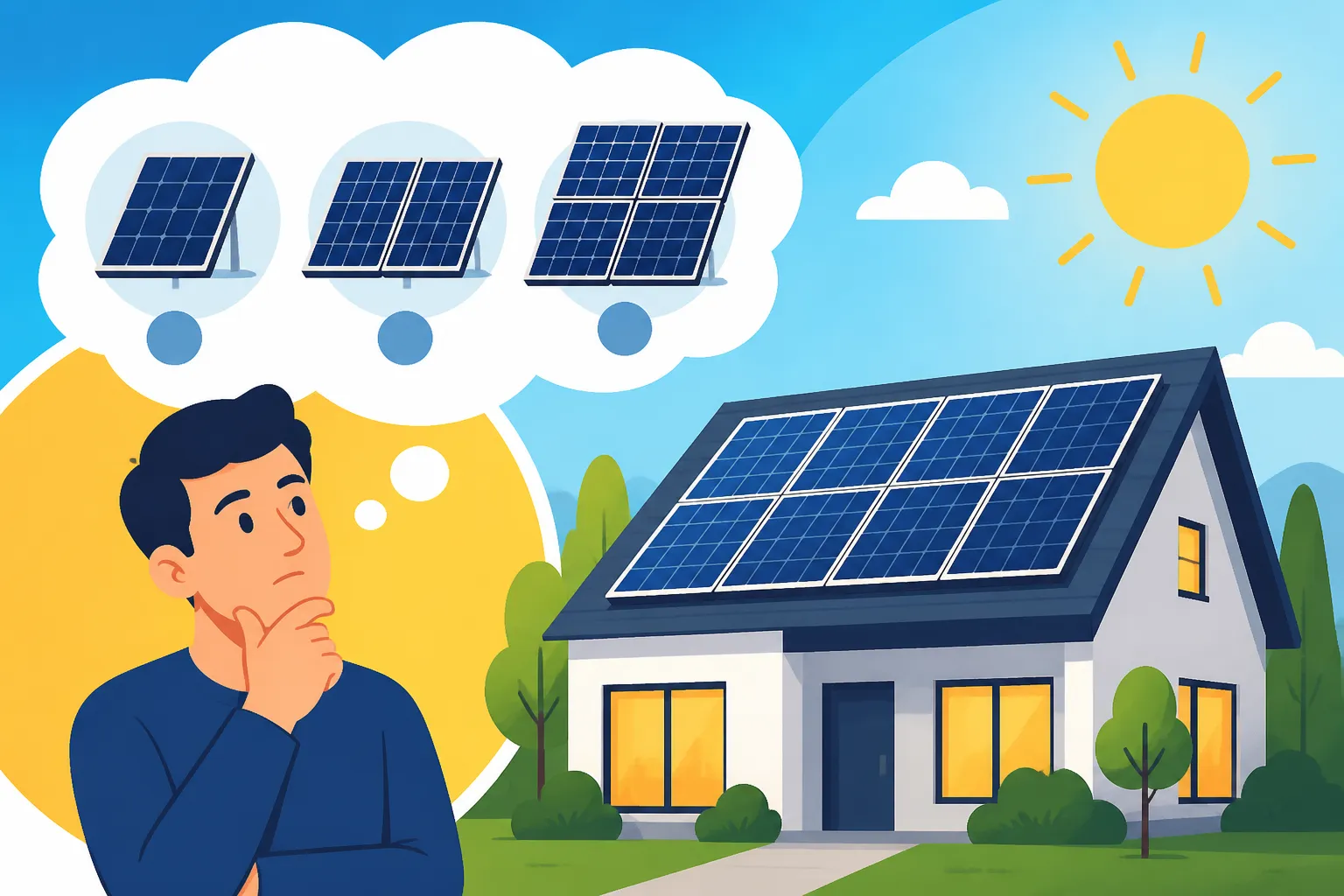
Figuring out exactly how many solar panels you need for your home can feel like trying to solve a complicated puzzle, especially when you’re just starting your solar journey. It's not a one-size-fits-all answer, and many homeowners get frustrated trying to make sense of their electricity bills and various panel specifications. This guide will walk you through all the crucial factors, from your energy consumption to your roof's unique characteristics, helping you understand how to determine the ideal solar system size for your specific situation.
Unraveling the Solar Panel Number Mystery: Key Factors
When you're first dipping your toes into the world of home solar, one of the first questions that pops up is almost always, "How many panels will I need?" It's a fundamental question, but the answer is rarely simple. So many variables come into play that influence the final number, and understanding these from the outset will save you a lot of headache and confusion down the line. We’re talking about everything from how much electricity you actually use to the very roof over your head.
Your Home's Energy Appetite and Usage Patterns
Let’s face it, we all use electricity differently. My neighbor might be charging two electric vehicles and running a pool pump, while I'm a minimalist who works from home and mostly uses a laptop and LED lights. This fundamental difference in lifestyle translates directly into your home's "energy appetite," measured in kilowatt-hours (kWh). Before you can even begin to think about panels, you need to understand how much juice your household consumes on a daily, monthly, and yearly basis. Pulling out those past electricity bills is step one, and honestly, it’s probably the most important one.
Think about your peak usage times, too. Do you blast the AC all summer long in Arizona, or are you more concerned with heating costs in a chilly New England winter? These patterns impact not just the total amount of energy you need to generate but also when you need to generate it. If you're a heavy evening user, for instance, and your utility company has an unfavorable net metering policy (like California's NEM 3.0, which greatly impacts how much you get credited for exporting power), then you might need a larger system or consider adding a battery to store your daytime excess. Understanding these nuances is crucial for designing a system that truly meets your needs and maximizes your savings.
It's also worth noting that your energy usage isn't static. Families grow, appliances get updated, and habits change. If you're planning on getting an electric vehicle in the next few years, adding a hot tub, or expanding your home, these future considerations should absolutely factor into your initial solar system design. A good solar installer will ask you about these plans, but it's important for you to have a clear picture in your mind of what your energy future looks like. This foresight can prevent you from under-sizing your system and needing costly additions down the road, ensuring your investment truly pays off over its lifespan.
The Lay of Your Land: Roof, Shading, and Local Sunlight
Beyond your personal consumption, the physical characteristics of your property play an enormous role in determining your solar panel count. Your roof, for instance, isn't just a shelter; it's a potential power plant. The size, pitch (angle), and orientation of your roof directly affect how many panels can physically fit and how efficiently they can capture sunlight. A south-facing roof in the Northern Hemisphere with a decent pitch is generally considered ideal, as it receives the most direct sunlight throughout the day. East and west-facing roofs are also viable, though they might require more panels to achieve the same energy output because they capture less peak sunlight.
Shading is another significant factor that many homeowners overlook or underestimate. Even a small amount of shade from nearby trees, chimneys, or neighboring buildings can drastically reduce a solar panel's output, especially if you’re using string inverters where the performance of the entire string can be affected by the weakest link. While microinverters or power optimizers can mitigate the impact of partial shading on individual panels, persistent shade will still mean less overall energy production. This might necessitate a larger number of panels to compensate for the reduced efficiency, or perhaps even a ground-mount system if your roof is simply too shaded. It's why a thorough site assessment by an installer is so critical; they'll use tools to map out shading patterns throughout the year. For more information on this, check out our guide on Roof Considerations for Solar Panels.
Lastly, your geographical location and its average "peak sun hours" are paramount. Peak sun hours aren't about how long the sun is in the sky, but rather the equivalent hours per day when the sun's intensity is at its peak (around 1,000 watts per square meter). A home in sunny Phoenix, Arizona, typically experiences more peak sun hours than a home in cloudy Seattle, Washington. This means that a solar panel in Phoenix will produce more electricity daily than the exact same panel in Seattle. Consequently, a home in a less sunny region might need more panels to achieve the same annual energy production as a home in a sunnier climate. This factor is built into the calculations that solar professionals use, but it’s an important concept for you to grasp when reviewing proposals.
Crunching the Numbers: A Step-by-Step Calculation Guide
Alright, now that we've covered the crucial factors that influence your solar panel needs, it’s time to get down to the nitty-gritty: the actual calculation. While your chosen solar installer will handle the precise engineering, understanding the basic methodology empowers you to critically evaluate their proposals and ensure you're getting a system that truly fits your home. This isn't just about math; it's about translating your lifestyle into tangible energy needs.
Deciphering Your Electricity Bill: Kilowatt-Hours (kWh)
Your electricity bill is your golden ticket to understanding your energy consumption. Most bills clearly state your monthly or annual kilowatt-hour (kWh) usage. We recommend gathering at least 12 months' worth of bills to get a comprehensive average, as usage can fluctuate significantly with seasons. For example, you might use a lot more electricity for air conditioning in July than you do in October. Averaging these out gives you the most realistic picture of your baseline needs. If you're struggling to find this information or if your bills are confusing, many utility providers offer online portals where you can track your historical usage.
Once you have your annual kWh consumption, divide that number by 12 to get your average monthly usage. Then, divide the monthly average by 30 (or 365 for annual) to get your average daily kWh usage. This daily number is what we'll use for our rough calculations. For example, if your annual usage is 10,950 kWh, your average daily usage is 30 kWh (10,950 / 365 = 30). This is the target amount of energy your solar system needs to generate each day, on average, to offset your electricity consumption. Many homeowners find it helpful to monitor their energy performance, and you can even find affordable clamp meters or smart plugs on Amazon to measure the actual draw of individual appliances if you want to get super granular. For more on tracking your usage, see our article on How to Monitor Solar Panel Performance.
It's also a good idea to consider any recent changes to your home that might not be reflected in past bills. Did you recently switch to energy-efficient appliances? Or did you just install a new home office with multiple monitors? These changes can subtly shift your energy profile. Conversely, if you're planning to downsize your family or move to a more energy-efficient home, your future needs might decrease. Don't just look backward; think forward about how your life might evolve and adjust your estimated kWh usage accordingly for a more accurate solar solution.
Understanding Solar Panel Specifications: Wattage and Efficiency
Now that we know your energy needs, let’s talk about the panels themselves. Solar panels are rated in watts (W), indicating their power output under ideal conditions. Most residential solar panels today range from 350 to 450 watts, though higher wattage panels are becoming more common. The panel's efficiency, typically between 18% and 23% for residential use, tells you how effectively it converts sunlight into electricity. Higher efficiency panels can produce more power in a smaller footprint, which is great if you have limited roof space. For a deeper dive, read our Solar Panel Wattage Guide (400W, 450W & More).
To estimate how many panels you need, you first need to determine your desired system size in kilowatts (kW). If you use 30 kWh per day and want to cover 100% of your usage, and assuming your location gets about 4-5 "peak sun hours" per day (we'll explain this next), you would need a system that can produce 30 kWh / 4.5 peak sun hours = ~6.67 kW of power. This is a crucial number. If you then choose 400-watt (0.4 kW) panels, you'd divide your total system size by the individual panel wattage: 6.67 kW / 0.4 kW/panel = approximately 17 panels.
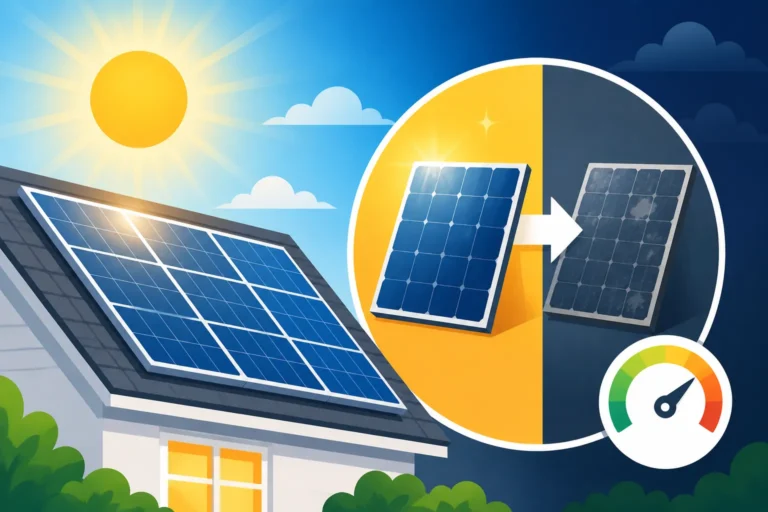
Keep in mind that panel specifications also include degradation rates and warranties. Even the best solar panels slowly lose a tiny bit of efficiency each year. A reputable panel will come with a 25-year performance warranty guaranteeing a certain percentage of its original output (often 85-90%) by year 25. While this factor is usually accounted for in the system design by professional installers, it's good to be aware that your panels won't produce exactly the same amount of power over their entire lifespan. For more on this, check out Solar Panel Efficiency & Degradation Explained.
Factoring in Your Location's "Peak Sun Hours"
This is where your geographic location really comes into play. "Peak sun hours" is a crucial metric, but it’s often misunderstood. It’s not just the number of hours the sun is visible in the sky; rather, it’s the number of hours per day when the intensity of sunlight averages 1,000 watts per square meter. This standardized measurement helps account for varying sun angles, cloud cover, and seasonal changes. For example, a day with 10 hours of sunlight might only have 5 peak sun hours if the sun is weaker in the morning and evening or if there's intermittent cloud cover.
You can find average peak sun hour data for your specific region through resources like the National Renewable Energy Laboratory (NREL) or by consulting with local solar installers. For instance, much of California might see an average of 5-6 peak sun hours, while parts of the Pacific Northwest might only get 3-4. This number directly impacts how much energy each of your panels can produce daily. A 400W panel in an area with 5 peak sun hours can theoretically produce 2 kWh per day (400W * 5 hours = 2000 Wh = 2 kWh), whereas the same panel in an area with 3 peak sun hours would only produce 1.2 kWh. This difference is why a Californian home might need fewer panels than a Michigan home with identical energy consumption.
Understanding your local peak sun hours is vital because it directly influences the size of the system (and thus the number of panels) you'll need to meet your energy demands. If your daily energy consumption is 30 kWh and you're in an area with 4 peak sun hours, your system needs to produce 7.5 kW (30 kWh / 4 hours). If you have 400W panels, that's roughly 19 panels (7.5 kW / 0.4 kW/panel). However, if you're in an area with 5 peak sun hours, the system would only need to produce 6 kW (30 kWh / 5 hours), requiring only 15 panels. This single variable can significantly alter your final panel count and overall Solar Panel Cost by System Size (kW).
Real-World Scenarios: Sizing Your System for Different Households
Calculating the precise number of solar panels can feel very abstract until you see it applied to real-world situations. The truth is, there's no "average home" when it comes to solar. Every household has unique energy demands and physical constraints. Let's look at a few hypothetical scenarios to illustrate how the factors we've discussed translate into actual panel counts. Remember, these are estimates, and your specific situation will always require a detailed assessment.
Compact Homes and Energy-Conscious Lifestyles
Imagine Sarah, who lives in a small, well-insulated 1,200 sq ft home in Austin, Texas. She works remotely, mostly uses energy-efficient appliances, and keeps her AC at a reasonable temperature. Her average daily electricity consumption is around 15 kWh. Austin gets a good amount of sun, let's say an average of 5.5 peak sun hours per day. Sarah is considering high-efficiency 420W solar panels for her system.
To offset her 15 kWh daily usage, her system needs to generate roughly 2.73 kW (15 kWh / 5.5 peak sun hours). With 420W panels (0.42 kW), she would need approximately 6.5 panels (2.73 kW / 0.42 kW per panel). Since you can't install half a panel, she'd likely need 7 panels to fully cover her usage, potentially overproducing slightly, which is often a good thing for net metering credits. A small system like this is relatively affordable, and typically, the Cost of a Single Solar Panel is less impactful on the total system cost than the labor involved.
For a homeowner like Sarah, an initial system of 6-8 panels providing around 2.5 kW to 3.4 kW would likely be perfect. This size system could still fit comfortably on a smaller roof, leaving room for future expansion if she were to add an electric bike or a small outdoor feature. It's a pragmatic approach for those with lower energy demands, ensuring they get sufficient power without over-investing in excess capacity they won't use.
The Average Family Home: Balancing Needs and Budget
Now consider the Miller family, a household of four living in a 2,500 sq ft suburban home in Orlando, Florida. They run their central air conditioning frequently, have a standard suite of appliances, and enjoy streaming services and gaming. Their combined daily electricity usage averages around 35 kWh. Florida is known for its abundant sunshine, so we'll use a conservative estimate of 5 peak sun hours per day, accounting for some summer cloudiness. They're looking at standard 400W panels.
Their required system size to offset 35 kWh daily would be 7 kW (35 kWh / 5 peak sun hours). With 400W panels (0.40 kW), they would need approximately 17.5 panels (7 kW / 0.40 kW per panel). This means an 18-panel system would be a good fit, likely producing around 7.2 kW. This is a common system size for many American families. While the upfront investment for a system this size is more substantial, the long-term savings on their electricity bill in a sunny state like Florida can be very significant.
For the Miller family, a system ranging from 16 to 20 panels (6.4 kW to 8 kW) would be a typical recommendation, providing ample power for their day-to-day needs. Installers will also look at the shape of their roof and potential shading from mature trees in their yard when proposing the layout. This mid-range system is often the sweet spot for many families, balancing comprehensive energy offset with a manageable installation footprint and cost. For more detailed cost breakdowns, you might explore articles like How Much Does a 8 kW Solar System Cost?.
Large Homes, High Consumption, and Future-Proofing
Finally, let's look at the Chen family, who live in a spacious 3,500 sq ft home in San Diego, California. They have two electric vehicles, a heated pool, and a home office for two. Their average daily electricity usage is a hefty 60 kWh. San Diego also boasts excellent sunshine, with about 5.8 peak sun hours. They are interested in high-performance 450W panels.
To cover their 60 kWh daily consumption, their system needs to generate approximately 10.34 kW (60 kWh / 5.8 peak sun hours). With 450W panels (0.45 kW), they would require about 23 panels (10.34 kW / 0.45 kW per panel). This indicates a system of 23-24 panels, yielding roughly 10.35 kW to 10.8 kW, would be appropriate. This is a significantly larger system, often referred to as a "whole-house" solar solution.
The Chen family's situation highlights the importance of future-proofing. They already have high consumption, but what if they add a third EV, or their kids grow up and use more energy? A good installer would discuss these possibilities. For larger systems, maximizing every inch of available roof space and choosing the highest efficiency panels becomes even more critical. In California, with the changes to net metering (NEM 3.0), the Chens might also seriously consider pairing their large system with a robust battery storage solution to maximize self-consumption and avoid high peak-time utility rates. You can learn more about larger systems by checking out How Much Does a 10 kW Solar System Cost?.
Beyond the Panels: Integrating Batteries and Planning Ahead
While the number of solar panels is paramount, a truly comprehensive solar solution often involves more than just panels on your roof. The discussion about how many panels you need often expands to include energy storage options and the foresight to plan for what your energy demands might look like years down the road. This forward-thinking approach ensures your investment remains valuable and effective over its long lifespan.
The Strategic Advantage of Solar Batteries
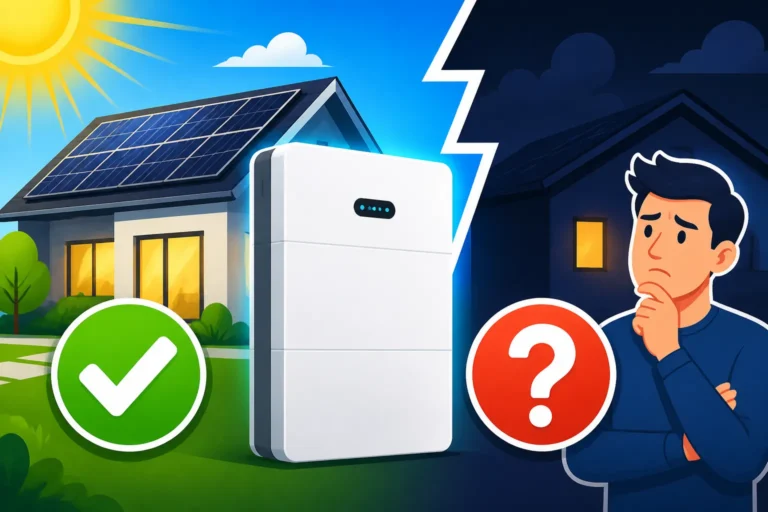
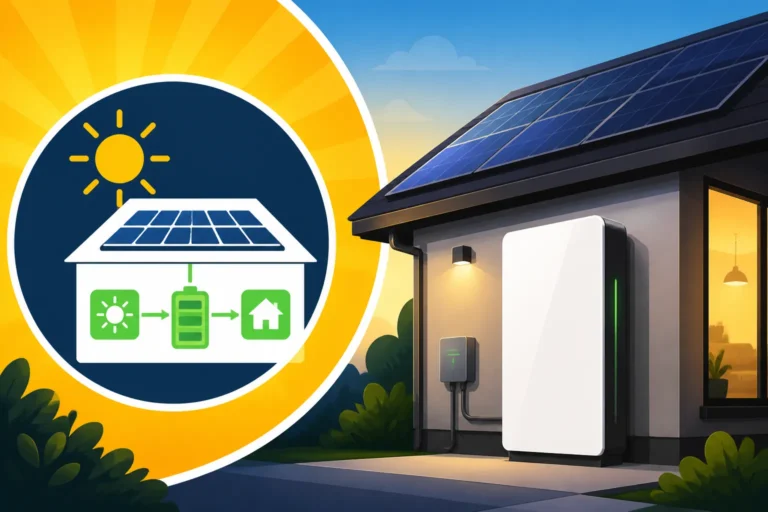
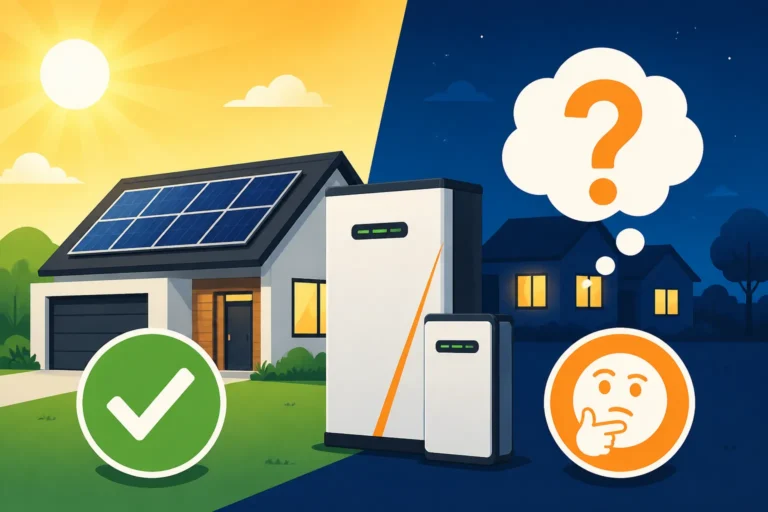
For many homeowners, especially in areas with less favorable net metering policies or frequent power outages, adding a solar battery can dramatically change the calculus of how many panels you need. A battery allows you to store excess electricity generated during the day for use later, reducing your reliance on the grid during evening peak rates or during an outage. In situations where your utility company doesn't offer full retail net metering — or even charges high "export charges" for sending power back to the grid — generating more power than you can immediately use or store becomes less financially appealing.
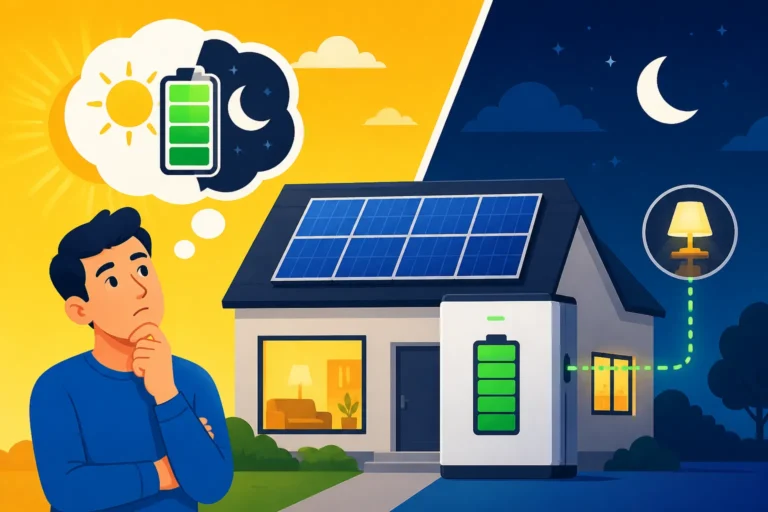
With a battery like a Tesla Powerwall or Enphase IQ Battery, you might actually optimize your system differently. Instead of sizing solely to offset 100% of your annual consumption, you might prioritize generating enough power to charge your battery daily and cover your evening usage, even if it means slightly less overall annual generation. This approach can be particularly beneficial in states where policies like California's NEM 3.0 make it harder to get good value for exported solar energy. The battery essentially becomes your personal utility, giving you greater energy independence and resilience. For a comprehensive look into storage, you might want to read our article: Do I Need a Battery With Solar?.
Furthermore, batteries provide invaluable backup power during grid outages. While solar panels typically shut down when the grid goes down (for the safety of utility workers), a system with battery backup can automatically disconnect from the grid and continue to power essential loads in your home. This capability often influences how people size their systems, as they might choose a slightly larger panel array not just for daily consumption but also to ensure robust battery charging capabilities to keep their home running smoothly during an emergency. This peace of mind is a significant driver for many considering solar-plus-storage solutions.
Envisioning Tomorrow: Future Energy Needs and System Scalability
One of the biggest mistakes homeowners make when going solar is only sizing their system for today's needs. Our lives are dynamic! Kids grow up, new technologies emerge, and our energy habits evolve. Are you thinking about purchasing an electric vehicle (EV) in the next five years? Do you plan to add a hot tub or a new addition to your home? Each of these changes will significantly increase your electricity consumption, and you want your solar system to be able to keep up. Neglecting future needs means you might have to expand your system later, which can be more complex and expensive than doing it right the first time.
When discussing your solar needs with installers, be open and honest about your future plans. A forward-thinking design can incorporate a slightly larger system than your current consumption warrants, or at least ensure that your current inverter and electrical infrastructure can accommodate additional panels in the future. This concept is known as "system scalability." For example, an installer might recommend installing an inverter that can handle more wattage than your initial panel array, making it easier to simply add more panels later without needing a costly inverter upgrade. This foresight directly impacts What Affects the Cost of Solar Panels? and your overall long-term savings.
Consider the potential for increased energy prices too. While your solar system essentially locks in your electricity costs, the rates from your utility company are likely to continue rising. By slightly oversizing your system now, you create a buffer against these future rate hikes and ensure you remain completely covered, even as utility prices climb. It's a strategic move for long-term financial security and energy independence. Planning ahead, even if it means a slightly larger initial investment, can lead to greater savings and fewer headaches down the road. Some homeowners even purchase small, off-grid DIY solar kits from Amazon for sheds or RVs to get a feel for the technology, though residential solar is a different beast entirely.
Navigating Installer Quotes and Expert Recommendations
So, you’ve done your homework, you have a rough idea of your energy consumption and the factors at play, but now what? The next step is to engage with solar installers, and this is where things can get a little overwhelming. Each company might present a different system size, panel count, and overall cost. It's easy to feel lost in the sea of jargon and sales pitches. However, with the knowledge you've gained, you’re in a much stronger position to ask the right questions and evaluate proposals.
Comparing Proposals: What Reputable Installers Consider
When you get quotes from different solar companies, pay close attention to the proposed system size in kilowatts (kW) and the corresponding number of panels. A reputable installer won't just tell you how many panels you need; they'll explain why they're recommending that specific size. Their proposal should clearly outline your estimated annual energy production, often broken down by month, and compare it to your historical energy consumption. They'll factor in your roof's orientation, pitch, and any shading issues, using specialized software to model production throughout the year.
The best installers also consider the quality and type of equipment. Are they proposing monocrystalline panels from a Tier 1 manufacturer like Qcells or REC, known for their efficiency and durability? Or are they suggesting a more budget-friendly option? The type of inverter (string, microinverter, or power optimizer) also plays a role in overall system efficiency and, consequently, the number of panels required. Microinverters from companies like Enphase, for example, optimize each panel individually, which can sometimes allow for a slightly smaller overall system in shaded conditions compared to a traditional string inverter setup. For a deeper dive into panel choices, check out our guide to the Best Solar Panels of 2026.
Don't be afraid to ask for a breakdown of their calculations. They should be able to show you their assessment of your peak sun hours, how they arrived at your estimated daily usage, and the expected production curve of the proposed system. Transparency is key. If an installer's proposal seems significantly different from others, or if they can't clearly explain their reasoning, that's a sign to proceed with caution. The entire process, from initial contact to final installation, typically involves several stages, and knowing what to expect can help, so review our Solar Installation Timeline: What to Expect.
Spotting Red Flags and Making Informed Decisions
Unfortunately, not all solar companies operate with the same level of integrity or expertise. When you're sifting through quotes and trying to decide, there are a few red flags to watch out for. Be wary of installers who push for an unreasonably large system that far exceeds your historical or projected energy needs without a clear, justifiable explanation. While future-proofing is good, unnecessary oversizing just adds to your upfront cost and may not provide proportional returns, especially if your net metering credits are low. Conversely, a system that seems too small to cover your usage might leave you still heavily reliant on the utility grid, defeating the purpose of going solar.
Another red flag is a lack of detailed site assessment. If an installer gives you a quote over the phone or after a very brief glance at your roof from the ground, without using satellite imagery or sending someone for a thorough inspection, they might be cutting corners. A proper assessment includes analyzing shading, roof condition, structural integrity, and electrical panel capacity. Skipping these steps can lead to a system that underperforms or even requires costly upgrades later. This is why it’s always recommended to get multiple quotes, compare them side-by-side, and ask probing questions about their methodology and equipment choices.
Ultimately, the goal is to choose an installer who offers a system size that is accurately tailored to your home, utilizes quality components, and is backed by solid warranties. Don’t be swayed by high-pressure sales tactics or promises that sound too good to be true. Take your time, compare proposals, and choose a company that makes you feel confident and informed. After all, this is a significant investment in your home and your energy future. Our guide on How to Choose a Solar Installer offers more advice on vetting companies.
Understanding System Sizing and Panel Counts
The exact number of panels will vary based on your specific needs, the panel wattage chosen, and your local conditions. Here’s a general guide to help visualize common system sizes:
| System Size (kW) | Approximate Panels (400W/panel) | Average Daily kWh Offset | Best For | Typical Home Size |
|---|---|---|---|---|
| 4 kW | 10 | 16-20 kWh | Small homes, low energy users | 1,000-1,500 sq ft |
| 6 kW | 15 | 24-30 kWh | Average homes, moderate users | 1,500-2,500 sq ft |
| 8 kW | 20 | 32-40 kWh | Larger homes, higher users | 2,000-3,000 sq ft |
| 10 kW | 25 | 40-50 kWh | Very large homes, high consumption (EVs, pools) | 2,500+ sq ft |
| 12+ kW | 30+ | 48+ kWh | High-demand homes, multiple EVs, significant backup needs | 3,000+ sq ft |
Note: Panel count is an estimate based on 400W panels. Actual numbers will vary based on individual panel wattage, efficiency, and specific site conditions (e.g., peak sun hours, shading).
Disclaimer
The information provided in this article is for general informational purposes only and does not constitute professional advice. While we strive to provide accurate and up-to-date content, solar energy system design and financial incentives are complex and constantly evolving. We strongly recommend consulting with certified solar professionals and financial advisors to assess your specific needs and eligibility for incentives.