Do I Really Need a Solar Battery?
It's a question on a lot of homeowners' minds these days: you've heard all the buzz about solar panels, but then comes the discussion of adding a battery, and suddenly, the cost starts to look a lot higher. You might be wondering if this extra expense is truly necessary or just a luxury. This guide is here to break down the real-world scenarios where a solar battery makes sense, and just as importantly, where you might be perfectly fine without one, helping you navigate this often-confusing decision.
Understanding Your Energy Needs and Solar Setup
Before you can decide if a solar battery is right for your home, it's crucial to understand how your current electricity works and what a standard grid-tied solar system does – and doesn't do. Many people assume that once they have solar panels, they'll be completely independent from the utility company, especially during a power outage. That's a common misconception that we need to clear up right away.
Grid-Tied Solar Without a Battery
Most residential solar panel systems installed today are what we call "grid-tied." This means your solar panels are connected directly to your home's electrical system, and also to the larger utility grid. When your panels generate more electricity than your home is using at that moment, the excess power is sent back to the grid. In return, your utility company usually credits your account for that power, often through a system called net metering. This is fantastic for reducing your monthly electricity bill, as you're effectively selling your excess power back to the grid. For a deeper dive into how this works, you can read our guide on Net Metering Explained: How It Works by State
However, there's a critical point here: for safety reasons, grid-tied solar systems without a battery are designed to shut down automatically when the utility grid goes down. Imagine if your panels were still pushing electricity onto the lines while utility workers were trying to repair them – that would be incredibly dangerous for them. So, even if the sun is shining brightly, if your neighborhood experiences a blackout, your grid-tied solar panels will stop producing power for your home. You'll be without electricity just like your neighbors, relying solely on the grid for power, which is exactly what a solar system without a battery can't do during an outage.
How Net Metering Policies Impact the Value of Excess Energy
The financial benefit of sending excess solar power back to the grid largely depends on your state's and utility provider's net metering policies. In some areas, like those still offering "full retail net metering," you get credited at the same rate you pay for electricity. This means every kilowatt-hour (kWh) you send back effectively offsets a kWh you would otherwise buy from the utility. This creates a powerful incentive to oversize your solar system slightly, as you can bank credits or even get paid for excess generation in some rare cases.
But in other regions, policies have shifted. California's NEM 3.0, now called Net Billing, significantly reduces the credit homeowners receive for exported electricity, pushing many to consider a battery to store that power instead of selling it for less. You can learn more about What Is NEM 3.0 (California Net Billing)?. Similarly, states like Texas, while having a booming solar market, often lack statewide net metering mandates, leaving it up to individual utilities to offer solar buyback programs, which can vary wildly and often offer lower rates than retail electricity. For those in Texas, understanding Does Texas Have Net Metering?, and exploring alternatives like specific utility solar buyback programs, becomes critical in determining the value of a battery. When export rates are low, storing your own power for later use becomes a much more attractive proposition.
When a Solar Battery Becomes Essential
There are definite situations where adding a solar battery storage system moves from a "nice-to-have" to a "must-have" or at least a "highly recommended" component of your home energy setup. It all boils down to your priorities: Do you want uninterrupted power? Do you want to maximize your financial savings? Or perhaps you dream of complete energy independence?
For Reliable Backup Power During Outages
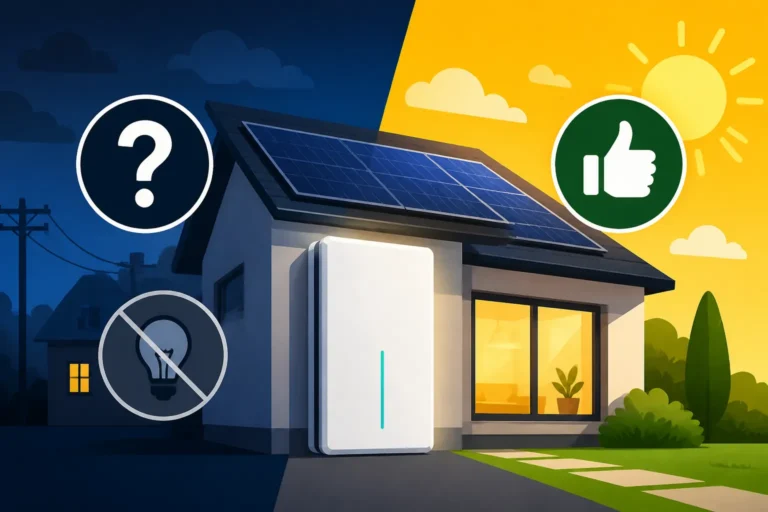
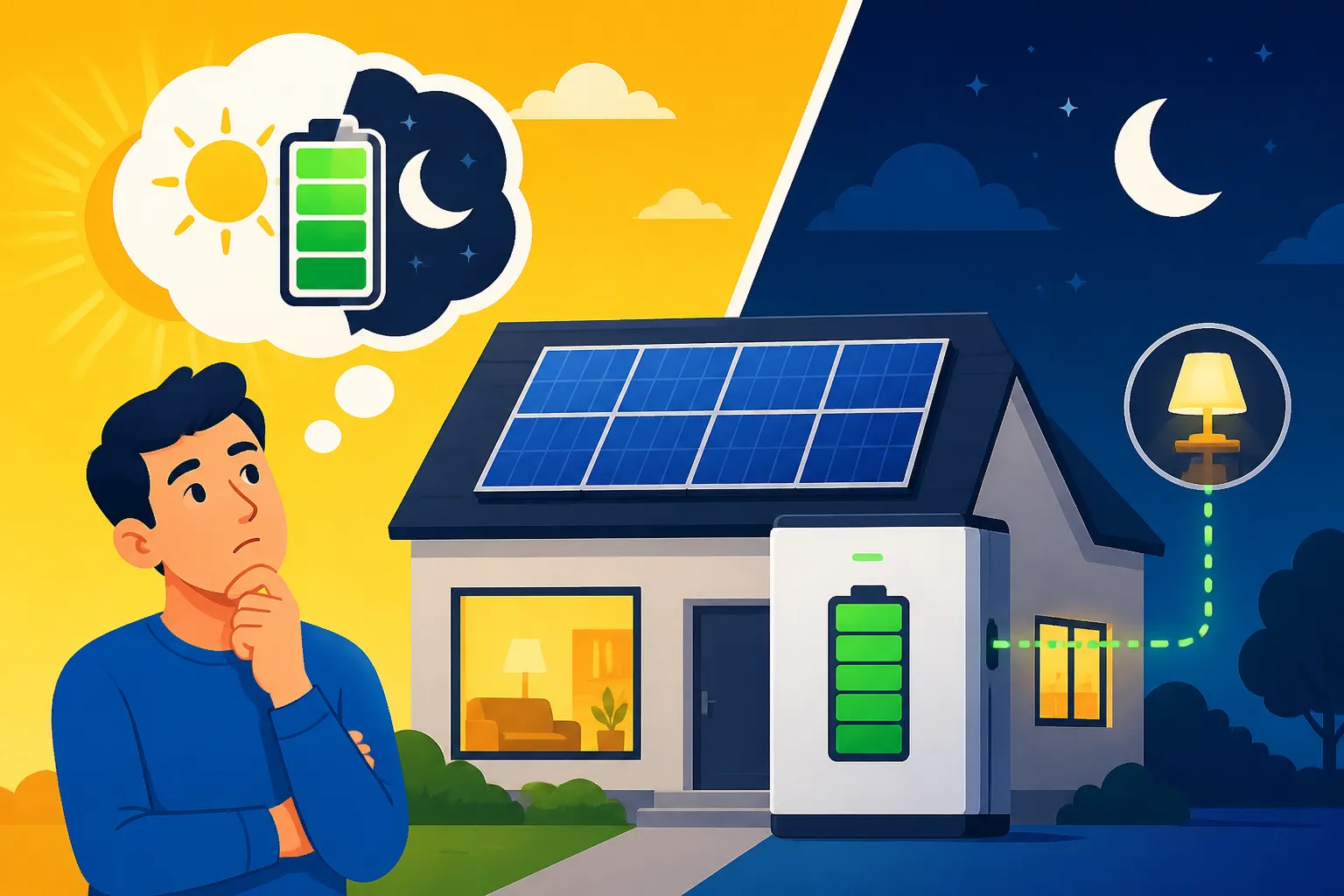
Let's be real: losing power is a massive headache. Whether it's a few hours, a full day, or longer after a severe storm, the inconvenience is undeniable. No lights, no refrigeration, no internet, no charging your devices – it disrupts everything. This is where a solar battery truly shines. When the grid goes down, a solar battery, paired with an appropriate inverter, automatically disconnects your home from the utility grid and seamlessly takes over, providing power to your designated critical loads.
Imagine a scenario in Florida, where hurricanes can cause widespread outages. Having a Tesla Powerwall or an Enphase IQ Battery can mean the difference between spoiled food and a working refrigerator, between a dark house and essential lighting, or between a bored family and charging phones. These batteries store the excess energy your panels produce during the day, and then release it to power your home when the sun isn't shining or the grid is down. They are designed to keep your most important appliances running, offering incredible peace of mind when the unexpected happens. You can learn more about how crucial these systems are for resilience in our guide on Do Solar Panels Work During a Power Outage?.
Maximizing Savings with Time-of-Use (TOU) Rates
Many utility companies are moving towards Time-of-Use (TOU) billing structures, where the price of electricity changes throughout the day. Typically, power is cheapest during off-peak hours (late night, early morning) and most expensive during peak hours (late afternoon/early evening when everyone comes home and turns on AC, cooks dinner, etc.). If you're on a TOU plan, this is where a solar battery can be a game-changer for your wallet.
With a battery, you can program your system to store the solar energy your panels produce during the day. Then, instead of drawing expensive power from the grid during those peak evening hours, your home can run on the stored battery power. Once the peak rates subside, or if your battery depletes, your home can then switch back to drawing cheaper power from the grid. This strategy, known as "arbitrage" or "peak shaving," effectively allows you to "buy low" (from your panels) and "sell high" (by avoiding high peak rates). Over time, these daily savings can significantly improve your Solar Panel Payback Period Explained.
Achieving Greater Energy Independence
For some homeowners, the desire to reduce reliance on the utility company, or even to eventually go completely off-grid, is a powerful motivator. While going fully off-grid is a much more complex and costly endeavor (and requires a significantly larger battery bank and solar array), adding a battery is a big step towards greater energy independence.
Even if you remain grid-tied, a battery system allows you to self-consume more of the power your panels generate. Instead of sending excess power to the grid when you're not home, only to buy it back later at potentially higher rates, you store it. This means you're using your own clean energy for a greater percentage of your daily needs. This sense of self-sufficiency resonates deeply with many, offering a feeling of control over their energy future, rather than being entirely beholden to utility rate hikes and grid instability.
When You Might Not Need a Solar Battery
It’s just as important to understand when a solar battery might not be the best investment for your specific situation. Solar batteries come with a significant upfront cost, and for some homeowners, the added benefits simply don't justify that expense.
If You Have Favorable Net Metering
If your utility company offers a strong net metering policy – particularly one that credits you at the full retail rate for every kilowatt-hour you send back to the grid – a battery might not be necessary for optimizing financial savings. In these ideal scenarios, the grid essentially acts as your "virtual battery."
Here’s how it works: when your solar panels produce more electricity than you're using, that excess energy goes onto the grid, and your meter spins backward (or your utility credits your account). Then, when your panels aren't producing (like at night or on cloudy days), you draw power from the grid, and those credits offset your usage. It's a dollar-for-dollar exchange, making the grid a very efficient and cost-effective storage solution. Why pay thousands for a physical battery if your utility is already giving you full credit for your exported power? The financial return on a battery in such an environment can be hard to justify, especially given the current Solar Panel Cost Per Watt Explained.
Your Budget is Tight and Focus is on Initial Savings
Let's be honest, solar power is an investment. While the long-term savings are compelling, the initial cost can be a hurdle for many. A solar battery adds a substantial amount to the overall price tag of a solar system. For example, while a typical 6 kW solar system might cost around $15,000 to $20,000 before incentives, adding a popular battery like a Tesla Powerwall or an Enphase IQ Battery could easily increase that cost by another $10,000 to $15,000, depending on capacity and installation complexity.
If your primary goal is to get into solar to reduce your monthly electricity bill as quickly and affordably as possible, and you're not particularly worried about power outages or extreme energy independence, then skipping the battery initially might be the smartest move. Many homeowners choose to install a "solar-ready" system, meaning their inverter and electrical panel are set up to easily add a battery down the road if their budget allows or if utility policies change. This approach allows them to start saving on electricity immediately without the full battery investment upfront. You can always monitor battery prices and availability on sites like Amazon for smaller accessories or even research educational materials, but for a full home battery system, a dedicated installer is key.
Infrequent Power Outages in Your Area
Consider your local grid's reliability. Do you live in an area with extremely stable power, where outages are rare, short-lived, and almost unheard of? If your power only goes out once every few years for an hour or two, the peace of mind offered by a battery might not justify its substantial cost.
Think about the average number of hours your power is out annually. If it's minimal, say less than 10-20 hours a year, then the return on investment for an expensive backup battery might simply not be there. For infrequent outages, a portable generator might be a more cost-effective solution, especially if you only need to power a few critical items. It's a trade-off between the cost of the battery versus the actual inconvenience and financial loss incurred during the rare power interruption.
Making the Decision: Is a Solar Battery Right for You?
The choice to add a solar battery is a personal one, influenced by a unique combination of factors specific to your home, location, and priorities. There's no one-size-fits-all answer, but by systematically evaluating your situation, you can make an informed decision that you'll be happy with for years to come.
Evaluating Your Specific Needs and Local Policies
Start by honestly assessing your reasons for considering solar in the first place. Is it purely financial savings? Is it environmental impact? Or is it a deep-seated desire for resilience and energy independence? Your primary motivation will heavily weigh on the battery decision. If backup power is non-negotiable for you, especially in regions prone to wildfires or severe weather, then a battery moves much higher up the priority list.
Next, dive deep into your local utility's policies. As we've discussed, net metering rates, time-of-use charges, and even potential grid service charges can drastically alter the financial equation. Some states, like Massachusetts with its SMART Program or New York with NY-Sun, offer specific incentives for adding storage, which can help offset the cost. Be sure to check for State Solar Incentives: Complete 2026 Guide. If your utility's net metering program is being phased out or offers very low compensation for exported power, a battery becomes much more appealing as a way to maximize your self-consumption and savings.
Consider your electricity usage patterns. Do you use most of your power in the evening? If so, a battery can help you store daytime solar production to offset expensive evening grid usage. Are you thinking about an electric vehicle down the line? Future energy needs, like charging an EV, might also push you towards adding battery storage sooner rather than later.
Cost-Benefit Analysis and Long-Term Value
The upfront cost of a solar-plus-battery system is undeniably higher than solar alone. When looking at the overall How Much Do Solar Panels Cost? 2026 Guide, understand that the battery adds a significant chunk. It’s crucial to perform a detailed cost-benefit analysis. Factor in the battery's lifespan, its warranty (typically 10-15 years for most major brands like Enphase or FranklinWH), and how much you anticipate saving from avoided peak charges or preventing food spoilage during outages. Remember, battery technology is constantly improving, leading to options like the Best Solar Batteries of 2026, which offer better performance and longer lifespans.
Also, consider the non-monetary value. What is the value of peace of mind during a blackout? What is the satisfaction of knowing you're largely powered by your own stored clean energy? These "soft" benefits are hard to quantify in dollars and cents but are very real to many homeowners. While the federal solar tax credit primarily benefits solar installations, there are often specific incentives for batteries, so it's worth exploring if Solar Battery Incentives in 2026, apply in your area. Without robust net metering, adding a battery to a large system could become more common, influencing the total Solar Plus Battery Cost.
Future-Proofing Your Home Energy System
Even if a battery isn't a top priority for you today, it's wise to think about future-proofing your solar installation. As utility rates continue to rise and grid stability becomes more uncertain in various regions due to climate change and aging infrastructure, the value of home energy storage is likely to increase.
Many solar installers offer "battery-ready" systems. This means they install an inverter that is capable of integrating a battery later on without needing to replace the entire inverter unit, or they ensure your electrical panel has the capacity for a future battery hookup. This keeps your options open. While you might not need a battery today, utility policies could change, or you might find yourself living in an area with more frequent outages in the future. Having the infrastructure in place makes adding storage a much simpler and less expensive upgrade down the road. Researching different inverter types, like those from Enphase vs SolarEdge: Which Inverter Is Better?, can help you understand battery compatibility options from the start.
| Scenario | Is a Solar Battery Recommended? | Key Considerations |
|---|---|---|
| Frequent Power Outages | Strongly Recommended | Provides essential backup power for critical loads; peace of mind during grid failures. |
| High Time-of-Use (TOU) Rates | Highly Recommended | Enables self-consumption of solar energy during expensive peak hours, maximizing financial savings. |
| Poor Net Metering Policies | Highly Recommended | Reduces reliance on selling excess power back to the grid for low compensation; stores energy for later use. |
| Off-Grid Living | Essential | Required to store energy for nighttime and cloudy days, as there is no utility grid connection. |
| Full Retail Net Metering | Optional (Lower Priority) | Grid acts as a "virtual battery"; financial return on a physical battery is less immediate unless backup is a priority. |
| Rare Power Outages | Optional (Lower Priority) | Cost of battery may not justify the infrequent need for backup power; a generator might be a more cost-effective alternative for occasional use. |
| Tight Budget | Optional (Consider Later) | Significant upfront cost; consider a "battery-ready" system to allow for future upgrade when budget permits. |
| Desire for Energy Independence | Recommended | Increases self-sufficiency and reduces reliance on the utility company, even if remaining grid-tied. |
In conclusion, a solar battery isn't always a requirement for a successful home solar installation. For many, a grid-tied system with strong net metering is perfectly sufficient and delivers significant savings. However, if you face frequent power outages, live with unfavorable net metering or high time-of-use rates, or simply prioritize energy independence and resilience, then a solar battery is likely a worthwhile and increasingly essential investment for your home. It's about finding the right balance for your specific lifestyle and financial goals.
Disclaimer
Please remember that the information provided in this guide is for educational purposes only and should not be considered financial or professional advice. Energy policies, incentives, and product availability can change rapidly. Always consult with certified solar professionals and financial advisors to determine the best solution for your unique situation.