Best Solar Panels of 2026
Choosing the right solar panels for your home can feel like an overwhelming task, especially with so many brands and technical specifications out there. It’s easy to get lost in the jargon of watts, efficiency, and degradation rates, leaving you wondering if you're truly making the best long-term investment for your family and your energy needs. This guide is designed to cut through the noise, providing a realistic look at the best solar panels available, helping you understand what truly matters and how to make an informed decision for your unique situation.
Understanding What Makes a "Best" Solar Panel
When you start looking into solar panels, it's easy to get caught up in the marketing hype. Every company claims to have the "best" panels, but what does that actually mean for a homeowner like you? It's not just about the highest number on a spec sheet; it's about a combination of factors that ensure reliability, long-term savings, and performance tailored to your specific environment. Let's break down the key characteristics that define truly top-tier solar panels in today's market.
Efficiency Ratings: More Power from Less Space
Solar panel efficiency is one of those numbers that gets thrown around a lot, and for good reason. Simply put, it measures how well a solar panel converts sunlight into usable electricity. A higher efficiency rating means the panel can generate more power from the same amount of sunlight hitting its surface. For many homeowners, especially those with limited roof space, efficiency is paramount. If you have a smaller roof, or if you want to maximize your energy production without covering every inch of your property, choosing high-efficiency panels can make a significant difference.
Think about it this way: if you have a tight spot for your solar array, a panel with 22% efficiency will produce more kilowatt-hours than a 19% efficient panel of the exact same physical size. This translates to needing fewer panels overall to meet your energy goals, which can save on installation costs and preserve the aesthetics of your home. It's not always about chasing the absolute highest number, but understanding that for certain homes and situations, those extra percentage points really count. For a deeper dive into how these numbers impact your system, check out our guide on Solar Panel Efficiency & Degradation Explained.
Temperature Coefficient: Performance in the Heat
Here's a factor many people overlook until they're living with their system: how well do solar panels perform when it's scorching hot outside? It might seem counterintuitive, but solar panels actually become less efficient as their temperature increases. This is where the "temperature coefficient" comes into play. It tells you how much a panel's power output will decrease for every degree Celsius rise above a standard test temperature (typically 25°C or 77°F). A lower (closer to zero or even negative) temperature coefficient is better, indicating that the panel handles heat more gracefully.
If you live in a region like Arizona, Texas, or Florida, where summer temperatures regularly soar, a panel with an excellent temperature coefficient can make a noticeable difference in your actual energy production during peak demand. While a panel might be rated at 400 watts under ideal lab conditions, its real-world output on a 100°F roof will be lower. Panels with superior temperature coefficients, often found in brands known for their high-performance cells, will maintain a higher percentage of their rated power in those demanding conditions. This means more consistent energy output and better savings when you need them most.
Durability and Build Quality: Withstanding the Elements
Your solar panels are going to spend decades on your roof, exposed to everything Mother Nature can throw at them: hail, heavy snow, high winds, extreme heat, and constant UV radiation. This is why durability and build quality are absolutely non-negotiable. The "best" solar panels aren't just efficient; they're built like tanks. Manufacturers achieve this through rigorous testing and using high-quality materials for everything from the solar cells themselves to the aluminum frames and tempered glass.
Look for panels that boast strong resistance to physical impacts, often measured by hail ratings, and robust frames designed to resist warping and corrosion. The connectors and wiring also need to be top-notch to prevent issues down the line. A panel might perform beautifully in lab conditions, but if its construction isn't robust, you could face issues like micro-cracks, moisture intrusion, or frame failures years later. Investing in panels from manufacturers known for their stringent quality control and superior materials can save you a world of headaches and ensure your system performs optimally for its entire lifespan.
Top Solar Panel Brands to Consider in 2026
Navigating the landscape of solar panel manufacturers can be a dizzying experience, with new players emerging and established ones continuously innovating. Several brands consistently stand out, offering a blend of cutting-edge technology, proven reliability, and robust warranties. When we talk about the "best," it’s often a balance of premium performance, affordability, and specific features that align with diverse homeowner needs.
Premium Performers: Maxeon and REC Solar
When uncompromising performance and long-term reliability are at the top of your list, brands like Maxeon (formerly SunPower) and REC Solar consistently lead the pack. These companies have invested heavily in research and development, resulting in panels that often boast the highest efficiency ratings and superior durability on the market.
Maxeon panels, for instance, are renowned for their unique cell design that eliminates busbars on the front of the cell, making them less susceptible to micro-cracks and power loss over time. This design allows for exceptional efficiency, often exceeding 22%, meaning you can generate more power from a smaller footprint – a huge advantage for homes with limited roof space or those aiming for maximum output. Their panels also come with some of the industry's strongest warranties, reflecting their confidence in product longevity. If you're looking for an in-depth look, our article Maxeon (SunPower) Solar Panel Review offers more details.
REC Solar, a Norwegian company, is another titan in the premium segment. Their Alpha series panels, featuring Heterojunction Technology (HJT), combine the best aspects of different silicon types to achieve very high efficiencies and an impressive temperature coefficient, meaning they perform exceptionally well even on hot days. REC panels are known for their consistent quality and are often a preferred choice for installers who prioritize system resilience. Both Maxeon and REC panels represent a significant upfront investment, but for many homeowners, their superior performance, extended lifespan, and peace of mind justify the cost, leading to greater long-term savings.
Value and Reliability: Qcells and Jinko Solar
For homeowners seeking an excellent balance of performance, reliability, and affordability, Qcells and Jinko Solar are consistently strong contenders. These brands have carved out a substantial market share by offering high-quality panels that deliver robust energy production without the premium price tag of the absolute top-tier options. They are often the sweet spot for many residential installations, providing a fantastic return on investment.
Qcells, with its strong presence in the North American market, is known for its durable, high-performance monocrystalline panels. Their Q.PEAK DUO series, for example, utilizes half-cut cell technology, which helps reduce resistive losses within the panel and improves performance in shaded conditions. Qcells panels typically offer efficiencies in the 20-21% range, making them highly competitive. They also have a strong manufacturing footprint, including facilities in the U.S., which can be a draw for buyers interested in domestic production. Our article on Qcells Solar Panel Review delves deeper into their offerings.
Jinko Solar is another global giant, consistently ranking among the top manufacturers by shipment volume. They offer a wide range of panels, including their Tiger Neo series, which uses N-type TOPCon technology to achieve high efficiency and impressive performance in various climates. Jinko panels are known for their strong performance-to-cost ratio, making them a popular choice for value-conscious homeowners. While perhaps not always having the absolute highest efficiency numbers in the industry, their reliability, comprehensive warranties, and widespread availability make them a safe and smart choice for many. For a comparison, consider checking out REC vs Qcells Solar Panels. You can also learn more about their specific models in our Jinko Solar Panel Review.
American-Made Excellence: Silfab Solar
For those who prioritize supporting domestic manufacturing or simply appreciate the stringent quality control often associated with U.S.-based production, Silfab Solar is a standout choice. This North American manufacturer has quietly built a reputation for producing high-quality, reliable solar panels right here on the continent. Their focus is squarely on the residential and commercial markets in North America, ensuring their products are tailored to the specific needs and environmental conditions of these regions.
Silfab panels, often manufactured in Washington and Canada, are known for their robust construction and impressive power output. They use advanced cell technology to achieve competitive efficiencies, typically in the 20-21% range, which is perfectly adequate for most home solar systems. What truly sets them apart, beyond their "Made in North America" label, is their meticulous attention to quality and durability. They subject their panels to some of the most rigorous testing in the industry, often exceeding international standards, to ensure long-term performance and reliability. This commitment means less chance of issues down the road.
Choosing Silfab means you're investing in a panel designed and built to withstand local climates, backed by a company with responsive customer service based nearby. For many, the peace of mind that comes with knowing their panels are made with such care and quality control, without having to pay the absolute highest premium, makes Silfab an incredibly attractive option. Learn more about their specific features and benefits in our Silfab Solar Panel Review.
Decoding Solar Panel Specifications and Warranties
Understanding the technical jargon and deciphering warranty terms can feel like reading a foreign language. But truly, these details are crucial for predicting your system's long-term performance and protecting your investment. Overlooking them can lead to unexpected costs or disappointment years down the line. Let’s break down what you absolutely need to know.
Product Warranty vs. Performance Warranty
When you look at a solar panel’s warranty, you'll typically see two distinct types: a product warranty and a performance warranty. It's vital to understand the difference, as they cover very different aspects of your solar investment.
The product warranty (sometimes called the materials or workmanship warranty) covers the physical panel itself against manufacturing defects, material failures, and issues with the panel's construction. This is similar to a warranty you’d get on any other appliance. If a panel delaminates, its frame corrodes prematurely, or there’s an electrical connection issue due to a manufacturing fault, the product warranty is what protects you. These warranties typically range from 10 to 15 years, but leading brands like Maxeon and REC offer impressive 25-year product warranties, showcasing their confidence in their build quality. A longer product warranty generally signals a more robustly built panel.
The performance warranty (or power output warranty) is unique to solar panels. It guarantees that the panel will produce a certain percentage of its original rated power output over a specified period, usually 25 to 30 years. Solar panels naturally degrade over time, meaning their ability to produce power slowly diminishes. The performance warranty assures you that this degradation won't exceed a certain rate. For example, a common performance warranty might state that the panel will produce at least 90% of its original power after 10 years and 80% after 25 years. Top-tier panels often guarantee a higher output, sometimes 92% or more after 25 years. This warranty is crucial because it directly impacts how much electricity your system will generate over its lifespan and, consequently, your long-term savings. Our comprehensive guide on Solar Panel Warranties Explained can give you even more details.
Understanding Degradation Rates
As we touched on, solar panels don't produce power at 100% efficiency forever. Their ability to convert sunlight into electricity gradually decreases over time, a process known as degradation. The rate at which this happens is called the degradation rate, and it’s typically expressed as a percentage loss per year. Understanding this rate is essential for projecting your system’s output and financial savings years into the future.
Most conventional solar panels have an average degradation rate of about 0.5% to 0.7% per year. This means after 10 years, a panel might be producing 93-95% of its original power, and after 25 years, around 80-87%. However, premium panels, especially those using advanced cell technologies, often boast significantly lower degradation rates, sometimes as low as 0.25% to 0.3% per year. This might seem like a small difference annually, but over 25 or 30 years, it adds up to substantially more electricity produced and more money saved. For example, a system with panels degrading at 0.25% per year will likely produce thousands of extra kilowatt-hours over its lifetime compared to one with panels degrading at 0.7% per year. This directly impacts your return on investment and how much you save on utility bills. Learning about Do Solar Panels Lose Efficiency Over Time? can help you predict your future power output.
Certifications and Industry Standards
Beyond manufacturer claims, look for panels that carry reputable certifications and adhere to industry standards. These third-party validations are critical because they confirm that the panels have been independently tested and meet specific performance, safety, and durability criteria. It’s like a stamp of approval that assures you the panel isn’t just good on paper, but proven in rigorous lab settings.
Key certifications to look for include:
- IEC (International Electrotechnical Commission) Certifications: Standards like IEC 61215 for terrestrial photovoltaic (PV) modules and IEC 61730 for PV module safety are globally recognized. These ensure panels meet minimum performance and safety requirements.
- UL (Underwriters Laboratories) Listing: Particularly important in North America, a UL listing (e.g., UL 1703 or UL 61730) indicates that the panels have been tested for safety and compliance with U.S. electrical codes. This is often a requirement for local permitting and utility interconnection.
- PID (Potential Induced Degradation) Resistance: PID is a phenomenon where high system voltages can cause power loss in solar cells. Many manufacturers now test and certify their panels for PID resistance, ensuring they maintain performance even in high-voltage environments.
- Salt Mist Corrosion Test: For homes near coastal areas, a certification demonstrating resistance to salt mist corrosion (e.g., IEC 61701) is essential to ensure longevity in harsh, saline environments.
These certifications aren't just technical details; they are your assurance that the panels are safe, reliable, and will perform as advertised. Always ask your installer about the certifications of the panels they recommend.
Specialized Solar Panels for Unique Needs
Not every home is the same, and neither are all solar panel systems. While standard monocrystalline panels work wonderfully for most installations, there are specialized options designed to address particular challenges or aesthetic preferences. Thinking about these unique solutions upfront can ensure your solar system perfectly integrates with your home and lifestyle.
Bifacial Panels: Maximizing Energy Capture
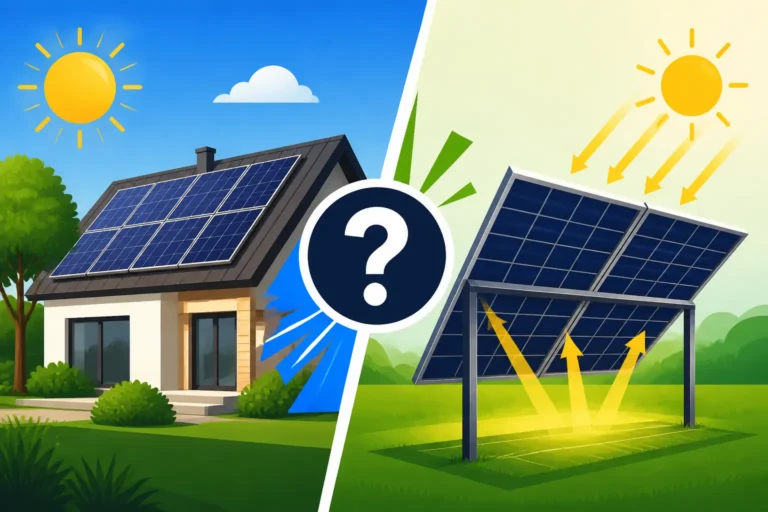
Imagine a solar panel that can generate electricity not just from the sun hitting its front surface, but also from reflected light bouncing off the ground or roof onto its back side. That's exactly what bifacial solar panels do. Unlike traditional monofacial panels, bifacial panels have solar cells on both sides, encased in a transparent backsheet or dual-glass design. This innovative technology allows them to capture more sunlight throughout the day.
Bifacial panels are particularly effective in certain scenarios. For ground-mount systems, if the ground beneath them is reflective (e.g., light-colored gravel or a white TPO roof), the panels can capture significantly more energy, sometimes boosting output by 5% to 25% compared to monofacial panels. They also tend to have better performance in low-light conditions and can benefit from improved cooling because air can circulate more freely around both sides of the panel. While they might come with a slightly higher upfront cost, the increased energy production can lead to a quicker Solar Panel Payback Period Explained and greater long-term savings, especially in areas with high electricity rates. They’re a smart consideration if you have the space for optimal light reflection.
Panels for Shaded or Complex Roofs
If your roof isn't perfectly unshaded all day long, or if it has multiple angles, dormers, or chimneys creating complex shading patterns, you might worry that solar isn't for you. But fear not! There are specific panel technologies and system designs that are particularly well-suited for these challenging conditions. The key is to mitigate the impact of shade on overall system performance.
Traditional string inverters can be problematic with shading, as a single shaded panel can drag down the performance of an entire string of panels. This is where microinverters or power optimizers shine. These devices (often paired with panels or installed individually) allow each solar panel to operate independently at its maximum power point. So, if one panel is shaded by a tree branch for an hour, the other panels in the array continue to produce at full capacity. Brands like Enphase Energy are well-known for their microinverter technology, which pairs beautifully with panels on complex or shaded roofs.
Additionally, certain panels utilize advanced cell architectures, like half-cut cells or shingled cells, which offer improved shade tolerance. These designs create more pathways for current to flow, meaning if one section of a cell is shaded, the entire panel doesn't shut down. When combined with microinverters, these panels can make solar a viable and highly effective option even on roofs that might seem less-than-ideal at first glance.
Aesthetic Options: Sleek and Integrated Designs
Let’s be honest, not everyone loves the look of traditional solar panels bolted onto their roof. If aesthetics are a major concern for you, the good news is that the industry has responded with increasingly sleek and integrated solutions. You no longer have to choose between going green and maintaining your home's curb appeal.
All-black solar panels are a popular choice for their discreet appearance. Instead of the typical silver frames and white backsheets, these panels feature black cells, black frames, and often black backsheets, allowing them to blend seamlessly with darker roofs. While they might run a tiny bit hotter than panels with white backsheets (which can reflect some heat), the aesthetic benefit is significant for many homeowners.
Beyond all-black panels, some manufacturers offer truly integrated solar roofing solutions. Tesla, for example, offers its Solar Roof, which replaces traditional roofing tiles with solar-generating tiles. While these are a more significant investment and renovation project, they offer an almost invisible solar solution. Companies like GAF Energy also provide integrated solar shingles that blend in with standard asphalt shingles, offering a less drastic but still highly aesthetic alternative. These options are perfect for new roof installations or homeowners undertaking a major renovation, allowing the solar to become an integral, beautiful part of the home's design.
Factors Beyond the Panel: System Components and Installation
While the quality of your solar panels is undeniably important, they are just one piece of the puzzle. A truly effective and long-lasting solar energy system relies on the harmonious integration of several other critical components, as well as the expertise of the people putting it all together. Overlooking these aspects can compromise even the "best" panels' performance and your overall satisfaction.
Inverters: The Brains of Your Solar System
Think of the inverter as the brain of your solar system. Solar panels produce direct current (DC) electricity, but your home and the grid use alternating current (AC) electricity. The inverter's crucial job is to convert that DC power into AC power. But it does much more than that; it also monitors your system's performance, helps with grid synchronization, and ensures safety. There are three main types of inverters, each with its own pros and cons:
- String Inverters: These are the most traditional type. Panels are wired together in "strings," and one central inverter handles the DC-to-AC conversion for the entire string. They are generally the most cost-effective option upfront. However, if one panel in a string is shaded or underperforms, it can affect the output of all other panels in that string. This makes them less ideal for roofs with complex shading patterns.
- Microinverters: These small, individual inverters are installed directly beneath each solar panel. Each panel gets its own microinverter, allowing it to convert DC to AC independently. This means that if one panel is shaded or has an issue, the rest of the system continues to operate at full capacity. Microinverters are excellent for shaded roofs, offer panel-level monitoring, and typically come with longer warranties. Brands like Enphase Energy are leaders in this technology. They usually come with a higher upfront cost than string inverters but can offer greater long-term energy production and flexibility.
- Power Optimizers: These are a hybrid solution. Small optimizers are attached to each panel to "condition" the DC power and maximize each panel's output, similar to microinverters. However, the DC power is then sent to a central string inverter for the final DC-to-AC conversion. SolarEdge is a prominent brand offering this technology. Power optimizers offer many of the benefits of microinverters (shade tolerance, panel-level optimization) but can sometimes be a more cost-effective option than a full microinverter system.
Choosing the right inverter technology is crucial for optimizing your system's performance based on your specific roof characteristics and energy goals. You can explore this further in Solar Inverters: String vs Microinverter vs Optimizer.
Batteries: Powering Your Home After Sundown
While solar panels generate electricity during the day, what happens when the sun goes down or during a power outage? That's where a solar battery comes in. Integrating a battery storage system with your solar panels can dramatically increase your energy independence and resilience. Batteries store excess electricity produced by your panels during the day, making it available for use at night or when the grid goes down.
In many areas, especially where net metering policies are less favorable (like California's NEM 3.0), batteries are becoming an increasingly attractive, if not essential, component. Instead of sending all your excess power back to the grid for a lower credit, you can store it and use it yourself, maximizing your savings. Batteries also provide crucial backup power during grid outages, keeping essential appliances running. Brands like Tesla with its Powerwall, Enphase with its IQ Battery, and FranklinWH are leading the charge in home battery solutions, offering varying capacities, functionalities, and integration capabilities with solar systems.
While adding a battery increases the upfront cost of your solar system, the benefits of energy independence, reduced reliance on the grid, and protection against power outages often outweigh the expense for many homeowners. Plus, there are often incentives like Solar Battery Incentives in 2026 that can help offset the cost.
The Importance of a Reputable Installer
Even the most cutting-edge solar panels and advanced inverters won't perform optimally if they're not installed correctly. This is why choosing a reputable and experienced solar installer is just as important, if not more important, than the brands of equipment you select. A good installer acts as your project manager, handling everything from system design and permitting to installation and activation.
A reputable installer will:
- Accurately assess your energy needs and roof suitability: They'll perform a thorough site survey, analyze your historical energy consumption, and design a system that's properly sized for your home.
- Select appropriate, high-quality equipment: They’ll recommend panels, inverters, and batteries that are best suited for your specific conditions and budget, rather than just pushing whatever they have in stock.
- Ensure proper permitting and compliance: Navigating local building codes, electrical standards, and utility interconnection requirements can be a nightmare. A good installer will handle all the paperwork, ensuring your system is compliant and safe. Our guide on Solar Permitting & Interconnection (PTO) Explained can give you a heads-up on the process.
- Provide expert installation: Their crews will be certified, experienced, and adhere to the highest safety and quality standards, ensuring your system is installed securely and efficiently.
- Offer strong warranties and post-installation support: A good installer stands behind their work, offering workmanship warranties and being available for any questions or issues that arise after installation.
Don't underestimate the value of due diligence when selecting an installer. Look for companies with strong local reputations, positive customer reviews, and relevant certifications (like NABCEP). Getting multiple quotes and comparing them comprehensively is always a smart move. Our article How to Choose a Solar Installer provides detailed advice on how to find the right partner for your solar journey.
Making Your Final Decision: A Step-by-Step Approach
Okay, you've absorbed a lot of information – from panel efficiency to battery storage and the importance of a great installer. Now comes the exciting part: actually making a decision for your home. This isn't a one-size-fits-all process, and a thoughtful, step-by-step approach will help you feel confident in your investment.
Assessing Your Energy Needs and Budget
Before you even start looking at specific panel brands, you need a clear picture of your household's energy consumption. Pull out your last 12-24 months of electricity bills. This will show your average monthly and annual kilowatt-hour (kWh) usage. Are you consistently using 800 kWh per month, or closer to 2,000 kWh? Knowing this is the first step in determining how many solar panels you need to offset your electricity bill. Consider if your energy needs might change in the future – perhaps you're planning to buy an electric vehicle, install an electric heat pump, or add a swimming pool. These additions will significantly increase your electricity consumption, so it's wise to factor them into your initial system sizing.
Next, establish a realistic budget. Solar panels are a significant investment, but there are many financing options available, from cash purchases to solar loans and leases/PPAs. While paying cash generally offers the best long-term return on investment by avoiding interest, it's not feasible for everyone. A solar loan allows you to own your system with monthly payments that are often less than your old utility bill. Programs like PACE financing, though they have their own considerations, might also be an option in some areas. Understanding what you can comfortably afford upfront and monthly will help narrow down your equipment and financing choices.
Getting Multiple Quotes and Comparing Options
This is perhaps the most critical step in ensuring you get the best deal and the right system for your home. Never settle for just one quote. Reach out to at least three different reputable solar installers in your area. This isn't just about price comparison; it's about comparing proposed system designs, equipment recommendations, warranties, and the overall customer service experience.
When you receive quotes, don't just look at the bottom line. Pay close attention to:
- System Size (kW): Does each installer propose a system that adequately meets your energy needs?
- Panel Brands and Models: Are they offering panels from the premium, value, or budget categories? Are these panels suitable for your roof's characteristics (e.g., shade tolerance, temperature coefficient)?
- Inverter Technology: Are they recommending string inverters, microinverters, or power optimizers? Does this choice align with your roof's shading profile and your desire for panel-level monitoring?
- Total Cost and Price Per Watt: Calculate the "price per watt" by dividing the total system cost by the system size in watts (e.g., $25,000 / 8,000 watts = $3.13/watt). This helps standardize comparisons across different system sizes.
- Warranties: What product and performance warranties are offered for the panels and inverters? What is the installer's workmanship warranty?
- Financing Terms: Understand the interest rates, loan terms, and any dealer fees associated with financing options. Our guide on Solar Loans: Complete Guide can help you navigate this.
- Estimated Savings and Payback Period: While these are projections, compare how each installer forecasts your long-term savings and how long until the system pays for itself.
Ask lots of questions! A good installer will be patient and thorough in their explanations. Don't be afraid to push for clarity on anything you don't understand.
Considering Future Expansion and Technology
The world of solar is constantly evolving, with new technologies and efficiencies emerging all the time. While you can't predict the future, it's wise to consider futureproofing your system to some extent. Ask your installer about the expandability of the proposed system. If you decide to add more panels later (e.g., if your energy needs increase), how easy and cost-effective will that be? Some inverter systems, especially those with microinverters, make adding panels in stages much simpler than traditional string inverter setups.
Also, think about technologies like electric vehicle charging, smart home integration, or adding more battery storage down the line. Does the proposed system have the capacity or the compatibility to incorporate these additions seamlessly? While you don't need to install everything at once, having a system that allows for future upgrades without a complete overhaul can save you money and headaches in the long run. Even a quick search on a platform like Amazon for solar-compatible smart home devices can give you an idea of how much potential exists for integration. Choosing a reputable brand that consistently innovates, even for just a few extra dollars, might be worth it for the peace of mind.
Common Misconceptions About Solar Panels
The journey to going solar is often clouded by misinformation and outdated ideas. It's easy to get discouraged by myths or misunderstandings that circulate, but armed with the right knowledge, you can approach your solar decision with confidence. Let's tackle some of the most common misconceptions head-on.
"All Panels Are Pretty Much the Same"
This couldn't be further from the truth, and it's one of the most damaging misconceptions out there. While all solar panels generally perform the same basic function – converting sunlight into electricity – the quality, efficiency, durability, and long-term performance vary significantly between manufacturers and even between different models from the same brand. It’s like saying all cars are the same because they all get you from point A to point B; a luxury sedan and an economy car both drive, but the experience, features, and longevity are vastly different.
As we discussed earlier, factors like efficiency ratings, temperature coefficients, product and performance warranties, and even the type of cell technology (like TOPCon vs. PERC) play a massive role. A premium panel from Maxeon or REC will almost certainly outperform and outlast a budget panel, especially in challenging conditions like high heat or partial shade. The materials used for the frame, glass, and backsheet also dictate how well the panel withstands extreme weather and degradation over 25+ years. Opting for cheaper, lower-quality panels might save you a little upfront, but it could lead to significantly less electricity production, more frequent issues, and a shorter lifespan, ultimately costing you more in the long run through higher utility bills and potential replacement costs. This is why understanding Solar Panel Cost Per Watt Explained is so crucial.
"Solar Only Works in Sunny States"
Another persistent myth is that solar energy is only viable in famously sunny states like California, Arizona, or Florida. While these states certainly benefit from abundant sunshine, solar technology has advanced to a point where it is highly effective in many regions with less intense or less consistent sun.
Consider places like Germany, which is a global leader in solar adoption despite having a climate comparable to the Pacific Northwest or New England. Modern solar panels are incredibly efficient at capturing diffuse light, meaning they still produce power on cloudy or overcast days. Additionally, colder temperatures can actually improve panel efficiency (thanks to a better temperature coefficient), as long as there's sunlight hitting the panels and they're clear of snow. States with good solar incentives, like New Jersey or Massachusetts, have thriving solar markets even though they experience all four seasons. The real determinant isn't just sunshine, but also local electricity rates, state incentives, and net metering policies, which can make solar highly advantageous even in areas you might not typically associate with it. Our guides on New Jersey Solar Incentives in 2026 or Massachusetts Solar Incentives in 2026 can show you how solar thrives in diverse climates.
"Newer Technology Always Means Better"
It’s tempting to always chase the newest, most innovative technology, but in the solar industry, "newer" doesn't always automatically equate to "better" for every homeowner, nor does it guarantee proven reliability. While technological advancements are constantly improving efficiency and durability, some cutting-edge innovations might still be in their early stages of deployment, meaning they lack a long track record of real-world performance.
Established technologies, like high-quality monocrystalline PERC (Passivated Emitter Rear Cell) panels, have been around for years and have a proven history of reliable performance over decades. They are well-understood, widely installed, and often offer an excellent balance of cost and efficiency. While newer technologies like N-type TOPCon or HJT (Heterojunction Technology) are indeed pushing efficiency boundaries and reducing degradation rates, they might come with a higher price tag or have less extensive long-term data compared to their predecessors.
For most residential applications, a well-established, high-efficiency panel from a reputable brand will provide an outstanding return on investment and reliable performance for 25 years or more. Don't feel pressured to always opt for the absolute newest tech if a proven solution offers a better balance for your budget and needs. It's about finding the right technology for your specific situation, not necessarily the newest. For instance, a 400W panel of proven technology might be a better investment than a 450W panel of unproven design if the price difference is significant. This is a good opportunity to consider what Solar Panel Wattage Guide (400W, 450W & More) might mean for your needs.
Disclaimer
Please remember that the information provided in this article is intended for general informational purposes only and does not constitute professional advice. Solar technology, incentives, and regulations are constantly evolving. It is crucial to consult with qualified solar professionals, financial advisors, and local authorities to get accurate information and personalized recommendations for your specific situation. Always conduct your own research and due diligence before making any purchasing or investment decisions.