What Is the Best Solar Panel for a Small Roof?
Trying to figure out how to go solar when your roof isn't sprawling and expansive can feel like a real puzzle. Many homeowners get discouraged, thinking their limited roof space means solar isn't even an option for them. But don't you worry! This guide is here to walk you through exactly how to select the absolute best solar panels that are specifically designed to maximize energy production even on the coziest of roofs.
Understanding the Challenges of Small Roofs for Solar
It's completely understandable to feel like your small roof is a hurdle to going solar. You see those big, sunny homes with arrays covering half their roof, and you might think, "Well, that's just not me." But the truth is, a smaller roof presents specific challenges that simply require a more strategic approach, not an abandonment of the idea altogether. It's about working smarter, not necessarily bigger.
Limited Space and Energy Needs
The most obvious challenge, of course, is the sheer lack of square footage. Every inch counts when you're dealing with a compact roof. This means you can't just slap on any standard-sized panel and expect to meet your energy goals. You're trying to achieve a significant reduction in your electricity bill, or maybe even eliminate it entirely, with fewer panels than someone with a much larger home. It's like trying to pack a full-sized suitcase into a carry-on; you need to be very intentional about what you choose to include. This often forces homeowners to prioritize efficiency and compact design above all else, which can sometimes come with a slightly higher upfront cost per panel, but pays off in the long run by maximizing your energy harvest. Understanding How Many Solar Panels Do I Need for My Home? becomes even more critical in these scenarios.
Another layer to this challenge is aligning your household's energy needs with the limited generation capacity. If you have a family of five with high electricity consumption and a tiny roof, it's going to be tougher to offset 100% of your usage compared to a single person with low consumption. This isn't to say it's impossible, but it requires a realistic assessment. You might need to consider energy efficiency upgrades within your home first, like switching to LED lighting or upgrading old appliances, to reduce your overall demand before solar even enters the picture. Every kilowatt-hour saved is one less that your solar panels need to produce, making your small roof system go a lot further.
Shading and Orientation Obstacles
Small roofs often come with unique shading issues that can significantly impact solar production. Maybe you have a tall tree in your neighbor's yard, a chimney casting a shadow, or even an adjacent part of your own house creating shade during certain hours of the day. On a larger roof, you might have enough unaffected space to simply avoid the shaded areas, but on a small roof, every spot is precious. A shadow across just one panel in a string array can bring down the performance of the entire row, severely diminishing your overall output. This makes technologies like microinverters or power optimizers almost a necessity, as they allow each panel to operate independently, mitigating the impact of partial shading.
Furthermore, the optimal orientation for solar panels is typically south-facing in the Northern Hemisphere, with a tilt angle that matches your latitude. On a small roof, you might not have the luxury of a perfectly south-facing plane that's free of obstructions. You might be forced to install panels on an east or west-facing slope, which will naturally produce less energy. While solar panels still work effectively on these orientations, you'll need to account for this reduced production when designing your system. It becomes a delicate balancing act of maximizing available space with the best possible orientation, all while battling potential shading. For more insights on this, you might want to look into Roof Considerations for Solar Panels.
Key Solar Panel Features for Compact Spaces
When you're dealing with a limited canvas, every brushstroke has to be intentional, and the same goes for solar panels on a small roof. You can't just pick the cheapest or most common option; you need panels that are specifically engineered to perform under spatial constraints. This means looking beyond just the wattage rating and delving into the nitty-gritty details of panel design and technology.
High-Efficiency Panels
For small roofs, efficiency isn't just a nice-to-have; it's absolutely crucial. A high-efficiency panel can convert more sunlight into electricity from the same amount of surface area as a less efficient one. This means that if you can only fit 10 panels on your roof, choosing panels with 22% efficiency instead of 18% efficiency can make a substantial difference in your total energy production. It allows you to generate more power with fewer panels, effectively overcoming the space limitation. Think of it like a sports car versus a sedan; both get you from A to B, but one does it with much more power in a smaller footprint.
Leading brands like Maxeon (formerly SunPower) or REC are renowned for their high-efficiency panels, often boasting efficiencies well above 21-22%. While these panels might have a higher Solar Panel Cost Per Watt Explained initially, the increased power output per square foot can lead to faster payback periods and greater long-term savings, especially in environments where space is at a premium. These panels often incorporate advanced cell technologies, such as n-type cells or back-contact designs, to squeeze every last drop of energy out of the sunlight they capture. When every panel spot is precious, investing in top-tier efficiency is almost always the smart move. You can read more about options in Best Solar Panels of 2026.
Physical Dimensions and Weight
It might sound basic, but the physical size of the solar panels you choose is incredibly important for small roofs. While most residential solar panels hover around a standard size (roughly 65 x 39 inches), there are variations. Some manufacturers offer slightly smaller or larger panels, and these differences can dictate how many panels you can fit into an awkward space or around obstructions. A slightly narrower panel, for example, might allow you to squeeze in an extra column of panels on a tight roof section that a standard-width panel wouldn't permit.
Weight is another factor, though less critical than dimensions for typical residential installations. Most modern solar panels are relatively light and within the structural capacity of a standard roof. However, if your roof has specific structural limitations, or if you're considering panels for a unique structure like a shed or carport with less robust framing, lighter panels could be a consideration. Always consult with your solar installer to ensure your roof can safely support the chosen panels, and remember that local building codes might have specific requirements.
Aesthetics and Curb Appeal
Let's be honest, solar panels are a significant addition to your home's exterior, and for many homeowners, how they look matters. On a smaller roof, the panels might be more visually prominent, making aesthetics a genuine concern. Traditionally, many panels have silver frames and white backsheets, which can stand out against a dark roof. However, manufacturers have increasingly responded to aesthetic demands.
Many high-efficiency panels now come with all-black designs (black frames, black backsheets), which tend to blend much more seamlessly into most rooflines, especially those with darker shingles. Brands like Qcells, known for their sleek designs, offer excellent aesthetic options. Some premium options, like integrated solar shingles or tiles (e.g., Tesla Solar Roof), offer the ultimate in discreet aesthetics, though they come with a significantly higher price tag and different installation processes. For a small, visible roof, choosing panels that complement your home's appearance can enhance, rather than detract from, your curb appeal.
Top Solar Panel Types and Brands Suited for Small Roofs
Navigating the world of solar panel types and brands can feel overwhelming, especially when you have specific constraints like a small roof. The good news is that advancements in solar technology have provided excellent solutions for these situations. It's not just about finding any panel; it's about finding the right panel that maximizes every inch of available space.
Monocrystalline vs. Polycrystalline for Small Spaces
When we talk about different types of solar panels, the primary distinction often comes down to monocrystalline versus polycrystalline.
-
Monocrystalline Solar Panels: These panels are typically made from a single, pure silicon crystal, giving them a uniform, dark black appearance. Because of their higher purity and more efficient manufacturing process, monocrystalline panels generally boast higher efficiencies (often 18-22% or more) and better performance in low-light conditions. This higher efficiency means they can generate more electricity per square foot. For homeowners with small roofs, this is a significant advantage. You can achieve your desired energy output with fewer panels, or a higher output from the same number of panels, making them the superior choice when space is limited. Their sleek, uniform look also often makes them more aesthetically pleasing, which is a bonus on a highly visible, smaller roof.
-
Polycrystalline Solar Panels: These panels are made from multiple silicon fragments melted together, giving them a more fragmented, speckled blue appearance. While generally more affordable per watt than monocrystalline panels, their efficiency is typically lower (around 15-17%). This means you'd need more polycrystalline panels to produce the same amount of electricity as fewer monocrystalline panels. On a small roof where space is a premium, the lower efficiency of polycrystalline panels makes them a less ideal choice, as you simply might not have enough room to install the necessary quantity to meet your energy needs.
In almost all scenarios involving a small roof, Monocrystalline vs Polycrystalline Solar Panels points clearly towards monocrystalline panels being the better investment, despite their slightly higher upfront cost, due to their superior space efficiency.
Brands Known for Compact, High-Performance Panels
Several reputable solar panel manufacturers excel at producing high-efficiency panels that are perfect for small or challenging roof spaces.
-
Maxeon (formerly SunPower): Maxeon panels are consistently among the most efficient on the market, often exceeding 22% efficiency. Their unique back-contact cell technology minimizes conductive losses, allowing for more power generation from a smaller footprint. They also offer excellent durability and warranties. For a small roof, Maxeon panels are often a top contender due to their ability to maximize energy production in limited space.
-
REC Solar: REC is another brand known for high-performance and reliable panels. Their Alpha series, utilizing heterojunction technology (HJT), offers impressive efficiencies and strong performance in varying temperatures. REC panels often come with an all-black aesthetic option, which can be great for visual integration on smaller roofs. They strike a good balance between efficiency, aesthetics, and value.
-
Qcells: Qcells has become a popular choice for residential solar, offering a range of panels with excellent efficiency and competitive pricing. Their Q.PEAK DUO series panels often come in an attractive all-black design, and they are known for robust performance even in partial shade, thanks to advanced cell technology. For homeowners looking for a balance of high performance, good aesthetics, and solid value on a smaller roof, Qcells is often a strong candidate.
While some solar components can be found on online retailers like Amazon, it's rare to purchase entire high-efficiency solar panels this way for a residential installation. High-quality panels from these leading brands are typically sourced and installed by certified solar professionals who can design a system specifically for your roof's unique characteristics.
Considerations Beyond the Panel Itself
Choosing the right solar panel is just one part of the equation, especially for a small roof. The supporting technology is equally, if not more, important.
-
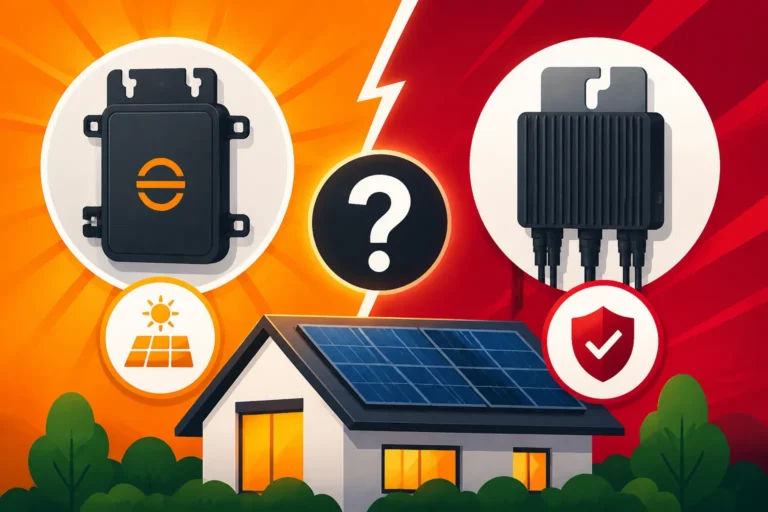
Microinverters or Power Optimizers: On a small roof, it's very likely that some panels might experience partial shading at different times of the day. Traditional string inverters, where panels are wired in series, can have their entire string's output reduced to that of the lowest-performing panel. This is where Solar Inverters: String vs Microinverter vs Optimizer really highlights the advantages of module-level power electronics (MLPE). Microinverters (like those from Enphase) or power optimizers (like SolarEdge) are installed on each individual panel. This allows each panel to operate independently, maximizing its output regardless of what other panels in the array are doing. If one panel is shaded, the others continue to produce at their full potential, which is critical for smaller, often more complex roof layouts. You can find components for these systems from distributors and sometimes even on Amazon for smaller DIY projects or replacements, but full residential systems are best left to professionals.
-
System Design: A skilled solar designer will be able to get the most out of your small roof. They'll consider not just the number of panels but also their precise placement, orientation, and tilt to optimize sun exposure. They might use specialized software to model shading patterns throughout the year, ensuring that every panel is placed for maximum efficiency. This meticulous design process is vital for small roofs where every square foot counts towards your energy goals.
Maximizing Your Solar Potential on a Small Roof
Having a small roof doesn't mean you're doomed to minimal solar savings. With clever planning and the right technology, you can squeeze every last drop of sunshine into usable electricity. It's about optimizing every aspect of your system, from where the panels sit to how your home consumes power.
Optimizing Panel Placement and System Design
The absolute first step to maximizing solar on a small roof is an impeccable design. A seasoned solar installer will act like an architect, carefully mapping out your roof's surface. They'll consider factors like chimneys, vents, skylights, and even dormers that might eat into your precious space. It's not just about fitting panels; it's about fitting them where they'll get the most sun throughout the day, and throughout the year.
This often involves sophisticated software that simulates sun paths and shading. For instance, if you have a slight offset in your roofline, a designer might opt for panels with slightly different dimensions to perfectly fill a specific section. They’ll also advise on the optimal tilt angle if your roof pitch isn't ideal, sometimes using racking systems that allow for a slight adjustment. While most residential systems are roof-mounted, if your roof is truly tiny or heavily shaded, your installer might even suggest exploring options like a ground-mount system in your yard if space permits, or even a carport solar solution. This attention to detail in How Much Roof Space Do Solar Panels Need? is what differentiates a good solar installation from a great one, especially on a compact footprint.
| Feature | Standard Panel (e.g., Polycrystalline) | High-Efficiency Panel (e.g., Monocrystalline) | Ideal for Small Roofs? |
|---|---|---|---|
| Efficiency Range | 15-17% | 19-22%+ | Yes, higher output |
| Power Output/sq ft | Lower | Higher | Yes, space savings |
| Appearance | Speckled Blue/Dark Blue | Uniform Black/Dark Grey | Yes, often more aesthetic |
| Cost per Watt | Generally Lower | Generally Higher | Trade-off for space |
| Performance in Shade | More affected with string inverters | Less affected with MLPE | Crucial, needs MLPE |
| Physical Size | Standard (approx. 65"x39") | Standard, but higher output for same size | Yes, efficient use |
Integrating Solar Batteries and Energy Management
On a small roof, where every kWh generated is hard-won, making the most of that energy is vital. This is where solar batteries come into play. If your utility has shifted away from generous net metering policies (like the changes seen with What Is NEM 3.0 California Net Billing?), or if you're in an area with less favorable Net Metering Explained How It Works by State, a solar battery system can be a game-changer.
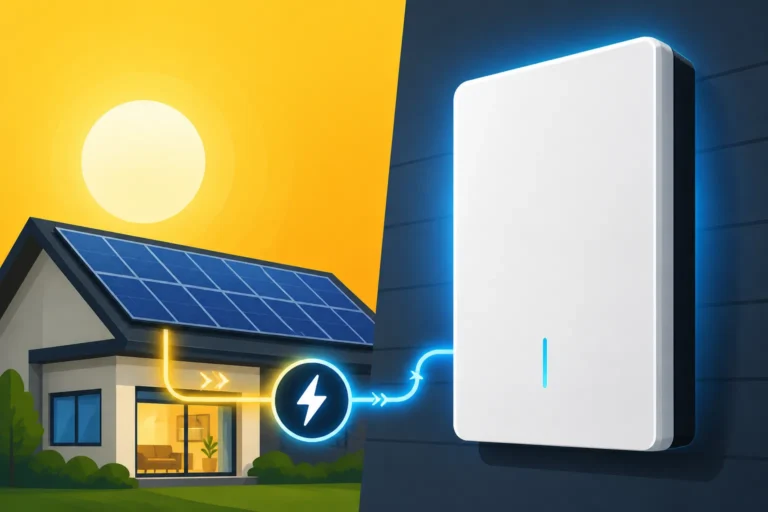
Instead of sending excess solar electricity back to the grid for a low credit (or no credit at all), you can store it in a battery like a Tesla Powerwall or an Enphase IQ Battery. This stored energy can then be used in the evening when your solar panels aren't producing, or during a power outage. This reduces your reliance on grid electricity to an even greater extent, maximizing the value of every electron your small array generates. For many with small roofs, the question becomes less about "Do I need a battery with solar?" and more about "How can a solar battery help me maximize my savings?" especially if grid buyback rates are low. Utilizing smart energy management systems that optimize when your battery charges and discharges can further enhance these savings, ensuring you're using your precious solar power precisely when it benefits you most.
Exploring Alternative Solar Solutions
What if, even with the most efficient panels and clever design, your small roof just cannot meet your needs? Don't throw in the towel on solar entirely! There are still fantastic options to consider:
-
Community Solar: This is a growing trend that allows you to "subscribe" to a larger solar farm located off-site. You receive credits on your electricity bill for the power generated by your share of the community solar project, without needing panels on your own roof. This is a perfect solution for renters, apartment dwellers, or homeowners with unsuitable roofs. It’s an excellent way to support renewable energy and save on electricity without any physical installation at your home. You can often sign up for community solar programs with minimal hassle and sometimes even find offerings through utility marketplaces or aggregators that might pop up in local online searches, similar to how you might find an electrical component on Amazon.
-
Ground-Mount or Carport Solar: If you have available yard space, even a modest one, or if you're planning to build a carport, these can be excellent alternatives to a roof-mounted system. Ground-Mount vs Roof-Mount Solar can give you some insights into the differences. Ground-mounts offer flexibility in orientation and tilt, allowing you to achieve optimal sun exposure often better than a roof. Carport solar not only generates electricity but also provides shade and protection for your vehicles. While these options require more physical space on your property beyond the roof, they eliminate the roof-specific constraints entirely.
-
Combined Approaches: Sometimes, the best solution is a hybrid. Maybe a few high-efficiency panels on your best roof section, combined with a subscription to a local community solar program, can get you to your energy goals. Or perhaps a small roof array supplemented by a ground-mount system in a sunny corner of your yard. Don't limit yourself to just one approach; a combination can often provide the most comprehensive and effective solution for a smaller home.
Disclaimer
Please remember that the information provided in this guide is for general educational purposes only and does not constitute professional advice. Solar system design, incentives, and regulations can vary significantly by location and change over time. Always consult with a qualified local solar professional to assess your specific needs and determine the best solution for your home. They can provide accurate quotes, evaluate your roof's suitability, and guide you through local permitting and incentive programs.