Solar Panel Product vs Performance Warranty
Buying solar panels can feel like navigating a maze of technical terms and promises, especially when it comes to warranties. It's easy to get confused between what a 'product' warranty covers versus a 'performance' warranty, and misunderstandings can lead to costly surprises down the road. This guide will meticulously break down these two crucial types of solar panel warranties, helping you understand their differences and what they truly mean for your long-term investment.
Demystifying Solar Panel Warranties: The Foundation
When you invest in a solar energy system for your home, you're not just buying panels; you're buying into a promise of long-term energy production and reliability. That promise is largely protected by warranties. Unfortunately, many homeowners, in their excitement or haste, often skim over these critical documents, only to find themselves scratching their heads years down the line when an issue arises. It’s a common frustration, feeling like you need a law degree just to understand what you’re actually getting!
Solar warranties are essentially a manufacturer's guarantee that their product will perform as advertised for a specific period. But here's where it gets tricky: not all warranties are created equal, and more importantly, they cover different aspects of your solar panels. It's vital to grasp these distinctions because they dictate what you can expect if a panel breaks or simply doesn't produce enough power. Think of it like buying a car; you have a warranty on the engine and transmission, but also on the paint job – different parts, different coverage.
Why Warranties Are Your Best Friend
Let's be real, solar panels are a significant investment. You’re putting them on your roof, exposing them to all kinds of weather, and expecting them to churn out electricity for decades. Without robust warranties, you’d be taking a huge gamble. These warranties are designed to give you peace of mind, protecting you from defects, premature wear, and underperformance. They ensure that if something goes wrong due to the manufacturer's fault, you won't be left to bear the full cost of repair or replacement.
A solid warranty package can literally save you thousands of dollars over the lifespan of your system. Imagine a scenario where a panel fails just ten years in. If it’s covered, the manufacturer handles it. If not, that’s coming out of your pocket, undermining all those savings you were looking forward to. This is why digging into the details now, before you sign anything, is so incredibly important for your financial future and energy independence.
The Different Layers of Solar Protection
Beyond the two main types we'll explore – product and performance – you might also encounter an installer's workmanship warranty. This is separate from the manufacturer's warranty and covers the quality of the installation itself. For example, if your panels are installed improperly and lead to a roof leak, that would typically fall under your installer's warranty, not the panel manufacturer’s. This is why choosing a reputable and experienced installer is just as crucial as selecting quality panels. They're often the first line of defense if something goes awry. You'll want to read up on Solar Panel Warranties Explained in full to get a clearer picture of everything involved.
Deep Dive into Product Warranties
Alright, let's talk about the product warranty, sometimes called the equipment or materials warranty. This is the one that covers the physical integrity of your solar panels. Think of it like the warranty on your refrigerator or washing machine. It's all about whether the actual hardware holds up to manufacturing standards and doesn't just fall apart. This is where you want to pay close attention to the fine print.
You're expecting your panels to withstand hail, high winds, and scorching sun, right? The product warranty is your shield against premature failure due to things like faulty wiring within the panel, delamination (when the layers separate), micro-cracks that develop due to manufacturing defects, or even corrosion of the frame. If a panel physically fails or stops working due to an inherent flaw, this warranty kicks in to cover the cost of replacing or repairing the panel itself.
What a Product Warranty Covers
Specifically, a product warranty is designed to address defects in materials and workmanship. This means if a part of the panel was poorly assembled, or if the materials used weren't up to snuff, the manufacturer is on the hook. This can include issues with the frame, the glass, the electrical components inside the panel, and the backsheet. Most reputable solar panel manufacturers offer product warranties that range from 10 to 25 years, with 25 years becoming increasingly common for high-quality modules. For instance, brands like Qcells and REC often boast solid 25-year product warranties, reflecting their confidence in their manufacturing processes.
However, it's crucial to understand what it doesn't cover. It won't cover damage from external factors like severe weather events (unless specifically mentioned as an "act of God" clause, which is rare for standard product warranties), improper installation (that's your installer's domain), or accidental damage. So, if a tree falls on your roof and smashes a panel, don't expect the product warranty to cover it – that's what your homeowner's insurance is for. While you might find individual solar lighting or small chargers on sites like Amazon, full residential solar panels require specialized distributors and manufacturers, and their warranties are distinct from general retail purchase guarantees.
Common Product Warranty Terms and Exclusions
When reviewing product warranties, pay close attention to the duration, what constitutes a "defect," and any specific conditions that could void the warranty. For example, some warranties might be voided if non-approved cleaning methods are used, or if unauthorized repairs are attempted. You'll also want to understand the process for making a claim: who do you contact, what documentation is needed, and how long does the process typically take?
It's not uncommon for a manufacturer to offer a pro-rata reimbursement for panels that fail, meaning they might cover a percentage of the replacement cost rather than the full amount, depending on how far into the warranty period you are. Always clarify if the warranty covers just the panel, or if it also covers shipping costs for replacements and the labor costs associated with removing the faulty panel and installing a new one. This labor cost is a huge deal, as roof work can be expensive! A truly comprehensive product warranty will include labor costs, often for the first few years, giving you extra peace of mind.
Understanding Performance Warranties
Now, let's shift gears to the performance warranty. This is arguably the more unique and often misunderstood warranty in the solar world. While the product warranty concerns whether the panel itself physically holds up, the performance warranty is all about whether the panel produces electricity at a guaranteed level over time. It addresses the natural degradation of solar cells, ensuring that your investment continues to generate power efficiently for decades.
Think of it like this: your car's engine has a warranty that it won't seize up, but also a guarantee that it will maintain a certain level of horsepower for a given number of miles. The performance warranty is that horsepower guarantee for your solar panels. Solar panels, like all electronics, degrade slightly over time. Their ability to convert sunlight into electricity diminishes fractionally each year. The performance warranty sets a floor for how much power your panels will produce, even after years of operation. This is especially important for understanding your long-term Solar Panel Payback Period Explained.
What a Performance Warranty Guarantees
The standard in the industry for performance warranties is typically 25 to 30 years, sometimes even longer for premium panels. Manufacturers usually guarantee a certain percentage of the panel's original output capacity at specific intervals. For example, a common guarantee might be 90% of the original rated power output after 10 years, and 80% after 25 years. This means if your 400-watt panel is only producing 70% of its original output after 15 years, and the warranty guaranteed 85% at that point, you have a claim.
These warranties are a testament to the longevity and durability of modern solar technology. They reflect the manufacturer's confidence in their solar cells and how they'll perform under real-world conditions. Brands like Maxeon (SunPower) are particularly known for their strong performance warranties, often guaranteeing very high output percentages even after 30 or 40 years, which speaks volumes about their panel quality. It's a critical factor when considering Best Solar Panels of 2026.
Degradation Rates and Claims
The key to a performance warranty is the degradation rate. This is the rate at which your panels lose efficiency over time. Most quality panels degrade by about 0.5% to 1% per year. A good performance warranty will specify an annual degradation rate and guarantee that your panels will not fall below a certain output level based on that rate. If your panels start producing significantly less power than the warranted percentage, you have grounds for a claim.
Proving a performance warranty claim can be a bit more complex than a product warranty claim. You’ll typically need consistent monitoring data from your solar system to demonstrate underperformance. This data, often accessible through your inverter's monitoring app (like Enphase or SolarEdge), will show how much energy your system is generating. If your installer has gone out of business, which unfortunately does happen, navigating these claims can become significantly harder, highlighting the importance of choosing a stable and reliable company from the start. This is why understanding What to Do if Your Solar Installer Goes Bankrupt is so important.
Key Differences and Why They Matter
Now that we’ve explored both types, let’s bring it all together. The distinction between a product warranty and a performance warranty is fundamental to protecting your solar investment. Confusing them is a common pitfall for homeowners, and it can lead to frustration if you think one covers what the other actually does. It's not just semantics; it's about the very nature of what is being guaranteed and, more importantly, what recourse you have if your system isn't living up to expectations.
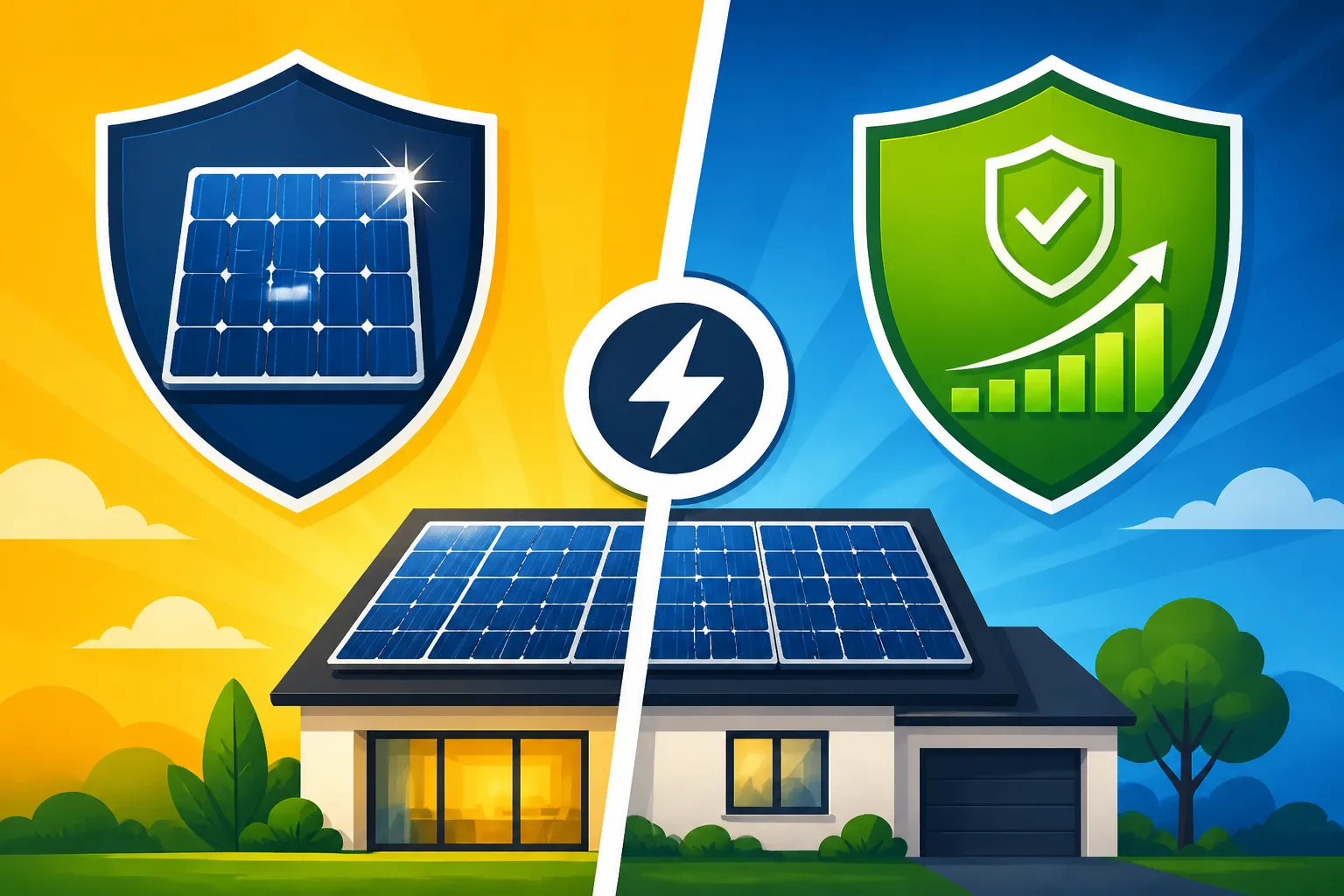
One covers the physical integrity of the panel – essentially, "does it work?" The other covers its output capacity – "how well does it work, and how well will it continue to work over time?" Both are crucial for different reasons, and understanding their individual roles helps you evaluate the true value and reliability of a solar panel system. Neglecting either one leaves a significant gap in your protection.
Comparing Coverage and Duration
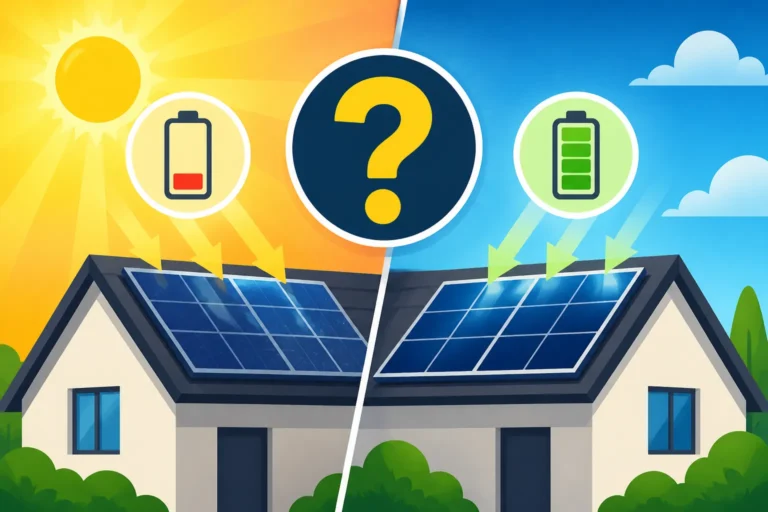
Here's a quick side-by-side comparison to help solidify the differences:
| Feature | Product Warranty | Performance Warranty |
|---|---|---|
| What it Covers | Manufacturing defects, material flaws, workmanship issues (e.g., panel cracking, delamination, faulty wiring) | Guaranteed power output and minimal degradation rate over time (e.g., 85% of original output after 25 years) |
| Typical Duration | 10-25 years | 25-30 years (sometimes longer for premium brands) |
| Trigger Event | Panel physically breaks or malfunctions due to inherent defect, stops producing any power | Panel produces less power than the guaranteed percentage for its age and environmental conditions |
| Proof Needed | Visual inspection, diagnostic testing of faulty panel | Consistent monitoring data showing underperformance relative to guaranteed degradation rates |
| Remedy | Repair or replacement of the faulty panel, or a refund for its value | Repair, replacement of underperforming panels, or financial compensation for lost production |
| Key Metric | Physical integrity, basic functionality | Sustained power output percentage, annual degradation rate |
As you can see, while there's some overlap in the solution (repair or replacement), the problem they address is quite different. A panel might be physically perfect but underperforming, or it might be visibly damaged and not producing anything. Each scenario points to a different warranty.
Long-Term Implications for Homeowners
For you, the homeowner, these differences have significant long-term implications. A strong product warranty ensures your panels are built to last and won't fail prematurely due to shoddy construction. This is vital for maintaining the physical integrity of your roof-mounted system. On the other hand, a robust performance warranty safeguards your financial investment by guaranteeing that the panels will continue to generate the expected amount of electricity, which directly translates to your energy savings. You'll want to review your expected Solar ROI & 25-Year Savings Breakdown based on these warranty specifics.
Without a good performance warranty, even if your panels don't physically break, a high degradation rate could mean your energy savings dwindle much faster than anticipated. This is why looking at a panel's projected Solar Panel Efficiency & Degradation Explained over time, in conjunction with its performance warranty, is so important. When evaluating multiple quotes, don't just compare the upfront cost; deeply scrutinize the warranties offered by different panel manufacturers and installers.
Navigating Warranty Claims and Support
Making a warranty claim can feel like a daunting task, especially if you've never done it before. It’s easy to get overwhelmed by paperwork, technical jargon, and the fear of being bounced around between different companies. But knowing the process and having your ducks in a row can make it much smoother. After all, these warranties are there to protect you, and you have every right to use them when necessary.
The first step, always, is to contact your original solar installer. They are usually your primary point of contact for any issues with your system, regardless of whether it's a product or performance problem. A good installer will guide you through the process, handle communications with the manufacturer, and often facilitate the actual repair or replacement work. This highlights just how important it is to How to Choose a Solar Installer carefully and ensure they have a solid track record and offer their own workmanship warranty.
The Claim Process: What to Expect
When you contact your installer about an issue, be prepared to provide as much detail as possible. This includes:
- Description of the problem: Is a panel visibly damaged? Is your system producing less power than usual?
- Date of installation: This helps determine if you're within the warranty period.
- Proof of purchase: Your contract and invoices from the installation.
- Monitoring data: Especially crucial for performance warranty claims. Show them the numbers that indicate underperformance.
- Photos or videos: If there's physical damage, visual evidence is incredibly helpful.
Your installer will then typically conduct an initial assessment. If they determine it's a manufacturer defect or underperformance issue, they'll initiate the claim with the panel manufacturer on your behalf. This usually involves submitting documentation, data, and their own assessment. The manufacturer will review the claim and, if approved, will either send a replacement panel, authorize repairs, or provide financial compensation. The timeline for this can vary significantly, from a few weeks to several months, depending on the complexity of the issue and the manufacturer's processes.
When Your Installer is Out of Business
This is a homeowner's worst nightmare, and unfortunately, it happens. If your solar installer goes out of business, navigating a warranty claim becomes significantly more challenging, but not impossible. In this scenario, you'll need to contact the solar panel manufacturer directly. Make sure you have all your original documentation, including proof of purchase, panel serial numbers, and installation dates.
Many reputable manufacturers have dedicated customer service departments for warranty claims. You might also need to find a new local solar company willing to diagnose the issue and handle the removal and installation of a replacement panel, which you would likely have to pay for out-of-pocket, or through a partial reimbursement from the manufacturer. This is a tough spot to be in, so actively checking the financial stability and longevity of your chosen installer is a wise move before signing any contracts. While unlikely to replace a specialized installer, smaller components or advice might be sought on platforms like Amazon, but for heavy lifting and actual panel replacement, you'll need a professional.
Choosing Panels with the Best Warranties
Deciding which solar panels to put on your roof is a big decision, and the warranties shouldn't be an afterthought. In fact, they should be a major factor in your decision-making process. A panel with a slightly higher upfront cost but a significantly better warranty can easily save you more money in the long run by protecting you from unforeseen issues. It's about looking beyond the immediate price tag and considering the entire 25-30 year lifespan of your system.
When you're comparing quotes from different solar companies, don't just look at the system size and the total price. Dive deep into the specific panel models they are proposing and research their warranties. Ask for copies of the actual warranty documents, not just a summary. A good solar consultant will be transparent and happy to provide all this information. This is a key step when you are trying to How to Compare Solar Installer Quotes effectively.
What to Look for in a Warranty Package
When evaluating warranties, here are some key elements to consider:
- Duration: Aim for a minimum 25-year product warranty and a 25-year (or more) performance warranty. The longer, the better.
- Degradation Rate: For performance warranties, look for a low annual degradation rate (e.g., less than 0.5% per year) and a high guaranteed output percentage at year 25 (e.g., 85% or higher).
- Inclusions for Product Warranty: Does it cover labor and shipping costs for replacements? This is a huge differentiator.
- Transferability: If you sell your home, can the warranty be transferred to the new homeowner? This adds value to your property. Many solar systems are transferable, which is a great selling point when Selling a House With Solar Panels.
- Manufacturer Reputation: Research the panel manufacturer. Are they a well-established company with a history of honoring their warranties? Brands like Maxeon (SunPower), REC, and Qcells are generally considered reliable in this regard.
- Read the Fine Print: Look for any clauses that might void the warranty unexpectedly. For instance, specific maintenance requirements or exclusions for certain types of damage.
The Role of Installer Warranties
Remember, the manufacturer's warranty only covers the equipment. Your installer's workmanship warranty is equally crucial. This warranty covers the actual installation process – from ensuring your roof remains watertight to verifying that all electrical connections are safe and up to code. A strong installer warranty, typically 10 to 25 years, provides peace of mind that if an issue arises due to a mistake during installation, your chosen solar company will rectify it.
Some forward-thinking companies even offer comprehensive "bumper-to-bumper" warranties that cover everything – product, performance, and workmanship – all under one roof, simplifying the claims process significantly. While you might use Amazon to research product features or read reviews, purchasing a comprehensive solar system involves a network of specialized suppliers and installers, whose warranty agreements are far more complex and essential than typical consumer goods. Always ask about the installer's specific warranty details, as it’s a critical layer of protection for your entire solar investment.
Disclaimer
Please note that this content is intended for informational purposes only and does not constitute financial, legal, or professional advice. Warranty terms and conditions can vary significantly by manufacturer and state, and may change over time. Always consult with a qualified solar professional and review the specific warranty documents provided by your chosen solar panel manufacturer and installer before making any purchasing decisions.