How Good Are Maxeon Solar Panels?
Let's face it, when you're thinking about investing in solar panels for your home, you're not just looking for any panels. You want the best, something that will truly stand the test of time and deliver reliable power. This often leads homeowners to ask: "How good are Maxeon solar panels?" It’s a completely valid question, given their reputation as a premium brand and the significant financial commitment involved. This guide aims to pull back the curtain on Maxeon panels, diving deep into their technology, performance, and overall value so you can make an informed decision for your home.
Understanding Maxeon Solar Panel Technology
Maxeon panels, formerly known as SunPower, have carved out a significant niche in the solar industry by consistently pushing the boundaries of what's possible in solar technology. They're not just another panel on the market; they’re built differently, and that difference is what often justifies their higher price point and leads to impressive long-term performance.
The Core Maxeon Cell Architecture
What truly sets Maxeon panels apart begins at the cellular level. Most conventional solar panels use a front-contact design, where metal strips on the front surface of the cell collect electrons. While effective, these strips can slightly block sunlight and are a common point of failure if the cell cracks. Maxeon panels, however, utilize a unique "back-contact" design. Imagine the entire front surface of the solar cell being dedicated solely to capturing sunlight, free from any grid lines or metal ribbons. That's what Maxeon cells achieve. All the electrical contacts are moved to the back of the cell.
This design choice has several profound implications. First, it maximizes the active surface area of the cell that's exposed to sunlight, leading to higher energy capture. Second, it makes the cells incredibly durable. Without fragile metal ribbons on the front, and with a solid copper foundation on the back, these cells are more resistant to cracking and corrosion, which are common issues in less robust panels, especially in harsh weather conditions. This robust construction means they are less susceptible to power loss over time due to microcracks or degradation, which is a common concern for homeowners looking at long-term investments.
High Efficiency and Performance
When you're talking about solar panels, efficiency is a big deal. It tells you how much of the sunlight hitting the panel is converted into usable electricity. Maxeon panels are consistently among the most efficient solar panels you can buy today. While the specific efficiency rating can vary by model, they frequently reach efficiencies exceeding 22%, with some models even higher. To put that in perspective, many standard panels on the market hover in the 17-20% range.
This higher efficiency means that for the same amount of roof space, Maxeon panels can generate more electricity than lower-efficiency alternatives. This is a huge advantage for homeowners with limited roof space or those looking to maximize their energy production from a smaller array. If you need to figure out how much power you'll need, understanding How Many Solar Panels Do I Need for My Home? is a great first step. This superior performance isn't just about peak conditions; it extends to real-world scenarios, too. Maxeon panels are known for their excellent performance in partial shade and at higher temperatures, which can significantly impact energy production throughout the day and across seasons. Their advanced design minimizes power loss due to high temperatures, a phenomenon known as the temperature coefficient, which is critical in warmer climates.
Durability and Longevity
Beyond efficiency, the physical durability of solar panels is paramount, especially since they'll be sitting on your roof for decades, exposed to everything Mother Nature can throw at them. Maxeon panels are built to withstand extreme weather conditions, including heavy snow loads, high winds, and even hail. Their unique cell structure, as mentioned earlier, with a thick copper backing and flexible connections, makes them less prone to damage from bending or impact compared to traditional cells.
This focus on durability directly translates to a longer useful lifespan and consistent performance over time. While most solar panels come with a 25-year performance warranty, Maxeon takes it a step further, often guaranteeing higher output levels at the end of that period. This commitment to longevity means less worry about premature degradation or costly replacements down the line, ensuring that your investment continues to pay off for many years. It's also worth investigating Solar Panel Efficiency & Degradation Explained to understand how these factors play into your long-term savings.
Maxeon's Industry-Leading Warranties
One of the most compelling reasons homeowners consider Maxeon (formerly SunPower) panels is their unparalleled warranty package. In an industry where warranties can sometimes be complex and confusing, Maxeon offers a straightforward, all-encompassing guarantee that truly sets them apart.
Comprehensive Product Warranty
Most solar panels come with a product warranty that covers defects in manufacturing, materials, and workmanship. This typically ranges from 10 to 12 years with many brands. Maxeon, however, offers a remarkably generous 40-year product warranty on their premium panels, like the Maxeon 3 or Maxeon 5 lines. Think about that for a moment: four decades of coverage. This warranty covers the panel itself, ensuring that if anything goes wrong due to a manufacturing defect within that timeframe, the company will repair or replace it.
This extended warranty period speaks volumes about the company's confidence in the quality and durability of their panels. For a homeowner, this translates into incredible peace of mind. Knowing that such a significant investment is protected for nearly half a century makes the decision to go with Maxeon much easier. It essentially future-proofs your solar array against most unforeseen issues related to the physical integrity of the panels. To put it simply, they stand behind their product in a way few others do, making them a top contender in discussions about Best Solar Panels of 2026.
Robust Performance Warranty
Beyond the product itself, the performance warranty guarantees how much power your panels will produce over time. All solar panels experience a slight decrease in efficiency each year, known as degradation. While a typical performance warranty might guarantee 80-85% of the original power output after 25 years, Maxeon panels often come with a performance warranty guaranteeing 92% or even 92.5% of their original output after 25 years, and then detailing continued strong performance even further out, sometimes to 40 years.
For example, their 40-year warranty usually guarantees that their panels will produce at least 88.3% of their original nameplate power after 40 years. This significantly lower degradation rate means your system will continue generating a higher percentage of its initial power production for a much longer period. This is crucial for maximizing your long-term savings and ensuring your system continues to meet your energy needs as efficiently as possible for decades. When considering Solar Panel Warranties Explained, Maxeon's offering is often held up as the gold standard. This sustained high performance directly impacts your Solar Panel Payback Period Explained and overall ROI.
Maxeon Panels in Real-World Scenarios
It's one thing for solar panels to look good on paper, but how do they actually perform when they're installed on a real home, dealing with real weather, and real shading? This is where Maxeon panels truly shine, demonstrating their premium capabilities beyond just high efficiency numbers.
Performance in Various Climates and Shading
Maxeon panels are designed to perform exceptionally well in a wide range of environmental conditions. In hot climates, where traditional solar panels can lose efficiency due to heat, Maxeon's low temperature coefficient ensures minimal power reduction. This means if you live in places like Phoenix, Arizona, or Orlando, Florida, your Maxeon panels will maintain a higher output during the scorching summer months compared to many other brands.
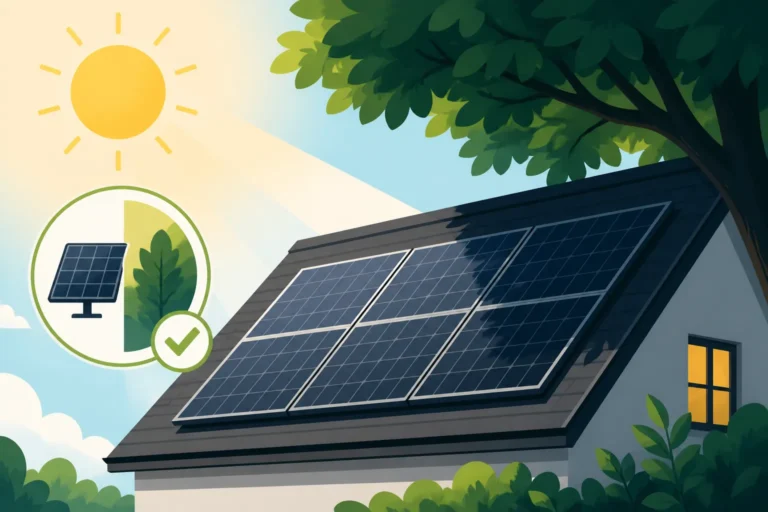
Similarly, in areas prone to partial shading, perhaps from a nearby tree or a chimney, Maxeon's advanced cell technology helps mitigate the impact. While no panel is immune to shading, their design allows individual cells to perform better when partly shaded, preventing the entire panel's output from plummeting. This is a crucial factor for homes with complex rooflines or minor shading issues, where optimizing every bit of sunlight is essential. For those with tricky roof situations, researching Best Solar Panels for Shaded Roofs will often point you towards panels with robust shade tolerance, like Maxeon. Even if you're just looking for solar-powered garden lights or a small off-grid charger for camping, checking out options on Amazon can give you an idea of how solar technology is adapting to diverse needs, though full home solar systems aren't typically purchased that way.
Space-Saving and Aesthetic Advantages
Because Maxeon panels boast such high efficiency, they can produce more power from a smaller footprint. This is incredibly advantageous for homeowners with limited roof space. Instead of needing 20 standard panels to achieve a certain system size, you might only need 16 or 17 Maxeon panels. This not only makes installation feasible for smaller roofs but can also lead to a cleaner, less cluttered aesthetic. Many homeowners appreciate the sleek, all-black design of Maxeon panels (often called "black on black"), which blends seamlessly with most roof types, enhancing curb appeal rather than detracting from it.
Furthermore, their robust construction often means less need for bulky racking systems, contributing to a lower profile and more integrated look. For those who care about the visual impact of solar on their home, Maxeon often delivers a premium aesthetic that matches its performance.
Value Proposition and Investment
While Maxeon panels typically come with a higher upfront cost compared to many competitors, their long-term value proposition is very strong. When you factor in their superior efficiency (leading to more power per square foot), minimal degradation rate, and industry-best 40-year comprehensive warranty, the lifetime savings and return on investment can often outweigh the initial price difference. You're paying for a premium product that is engineered for maximum performance and reliability over a significantly longer period.
This makes them a particularly attractive investment for homeowners planning to stay in their homes for many years, as they'll reap the benefits of consistent, high-yield energy production for decades. Furthermore, the enhanced durability and comprehensive warranty reduce the risk of unexpected maintenance or replacement costs, making your solar investment more predictable and secure. Understanding your Solar ROI & 25-Year Savings Breakdown can help you visualize these benefits. When you compare the performance and longevity, the initial investment often makes more sense for many people.
Comparing Maxeon to Other Premium Brands
When you're evaluating solar panels, especially at the higher end of the market, it's easy to get lost in specifications and claims. Maxeon often comes up in the same breath as other top-tier manufacturers like REC, Qcells, or Canadian Solar. While all these brands offer excellent products, there are key distinctions that might sway your decision.
Key Differentiators
Maxeon's primary differentiator, as we've discussed, lies in its unique back-contact cell technology and its resulting benefits: highest efficiency, exceptional durability, and industry-leading warranties. This proprietary technology, often found in their Maxeon line, is what truly sets them apart from the competition, including other premium brands like REC Solar or Qcells, which also produce excellent, high-efficiency panels but generally use different cell architectures (like PERC or TOPCon).
For instance, REC vs Qcells Solar Panels are often compared for their efficiency and value, and while both are strong contenders, Maxeon often surpasses them in terms of pure efficiency and the sheer length of its comprehensive warranty. REC's Alpha series, for example, offers great performance and a 25-year warranty, while Qcells has robust panels with competitive pricing and solid warranties. However, neither typically matches Maxeon's 40-year product and performance warranty. Maxeon's commitment to low degradation is also a significant selling point; your system will produce more power for longer. If you ever need to find monitoring accessories or cleaning kits for your solar panels, platforms like Amazon can be a good resource to find them, although the panels themselves are typically bought through certified installers.
Considering Cost vs. Benefits
It's no secret that Maxeon panels usually come with a higher price tag per watt than most other panels on the market. This can be a hurdle for some homeowners. However, it's crucial to look beyond the initial cost and consider the overall value proposition, especially for a long-term investment like solar.
When comparing Maxeon to other premium brands, here's a rough breakdown:
| Feature | Maxeon (formerly SunPower) | REC Solar (e.g., Alpha Series) | Qcells (e.g., Q.PEAK DUO Series) |
|---|---|---|---|
| Efficiency (Typical) | 21.5% – 23% | 21% – 22% | 20% – 21.5% |
| Product Warranty | 40 years (Premium lines) | 25 years (for ProTrust warranty) | 25 years (for Q.PEAK DUO BLK ML-G10+) |
| Performance Warranty | 92.5% at 25 years, 88.3% at 40 years | 92% at 25 years (for ProTrust warranty) | 86% at 25 years |
| Degradation Rate | Very low (~0.25% per year) | Low (~0.25% – 0.3% per year) | Standard (~0.5% per year) |
| Temperature Coefficient | Excellent (e.g., -0.29%/°C) | Very good (e.g., -0.26%/°C) | Good (e.g., -0.32%/°C) |
| Technology Focus | Back-contact cells, solid copper foundation | Heterojunction (HJT) cells, half-cut cells | PERC, half-cut cells, zero-gap technology |
| Aesthetics | Often all-black, sleek design | All-black options available | All-black options available |
(Note: Specific warranty terms and efficiency ratings can vary by model and region. Always check the latest datasheets from the manufacturer.)
As you can see, Maxeon consistently ranks at the top, particularly in warranty length and sustained performance. If maximizing energy production from limited space, ensuring extreme durability, and having the longest possible warranty are your top priorities, then the higher investment in Maxeon panels is likely worthwhile. However, if budget is a tighter constraint and you're still looking for high quality, brands like REC and Qcells offer excellent performance and strong warranties that might be a better fit. Ultimately, the "best" panel depends on your specific needs, budget, and priorities for your home solar system. Exploring How Much Do Solar Panels Cost? 2026 Guide can provide a broader context for these price considerations.
The Long-Term Maxeon Experience
Choosing solar panels is a long-term commitment, often spanning 25 years or more. With Maxeon, the expectation is not just that the panels will last, but that they will perform at an exceptionally high level throughout their lifespan, offering sustained benefits and peace of mind.
What to Expect Over Decades of Use
When you install Maxeon panels, you're not just getting solar panels; you're getting a system designed for longevity and resilience. Over the decades, you can expect consistent energy production that significantly reduces or even eliminates your electricity bills. Their low degradation rate means that even 20, 30, or 40 years down the line, your system will still be generating a substantial amount of power, outpacing many other panels in the market. This steady output is crucial for maintaining the financial benefits of your solar investment without needing premature system upgrades or additions.
Maintenance for Maxeon panels is generally similar to other high-quality solar panels; they benefit from occasional cleaning, especially if you live in a dusty area or one with significant pollen. Simple cleaning supplies, sometimes found on platforms like Amazon, can help maintain optimal efficiency. You should also regularly monitor your system's performance, which is typically done through an online portal provided by your installer or inverter manufacturer. Should any issues arise, the comprehensive 40-year warranty means you're well-protected against defects, offering a level of security that is unmatched by most competitors.
Are Maxeon Panels Worth the Investment?
This is the million-dollar question for many homeowners. Given their higher upfront cost, are Maxeon solar panels truly worth the investment? For many, the answer is a resounding yes, especially for those who prioritize:
- Maximum Efficiency: If you have limited roof space but high energy needs, Maxeon's superior efficiency allows you to generate more power with fewer panels.
- Long-Term Reliability and Durability: If you want a system that will withstand extreme weather and perform consistently for decades without significant degradation or risk of failure, Maxeon is a top choice.
- Peace of Mind: The industry-leading 40-year comprehensive warranty offers unparalleled protection and reassurance, significantly reducing the risks associated with a long-term investment.
- Aesthetics: For homeowners who value a sleek, all-black, low-profile appearance that enhances their home's curb appeal, Maxeon often delivers.
While the initial outlay might be higher, the cumulative savings over the system's extended lifespan, combined with reduced maintenance concerns and superior performance, often make Maxeon panels a financially savvy decision. It's an investment in premium quality that pays dividends in both energy savings and peace of mind for potentially half a century. When considering Are Solar Panels Worth It in 2026?, for many, the Maxeon experience solidifies the positive answer.
Ultimately, Maxeon solar panels are "good" in the sense that they represent the pinnacle of solar technology in terms of efficiency, durability, and warranty protection. They're built for homeowners who demand the best performance and longest lifespan from their solar energy system, even if it means a higher initial investment.
Disclaimer
This article is for general informational purposes only and does not constitute professional advice. Laws, prices and regulations vary by location and change over time. Consult a qualified professional for guidance on your specific situation.