Best Solar Panel and Inverter Combination
Deciding to go solar is a fantastic step towards energy independence, but then you're immediately hit with a mountain of choices. One of the biggest head-scratchers for many homeowners is figuring out the perfect marriage between solar panels and inverters. It feels like you need an engineering degree just to understand the jargon, and making the wrong choice can really impact your system's performance and your long-term savings. This guide is here to untangle that complexity, helping you understand how these two critical components work together and what combinations will yield the best results for your unique home and energy needs.
Understanding the Core Components: Panels and Inverters
Before we dive into specific combinations, it’s crucial to grasp what solar panels and inverters actually do. Think of them as the heart and brain of your solar energy system, each playing a distinct yet interconnected role in bringing clean electricity into your home.
The Role of Solar Panels in Your System
Solar panels, often visible on rooftops, are your system's workhorses. Their primary job is to capture sunlight and convert it into direct current (DC) electricity. This process relies on photovoltaic (PV) cells, which use semiconductor materials—most commonly silicon—to create an electric field when exposed to light. The efficiency of these panels, or how well they convert sunlight into electricity, varies significantly between models and brands. For instance, panels from companies like Qcells or REC are often praised for their robust performance, even in less-than-ideal conditions.
Beyond just capturing light, panels also determine the overall capacity of your system. The more panels you have, and the higher their individual wattage, the more electricity your system can potentially generate. When considering how many solar panels you need for my home, you’ll factor in your electricity consumption, available roof space, and local sunlight conditions. It’s not just about slapping panels on your roof; it’s about designing a system that efficiently meets your household's demands.
The Critical Function of Solar Inverters
While solar panels generate DC electricity, almost all household appliances and the utility grid run on alternating current (AC) electricity. This is where the inverter steps in – it's the vital bridge that converts the DC power from your panels into usable AC power. Without an inverter, the electricity generated by your panels would be effectively useless for your home.
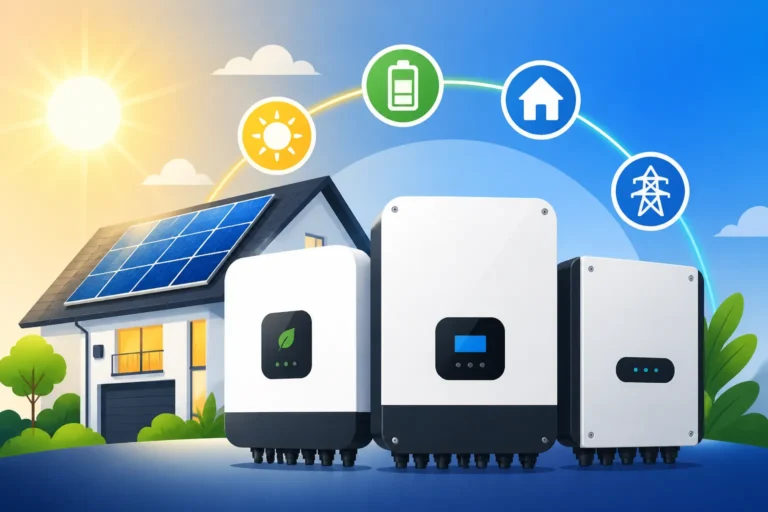
There are primarily three types of inverters you'll encounter:
- String Inverters: These are the traditional choice. Multiple panels are wired together in "strings," and each string connects to a central inverter. They are generally the most cost-effective option upfront.
- Microinverters: Instead of one central inverter, each solar panel has its own small inverter attached directly to it. This allows each panel to operate independently, optimizing its own power output. This can be a huge advantage, especially for roofs with shading issues.
- Power Optimizers: These combine aspects of both string inverters and microinverters. An optimizer is attached to each panel, conditioning the DC power and sending it to a central string inverter for the final DC-to-AC conversion. They also allow for panel-level optimization.
The choice of inverter heavily impacts how your system performs, especially under varying conditions like partial shade, and how easily you can monitor individual panel performance. You can delve deeper into the pros and cons in a guide on Solar Inverters: String vs Microinverter vs Optimizer.
Factors to Consider When Pairing Panels and Inverters
Choosing the best solar panel and inverter combination isn't a one-size-fits-all decision. It requires a thoughtful assessment of several factors unique to your home, budget, and energy goals. Neglecting any of these can lead to a less-than-optimal system that doesn't deliver the savings or performance you expect.
System Size and Your Energy Needs
Your household's electricity consumption is the bedrock of your solar system design. A larger home with high energy usage, perhaps running multiple air conditioners or electric vehicle chargers, will naturally require more solar panels and a corresponding inverter system capable of handling that higher output. Conversely, a smaller home with moderate usage might need fewer panels, potentially simplifying the inverter setup.
Start by looking at your past utility bills to understand your average monthly and annual kilowatt-hour (kWh) usage. This will help your installer determine the appropriate system size. Once the total system wattage is calculated, the inverter or inverter system (whether it's one large string inverter, a series of microinverters, or optimizers paired with a string inverter) must be sized to efficiently handle the aggregate DC output from your chosen panels. An undersized inverter can bottleneck your system's production, while an oversized one can be an unnecessary expense. Understanding your Solar Panel Cost Per Watt Explained can also help you budget for the right system size.
Roof Characteristics and Shading Challenges
The physical attributes of your roof play an enormous role in shaping your panel and inverter choices. Not all roofs are created equal when it comes to solar.
- Roof Space and Orientation: A large, unshaded, south-facing roof in the Northern Hemisphere is the ideal canvas for solar. In such a scenario, where all panels receive consistent sunlight, a traditional string inverter might be perfectly adequate and cost-effective. However, if your roof has multiple angles, dormers, or limited space, you might need to place panels in different orientations, which can affect the performance of a string inverter.
- Shading: This is arguably the most critical factor influencing inverter choice. If portions of your roof are regularly shaded by trees, chimneys, or neighboring buildings, a string inverter will struggle. With a string inverter, if even one panel in a string is shaded, the output of the entire string can be significantly reduced, much like a weak link in a chain. This is where microinverters or power optimizers truly shine. Since they optimize power at the individual panel level, a shaded panel won't drag down the performance of the unshaded panels. Companies like Enphase are well-known for their microinverter solutions that excel in shaded conditions, making them a popular choice when shade is a concern. You can read more about specific considerations in Roof Considerations for Solar Panels.
Budget and Long-Term Value
Cost is always a significant consideration, and the initial outlay for a solar system can vary widely depending on the chosen components. String inverters typically have a lower upfront cost than microinverters or power optimizers. However, the cheapest option isn't always the best long-term value, especially if it means sacrificing performance or durability.
- Upfront Cost vs. Lifetime Savings: While microinverters or optimizers might add to the initial price tag, they can lead to greater energy production over the system's lifetime, especially on complex or shaded roofs. This increased production translates directly into greater savings on your electricity bill, potentially shortening your Solar Panel Payback Period Explained.
- Warranties and Durability: Consider the warranties offered on both your panels and inverters. High-quality panels from brands like Maxeon (SunPower) often come with industry-leading product and performance warranties, ensuring their longevity. Similarly, inverters have different warranty periods. Microinverters, due to their distributed nature, often have longer warranties than string inverters because the failure of one unit doesn't bring down the entire system, and replacement is simpler. Weighing the cost against the expected lifespan, maintenance, and warranty support is essential for true long-term value. Some homeowners even purchase extra components, like replacement microinverters, from online retailers like Amazon to have on hand, though this should always be discussed with your installer.
Popular and Effective Solar Panel and Inverter Combinations
Now that we've covered the basics and key considerations, let's explore some common and highly effective solar panel and inverter pairings that address different home scenarios.
High-Efficiency Panels with Microinverters (e.g., Qcells/REC with Enphase)
This combination is a favorite for homeowners seeking maximum power output, especially if their roof has shading or complex geometries.
- Why it works: High-efficiency panels, such as those from Qcells or REC Solar, are designed to squeeze every last bit of energy from the sun. When paired with microinverters from a company like Enphase Energy, each panel operates at its independent peak performance. If one panel is temporarily shaded by a cloud or a tree branch, the others continue to produce at their maximum potential. This eliminates the "Christmas light effect" where one underperforming panel can degrade the output of an entire string.
- Ideal Scenario: Homes with multiple roof facets, chimneys, dormers, or partial shading throughout the day. It's also excellent for homeowners who want granular monitoring of each panel's performance and robust reliability due to the redundancy of individual inverters. If an Enphase microinverter fails on one panel, the rest of the system continues to operate without interruption, making troubleshooting and replacement simpler.
- Considerations: The upfront cost for a system with microinverters tends to be higher per watt than a string inverter system. However, for many, the enhanced performance, extended warranties, and system resilience easily justify the investment. You can often find a wide range of compatible mounting hardware and accessories for this type of setup on platforms like Amazon.
Standard Panels with String Inverters and Optimizers (e.g., Jinko/Trina with SolarEdge)
This combination offers a good balance of cost-effectiveness and performance, particularly for roofs that experience some shading but not enough to warrant full microinverter systems.
- Why it works: Solar panels from manufacturers like Jinko Solar or Trina Solar offer excellent performance for their price point, making them a popular choice for many systems. When combined with a string inverter system that uses power optimizers (like those from SolarEdge), you get the best of both worlds. The optimizers are installed on each panel, ensuring that each panel's output is maximized before sending the conditioned DC power to a central string inverter. This mitigates the impact of shading on individual panels, much like microinverters, but uses a single central inverter for the DC-to-AC conversion.
- Ideal Scenario: Homes with fairly uniform roof planes but occasional, predictable shading (e.g., from a nearby tree that casts a shadow for a few hours a day). It's also a strong contender for homeowners who want panel-level optimization and monitoring without the full cost of microinverters, or for larger systems where a single central inverter is easier to manage.
- Considerations: While better than a pure string inverter for shading, if the central string inverter goes down, the entire system stops producing power. However, the system's overall cost is often more competitive than an all-microinverter setup. The power optimizers provide a good middle ground for performance and budget. For further comparison, you might find our guide on Enphase vs SolarEdge: Which Inverter Is Better? helpful.
Integrated Solutions (e.g., Tesla Solar)
For those who prioritize simplicity, aesthetics, and a single-brand ecosystem, integrated solar solutions are gaining traction.
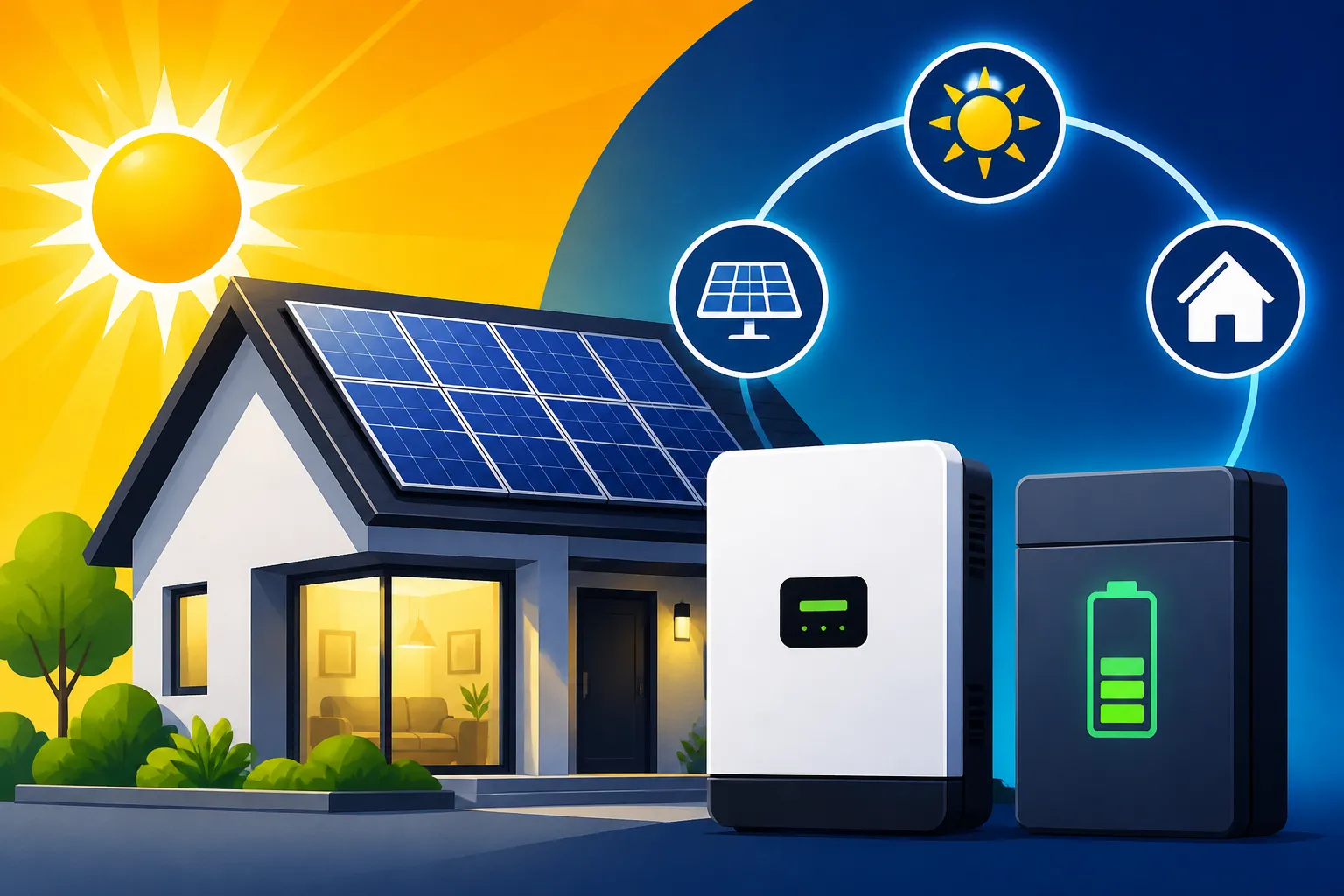
- Why it works: Companies like Tesla offer a complete solar energy ecosystem, often encompassing their solar panels (or solar roof tiles), proprietary inverters, and the Powerwall battery storage system. This "all-in-one" approach simplifies the design and installation process, as all components are designed to work seamlessly together. The Tesla inverter, for instance, is built to integrate directly with their panels and Powerwall, providing a streamlined experience for energy generation, storage, and management.
- Ideal Scenario: Homeowners who want a unified, aesthetically pleasing system with integrated battery storage capabilities, particularly those looking to maximize their energy independence and backup power. It's also appealing for those who prefer to deal with a single company for their entire solar solution.
- Considerations: Integrated solutions might offer less flexibility in terms of mixing and matching components from different manufacturers. While convenient, the total cost can sometimes be higher, and you're tied to one brand's specific technology and warranty structure. However, the ease of installation and comprehensive app-based monitoring can be a significant draw for many.
Here's a quick comparison table to help visualize these combinations:
| Combination Type | Panel Examples | Inverter Examples | Ideal Scenario | Pros | Cons |
|---|---|---|---|---|---|
| High-Efficiency + Microinverters | Qcells, REC, Maxeon | Enphase IQ Series | Shaded roofs, complex layouts, granular monitoring required | Max production in shade, panel-level monitoring, high reliability, long warranties | Higher upfront cost |
| Standard + Optimizers | Jinko, Trina, Canadian Solar | SolarEdge, Tigo | Some shading, multiple roof planes, good balance of cost/performance | Good shade mitigation, panel-level monitoring, cost-effective than microinverters | Central inverter remains a single point of failure |
| Integrated System | Tesla Solar Panels | Tesla Inverter/Powerwall | Unified system, battery storage focus, aesthetics, single vendor | Seamless integration, aesthetic appeal, comprehensive ecosystem, simplified purchasing | Less flexibility in component choice, potentially higher cost, vendor lock-in |
Making the Best Choice for Your Home
Selecting the right solar panel and inverter combination isn't a decision you have to make alone. It’s a significant investment, and ensuring you get the most efficient and reliable system for your specific needs will lead to greater satisfaction and savings down the line.
Getting Professional Assessments and Quotes
The absolute best way to determine the optimal panel and inverter combination for your home is to consult with reputable solar installers. They have the expertise to assess your specific situation, including:
- Your energy consumption patterns: A good installer will analyze your past electricity bills to accurately size your system.
- Your roof's characteristics: They'll conduct a detailed site survey to evaluate roof size, pitch, orientation, age, and most importantly, any potential shading issues throughout the day and year. For example, knowing your Roof Age: When to Replace Before Solar is crucial.
- Local climate conditions: They can factor in average sunlight hours, temperature variations, and even snow loads in your area.
Don't settle for just one quote. Obtaining multiple quotes from different installers allows you to compare system designs, equipment options, pricing, and warranty terms. Ask detailed questions about why they recommend a particular panel and inverter combination. A transparent installer will explain their choices based on your home's unique attributes rather than pushing a generic solution. You can learn more about how to find a reliable professional in our guide on How to Choose a Solar Installer. While you might find some components or general information on places like Amazon, a professional installer provides the crucial expertise for system design and installation.
Checking Warranties and Customer Support
Warranties are incredibly important for both solar panels and inverters, as they protect your investment for decades. Solar panels typically come with two main warranties:
- Product Warranty: Covers defects in manufacturing and materials, usually lasting 12-25 years.
- Performance Warranty: Guarantees that the panels will produce a certain percentage of their original power output over a specified period (e.g., 80% after 25 years).
Inverters also come with warranties, which can range from 10-25 years depending on the type and brand. Microinverters often have longer warranties (20-25 years) compared to string inverters (10-12 years), reflecting their design for longevity and easier individual replacement. When you're making your final decision, look not just at the length of the warranty, but also at the reputation of the manufacturer and the installer. How easy is it to file a claim? What is their track record for customer support? A strong warranty from a reputable company like SunPower (Maxeon) or Enphase can provide significant peace of mind over the 25+ year lifespan of your system. You can gain more insight by reading our article on Solar Panel Warranties Explained.
Ultimately, the best solar panel and inverter combination is the one that is perfectly tailored to your home, maximizes your energy production and savings, and provides long-term reliability. Don't rush the process, do your research, and lean on the expertise of trusted professionals to make an informed decision that you'll be happy with for years to come.
Disclaimer
The information provided in this guide is intended for general informational purposes only and does not constitute professional advice. Solar system design and installation require expert assessment. Always consult with qualified solar professionals to determine the best solution for your specific property and energy needs. Performance, costs, and savings can vary widely based on location, system design, energy usage, and prevailing electricity rates.