Solar Panel Technology: TOPCon, HJT & PERC
Navigating the world of home solar can feel like learning a new language, especially when installers start throwing around terms like PERC, TOPCon, and HJT. It’s frustrating when you're trying to make a significant investment in your home's future, but the technical jargon just makes your head spin. This comprehensive guide is here to demystify these advanced solar panel technologies, helping you understand what they mean for your energy production, efficiency, and ultimately, your savings.
Understanding the Foundation: What is a Solar Cell?
Before we dive into the specific technologies that make modern solar panels so powerful, it's really helpful to understand the basic building block: the solar cell itself. Imagine it as the tiny engine that converts sunlight into usable electricity. Without a solid grasp of this fundamental concept, the nuances of PERC, TOPCon, and HJT can feel abstract and irrelevant to your everyday life. We're talking about the very heart of your solar system here, and knowing how it works will empower you to make more informed decisions.
The Photovoltaic Effect: How Sunlight Becomes Electricity
At its core, a solar cell works through something called the photovoltaic effect. It sounds super scientific, but it's actually quite elegant. When sunlight (which is made of tiny energy packets called photons) hits the silicon material in a solar cell, these photons transfer their energy to electrons within the silicon atoms. This energy transfer knocks the electrons loose, causing them to flow. Think of it like a miniature pinball machine where the photons are the plungers, and the electrons are the balls, getting knocked around and creating a current.
To make this flow of electrons useful, solar cells are designed with two different layers of silicon, often referred to as n-type and p-type. One layer has extra electrons (n-type, for negative), and the other has spaces where electrons are missing, called "holes" (p-type, for positive). When photons dislodge electrons, the n-type layer pushes them towards the p-type layer, creating an electric field. This directed flow is what we harness as direct current (DC) electricity, which is then sent to an inverter to be converted into alternating current (AC) for your home. It’s a continuous, silent dance of particles that powers your lights and appliances.
Key Components of a Standard Solar Panel
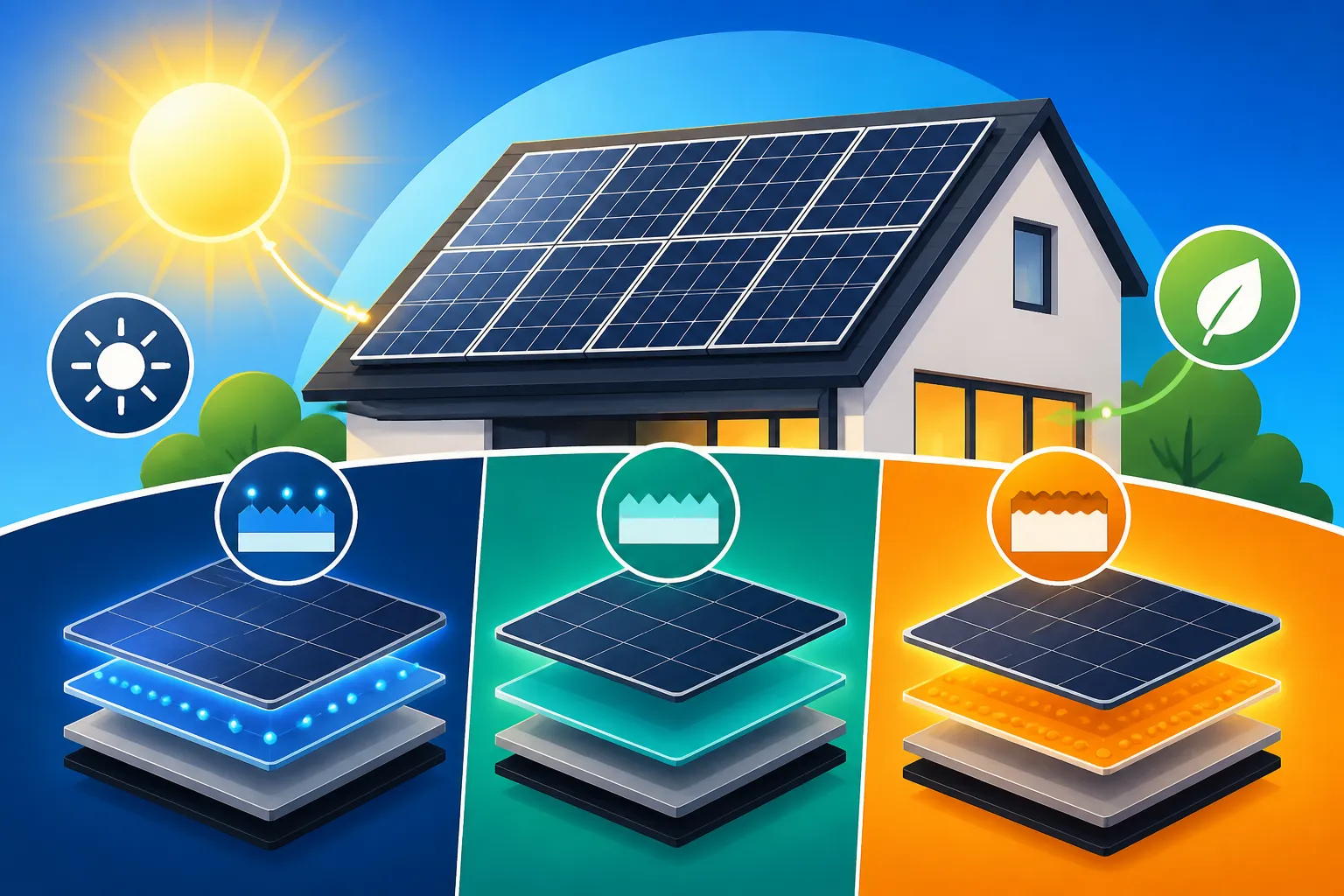
While the solar cell is the star of the show, a complete solar panel is actually a complex sandwich of various materials, each playing a crucial role in protecting and optimizing those delicate cells. You've got the cells themselves, usually arranged in a grid. These are encased between layers of protective materials, typically ethylene vinyl acetate (EVA), which acts like a sealant to protect against moisture and vibration. This entire assembly is then topped with a sheet of tempered glass – often chosen for its durability against hail, debris, and extreme weather – and backed by a sturdy, weather-resistant polymer sheet, known as the backsheet.
Around the edges, you'll find an aluminum frame, which provides structural integrity, makes the panel easier to handle and mount, and helps dissipate heat. Finally, on the back, there's a junction box where the electrical connections from all the individual cells are brought together, ready to connect to your system's wiring and ultimately, your inverter. Each of these components is vital, working together to ensure the solar cells can reliably perform their energy-generating magic for decades, standing up to everything Mother Nature throws at them. Understanding these parts helps you appreciate the engineering behind every panel on your roof.
The Workhorse of Yesterday: PERC Solar Panel Technology
For years, if you talked about high-efficiency solar panels, you were almost certainly talking about PERC technology. It's been the industry standard for quite a while, and for good reason: it took the humble solar cell and gave it a significant performance boost without reinventing the wheel entirely. Think of PERC as the reliable, high-performing sedan of the solar world – not necessarily the flashy new sports car, but incredibly effective and widely adopted. Many homeowners in states like California and Arizona have benefited immensely from PERC panels, seeing significant reductions in their electricity bills.
How PERC Improves Upon Traditional Solar Cells
Traditional solar cells, known as BSF (Back Surface Field) cells, had a bit of a limitation: some sunlight would pass right through the silicon cell without being converted into electricity. This wasted energy was a challenge. Along came PERC – or Passivated Emitter and Rear Cell – technology, which solved this problem with a clever addition. Essentially, manufacturers added a thin, reflective layer to the back of the solar cell, behind the silicon wafer. This layer, typically made of dielectric material, acts like a mirror.
When photons from sunlight penetrate the silicon without activating electrons on their first pass, this reflective layer bounces them back into the silicon. This gives the photons a second chance to be absorbed and create electricity. Additionally, the passivation layer also helps reduce what's called "electron recombination" at the rear surface. In simpler terms, it prevents electrons from getting stuck or recombining before they can contribute to the electrical current, thereby increasing the overall efficiency of the cell. This seemingly small tweak had a massive impact, allowing PERC panels to achieve higher efficiencies and perform better, especially in lower light conditions, compared to their predecessors.
Advantages and Limitations of PERC Panels
The primary advantage of PERC technology is its significantly higher efficiency compared to older, standard solar cells. This means that for the same roof space, a PERC panel can generate more electricity, which is a huge benefit for homeowners with limited roof area or high energy needs. They also tend to perform better in high-temperature conditions due to improved electron movement, experiencing less power degradation as temperatures rise. Furthermore, PERC technology is well-established, meaning manufacturing processes are optimized, leading to more affordable panels that are still highly reliable. You’ll find many reputable brands utilizing PERC, making it a very accessible and dependable option.
However, like any technology, PERC panels do have some limitations. While they brought a big jump in efficiency, they're not the absolute pinnacle anymore. Newer technologies like TOPCon and HJT are now pushing those efficiency boundaries even further. PERC panels can also be more susceptible to Light-Induced Degradation (LID) and Potential-Induced Degradation (PID) compared to some of the newer N-type cell structures, though manufacturers have made significant strides in mitigating these issues over the years. Still, it’s worth noting that while PERC was revolutionary, the solar industry continues to evolve rapidly, always striving for that next level of performance and durability. This evolution is why you might hear about different Solar Panel Warranties Explained depending on the technology.
The Rise of N-Type: TOPCon Solar Panel Technology Explained
If PERC was the reliable sedan, then TOPCon is like the newer, more fuel-efficient hybrid model entering the market. It represents the next evolutionary step for what are known as "N-type" solar cells, which offer several inherent advantages over the "P-type" cells that dominate the PERC market. Homeowners exploring options for higher energy output and longer-term reliability are increasingly looking at TOPCon as a compelling choice. This technology is gaining serious traction, becoming a favored option for many forward-thinking solar installations.
The N-Type Advantage in TOPCon Cells
The fundamental difference with TOPCon (Tunnel Oxide Passivated Contact) technology lies in its use of N-type silicon wafers, rather than the P-type wafers traditionally used in most PERC cells. This might sound like a minor detail, but it makes a big difference. P-type silicon is doped with boron, which, while effective, can react with oxygen and light to cause power degradation over time (the aforementioned Light-Induced Degradation or LID). N-type silicon, on the other hand, is doped with phosphorus.
This phosphorus doping makes N-type cells much less susceptible to LID, meaning they maintain their efficiency better over their lifespan. In TOPCon cells specifically, a super thin layer of silicon oxide is grown on the back surface of the N-type wafer, followed by a layer of doped polysilicon. This "tunnel oxide" layer effectively passivates the surface, preventing electron recombination and improving charge carrier collection. The result is a cell that not only degrades less but also boasts higher open-circuit voltage, leading to more power output from each individual cell. It's a significant engineering feat that leverages the strengths of N-type silicon to deliver superior performance.
Performance Benefits and Challenges of TOPCon
The benefits of TOPCon panels are quite compelling. First and foremost is their higher efficiency, often reaching beyond 22-23% in commercial products, pushing closer to what was once considered laboratory-only performance. This means you can get more power from fewer panels or cover a smaller roof space more effectively. Secondly, their N-type structure leads to a lower degradation rate over time. While a typical PERC panel might degrade by 0.5% to 0.7% annually, TOPCon panels often boast degradation rates of around 0.4% or even lower, meaning they’ll be producing closer to their original output for longer. They also tend to have better temperature coefficients, meaning their performance drops less dramatically on hot, sunny days.
However, the manufacturing process for TOPCon cells is more complex than for PERC, requiring more precise control over the thin-film deposition and doping steps. This can, in some instances, translate to slightly higher manufacturing costs, which might be passed on to the consumer. While these panels are becoming more widespread, the initial investment might be marginally higher than a comparable PERC system. Nevertheless, for many homeowners, the long-term benefits in terms of higher energy yield and extended performance often outweigh the initial cost difference, especially when considering the entire Solar Panel Payback Period Explained. The improved efficiency can also directly impact your overall Solar ROI & 25-Year Savings Breakdown.
The Cutting Edge: HJT (Heterojunction) Solar Panel Technology
If TOPCon is the advanced hybrid, then HJT is the electric vehicle of the solar world – pushing the boundaries of what's possible with silicon-based solar cells. Heterojunction technology combines the best of two different worlds, offering incredibly high efficiencies and impressive durability. While perhaps not as ubiquitous as PERC or even TOPCon just yet, HJT is quickly gaining ground, becoming the technology of choice for those seeking maximum performance and a truly premium solar solution. Major players like REC Solar and Panasonic are investing heavily in HJT, demonstrating its potential.
Combining Amorphous and Crystalline Silicon
HJT, or Heterojunction Technology, achieves its remarkable performance by doing something quite unique: it layers ultra-thin films of amorphous silicon onto a crystalline silicon wafer. This is different from PERC or TOPCon, which primarily rely on modifications to crystalline silicon alone. Crystalline silicon is excellent for capturing light and generating power, but it has surface defects that can cause electrons to recombine before they can be harvested, leading to energy loss.
Here's where the amorphous silicon comes in. Amorphous silicon is a different form of silicon that, when applied in very thin layers, acts as an outstanding passivating agent. It effectively "cleans up" the surface of the crystalline wafer, reducing those pesky recombination losses to a minimum. By sandwiching the crystalline silicon between these two layers of intrinsically doped amorphous silicon, the HJT cell creates an incredibly efficient pathway for electrons to flow, leading to higher voltage and current output. This combination results in a cell that captures more sunlight and converts it into electricity with less waste, pushing efficiencies to new heights.
High Efficiency and Durability of HJT Panels
The performance advantages of HJT panels are truly impressive. They boast some of the highest efficiencies available on the market today, often exceeding 23-24%, meaning you can squeeze the most electricity out of every square foot of your roof. Beyond pure efficiency, HJT cells exhibit an exceptionally low-temperature coefficient. This means that when the sun is blazing and your roof is scorching hot, HJT panels maintain their performance better than almost any other technology. For homeowners in hot climates like Texas or Florida, this is a massive benefit, translating into more actual energy production throughout the year.
Furthermore, HJT cells, like TOPCon, utilize an N-type crystalline silicon wafer, making them inherently resistant to Light-Induced Degradation (LID) and Potential-Induced Degradation (PID). Their symmetric bifacial design, meaning they can absorb light from both the front and back, also contributes to higher energy yield in certain installations, especially with ground-mount systems or reflective surfaces. All these factors contribute to an extremely low annual degradation rate, often as low as 0.25% per year, giving HJT panels an exceptionally long and productive lifespan. While the manufacturing process is intricate and specialized, leading to a higher initial cost, the long-term savings and superior performance make HJT an appealing choice for many. When you look at the Best Solar Panels of 2026, you'll often find HJT technology prominently featured.
Comparing the Technologies: Which One is Right for You?
Now that we've peeled back the layers on PERC, TOPCon, and HJT, the big question remains: which one is the right fit for your home? It’s not just about picking the "best" technology in a vacuum; it’s about finding the best technology for your specific needs, budget, and location. What works brilliantly for a sprawling, unshaded roof in Arizona might not be the most cost-effective solution for a smaller, partially shaded roof in a cooler climate. Let's break down the key factors to consider.
Efficiency, Cost, and Degradation Rates Compared
When evaluating solar panel technologies, three metrics often stand out: efficiency, cost, and degradation rate. Efficiency tells you how much of the sunlight hitting the panel is converted into electricity; higher is generally better, especially if your roof space is limited. Cost, of course, is a major factor for most homeowners, representing the upfront investment. And degradation rate indicates how much power output your panels will lose each year – a lower rate means your panels perform better for longer.
Let’s put it into a table to make it a bit clearer:
| Technology | Typical Efficiency Range | Relative Cost | Annual Degradation Rate | Temperature Coefficient | N-Type/P-Type Base |
|---|---|---|---|---|---|
| PERC | 19% – 21.5% | Low to Medium | 0.5% – 0.7% | Moderate | P-type |
| TOPCon | 21.5% – 23% | Medium | 0.4% – 0.5% | Good | N-type |
| HJT | 22.5% – 24%+ | Medium to High | 0.25% – 0.4% | Excellent | N-type |
As you can see, there’s a clear progression. PERC offers a fantastic balance of performance and affordability, making it a solid choice for many. TOPCon steps up the game with better efficiency and lower degradation due to its N-type base, often providing a sweet spot for those wanting more output without a significant jump in price. HJT represents the premium end, delivering top-tier efficiency and durability, but typically at a higher initial cost. Your decision will depend heavily on your priorities.
Real-World Scenarios for Each Technology
Let’s think about some real-life situations:
-
Scenario 1: The Budget-Conscious Homeowner with Ample Roof Space.
If you have a large, south-facing roof in, say, suburban Orlando, Florida, and your primary goal is to minimize upfront costs while still getting excellent performance, PERC panels might be your best bet. Because you have plenty of room, you don't necessarily need the absolute highest efficiency panels to meet your energy needs. A system with a slightly lower Solar Panel Cost Per Watt Explained can still deliver substantial savings over time, and modern PERC panels from brands like Qcells or Jinko Solar are incredibly reliable. You might find a great deal on a complete system using PERC cells, allowing you to go solar sooner. -
Scenario 2: The Homeowner with Limited Roof Space or High Energy Demands.
Imagine you live in a dense neighborhood in San Diego, California, where roof space is at a premium, or you have a large family with high electricity consumption. In this case, maximizing output from every panel is crucial. TOPCon technology shines here. Its higher efficiency means you can generate more power with fewer panels, potentially fitting a sufficient system onto a smaller roof footprint. The lower degradation rate also means consistent, high output for decades, which is critical when every watt counts. Many homeowners are also keen to learn What Is the Cost Per Watt for Solar in California? as they consider these higher-efficiency options. -
Scenario 3: The Early Adopter Seeking Peak Performance and Long-Term Value.
Perhaps you're in a climate with extreme temperatures, like Phoenix, Arizona, or you simply want the absolute best performing, longest-lasting panels available. HJT is likely your champion. Its superior temperature coefficient means it won't lose as much efficiency on those blistering 110-degree days, and its ultra-low degradation rate ensures maximum power production for 30 years or more. While the initial investment might be higher, the long-term energy yield and durability can lead to greater overall savings and peace of mind. For those focused on ultimate system longevity and minimum output drop over time, HJT technology is a clear winner. For tools to research these various technologies and their specs, sometimes even a platform like Amazon can be useful for comparing base models or small components that might interface with these panels.
Beyond the Cell: Other Factors Affecting Solar Panel Performance
It's easy to get caught up in the fascinating world of solar cell technology, but remember that the cells are just one piece of the puzzle. The performance of your entire home solar system is a symphony of interconnected components, all working in harmony. You could have the most advanced HJT panels on your roof, but if the other elements aren't up to par or are improperly configured, you won't get the full benefit. It's like having a high-performance engine in a car with a bad transmission – the potential is there, but it's not being realized.
The Role of Inverters and Optimizers
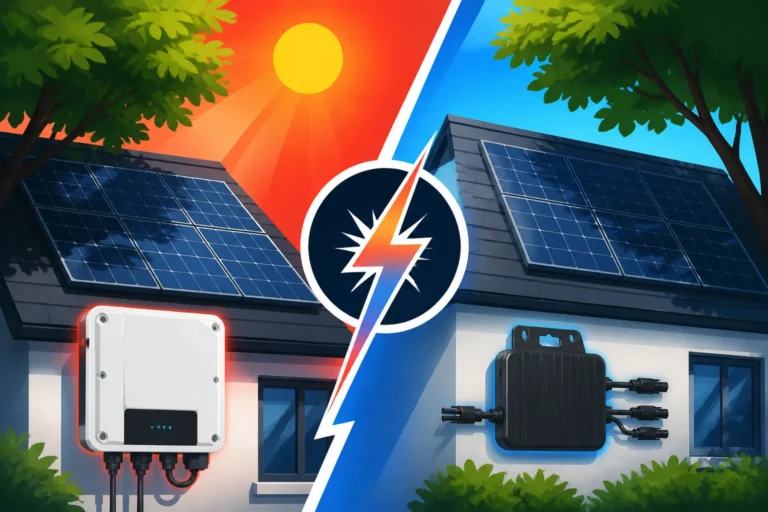
After your solar panels generate direct current (DC) electricity, it needs to be converted into alternating current (AC) that your home appliances use and that the utility grid understands. That's where inverters come in. There are generally three main types: string inverters, microinverters, and power optimizers.
- String Inverters: These are the traditional workhorses. Panels are wired together in "strings," and the DC power from an entire string feeds into one central inverter. They're generally the most cost-effective option. However, if one panel in the string is shaded or underperforms, it can drag down the performance of all panels in that string, creating a bottleneck. This can be a real frustration for homeowners with complex roofs or intermittent shading.
- Microinverters: These are a fantastic solution for many modern homes. Instead of one central inverter, each solar panel has its own small inverter attached directly to its back. This means each panel operates independently. If one panel is shaded by a tree branch or a chimney, the others continue producing at full power. This maximizes overall system output, especially for roofs with varying sunlight conditions. They also offer panel-level monitoring, so you can see exactly how each panel is performing. Enphase is a leading brand in microinverters, offering robust solutions for residential systems.
- Power Optimizers: These are a hybrid solution, often paired with a central string inverter. Each panel gets an optimizer that conditions the DC power and performs maximum power point tracking (MPPT) at the panel level. This mitigates shading issues, much like microinverters, but the DC power is then sent to a central string inverter for conversion to AC. SolarEdge is a prominent provider of optimizer-based systems.
Choosing the right inverter strategy is almost as important as choosing your panels, especially if you have any shade on your roof or plan for future system expansion. For a deeper dive, check out our guide on Solar Inverters: String vs Microinverter vs Optimizer.
Environmental Impact and Installation Considerations
Beyond the technology itself, the real-world performance of your solar panels is heavily influenced by their environment and how they're installed. The angle and direction of your roof, for instance, play a huge role. A south-facing roof in the Northern Hemisphere generally receives the most direct sunlight throughout the day, maximizing production. However, panels facing east or west can still be highly effective, especially if you have higher energy consumption in the mornings or evenings. The pitch or slope of your roof also matters, with optimal angles varying by latitude.
Shading, even intermittent shading from a nearby tree or a new construction, can significantly impact output. This is where those microinverters or optimizers really earn their keep, by allowing individual panels to perform at their best even if others are compromised. Furthermore, proper installation by a reputable solar company is paramount. This includes ensuring correct wiring, secure mounting that protects your roof, and adherence to all local building codes and utility interconnection requirements. A botched installation can not only reduce your system's efficiency but also lead to costly damage or safety hazards down the line. Even seemingly small details, like ordering the right kind of mounting hardware, can sometimes be sourced from larger online retailers like Amazon if you're taking a DIY approach to smaller components, though professional installation for the main system is always recommended. This comprehensive process, from initial site survey to final Solar Permitting & Interconnection (PTO) Explained, ensures your investment pays off.
Future of Solar Panel Technology: What's Next?
The solar industry is a dynamic and innovative field, constantly pushing the boundaries of efficiency, durability, and cost-effectiveness. Just when we think silicon-based technology has reached its peak, engineers find new ways to squeeze even more power out of each cell. While PERC, TOPCon, and HJT represent significant milestones, they are by no means the end of the journey. The quest for cleaner, more abundant energy continues, driven by scientific breakthroughs and a global commitment to sustainability.
Tandem Cells and Perovskites
Looking ahead, one of the most exciting areas of research is tandem cells. Imagine stacking different solar cell materials on top of each other, each optimized to capture a different part of the solar spectrum. Silicon cells are great at absorbing red and infrared light, but they're less efficient with blue and green light. What if we could put a different material on top that excels at capturing those other wavelengths? That's the idea behind tandem cells, and one of the most promising candidates for the top layer is a material called perovskite.
Perovskites are a class of materials that are incredibly efficient at absorbing light and converting it into electricity, especially in the blue and green parts of the spectrum. When a perovskite cell is stacked on top of a traditional silicon cell, the combination can achieve efficiencies well beyond what either material could do alone. We're talking about potential efficiencies exceeding 30%, which would be a game-changer for solar power. While still largely in the research and development phase, and facing challenges with long-term stability and scaling up manufacturing, perovskite-silicon tandem cells represent the next frontier in ultra-high-efficiency solar technology, promising smaller, more powerful panels for the future.
The Continuous Drive for Innovation
Beyond tandem cells and perovskites, the solar industry is buzzing with other innovations. Researchers are exploring quantum dots, organic photovoltaics, and even transparent solar cells that could be integrated into windows. There's also ongoing work to improve the bifacial capabilities of panels, allowing them to capture sunlight reflected from the ground or snow, further increasing energy yield. The focus isn't just on raw efficiency either; there's a strong drive toward improving the environmental footprint of manufacturing, extending panel lifespans, and making solar energy more accessible and affordable for everyone.
The continuous drive for innovation means that today's cutting-edge technology will eventually become tomorrow's standard, much like PERC once revolutionized the market and is now being superseded by TOPCon and HJT. This rapid evolution benefits homeowners directly, as it consistently leads to more powerful, more reliable, and ultimately, more cost-effective solar solutions. Staying informed about these developments will help you appreciate the incredible progress in solar energy and feel confident that your investment in home solar is part of a rapidly advancing, brighter future. If you're wondering Will the Solar Tax Credit Come Back? or considering Federal Solar Incentives That Still Exist in 2026, these advancements will only make those incentives more impactful. Even platforms like Amazon are seeing an increase in smart home energy management systems that interface with these evolving solar technologies, making it easier for homeowners to monitor and optimize their energy use.
Disclaimer
The information provided in this guide is intended for general informational purposes only and does not constitute professional advice. While we strive to provide accurate and up-to-date content, solar technology and incentive programs are constantly evolving. We recommend consulting with qualified solar professionals and financial advisors before making any decisions related to your home solar system.