Tesla Powerwall vs Enphase IQ Battery
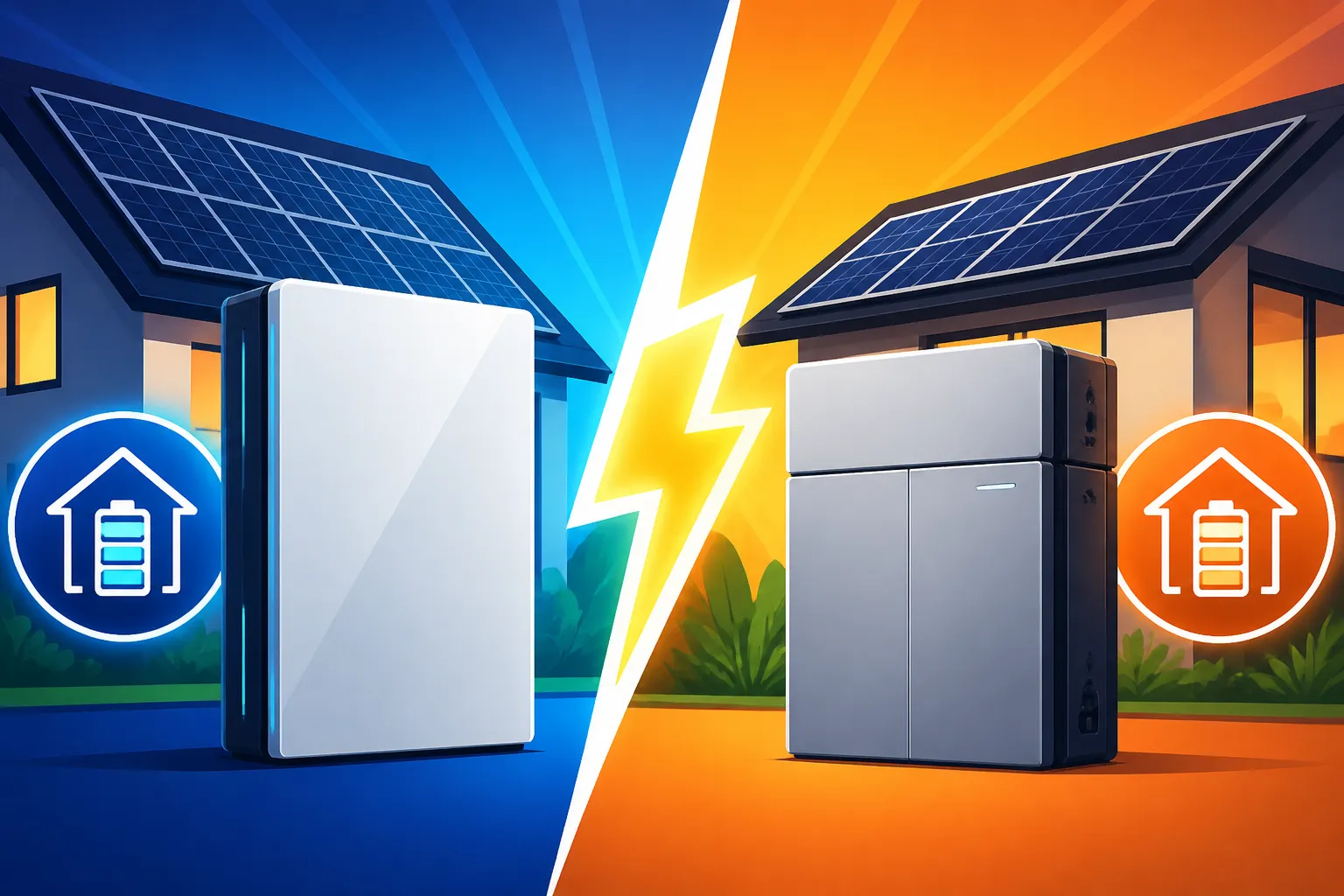
Deciding on the right home battery storage system can feel like navigating a maze, especially when you're looking at top contenders like the Tesla Powerwall and the Enphase IQ Battery. Homeowners often struggle with understanding the nuanced differences that truly impact daily energy use, backup capabilities, and long-term investment. This guide is here to cut through the jargon, giving you a clear, empathetic breakdown of these two popular choices so you can confidently decide which system truly aligns with your family's energy needs and lifestyle.
The Growing Need for Home Battery Storage
It's no secret that our electricity grids are becoming less reliable. From severe weather events causing widespread outages to fluctuating energy prices that make your monthly bill a guessing game, many homeowners are feeling the pinch and seeking more control over their power. This desire for energy independence, coupled with the rising popularity of solar panels, has made home battery storage an essential consideration for anyone looking to truly future-proof their home.
Why Backup Power is More Critical Than Ever
Remember that one time the power went out right in the middle of preparing dinner or during a critical work meeting? It's not just an inconvenience anymore; for many, it's a real disruption to daily life. Aging infrastructure, extreme weather events – like the winter storms that crippled Texas's grid or the wildfires that necessitated planned outages in California – and even simply overloaded local circuits mean that grid reliability is a constant concern. A home battery system like the Tesla Powerwall or an Enphase IQ Battery offers a lifeline, seamlessly taking over when the grid falters, keeping your lights on, your refrigerator cold, and your internet humming. It's about peace of mind, knowing your home remains functional and comfortable, no matter what happens outside.
Maximizing Your Solar Investment with Storage
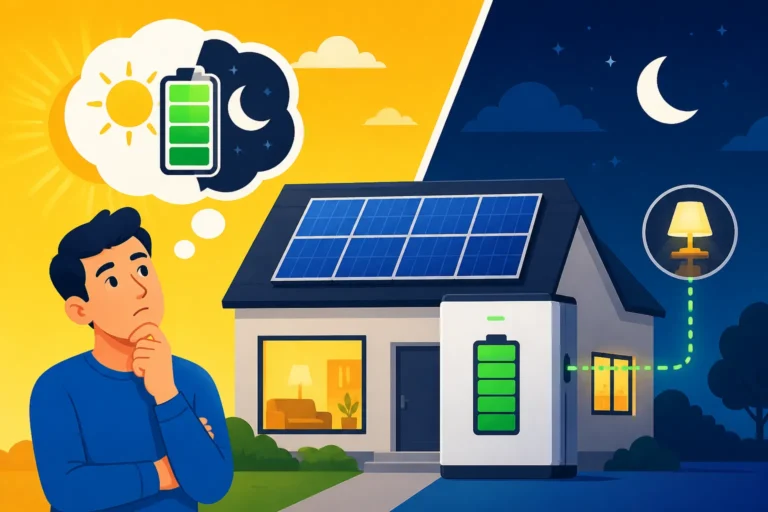
You've made the leap to solar, and that's fantastic! But without a battery, you're still largely beholden to your utility company. Think about it: your solar panels generate the most electricity during the day when the sun is shining, but your household often uses the most power in the evenings, after the sun goes down. This mismatch is where a battery truly shines. Instead of sending your excess solar energy back to the grid for often-low compensation (especially in states with less favorable net metering policies, like California's NEM 3.0, which significantly reduced export credits), a battery allows you to store that valuable energy. You can then use it later when utility rates are higher, effectively turning your home into its own mini-utility. This self-consumption strategy is key to truly maximizing your savings and reaching greater energy independence. If you're wondering, "Is it worth adding a battery to my solar system?", the answer increasingly leans towards yes, particularly as grid policies evolve.
Delving into the Tesla Powerwall Ecosystem
Tesla has become a household name, synonymous with innovation and pushing boundaries, and their Powerwall battery storage system is no exception. It’s part of a larger, integrated energy ecosystem designed to work seamlessly, especially if you're already considering other Tesla energy products like their solar panels or Solar Roof.
Powerwall 3: Features and Specifications
The latest iteration, the Tesla Powerwall 3, builds on the strong foundation of its predecessors. It's an all-in-one unit that integrates the solar inverter directly into the battery itself, simplifying installation and reducing the number of components needed. This design offers a sleek, compact profile, often seen mounted on an exterior wall of a home, providing a significant amount of energy storage.
The Powerwall 3 boasts an impressive usable energy capacity of 13.5 kWh, which is substantial enough to cover the essential loads of many homes during a typical power outage for a day or more, depending on usage. Its continuous power output is around 11.5 kW, allowing it to run larger appliances simultaneously. This means you can keep your AC running, use major kitchen appliances, and generally maintain a high level of comfort even when the grid is down. The unit's round-trip efficiency is quite high, typically around 90%, meaning very little energy is lost when charging and discharging. For a deeper dive, you can check out our comprehensive guide on the Tesla Powerwall 3 Review.
Tesla's Integrated Approach to Home Energy
What truly sets the Powerwall apart is its integration within the broader Tesla ecosystem. If you have Tesla solar panels or a Tesla Solar Roof, the Powerwall acts as the central hub, managing your solar production, energy storage, and consumption through a single, intuitive app. This app, often praised for its user-friendliness, provides real-time monitoring, historical data, and smart controls, allowing you to optimize your energy usage. For instance, you can set it to prioritize self-consumption, grid backup, or even economic modes where it charges when electricity is cheap and discharges when it's expensive.
This vertical integration means less fuss with different brands and apps, making for a streamlined user experience. You're buying into a complete solution designed to work harmoniously. This approach can be very appealing to homeowners who appreciate a single point of contact for all their solar and storage needs.
Exploring the Enphase IQ Battery System
Enphase has long been a leader in microinverter technology, and their IQ Battery system extends that expertise into home energy storage. Unlike Tesla's monolithic approach, Enphase focuses on modularity, scalability, and a distributed architecture, which can offer unique advantages for certain homeowners.
IQ Battery Models: Capacity and Technology
The Enphase IQ Battery lineup offers a range of capacities, with common models including the IQ Battery 3 (3.36 kWh), IQ Battery 5P (5 kWh), and larger systems built by combining multiple units. These batteries are distinct because they feature integrated IQ Microinverters, the very same technology Enphase uses for its solar panels. This means that each battery module has its own brain, converting DC power from the battery to AC power for your home, and vice-versa. This distributed architecture enhances reliability; if one module were to have an issue, the rest of the system continues to function without interruption.
The IQ Battery 5P, for instance, offers a continuous power output of 3.84 kW, and multiple units can be stacked to achieve higher power and capacity, providing incredible flexibility. Its round-trip efficiency is also competitive, typically around 89%. This modularity is a huge selling point, allowing homeowners to start small and expand their storage capacity as their needs or budget evolve. For more information on their core technology, you might find our Enphase IQ8 Microinverter Review helpful, as the same principles apply.
Enphase's Modular and Distributed Architecture
The beauty of the Enphase system lies in its modularity. Each IQ Battery unit is self-contained and operates independently, allowing for easy expansion. Let’s say you install two IQ Battery 5P units for a total of 10 kWh storage initially. If your energy needs increase in a few years – maybe you get an electric vehicle or add a new appliance – you can simply add more IQ Battery modules to your existing system. You don't have to replace your entire setup or worry about compatibility.
This distributed architecture also offers enhanced safety, as high-voltage DC power is contained within each small battery unit, and the system operates on AC power for most of the household distribution. The Enphase App provides comprehensive monitoring and control, much like Tesla's, but it's designed to manage both your Enphase solar array and your battery storage from a single interface, offering granular insights into the performance of each individual component. Homeowners looking to integrate their solar array and battery storage from the same manufacturer will appreciate the unified approach, often finding a great selection of smart home accessories to pair with such systems on online retailers like Amazon.
Side-by-Side Comparison: Tesla Powerwall vs. Enphase IQ Battery
When it comes down to making a decision, looking at the two systems side-by-side on key metrics can really clarify which one is a better fit for your specific situation. It’s not just about raw numbers; it’s about how those numbers translate to real-world benefits for your home.
Performance and Capacity
Both systems deliver excellent performance, but they approach it differently. The Powerwall 3 offers a larger single-unit capacity at 13.5 kWh usable, and a higher continuous power output of 11.5 kW. This makes it a powerhouse for whole-home backup, capable of running multiple large appliances simultaneously without breaking a sweat. If your primary goal is robust, long-duration backup for your entire home, especially if you have high energy demands, the Powerwall’s single-unit capacity might be very appealing.
Enphase, on the other hand, provides flexibility through its modular design. While a single IQ Battery 5P has 5 kWh of usable capacity and 3.84 kW continuous power, you can combine multiple units. For example, three IQ Battery 5P units would give you 15 kWh of storage and 11.52 kW of continuous power, roughly comparable to a single Powerwall 3 in total capacity and power, but distributed across multiple units. This modularity means you can tailor your system precisely to your needs, perhaps starting with a smaller setup for critical loads and expanding later.
Cost and Value Proposition
The upfront cost for solar storage solutions can be a significant hurdle, but it’s crucial to look beyond the sticker price and consider the long-term value. Typically, a single Tesla Powerwall 3 can cost anywhere from $10,000 to $15,000 installed, depending on your location and specific installation complexities, which includes the integrated inverter. Enphase IQ Batteries, being modular, vary in price based on the number of units. A single IQ Battery 5P might cost $5,000-$7,000 installed, so to get comparable capacity to a Powerwall, you'd be looking at two or three units, putting the total cost in a similar range, often $10,000-$20,000.
However, the value proposition extends beyond purchase price. Factors like potential utility savings, incentives, and the overall system efficiency contribute to the return on investment. Our guide on Solar Plus Battery Cost and Solar Battery Cost: Full Breakdown can help you understand these figures in more detail. Both brands are premium products, and while the initial investment is substantial, the long-term benefits of energy independence and bill savings often make them worthwhile. When considering financing, be sure to understand any dealer fees that might be rolled into the loan.
Warranty and Longevity
Both Tesla and Enphase offer strong warranties that reflect confidence in their products. Tesla typically offers a 10-year warranty for the Powerwall, guaranteeing it will retain a certain percentage of its capacity (usually 70%) after 10 years or a specified number of cycles. Enphase also provides a 10-year warranty for its IQ Batteries, similarly guaranteeing performance and capacity retention.
When evaluating longevity, it’s important to remember that batteries, like all electronic components, will degrade over time. The "number of cycles" or "throughput" (total energy charged/discharged) are key metrics. Both systems are designed for daily cycling over a decade or more. The modularity of Enphase could be seen as an advantage here; if one battery module degrades faster or fails, it can be replaced without affecting the entire system. With the Powerwall, it’s a single unit, so a failure affects the whole system, though comprehensive warranty coverage should mitigate this concern. Understanding your solar panel warranties explained can also offer insight into what to expect from your entire home energy system.
System Integration and Ecosystem
This is where the philosophical differences between the two companies really come into play. Tesla champions a fully integrated "one-stop-shop" approach. If you have a Tesla electric vehicle, a Tesla Solar Roof, and a Powerwall, everything works together seamlessly through a single app. The inverter is built directly into the Powerwall 3, simplifying the solar-to-storage connection. This makes for a very clean, unified aesthetic and user experience.
Enphase, conversely, specializes in microinverters and takes a distributed approach. Their IQ Batteries are designed to integrate seamlessly with their microinverter-based solar systems. Each solar panel has its own microinverter, and each battery module has its own microinverter. This means that even if you have an existing solar system with Enphase microinverters, adding IQ Batteries is usually a straightforward process. This modularity can make it easier to pair with non-Enphase solar panels (as long as they are AC-coupled through Enphase microinverters) and other smart home devices. You might even find some compatible accessories to streamline monitoring or automation through online retailers like Amazon.
| Feature | Tesla Powerwall 3 | Enphase IQ Battery 5P (single unit) |
|---|---|---|
| Usable Capacity | 13.5 kWh | 5 kWh (expandable) |
| Continuous Power | 11.5 kW | 3.84 kW (expandable) |
| Integrated Inverter | Yes (for solar) | Yes (AC-coupled microinverters) |
| System Architecture | Centralized, all-in-one | Modular, distributed |
| Scalability | Add more Powerwalls | Add more IQ Battery modules |
| Warranty | 10 years, 70% capacity retention | 10 years, 70% capacity retention |
| Ecosystem | Tesla Solar Roof, Tesla vehicles, Tesla App | Enphase IQ Microinverters, Enphase App, broader compatibility |
| Typical Use Case | Whole-home backup, high demand, integrated Tesla homes | Flexible capacity, phased expansion, microinverter solar systems |
Installation, Placement, and Scalability
Beyond the technical specifications, the practical aspects of installation and how easily you can expand your system are critical considerations for any homeowner. You want a system that fits your home, your lifestyle, and your future needs.
Installation Process and Requirements
The installation process for both the Tesla Powerwall and Enphase IQ Battery systems is handled by certified installers. These aren't DIY projects due to the high voltage and complex electrical work involved. However, the nature of the installation can differ.
For the Powerwall 3, its integrated inverter design can simplify the overall wiring if you're installing a new Tesla solar system alongside it. Fewer separate components mean less conduit and potentially a quicker electrical hookup. It's a larger, heavier single unit, so the mounting location needs to be robust, typically on an exterior wall or in a garage. The process involves mounting the unit, connecting it to your home's electrical panel, and integrating it with your solar array and the grid. You'll also need to go through the necessary permitting and utility interconnection processes, which our guide on Solar Permitting & Interconnection PTO Explained covers in detail.
Enphase IQ Battery installations benefit from their modularity. Because each unit is smaller and lighter than a Powerwall, they can be more flexible in terms of placement. Multiple units can be installed side-by-side or stacked. The AC-coupled nature of the Enphase system often means a relatively straightforward integration with existing Enphase microinverter solar arrays. The installation involves mounting the individual battery modules, wiring them into your home's electrical system, and setting up the Envoy gateway for monitoring and control. The smaller size of individual units might make them easier to maneuver and install in tighter spaces, which can be a real plus for installers and homeowners alike.
Optimal Placement Considerations
Where you place your battery can impact aesthetics, performance, and even safety. Both Tesla Powerwall and Enphase IQ Batteries are rated for outdoor installation, offering flexibility. However, protecting them from direct sunlight and extreme temperatures can help optimize their longevity and efficiency. Many homeowners choose to install them in a garage, utility room, or on an exterior wall.
The Tesla Powerwall’s larger, monolithic design means you need a substantial clear wall space. While sleek, its prominent size might influence where you want it installed if aesthetics are a major concern. Because it’s one large unit, planning the ideal spot from the start is crucial.
Enphase IQ Batteries, with their smaller, modular units, offer more options. You might be able to fit several units into spaces where a single Powerwall wouldn't. This can be particularly useful if you have limited wall space or want to distribute the units for specific zoning within your home's electrical system, though this is less common for residential setups. Installers will always advise on the best location based on accessibility, wiring paths, and local codes. For those curious about the physical side of going solar, topics like How Are Solar Panels Installed? Step by Step might offer a broader context for the entire system's placement.
Future Expansion and Scalability
One of the most important long-term considerations is how easily you can expand your system down the road. Our energy needs aren't static; they evolve as families grow, technology advances, and lifestyles change.
With the Tesla Powerwall, scalability means adding more Powerwall units. If you initially install one and find you need more capacity, you would purchase and install a second (or third) Powerwall. This is a straightforward way to increase storage, assuming you have the space and budget for additional full units.
Enphase's modular design offers a different kind of scalability. You can add individual IQ Battery modules as needed. For instance, if you started with two IQ Battery 5P units (10 kWh total) and later decide you need an extra 5 kWh, you can simply add one more IQ Battery 5P unit. This incremental expansion can be more cost-effective if you only need a slight increase in capacity rather than doubling your entire system. This flexibility is often cited as a key benefit by homeowners who want the ability to grow their system over time without a massive upfront investment or complete system overhaul. The question of "what size solar battery do I need?" is often best answered with a system that allows for future expansion.
Which Home Battery Is Right for Your Home?
Choosing between the Tesla Powerwall and the Enphase IQ Battery really boils down to your personal priorities, your existing solar setup, and your long-term vision for your home's energy. Both are excellent, top-tier products, but they cater to slightly different needs and preferences.
When Tesla Powerwall is the Ideal Choice
The Tesla Powerwall is often the perfect fit for homeowners who:
- Desire maximum, robust whole-home backup: With its large single-unit capacity (13.5 kWh) and high power output (11.5 kW), the Powerwall 3 is exceptional at keeping an entire home running comfortably during extended outages. If you have central air conditioning, well pumps, or other high-draw appliances you absolutely need to run during a blackout, the Powerwall handles it with ease.
- Appreciate a fully integrated ecosystem: If you already own a Tesla EV, are considering a Tesla Solar Roof or Tesla solar panels, or simply prefer a single brand and app to manage all your home energy needs, the Powerwall's seamless integration is a huge advantage. It's a unified, streamlined experience.
- Prioritize a clean, minimalist aesthetic: The Powerwall's all-in-one design often results in a very neat and contained installation, which can be visually appealing.
- Need high-power output from a single unit: For homes with significant surge loads or a desire to run many appliances simultaneously during an outage, the Powerwall’s higher continuous power rating out-of-the-box is a strong benefit.
When Enphase IQ Battery is the Ideal Choice
The Enphase IQ Battery system shines for homeowners who:
- Value modularity and flexible scalability: If you want the ability to start with a smaller system and easily add capacity later, or if you prefer the incremental investment approach, Enphase's modular design is unmatched. It's perfect for evolving energy needs.
- Have an existing Enphase microinverter solar system: The IQ Batteries are designed to integrate perfectly with Enphase microinverters, making them a natural extension for existing Enphase solar customers. The AC-coupled nature simplifies adding storage.
- Prioritize distributed reliability and enhanced safety: With microinverters in each battery module, the failure of one unit doesn't bring down the entire system. This distributed architecture also means no high-voltage DC current runs throughout the house, which some homeowners prefer for safety reasons.
- Have unique placement constraints: The smaller, lighter individual IQ Battery units offer more flexibility for installation in tighter or less conventional spaces.
- Seek detailed, component-level monitoring: Enphase's app provides granular data on individual solar panels and battery modules, offering a very detailed look at system performance, which can be a plus for energy enthusiasts.
Key Factors in Your Decision-Making Process
Ultimately, your decision should stem from a thorough evaluation of your specific circumstances. Consider:
- Your current and future energy consumption: Do you have high peak demand, or is your usage more spread out? Do you anticipate adding an EV or other major appliances soon? This will directly influence How many solar panels do I need for my home? and battery capacity.
- Your existing solar setup: Is it a new installation, or are you adding a battery to an older system? Is it a string inverter system or microinverters?
- Budget and financing options: Understand the total installed cost and how incentives like Federal Solar Incentives That Still Exist in 2026 or Solar Battery Incentives in 2026 might reduce your out-of-pocket expenses. Compare financing options.
- Aesthetics and available space: Where can the battery units be safely and effectively installed on your property?
- Personal preference for integration vs. modularity: Do you prefer a single-brand, all-in-one approach, or the flexibility of a modular, distributed system?
By carefully weighing these factors, alongside talking to a few reputable local solar installers (which you can often research through platforms like Amazon for reviews and product information on related items), you'll be well-equipped to make the best choice for your home’s energy future.
Disclaimer
Please note that the information provided in this guide is for general informational purposes only and should not be considered professional financial, tax, or energy advice. System costs, incentives, and product specifications can vary by location and change over time. Always consult with certified solar professionals and financial advisors to determine the best energy storage solution for your specific needs and circumstances.