Solar Battery Cost: Full Breakdown
Most homeowners invest in solar panels thinking they are buying total energy independence, only to realize during the first blackout that their system shuts off automatically for safety reasons. It is a frustrating wake-up call that leads everyone to the same question: what does a battery actually cost? This guide breaks down the hardware, labor, and hidden fees to help you budget for real reliability.
Understanding the Base Price of Solar Storage
When you start looking at the price tag of a solar battery, the numbers can feel like a moving target. In 2026, the average cost for a residential solar battery typically ranges between $10,000 and $20,000, but that is rarely the "out-the-door" price. You have to look at the chemistry of the battery itself, as most modern systems use Lithium Iron Phosphate (LFP) or Lithium Nickel Manganese Cobalt (NMC). LFP has become the industry darling because it lasts longer and is generally safer, though it might come with a slight premium over older technologies.
The capacity of the battery, measured in kilowatt-hours (kWh), is the primary driver of the hardware cost. A standard 10 kWh battery might cover your essential loads—fridge, lights, and WiFi—for a day, but if you want to run the air conditioner or a well pump, you are looking at stacking multiple units. This is where the Solar Battery Cost: Full Breakdown starts to get complex, as each additional unit requires more than just the "box" on the wall; it requires integrated software and often an upgraded inverter to handle the load.
Beyond the box, you have the "soft costs," which include everything from permitting to the installer’s profit margin. These can easily make up 30% to 40% of your total invoice. In many states, the permitting process for storage is actually more rigorous than it is for the panels themselves because of fire safety codes. Using a platform like Modernize to compare local installers can help you see how these soft costs fluctuate based on your specific zip code and the local building department's requirements.
Hardware Costs: Chemistry and Capacity
The heart of your investment is the battery cells. We’ve moved past the days of lead-acid batteries that required constant maintenance and a dedicated ventilated room. Today’s lithium-ion options are sleek, but their internal chemistry dictates the price. LFP batteries are currently the gold standard for home use because they can be discharged to 0% without damaging the lifespan of the unit. This "depth of discharge" is a critical metric; if you buy a cheaper battery that can only safely use 80% of its capacity, you are effectively paying more per usable kWh.
Capacity is not a "one size fits all" metric. I often see homeowners over-buy storage because they are scared of being left in the dark, but a 20 kWh system might be overkill if you only need to survive a four-hour outage. Conversely, under-buying leads to "battery anxiety," where you are constantly checking an app to see if you can afford to turn on a lamp. Finding the sweet spot usually requires looking at your peak evening usage—the hours after the sun goes down but before the house goes to sleep.
The Soft Costs of Installation
Installation is where the "DIY" dream usually meets a very expensive reality. You aren't just mounting a bracket; you are often reworking your entire electrical main lug or installing a "protected loads" sub-panel. An electrician needs to physically separate the circuits you want to keep alive during an outage from the ones that can stay dead, like the electric dryer or the hot tub. This labor-intensive process is a major part of the Solar Installation Labor Cost that people often overlook until they see the line-item breakdown.
Then there is the matter of the inverter. If you have an existing solar system, your current inverter might not be "battery-ready." This means you either need a specialized battery that has its own internal inverter (AC-coupled) or you need to swap out your solar inverter for a hybrid model (DC-coupled). Each path has different price implications. AC-coupled systems, like the Tesla Powerwall 3 Review suggests, are often easier to retrofit but can be slightly less efficient than a fully integrated DC system.
Factors That Push the Price Up or Down
Your home’s existing infrastructure plays a massive role in whether your battery quote looks like a bargain or a burden. If your electrical panel is forty years old and maxed out on space, a battery installation will almost certainly trigger a mandatory "Main Panel Upgrade" (MPU). This can add $2,000 to $4,000 to the project before a single battery cell arrives at your door. It is a frustrating surprise, but a necessary one for safety and code compliance.
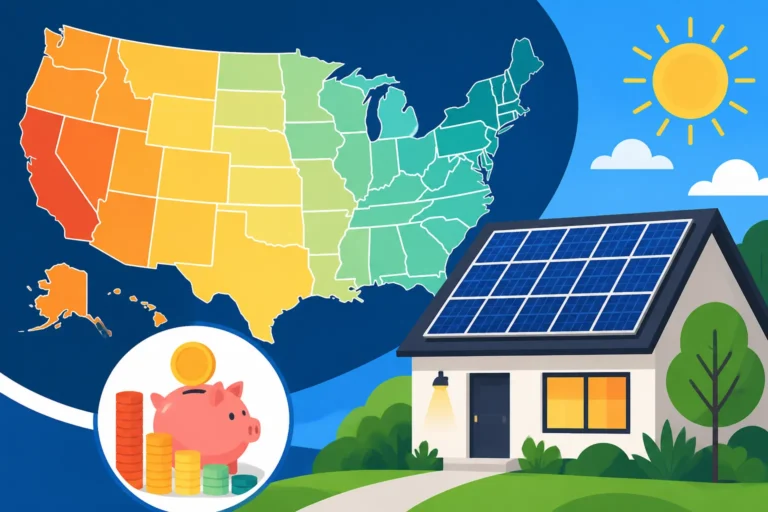
Geography is another silent price-driver. In high-demand markets like California or the Northeast, labor rates are significantly higher, and the backlog for inspections can drag a project out for months, increasing the overhead for the installation company. However, these are often the same areas where the Solar Plus Battery Cost is most easily justified because of high utility rates and frequent grid instability. Comparing quotes through Modernize allows you to see if a specific installer has "regional pricing" that might be more competitive than a national brand.
Retrofitting vs. New System Installation
There is a significant price difference between installing a battery alongside a new solar array and "retrofitting" one to an existing system. When done together, you save on "truck rolls"—the cost of the crew coming out, the permitting fees, and the electrical work, which can be streamlined. Many homeowners find that the Solar Panel Plus Battery Cost is much more digestible when the labor is bundled.
Retrofitting is more surgical. The installer has to work around an existing system, often from a different manufacturer, and ensure that the two "brains" communicate correctly. This often requires additional communication hardware or an external gateway. If you are considering adding storage later, it is always worth asking your initial solar installer if they are using "storage-ready" components to save you several thousand dollars in labor down the line.
Brand Recognition and Reliability
In the solar world, you often pay a premium for the "peace of mind" that comes with a big name. Brands like Tesla, Enphase, and FranklinWH have established ecosystems that work seamlessly. While you might find a "white-label" battery for 20% less, the risk lies in the software and the warranty. A battery is only as good as the software that tells it when to charge and discharge. If the software is buggy, you might find your battery empty right when a storm hits.
Reliability also relates to the Solar Panel Warranties Explained logic; you want a company that will actually exist in ten years. Most top-tier batteries come with a 10-year warranty that guarantees a certain percentage of capacity (usually 70%) remains at the end of that decade. Cheaper brands might offer the same paperwork, but if they don't have a robust support network in the US, getting a replacement unit during year seven could be a nightmare.
| Battery Component | Estimated Cost (Low) | Estimated Cost (High) | Notes |
|---|---|---|---|
| Battery Module (10kWh) | $7,000 | $12,000 | Varies by chemistry (LFP vs NMC) |
| Hybrid Inverter/Gateway | $1,500 | $3,500 | Required for system communication |
| Electrical Labor/Sub-panel | $2,000 | $5,000 | Depends on home wiring complexity |
| Permitting & Engineering | $500 | $1,500 | Varies by local AHJ requirements |
| Total Estimated Price | $11,000 | $22,000 | Before incentives and rebates |
Incentives and Rebates: Offsetting the Initial Hit
The sticker shock of a $15,000 battery is real, but very few people actually pay that full amount. The federal government and various state agencies have realized that residential batteries help stabilize the entire grid, not just your home. By storing excess solar power and dumping it back into the house during peak demand, you are effectively taking the pressure off old, struggling power plants. This is why the Solar Battery Incentives in 2026 remain some of the most aggressive in the renewable energy sector.
Beyond the federal level, many states have introduced "performance-based incentives." This is a fancy way of saying the utility company will pay you to "borrow" your battery a few times a year during extreme heatwaves or cold snaps. These programs can pay back hundreds of dollars annually, which significantly changes the math on your Solar Panel Payback Period Explained. It turns the battery from a "backup-only" emergency tool into an active, income-generating asset.
Federal and State Level Assistance
The primary driver for savings is the federal tax credit. Even today, many homeowners are surprised to find that batteries installed with or without solar can qualify for a significant percentage off their federal tax liability. This isn't a "check in the mail," but a reduction in the taxes you owe. If you have the tax appetite, it is effectively a 30% discount on the entire project, including the labor and the electrical upgrades mentioned earlier.
Some states go much further. For instance, looking at Maryland Solar Incentives & SREC Guide or similar programs in the Northeast, you might find state-level rebates that can be stacked on top of federal credits. These are often "first-come, first-served," so waiting a year to see if prices drop might actually cost you money if the state-level incentive pot runs dry. It is a delicate balance of timing the market.
Utility-Specific Storage Programs
Utilities are the new players in the battery game. Programs like "ConnectedSolutions" in the Northeast or similar "Virtual Power Plant" (VPP) initiatives in the West allow your utility to tap into your battery when the grid is stressed. In exchange, they pay you a fixed rate per kW. Over the life of a 10-year warranty, these payments can cover a third or more of the original Solar Battery Cost: Full Breakdown.
However, you have to read the fine print. Some utility programs require you to give up control of your battery during certain hours. If you live in an area with frequent, unpredictable outages, you want to ensure the program has a "storm watch" mode that keeps your battery at 100% when severe weather is forecasted. Most Modernize-certified installers are well-versed in these local programs and can help you enroll during the installation process.
Calculating the ROI of Your Battery Investment
Is a battery a "good" investment? If you are looking strictly at dollars and cents, the ROI of a battery is often longer than that of the solar panels themselves. Solar panels pay for themselves by eliminating a monthly bill; batteries pay for themselves by protecting you from the cost of an outage and by navigating complex "Time-of-Use" (TOU) rate plans. In many states, the price of electricity doubles between 4 PM and 9 PM. If your battery can power your home during those expensive hours, the savings add up fast.
You also have to consider the "value of peace of mind." How much is it worth to you to know that your food won't spoil, your basement sump pump will keep running, and your home office will stay online during a three-day outage? For many, especially those who work from home or have medical equipment, the Solar ROI & 25-Year Savings Breakdown doesn't fully capture the emotional relief of being the only house on the block with the lights on.
Avoided Outage Costs and Peace of Mind
Let's talk about the "hidden" costs of not having a battery. I've spoken to homeowners who lost $500 worth of groceries in a single summer blackout. Others had to spend $1,000 on a hotel and pet boarding because their house became unlivable during a winter power failure. When you start adding up these "incident costs" over a ten-year period, the Is Solar Worth It Without the Tax Credit? question starts to look much different.
There is also the property value aspect. A home with an integrated, high-end storage system is increasingly attractive to buyers who are weary of aging infrastructure. While it might not add the exact dollar amount of the installation to your asking price, it significantly increases marketability. It is a "top-tier" feature that sets a home apart in a crowded market, much like a finished basement or a gourmet kitchen.
Time-of-Use Savings and Peak Shaving
In states like California, under the new California Net Billing (NEM 3.0) Affects Savings, batteries are no longer a luxury—they are almost a requirement for solar to make financial sense. Since the utility no longer pays you full retail value for the energy you send back to the grid during the day, your goal is to keep every electron you produce. You store the midday sun in your battery and use it at night.
This "peak shaving" strategy can save the average homeowner $50 to $100 a month on top of their solar savings. When you factor this into the How Much Can You Save With Solar Panels? calculation, the payback period for the battery starts to align more closely with the panels. It is about maximizing self-consumption. If you aren't using a battery, you are essentially selling your energy cheap to the utility and buying it back at a premium a few hours later.
Comparing the Heavy Hitters: Popular Battery Models
The market is currently dominated by a few major players, each with a different philosophy on energy storage. Tesla changed the game with the Powerwall, focusing on an all-in-one "sleek" design that appeals to the masses. Enphase, on the other hand, uses a modular approach with their IQ Battery system. This allows you to start small and add more "buckets" of energy as your budget allows, which is a great strategy for those who are intimidated by the Solar Battery Cost: Full Breakdown of a massive system.
There are also newcomers like FranklinWH and the FranklinWH aPower Battery Review highlights their focus on "whole-home" backup without the need for complex sub-panels. They use high-capacity integrated inverters that can handle the "surge" current of a large AC unit, which has traditionally been the Achilles' heel of smaller home batteries. Choosing between these often comes down to what solar equipment you already have or are planning to buy.
Tesla, Enphase, and the New Guard
The Tesla Powerwall vs Enphase IQ Battery debate is the "iPhone vs Android" of the solar world. Tesla offers a higher power output for a lower price-per-kWh, but their customer service can be hit-or-miss depending on your local installer. Enphase offers unparalleled reliability because they have no "single point of failure"—if one micro-battery in the stack fails, the rest of the system keeps humming.
The "New Guard" includes companies like Canadian Solar and Qcells, which are now offering integrated "all-under-one-roof" solutions. By buying your panels, inverter, and battery from the same manufacturer, you often get a unified warranty. This simplifies things immensely if something goes wrong; you only have one phone number to call. If you're comparing these options, using Modernize to find an installer who is certified in multiple brands is the best way to get an unbiased comparison.
Choosing the Right Fit for Your Energy Profile
Your "Energy Profile" is just a fancy way of saying how you use power. If you are a "vampire" who uses most of your energy at night (EV charging, laundry, dishwasher), you need a battery with a high "continuous power" rating. If you just want to keep the internet and a few LED bulbs on during a storm, you can prioritize "total capacity" over "power output."
I always recommend that homeowners look at their utility bill to see their "Peak Demand" (measured in kW). If your peak demand is 7 kW, but your battery can only output 5 kW, your lights will flicker and the system might shut down if you turn on the microwave while the AC is running. Understanding these technical nuances is why the How Much Does a Tesla Powerwall Cost? question is only half the battle; you have to know if one is actually enough for your specific lifestyle.
Practical Steps to Getting a Fair Quote
The biggest mistake I see is homeowners falling for "high-pressure" sales tactics at their front door. Solar and storage are complex financial products, and you should never sign a contract on the first day. A reputable installer will want to see your electrical panel, look at your last twelve months of utility bills, and potentially do a "load analysis" to see what your home actually requires.
To get a fair price, you need at least three quotes. But comparing them can be like comparing apples to oranges if one installer uses a 10 kWh battery and another uses a 13 kWh unit. This is where tools like Modernize are invaluable. They help standardize the information so you can see the "price per kWh" of storage, which is the most accurate way to determine if you are getting a good deal.
Using Comparison Tools for Real-World Accuracy
When you use a comparison tool, don't just look at the bottom line. Look at the specific equipment being offered. Does the quote include a Tesla Powerwall 3 vs Enphase IQ Battery Solar Battery comparison? Does it account for the MPU (Main Panel Upgrade) we discussed earlier? A low-ball quote might be missing the necessary electrical work, leading to "change orders" that blow your budget halfway through the installation.
Also, check the labor warranty. Most batteries have a manufacturer's warranty for the equipment, but if the installer messes up the wiring, the manufacturer won't cover the repair. You want an installer who offers at least a 5-to-10-year "workmanship warranty." This ensures that if a communication cable shakes loose or a seal on an outdoor unit fails, they will come back and fix it without charging you a $200 service fee.
Red Flags in Storage Estimates
One major red flag is an installer who promises "total grid independence" with a single small battery. Unless you live in a tiny home with very few appliances, one battery is rarely enough to go truly "off-grid" forever. It is a backup tool, not a replacement for the utility. If an estimate seems too good to be true, or if they gloss over the Solar Battery Incentives in 2026 and tell you the system is "free" through a government program, walk away.
Another red flag is a lack of technical detail. If the quote just says "Battery System" without specifying the brand, model, and capacity, they are likely planning to install whatever they can get for the cheapest price that month. You are making a 10-to-15-year investment; you deserve to know exactly what is being bolted to the side of your house. Demand a detailed spec sheet and don't be afraid to ask, Is It Worth Adding a Battery to My Solar System? based on your specific historical usage data.
Short Disclaimer
The information provided in this guide is for educational purposes only and does not constitute financial, legal, or professional engineering advice. Solar battery costs, incentives, and utility programs fluctuate frequently and vary significantly by location and individual home configuration. Always consult with a qualified solar professional and a tax advisor before making a large investment in home energy storage.