Solar Panel Cost by State
Most homeowners starting their solar journey are met with a wall of confusing, contradictory pricing data that feels more like a guessing game than a financial plan. You might see a neighbor pay one price while a relative three states away pays half that for the same system size. This guide breaks down the actual solar panel cost by state to help you navigate these regional price gaps and plan your investment with confidence.
Why Solar Costs Vary So Much from Coast to Coast
It is incredibly frustrating to realize that the exact same equipment—the same high-efficiency panels and the same microinverters—can cost thousands of dollars more just because you live on the other side of a state line. This discrepancy isn't usually the result of installers trying to "price gouge" certain areas, but rather a complex web of local market dynamics. When you look at the Solar Panel Cost Per Watt Explained metrics, you start to see that the "sticker price" is just the beginning of the story.
Regional Market Maturity and Competition
In states like California and Massachusetts, the solar industry has been established for decades. This maturity creates a highly competitive environment where dozens of installers are constantly undercutting each other to win your business. This competition naturally drives down the price per watt. In contrast, states with emerging solar markets may only have a handful of reputable installers. These companies often face higher customer acquisition costs because they have to spend more on education and marketing to convince homeowners that solar is a viable option in their region.
Furthermore, a mature market usually has a robust network of equipment wholesalers. In a high-volume state, an installer might be able to pull equipment from a local warehouse the same day. In a state with less solar activity, that same installer might have to pay significant shipping fees to get panels delivered from a distant hub, and those costs are inevitably passed down to you. Platforms like Modernize can help you bridge this gap by connecting you with a variety of local pros who are already integrated into these regional supply chains.
The "soft costs" of doing business—which include everything except the hardware—are where the biggest regional differences lie. In a state where solar is common, the local government likely has a streamlined process for permitting. In a state where solar is rare, a local building department might treat your installation like a complex commercial project, requiring expensive engineering wet stamps and multiple rounds of inspections that add weeks to the timeline and hundreds to the bill.
Labor Rates and Local Permitting Fees
Labor is one of the most volatile variables in the solar pricing equation. In high-cost-of-living areas like the San Francisco Bay Area or the New York City metro, the hourly rate for a licensed electrician and a crew of certified installers can be double what it is in the rural Midwest. These labor costs are baked into your quote and are non-negotiable. It isn't just about the hands on the roof; it is about the workers' compensation insurance, the cost of keeping a fleet of trucks on the road, and the administrative staff required to handle state-specific paperwork.
Permitting fees are another "hidden" cost that varies wildly by state and even by municipality. Some forward-thinking cities have capped solar permitting fees at a nominal $50 or $100 to encourage adoption. Other jurisdictions view solar permits as a significant revenue stream, charging fees based on the total value of the project. This can add $500 to $1,500 to your total system cost before a single rail is even bolted to your roof.
Local code requirements also play a massive role. For example, some states have strict "fire setbacks" that require a certain amount of clear space around the edges of your roof for firefighter access. If your state has aggressive fire codes, your installer might have to use more expensive, smaller panels to fit the required energy output into a smaller footprint, or they might have to spend more time on complex wiring runs to avoid restricted areas. Using a service like Modernize to vet local contractors can help you find experts who already know how to navigate these specific local headaches.
Supply Chain and Logistics to Rural vs. Urban Areas
If you live near a major port city like Long Beach, Savannah, or Newark, your solar panels didn't have to travel far to reach your installer. However, if you are in a landlocked state like Montana or Kansas, those panels likely traveled hundreds of miles by rail and truck. The logistics of moving glass—which is heavy, fragile, and bulky—are expensive. These freight costs are often invisible to the consumer but are a major reason why the Solar Panel Cost by State varies so significantly.
The geography of your specific property also matters within the state context. An installer based in a major city might charge a "trip fee" or a higher mobilization rate if your home is two hours away in a rural county. They have to account for the fuel and the paid travel time for a four-person crew. In states with vast rural expanses, these logistical "adders" can make a significant dent in your ROI.
Lastly, the types of roofs common in your region can influence the cost. In the Southwest, tile roofs are everywhere. Removing and replacing tiles to install solar mounts is a delicate, labor-intensive process compared to bolting mounts directly into a standard asphalt shingle roof common in the Northeast. Installers in different states develop specialized skills for the local architecture, and their pricing reflects the difficulty of working with those specific materials.
Breaking Down the Average Cost Per Watt by Region
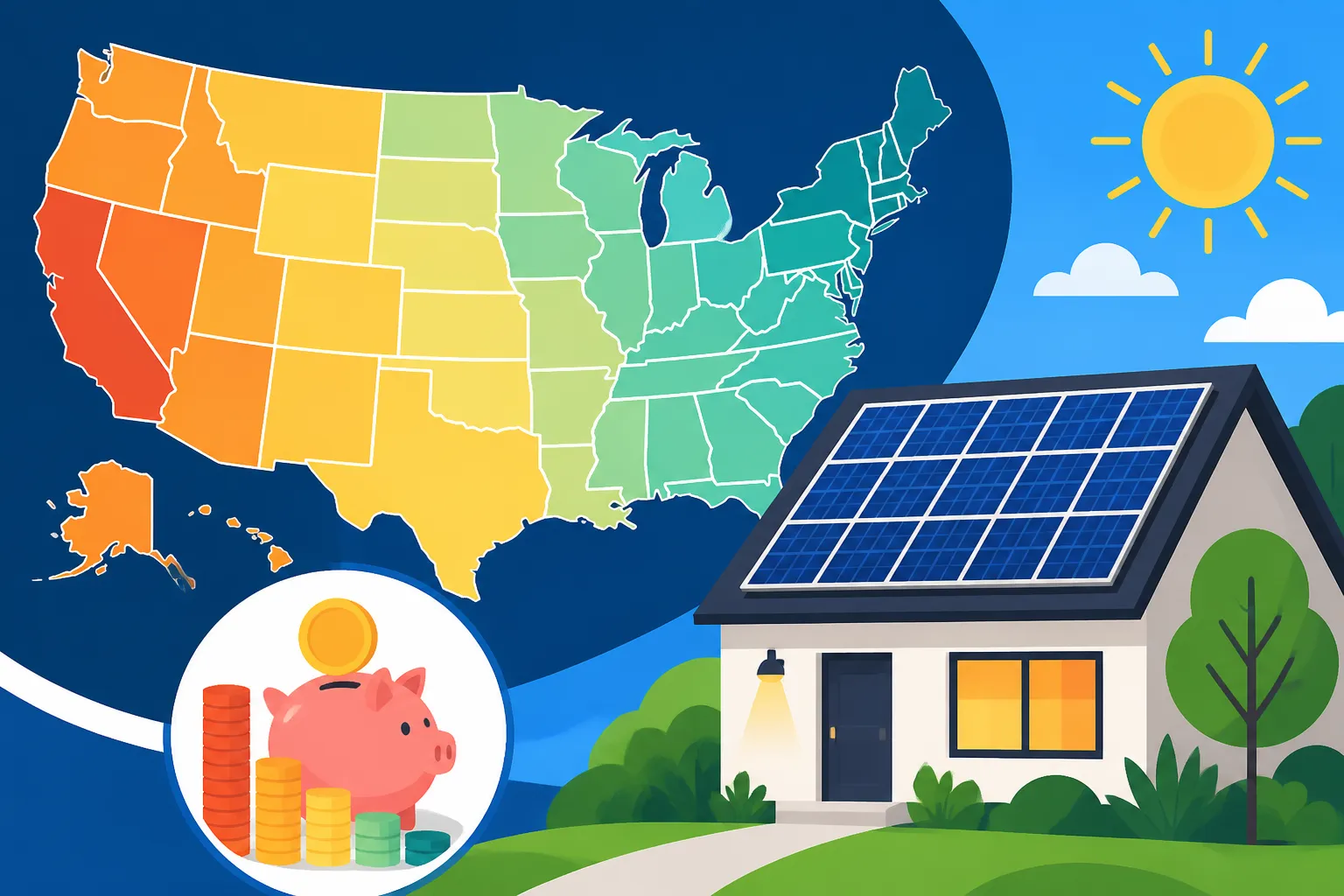
To get a realistic sense of what you'll pay, it helps to look at the country in regional blocks. While every home is unique, regional trends are remarkably consistent. When you look at the How Much Do Solar Panels Cost? 2026 Guide, you'll see that the national average is often a poor indicator of what you will actually see on a quote in your specific zip code.
The Northeast and Mid-Atlantic Markets
The Northeast is home to some of the highest electricity rates in the country, which has driven massive demand for solar despite the region not being known for perpetual sunshine. In states like New Jersey and Massachusetts, the Solar Panel Cost in New York and surrounding areas tends to be slightly higher than the national average on a "gross" basis—often ranging from $2.80 to $3.30 per watt. However, these states also have some of the most aggressive incentive programs.
High labor costs and old housing stock contribute to the higher upfront price. Many homes in the Northeast require electrical service upgrades or even structural roof reinforcements before they can support a modern solar array. Installers in this region are very accustomed to working on steep-pitched roofs and dealing with "ice dam" considerations, which requires a higher level of craftsmanship and more expensive mounting hardware designed to withstand heavy snow loads.
Despite the higher initial cost, the ROI in the Northeast is often better than in "cheaper" states because you are offsetting such expensive utility power. Reaching out through Modernize ensures you are speaking with installers who understand the specific net metering rules and local rebates that make these higher-priced systems financially viable.
The Sun Belt and Southern States
The Sun Belt—spanning from Florida through Texas and over to Arizona—is the heart of the American solar industry. Because there is so much sun and so much flat land, the market is incredibly efficient. Here, you will often find some of the lowest "cost per watt" figures in the nation, frequently dipping below $2.50 per watt for standard residential installations. The Solar Panel Cost in Florida and the Solar Panel Cost in Texas are prime examples of high-volume markets where efficiency has trickled down to the consumer.
The South does present unique challenges, however. In coastal areas, solar arrays must be engineered to withstand hurricane-force winds, which requires more mounting points and heavier-duty racking. In the desert Southwest, the extreme heat can actually degrade solar panel efficiency and shorten the lifespan of string inverters. Therefore, while the panels themselves might be cheaper to install, you might spend more on "premium" equipment designed for high-heat environments.
Another factor in the South is the lack of state-level income tax credits in many jurisdictions. While the upfront cost is lower, you are often relying solely on the federal tax credit and local utility rebates to make the math work. This makes the "gross" price very important, as there are fewer "cushions" to soften the blow of a high quote.
The Midwest and Mountain Regions
The Midwest is currently the fastest-growing solar region, but it remains one of the most expensive on a per-watt basis. This is largely due to the lack of "density." An installer in Illinois or Ohio might have to travel much further between job sites than an installer in Los Angeles. This lack of installer density means less competition and higher operational overhead. You might see prices in the $3.00 to $3.50 per watt range in states like Missouri or Indiana.
In the Mountain states, such as Colorado and Utah, solar is very popular, but the terrain and weather play a role in pricing. Colorado has a very mature market with prices that rival the Sun Belt, but the "Mountain" factor means that if you live in a remote area, you could see significant surcharges for delivery and labor.
Midwestern states are also seeing a rise in "community solar," which can sometimes compete with rooftop solar for a homeowner's attention. This competition can occasionally suppress rooftop prices as installers try to prove that owning your own system is more beneficial long-term than just subscribing to a remote farm. Comparison shopping via Modernize allows you to see how these local companies are pricing their services against the backdrop of these regional shifts.
Deep Dive into the Top Solar States
If you live in one of the "Big Three" solar states—California, Texas, or Florida—your experience will be very different from someone in a state where solar is just starting to take off. These states represent a massive portion of the residential market and have unique rules that dictate total system costs.
California's Evolving Solar Landscape
California remains the gold standard for solar, but it is also one of the most expensive and complex. The Solar Panel Cost in California is influenced by high labor rates and the most stringent building codes in the nation. Furthermore, the shift to "Net Billing" (often called NEM 3.0) has fundamentally changed how systems are sized and priced. To get a good ROI now, most California homeowners are adding batteries, which can double the total project cost.
In 2026, a standard 8kW solar system in California might cost $22,000 to $26,000 before incentives, but adding a high-end battery like the Tesla Powerwall 3 can push that closer to $35,000. While the "per watt" price for the panels remains competitive due to the sheer volume of installers, the "system price" is higher because of the necessary storage component.
California also has unique "Title 24" requirements for new construction, meaning every new home must have solar. This has created a massive "builder grade" solar market where prices are very low because systems are installed en masse during the construction phase. For existing homeowners, however, the retrofitting process remains a premium service.
Texas and the Rise of Utility-Scale Influence
Texas is a "wild west" of solar pricing. Because the state's grid (ERCOT) is deregulated, your solar "cost" is heavily tied to which retail electric provider (REP) you use. The Solar Panel Cost in Texas is generally lower than the national average, but the lack of a state-wide net metering mandate means you have to be very careful about who you hire and what plan you sign up for.
Installers in Texas are often dealing with massive homes. An 8 kW solar system in Texas might be common, but many Texas homes have 15kW or 20kW systems because of the massive air conditioning loads in the summer. When you buy at that scale, your "price per watt" drops significantly due to economies of scale. You might pay $2.40 per watt for a 15kW system, whereas a 5kW system would cost $3.20 per watt.
The Texas market is also heavily influenced by the presence of massive utility-scale solar farms. This has created a large pool of trained solar labor, which helps keep residential labor costs down. However, it also means that residential installers are constantly competing with large-scale projects for equipment and personnel, which can lead to volatility in quotes during "boom" periods.
Florida's Sunshine Without the State Tax Credit
Florida is the "Sunshine State," yet it doesn't offer a state-level income tax credit for solar. This is a common point of frustration for residents who see their neighbors in other states getting massive state-level checks. To compensate, Florida has very strong Solar Sales Tax Exemptions by State and Solar Property Tax Exemptions by State policies. You don't pay the 6% sales tax on your equipment, and the value the solar adds to your home can't be used to increase your property taxes.
The Solar Panel Cost in Florida is also kept in check by a very robust net metering policy (as of 2026), which allows homeowners to get full credit for the excess energy they send back to the grid. This makes high-efficiency systems very attractive. Most Florida installers focus on "hurricane-ready" installations, using heavy-duty rails and extra-long lag bolts to ensure the system stays attached during a Category 4 storm.
Because Florida has a high concentration of retirees and seasonal residents, the solar market has a lot of "high-pressure" sales organizations. This makes it more important than ever to use a neutral platform like Modernize to find vetted, reputable companies that won't try to lock you into a bad lease or an overpriced PPA.
2026 Solar Pricing Comparison Table by State
The following table provides a snapshot of estimated costs for a standard 10kW system across various states. These figures are "gross" costs before the federal tax credit or any local rebates are applied.
| State | Avg. Cost Per Watt | Estimated 10kW System Cost | Top Local Incentive/Feature |
|---|---|---|---|
| Arizona | $2.35 | $23,500 | State Tax Credit ($1,000 Cap) |
| California | $2.85 | $28,500 | Strong Battery Incentives (SGIP) |
| Colorado | $2.60 | $26,000 | Sales & Property Tax Exemptions |
| Florida | $2.45 | $24,500 | Full Sales Tax Exemption |
| Illinois | $3.10 | $31,000 | Illinois Shines (SREC Program) |
| Massachusetts | $3.20 | $32,000 | SMART Program (Performance Payments) |
| New Jersey | $2.95 | $29,500 | SREC-II / SuSI Program |
| New York | $3.15 | $31,500 | 25% State Tax Credit ($5,000 Cap) |
| Texas | $2.40 | $24,000 | No State Sales Tax on Solar |
| Washington | $2.75 | $27,500 | Sales Tax Remittance Program |
Note: These figures are based on the Solar Panel Cost by System Size (kW) for a standard residential roof-mount installation. Ground-mount systems or those requiring significant electrical upgrades will be higher.
The Hidden Factors That Impact Your Local Quote
When you get a quote that seems higher than the state average, it is rarely a mistake. Most of the time, it is because of specific "adders" that are unique to your home. Understanding these can help you negotiate better or at least understand where your money is going.
Roof Complexity and Material Adders
Not all roofs are created equal. A "simple" roof is a single, south-facing plane with a 20-degree pitch and asphalt shingles. If your roof has multiple gables, hips, valleys, or dormers, your installer has to spend significantly more time on the design and the actual installation. Each "plane" requires its own set of rails, wiring, and grounding.
Material also matters. If you have a metal roof with standing seams, the installation is actually easier and often cheaper because the mounts just clamp onto the seams. However, if you have a clay tile roof, the installer has to "tile-hook" or use a "flash-it" system where they remove tiles, install a flashing plate, and then replace the tile (often breaking several in the process). This can add $1,000 to $3,000 to the Solar Panel Cost by State averages.
Height is another factor. A one-story ranch is a breeze to work on. A three-story Victorian requires scaffolding, safety harnesses for every worker, and much more time spent moving equipment up and down ladders. Many installers have a "second-story adder" of $0.10 to $0.20 per watt to account for the increased risk and labor time.
Electrical Panel Upgrades and Structural Reinforcements
Before you can plug your solar system into your home, your electrical panel has to be able to handle the load. Many older homes have 100-amp or 125-amp panels that are already full. To add a solar system (especially one with a battery or an EV charger), you will likely need a Main Panel Upgrade (MPU) to 200 amps. This is a common "hidden" cost that can add $2,000 to $4,000 to your bill.
Similarly, your roof structure must be able to support the weight of the panels for 25+ years. Solar panels and racking add about 3 pounds per square foot to your roof. While that doesn't sound like much, if you have an older home with 2×4 rafters or wide spacing, a structural engineer might require you to "sister" the rafters or add bracing in the attic.
These costs are often discovered during the "Site Survey" phase, which happens after you've signed an initial contract. It is always a good idea to ask your installer upfront: "What is your standard charge if I need a main panel upgrade?" This prevents sticker shock three weeks into the process. Using Modernize to find installers who handle their own electrical work can sometimes save you money compared to hiring an outside electrician.
The Impact of Local Interconnection Timelines
In some states, the "Permission to Operate" (PTO) process is a nightmare. You might have your panels installed in three days, but then wait four months for the utility company to come out, swap your meter, and give you the green light to turn the system on. In these states, installers have to carry the cost of the project longer, which can lead to higher prices.
There are also "interconnection fees" charged by the utility. Some utilities charge a flat $100 fee, while others require a "distribution system study" if you are installing a large system in an area where the grid is already saturated with solar. These studies can cost thousands of dollars and are almost always the responsibility of the homeowner.
If your local utility requires "external disconnect switches" or specific types of smart meters, your installer has to include those in the hardware list. These regional technical requirements are a major reason why the "same" system costs more in one utility territory than another.
How State-Specific Incentives Offset Your Initial Investment
The State Solar Incentives: Complete 2026 Guide is your best friend when trying to lower the net cost of your system. While the federal tax credit is the same everywhere, state-level "layers" can sometimes cut your total cost in half.
State Tax Credits vs. Performance-Based Incentives
A state tax credit is usually a "dollar-for-dollar" reduction in your state income tax. New York, for example, offers a 25% tax credit capped at $5,000. If you owe $6,000 in state taxes, you only pay $1,000. This is a massive, immediate win. Other states use "Performance-Based Incentives" (PBI), like the SMART program in Massachusetts. Instead of a lump sum, the utility pays you a certain amount for every kilowatt-hour your system produces over a period of 10 years.
PBIs are great because they encourage you to keep your system well-maintained. If your system is dirty or a panel is shaded, you are literally losing money from your monthly check. However, PBIs don't help with the upfront cost as much as a tax credit does, which is why many homeowners in PBI states choose to finance their systems.
Some states also offer "rebates," which are checks sent directly to you (or the installer) after the system is installed. These have become rarer as solar has become mainstream, but some municipal utilities in states like Texas and Florida still offer them to meet local renewable energy goals.
SRECs and Monthly Revenue Streams
Solar Renewable Energy Credits (SRECs) are a way for you to sell the "greenness" of your energy to utility companies. In states with a Renewable Portfolio Standard (RPS), utilities are legally required to get a certain percentage of their power from solar. If they can't build enough solar farms, they have to buy credits from homeowners like you.
States like New Jersey, Maryland, and Illinois have active SREC markets. Depending on the state, one SREC (which represents 1,000 kWh of production) can be worth anywhere from $40 to over $200. For a standard 10kW system, you might generate 12 SRECs a year. In a high-value state, that is an extra $2,000+ in annual income just for having panels on your roof.
The SREC market is volatile, much like the stock market. Some homeowners choose to "lock in" a flat rate for their SRECs for 10 years with a broker, while others "spot trade" them to try and get the highest price. This revenue stream isn't a "discount" on the price, but it significantly shortens your payback period.
Sales and Property Tax Exemptions
The "hidden" heroes of solar incentives are the tax exemptions. In a state with a 7% sales tax, a $30,000 solar system would normally cost an extra $2,100 in taxes. Many states waive this, which is an immediate savings.
Property tax exemptions are even more valuable long-term. A solar system can easily add $15,000 to $25,000 to your home's value. Without an exemption, your property taxes would go up every year because of that added value. In states with high property taxes, this exemption can save you $500 to $1,000 every single year for as long as you own the home.
When you are comparing quotes, make sure the installer has clearly indicated whether they have factored in these exemptions. Some unscrupulous sales reps will "include" the sales tax savings as if it were a discount they are giving you, when in reality, it is a state-mandated benefit you get regardless of which installer you choose.
Choosing the Right Local Installer for Your State
Your choice of installer is the single biggest factor in the final Solar Panel Cost by State you will pay. While it is tempting to go with the biggest national brand, local "boutique" installers often have lower overhead and a better understanding of local utility quirks.
National vs. Local Boutique Installers
National companies have massive marketing budgets and can sometimes offer "bundled" deals with things like smart home tech or roofing. However, they also have huge "soft costs" because they have to pay for that marketing. A local installer might find most of their business through word-of-mouth or platforms like Modernize, allowing them to pass those savings on to you.
Local installers also tend to be more "nimble" with the local building department. They know the inspectors by name and know exactly what a specific county wants to see on a blueprint. This can shave weeks off your installation timeline. On the flip side, national companies often have more robust "guarantees" and are less likely to go out of business during a market downturn.
A good middle ground is finding a regional installer—one that operates in 3 or 4 states. They have the scale to get good pricing on equipment but are still "local" enough to care about their reputation in your community.
Vetting Licenses and Regional Certifications
Every state has different licensing requirements for solar. In some states, you just need a general contractor's license. In others, like California or Washington, you need a specialized solar contractor license and a master electrician on staff. You should never hire an installer who cannot produce their state license number and proof of insurance.
Look for "NABCEP" certification. This is a national gold standard for solar professionals. An installer with NABCEP-certified leads on their crews is much more likely to follow best practices for wiring and waterproofing.
Finally, check if the installer is an "authorized dealer" for the equipment they are selling (like Enphase or Tesla). This ensures that if the equipment fails, the manufacturer will honor the warranty and potentially even pay the installer's labor costs to fix it. If you buy from a non-authorized installer, you might be stuck paying for the labor to replace a "free" warranty part.
Disclaimer
The information provided in this guide is for educational purposes only. Solar pricing, state incentives, and utility policies are subject to frequent changes and may vary based on individual circumstances, including roof condition, local building codes, and creditworthiness. Always obtain multiple quotes from licensed professionals and consult with a tax professional regarding your eligibility for federal and state tax credits.