How Much Does Solar Cost Compared to a Generator?
When the lights go out, or even when those monthly electricity bills just feel too high, many homeowners find themselves at a crossroads, wondering about the best way to secure their home's power supply. It’s a common dilemma: do you invest in a traditional backup generator for those emergency outages, or do you take the leap into solar power, perhaps even with battery storage, to tackle both daily energy costs and unexpected blackouts? This guide is here to untangle the financial realities and long-term implications of each option, helping you decide which path makes the most sense for your wallet and your peace of mind.
Understanding the Upfront Costs: Solar vs. Generator
The first thing most homeowners think about is that initial sticker price. It's easy to get overwhelmed by numbers, especially when comparing two fundamentally different systems. Let's break down what you're actually paying for with each.
Initial Investment for a Whole-Home Generator
When we talk about a whole-home generator, we're typically referring to a permanent standby generator, not just a portable unit you wheel out of the garage. These are robust machines designed to kick in automatically when the grid goes down, powering your entire house or at least critical circuits.
The cost for a standby generator can vary significantly based on its size (kW output), fuel type, and the complexity of the installation. For instance, a 10 kW generator might be sufficient for a smaller home to run essentials like a refrigerator, some lights, and a well pump, while a 20 kW or 22 kW unit is more suitable for powering an average 2,000 to 3,000 square foot home, including air conditioning. The price tag for the generator itself usually ranges from $3,000 to $6,000 for smaller units, climbing to $8,000 to $15,000 or more for larger, more powerful models from brands like Generac or Kohler.
Beyond the unit cost, installation is a major factor. A licensed electrician needs to install an automatic transfer switch, which detects power outages and seamlessly switches your home's power source. A plumber is often required if you're connecting to a natural gas line, or if you need to install a large propane tank. Site preparation, including a concrete pad for the generator and any necessary trenching for fuel lines or electrical conduit, also adds to the expense. All told, you're generally looking at an installed cost between $8,000 and $20,000, and sometimes even higher for very large homes or complex setups. For instance, in areas with strict local codes or difficult terrain, those installation costs can really climb.
Initial Investment for a Solar-Plus-Battery System
Now, let's look at solar with battery storage – often referred to as a "solar-plus-battery" system. This isn't just about putting panels on your roof; it's about creating a comprehensive energy solution that generates power, stores it, and can provide backup when the grid fails.
The initial investment for solar involves several components. First, there's the cost of the solar panels themselves. As discussed in our comprehensive guide on How Much Do Solar Panels Cost? 2026 Guide, prices vary widely based on panel efficiency, brand, and system size. Then you have inverters, mounting hardware, wiring, and the labor for installation. For an average home, a typical solar system might be 6 kW to 10 kW, with installed costs often ranging from $18,000 to $30,000 before any incentives. You can dive deeper into the specifics of Solar Panel Cost Per Watt Explained to understand how these figures are calculated.
Adding a battery system for backup power significantly increases this upfront cost. A single home battery, like a Tesla Powerwall or an Enphase IQ Battery, can cost anywhere from $10,000 to $15,000 or more, including installation. Most homes that want substantial backup might need two or even three batteries, pushing the battery portion of the cost to $20,000 to $45,000. So, a full solar-plus-battery system could easily run anywhere from $30,000 to upwards of $70,000, depending on the size of your solar array and the number of batteries you choose. It's a hefty investment, no doubt, but one that comes with a different set of long-term financial implications than a generator. Many homeowners exploring this option turn to resources like Modernize to connect with reputable installers and get competitive quotes, helping them navigate the complexities of system design and pricing.
Long-Term Operating Expenses and Fuel Considerations
The initial cost is only half the story. What about the ongoing expenses of keeping these systems running? This is where the differences between solar and generators really start to shine, or perhaps, dim.
Fueling and Maintaining a Traditional Generator
A traditional generator, by its very nature, requires fuel to operate. If your generator runs on gasoline, you'll need to keep a supply on hand, which can be challenging and unsafe in large quantities, especially during widespread outages when gas stations might be without power or have long lines. Propane generators require a large, often unsightly, tank that needs to be refilled regularly, usually by a service provider. Natural gas generators connect directly to your home's existing gas line, which means no worries about running out of fuel, but they won't work if the natural gas supply itself is interrupted, though this is rare.
The cost of fuel can add up quickly during an extended outage. For example, a mid-sized 20 kW generator running on natural gas might consume around 200 cubic feet per hour, while a propane model could burn through 2-3 gallons an hour. Multiply that by days of continuous operation, and you're looking at hundreds, if not thousands, of dollars in fuel costs for a significant event like a hurricane or a major winter storm.
Beyond fuel, generators also demand regular maintenance. Just like your car, they have engines that need routine care. This typically includes oil changes, spark plug replacements, air filter cleaning, and general inspections. Most manufacturers recommend professional servicing at least once a year, and often after a certain number of run hours. These maintenance contracts can cost anywhere from $150 to $500 annually. Plus, generators need to be test-run periodically (weekly or monthly) to ensure they're in working order, which also consumes fuel, even if just a small amount. This regular upkeep is essential to ensure your generator works when you really need it, but it's an ongoing expense you simply can't avoid.
The "Fuel" for Solar: Free Sunshine and Battery Lifespan
Here's where solar-plus-battery systems stand apart: their primary "fuel" is free sunshine. Once your solar panels are installed, they harness energy from the sun without any recurring fuel costs. This is a massive long-term advantage, as you're no longer at the mercy of fluctuating gas or utility prices for your daily electricity or backup power.
Solar panels themselves require very little maintenance. A quick rinse with a hose a couple of times a year might be all they need, especially in dusty areas or if you experience significant pollen. Snow and ice usually slide off, and rain helps keep them clean. The main components that might need attention over time are the inverters, which typically have a 10-15 year warranty, and the batteries.
The solar battery is the component with the most significant long-term cost implication. While a high-quality battery like a Tesla Powerwall 3 Review & Cost or an Enphase IQ Battery Review & Cost can last 10-15 years, it will eventually degrade and need replacement. Replacing a home battery could be a substantial expense, potentially costing another $10,000 or more, though battery technology is constantly improving and prices are expected to decrease over time. However, even with a future battery replacement, the cumulative savings from drastically reduced or eliminated electricity bills over decades often far outweigh this cost. Moreover, some battery systems are eligible for ongoing Solar Battery Incentives in 2026 which can help offset future replacement costs or simply sweeten the deal on the initial purchase.
The True Value: Savings, Incentives, and ROI
While upfront and operating costs are critical, it's the overall value and financial return that truly differentiates solar-plus-battery systems from traditional generators. It's not just about what you pay, but what you get back.
Financial Benefits and Incentives for Solar
One of the biggest arguments for going solar is the immediate and long-term reduction in your monthly electricity bills. When your solar panels are generating more power than your home consumes, that excess electricity is often sent back to the grid. Thanks to programs like Net Metering Explained: How It Works by State, you can receive credits for this power, effectively turning your meter backward or at least dramatically lowering your bill. In some states, especially those with robust markets, you can even sell SRECs Explained: Selling Solar Renewable Energy Credits for additional income.
Beyond the ongoing savings, significant incentives can dramatically lower the net cost of a solar-plus-battery system. The federal government offers the Investment Tax Credit (ITC), which is a substantial percentage of your system's cost, effectively acting as a discount on your taxes. While many people ask Is the Solar Tax Credit Gone in 2026?, the Inflation Reduction Act of 2022 actually extended and enhanced this credit, making solar more financially appealing than ever. Many states and even local utilities also offer their own State Solar Incentives: Complete 2026 Guide or Utility Solar Rebates: How to Find Yours, which can include rebates, performance-based incentives, and property or sales tax exemptions. These incentives are a game-changer, making the higher upfront cost of solar much more manageable and significantly improving your long-term return on investment.
Think of it this way: a solar-plus-battery system doesn't just sit there waiting for an outage. It's actively working every single day to save you money on your utility bills, all while providing the backup power you seek. This dual functionality is where its true value lies.
Generator Savings: Purely Outage Protection
A traditional backup generator serves one primary purpose: to provide power during an outage. Its "savings" are indirect and situational. You're not saving money on your monthly utility bills by having a generator; in fact, you're spending money on fuel and maintenance even when the power is on.
The value of a generator comes from what it prevents rather than what it earns. During an extended power outage, a generator can prevent:
- Spoiled food: Saving hundreds of dollars in groceries.
- Property damage: Preventing frozen pipes in winter or sump pump failures during heavy rain.
- Loss of comfort: Keeping your heating, cooling, and lights on.
- Lost income: If you work from home, a generator can ensure business continuity.
- Temporary lodging costs: Avoiding the need to stay in a hotel.
So, while a generator doesn't generate income or reduce your daily energy expenditures, it offers invaluable peace of mind and protection against the often costly inconveniences and damages caused by power interruptions. It’s an insurance policy, plain and simple. For many, this peace of mind is worth the investment, particularly in areas prone to frequent or prolonged outages.
Comparing Overall Lifetime Value and Payback Periods
When you look at the big picture, the comparison of lifetime value becomes quite stark. A solar-plus-battery system has a clear Solar Panel Payback Period Explained, typically ranging from 6 to 12 years depending on your location, electricity rates, and available incentives. After this payback period, your system continues to generate free electricity for another 15-20 years or more, effectively putting money back in your pocket by offsetting utility bills. Furthermore, installing solar panels often increases your home's value, making it an asset if you decide to sell. Our guide on Do Solar Panels Increase Home Value? provides more details on this aspect. Over 25 years, the Solar ROI & 25-Year Savings Breakdown can be substantial, often tens of thousands of dollars in net savings.
On the other hand, a generator has a different kind of payback. It doesn't generate revenue or reduce your everyday expenses. Its "payback" is realized only when you avoid a significant loss or inconvenience during an outage. For example, if a severe winter storm knocks out power for a week, and your generator saves you $500 in spoiled food and $1,000 in hotel stays, plus prevents a several thousand dollar pipe burst, it has "paid for itself" in that one event. However, the generator itself, and its fuel and maintenance costs, are always a net drain on your finances, outside of these emergency situations.
Ultimately, the choice comes down to your priorities. Are you looking for an active investment that reduces your monthly expenses and offers backup power, or primarily an insurance policy against outages? Many homeowners realize that for a comparable upfront cost (after incentives), a solar-plus-battery system offers a far greater financial return over its lifetime, in addition to reliable backup. When considering this long-term perspective, it's often wise to consult with professionals. Services like Modernize can help you gather quotes for both solar-plus-battery systems and generator installations, allowing you to compare options tailored to your specific needs and local market conditions.
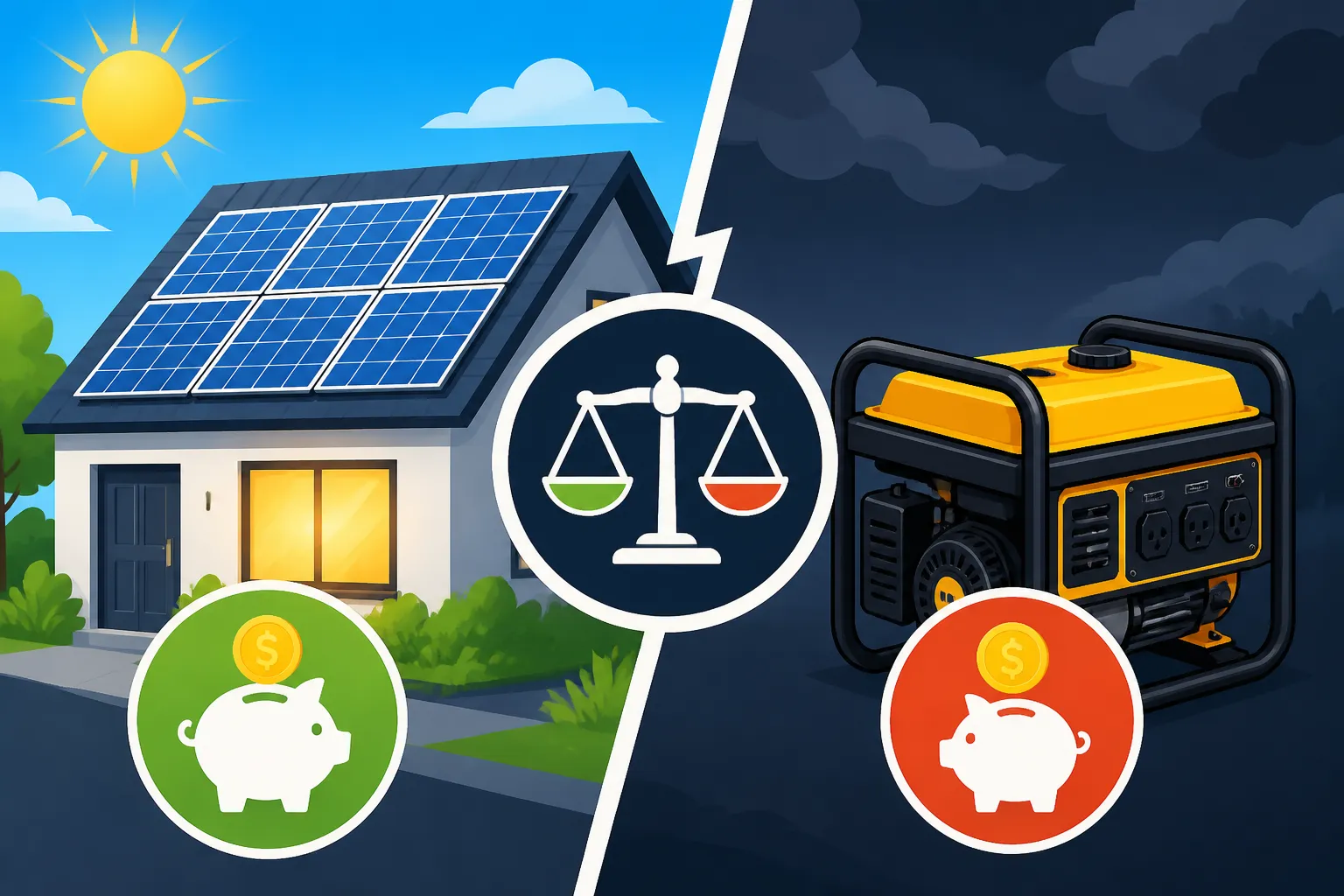
Here's a quick comparison to help visualize the differences:
| Feature | Solar-Plus-Battery System | Traditional Standby Generator |
|---|---|---|
| Primary Function | Daily electricity generation, bill reduction, backup power | Emergency backup power during outages |
| Upfront Cost (Installed) | $30,000 – $70,000+ (highly variable with size & batteries) | $8,000 – $20,000+ (variable with size & installation) |
| Operating Costs | Minimal (free sunshine), potential battery replacement every 10-15 years | Ongoing fuel costs, annual maintenance (~$150-$500/year) |
| Fuel Source | Sunlight (free, renewable) | Natural gas, propane, gasoline (finite, purchased) |
| Environmental Impact | Low carbon footprint | Produces emissions (carbon monoxide, CO2) |
| Noise | Silent operation | Loud when running (typically 60-70 dB at 23 ft) |
| Daily Savings | Significant reduction/elimination of utility bills | None (actually adds to daily expenses via fuel/maintenance) |
| Incentives | Federal tax credits, state/local rebates, SRECs | Few to none for residential backup generators |
| Increase Home Value | Generally increases home value significantly | Modest or neutral impact on home value |
| Maintenance | Low (occasional cleaning), inverter/battery checks | Annual professional service, regular test runs, oil changes |
| Reliability | Highly reliable, works as long as the sun shines (and batteries hold charge) | Highly reliable, but dependent on fuel supply and regular maintenance |
| Duration of Backup | Days (with sufficient battery storage, solar recharge) | Limited by fuel supply (unlimited with natural gas, if grid supply holds) |
Disclaimer
Please remember that the information provided in this article is for general guidance only. Solar and generator costs, incentives, and regulations can vary significantly based on your specific location, local utility policies, system size, and current market conditions. It's always recommended to consult with qualified professionals and obtain multiple quotes tailored to your unique circumstances before making any purchasing decisions. While we strive to keep our information accurate and up-to-date, these factors are subject to change.