Does Maryland Have Net Metering in 2026?
Marylanders are currently facing a frustrating paradox: electricity rates from utilities like BGE and Pepco continue to climb, yet there is constant chatter about states across the country slashing solar benefits. You might be wondering if you missed the boat or if the rug is about to be pulled out from under you. This guide clarifies exactly where Maryland stands on net metering, ensuring you know how to protect your investment and maximize your monthly savings.
The State of Maryland Net Metering
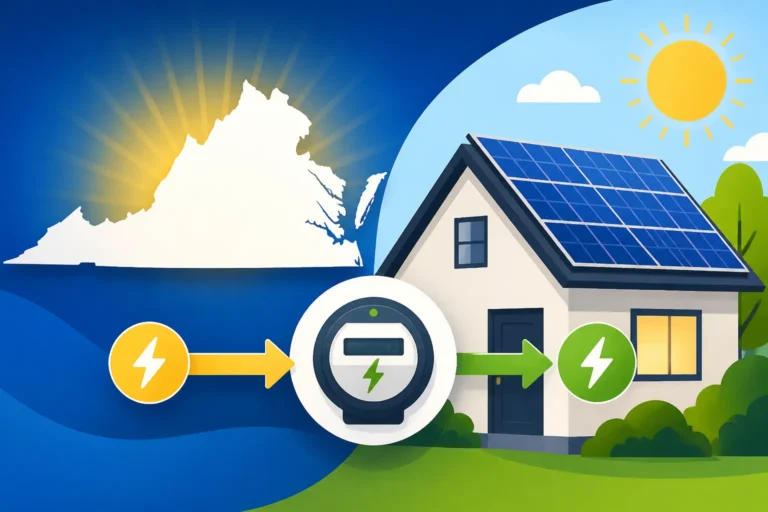
If you have been keeping an eye on the solar industry, you know that the national landscape is shifting. Several states have moved toward "Net Billing" structures that significantly reduce the value of the energy homeowners send back to the grid. However, as we move forward, Maryland remains one of the most robust and protective environments for residential solar owners. The short answer is yes, Maryland absolutely has net metering in 2026, and it continues to operate on a 1:1 retail credit basis.
This means that for every kilowatt-hour (kWh) of solar energy your panels produce that you don't use immediately, your utility company credits you at the full retail rate. If you are paying 15 cents per kWh for power from the grid, they are giving you 15 cents of credit for the power you export. This is a massive win for homeowners in cities like Frederick or Bethesda, where summer cooling costs can send bills into the stratosphere. Validating the frustration many feel, it is exhausting to keep up with changing regulations, but Maryland’s commitment to its Renewable Portfolio Standard (RPS) has kept this specific benefit stable while other states have faltered.
To truly understand why this matters, you have to look at the Net Metering vs Net Billing: What's the Difference? debate. While Net Billing pays you a lower "wholesale" rate for your power, Maryland’s full retail net metering ensures that your solar system acts like a giant savings account. When the sun is shining in July, you are "depositing" energy into the grid, and in the dark days of January, you are "withdrawing" that energy without paying the utility's increased winter rates.
How Maryland Utilities Handle Your Solar Credits
In Maryland, the net metering rules apply to all investor-owned utilities. This includes Baltimore Gas and Electric (BGE), Pepco, Potomac Edison, and Delmarva Power. While the overarching law is the same, the logistical "how-to" of your credits can vary slightly depending on who sends you your monthly bill. Most homeowners find the "rollover" aspect to be the most confusing part of the process, and rightfully so—utility bills aren't exactly known for their clarity.
When your system produces more than you consume during a billing cycle, those excess kWh credits roll over to the next month. They do not expire at the end of the month. Instead, they accumulate. This is vital for Maryland’s climate. We have beautiful, sunny springs and falls where your HVAC system might barely run, allowing you to build up a massive "credit bank" that carries you through the humid August heat. I have seen homeowners in the Annapolis area go months without a "supply" charge on their bill because they managed their credits so effectively during the shoulder seasons.
However, there is an annual "true-up" period. Once a year—usually in the spring—your utility will look at your total balance. If you still have excess credits, they are required to pay you for them. But here is the catch: they don't pay you the full retail rate for that year-end surplus; they pay you the "avoided cost" or wholesale rate. This is why we always tell people that How Many Solar Panels Do I Need for My Home? is a critical question. You don't want to overbuild your system by 150% because the utility won't reward that extra production at the same high rate they do for the energy that offsets your actual usage.
| Utility Company | Service Area | Net Metering Type | Credit Rollover |
|---|---|---|---|
| BGE | Central Maryland (Baltimore area) | 1:1 Retail | Monthly |
| Pepco | Montgomery & Prince George's Co. | 1:1 Retail | Monthly |
| Potomac Edison | Western Maryland | 1:1 Retail | Monthly |
| Delmarva Power | Eastern Shore | 1:1 Retail | Monthly |
Combining Net Metering with Maryland SRECs
One of the most unique aspects of the Maryland market is that net metering is just one half of the financial equation. While net metering wipes out your electric bill, Solar Renewable Energy Credits (SRECs) provide you with a separate stream of income. The Maryland SREC market remains active and is an essential component of your ROI. For every 1,000 kWh (or 1 megawatt-hour) your system produces, you earn one SREC. You can then sell these credits on an open market to utilities that need them to meet state clean energy mandates.
Many people get confused and think that if they use net metering, they can’t get SRECs. That is a myth. They are two entirely different "buckets" of value. Net metering is a billing arrangement with your utility; SRECs are a performance-based incentive. If you are looking for a deep dive into how to monetize these, checking out a Maryland SREC Market Guide is a great next step. In 2026, Maryland's SREC prices have shown more stability than those in neighboring states like Pennsylvania, thanks to the state's aggressive clean energy goals.
When you factor in these credits alongside your monthly bill savings, the "payback period" for a system in Maryland is often significantly shorter than the national average. I have talked to homeowners who are essentially "getting paid" to have solar on their roof once you subtract their SREC income from their remaining fixed utility connection fees. If you're still early in your research, looking at the Maryland Solar Incentives & SREC Guide will give you a full picture of how these two programs stack together to maximize your wallet's health.
The Future of Net Metering and Potential Caps
A common concern I hear from people in Maryland is whether the program will reach its "cap." Like most states, Maryland has a limit on the total amount of solar that can be enrolled in net metering statewide. Historically, whenever Maryland has approached this cap, the General Assembly has stepped in to raise it, recognizing that solar is a key part of the state's economic and environmental future. As of 2026, the cap is not an immediate threat to residential homeowners, but it is a reminder that these policies are legislative, not natural laws.
This brings us to the concept of "Grandfathering." In almost every case where net metering rules have changed elsewhere, existing solar owners were "grandfathered" into the old, better rates for 10 to 20 years. This is why many experts suggest that 2026 is a "sweet spot" for Maryland. You can lock in the current 1:1 retail net metering rates now. If the state ever does transition to a less favorable model in the future, you will likely be protected under your original agreement. It is one of the few times where "acting now" isn't just a sales tactic, but a legitimate way to hedge against future regulatory changes.
Even if you live in a situation where you cannot put panels on your own roof—perhaps you are in a condo in downtown Silver Spring or have a heavily shaded lot in Columbia—you can still benefit from these policies. Maryland has a very healthy Community Solar: How It Works & Who Qualifies program. This allows you to subscribe to a local solar farm and receive net metering credits on your utility bill just as if the panels were on your own property. It's a fantastic alternative that validates the idea that solar should be accessible to everyone, regardless of their roof's orientation.
Maximizing Your ROI with Other Maryland Incentives
While net metering is the engine that drives your monthly savings, there are other "boosters" available in 2026 that you shouldn't ignore. For example, Maryland offers a state-level grant, often around $1,000 for residential systems, which is a nice "welcome to solar" check from the state government. Additionally, you should verify if your local county offers any perks. Some counties, like Prince George's or Anne Arundel, have historically offered their own property tax credits for solar installations.
It is also vital to remember the Solar Property Tax Exemptions by State rules. In Maryland, the value added to your home by a solar array is exempt from property tax assessments. This is a huge relief for homeowners who worry that improving their home's energy efficiency will lead to a higher tax bill. You get the increased home value—which is documented to be around 4% on average—without the tax penalty. When you combine this with the ongoing Maryland Solar Incentives in 2026, the financial case becomes incredibly hard to ignore.
Finally, as you navigate this journey, the quality of your installation matters just as much as the incentives. Net metering only works if your system is actually producing power. Ensuring you know How to Choose a Solar Installer who understands the specific interconnection requirements of Maryland utilities like BGE or Pepco will save you months of headaches. I’ve heard horror stories of systems sitting on roofs for six months without being turned on because the installer didn't file the net metering paperwork correctly. Don't let that be you.
Why 2026 Is a Pivotal Year for Maryland Homeowners
Looking ahead, the question of Are Solar Panels Worth It in 2026? is met with a resounding "yes" in the Old Line State. With the federal tax credit still providing a significant cushion and Maryland's 1:1 net metering still in full effect, the economic environment is as close to a "perfect storm" for savings as we have seen. We are seeing more homeowners opt for "solar-plus-storage" systems as well. While net metering provides a "virtual battery" via the grid, a physical battery can offer backup power during those frequent Maryland storms that knock out power lines in wooded neighborhoods.
The frustration of dealing with utility companies is real. They don't make it easy to understand your bill, and they certainly don't make it easy to transition away from their supply. But net metering is the legal lever you have to flip the script. By producing your own power and forced-feeding it back to the grid at retail prices, you are taking control of one of your largest monthly expenses.
If you're still on the fence, I encourage you to look into the SRECs Explained: Selling Solar Renewable Energy Credits to see how that extra income can further offset your costs. Maryland has created a roadmap for energy independence that is currently the envy of many other states. Whether you are in the mountains of Western Maryland or the coastal plains of the Eastern Shore, net metering remains your most powerful tool for long-term financial stability in an era of rising energy costs.
Maryland Net Metering Disclaimer
The information provided in this guide regarding Maryland net metering and solar incentives is for educational purposes only and reflects the policy landscape as of early 2026. Laws, utility regulations, and SREC market prices are subject to change by the Maryland General Assembly or the Public Service Commission. Always consult with a qualified tax professional and a licensed solar installer to verify current eligibility and potential savings for your specific property and financial situation.