Does Illinois Have Net Metering in 2026?
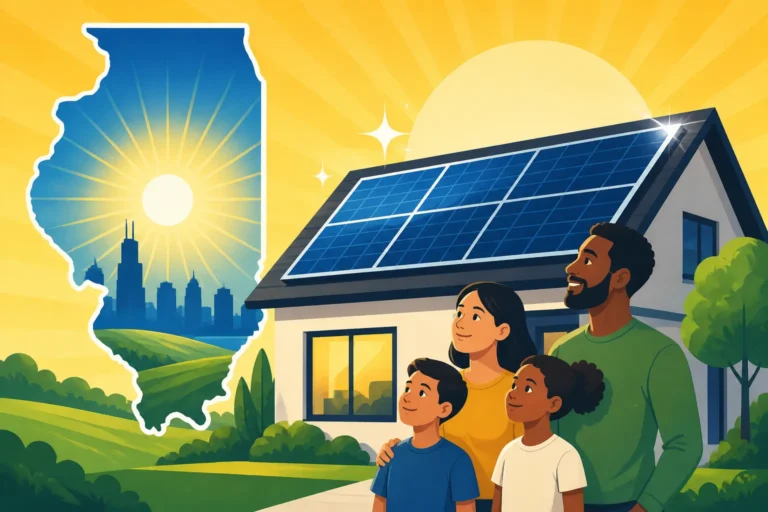
Trying to keep up with the shifting energy laws in Illinois feels a bit like trying to navigate a Chicago blizzard—the visibility changes by the minute, and you’re never quite sure if the ground under you is solid or slick. If you are wondering if Illinois still offers net metering in 2026, this guide will walk you through the current state of credits, rebates, and exactly how much you can expect to save on your monthly utility bill.
The Reality of Illinois Net Metering
For years, Illinois was often cited as a "gold standard" for solar incentives because of its generous 1:1 full retail net metering. If your panels produced an extra kilowatt-hour of power, your utility company—usually ComEd or Ameren—would credit you the full retail price of that power. It was simple, it was fair, and it made the math for going solar very attractive. However, as we move through 2026, the landscape has shifted significantly due to the long-planned transitions outlined in the Climate and Equitable Jobs Act (CEJA).
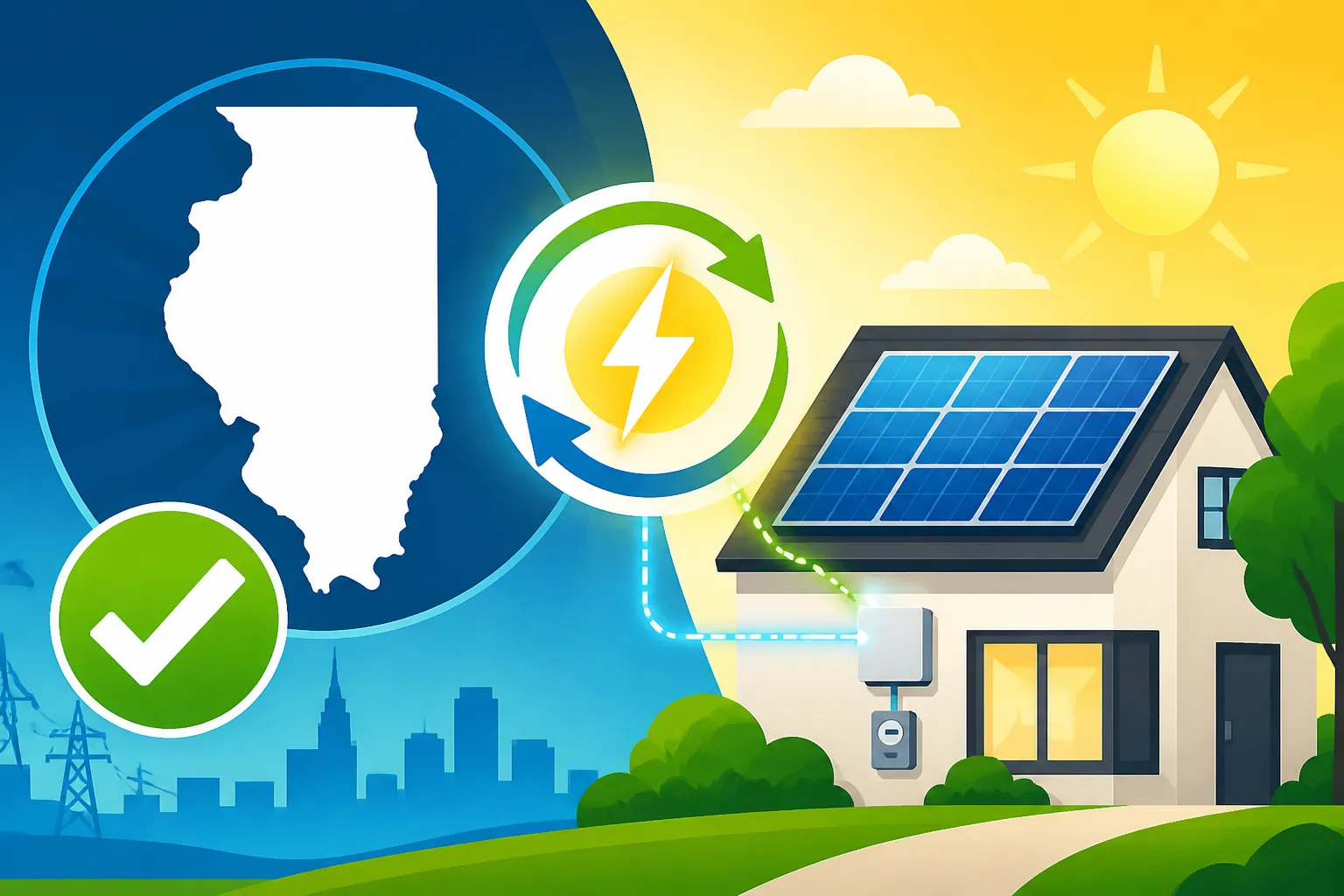
The short answer is yes, Illinois still has net metering, but the "flavor" of that net metering depends heavily on when you had your system installed and which utility territory you live in. We are currently in a transition period where the old "Full Retail" model is being phased out for new solar adopters in favor of a "Distributed Generation (DG) Rebate" model combined with supply-only credits. This change has caused a lot of anxiety for homeowners, and rightfully so. You want to know if the rug is being pulled out from under your investment.
The truth is that while the mechanism has changed, the goal remains the same: to make solar a viable financial decision. But you have to be much more strategic now about system sizing and battery storage than you did five years ago. To understand where you stand, you first need to know the Net Metering vs Net Billing: What's the Difference? because Illinois is moving closer to a net billing structure for new participants.
ComEd and Ameren: The Move to the DG Rebate
If you are a ComEd or Ameren customer looking to go solar in 2026, you are likely looking at the new compensation structure. The state reached its "5% peak load" threshold, which triggered a shift in how solar energy is credited. Instead of getting a credit for both the "Supply" and "Delivery" portions of your bill for every excess kilowatt-hour you send back to the grid, the new system often splits these.
Under the 2026 rules for new applicants, you generally receive a credit for the energy supply portion of your bill. However, to make up for the loss of the delivery credit—which used to be part of that 1:1 retail rate—the state introduced the Distributed Generation (DG) Rebate. This is a one-time, upfront payment based on the kilowatt (kW) capacity of your system. It is designed to "pre-pay" you for the value of the delivery credits you would have received over the life of the system.
This shift is a double-edged sword. On one hand, receiving a check for several thousand dollars shortly after installation is great for lowering your initial How Much Do Solar Panels Cost? 2026 Guide. On the other hand, it means your monthly bill won't drop as close to zero as it might have under the old rules, because you are still paying those delivery charges for any power you pull from the grid at night. This is why we are seeing a massive surge in people looking into Solar Battery Incentives in 2026 to keep their power at home rather than sending it back for a lower credit.
Why the Illinois Shines Program Matters More Than Ever
You cannot talk about Illinois solar without talking about the Illinois Shines & Solar for All programs. While net metering handles your monthly bill credits, Illinois Shines—formally known as the Adjustable Block Program—is what provides the bulk of your long-term return on investment through SRECs.
In 2026, the SREC (Solar Renewable Energy Credit) market remains robust. When you install a system, you are essentially selling the "greenness" of your energy back to the state in a 15-year contract. For most residential systems, this is paid out as a lump sum or over a few years, providing a massive influx of cash. When you combine your SRECs with the new DG Rebate, the upfront cost of solar in Illinois is still among the lowest in the country, even if the monthly net metering credits aren't quite as high as they used to be.
If you are confused about how these credits are valued, you should look into SRECs Explained: Selling Solar Renewable Energy Credits. In Illinois, these are not just small bonuses; they are central to your financial planning. In fact, many homeowners find that the SREC payment alone covers 20% to 30% of their total system cost.
Comparing Illinois Solar Compensation Models
To help you visualize the difference between the "Old" and "New" ways of doing things in Illinois, take a look at the table below.
| Feature | Old 1:1 Net Metering (Legacy) | 2026 DG Rebate Model (New) |
|---|---|---|
| Compensation Rate | Full Retail (Supply + Delivery) | Supply Only (per kWh) |
| Upfront Incentive | None (standard) | DG Rebate ($ per kW) |
| Monthly Bill Impact | Can reach near $0 | Usually leaves delivery charges |
| SREC Eligibility | Yes | Yes |
| Battery Value | Low (Grid acts as battery) | High (Avoids delivery charges) |
| Payback Period | 6–8 Years | 7–9 Years (with rebate) |
Is Solar Still a Good Investment in Illinois in 2026?
One of the most common frustrations we hear from homeowners is the feeling that they "missed the boat." They see their neighbor who installed solar in 2021 getting full retail credits and feel like they are getting a raw deal. I want to validate that feeling—it is frustrating when the rules change. However, when you look at the Solar ROI & 25-Year Savings Breakdown for Illinois in 2026, the numbers still tell a very compelling story.
First, the cost of equipment has continued to stabilize, and installers have become much more efficient. Second, the price of electricity from ComEd and Ameren has not exactly gone down. Every time the utility companies hike their rates, the value of the energy you produce on your roof goes up.
Even with the shift away from full retail net metering, most Illinois homeowners find that solar pays for itself in under a decade. When you consider that these systems are warrantied for 25 years, you are looking at 15+ years of essentially free electricity. The key is to ensure your system is sized correctly. In the old days, you could "oversize" a system and just rack up credits. Today, you want to size your system to match your actual consumption as closely as possible to maximize your Illinois Solar Incentives in 2026.
The Importance of Battery Storage in the New Landscape
If you’ve been following the news about California Net Billing (NEM 3.0) Affects Savings, you know that when net metering gets cut, batteries become the hero of the story. Illinois isn't quite as extreme as California yet, but we are moving in that direction.
A solar-only system in Illinois is still a great deal, but a solar-plus-storage system is the "pro move." By adding a battery, you can store the excess energy your panels produce during the sunny Illinois afternoons and use it at night. This allows you to avoid pulling power from the grid and paying those delivery charges that are no longer covered by net metering credits.
Furthermore, the DG Rebate for systems with batteries is often higher or more accessible, and there are federal incentives that still apply to the storage component. If your goal is total energy independence and the lowest possible monthly bill, a battery is no longer a luxury—it’s a tactical component of your home's energy system.
Navigating the Application Process and PTO
One thing that hasn't changed in 2026 is the bureaucracy. To get your system turned on and start receiving any kind of credit, you have to go through the interconnection process. This culminates in getting your What Is Permission to Operate (PTO)?.
In Illinois, the timeline for PTO can vary wildly. ComEd is generally faster than some of the smaller co-ops, but you should still expect a wait of four to eight weeks after your panels are physically on the roof. During this time, your system is installed but essentially "dark." You can't turn it on because the utility company hasn't swapped out your meter for a bidirectional one yet.
Working with a reputable local installer is crucial here. They handle the "paperwork headache" that comes with the DG Rebate application, the Illinois Shines enrollment, and the utility interconnection. If you try to DIY this in 2026, you might find yourself stuck in a loop of rejected forms and missed incentive deadlines.
Common Myths About Illinois Net Metering
There is a lot of misinformation floating around, especially from high-pressure door-to-door salespeople. Let’s clear a few things up:
- Myth: Net Metering is "Gone." As we’ve discussed, it isn’t gone; it has evolved. You still get credited for your supply, and you get an upfront rebate to offset the rest.
- Myth: You can't get SRECs anymore. The Illinois Shines program is very much alive. While "blocks" occasionally fill up and create waitlists, the program is designed to be permanent through 2030 and beyond.
- Myth: Solar doesn't work in Illinois winters. Your panels will actually produce more efficiently in the cold! While the shorter days and occasional snow cover mean less production in January than in July, the annual average in Illinois is more than enough to make solar worth it.
If you are still on the fence, I highly recommend checking out a Solar Panel Payback Period Explained guide tailored for the Midwest. You'll see that even with the 2026 changes, Illinois remains one of the best states in the region for solar, far outperforming neighbors like Indiana or Missouri in terms of state-level support.
Final Thoughts for Illinois Homeowners
The transition in 2026 represents a maturing solar market. The state is moving away from simple "1:1 swaps" and toward a more complex, but still lucrative, system of rebates and supply credits. It requires a bit more homework on your part, and it definitely requires a solar installer who understands the nuances of the CEJA legislation.
Don't let the technical jargon scare you off. Between the DG Rebate, the federal tax credit (which, while reduced, is still a major factor), and the ongoing Illinois Shines payments, the financial argument for home solar in the Land of Lincoln is still rock solid. Just make sure you are looking at the "net" picture—the combination of upfront checks and monthly savings—rather than just the monthly credit line on your ComEd bill.
Disclaimer
This guide is for informational purposes only and does not constitute legal, tax, or financial advice. Solar incentives, including net metering policies and DG rebate values, are subject to change by the Illinois Commerce Commission (ICC), state legislature, and individual utility companies. Always consult with a qualified solar professional and a tax advisor to confirm the specific incentives available for your home and location in 2026.