Arizona Solar Incentives in 2026
It's completely understandable to feel a bit overwhelmed when trying to figure out what solar incentives are actually available in Arizona right now. Between the ever-changing policies and the sheer volume of information out there, it can feel like you need a degree in finance just to understand if going solar is worth it for your home. This guide is here to cut through the confusion and give you a clear, realistic look at the Arizona solar incentives you can genuinely take advantage of, helping you make an informed decision for your family and your budget.
Understanding Arizona's Solar Landscape in 2026
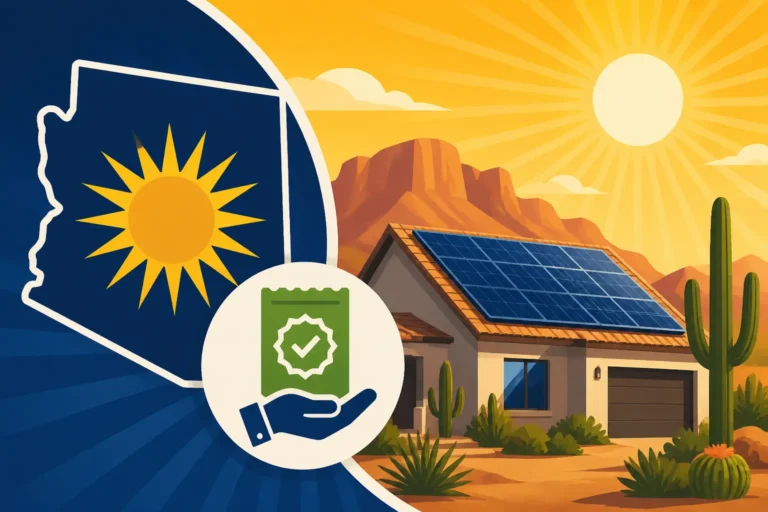
Arizona, the "Grand Canyon State," is famous for its abundant sunshine, making it an ideal place for solar power. However, the incentives and programs that make solar financially attractive have shifted over the years, moving from generous rebates to a more nuanced landscape. In 2026, Arizona homeowners looking to go solar will find a mix of federal support, state-level tax benefits, and specific utility programs that, when combined, can still make a significant difference in the overall cost of a system and your long-term savings. The key is knowing precisely what's on the table and how to access it.
The Federal Solar Tax Credit Remains a Game Changer
Let's start with the big one: the federal solar tax credit, officially known as the Investment Tax Credit (ITC). While you might hear whispers about tax credits disappearing, rest assured, this one is still very much alive and kicking in 2026. This isn't an Arizona-specific incentive, but it's such a massive part of solar savings that it's crucial for any homeowner in the state to understand.
The ITC allows you to claim a percentage of your solar energy system's cost as a credit on your federal income taxes. In 2026, this credit is still at 30% of the total installed cost, including equipment, labor, and even solar batteries paired with your system. For example, if your entire solar installation costs $30,000, you could potentially reduce your federal tax liability by $9,000. It's not a deduction; it's a direct dollar-for-dollar reduction of the income tax you owe, which is incredibly powerful. You can even claim the tax credit on a solar battery if it's installed with your solar system. This credit is available for both owned systems and those financed through solar loans, but not for leased systems or Power Purchase Agreements (PPAs) where you don't own the equipment. Understanding how this credit works is paramount, and many people have questions like, "Is the Solar Tax Credit Gone in 2026?" or "Can You Still Get a Solar Tax Credit in 2026?" The good news is, for now, it's still here.
State-Level Tax Exemptions for Solar Energy
Beyond the federal support, Arizona provides a couple of significant state-level tax exemptions that help reduce the financial burden of going solar. These aren't cash rebates, but they prevent solar from adding to your property or sales tax bills, which can save you a substantial amount over time.
Arizona Solar Property Tax Exemption
One of the most appealing state incentives is the Arizona Solar Property Tax Exemption. Normally, when you make a major home improvement that increases your property's value, your property taxes go up. Installing a solar energy system undeniably increases your home's value, but Arizona has a fantastic policy that prevents this from penalizing you. The state exempts the added value of a solar energy device from your property taxes. This means that while your home becomes more valuable and attractive to potential buyers, your annual property tax bill won't climb just because you've added solar panels. This is a huge, long-term saving that often gets overlooked but can add up to thousands of dollars over the lifetime of your system, especially in areas with higher property values. Imagine the peace of mind knowing your energy bills are lower, and your property tax won't unexpectedly jump because of your green upgrade.
Arizona Solar Sales Tax Exemption
When you purchase a solar energy system in Arizona, you'll be glad to know that you won't pay state sales tax on the equipment itself. The Arizona Solar Sales Tax Exemption removes the state sales tax from the gross retail amount charged for solar energy devices. This means that if your solar panels and associated equipment cost $20,000, you avoid paying the standard Arizona transaction privilege tax rate (sales tax) on that amount, which can be several hundred to over a thousand dollars depending on your local sales tax rates. While this doesn't apply to the labor portion of the installation, it's still a nice chunk of change saved upfront on the materials. Every little bit helps when you're making such a significant investment in your home.
Navigating Arizona's Net Billing and Export-Import Rates
One of the most critical aspects of going solar in Arizona, especially in 2026, isn't an "incentive" in the traditional sense, but rather how your utility compensates you for the excess electricity your panels produce. This has been a hot topic, with many states moving away from traditional net metering. Arizona is no different, having transitioned from full retail net metering to what's often referred to as "export-import" or "net billing" rates.
Understanding the Solar Export-Import Rate
For homeowners served by major utilities like Arizona Public Service (APS) and Salt River Project (SRP), the way you are credited for excess solar power has fundamentally changed. Instead of receiving a one-for-one credit for every kilowatt-hour (kWh) you send back to the grid (which was traditional net metering), you're now compensated at a lower "export rate" or "avoided-cost rate." This rate is typically much lower than the retail rate you pay for electricity from the grid.
For instance, if your panels produce more electricity than your home consumes during the day, that surplus energy is sent to the grid. APS and SRP will then credit your account for that electricity at their respective export rates. These rates are designed to reflect the utility's avoided cost of generating that power, rather than the price you pay as a consumer. This shift means that maximizing self-consumption of your solar power becomes more financially advantageous than simply sending it all back to the grid. This policy means that simply oversizing your system to export a lot of power might not be the most efficient strategy for savings anymore. Understanding your specific utility's rules is crucial, as is evaluating whether a solar battery makes sense for your home to store excess power for later use.
The Role of Solar Batteries in Maximizing Savings
Given Arizona's shift to export-import rates, solar batteries have become an increasingly attractive option for homeowners. Instead of exporting your excess solar production to the grid at a lower rate, a solar battery like the Tesla Powerwall or Enphase IQ Battery allows you to store that surplus energy. You can then use this stored energy later in the day, particularly during peak utility hours when electricity rates are often highest.
By doing so, you reduce the amount of electricity you need to purchase from the grid at those higher retail rates. This strategy effectively increases your "self-consumption" and can significantly boost your overall savings, especially if your utility has time-of-use (TOU) rates. Many homeowners are asking, "Are Solar Batteries Still Eligible for Incentives in 2026?" and the answer is yes, as the federal tax credit still applies to them when installed with a solar system. Adding a battery not only enhances your savings under net billing but also provides valuable backup power during grid outages, offering greater energy independence and peace of mind, which is a huge draw for many Arizonans.
Arizona Utility Programs and Other Considerations
Beyond the main federal and state incentives, Arizona's utility companies often offer their own programs or have specific rate structures that can impact your solar savings. It's always a smart move to check directly with your local utility provider.
Major Utility Solar Programs in Arizona
While traditional cash rebates from utilities have largely phased out in Arizona, some utilities may still offer specific programs or rate plans designed for solar customers. For instance, both APS and SRP, the two largest electric utilities in the state, have specific rate plans for customers with solar installations.
- Arizona Public Service (APS): APS offers various rate plans for solar customers, including time-of-use (TOU) rates and demand-based rates. Understanding which rate plan is best for your specific usage patterns and solar production is critical. APS also has specific interconnection requirements for solar systems. It's not just about getting panels on your roof; it's about optimizing your usage and understanding how APS will bill you. Their current solar program generally refers to their standard rate plans and the solar export rate mechanism, so it’s essential to model your savings with these factors in mind.
- Salt River Project (SRP): Similar to APS, SRP has specific pricing plans for solar customers, which have also moved away from one-to-one net metering. Their solar rate plans often involve a grid access charge and export credits at a lower value. SRP's policies are particularly important for homeowners in the Phoenix metropolitan area. They might offer incentives for certain technologies or energy efficiency upgrades that complement solar, so it’s worth investigating their current offerings. Always review the detailed terms and conditions of these plans to see how they impact your potential savings.
Low-Income Solar Programs
Arizona is also working to ensure that solar energy is accessible to everyone, not just those with higher incomes. While specific, widespread state-funded low-income solar programs are less common, some initiatives and non-profit organizations exist. For example, the Low-Income Home Energy Assistance Program (LIHEAP) doesn't directly fund solar installations, but it can help low-income households manage their energy bills, which solar aims to reduce long-term. Organizations like GRID Alternatives often work in Arizona to provide solar to qualifying low-income families and communities, typically leveraging grants and donations. If you're wondering, "Do I Qualify for Low-Income Solar Programs?", researching local community action agencies and non-profits dedicated to energy assistance is a good starting point. These programs often have specific income requirements and geographical limitations, so it's best to check directly with local agencies for the most up-to-date information.
PACE Financing Options
While not an incentive, PACE (Property Assessed Clean Energy) financing is an option that some Arizona homeowners explore for solar installations. PACE programs allow property owners to finance energy efficiency, renewable energy, and water conservation improvements through an assessment on their property tax bill. This means the loan is tied to the property, not the individual. While it can offer zero-down financing and long repayment terms, it also comes with complexities and risks. It's important to thoroughly understand how PACE financing works and its implications, as it can affect property sales and have specific legal requirements. Always compare PACE against traditional solar loans to determine the best financial path for your situation.
Arizona Solar Incentives at a Glance
To make things a bit clearer, here's a quick summary of the main solar incentives available to Arizona homeowners in 2026:
| Incentive Type | Description | Who Qualifies | Key Benefit |
|---|---|---|---|
| Federal Solar Tax Credit | A 30% tax credit on the cost of your solar energy system (including battery storage). | Homeowners who purchase or finance their solar system. | Direct reduction of federal income tax liability. |
| AZ Solar Property Tax Exemption | Exemption of the increased home value from solar from property tax assessments. | All homeowners installing solar in Arizona. | Long-term savings on annual property tax bills. |
| AZ Solar Sales Tax Exemption | Exemption from state sales tax on the retail cost of solar energy equipment. | All homeowners purchasing solar equipment in Arizona. | Upfront savings on the total cost of the solar system materials. |
| Utility Export/Buyback Rates | Utilities (e.g., APS, SRP) compensate solar customers for excess electricity sent to the grid, though at a rate lower than retail. | Solar customers connected to the grid with a participating utility. | Credits on monthly utility bills for exported energy, though at a reduced rate compared to traditional net metering. |
Maximizing Your Savings with Solar in Arizona
Given the current landscape of incentives and utility policies, making the most of your solar investment in Arizona requires a strategic approach. It's not just about installing panels; it's about optimizing your system and understanding your energy consumption.
Strategic Energy Consumption
With the transition to export-import rates by utilities like APS and SRP, reducing your reliance on grid power, especially during peak hours, is more important than ever. This means making conscious choices about when you use energy-intensive appliances. For example, running your dishwasher or washing machine in the middle of the day when your solar panels are producing at their peak can dramatically reduce the amount of electricity you need to pull from the grid. This also minimizes the amount of energy you export at the lower buyback rate. This approach directly impacts how much you save monthly and shortens your Solar Panel Payback Period Explained.
Consider installing smart home devices that can automate these processes, or simply adjust your habits. Thinking about your energy usage in tandem with your solar production schedule can unlock significant additional savings.
The Value of Professional Solar Consultation
Navigating the nuances of Arizona's solar incentives and utility rates can feel like a maze. This is where professional solar installers truly shine. A reputable local installer won't just sell you panels; they'll help you design a system optimized for your home's energy needs, roof orientation, and local utility policies. They'll also be invaluable in explaining how to apply for the federal tax credit and ensuring your system qualifies for state tax exemptions.
Furthermore, a good installer will help you compare different equipment options, like various solar panel brands and inverter types, and discuss whether adding a solar battery makes economic sense for your household. They can also assist with the complex permitting and interconnection process, which is essential for getting your system up and running legally and efficiently. When considering a solar installation, getting multiple quotes and having detailed discussions with different providers is always a good idea. Looking into How to Choose a Solar Installer can help you find the right fit.
Future-Proofing Your Solar Investment
While the federal tax credit is currently set at 30% through 2032, state and utility policies can evolve. Building a system that can adapt to potential changes, such as further adjustments to export rates or the introduction of new technologies, is a smart long-term strategy. This might involve choosing a modular system that can be easily expanded, or investing in smart home energy management systems that provide greater control over your consumption.
Staying informed about any proposed changes to Net Metering Explained: How It Works by State or other incentives can help you make timely decisions. For example, some homeowners might be wondering, "Is Net Metering Going Away?" or "What Solar Incentives Are Left in California?" (a state that has already made significant changes). While Arizona has already made its shift, it's always wise to keep an eye on the regulatory landscape to ensure your system continues to deliver maximum value over its 25+ year lifespan.
Final Thoughts on Going Solar in Arizona
Even with shifts in utility policies, Arizona remains a fantastic place to go solar, thanks to its abundant sunshine and the remaining powerful incentives. The federal solar tax credit offers a significant upfront saving, while state property and sales tax exemptions provide continuous financial benefits. By understanding how net billing works with your local utility and strategically managing your energy consumption—perhaps with the help of a solar battery—you can still realize substantial savings and contribute to a more sustainable future. Don't let the complexity deter you; with the right information and a trusted installer, your journey to energy independence in the Arizona sun can be a rewarding one.
Disclaimer
Please note that incentive programs, tax laws, and utility policies can change. While we strive to provide the most accurate and up-to-date information, it is always recommended to consult with a qualified solar professional, tax advisor, and your local utility provider to confirm eligibility and current program details for your specific situation.