Does Colorado Have Net Metering in 2026?
Rising utility rates across the Front Range have left many Colorado homeowners feeling stuck between a rock and a hard place, especially as cooling costs spike during our intense high-altitude summers. You are likely wondering if the state still offers the financial "safety net" of net metering to offset these costs. This guide breaks down exactly how Colorado’s net metering landscape looks and how you can maximize your energy savings today.
The State of Colorado Net Metering
If you have been scouring the internet for a straight answer, here is the good news: Colorado remains one of the most solar-friendly states in the country, and net metering is very much alive and well. Unlike some states that have moved toward "Net Billing" (which often pays you less for the power you send back to the grid), Colorado has maintained a strong commitment to retail-rate net metering for most residential customers.
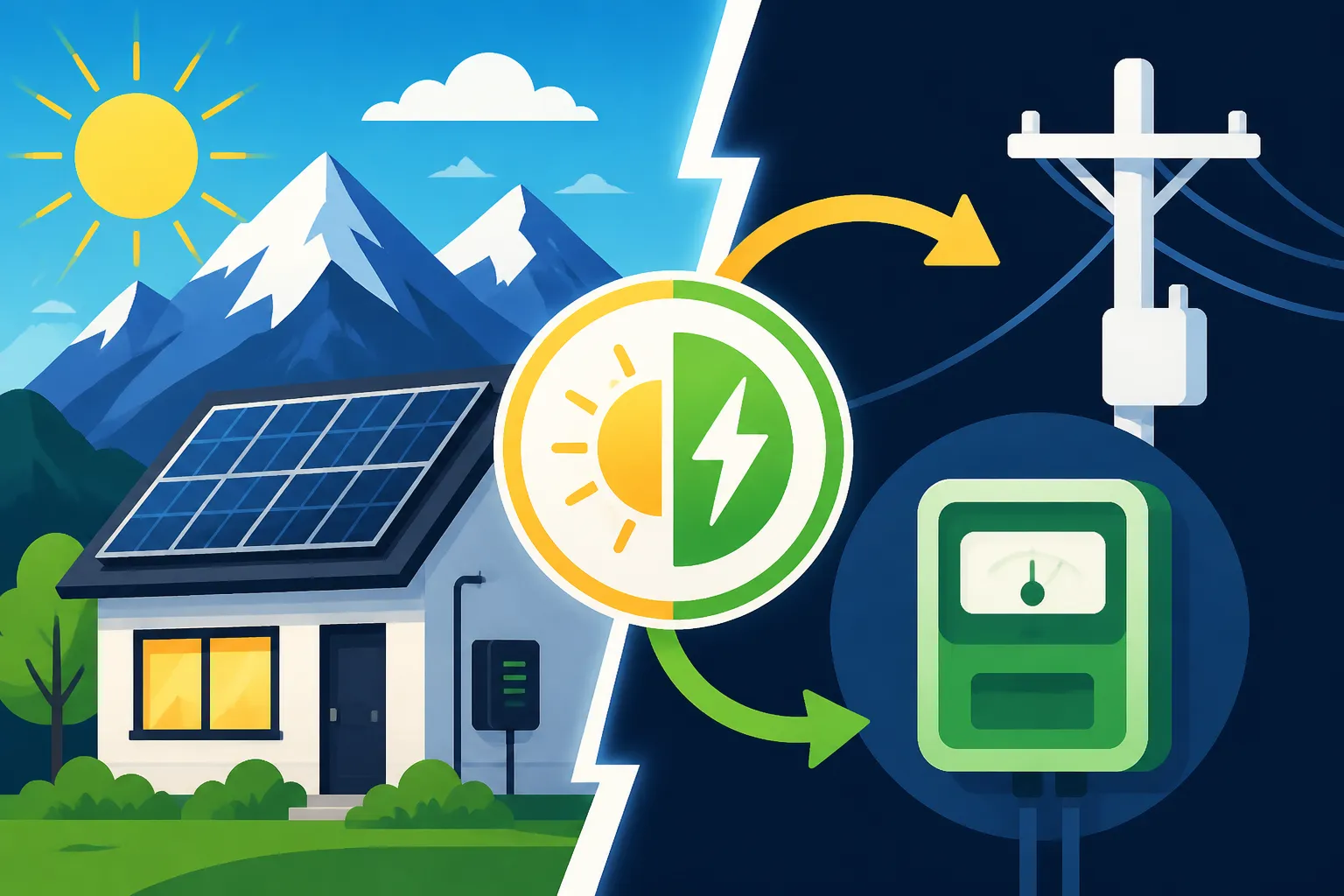
The core philosophy in Colorado has been to encourage energy independence. When your solar panels produce more electricity than your home needs—which happens quite often during those 300+ days of sunshine we brag about—that excess power flows back onto the utility grid. Your meter literally runs backward, and you receive a credit on your bill for every kilowatt-hour (kWh) you export. In 2026, these credits are typically valued at the same price you would pay for electricity, making the grid act like a giant, free battery for your home.
This is a massive win for homeowners in cities like Denver, Aurora, and Fort Collins. It means that the energy you produce at noon on a Tuesday in July helps pay for the air conditioning you run at 8:00 PM that same night. Without this policy, the Solar Payback Period in Colorado would be significantly longer, making it harder for the average family to justify the upfront investment.
Understanding the Monthly Rollover Process
One of the most common questions I get from local homeowners is what happens to those credits if they aren't used up immediately. In Colorado, your net metering credits don't expire at the end of the month. If your system produces 1,000 kWh in May but you only use 800 kWh, those 200 kWh of extra credit roll over to June.
This rollover is critical for our climate. We have massive seasonal swings. Your system might overproduce during the late spring and early summer, building up a “bank” of credits. You then draw from that bank during the shorter days of December and January when your production naturally dips. This cycle is a cornerstone of why people find that the answer to Is Solar Worth It in Colorado in 2026? is a resounding yes.
The Annual True-Up Period
While the credits roll over month-to-month, Colorado utilities generally have an "Annual True-Up" date. This is the moment once a year when the utility looks at your total production versus your total consumption. If, at the end of that 12-month period, you still have a surplus of credits in your bank, the utility will typically pay you out for that excess.
However, a quick word of caution: the payout for that year-end surplus is usually at the "wholesale" rate, not the "retail" rate. This means the check you get in the mail won't be as large as the value of the credits if you had used them yourself. This is why properly sizing your system is so important; you want to cover your needs without overbuilding to the point of diminishing returns. You can learn more about this in our State Solar Incentives: Complete 2026 Guide.
How Net Metering Varies by Utility Provider
Not all net metering in Colorado is created equal. While state law sets the baseline, the specific experience can change depending on whether you are with a large investor-owned utility like Xcel Energy or a smaller municipal cooperative. Understanding these nuances is key before you sign any contracts or worry about the Solar Panel Cost in Colorado.
Xcel Energy Net Metering Rules
As the largest utility provider in the state, Xcel Energy sets the standard for many Colorado solar customers. In 2026, Xcel continues to offer 1:1 net metering. Their process is relatively streamlined, though you must ensure your system passes a final inspection before you receive your official What Is Permission to Operate (PTO)?.
Xcel also offers "Solar*Rewards," which is a separate program where they pay you for the Renewable Energy Credits (RECs) your system generates. This is an added layer of income on top of your net metering savings. It’s a great way to shave even more time off your ROI, especially if you are concerned about how Are Solar Panels Worth It Without the Tax Credit in 2026? now that the federal landscape has shifted.
Black Hills Energy and Municipal Utilities
If you are down in Pueblo or parts of the Western Slope served by Black Hills Energy, the rules are very similar to Xcel’s, though the administrative steps might differ. Black Hills has historically been supportive of net metering, recognizing it helps them manage peak load during those scorching summer afternoons.
For those in Colorado Springs, Fort Collins, or Loveland, you are likely served by a municipal utility. These "munis" often have their own specific bylaws. For instance, Colorado Springs Utilities has a very robust net metering program, but they might have different caps on system size compared to Xcel. Always check with your specific provider to see Does My Utility Offer a Solar Rebate? or any specific local performance-based incentives.
Rural Electric Cooperatives (RECs)
Homeowners in more rural areas of the state are often served by cooperatives like United Power or Poudre Valley REA. These organizations are member-owned, which often means they are very pro-solar. However, some cooperatives have experimented with "fixed charges" or "demand charges" that can eat into your net metering savings if you aren't careful. It is vital to understand the "avoided-cost rate" if your specific coop doesn't offer a full 1:1 retail credit. You can find more detail on this in our guide to Net Metering Explained: How It Works by State.
Capacity Limits and System Sizing in 2026
A major shift in Colorado law (specifically SB21-261) significantly expanded how large your solar system can be while still qualifying for net metering. This is a detail that often gets overlooked in generic solar guides, but it’s a game-changer for Colorado residents.
The 200 Percent Rule
In the past, many utilities restricted you to sizing a system that covered only 120% of your previous year’s energy usage. The rules are much more flexible. Homeowners can now size their systems up to 200% of their historical annual consumption. Why does this matter? Because of the "electrification" trend.
If you are planning to buy a Tesla or a Rivian next year, or if you want to swap your old gas furnace for a high-efficiency heat pump, you are going to need a lot more electricity. The 200% rule allows you to build a solar array today that accounts for the energy needs you will have tomorrow. This forward-thinking policy is a big part of why Does Colorado Have Net Metering? remains such a positive topic for local homeowners.
Sizing for Batteries and Resilience
With the 200% rule, many Coloradoans are also looking into storage. While net metering acts like a "virtual battery," it doesn't help you if the grid goes down during a heavy spring snowstorm or a wildfire-related outage. By sizing your system larger, you can more effectively charge a home battery.
Even though the primary federal credit has evolved, you should check if Are Solar Batteries Still Eligible for Incentives in 2026? through local utility programs or state-level tax exemptions. Storing your own power can be a smart hedge against any future changes to net metering rules, even if things look stable right now.
| Feature | Xcel Energy (Colorado) | Black Hills Energy | Typical CO Muni/Co-op |
|---|---|---|---|
| Net Metering Ratio | 1:1 Retail Rate | 1:1 Retail Rate | Varies (Mostly 1:1) |
| Credit Rollover | Indefinite (Monthly) | Indefinite (Monthly) | Annual or Monthly |
| Annual True-Up | Yes (Wholesale Payout) | Yes (Wholesale Payout) | Varies |
| System Size Limit | 200% of Usage | 200% of Usage | Varies by Charter |
| Additional Incentives | Solar*Rewards (RECs) | REC Payouts available | Local Rebates often exist |
Challenges and Future Outlook for Colorado Solar
While the current outlook is bright, I wouldn't be a veteran lifestyle blogger if I didn't give you the realistic side of things. Net metering is a point of contention for many utilities nationwide, and while Colorado has strong legislative protections, it’s always wise to stay informed.
The "Cost Shift" Argument
Utilities often argue that net metering customers aren't paying their "fair share" for the upkeep of the poles and wires because their bills are so low. While the Colorado Public Utilities Commission (PUC) has generally sided with homeowners, there is always a chance that fixed monthly charges could increase. This wouldn't eliminate net metering, but it could slightly decrease the monthly savings.
This is why I always tell my readers to "grandfather" themselves in. Usually, when net metering rules change, existing customers are protected under the old rules for 10 to 20 years. Getting your What Is Permission to Operate (PTO)? confirmed under current 2026 rules is a great way to lock in your financial benefits for the long haul.
Navigating the Application Process
Don't let the paperwork scare you. Most reputable installers in the Denver and Colorado Springs areas handle the net metering application for you. However, you should still be proactive. Ask your installer for a copy of the interconnection agreement and verify that they have checked for any How Do I Find Solar Rebates Near Me? that might be specific to your zip code.
The timeline for approval can also vary. In some high-demand areas, it can take several weeks for the utility to swap out your meter for a bidirectional one. Being patient and knowing what to expect can save you a lot of frustration.
Maximizing Your ROI with Colorado Net Metering
To truly get the most out of your solar investment, you need to think beyond just the panels. It’s about how you use the energy and how you leverage every available program in the Centennial State.
First, consider the timing of your heavy energy usage. Since Colorado offers 1:1 net metering, it doesn't technically matter when you use your power from a purely financial standpoint (unless you are on a specific Time-of-Use rate). However, using your high-draw appliances—like the dishwasher or dryer—during the day when your panels are soaking up the sun reduces the amount of power that has to travel back and forth across the grid, which is slightly more efficient.
Second, stay on top of local developments. Colorado is a leader in community solar projects. If you have a roof that is too shaded by beautiful old oak trees or if you live in a condo, you might still be able to benefit from net metering through a "virtual" program. Check out our guide on Community Solar: How It Works & Who Qualifies to see if that is a better fit for your situation.
Finally, remember that solar adds tangible value to your home. In a competitive real estate market like the Front Range, a home that essentially "pays for its own power" is a massive selling point. Even if you don't stay in the house for the full 25-year lifespan of the panels, the net metering benefits you've accumulated make the property much more attractive to future buyers.
Disclaimer
This guide is for informational purposes only and does not constitute financial, legal, or professional tax advice. Solar policies, utility rates, and net metering regulations in Colorado are subject to change by the Public Utilities Commission and state legislature. While every effort has been made to ensure accuracy for 2026, you should always consult with a qualified solar professional or your specific utility provider before making an investment. Historical performance and current incentives do not guarantee future savings.