Maryland SREC Market Guide
If you have spent any time looking at your Maryland electric bill lately, you have probably felt that specific sting of rising delivery charges and fluctuating supply rates. It is frustrating to feel like you are at the mercy of a utility company, which is why so many of your neighbors in places like Silver Spring or Annapolis are turning to the sun. This guide solves the mystery of the Maryland SREC market, showing you exactly how to turn the energy your roof produces into a recurring stream of income that helps your system pay for itself.
Understanding SRECs in the Maryland Energy Landscape
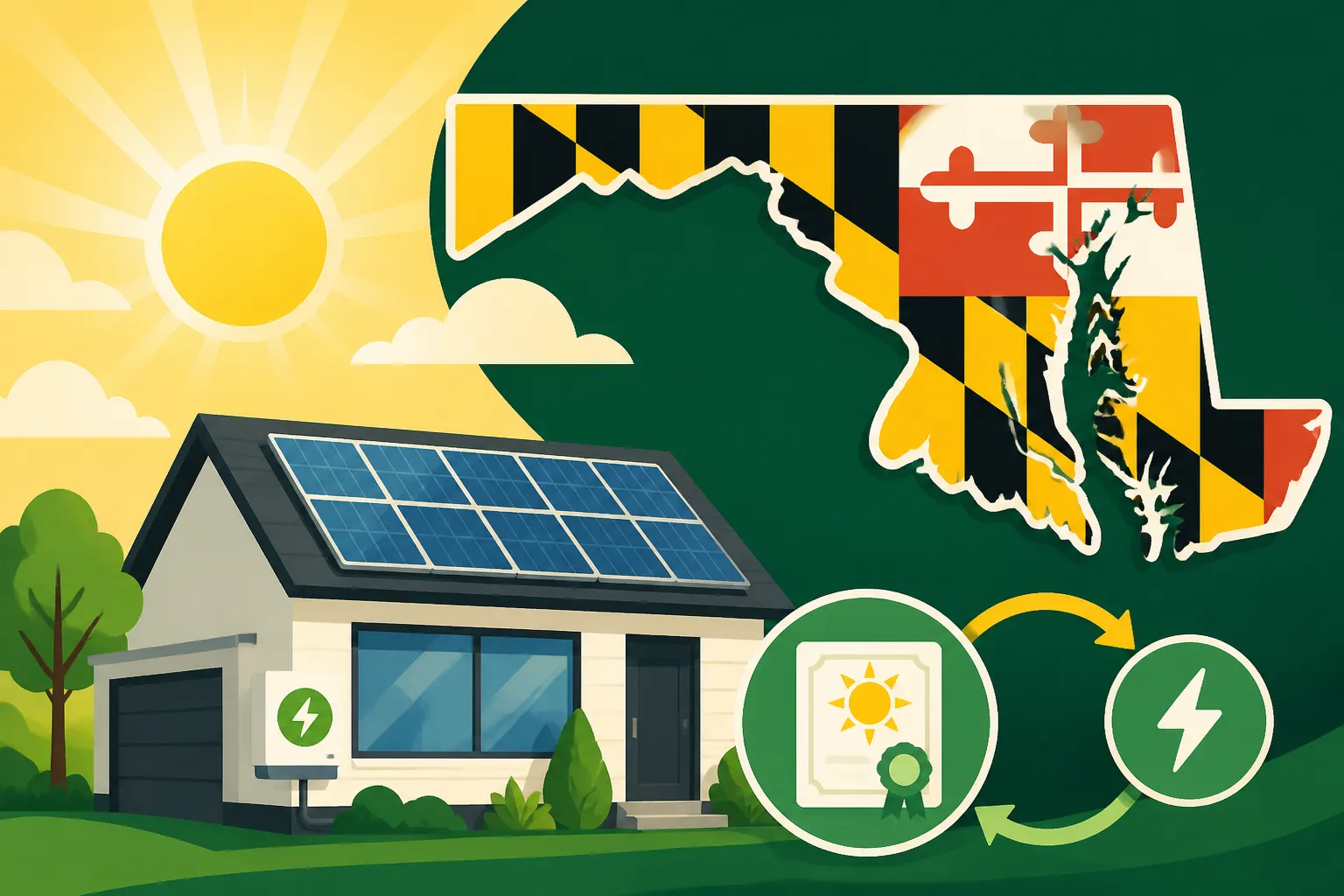
To really get why Maryland is one of the more interesting states for solar, we have to look past the hardware on your roof. Most people understand that solar panels save you money by reducing your utility bill, but the real "secret sauce" in Maryland is the Solar Renewable Energy Credit, or SREC. Think of an SREC as a digital certificate that represents the "green-ness" of the electricity you produce. For every 1,000 kilowatt-hours (kWh) of electricity your system generates, you earn one SREC.
The reason these credits have value is not just because they are good for the planet. It is because Maryland has a law called the Renewable Portfolio Standard (RPS). This law mandates that utility companies like BGE or Pepco must get a certain percentage of their electricity from solar power. If they do not meet these targets, they have to pay a massive fine to the state. To avoid those fines, they buy SRECs from homeowners like you. This creates a market where your solar production becomes a commodity that you can trade for cash.
When you are first exploring this, it can feel overwhelming. You are likely wondering if your specific roof can even generate enough power to make this worth it. Using a service like Modernize can help you connect with local experts who can map out your production potential and explain how these credits will look on your balance sheet. This is a crucial first step because the Maryland SREC market is built entirely on the volume of energy you produce, not just the size of your array.
The Maryland Solar Carve-Out Explained
Maryland’s RPS includes what is known as a solar carve-out. This is a specific requirement within the larger renewable energy goal that must be met specifically by solar energy. As we move through 2026, these requirements are designed to get more aggressive. The state wants more solar on the grid, and they are willing to force utilities to pay for it.
The "Solar Alternative Compliance Payment" (SACP) acts as a price ceiling for the market. If SREC prices get too high, utilities will just pay the fine instead. In Maryland, this price ceiling is scheduled to decrease over time, which means the market has a built-in "use it or lose it" feel. Understanding SRECs Explained: Selling Solar Renewable Energy Credits is vital for anyone trying to time their entry into the market. You want to lock in your registration while the demand is high and the compliance payments are still significant.
How Maryland Differs from Neighboring States
If you have friends in Pennsylvania or Virginia, you might hear different stories about SREC values. Maryland has historically maintained a much stronger market than Pennsylvania because Maryland’s laws are stricter regarding where utilities can buy their credits. Maryland utilities generally have to buy credits from systems located within the state or those that pump energy directly into the Maryland grid.
This protectionist approach keeps the supply in check. When you look at Solar Renewable Energy Credit Prices by State, you will see that Maryland often sits in a "sweet spot"—not quite as high as New Jersey’s legendary (but complex) market, but significantly more lucrative than the wide-open markets in the Midwest. This stability is why Maryland homeowners often see a much faster Solar Panel Payback Period Explained than those in states without a dedicated carve-out.
Navigating the SREC Selling Process in 2026
Once your system is up and running, you do not just automatically get a check in the mail. There is a bit of bureaucracy involved, but it is manageable once you know the steps. Your system must be registered with the Maryland Public Service Commission (PSC) and the PJM GATS (Generation Attribute Tracking System). This is the "stock exchange" for energy credits in our region.
Most homeowners do not want to spend their Friday nights trading credits on a digital exchange. That is where SREC aggregators come in. These are companies that bundle credits from thousands of homeowners and sell them in bulk to the utilities. They take a small commission and handle all the paperwork for you. When researching How Do I Sell My SRECs?, you will find that choosing the right aggregator is just as important as choosing the right panels.
Choosing Between Spot Market and Fixed Contracts
When you sign up with an aggregator, you usually have to choose how you want to be paid. This is where your personal risk tolerance comes into play. You can choose the "Spot Market" price, which means you get paid whatever the current market value is when your credit is minted. This can be great if prices are spiking, but it offers no protection if the market crashes.
Alternatively, many Marylanders opt for a "Fixed Price" or "Annuity" contract. Here, you agree to a set price for your SRECs for a period of 3 to 10 years. You might miss out on a price surge, but you have the peace of mind knowing exactly what your quarterly check will be. For those who used Maryland Solar Incentives & SREC Guide to plan their home budget, the fixed-price model is often the winner because it makes the ROI predictable.
| Contract Type | Risk Level | Stability | Potential Upside |
|---|---|---|---|
| Spot Market | High | Low | High – Benefit from market spikes |
| Fixed Price | Low | High | Medium – Guaranteed rate for years |
| Annuity | Low | Very High | Low – Consistent, long-term payments |
| Upfront Buyout | Minimal | Immediate | Lowest – Cash now, but no future gain |
The Role of Your Solar Installer
A reputable installer will usually handle the initial SREC registration for you as part of the "Permission to Operate" process. However, some lower-cost installers might leave this to the homeowner to save on their own labor costs. This is why it is so important to vet your contractors. Tools like Modernize allow you to compare professionals who understand the specific Maryland registration requirements. If you miss the registration window, you could lose out on months of credits that cannot be claimed retroactively.
If you are currently in the planning stages, checking Maryland Solar Incentives in 2026 will give you a clear picture of what paperwork you should expect your installer to handle. Don't be afraid to ask them directly: "Who is responsible for registering my system with GATS?" If they don't have a clear answer, that is a red flag.
Maximizing the Value of Your Maryland Solar Investment
SRECs are just one piece of the puzzle. To truly win at the solar game in Maryland, you have to stack your incentives. The state offers an excellent sales tax exemption, meaning you don't pay that 6% on your solar equipment. When you combine this with the SREC income, the financial picture starts to look very different from a standard home improvement project.
You should also keep an eye on the State Solar Incentives: Complete 2026 Guide to see if there are any local county-level grants available. For instance, some counties in Maryland have offered property tax credits for solar installations in the past. While SRECs provide the "active" income, these tax exemptions provide the "passive" savings that keep your initial out-of-pocket costs down.
Why SRECs Make Solar Possible for More People
Before SRECs were a major factor, solar was often seen as a luxury for the wealthy. Now, the projected income from these credits can actually help you qualify for financing. Some lenders will look at the estimated SREC production and the Solar Panel Payback Period Explained to offer better terms on a solar loan. They know that you aren't just saving money on your bill; you are owning a small power plant that generates a saleable product.
This shift has made it much easier for middle-class families in suburban Maryland to justify the switch. If you can prove that your SREC checks will cover a significant portion of your monthly loan payment, the "risk" of going solar evaporates. This is a point of discussion you should definitely have when using Modernize to find an installer; ask them for a "pro forma" or a financial projection that specifically breaks down SREC income versus loan interest.
Long-Term Market Outlook for Maryland
As we look toward the late 2020s, the Maryland SREC market is expected to remain one of the more robust in the country. The state's commitment to the Climate Solutions Now Act of 2022 means that the pressure on utilities to find solar credits is not going away. Even as the federal tax landscape shifts, the local Maryland market remains a stronghold of support for clean energy.
However, supply is always increasing as more people go solar. This is the classic supply and demand curve. While the market is strong now, those who get in early tend to see the best returns. If you wait until 2028 or 2030, the "carve-out" might be closer to being filled, which could soften prices. This is why many experts suggest that 2026 is a "goldilocks" year—the technology is efficient, the installers are experienced, and the SREC demand is still very high.
Taking the Next Steps Toward Solar Ownership
If all this talk of markets and credits has your head spinning, don't worry. The most important thing to remember is that SRECs are a reward for doing something that already benefits you. You get the lower power bills, the energy independence during storms (if you add a battery), and the increased home value, and then the SREC market essentially pays you a "bonus" for providing that clean energy to the grid.
Start by getting a clear sense of your home's potential. Every roof is different. A house in the shaded woods of Western Maryland will have a different SREC profile than a townhome in Baltimore with a flat, sun-drenched roof. You can find out exactly where you stand by looking at How Much Can You Save With Solar Panels? and then reaching out to professionals through Modernize to get a boots-on-the-ground estimate.
Preparing Your Documentation
When you finally decide to pull the trigger, keep a "Solar Folder." You will need your final signed contract, the "Permission to Operate" (PTO) letter from your utility, and your system’s technical specifications (like the number of panels and the inverter model). You will need all of this to register for SRECs. Most aggregators have a simple online portal where you can upload these documents and start the flow of credits.
Once registered, you can usually choose to have your payments direct-deposited. It is a great feeling to see a deposit hit your bank account and know that it was generated by the sun hitting your roof while you were at work. It turns your home from a liability that costs you money every month into an asset that contributes to your wealth.
Maryland Solar Incentives Disclaimer
The information provided in this guide is for educational purposes only and does not constitute financial, legal, or tax advice. The SREC market is subject to legislative changes and market fluctuations that can impact the value of credits. Always consult with a qualified tax professional or financial advisor before making significant investments in home solar technology. SREC prices are not guaranteed and can change based on state policy and utility demand.