Will Solar Raise My Property Taxes?
Many homeowners hesitate to pull the trigger on a clean energy upgrade because they fear the "success tax." You spend $30,000 to improve your home’s efficiency, and suddenly, the county assessor shows up to increase your valuation, leading to a higher annual tax bill that eats into your monthly energy savings. This guide clarifies exactly how solar impacts property taxes, which states protect you from hikes, and how to ensure your investment remains profitable.
Understanding the Relationship Between Solar Panels and Home Value
When you install a solar energy system, you are making a significant capital improvement to your property. Much like finishing a basement or adding a luxury deck, solar panels are viewed by the real estate market as a value-add. In many high-demand markets, such as Austin, Texas, or the coastal suburbs of New Jersey, buyers are increasingly willing to pay a premium for a home that comes with a "locked-in" low electricity bill.
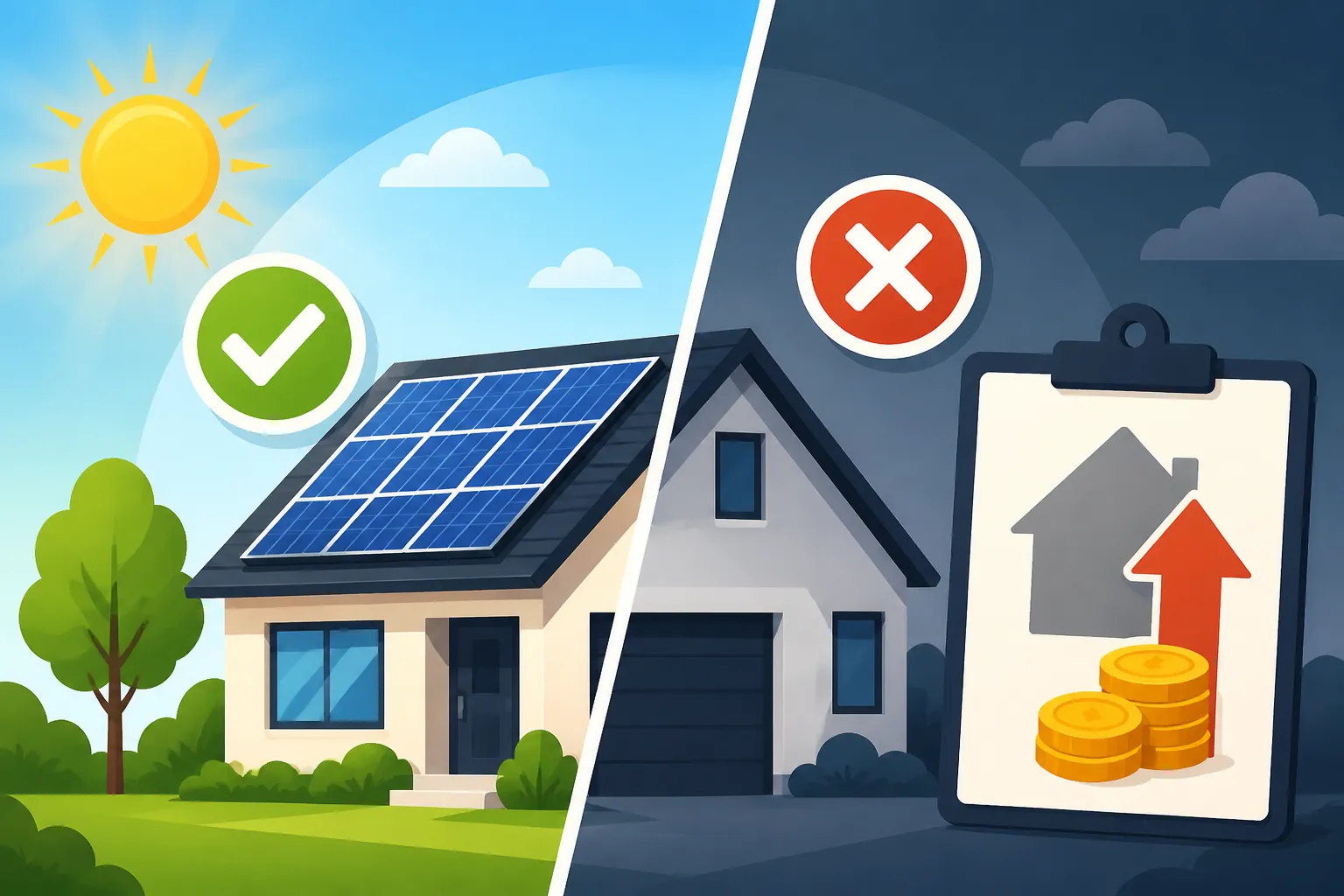
From a purely economic standpoint, if your home is worth more, your property taxes should technically go up. Most local governments calculate your tax bill based on the assessed fair market value of the structure and the land. If a certified appraiser determines that your new 10kW system adds $20,000 to your home’s resale price, a standard assessment would result in a proportional tax increase. However, because solar is a public good that reduces strain on the electrical grid, the rules are often rewritten to favor the homeowner.
It is essential to distinguish between market value and assessed value. While you certainly want the market value to rise for your own equity, you want the assessed value—the number the government sees—to stay flat. To see the full breakdown of how this affects your bottom line, you can explore whether Do Solar Panels Increase Home Value? in your specific neighborhood.
How Assessors View Solar Installations
In 2026, tax assessors have become much more sophisticated in how they value renewable energy. In the past, many simply ignored the panels because they didn't have enough "comparable sales" to justify a higher price. Today, data from across the country shows that solar-equipped homes sell faster and for more money.
If you live in a state without specific protections, the assessor might use the "cost approach" to value your system. This means they look at what you paid for the equipment and installation and add a portion of that cost to your property’s total value. This is the scenario that keeps homeowners up at night, as it can feel like you are being punished for trying to be environmentally conscious and energy independent.
The Market Premium for Energy Efficient Homes
Real estate trends suggest that the "solar premium" is no longer just a theory. In states like California and Florida, a solar-ready home is often treated with the same level of interest as a home with a brand-new roof or an updated kitchen. Prospective buyers look at the rising utility rates from traditional providers and see a solar home as a hedge against inflation.
This market premium is great for your net worth, but it creates a paradox. You want the highest possible appraisal when you sell, but the lowest possible assessment while you live there. This is why understanding Do Solar Panels Increase Property Taxes or Just Value? is the most common question I get from readers who are worried about the long-term ROI of their systems.
Solar Property Tax Exemptions and State Policies
The good news is that the majority of U.S. states realized long ago that taxing people for going solar was a bad policy. To encourage adoption, dozens of states have passed mandatory "Solar Property Tax Exemptions." These laws essentially tell the local tax assessor, "Even if the solar panels make the house more valuable, you are legally forbidden from including that value in the property tax calculation."
This is a massive win for homeowners. It allows you to enjoy the increased equity of a more valuable home without paying a single extra cent in annual taxes. For example, if you live in a state with a 100% property tax exemption, you could add a $40,000 system to your roof, and your tax bill would remain exactly what it would have been without the panels.
To see where your state stands, it is helpful to look at a State Solar Incentives: Complete 2026 Guide to see if your local legislature has enacted these protections. Without these laws, your "payback period" could be extended by several years due to the added tax burden.
States with Mandatory Exemptions
In 2026, states like Florida, New York, and New Jersey remain leaders in this area. In these jurisdictions, the exemption is typically automatic and permanent. You don't have to jump through hoops or re-apply every year. The law is clear: the "added value" of a solar energy system is exempt from the ad valorem tax.
In Florida, for instance, the state constitution specifically protects renewable energy source devices from being considered in the assessment of real property. This is a huge relief for residents in the Sunshine State who are already dealing with rising insurance costs and want to keep their other carrying costs as low as possible. You can find more details on these specific regional benefits in the Solar Property Tax Exemptions by State resource.
Local Option Exemptions and County Level Rules
Not every state is as generous at the top level. Some states leave the decision up to individual counties or municipalities. This is known as a "local option" exemption. In states like New Hampshire or Virginia, your neighbor in the next town over might be exempt from solar taxes while you are not, simply because of a vote by the local town council.
This is where things get tricky and why I always recommend calling your local assessor’s office before you sign a contract. Ask them specifically if they have a "Residential Solar Energy System Exemption." If they do, ask if it is a fixed dollar amount or a percentage of the system’s value. Knowing this ahead of time is a critical part of calculating your Solar Panel Payback Period Explained accurately.
| State Type | Policy Nature | Impact on Tax Bill |
|---|---|---|
| Mandatory Exemption | State Law | 0% Increase (Value is ignored) |
| Local Option | County/City Law | Varies by Zip Code |
| No Exemption | Standard Assessment | Tax increases with home value |
| Partial Exemption | State/Local Law | Only a portion of value is taxed |
How to Navigate the Assessment Process
Even if you live in a state with a great exemption law, the process isn't always automatic. In some jurisdictions, the tax assessor only knows you've made an improvement because a building permit was filed. They might not realize that the "improvement" is a qualifying solar system that should be excluded from your bill.
You should be proactive. Once your system is installed and you have received your What Is Permission to Operate (PTO)?, keep a copy of your final signed contract and your permit. When your next assessment notice arrives in the mail, look at it closely. If you see a jump in value that seems to correlate with your solar installation, you may need to file a formal appeal or an exemption application.
Filing for Your Property Tax Exemption
In many states, such as New York, you must file a specific form (like the RP-487) with your local assessor to claim the exemption. This is a one-time filing in most cases, but if you miss the deadline—often referred to as the "taxable status date"—you might be stuck paying the higher tax for a full year before the exemption kicks in.
Don't assume the solar installer will do this for you. While the best local installers will guide you through the paperwork, the legal responsibility to manage your property taxes lies with the homeowner. Ensuring you have checked all the boxes for How Much Can Solar Incentives Save Me in 2026 includes these administrative tasks that are often overlooked in the excitement of getting panels on the roof.
Impact of Solar Leases vs Ownership on Taxes
One of the most confusing aspects of the property tax conversation is how the "ownership model" affects the bill. If you buy your system with cash or a loan, you own the equipment, and it is part of your real estate. Therefore, the property tax exemptions we've discussed apply directly to you.
However, if you choose a solar lease or a Power Purchase Agreement (PPA), the solar company technically owns the panels on your roof. In many states, because the panels are "personal property" of a corporation rather than "real property" owned by the homeowner, they aren't even included in your home’s assessment to begin with. This can be a silver lining for those who choose a lease, though you should always weigh this against the fact that you lose the federal tax credit. You can dive deeper into this comparison by looking at Do Solar Leases Still Save Money Without the Tax Credit? or comparing the overall Solar Lease vs PPA vs Buy: Which Is Best? to see which fits your financial goals.
Long Term Financial Impact and ROI
At the end of the day, the goal of home solar is to save money and increase your self-sufficiency. If your property taxes go up by $500 a year, but your electricity bill drops by $2,000 a year, you are still "net positive" by $1,500. While any tax increase is frustrating, it rarely outweighs the massive savings generated by a well-designed system.
In 2026, with electricity rates continuing to climb in almost every utility territory, the "opportunity cost" of waiting is often higher than the risk of a small tax bump. Most homeowners find that even in states without exemptions, the ROI remains strong. If you are on the fence, I highly recommend running the numbers on Will I Save Money Going Solar in 2026? to see the current market projections.
The key is to be an informed consumer. By knowing your state's laws and being ready to file the necessary paperwork with your county, you can ensure that your transition to clean energy is a win for both the planet and your bank account. If you're still wondering Are Solar Panels Worth It in 2026? after considering the tax implications, remember that the most expensive energy is the energy you keep buying from the grid at ever-increasing prices.
Disclaimer
The information provided in this guide is for educational purposes only and does not constitute professional tax, legal, or financial advice. Property tax laws and solar incentives vary significantly by state and local municipality and are subject to change. Always consult with a qualified tax professional or your local assessor's office to confirm the specific rules and filing requirements in your area before making any financial commitments.