Do Solar Leases Still Save Money Without the Tax Credit?
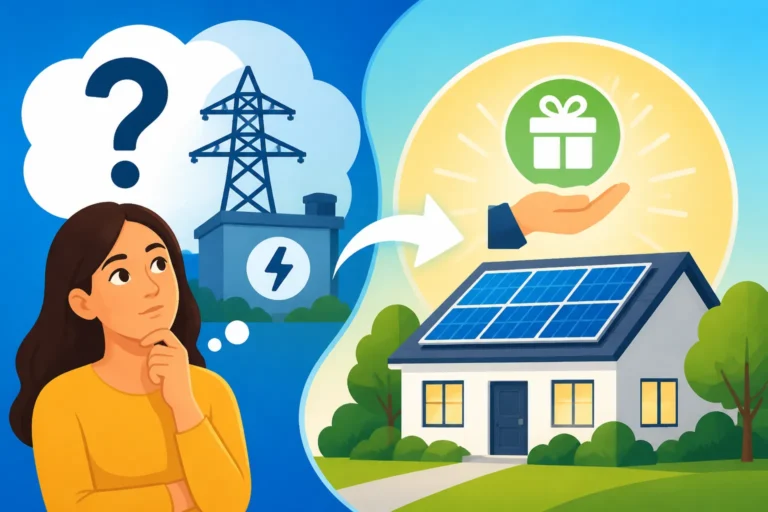
Many homeowners are currently staring at rising utility bills while feeling like they missed the boat on the federal solar tax credit. The frustration of watching your neighbors in places like Scottsdale or Miami lock in low rates while you feel stuck with a legacy grid is incredibly real. This guide explores whether solar leases still provide a viable path to savings in a landscape where traditional tax incentives have shifted or expired.
Understanding the Solar Lease Model
The solar industry has undergone a massive transformation over the last few years, especially as we moved past the peak era of the residential federal tax credit. For a long time, the advice was simple: buy your system to "own" the tax credit. But now that the landscape is more complex, the third-party ownership model—better known as a solar lease—is seeing a major resurgence. When you enter a lease, a provider like Sunrun or a local Florida installer owns the equipment on your roof, and you simply pay a fixed monthly fee to use the power it produces.
How Third-Party Ownership Works
In a solar lease, the installer is responsible for the entire lifecycle of the system. They handle the engineering, the permitting with local offices in cities like Austin or San Diego, and most importantly, the ongoing maintenance. For a homeowner who doesn't want to deal with the technical headache of monitoring inverter health or cleaning panels after a dust storm, this "hands-off" approach is often the primary draw. You aren't buying a product; you are buying a service that guarantees a certain amount of electricity production.
The contract typically lasts 20 to 25 years. During this time, you pay a monthly lease payment that is designed to be lower than your current utility bill. I’ve spoken with families in New Jersey who were paying $250 a month to the utility and switched to a $160 monthly lease payment. That immediate $90 in monthly "found money" is a powerful motivator, especially when inflation is squeezing every other part of the household budget. However, the ownership stays with the company, which means they are the ones who worry about the system’s performance.
The Indirect Benefit of the Tax Credit
A common misconception is that if the residential tax credit is gone, the lease is automatically a bad deal. In reality, large solar corporations often utilize different tax structures than individual homeowners. While the 25D residential credit may have expired or reduced, these companies often leverage the How the 48E Commercial Credit Helps Lease Customers to keep their own costs down. Because the leasing company can still claim commercial-grade incentives and depreciation, they can often offer lower monthly payments than you might expect.
Essentially, the leasing company "absorbs" the tax benefits that you might not have the tax liability to claim anyway. This is a crucial point for retirees or those with lower taxable income in states like Pennsylvania or Ohio. If you don't owe enough in federal taxes to even use a credit, the credit is worthless to you. By leasing, you allow a larger entity to take that credit and pass a portion of the value back to you through a lower monthly payment. It's a way of indirectly benefiting from a system that would otherwise be out of reach.
Financial Realities: Do Monthly Savings Still Add Up
The biggest question I get is whether the math still works without that 30% "discount" from the government. The answer isn't a simple yes or no; it depends heavily on your local utility rates. In high-cost areas like Massachusetts or California, even without a federal tax credit, solar power is still significantly cheaper than the "brown power" coming off the grid. When utility rates in New York City are pushing 30 cents per kilowatt-hour, a solar lease that locks you in at 15 cents is a massive win, regardless of who owns the panels.
Comparing Lease Payments to Utility Bills
To see if a lease makes sense for your home, you have to look at your "Price Per Kilowatt-Hour" (kWh). When you look at your bill from a company like ConEd or PG&E, don't just look at the total; look at the delivery and supply charges combined. If your total cost per kWh is rising every year, a lease provides a "ceiling" for your energy costs. Most leases are structured so that even without the tax credit, the starting payment is roughly 10% to 20% lower than your average utility bill.
Consider a scenario where a homeowner in Maryland currently pays $200 a month for electricity. A solar lease might start at $155 a month. Over the first year, that’s over $500 in savings. However, you must account for the Solar Lease vs PPA vs Buy: Which Is Best? debate, as some agreements have different structures for how they charge you. In a lease, the payment is fixed regardless of production, whereas in a PPA (Power Purchase Agreement), you only pay for what the panels actually generate. Both are forms of third-party ownership that bypass the need for you to claim a tax credit yourself.
Escalator Clauses and Long-Term Value
One of the "gotchas" that people often stress about is the lease escalator. This is a clause in the contract that increases your monthly payment by a small percentage—usually between 1% and 3.5%—every year. Critics point to this and say the lease gets more expensive over time. While that’s true, it’s important to look at the historical context of utility rate hikes. In many parts of the country, utility companies have raised rates by 5% to 10% annually.
| Feature | Buying with Cash/Loan | Solar Lease (Third-Party) |
|---|---|---|
| Tax Credit Benefit | Homeowner claims credit directly | Leasing company keeps credit |
| Maintenance | Homeowner's responsibility | Included by the provider |
| Upfront Cost | $15,000 – $30,000+ | Usually $0 down |
| System Monitoring | Homeowner monitors app | Provider guarantees uptime |
| Impact on Debt | Adds to debt-to-income ratio | Does not appear as a typical loan |
| Ownership | Homeowner owns the asset | Company owns the asset |
If your lease payment goes up by 2.9% but your utility company raises rates by 7%, the gap between what you pay for solar and what you would have paid for the grid actually grows wider over time. You are effectively hedging against future inflation. This is why many people find that Do Solar Leases Still Save Money Without the Tax Credit? is a resounding yes, provided the escalator is lower than your local utility's historical rate increases.
When a Solar Lease Makes Sense (And When It Doesn't)
I’ve met plenty of people who are "ownership or bust," and I get it. Owning your system is like owning your home rather than renting. But just like the housing market, sometimes renting (or leasing) is the smarter tactical move for your specific stage of life. If you are 70 years old and living in a beautiful ranch in Arizona, taking on a 20-year loan or spending $25,000 in cash might not be the most logical move for your estate planning.
Scenarios for Fixed-Income Homeowners
For those on a fixed income, a solar lease is often the only way to go green while keeping liquid cash in the bank. Since most leases are "$0 down," you don't have to touch your retirement savings or your 401(k) to start saving on day one. Furthermore, if you are in a situation where you don't have a massive tax liability—perhaps you are living on Social Security and modest pension draws—you wouldn't be able to "use" the tax credit anyway.
In this case, the fact that the Federal Solar Incentives That Still Exist in 2026 are geared towards ownership doesn't matter to you. You are looking for immediate monthly cash flow. If a lease takes your winter heating bill from $400 down to a combined $280 (lease + remaining grid fee), that is money you can use for groceries, travel, or healthcare right now. For many, the "opportunity cost" of spending $20,000 in cash to save an extra $40 a month over a lease isn't worth it.
Comparing Leasing to PPAs and Loans
When you look at the options, you might also consider Solar Loans: Complete Guide as an alternative. A loan allows you to own the system, but in 2026, interest rates might be higher than they were in the "easy money" era of the early 2020s. If a solar loan has a 7% or 8% interest rate, the monthly loan payment might actually be higher than a lease payment. This is a critical pivot point for homeowners.
When the monthly loan payment exceeds the monthly lease payment, the lease becomes the superior "cash flow" option. You also have to consider the "Peace of Mind" factor. If an inverter dies in year 12 of a loan-owned system, you are on the hook for the $2,000 to $3,000 replacement cost. In a lease, you just call the company and they fix it for free because they are the ones losing money if the system isn't producing power. For many, this insurance policy is worth the trade-off of not owning the equipment.
The Impact of State-Level Incentives on Leased Systems
Even if the federal tax credit is no longer the titan it once was, state-level incentives still play a massive role in whether a lease is profitable. States like Illinois, Massachusetts, and New Jersey have robust programs that are often baked into the lease pricing offered by providers. When you see a low lease rate in Chicago, it's often because the leasing company is collecting the benefits of Illinois Shines & Solar for All and passing that value down to you.
SRECs and Net Metering for Lessees
In states with SREC (Solar Renewable Energy Credit) markets, the ownership of those credits usually goes to the leasing company. This might sound like you’re losing out, but again, it’s about the "Trade." You trade the SRECs to the company in exchange for a significantly lower monthly lease payment. For most people, trying to figure out How to Sell SRECs (SRECTrade, Sol Systems) is a headache they don't want. Letting the pros handle the market fluctuations while you just enjoy the lower bill is a common preference.
However, you should always check the Net Metering Explained: How It Works by State rules for your specific utility. Even with a lease, you usually still benefit from net metering. This means that during the day, when your leased panels are pumping out extra power, that energy goes back to the grid and "spins your meter backward." You get the credit for that power on your night-time usage, which is key to making the lease math work. If your state has moved to a less favorable system like What Is NEM 3.0 (California Net Billing)?, you might need to ensure your lease includes a battery to see the same level of savings.
Local Rebates and Property Tax Benefits
One major advantage of leasing that people often overlook is the property tax situation. In many jurisdictions, solar panels can increase your home's assessed value. If you own the panels, you might be worried about your property taxes ticking up. However, because a leased system is technically "personal property" owned by a third party, it often doesn't trigger the same property tax reassessment. You can check the Solar Property Tax Exemptions by State list to see if your area has specific protections, but leasing often simplifies this hurdle.
Furthermore, many local utility rebates are still available for leased systems. A utility in Colorado or Nevada might offer a one-time rebate of $500 or $1,000 to encourage solar adoption. In many lease contracts, this rebate is used to "buy down" the monthly payment, making the lease even more competitive against the grid. Always ask your consultant to show you a side-by-side comparison of the How Much Can Solar Incentives Save Me in 2026? data so you can see exactly where every dollar of incentive is going.
Practical Steps to Evaluating a Solar Lease
If you’ve decided that a lease might be the right path, don't just sign the first contract that a door-to-knock salesperson puts in front of you. The "2026 version" of solar leasing requires a bit more scrutiny than in years past. You want to look for companies with strong balance sheets—remember, you are entering a 25-year relationship with this company. If they go out of business, your maintenance guarantee might become a piece of useless paper.
First, check the Solar Panel Warranties Explained section of the lease. Ensure it covers not just the panels, but the inverter and the roof penetrations. A good lease will have a "production guarantee." This means if the system produces less power than they promised, they actually cut you a check for the difference. This turns your roof into a guaranteed savings machine, removing the risk that a cloudy year will ruin your financial projections.
Second, understand the transfer process. A common fear is that a lease makes it harder to sell your house. While it adds a step to the process, it's rarely a deal-breaker if the savings are clear. Make sure the lease has a "Transfer Guarantee" that allows the new homeowner to take over the payments easily. Most buyers in high-energy-cost states are thrilled to take over a bill that is $100 cheaper than the neighbor's. In fact, many are finding that Do Solar Panels Increase Home Value? can still be true for leased systems if the savings are documented and significant.
Finally, compare the lease against a PPA. In some states, a PPA is more common and can sometimes offer even better "per-unit" pricing on electricity. If you are in a state like South Carolina or Texas, check out the Solar Buyback Programs in Texas to see how exported power is handled under a lease versus a PPA. The more you know about the flow of electrons and dollars, the more confident you'll feel that you aren't "missing out" on the tax credit, but rather, you're just using a different tool to reach the same goal: a lower cost of living and a cleaner footprint.
Solar Lease Disclaimer
The information provided in this guide is for educational and informational purposes only and does not constitute financial, tax, or legal advice. Solar incentives, including federal, state, and local programs, are subject to change based on legislative actions and utility policy updates. Homeowners should consult with a qualified tax professional or financial advisor to understand their specific eligibility for incentives and the long-term implications of any solar contract. Individual savings vary based on roof orientation, local utility rates, and household energy consumption. Always review the full terms and conditions of any lease or purchase agreement before signing.