What Happens After Solar Is Installed?
So, you’ve made the leap! Your beautiful new solar panels are sparkling on your roof, the installers have packed up their gear, and the hum of anticipation is almost palpable. But if you're like many homeowners, you might be wondering, "Okay, the panels are on the roof, but what exactly happens now?" It’s a common question, and it speaks to a legitimate phase of the solar journey that often gets overlooked in the excitement of installation. This comprehensive guide will walk you through everything that occurs once the physical work is complete, from getting your system officially turned on to understanding your new energy bills and maintaining your investment for decades to come.
The Big Wait: What is Permission to Operate (PTO)?
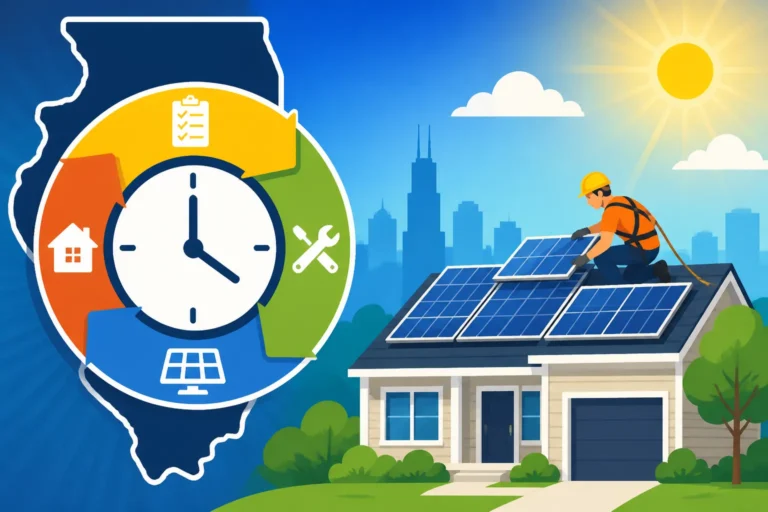
It’s completely normal to feel a bit antsy when your solar panels are installed but not yet producing power for your home. This waiting period is standard, and it all revolves around a crucial step known as Permission to Operate, or PTO. Think of it as the official green light from your local utility company and governing authorities that allows your solar system to safely connect to the grid and start generating electricity.
Understanding the PTO Process
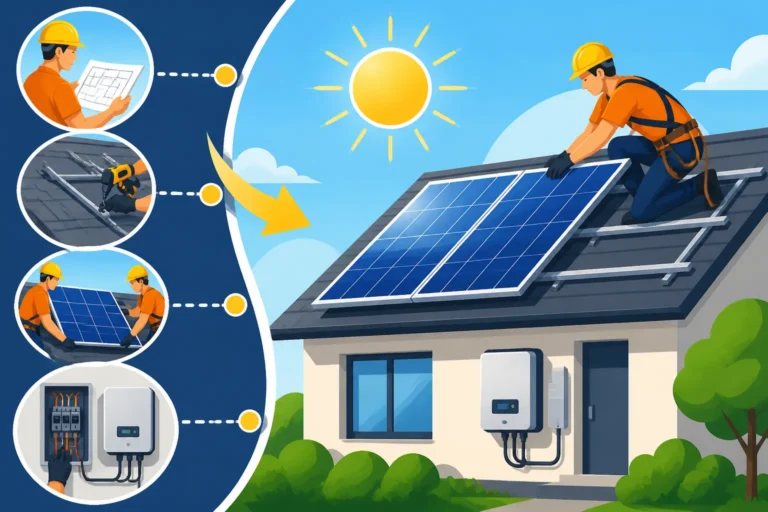
The PTO process isn't just a formality; it's a series of checks and balances designed to ensure your new solar system is safe, meets all local and national electrical codes, and can seamlessly integrate with the existing utility infrastructure. First, after your panels are physically installed, your solar installer will typically schedule a final inspection with your local building department. This inspection confirms that the installation adheres to the approved plans, local building codes, and safety standards. This might include checking the wiring, mounting, and structural integrity of the system.
Once your local municipality or county inspector signs off, the next big step involves your utility company. Your installer submits all the necessary documentation, including the approved inspection reports, to your utility provider. The utility then reviews these documents and often conducts its own final check, sometimes referred to as a "commissioning test" or "interconnection inspection," to ensure everything is up to their specific grid standards. They’ll also install or update your electric meter to one that can track both the electricity you draw from the grid and the excess solar electricity you send back to it, which is essential for Net Metering Explained: How It Works by State. Only after the utility company gives its final approval, issuing the official "Permission to Operate," can your system be fully activated and start sending power to your home and the grid.
Why PTO Takes Time
The waiting game for PTO can be one of the most frustrating parts of going solar, and it's something almost every new solar owner experiences. The exact timeline can vary wildly, from a couple of weeks to several months, depending on where you live and the current backlog of your local authorities and utility company. For instance, homeowners in bustling areas like Southern California or parts of the Northeast might face longer waits due to the sheer volume of solar installations, whereas those in less populated regions might see a quicker turnaround.
Several factors contribute to these delays. Local permitting offices can be understaffed or have specific scheduling requirements for inspections. Utility companies, too, have their own internal processes, and while they want to get you connected, they also have safety protocols and grid stability concerns that require thorough review. Weather can also play a role, delaying inspections or necessary utility work. Your solar installer should keep you informed throughout this phase, providing updates on inspection schedules and utility communications. Platforms like Modernize can help you understand these timelines even before you commit, connecting you with installers who are transparent about the full process. It’s important to remember that these delays, while annoying, are ultimately about ensuring your system operates safely and efficiently for the long haul. You can learn more about the specifics of this phase in our guide on What Is Permission to Operate (PTO)?.
Connecting to the Grid and Net Metering
Once you receive that coveted PTO, it's time for your system to truly come alive! This is when your solar panels begin interacting with your home's electrical system and the broader utility grid, transforming your energy consumption habits and your relationship with your electricity provider.
The Role of Your Utility Company
Your utility company plays an absolutely central role in your post-installation solar experience. Beyond just granting PTO, they are the gateway through which your excess solar energy flows back into the grid, and from whom you'll draw power when your panels aren't producing enough (like at night or on very cloudy days). This dynamic interaction is managed by your new smart meter, often installed during the PTO phase. This meter precisely measures how much electricity your home consumes from the grid and how much excess electricity your solar panels export to it.
The rules and regulations governing this exchange are set at the state level and by individual utility companies. In some areas, utilities are actively promoting solar, offering streamlined interconnection processes and generous programs. In others, the process might be more cumbersome, or the benefits for sending power back to the grid might be less favorable. It’s crucial to understand your specific utility's policies because they directly impact your savings and how your solar system operates day-to-day. If you're in an area that's seen recent changes, like the implementation of California NEM 2.0 vs NEM 3.0 Explained, understanding these details is paramount.
How Net Metering Works in Practice
Net metering is the billing mechanism that allows you to essentially "store" excess solar energy in the grid. When your solar panels produce more electricity than your home is using at that moment, the surplus is exported to the utility grid, and your meter credits you for that power. When your panels aren't producing enough (e.g., at night, on rainy days, or during peak demand when your usage is high), you draw electricity from the grid, and your meter debits you. At the end of the billing cycle, you're only charged for your "net" consumption – the difference between the electricity you pulled from the grid and the electricity you sent back.
The value of the credits you receive for exported power is where things can get a little complex. Under traditional full retail net metering, you get credited at the same rate you pay for electricity, making it incredibly beneficial. However, some states and utilities have moved to modified net metering programs or "net billing," where exported power is compensated at a lower "avoided-cost rate" or wholesale rate, rather than the full retail price. This means that while you still get credit, it might not be a one-to-one exchange. For example, in California, homeowners under NEM 3.0 receive credits for exported power based on hourly energy prices, which can fluctuate significantly. Understanding these nuances is critical for accurately projecting your savings and your system's Solar Panel Payback Period Explained.
Here's a simplified table comparing different net metering scenarios:
| Net Metering Type | Description | Exported Energy Credit | Ideal For |
|---|---|---|---|
| Full Retail Net Metering | You receive bill credits for excess solar power exported to the grid at the same rate you pay for electricity. | Full retail rate | Maximizing savings, less need for batteries |
| Net Billing (e.g., NEM 3.0) | You receive credits for exported power at a lower, often variable, rate (e.g., wholesale or avoided-cost). | Lower, variable rate | Optimizing self-consumption, pairing with batteries |
| Feed-in Tariff | You sell all the electricity your system produces to the utility at a fixed rate, and buy back all the power you need. | Fixed rate per kWh | Guaranteed income, but less direct bill offset |
| Net Metering with Time-of-Use (TOU) Rates | Exported and imported electricity are valued differently depending on the time of day. | Varies by TOU period | Shifting energy usage to off-peak, battery integration |
Monitoring Your System's Performance
Once your solar system is online and producing power, you'll want to keep a close eye on its performance. This isn't just about curiosity; active monitoring helps you ensure your system is running optimally, catching any potential issues early, and truly understanding your energy generation and savings.
Getting Started with Monitoring Apps
Almost all modern solar systems come equipped with sophisticated monitoring capabilities, typically accessible through a dedicated mobile app or a web portal provided by your inverter manufacturer or solar installer. Brands like Enphase and SolarEdge, which are popular choices for inverters and optimizers, offer robust platforms that provide real-time data on your system’s production. Setting up these apps is usually straightforward – your installer will provide you with login credentials and may even walk you through the basics during the handover.
These apps become your digital dashboard for your solar energy. You can see how much electricity your panels are generating hour by hour, day by day, month by month, and even over the lifetime of your system. Many apps also show your home's energy consumption (if you have consumption monitoring installed), allowing you to see the direct impact your solar is having. Some advanced systems, especially those with batteries like a Tesla Powerwall or Enphase IQ Battery, will also display battery charge levels, historical data, and even allow you to control energy flows, such as prioritizing battery charging or grid export. Spend some time getting familiar with the interface – it’s designed to empower you with information.
Understanding Your Solar Production Data
Looking at graphs and numbers can be a little intimidating at first, but understanding your solar production data is key to being an informed solar homeowner. The main metric you'll see is kilowatt-hours (kWh) produced. This tells you the actual amount of electricity your system has generated. You'll likely see higher production on clear, sunny days, and lower production on cloudy or rainy days, which is completely normal. Seasonal variations are also expected: longer daylight hours and higher sun angles in summer typically mean more production than in winter.
Beyond daily production, monitoring apps often provide:
- Historical Trends: See how your system performs over weeks, months, or years. This is invaluable for comparing performance against past periods and identifying any dips.
- Carbon Offset Data: Many apps will translate your kWh production into environmental benefits, showing you how much carbon emissions you've avoided, equivalent to planting trees or driving fewer miles.
- Component-Level Monitoring: If you have microinverters (like those from Enphase) or power optimizers (like SolarEdge), your app might even show you the production of individual panels. This is incredibly useful for pinpointing a single underperforming panel due to shading or a rare equipment fault.
Comparing your actual production data to the estimated production your installer provided in your initial proposal is a great way to gauge if your system is meeting expectations. If you notice a consistent, unexplained drop in production, or significant discrepancies, that’s a signal to reach out to your installer for a check-up. Active How to Monitor Solar Panel Performance helps ensure you get the most out of your investment.
Financial Aspects and Ongoing Savings
After all the planning and installation, the moment you truly feel the impact of solar is when you start seeing the financial benefits. This includes reduced utility bills, leveraging remaining incentives, and understanding your solar financing.
Receiving Your First Lower Utility Bill
This is often the most anticipated part for new solar owners! Your first few utility bills after PTO might look a little different. Instead of a high, fluctuating amount based purely on your consumption, you'll start to see credits for the energy your panels sent back to the grid. Depending on your net metering agreement, your bill could be significantly lower, or even show a negative balance if you overproduced. Many homeowners find that their peak summer bills, traditionally the highest due to air conditioning, are drastically reduced, or even zeroed out, thanks to robust solar production.
It's important to understand that even with solar, you’ll typically still receive a bill from your utility company. This might include fixed charges (like a basic service fee or connection charge that all customers pay, regardless of consumption), taxes, or charges for any electricity you imported from the grid that wasn't offset by your exports. Don't be alarmed by these minimal charges; the key is the dramatic reduction in the energy usage portion of your bill. Keep a close eye on these first few bills and compare them to your pre-solar statements to truly appreciate the impact. If anything looks confusing or unexpected, your solar installer or utility company should be able to clarify.
Claiming Remaining Incentives and Rebates
While the upfront federal solar tax credit is a huge incentive, there might be additional local, state, or utility-specific incentives that come into play after installation or that require specific actions post-PTO. These can significantly enhance your long-term savings. For instance, some states offer their own solar tax credits, like the one in New York NY-Sun & State Solar Tax Credit (25%). Others might have Utility Solar Rebates: How to Find Yours that are disbursed after your system is fully operational and inspected.
Another common post-installation incentive involves Solar Renewable Energy Credits (SRECs). In states with SREC markets, your solar system generates one SREC for every megawatt-hour (MWh) of electricity it produces. You can then sell these SRECs on a market, providing an additional revenue stream. The process for selling SRECs often involves registering your system with a state-specific program and then working with a broker like SRECTrade or Sol Systems. Your solar installer should guide you on how to navigate these programs and claim any eligible incentives. Always keep thorough records of your installation costs and any paperwork related to incentives, as you'll need these for tax purposes or rebate applications.
Understanding Your Solar Loan or Lease Payments
If you financed your solar system through a loan or a lease/PPA, your payment schedule will kick in after installation. For solar loans, you’ll start making your monthly payments, much like a mortgage or car loan. These payments are typically fixed, allowing for predictable budgeting. It's crucial to compare your new combined solar loan payment and any remaining utility charges against your previous electricity bills to ensure you're seeing the expected savings. Many homeowners find their combined solar payment and reduced utility bill is less than or comparable to their old, unpredictable utility bills, especially as electricity rates continue to climb.
With a solar lease or Power Purchase Agreement (PPA), you're typically paying a fixed monthly fee for the use of the panels or for the electricity they produce. Your contract will outline the payment terms, including any annual escalators (common in leases) and the length of the agreement. For both loans and leases, understanding the fine print of your contract is vital. Knowing your loan interest rate, any dealer fees that might have been rolled into the loan, or lease escalation clauses is key to fully comprehending the financial impact of your system over its lifespan. Platforms like Modernize can help homeowners connect with reputable installers who are transparent about all financing options, including various Solar Loans: Complete Guide.
Living with Solar: Maintenance and Best Practices
Installing solar panels isn't a "set it and forget it" endeavor, though it's remarkably close! Modern solar systems are designed to be durable and require minimal attention, but a little proactive care can ensure they continue to perform at their peak for decades.
Routine Maintenance and Cleaning
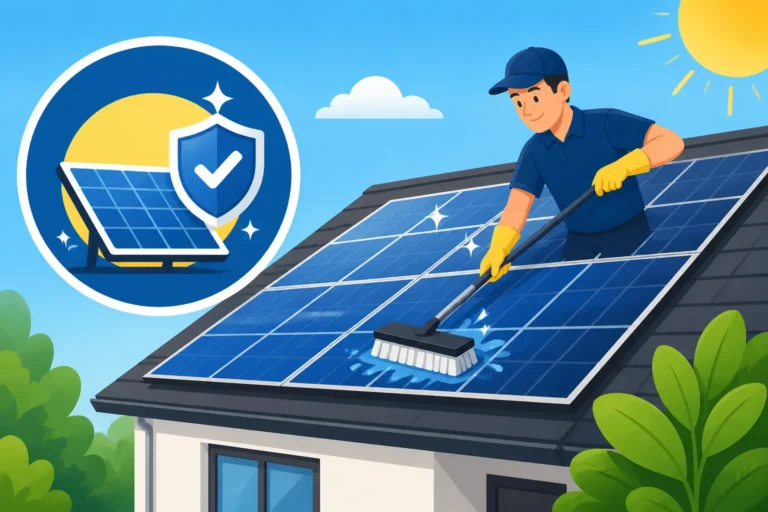
Good news: solar panels don't require daily or even monthly maintenance for most homeowners. They're built to withstand the elements, and rain often does a surprisingly good job of rinsing away dust, pollen, and light debris. However, there are a few things to keep in mind. Over time, significant build-up of dirt, leaves, bird droppings, or even heavy layers of pollen can slightly reduce efficiency. For most residential systems, a thorough cleaning once or twice a year is sufficient, especially if you live in a dusty area, near agricultural fields, or have a lot of trees around.
When it comes to cleaning, safety is paramount. Never get on your roof yourself unless you are specifically trained and equipped to do so safely. Many solar installers offer cleaning services, or you can hire a professional window or roof cleaner. If you do opt for DIY cleaning, use a soft brush or squeegee with plain water, preferably in the early morning or late evening when the panels are cool to the touch. Avoid harsh detergents or abrasive materials, which can damage the panel surface. Regular inspection from the ground can also help: look for excessive debris, signs of animal nesting under the panels, or any visible damage. Addressing these minor issues promptly can prevent them from turning into bigger problems that impact your energy production. Our detailed guide on Solar Panel Maintenance & Cleaning offers more tips.
Addressing Common Issues and Troubleshooting
While solar systems are generally robust, minor issues can occasionally pop up. The most common "problem" is simply reduced production, often due to temporary shading from a new tree growth, excessive dirt, or even a build-up of snow in winter. Your monitoring app is your first line of defense here; if you notice a sudden, unexplained drop in production that isn't weather-related, it's worth investigating.
Technical issues, though less common, can include inverter faults, wiring problems, or even a damaged panel (though panels are highly resilient). Your inverter, whether it's a string inverter or microinverter, will typically display error codes or indicators if something is amiss. Modern inverters and optimizers are quite smart; for example, Enphase microinverters often self-diagnose and report issues through the monitoring platform. If you see an error code or consistently low production without an obvious cause (like a heavy storm or prolonged cloudiness), contact your solar installer. Most reputable installers offer a strong warranty on their workmanship and will come out to diagnose and fix any system issues that arise. It’s comforting to know that your investment is protected, usually for many years after installation.
Maximizing Your Solar Investment Over Time
Going solar is a significant investment in your home and your future. To truly get the most out of it, thinking about the long game – and how to continuously optimize your system – is key.
Considering Solar Batteries for Enhanced Savings and Backup
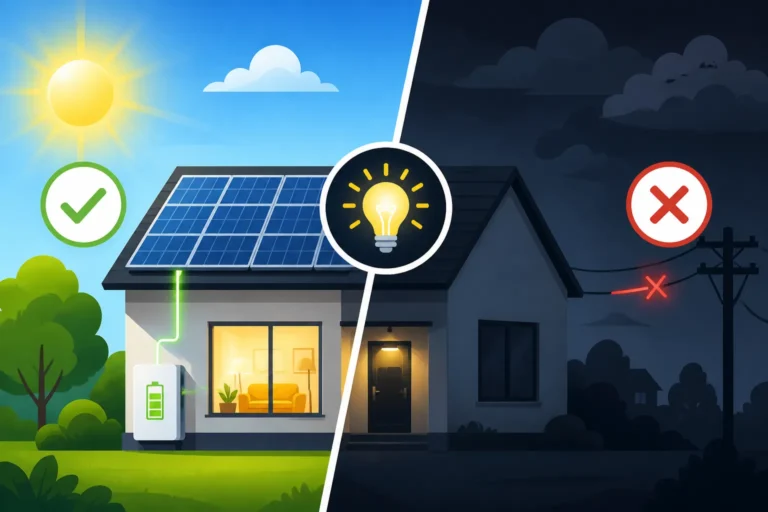
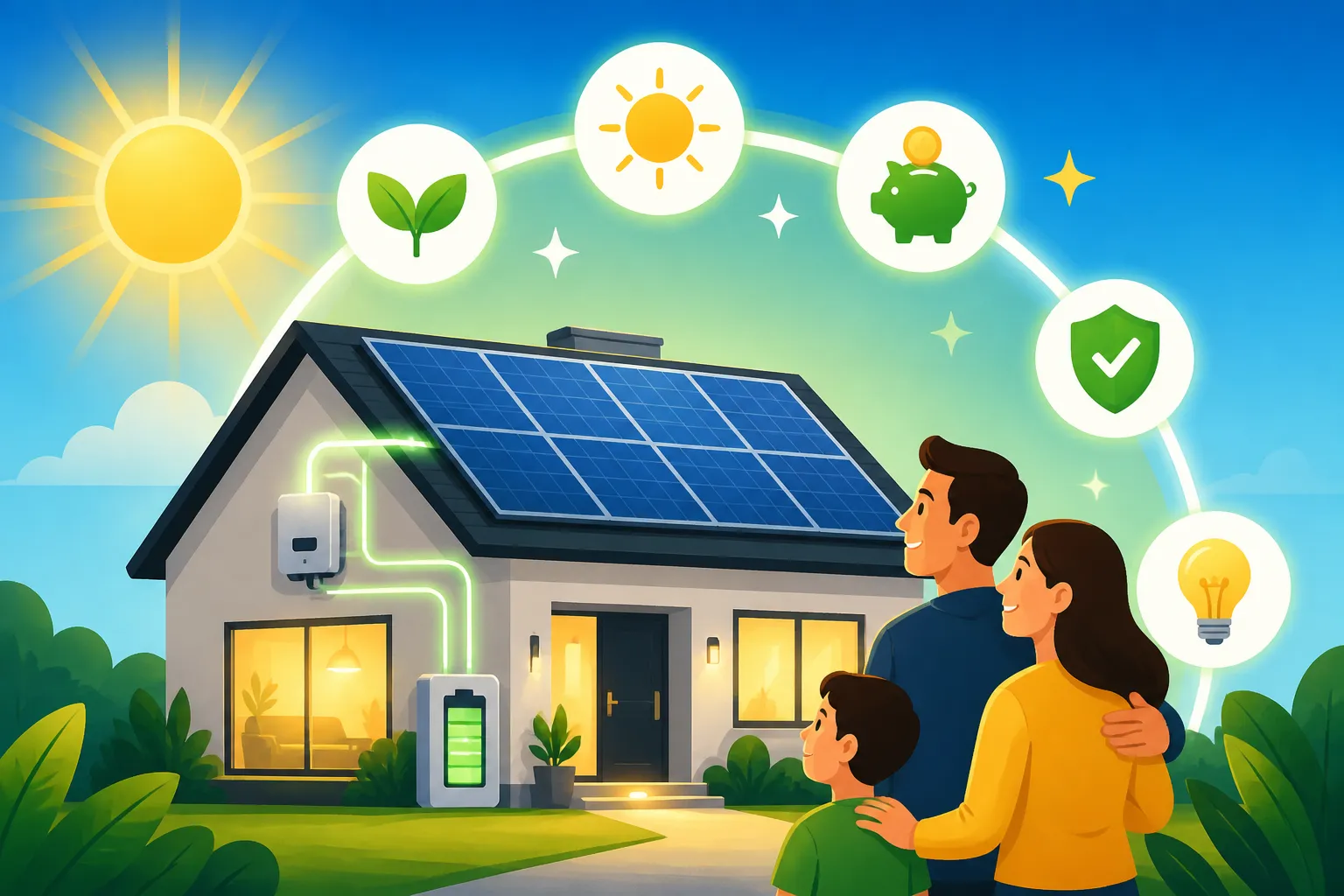
One of the biggest evolutions in home solar is the increasing popularity and affordability of solar battery storage. While your grid-tied solar system reduces your electricity bills, it typically won't keep your lights on during a power outage unless you have a battery backup. Furthermore, in areas with unfavorable net metering policies (like California's NEM 3.0), or with time-of-use (TOU) electricity rates, a solar battery can significantly enhance your savings. A battery allows you to store excess solar energy generated during the day and use it at night or during peak utility rate hours, rather than sending it to the grid for reduced credit.
Brands like Tesla (with their Powerwall), Enphase (with the IQ Battery), and FranklinWH offer excellent home battery solutions that integrate seamlessly with most solar panel systems. They provide critical backup power for essential loads during outages and act as an energy management tool to optimize your self-consumption. When considering adding a battery, think about your energy goals: is it primarily for backup? Or for maximizing financial savings under specific utility rates? The answer will influence the size and type of battery system that’s right for you. It's also worth investigating if there are Solar Battery Incentives in 2026 available in your area, as these can significantly reduce the upfront cost.
Tracking Your System's Payback Period
Understanding your system's payback period is crucial for evaluating your long-term return on investment (ROI). This is the length of time it takes for the savings on your electricity bills, combined with any incentives, to offset the initial cost of your solar installation. For instance, if your system cost $20,000 after incentives, and you save an average of $2,000 per year on electricity, your simple payback period would be 10 years. After this point, your system is essentially paying you!
Many factors influence your payback period, including your initial system cost (Solar Panel Cost by State varies widely), the amount of electricity you consume, your local electricity rates, and the available incentives. States with high electricity rates and strong solar incentives, like Massachusetts or Hawaii, often see shorter payback periods. As electricity rates continue to rise (a trend seen across much of the US), your solar savings increase, potentially shortening your payback period even further. Regularly checking your utility bills and monitoring your system's production allows you to track your progress toward this critical financial milestone. Knowing your Solar Panel Payback Period Explained helps cement confidence in your solar investment.
The Future: System Upgrades and Expansion
Your initial solar installation is a fantastic start, but it might not be the end of your clean energy journey. Homes evolve, energy needs change, and solar technology continues to advance. Thinking ahead can help you maximize your system's benefits for the long term.
When to Think About Adding More Panels
Life happens, and your energy consumption might increase over time. Maybe you're adding an electric vehicle, installing a new hot tub, or your family is growing. If your current solar system isn't fully offsetting your electricity usage anymore, or if you're consistently drawing more power from the grid than you'd like, it might be time to consider expanding your system. Most solar installations are designed with potential expansion in mind, assuming you have available roof space.
Adding more panels isn't always as simple as just slapping a few more on the roof, however. It often requires new permits, an updated interconnection agreement with your utility, and potentially an inverter upgrade if your current one can't handle the increased load. It's a good idea to consult with your original installer or another reputable solar company to assess your roof space, current electrical infrastructure, and the feasibility and cost of an expansion. They can help you determine How Many Solar Panels Do I Need for My Home? to meet your new energy demands and guide you through the process.
Integrating Smart Home Technology
Solar energy production and consumption are perfectly suited for integration with smart home technology. Imagine your smart thermostat automatically adjusting based on your solar production forecasts, or your EV charging prioritizing times when your solar panels are generating the most excess power. Many modern solar monitoring platforms already integrate with various smart devices, allowing for a more holistic approach to home energy management.
This could involve smart plugs that turn off energy-hungry appliances when solar production dips, or smart home energy managers that optimize appliance usage to coincide with peak solar generation or off-peak utility rates. The goal is to move beyond simply generating electricity and towards intelligently consuming it, making your home more efficient and maximizing your How Much Can You Save With Solar Panels?. As smart home technology continues to advance, the synergy with solar will only grow, offering new ways to manage and save on your household's energy footprint. Talk to your installer about the smart home capabilities of your solar equipment, or research compatible devices that can work with your system.
Disclaimer
The information provided in this article is for general informational purposes only and does not constitute professional financial, tax, or energy advice. Solar incentives, regulations, and costs can vary significantly by location and change over time. Always consult with a qualified solar professional, tax advisor, or local utility provider to get the most accurate and up-to-date information for your specific situation.