How Long Does Solar Installation Take in New York?
You signed a solar contract in April, the crew was on your roof for a day and a half in June, and yet the panels sat dark until August. That gap frustrates a lot of New Yorkers. This guide walks through every stage of a New York solar project, how long each one usually takes, and what you can do to keep yours moving.
The Short Answer: Two to Four Months From Contract to Power
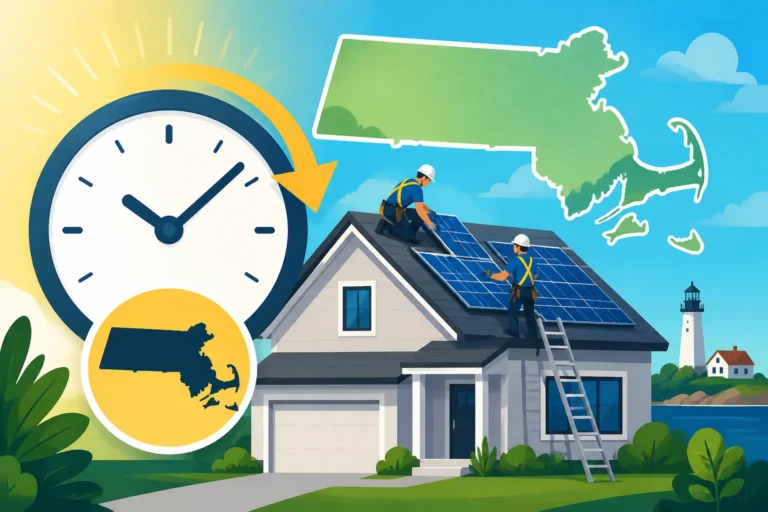
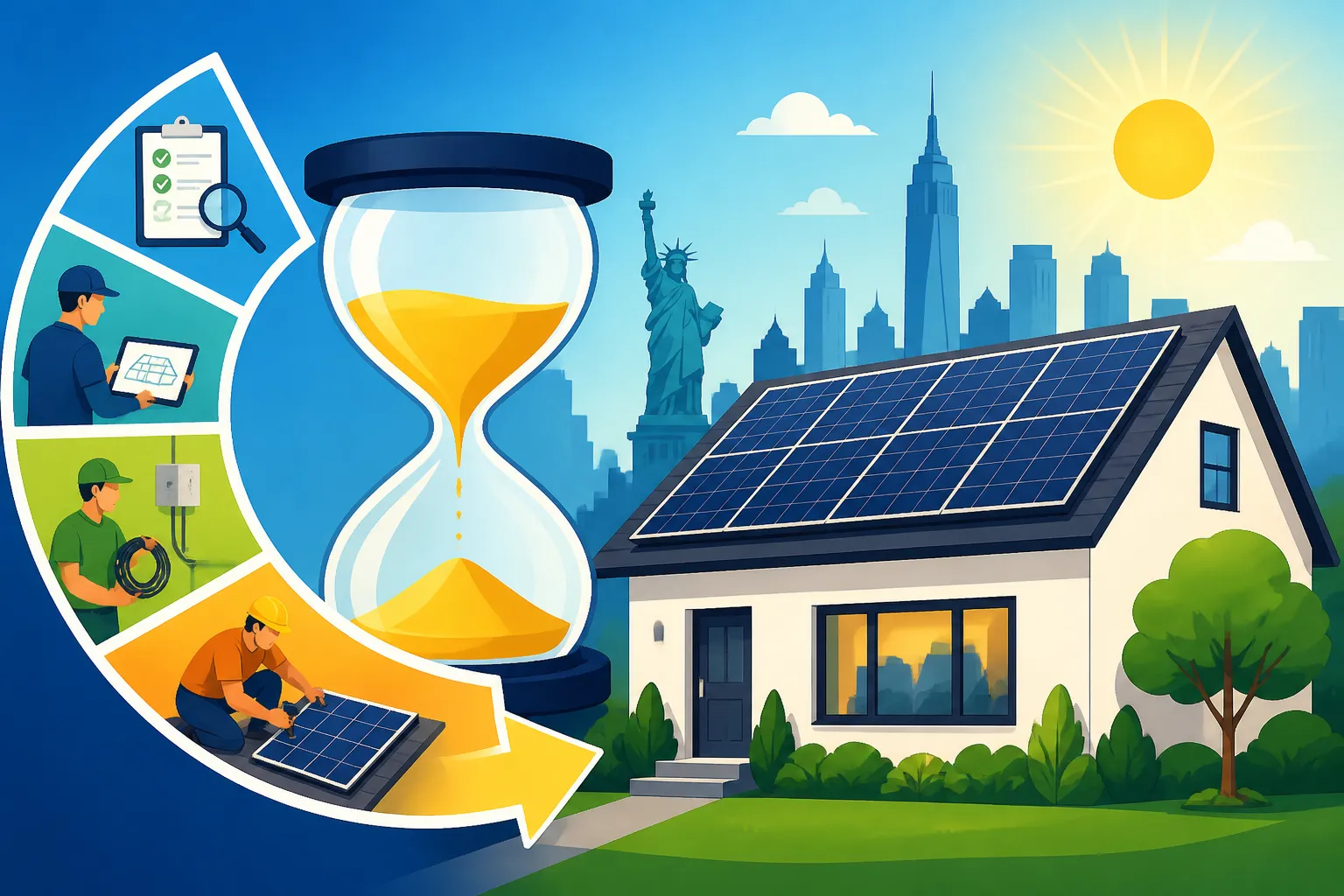
For a typical single-family home in New York, the whole journey from signed contract to a system that is legally switched on usually lands somewhere between 9 and 17 weeks, or roughly two to four months. The physical installation is the fastest part. Most residential crews finish the racking, panels, wiring and inverter work in one to three days. Everything around that short burst of activity is paperwork, scheduling and waiting for a third party to sign off.
If you want the national picture first, our Solar Installation Timeline: What to Expect covers the same stages in general terms. New York adds its own wrinkles: dense permitting in New York City, strict fire setback rules, several different utilities with their own interconnection queues, and winter weather that can push roof work back by weeks.
How the Stages Add Up
Here is a realistic breakdown for a standard rooftop system on a one or two family home. The low end assumes a simple roof, a responsive installer and no corrections; the high end assumes the normal friction most homeowners actually run into.
| Stage | What Happens | Typical Duration |
|---|---|---|
| Consultation and site survey | Bill review, roof measurements, shading check, electrical panel inspection | 1 to 2 weeks |
| Design and contract | Panel layout, engineering drawings, financing approval, signing | 1 to 2 weeks |
| Permits and utility application | Building or electrical permit plus interconnection application filed with your utility | 2 to 4 weeks |
| Equipment and crew scheduling | Ordering panels, inverters and racking; booking an install date | 1 to 2 weeks |
| Physical installation | Mounting, wiring, inverter and monitoring setup, usually one to three days on site | 1 week |
| Local inspection | Building or electrical inspector visits; any corrections are fixed | 1 to 2 weeks |
| Utility approval and PTO | Meter swap if needed and Permission to Operate | 2 to 4 weeks |
| Total | From first meeting to a system you can turn on | 9 to 17 weeks |
Add the low column and you get 9 weeks; add the high column and you get 17. Projects that need a roof replacement, a main panel upgrade or a battery can run longer, which we cover below. The install day is short because the crew is the one piece your installer fully controls; the building department, inspector and utility each work through their own backlog.
Where New York Projects Slow Down
Every region of the state has its own personality. A ranch house in suburban Rochester and a brownstone in Brooklyn are both “New York solar,” but the paperwork could hardly be more different.
Permits in New York City Versus Upstate
In the five boroughs, rooftop solar generally goes through the Department of Buildings, and the plans have to respect fire department access pathways and roof setbacks. Flat roofs on rowhouses often need ballasted or tilted racking with structural review, which adds engineering time. Landmarked buildings and homes in historic districts may also need Landmarks Preservation Commission review, which can add weeks on its own.
Outside the city, permitting is handled by your town, village or city building department. Many municipalities have adopted the state’s unified solar permit, which streamlines small residential systems and can make this step quick. Others still use their own forms and review schedules. The difference between a town that turns permits around in days and one that takes a month can be the single largest swing in your timeline. Our Solar Permit Process in New York goes deeper into the forms and inspections involved.
Utility Interconnection Across the State
Your utility decides when you can legally send power to the grid. Depending on where you live, that might be Con Edison, PSEG Long Island, National Grid, NYSEG, RG&E, Central Hudson or Orange and Rockland. Each one runs its own application process, and small residential systems usually move through a simplified track, but queues still vary by season and by how busy the local circuit is.
After your system passes inspection, the utility may need to swap your meter for a bidirectional one before granting final approval. You must not switch the system on before that approval arrives. If you want to understand the final sign-off in detail, read What Is PTO (Permission to Operate) in Solar?.
Weather and Seasonal Backlogs
New York winters do not stop solar, but they do slow roof work. Snow, ice and high winds make crews postpone jobs for safety, and a postponed slot can push you back a week or two. Spring is often the busiest season because many homeowners decide to go solar once the weather warms up, which can lengthen both installer schedules and inspection queues. Late summer and early fall tend to be a sweet spot, with dry roofs and long enough days for full shifts.
The panels themselves handle cold well; if you are worried about winter output, see Do Solar Panels Work in Snow?.
Roof, Electrical and Battery Add-Ons
Three common add-ons extend a New York timeline:
- Roof replacement. Older housing stock is everywhere in this state, and if your shingles have fewer than ten years left, most installers will recommend replacing them first. That can add anywhere from a couple of weeks to a couple of months depending on roofer availability. See Roof Age: When to Replace Before Solar before you sign anything.
- Main panel upgrade. Older homes with a 100 amp service sometimes need an upgrade to handle solar backfeed. That can require utility coordination for a disconnect and reconnect, adding a few weeks.
- Battery storage. Adding a battery means extra equipment, extra fire code review and sometimes extra inspection steps. In New York City in particular, battery permitting has its own requirements, so plan for a longer review.
How to Keep Your New York Solar Project on Schedule
You cannot speed up a building department, but you can avoid being the cause of a delay. Most stalled projects come down to missing documents, slow responses or surprises that should have been caught at the site survey.
Steps You Can Take Before and After Signing
- Gather your utility bills early. Have twelve months of usage ready so the design is right the first time and does not need to be redrawn.
- Get several quotes at once. Comparing installers side by side saves weeks of back and forth. A matching service such as Modernize can connect you with multiple local installers through a single request, which is handy if you do not know where to start. Our guide Should I Get Multiple Solar Quotes? explains why this pays off.
- Ask each installer about their permitting track record. A company that files in your town every month knows its quirks. Use What Questions to Ask a Solar Installer as a checklist.
- Settle roof and panel questions before the contract. Make sure the site survey flags roof condition and electrical capacity so nothing surprises the inspector later.
- Sign and return documents the same day. Interconnection agreements, HOA approvals and financing paperwork often wait on homeowner signatures.
- Prepare the site. Clear driveway access, trim overhanging branches if allowed and make the electrical panel easy to reach. Our list in How to Prepare Your Home for Solar Installation covers the details.
- Be home or reachable for the inspection. Missing an inspection window can cost you a week or more.
Choosing an Installer Who Moves Fast
Speed should never come at the expense of quality, but responsiveness tells you a lot. During the quoting stage, notice how fast each company returns your calls and how clearly they explain the timeline. An installer who promises your system will be “on in two weeks” is either describing only the install day or overselling. A good one will walk you through each stage and give honest ranges.
When you compare quotes, whether you collected them yourself or through Modernize, ask each company for an estimated date for every milestone in the table above. Then ask what happens if they miss one. A clear answer is a good sign. For a broader checklist, read How to Choose a Solar Installer.
Timing Around Incentives
Timing also matters for the money side. The federal residential clean energy credit, Section 25D, ended for systems placed in service after 2025, so it is no longer available to New York homeowners finishing projects now. What still matters is the state side: the New York State solar equipment tax credit and NY-Sun incentives, which step down as capacity blocks fill in each region. Because those blocks can change while your project is in progress, ask your installer when your incentive is locked in, whether at contract signing, application or completion. For the full picture, see New York Solar Incentives in 2026.
Net metering rules also shape when your savings actually start, since credits only begin after PTO. Does New York Have Net Metering in 2026? explains how export credits work across the state’s utilities.
Frequently Asked Questions
Can I turn my system on right after the crew leaves?
No. Even if everything looks finished, you need to pass the local inspection and receive utility approval first. Turning a system on early can violate your interconnection agreement and create a safety hazard for line workers.
Is New York slower than other states?
Generally a bit slower than sunbelt states with high solar volume and automated permitting, mainly because of New York City rules, older roofs and winter weather. Upstate suburbs with streamlined permits can be just as fast as anywhere else.
What is a realistic timeline for a home on Long Island?
Long Island homes typically fall within the same 9 to 17 week window. The main variables are your town building department and PSEG Long Island’s interconnection queue at the time you apply.
Does a battery always add time?
Usually, yes. Batteries bring extra equipment lead times and additional code review, so expect a longer path than panels alone, especially in New York City.
Where can I find installers who know my area?
Local experience matters more than size. Neighbors, town building staff and matching services like Modernize can all point you to companies that regularly file permits in your municipality.
Disclaimer
This article is for general informational purposes only and does not constitute professional advice. Laws, prices and regulations vary by location and change over time. Consult a qualified professional for guidance on your specific situation.