Do Solar Panels Work During a Power Outage?
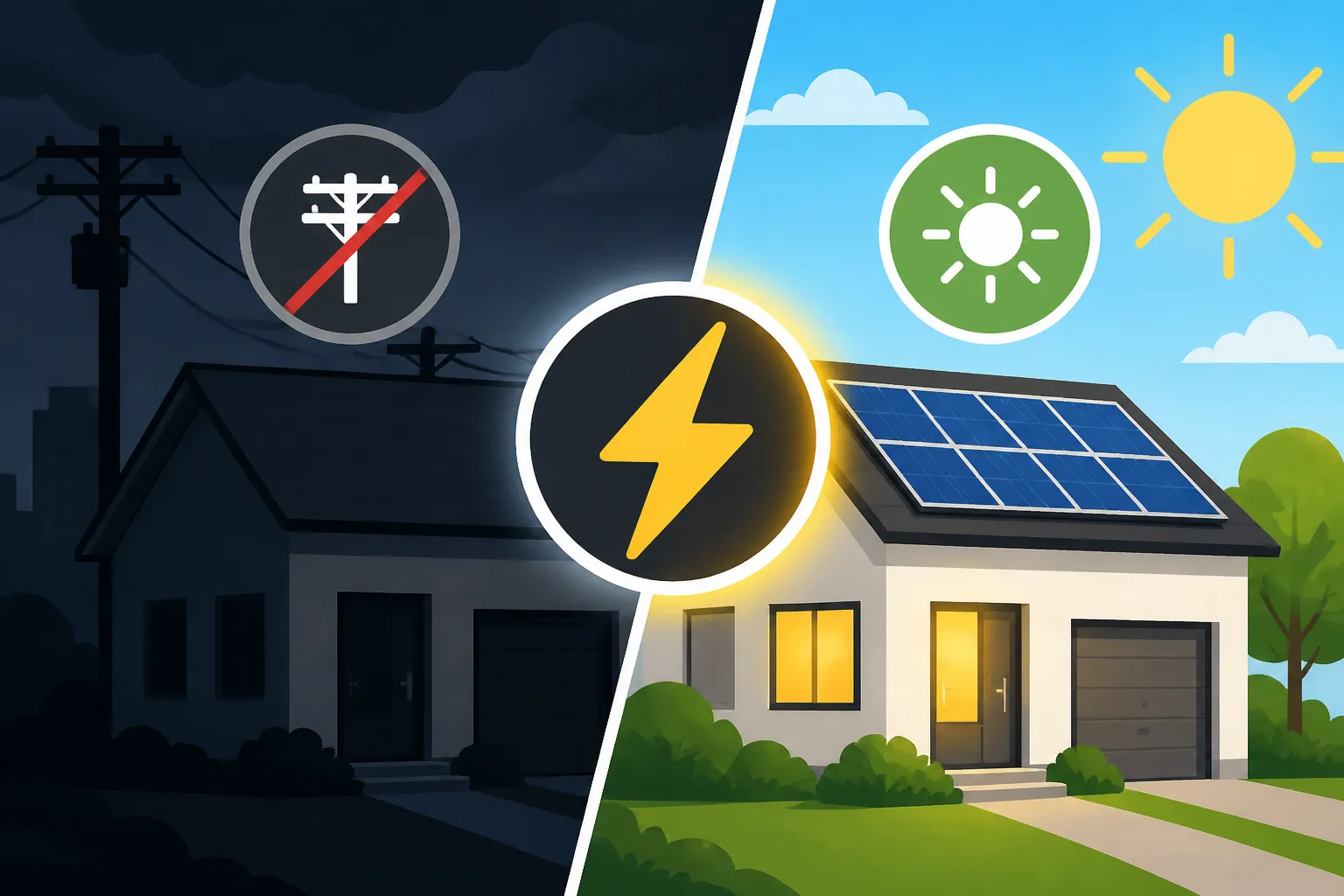
It's happened to all of us: a wild storm rolls through, maybe a car hits a utility pole, or perhaps it's just one of those inexplicable grid failures. Suddenly, your lights flicker, then poof – darkness. You glance up at your roof, seeing those beautiful solar panels glinting (or at least silently sitting there), and a frustrated thought pops into your head: "I have solar! Why isn't my power on?" This is a common and perfectly valid confusion for many homeowners, and this comprehensive guide is here to clear up exactly why your solar panels might not be working during a power outage and what you can do about it.
The Grid-Tied Conundrum: Why Your Solar Goes Dark When the Lights Go Out
It might seem counterintuitive, right? You've invested in solar panels, a source of clean, independent energy, only to find yourself plunged into darkness just like your neighbors when the grid fails. This isn't a flaw in your solar system; it's a critical safety feature known as "anti-islanding." Understanding this mechanism is key to grasping why most solar setups behave this way during an outage.
The Critical Safety Net: Anti-Islanding Explained
The primary reason your grid-tied solar system shuts down during a power outage isn't to annoy you; it's to protect the brave men and women who work to restore power. When the utility grid experiences an outage, whether due to a fallen tree or equipment failure, utility linemen are dispatched to fix the problem. They expect the power lines to be de-energized, making them safe to work on.
Now, imagine if your solar panels kept generating electricity and feeding it back onto those supposedly "dead" lines. This creates what's called an "island" of energized circuits within a de-energized grid. This rogue electricity, even from a residential system, poses a severe electrocution hazard to utility workers who might not realize the lines are still live. Your solar inverter, the brain of your system that converts the DC power from your panels into usable AC power for your home and the grid, is specifically designed with anti-islanding protection. This function automatically detects when the grid goes down and immediately shuts off the power flow from your solar panels, effectively isolating your home's system from the utility grid. It's a non-negotiable safety standard that all grid-tied solar systems must comply with, ensuring that everyone remains safe during an emergency.
What "Grid-Tied" Really Means for Your Home
Most residential solar systems are "grid-tied," meaning they are directly connected to your local utility company's electrical grid. This connection offers several significant benefits that make solar financially viable and practical for most homeowners. For one, it allows you to participate in programs like Net Metering Explained: How It Works by State, where any excess electricity your panels produce is sent back to the grid, and you receive credits on your electricity bill. This ensures that you're always getting value from your solar generation, even when your home isn't consuming all the power.
However, this reliance on the grid means your system also leans on it for stability and synchronization. The utility grid provides a stable frequency and voltage that your inverter needs to operate correctly. Without that stable reference from the grid, your inverter can't safely convert and deliver power, so it shuts down. Think of it like a boat tethered to a dock. As long as the dock is there, the boat is stable and can function. If the dock disappears (the grid goes down), the boat might still be operational, but it has nothing to anchor to and thus can't effectively perform its intended function of moving goods to and from the shore. This is why even on the sunniest day, if the grid goes down, your grid-tied solar panels will follow suit. When the grid comes back online, your inverter will detect the stable power, perform a quick safety check, and then seamlessly resume operations, often within minutes.
Bringing the Light Back: Solar with Battery Backup
The frustration of having solar panels but no power during an outage is a common one, and thankfully, there's a widely adopted solution: adding a battery backup system. This integration transforms your standard grid-tied system into a "hybrid" system, offering the best of both worlds – grid connectivity for daily savings and energy independence when the grid fails.
How Solar Batteries Keep Power Flowing During an Outage
When you pair your solar panels with a home battery storage system, you gain a critical layer of energy resilience. Here's how it fundamentally changes the power outage scenario: when the utility grid goes down, your hybrid solar system's inverter detects the loss of external power, just as a regular grid-tied system would. However, instead of simply shutting down, the system then activates an automatic transfer switch. This switch quickly and safely disconnects your home from the main utility grid, creating a protected "microgrid" within your house. Once isolated, your solar panels can continue to generate electricity, which is then directed to charge your battery bank and power designated "critical loads" in your home.
This means that essential appliances – like your refrigerator, some lights, medical devices, or internet router – can remain operational, drawing power directly from your battery or from the solar panels if they're actively generating enough. This critical load panel is a separate electrical subpanel that contains only the circuits you've chosen as essential. This strategic separation ensures that your battery's power isn't wasted on non-essential items, maximizing your backup duration. Popular battery systems, like the Tesla Powerwall 3 Review & Cost or the Enphase IQ Battery Review & Cost, seamlessly manage this transition, often within milliseconds, so you might not even notice the grid went down until you see your neighbor's lights are out.
Choosing the Right Battery System for Your Needs
Deciding on a solar battery system involves considering several factors tailored to your specific energy needs and budget. The first step is to assess your critical loads – what appliances absolutely must stay on during an outage? Do you need to run your entire house, or just the essentials? This will help determine the necessary battery capacity, usually measured in kilowatt-hours (kWh). Most modern home batteries utilize advanced lithium-ion chemistry, offering excellent performance and longevity. Brands like Tesla, Enphase, FranklinWH, and LG Chem are leaders in the market, each offering different capacities, features, and integration options.
For instance, some systems are modular, allowing you to add more battery units over time if your needs change, while others come in single, larger units. You'll also want to consider the power output (kW) of the battery, which dictates how many appliances it can run simultaneously. A higher power rating means you can run more energy-intensive devices at the same time. Many homeowners find it helpful to consult with a reputable solar installer to help size the perfect battery system. Companies like Modernize can help connect you with qualified local installers who can assess your specific situation, discuss different options like a Tesla Powerwall vs Enphase IQ Battery setup, and provide tailored recommendations that fit your budget and energy resilience goals. Remember, the goal is not just to have a battery, but to have a battery system that reliably meets your expectations when you need it most. And yes, Are Solar Batteries Still Eligible for Incentives in 2026? – often they are, which can significantly reduce the upfront cost.
Off-Grid Freedom: Complete Independence from Outages
While grid-tied solar with battery backup offers resilience, there's another path for those who seek total energy independence: an off-grid solar system. This setup completely severs ties with the utility company, meaning power outages from the grid become a non-issue for your home.
The Components of an Off-Grid System
Going off-grid is a commitment to self-sufficiency and requires a carefully designed system that can meet 100% of your energy needs, 24/7. Unlike grid-tied systems that can lean on the utility for supplemental power or to store excess energy, an off-grid system must be entirely self-contained. The core components include:
- Solar Panels: These are your primary energy collectors, sized to produce enough electricity to cover your daily consumption and fully recharge your batteries, even during less sunny periods.
- Charge Controller: This device manages the power flowing from your solar panels to your batteries, preventing overcharging and optimizing battery lifespan.
- Battery Bank: This is the heart of an off-grid system. It must be significantly larger than a typical backup battery for a hybrid system, designed to store enough energy to power your home through multiple days without sun (known as "autonomy"). Lithium-ion batteries are increasingly popular for their efficiency and long cycle life, but lead-acid batteries are also still used in some larger, less frequently cycled applications.
- Off-Grid Inverter: This specialized inverter converts the DC power from your batteries into usable AC power for your home, but critically, it creates its own stable AC waveform, rather than relying on the utility grid for synchronization. This is what allows it to operate completely independently.
- Backup Generator (Optional but Recommended): While the goal is solar independence, most off-grid setups include a generator (propane, diesel, or natural gas) as a backup for extended periods of low sun or unusually high energy demand, ensuring you're never left completely without power.
Each of these components must be carefully selected and sized to work in harmony, creating a robust and reliable power supply for your isolated home.
Realities and Challenges of Off-Grid Living
While the idea of living entirely free from utility bills and grid outages is incredibly appealing, the realities of off-grid living come with their own set of challenges. The upfront cost is typically significantly higher than a grid-tied system, even with a battery backup. This is due to the need for a much larger battery bank, higher capacity inverters, and often the inclusion of a backup generator and its associated fuel storage. For instance, comparing the Cost of a Single Solar Panel for a grid-tied versus an off-grid system, the total system cost will be much higher for the off-grid setup due to the comprehensive energy storage and conversion equipment required.
Energy management also becomes a daily discipline. You need to be acutely aware of your power consumption, especially during cloudy days or long winter nights, to ensure you don't deplete your battery bank. This often means making conscious choices about when to run energy-intensive appliances like washing machines or dishwashers. Sizing the system correctly is paramount; under-sizing can lead to frequent generator use or power shortages, while over-sizing can be unnecessarily expensive. Moreover, maintenance requirements are generally higher for off-grid systems, especially for battery banks, which may require regular monitoring and occasional servicing depending on the type. While liberating, going off-grid isn't just about installing solar panels; it's about adopting a lifestyle of careful resource management and greater self-reliance, making a deep dive into guides like How Much Does It Cost to Go Off-Grid With Solar? essential before committing.
Understanding Your Solar Setup: Grid-Tied vs. Hybrid vs. Off-Grid
Navigating the world of home solar can feel like learning a new language, especially when it comes to system types and their functionality during a power outage. Knowing the differences between grid-tied, hybrid, and off-grid systems is crucial for setting realistic expectations and making informed decisions about your energy future.
Grid-Tied Without Battery: The Standard Approach
This is by far the most common type of residential solar installation. As we discussed earlier, a grid-tied system is directly connected to your local utility company's electrical grid. Its primary purpose is to reduce or eliminate your monthly electricity bill by generating your own power. When your panels produce more electricity than your home is consuming, that excess power is exported to the grid, and you typically receive credits through a Net Metering Explained: How It Works by State program. Conversely, when your panels aren't producing enough (e.g., at night or on very cloudy days), your home seamlessly draws power from the grid.
The major benefit of this setup is its simplicity and cost-effectiveness. It requires fewer components than battery-backed or off-grid systems, leading to a lower How Much Do Solar Panels Cost? 2026 Guide upfront. Most homeowners find that the financial savings from reduced electricity bills alone make this system worthwhile, contributing to a shorter Solar Panel Payback Period Explained. The trade-off, as we've explored, is the lack of power during a grid outage due to anti-islanding regulations. For many, this isn't a deal-breaker; they either have infrequent outages or rely on portable generators for emergencies.
Grid-Tied with Battery (Hybrid Systems): The Best of Both Worlds
A grid-tied system augmented with battery storage, often referred to as a hybrid solar system, offers a powerful combination of bill savings and energy resilience. These systems maintain their connection to the utility grid, allowing you to still benefit from net metering or other utility programs when your batteries are full and your home's demand is met. However, the addition of a battery fundamentally changes how your home handles grid outages.
During normal operation, the battery can store excess solar energy for use later, such as after sunset, further reducing your reliance on grid electricity. This can be particularly beneficial in areas with time-of-use (TOU) billing, where electricity rates are higher during peak demand hours. When an outage occurs, the system automatically disconnects from the grid and powers your selected critical loads from the stored battery energy, and simultaneously from your solar panels if the sun is shining. This setup is rapidly gaining popularity as battery technology becomes more affordable and efficient. If you've ever wondered, Do I Need a Battery With Solar? – for many, the peace of mind and enhanced energy management offered by a hybrid system makes it an increasingly attractive investment. It bridges the gap between total grid reliance and complete off-grid independence, providing a practical solution for modern energy needs.
Fully Off-Grid Systems: Total Independence
For those in remote locations without grid access, or for homeowners who prioritize absolute self-sufficiency above all else, a fully off-grid solar system is the answer. As the name suggests, these systems operate entirely independently of the utility grid. There's no connection, no utility bill, and consequently, no concern about grid outages affecting your power supply.
This level of independence comes with significant responsibilities and higher costs. An off-grid system must be meticulously designed to meet all your energy demands, taking into account seasonal variations in sunlight, potential extended cloudy periods, and your household's peak energy consumption. This often means a much larger solar array and a substantial battery bank with enough capacity for several days of autonomy. While this system liberates you from utility companies, it also places the full burden of energy generation, storage, and management squarely on your shoulders. It requires a deeper understanding of your energy consumption habits and proactive maintenance. For those considering this route, working with a highly experienced installer specializing in off-grid solutions is paramount to ensure a reliable and safe system. This table summarizes the core differences:
| System Type | Grid Connection | Power During Outage? | Backup Capacity | Primary Benefit | Drawback |
|---|---|---|---|---|---|
| Grid-Tied (No Battery) | Yes | No | N/A | Low initial cost, net metering savings | No backup power |
| Grid-Tied (With Battery) | Yes | Yes (limited) | Varies by battery size | Backup power, optimize self-consumption | Higher initial cost, battery limitations |
| Off-Grid (With Battery) | No | Yes (full system) | Full system capacity | Complete energy independence | High cost, complex design, self-reliance |
Navigating an Outage with Solar: Practical Steps
When the power inevitably goes out, knowing what to expect and how to manage your solar system can make a big difference, especially if you have a battery backup. Being prepared allows you to make the most of your investment and ensures your household remains as comfortable and functional as possible.
Checking Your System's Status During an Outage
First things first, if you have a standard grid-tied system without a battery, expect it to shut down. There's no action required on your part, and no way to force it back on until the grid is restored. Your inverter will simply go dark, and any monitoring apps will show "offline" or "no production."
If you have a hybrid system with a battery backup, the situation is different. Modern battery systems and their inverters are incredibly smart. They typically come with monitoring apps (like those from Enphase or Tesla) that you can access from your smartphone or computer, assuming your internet is still working (which it would be if your router is on a critical load circuit). These apps will show you:
- Battery Charge Level: How much juice is left in your battery.
- Current Power Flow: Whether your solar panels are currently generating power (if it's sunny) and how much power your home is drawing from the battery.
- Estimated Runtime: Many apps will even give you an estimate of how long your battery can power your current load based on its charge and usage.
If your internet is down, or if you prefer a direct check, many inverters and battery units have physical displays that provide similar information. Look for status lights indicating "grid disconnected," "battery discharge," or "solar production." Knowing how to quickly check these indicators can help you manage your expectations and plan your energy usage during the outage. It's always a good idea to familiarize yourself with your system's monitoring capabilities before an outage occurs.
Energy Management During an Outage with Battery Backup
Having a battery backup doesn't mean you can use electricity endlessly during an outage. Batteries have a finite capacity, and their duration depends entirely on how much power you're consuming. This is where smart energy management comes into play.
Prioritize Your Loads: If you have a critical load panel, you've already prioritized which circuits receive power. During an outage, be mindful of what's connected to those circuits. For example, avoid running high-wattage appliances like hair dryers, electric kettles, or toasters simultaneously. If you have a well pump or a mini-split AC unit on a critical circuit, use them sparingly.
Conserve Power: Think of your battery as a limited resource. Turn off lights in unused rooms, unplug chargers for devices that are already full, and keep refrigerator doors closed as much as possible. If it's sunny, your solar panels will be recharging your battery, extending your runtime. If it's cloudy or nighttime, your battery is depleting with no immediate source of recharge from solar.
Understand Your Backup Duration: Most home battery systems are designed to provide power for essential loads for 12-48 hours, depending on their size and your usage. If you live in an area prone to multi-day outages, you might consider a larger battery bank or even integrating a generator with your hybrid system for extended resilience. Discussing these scenarios with a professional solar installer, perhaps one found through services like Modernize, can help you properly size your system and understand its limitations. They can help you evaluate how much energy you actually need during an outage versus what your battery can realistically provide, ensuring your system meets your expectations for emergency preparedness.
The Evolving Landscape: Future of Solar and Outages
The way we think about electricity and grid resilience is constantly evolving, and solar technology is at the forefront of this transformation. While anti-islanding regulations are still crucial, advancements in smart grid technology and inverter capabilities are slowly but surely changing the conversation around solar and power outages.
Smart Grids and Microgrids: A Glimpse into Tomorrow
Imagine a future where localized outages don't mean widespread darkness. That's the promise of smart grids and microgrids. A smart grid is an upgraded electrical grid that uses digital communication technology to detect and react to local changes in usage and supply. It can manage electricity flows more efficiently and, crucially for our discussion, potentially allow parts of the grid to operate independently during an outage, rather than requiring a complete shutdown.
Microgrids take this a step further. A microgrid is essentially a localized energy system that can operate independently from the main utility grid. It's typically powered by distributed energy resources like solar panels, wind turbines, and battery storage, serving a specific community, campus, or even a neighborhood. In the event of a main grid outage, the microgrid can "island" itself and continue to provide power to its connected homes and businesses. This means that even if your entire town loses power, your community microgrid could keep essential services and homes running. Projects like the Brooklyn Microgrid in New York or the efforts in places like Puerto Rico post-hurricane, showcase how microgrids can provide critical resilience. These advanced systems require sophisticated control mechanisms and local generation, potentially integrating multiple homes with solar and storage to create a self-sustaining power bubble. As we move towards more distributed and resilient energy infrastructure, the future of power during an outage could look very different.
Advanced Inverter Technologies: The Path to Greater Flexibility
Much of the current limitation regarding solar during outages stems from the "anti-islanding" safety protocol built into traditional grid-tied inverters. However, a new generation of advanced inverters, often called "grid-forming" inverters, is beginning to emerge. Unlike traditional inverters that simply follow the grid's voltage and frequency, grid-forming inverters can create their own stable AC waveform. This capability is essential for managing a microgrid or an isolated home system.
These inverters, often found in conjunction with robust battery storage, can essentially act as a mini-grid operator for your home. This means that in the event of a grid outage, they can not only disconnect your home safely but also continue to regulate voltage and frequency, allowing your solar panels to keep producing power and either charge your batteries or directly power your critical loads without needing the external grid reference. Brands like SolarEdge and Enphase are continually innovating their inverter technology to offer greater flexibility and resilience. This technological evolution promises to make hybrid solar systems even more powerful and seamless during power interruptions. The goal is to move beyond simply shutting down to actively managing your home's power supply, whether the grid is up or down, further enhancing the value proposition of residential solar in the years to come. Ultimately, the industry is working towards a future where your solar truly is your reliable power source, come what may.
Disclaimer
The information provided in this guide is intended for general informational purposes only and does not constitute professional advice. Solar system performance, incentives, regulations, and costs can vary significantly based on your location, specific energy needs, and prevailing market conditions. Always consult with certified solar professionals and local authorities before making any decisions regarding solar installation or energy storage.