How Many Solar Panels for a 2,000 Sq Ft House?
It's easy to get caught up in the idea that your home's square footage should tell you exactly how many solar panels you need, especially if you live in a roughly 2,000 square foot house. The truth is, relying solely on square footage is a common trap that can lead to an undersized or oversized system. This guide will help you understand the real factors at play and walk you through how to accurately estimate your solar panel needs.
The Real Equation: Why Square Footage Isn't the Whole Story
When you're trying to figure out how many solar panels your 2,000 square foot home might need, it’s natural to think there's a simple answer based on size. After all, a bigger house usually means more electricity, right? While there's a kernel of truth to that, it's far from the full picture. Two identical 2,000 square foot homes in the same neighborhood could have vastly different electricity bills because square footage alone doesn't dictate consumption.
Your Home's Unique Energy Fingerprint
Think of your home's electricity usage as a unique fingerprint. It's shaped by so much more than just the floor plan. For instance, are you a family of four constantly running laundry, dishwashers, and multiple TVs, or are you a couple who spends most of your time out of the house? Do you crank the AC all summer or rely on ceiling fans and open windows? All these lifestyle choices dramatically impact your energy consumption.
Beyond lifestyle, the appliances you use play a huge role. An older refrigerator can use significantly more energy than a new, energy-efficient model. Electric water heaters, heat pumps, electric vehicle (EV) charging, and even a swimming pool pump can be major energy hogs. Insulation quality, window efficiency, and even the number of occupants all contribute to your overall kilowatt-hour (kWh) usage. So, before you even look at a single solar panel, your first step is to truly understand your actual electricity consumption, typically found on your monthly utility bills. This is the bedrock of any accurate solar estimate, far more so than just knowing your home's size.
The Impact of Location and Climate
Where your 2,000 square foot home is located also profoundly affects how many solar panels you'll need. A home in sunny Phoenix, Arizona, will likely generate more electricity per panel than an identical home in Seattle, Washington, which sees more cloudy days. This isn't just about sunshine, though; it's about "peak sun hours." Peak sun hours are the equivalent number of hours per day when solar irradiance averages 1,000 watts per square meter, which is how solar energy production is often measured.
States with abundant sunshine, like California, Florida, or Texas, generally allow homeowners to generate more power with fewer panels, or smaller systems overall, compared to states further north or those with historically cloudier weather. The local climate also dictates heating and cooling needs, which are typically the largest energy loads for most households. For example, a 2,000 square foot home in snowy Boston will have different energy demands and solar production profiles than one in humid Miami, even if both homes have similar square footage and family sizes. Understanding your regional climate and its average peak sun hours is absolutely crucial for sizing your system correctly and is a key factor that a qualified solar installer will consider during their initial assessment.
Breaking Down the Numbers: How to Calculate Your Solar Panel Needs
Okay, so we've established that square footage is a starting point, but not the end-all-be-all. Now, let's get into the practical steps for calculating how many solar panels your 2,000 square foot house actually needs. It’s a bit of math, but it's totally manageable, and it’s the most accurate way to proceed.
Step 1: Pinpointing Your Daily Electricity Usage
This is the most critical piece of information. You need to know how much electricity your home consumes annually in kilowatt-hours (kWh). Don't guess! Dig out your past 12 months of utility bills. Most bills will show your monthly kWh usage, and many even provide an annual summary. If they don't, manually add up the last 12 months. This gives you a true reflection of your usage fluctuations throughout the seasons.
Once you have your annual kWh usage, divide that number by 365 to get your average daily kWh usage. For example, if your home used 12,000 kWh over the last year, your average daily usage is roughly 32.8 kWh (12,000 kWh / 365 days). This daily average is the target your solar system needs to meet or exceed. Remember, you might want to slightly oversize your system if you plan on adding an electric vehicle, a new hot tub, or any other significant electrical load in the near future. This forward-thinking approach can save you from costly additions later on. Knowing your energy consumption is also vital for understanding your potential for savings, as explored in articles like How Much Can You Save With Solar Panels?.
Step 2: Understanding Solar Panel Output and Sunlight Hours
Now that you know your target daily energy production, you need to factor in how much electricity a single solar panel can produce in your specific location. This involves two main components:
- Panel Wattage: Modern solar panels typically range from 300 to 450 watts (W) per panel. Higher wattage panels produce more electricity individually. For example, a 400W panel generates more power than a 350W panel under the same conditions. You can dive deeper into this with a Solar Panel Wattage Guide (400W, 450W & More).
- Peak Sun Hours: As we discussed, this is the equivalent number of hours per day that your panels receive optimal sunlight. This varies significantly by geographic location, time of year, and even local microclimates. You can find average daily peak sun hours for your specific area from resources like the National Renewable Energy Laboratory (NREL) or by consulting a local solar installer. For instance, parts of sunny California might get 5-6 peak sun hours, while a cloudier region in the Northeast might only get 3-4.
To estimate a single panel's daily output, use this formula:
(Panel Wattage / 1000) * Peak Sun Hours = Daily kWh per panel
So, a 400W panel in an area with 5 peak sun hours would produce:
(400W / 1000) * 5 hours = 2 kWh per day
However, it's also important to factor in system losses. Real-world solar systems aren't 100% efficient due to factors like temperature, wiring losses, dust, and inverter inefficiencies. Most systems experience about 15-20% loss. So, that 2 kWh per day per panel might realistically be closer to 1.6-1.7 kWh per day. Solar Panel Efficiency & Degradation Explained delves into these details.
Step 3: Crunching the Numbers for Panel Quantity
With your average daily kWh usage and the effective daily kWh production per panel, you can now estimate the number of panels.
- Required Daily kWh / Effective Daily kWh per panel = Number of panels
Using our example: If your 2,000 sq ft home needs 32.8 kWh per day and each 400W panel (with losses) provides 1.6 kWh per day:
- 32.8 kWh / 1.6 kWh per panel = 20.5 panels
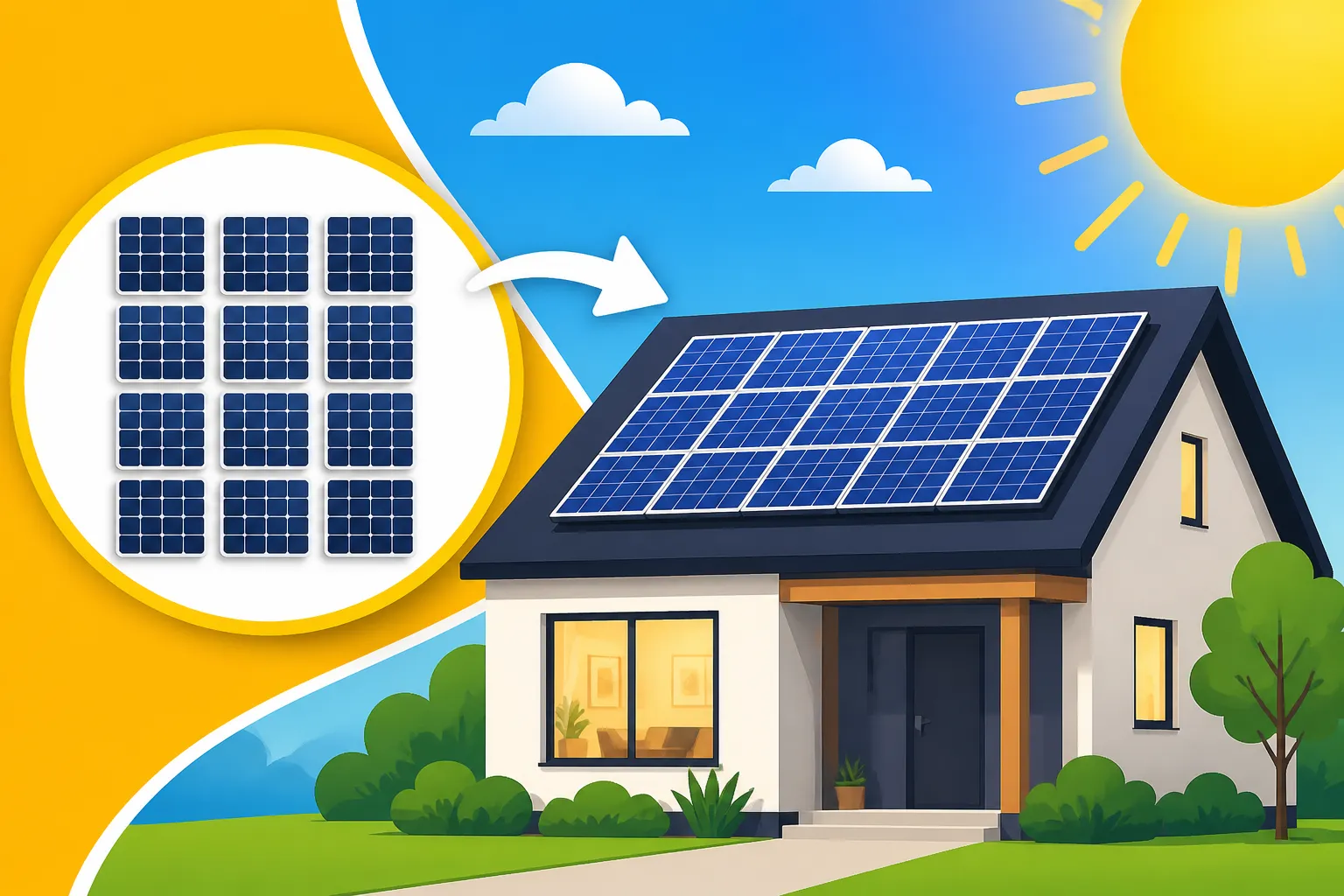
Since you can't install half a panel, you'd round up to 21 panels to ensure you meet your energy needs. Keep in mind this is an estimate. A professional solar design will optimize panel placement, orientation, and account for shading to give you the most accurate figure. This also helps determine the overall Solar Panel Cost by System Size (kW) as the number of panels directly impacts the total system size.
Here's a simplified table to give you a rough idea, assuming a 400W panel, 5 peak sun hours per day, and a 15% system loss (meaning each 400W panel effectively produces about 1.7 kWh per day):
| Daily Home Energy Usage (kWh) | Annual Home Energy Usage (kWh) | Estimated Number of 400W Panels | Estimated System Size (kW) |
|---|---|---|---|
| 20 kWh | 7,300 kWh | 12 panels | 4.8 kW |
| 30 kWh | 10,950 kWh | 18 panels | 7.2 kW |
| 40 kWh | 14,600 kWh | 24 panels | 9.6 kW |
| 50 kWh | 18,250 kWh | 29-30 panels | 11.6 – 12 kW |
Note: These are estimates. Actual numbers will vary based on your specific location, panel efficiency, system components, and site conditions.
Practicalities Beyond the Math: Roof, Budget, and Battery Backup
So, you've done the math and have a good idea of how many panels your 2,000 sq ft home might need. But the real world isn't just about calculations! There are some very practical considerations that can influence your final solar system design, from the physical space on your roof to your financial goals.
Assessing Your Roof's Solar Potential
Your roof is the primary real estate for your solar panels, and not all roofs are created equal for solar. For a 2,000 square foot house, you'll need a significant portion of your roof to be suitable. The ideal scenario is a south-facing roof with minimal shading from trees, chimneys, or neighboring buildings. East and west-facing roofs can also work well, especially if you have high energy usage in the mornings and evenings, but they might require more panels to achieve the same output as a south-facing array.
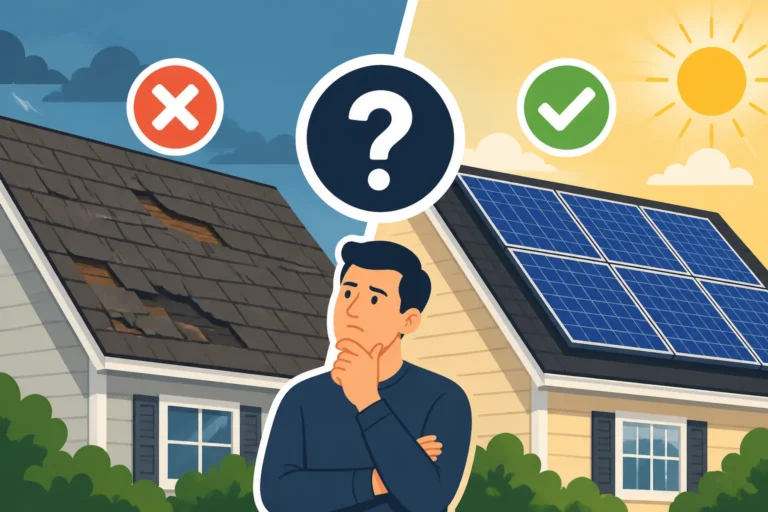
Beyond orientation, the condition and material of your roof are critical. If your roof is old or nearing the end of its lifespan, it's often more cost-effective to replace it before installing solar panels. Removing and reinstalling panels for a new roof can be an unexpected expense down the line. Different roofing materials also present different challenges and costs for installation. For example, asphalt shingles are typically straightforward, while tile or slate roofs can be more complex. Understanding these factors is key to knowing if your home is a good candidate for solar, and you can explore more about this in Roof Considerations for Solar Panels. A professional solar installer will conduct a thorough site survey to assess all these elements.
Budgetary Realities and System Scalability
Let's be real: budget is almost always a factor when considering a significant home improvement like solar. While the math might tell you that your 2,000 square foot home needs 20 panels, your budget might lead you to start with a slightly smaller system. Many homeowners opt for a system that offsets 80-90% of their electricity bill, especially if they have limited roof space or want to manage upfront costs. Remember, even partially offsetting your electricity usage can lead to substantial savings over time.
The cost of solar panels can vary significantly based on the number of panels, their wattage, the type of inverter, and labor costs. You might find that the optimal number of panels for your usage pushes the system size (and thus the cost) beyond your initial comfort zone. However, financing options like solar loans and various incentives, such as State Solar Incentives: Complete 2026 Guide, can make solar more accessible. It's crucial to get multiple quotes and compare Solar Panel Cost Per Watt Explained to ensure you're getting a fair price. Don't let a tight budget deter you; there are often ways to scale your system or choose financing that fits your needs.
Integrating Solar Batteries for Enhanced Resilience
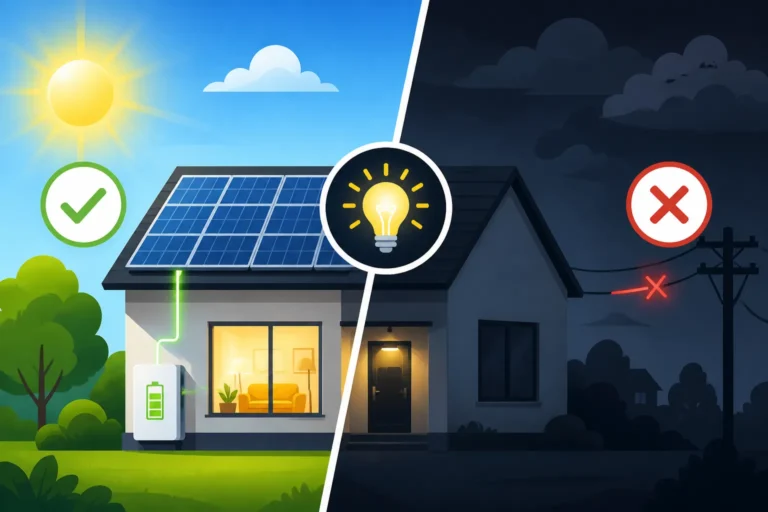
While not strictly about the number of panels, the decision to add a solar battery can influence your overall system design and how you view your energy independence for a 2,000 sq ft home. If your primary goal is to have backup power during grid outages, or if your state has less favorable net metering policies like California's NEM 3.0 (Net Billing), a battery becomes a very attractive option. A battery allows you to store excess solar energy generated during the day and use it at night or when the grid goes down, reducing your reliance on the utility company.
Adding a battery, like a Tesla Powerwall or an Enphase IQ Battery, will add to the upfront cost, but it provides significant benefits in terms of energy independence and potentially greater savings if your utility buys back excess power at a low rate. If you're considering a battery, your solar designer will factor this into the overall system size, potentially optimizing the number of panels to ensure efficient battery charging. For a comprehensive look, check out Do I Need a Battery With Solar?. It's a smart addition for many homeowners looking to future-proof their energy setup.
Partnering for Success: Getting Accurate Solar System Estimates
You've done your homework, understood your energy usage, and considered all the practical elements. Now it's time to bring in the professionals. Getting accurate estimates for your 2,000 square foot home's solar system is crucial, and it requires careful engagement with reputable solar installers.
The Importance of Professional Site Assessments
No amount of online research or self-calculation can replace a thorough professional site assessment. A qualified solar installer will send a team to your home to evaluate every detail. They’ll look at:
- Your Roof: They'll confirm its age, condition, material, pitch, and structural integrity. They'll also measure precise dimensions to determine how many panels can physically fit while adhering to setbacks and clearances.
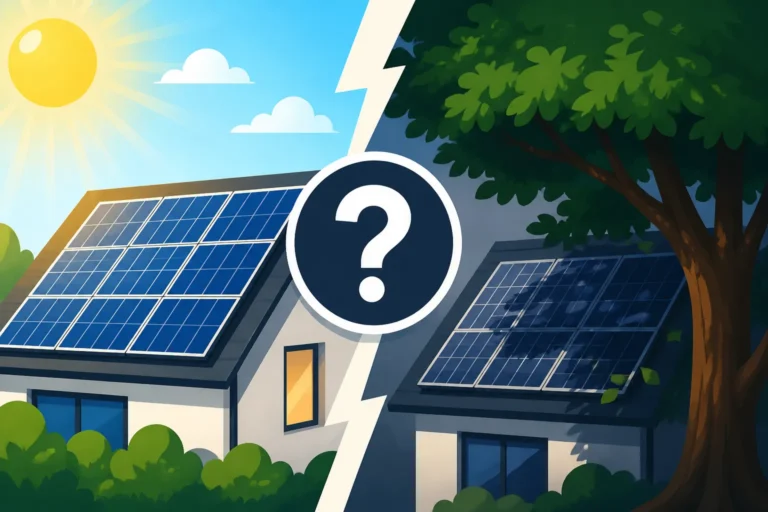
- Shading: Using specialized tools, they'll analyze shade patterns throughout the year, identifying potential obstructions that could reduce panel efficiency. This is critical because even a small amount of shade on one panel can impact the output of an entire string of panels if you're using string inverters.
- Electrical Panel: They'll assess your main electrical panel's capacity to ensure it can handle the new solar system safely and effectively. Sometimes, an electrical panel upgrade is necessary, which adds to the project cost.
- Energy Consumption Verification: They'll ask for your utility bills to confirm your historical energy usage, often cross-referencing it with your home's characteristics.
This in-depth analysis allows them to design a system that is perfectly tailored to your home's unique needs and site conditions, providing the most accurate estimate for the number of panels and overall system size. They can also offer insights into which Best Solar Panels of 2026 might be ideal for your roof and budget.
Navigating Quotes and Choosing the Right Installer
Once you have a few professional assessments, you'll start receiving solar quotes. This is where many homeowners feel overwhelmed because quotes can look very different. Don't just focus on the bottom-line price. Instead, compare:
- System Size (kW): Is it appropriately sized for your needs?
- Number of Panels: How many panels are they proposing, and what's their wattage?
- Equipment: What brand and type of panels, inverters (e.g., microinverters vs. string inverters), and potentially batteries are included? The quality of these components affects performance and longevity.
- Warranties: What are the product and performance warranties for the panels, inverters, and the installation itself?
- Total Cost and Price Per Watt: Calculate the cost per watt (total cost divided by system size in watts) to compare apples to apples. This is a great way to understand the Solar Panel Cost Per Watt Explained.
- Financing Options: What loan terms, interest rates, or lease/PPA structures are they offering? Make sure you understand all fees, like dealer fees, if applicable.
It's highly recommended to get at least three quotes from different, reputable installers. A service like Modernize can help connect you with pre-screened local solar installers, simplifying the process of getting competitive bids. This not only ensures you get a fair price but also gives you different perspectives on system design and equipment. Choosing a reputable installer is just as important as the equipment itself, as their expertise impacts everything from the Solar Installation Timeline: What to Expect to long-term performance and customer service. Don't be afraid to ask questions, check references, and read reviews to ensure you're working with a company that has your best interests at heart.
Disclaimer
Please note that the information provided in this guide is for general informational purposes only and does not constitute professional advice. Solar system sizing, costs, and savings can vary significantly based on individual circumstances, location, utility rates, available incentives, and specific product choices. Always consult with qualified solar professionals for personalized assessments and recommendations for your home.