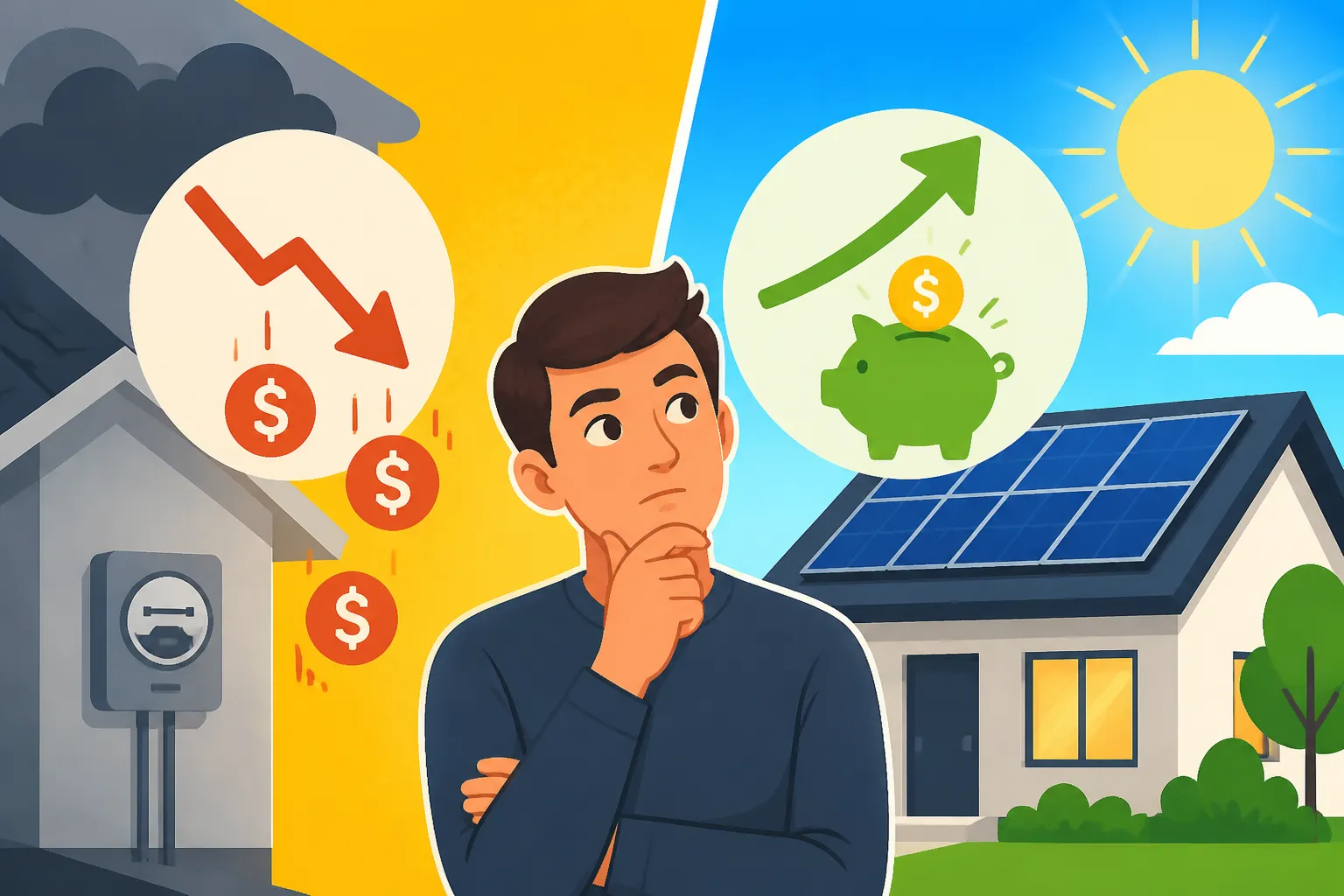
Do Solar Panels Really Save You Money?
It’s a question that echoes through countless homes across the country: "Do solar panels really save you money?" For many homeowners grappling with ever-increasing electricity bills and the allure of clean energy, the promise of savings often comes with a healthy dose of skepticism. This comprehensive guide is here to cut through the noise, validate your concerns, and deeply explore how solar energy can, in fact, significantly reduce your household expenses and offer substantial long-term financial benefits.
The Initial Question: Can Solar Panels Truly Save You Money?
Let's be honest, when someone tells you that installing something expensive on your roof is going to save you money, a little part of you probably rolls your eyes. You've heard the sales pitches, seen the glossy ads, and perhaps even had a neighbor rave about their solar journey. But the big question remains: Is it just hype, or is there genuine financial relief to be found? This section addresses that core skepticism head-on, laying the groundwork for understanding the real, tangible savings.
Unpacking the Skepticism Around Solar Investments
It's completely normal to be skeptical. After all, the upfront cost of a solar panel system can seem daunting. We’re talking about a significant investment, often tens of thousands of dollars, right? For most people, that’s not pocket change. And then there are the stories – tales of complex installations, confusing contracts, or the worry that the technology might not live up to its promises. You might think, "My electricity bill is already high, but is replacing it with a new, equally high loan payment really going to help?" This thinking is perfectly valid and highlights the need for clear, unbiased information.
Many folks also wonder about the reliability of solar panels. What happens if it's cloudy for days? Will I still save money in the winter? Are these savings truly consistent, or will they fluctuate wildly? These are common and legitimate concerns that make people pause. The solar industry has sometimes struggled with transparency, which only fuels this skepticism, making it harder for homeowners to discern real value from aggressive sales tactics. We're here to explain the nuts and bolts so you can make an informed decision for your home and budget.
The Core Promise of Solar: Lowering Your Energy Bills
At its heart, the primary way solar panels save you money is elegantly simple: they generate free electricity from the sun. This electricity powers your home, directly reducing the amount you need to buy from your utility company. Think about it this way: instead of paying your utility for every kilowatt-hour (kWh) you consume, you're essentially producing your own power.
For many homeowners, this means seeing their monthly electricity bill drop dramatically – often to just a basic connection fee. Imagine only paying $10-$20 a month instead of $150, $200, or even $300! This immediate and noticeable reduction in your operational expenses is the most direct and impactful form of saving that solar provides. Over months and years, these small monthly savings add up to substantial amounts, effectively paying for your solar system over its lifespan. The ability to control a significant portion of your energy costs, rather than being at the mercy of utility rate hikes, is a powerful financial advantage.
How Solar Actually Delivers Financial Savings
Moving beyond the initial concept, let's dive into the practical mechanisms through which solar panels translate sunlight into cold, hard cash savings. It’s not just about producing electricity; it’s about a combination of factors working together to put money back in your pocket.
Decoupling from Utility Rate Hikes
One of the most frustrating aspects of homeownership is the seemingly endless upward creep of utility rates. You try to conserve, you upgrade appliances, but year after year, that electricity bill keeps climbing. This isn't just your imagination; electricity rates have historically risen across the U.S., driven by factors like fuel costs, infrastructure upgrades, and regulatory changes. When you rely solely on your utility for power, you're entirely vulnerable to these increases.
Solar panels offer a powerful buffer against this financial uncertainty. Once your system is installed and paid for (or you're making predictable loan payments), your cost of electricity production becomes largely fixed. You're producing your own power at a predictable, often much lower, "rate." As grid electricity prices continue to rise over the next 20-30 years, your solar savings will only grow more significant because you're avoiding ever-higher charges. This long-term financial stability is a massive, often underestimated, benefit of going solar. It's like locking in your gas price for the next two decades, protecting yourself from the volatility of the market.
The Power of Net Metering and Export Credits
Here's where things get really clever: Net Metering. Many states and utility companies have policies in place where, if your solar panels produce more electricity than your home consumes at any given moment, that excess power is automatically sent back to the grid. And here’s the best part: your utility essentially buys it from you!
With full retail net metering, you get credited at the same rate you would pay for electricity. So, if you’re out during the day and your panels are pumping out power, that excess energy builds up credits on your account, which then offset the power you draw from the grid at night or on cloudy days. It’s a beautifully simple system that allows your meter to effectively spin backward, leading to those incredibly low, or even zero, electricity bills. You can learn more about how this works in our guide on Net Metering Explained: How It Works by State.
However, it's crucial to understand that net metering policies can vary significantly by state and even by utility, and they are constantly evolving. Some states, like California with its NEM 3.0, have shifted to "net billing" or "export credits," where you might get compensated at a lower wholesale rate for your exported power, rather than the full retail rate. Even with these changes, selling excess electricity back to the grid still contributes significantly to your overall savings, making your solar investment more lucrative.
Unlocking Government Incentives and Rebates
This is where the financial puzzle pieces really start to come together, making solar a much more attainable and affordable investment. Both federal and state governments, as well as local utilities, offer various incentives to encourage homeowners to adopt solar energy. These aren't just small discounts; they can dramatically reduce the upfront cost of your system and shorten its payback period.
The most prominent incentive currently is the federal solar tax credit, known as the Investment Tax Credit (ITC). This credit allows you to deduct a significant percentage of your solar system's cost from your federal income taxes. In 2024, that's a whopping 30% of the total system cost, including installation! While the exact percentage can change over time, this credit has historically been a huge driver for solar adoption. Don't miss our detailed explanation of the Federal Solar Incentives That Still Exist in 2026 to see what’s available.
Beyond the federal incentive, many states and even specific cities or utility companies offer their own programs. These can include:
- State Tax Credits: Some states, like New York, offer additional tax credits on top of the federal one.
- Property Tax Exemptions: Many areas exempt the added value of solar panels from your property tax assessment, meaning your home value goes up without your taxes following suit. You can explore Solar Property Tax Exemptions by State for more details.
- Sales Tax Exemptions: In certain states, you won't have to pay sales tax on your solar equipment, cutting down on initial costs. Our guide on Solar Sales Tax Exemptions by State provides a comprehensive list.
- Solar Renewable Energy Credits (SRECs): In some markets, you can generate and sell SRECs, which are certificates representing the environmental benefits of your solar production, adding another revenue stream. Our resource on SRECs Explained: Selling Solar Renewable Energy Credits can help you understand this unique benefit.
- Utility Rebates: Many local utility companies offer direct cash rebates for installing solar. Finding these can sometimes be tricky, but a good installer, or tools like Modernize, can help identify what's available in your area. Our guide on Utility Solar Rebates: How to Find Yours is a great starting point.
These incentives collectively can reduce your total solar cost by a substantial margin, often making solar financially viable even in areas with lower electricity rates. It’s absolutely essential to research the specific incentives available where you live, as they can significantly impact your overall savings.
What Drives Your Specific Solar Savings Potential?
While the general principles of solar savings are universal, the exact amount of money you save will depend on a unique combination of factors. Understanding these variables is crucial for accurately estimating your return on investment and ensuring you get the best possible deal.
Location, Sunlight, and Roof Suitability
It might seem obvious, but where you live plays a huge role in how much sun your panels receive, and therefore, how much electricity they generate. States like California, Arizona, and Florida, with abundant sunshine, generally see higher production. However, even states further north or with more cloudy days, like Massachusetts or New Jersey, can still achieve excellent savings thanks to robust state incentives and decent solar irradiance.
Beyond geographic location, the specifics of your roof matter. Does your roof face south? South-facing roofs typically get the most direct sunlight throughout the day, maximizing energy production. What about shading from trees or neighboring buildings? Even partial shading during peak sunlight hours can significantly reduce your system's efficiency. Furthermore, the age and condition of your roof are critical; you don't want to install solar panels on a roof that will need replacing in a few years, as reinstalling panels can be costly. A professional solar installer will conduct a detailed site assessment to evaluate these factors and determine your home's solar potential.
Your Energy Consumption Habits and System Sizing
To truly maximize your savings, your solar system needs to be sized correctly for your household's energy needs. Installing a system that's too small might not offset enough of your bill, leaving you paying more to the utility. Conversely, an oversized system might produce more electricity than you can use or get credit for, making it an unnecessarily expensive investment.
A qualified solar installer will analyze your past 12-24 months of electricity bills to understand your average monthly and seasonal energy consumption. This data is vital for designing a system that produces just the right amount of power to cover your needs, taking into account net metering rules and any battery storage you might consider. Your lifestyle, including future plans like adding an electric vehicle or a hot tub, should also be factored in. For more on this, you might find our article on How Many Solar Panels Do I Need for My Home? helpful.
The Impact of Financing on Your Bottom Line
How you pay for your solar system is one of the most significant factors influencing your total savings and when you start seeing them. There are generally three main ways to go solar:
- Cash Purchase: This offers the highest long-term savings and the quickest payback period because you avoid interest payments and benefit fully from all incentives. While the upfront cost is considerable, the return on investment can be substantial over the system's 25+ year lifespan. Our guide on Cash vs Financing Solar: Which Saves More? details these advantages.
- Solar Loan: This is the most common option for homeowners who don't want to pay cash. You take out a loan, often specifically designed for solar, and make monthly payments. You still own the system, qualify for all incentives, and begin saving on your electricity bill immediately. The key is to find a loan with favorable terms and understand any associated dealer fees. If you're considering a loan, check out our Solar Loans: Complete Guide.
- Solar Lease or Power Purchase Agreement (PPA): With these options, you don't own the system. Instead, a third-party company owns, installs, and maintains the panels on your roof. You pay a fixed monthly lease payment or pay for the electricity generated at a predetermined rate (PPA) that is typically lower than your utility's rate. While these options often require $0 down, your overall long-term savings are generally lower than with ownership, and you might not qualify for all incentives directly. Our Solar Lease vs PPA vs Buy: Which Is Best? article breaks down the pros and cons of each.
The choice between these financing options will heavily influence your monthly cash flow, your eligibility for incentives, and your total savings over the life of the system. It’s vital to compare all options carefully.
Here's a simplified look at how financing affects typical savings over 25 years:
| Financing Method | Upfront Cost (Example 10kW System) | Est. Monthly Bill Reduction | Est. Total Savings (25 Yrs) | Ownership of System | Qualifies for ITC |
|---|---|---|---|---|---|
| Cash Purchase | ~$25,000 – $35,000 (pre-ITC) | ~$150 – $250+ | ~$30,000 – $80,000+ | Yes | Yes |
| Solar Loan | $0 – Low initial payment | ~$50 – $150 (after loan payment) | ~$15,000 – $50,000+ | Yes | Yes |
| Solar Lease/PPA | $0 | ~$30 – $100 (after lease/PPA payment) | ~$5,000 – $25,000+ | No | No (third-party) |
| Note: These are rough estimates and vary wildly by location, electricity rates, incentives, and system size. |
Realizing the Full Financial Picture Over Time
When we talk about saving money with solar, it's not just about the immediate reduction in your monthly bill. It's also about the long-term financial health of your home and leveraging your investment for future gains. Solar is a 25-30 year commitment, and its financial benefits accrue significantly over that period.
The Long-Term Return on Investment and Property Value
Thinking about solar panels as a long-term investment rather than just an expense is crucial. The initial cost can be recouped over time through those monthly energy savings, and the cumulative savings can far exceed the initial outlay. This period, known as the Solar Panel Payback Period Explained, typically ranges from 6 to 12 years, depending on your state, electricity rates, and available incentives. After this point, the electricity your panels generate is essentially free.
Beyond direct energy savings, solar panels are proven to increase your home's value. Studies by reputable organizations like Berkeley Lab and Zillow have consistently shown that homes with solar panels sell for a premium compared to similar non-solar homes. This added value can be substantial, often 3-4% higher, or more in some markets. For example, a home appraised at $400,000 could see an increase of $12,000 to $16,000 or more with a fully owned solar system. This is a significant asset that enhances your property's marketability and ensures a return on your investment when it's time to sell. Our article on Do Solar Panels Increase Home Value? dives deeper into this topic.
Considering Solar Batteries for Enhanced Resilience and Savings
While not strictly necessary for saving money with solar, adding a solar battery can significantly enhance your financial benefits, especially in areas with unfavorable net metering policies or frequent power outages. Batteries, like the Tesla Powerwall or Enphase IQ Battery, store excess solar energy produced during the day. This stored energy can then be used at night, during peak electricity rate times (called "time-of-use" or TOU rates), or during a grid outage.
In regions with TOU rates, electricity can be much more expensive during certain hours (e.g., 4 PM to 9 PM). A battery allows you to avoid buying expensive grid power during these peak times by using your stored solar energy instead, further maximizing your savings. It also provides true energy independence and backup power during blackouts, which, while not a direct "saving," certainly offers peace of mind and protects against potential losses from spoiled food or disrupted work. There are even specific Solar Battery Incentives in 2026 that can make these systems more affordable. Check out our guide on the Best Solar Batteries of 2026 to learn more about options.
Maximizing Your Savings with Solar
Alright, so solar can save you money. Now, how do you ensure you get the most savings possible? It's not just about installing panels; it's about smart planning, careful selection, and proactive management.
Getting Multiple Quotes and Comparing Options
This is perhaps the most critical step in ensuring you maximize your savings. The solar market is competitive, and prices for a similar system can vary significantly from one installer to another. Don't make the mistake of going with the first quote you receive!
We always recommend getting at least three, ideally five, detailed quotes from different reputable solar installers in your area. This allows you to compare not just the overall price, but also the equipment being offered (panel brands like Qcells or REC, inverter types like Enphase or SolarEdge), warranties, financing options, and the installer's reputation. Look beyond just the bottom line; a slightly higher initial cost might come with better equipment or a stronger warranty, leading to greater long-term savings and fewer headaches. Platforms like Modernize can be incredibly helpful here, as they connect homeowners with multiple pre-screened local solar companies, simplifying the comparison process. Always ask for a breakdown of all costs, including installation, permitting fees, and estimated energy production.
Considering a Solar Battery for Enhanced Savings
As touched upon earlier, a solar battery can be a game-changer for your savings, particularly in states with less favorable net metering policies or high time-of-use rates. By allowing you to store your own excess generation rather than selling it back to the grid at a lower rate, you retain more of the value your panels produce.
In a scenario where net metering credits are low, or even non-existent, a battery becomes essential to avoid buying expensive electricity from the utility grid in the evenings. It transforms your home into more of an independent power hub, giving you greater control over your energy consumption and expenditure. While it adds to the upfront cost, the long-term financial benefits, coupled with the security of backup power, often make it a worthwhile addition for truly maximizing savings and energy independence.
Regular Maintenance and Monitoring
Once your solar system is up and running, don't just forget about it! While solar panels require minimal maintenance, a little attention can go a long way in ensuring they operate at peak efficiency and continue to deliver maximum savings.
Most modern solar systems come with monitoring apps that allow you to track your energy production in real-time. Keep an eye on these numbers. A sudden drop in production could indicate an issue, like shading from a newly grown tree branch, accumulated dirt, or a technical malfunction that needs addressing. While panels are generally self-cleaning with rain, an occasional rinse with a hose, especially after a dry, dusty period, can prevent performance dips. Many solar companies also offer maintenance plans, though usually, this isn't strictly necessary. Proactive monitoring and simple upkeep ensure your system is always working its hardest to save you money. The investment is working for you, so make sure it's always performing optimally!
Disclaimer
The information provided in this guide is for general informational purposes only and does not constitute financial, tax, or legal advice. Solar incentives, policies, and costs are subject to change and vary significantly by location. It is essential to consult with qualified solar professionals, financial advisors, and tax experts to determine the best course of action for your specific circumstances.