Is Solar Worth It in New York?
Living in New York, you've probably stared at your rising electricity bills and wondered if there's a better way. The idea of solar panels sounds great in theory – clean energy, lower costs – but is it really worth the investment in a state known for its winters and bustling cities? This comprehensive guide is here to cut through the noise, validate those concerns, and give you a realistic, in-depth look at whether going solar in New York makes financial and practical sense for your home.
Understanding New York's Energy Landscape
New York is a state of contrasts, from the rural expanses upstate to the dense urban jungles of NYC. This diversity plays a big role in how solar energy is perceived and adopted. When you're considering such a significant home improvement, it's essential to understand the unique energy environment you're operating within.
High Electricity Rates in the Empire State
Let's be honest, those monthly electricity bills in New York can be brutal. You're not alone if you've felt that sting. New York's electricity rates consistently rank among the highest in the nation, often significantly above the national average. This isn't just about high demand; it's a complex mix of factors like aging infrastructure that needs constant upgrades, the costs associated with transmitting power over long distances, and the state's ambitious clean energy mandates, which, while beneficial in the long run, do add to the immediate costs for utilities.
For homeowners, this translates directly into a painful monthly expenditure. Whether you're in a sprawling suburban home in Long Island, a brownstone in Brooklyn, or a farmhouse in the Finger Lakes, electricity is a significant and often unpredictable part of your budget. These high rates are precisely what make solar energy so appealing here. Every kilowatt-hour your solar panels produce means a kilowatt-hour you don't have to buy from the utility at those premium prices. The higher your current electricity rate, the faster your solar investment tends to pay for itself.
Sunshine, or Lack Thereof? Debunking Solar Myths for New York
One of the biggest misconceptions I hear from New Yorkers about solar is, "But we don't get enough sun!" It's true, New York isn't exactly the Sunshine State, and we certainly get our fair share of cloudy days and winter snow. However, this often leads people to underestimate the actual solar potential here. Modern solar panels are incredibly efficient and don't need direct, blazing sunshine to produce electricity. They work well with diffuse light, meaning even on overcast days, your system will still be generating power, just at a reduced rate.
Think about Germany, a global leader in solar adoption, which has a similar solar irradiance profile to parts of New York, if not less. Their success proves that plenty of sunlight isn't the only factor for solar viability. Furthermore, snow often slides off solar panels due to their dark color and angle, especially as the sun warms them. And for those cold, clear winter days, solar panels actually perform more efficiently in cooler temperatures. What truly matters is the cumulative amount of sunlight your roof receives throughout the year, and for most of New York, that amount is more than sufficient to make solar a worthwhile investment, especially when paired with strong incentives.
Key Solar Incentives and Programs in New York
While high electricity rates provide a strong economic driver for solar in New York, the state's robust collection of incentives and programs truly makes it an attractive proposition. New York has committed heavily to renewable energy, and they put their money where their mouth is, offering significant support to homeowners who go solar.
The New York State Solar Tax Credit (25%)
This is a big one for New York homeowners. The state offers a personal income tax credit for solar energy system equipment and installation costs. It's designed to complement federal incentives, and for many, it significantly reduces the upfront cost of going solar. The New York State Solar Tax Credit is worth 25% of your total system costs, up to a maximum credit of $5,000.
Let's put that into perspective. If your solar system costs $25,000, you could get a $5,000 credit back on your state taxes. This is a direct reduction in the money you owe the state, not just a deduction. It's part of the broader NY-Sun program, which aims to drive solar deployment across the state. To qualify, your solar energy system must be installed on your primary residence in New York, and it must meet certain output requirements. It’s crucial to understand how this interacts with the federal tax credit. For a comprehensive look at how federal incentives factor in, check out our guide on Federal Solar Incentives That Still Exist in 2026 and Is the Solar Tax Credit Gone in 2026?.
Net Metering in New York
Net metering is often called the "secret sauce" that makes rooftop solar so effective, and New York has a solid system in place. It allows you to send any excess electricity your solar panels produce back to the utility grid. In exchange, the utility credits your account for that power, effectively reducing your future bills. This is crucial because your solar panels might produce more electricity during the day than your home consumes, especially when you're at work or away.
Under New York's net metering rules, you generally receive credits at a rate similar to what you would pay for electricity. This means you're essentially getting full retail value for the power you export. When your panels aren't producing (like at night), you draw electricity from the grid using those credits. This "bank" of credits helps offset your consumption during non-sunny hours or seasons. While policies can evolve, New York has historically been very supportive of net metering. Understanding Net Metering Explained: How It Works by State is key to maximizing your solar savings, and it's particularly favorable in New York compared to some other states facing changes like California's NEM 3.0.
NY-Sun Program and Other Local Initiatives
Beyond the tax credit and net metering, New York’s commitment to solar is primarily channeled through the NY-Sun program, administered by the New York State Energy Research and Development Authority (NYSERDA). This program isn't just one thing; it's a comprehensive initiative that provides declining, performance-based incentives (PBIs) to lower the upfront costs of solar installations. These incentives are paid directly to solar installers, who then pass the savings on to you, the homeowner, making solar more affordable from the get-go.
The NY-Sun program has different funding blocks, and as more solar is installed, the incentive rates gradually step down. This creates an incentive for homeowners to go solar sooner rather than later to take advantage of higher rates. Beyond state-level programs, many local utilities, such as Con Edison, National Grid, and NYSEG, also offer their own solar rebates and programs. These utility-specific incentives can further reduce your costs and vary depending on your service area. It's always a good idea to check with your local utility or a trusted installer to see what's available in your specific location. You can learn more about finding these local benefits in our guide on Utility Solar Rebates: How to Find Yours. For those whose roofs aren't suitable for solar, New York also has strong community solar programs, allowing you to subscribe to a share of a larger, off-site solar farm and receive credits on your electricity bill.
The Financial Return on Investment in New York
Investing in solar is a significant financial decision, and for New York homeowners, the return on investment (ROI) is a critical factor. You want to be sure that your money is well spent and that the benefits outweigh the costs over time. The good news is that with New York's high electricity rates and strong incentives, the financial picture for solar tends to be very positive.
Calculating Your Solar Payback Period in New York
The payback period is the amount of time it takes for the savings from your solar panels to equal their upfront cost. It's one of the most important metrics homeowners consider. In New York, thanks to those juicy state and federal incentives combined with high electricity prices, the payback period for a residential solar system is generally quite attractive. While it can vary widely based on your specific situation, many New York homeowners see their systems pay for themselves within 7 to 10 years.
Consider a hypothetical family in Albany. Their average electricity bill is $180, and they install a 7 kW solar system costing $25,000. After applying the 25% federal tax credit (now 30% thanks to the IRA) and New York's $5,000 state tax credit, their net cost could drop significantly. If their system generates enough power to offset 80-90% of their bill, they might save $1,900-$2,000 annually on electricity. This rapid offset, combined with the substantial tax credits, accelerates the payback. Factors influencing this period include the size of your system, your historical energy consumption, the precise incentives you qualify for, and how quickly electricity rates continue to climb. For a deeper dive into this calculation, refer to our article on Solar Panel Payback Period Explained.
Long-Term Savings and Increased Home Value
Once your solar system has paid for itself, every kilowatt-hour it produces is essentially free electricity for the remainder of its lifespan, which can be 25 years or more. Given that electricity rates in New York have historically risen and are projected to continue doing so, those long-term savings can be substantial. Over 20-25 years, a typical New York homeowner could save tens of thousands of dollars on their utility bills. Imagine not having to worry about energy price hikes for decades!
Beyond the direct savings, solar panels are also proven to increase your home's value. Studies consistently show that homes with owned solar panels sell for more and often faster than comparable homes without solar. This added value is often tax-exempt in New York, thanks to specific property tax policies. This means you get the benefit of increased property value without a corresponding jump in your property tax bill, making solar an even smarter investment. When considering Do Solar Panels Increase Home Value?, New York's policies are definitely a plus.
Comparing Financing Options for New York Homeowners
The upfront cost of a solar system can feel daunting, but New York offers various financing options to make it accessible. It's crucial to compare these to find what works best for your financial situation.
- Cash Purchase: This offers the highest long-term savings and the quickest payback period because you avoid interest payments. You'll also reap the full benefits of all incentives immediately.
- Solar Loan: Many homeowners opt for a solar loan. You own the system from day one, which means you qualify for all the incentives, including the state and federal tax credits. Your monthly loan payments are often designed to be less than or comparable to your previous electricity bill, leading to immediate savings. However, be wary of "dealer fees" or "loan origination fees" that can inflate the true cost of your loan. Always ask for the cash price of the system and compare it to the total cost of the loan.
- Solar Lease or Power Purchase Agreement (PPA): With a lease, you pay a fixed monthly fee for the use of the solar panels, and with a PPA, you only pay for the electricity the panels produce at a set rate per kilowatt-hour. These options often require $0 down, making them attractive for those with limited upfront capital. The downside is that you don't own the system, so the installer claims the tax credits and other incentives. While you still get savings on your electricity bill, they are typically less significant than with ownership, and the increase in home value is also usually smaller.
For New York homeowners, owning the system (cash or loan) generally offers the best ROI due to the state's generous tax credit. Make sure to get several quotes and thoroughly understand all the terms before committing. Many installers, often facilitated by platforms like Modernize, can walk you through the specifics of these financing options and help you weigh the pros and cons in the New York context.
Practical Considerations for Going Solar in New York
Beyond the financial incentives, there are practical aspects of installing solar in New York that every homeowner needs to consider. From the suitability of your roof to navigating the installation process, understanding these elements will help you prepare for a smooth transition to solar energy.
Roof Suitability and System Sizing
Your roof is the foundation of your solar investment. Not all roofs are created equal when it comes to hosting solar panels. In New York, you'll find a variety of roof types, from classic asphalt shingles common in suburban areas to flat roofs on urban buildings. A critical factor is the condition and age of your roof. Solar panels are designed to last 25-30 years, so if your roof is nearing the end of its lifespan, it might be more cost-effective to replace it before installing solar. This prevents the costly process of removing and reinstalling panels just a few years down the line.
The orientation of your roof also plays a significant role. South-facing roofs are ideal for maximum sun exposure throughout the day, but east and west-facing roofs can also be highly productive, especially in New York where distributed generation is well-supported. Do Trees or Shade Make Solar Not Worth It? is another key consideration; even a small amount of shade from trees or neighboring buildings can impact panel performance. Finally, determining energy needs is crucial. This involves analyzing your past electricity consumption to ensure your system is appropriately sized to offset your energy needs without oversizing, which might not be cost-effective. A good installer will conduct a thorough site assessment to evaluate all these factors.
Finding a Reputable Installer and Navigating the Process
Choosing the right solar installer in New York is perhaps the most important decision you'll make. A reputable installer will guide you through the entire process, from initial design and permitting to installation and final interconnection with the utility grid. With the growing popularity of solar, there are many companies out there, and unfortunately, not all are equally reliable.
I always recommend getting at least three different quotes from local installers. This allows you to compare pricing, equipment, warranties, and proposed system designs. Look for installers with a strong track record, positive customer reviews, and relevant certifications, like those from NABCEP (North American Board of Certified Energy Practitioners). Platforms like Modernize can be a valuable resource for connecting with vetted, local solar professionals in New York, making the process of finding reputable companies much easier. The typical Solar Installation Process in New York involves several stages: initial consultation, site survey, system design, permitting with your local municipality (which can vary significantly from, say, Buffalo to the Bronx), installation, inspection, and finally, What Is Permission to Operate (PTO)? from your utility. Each step requires careful coordination and expertise, making a good installer invaluable. For more tips, check out our guide on How to Choose a Solar Installer.
Solar Batteries for Enhanced Resilience
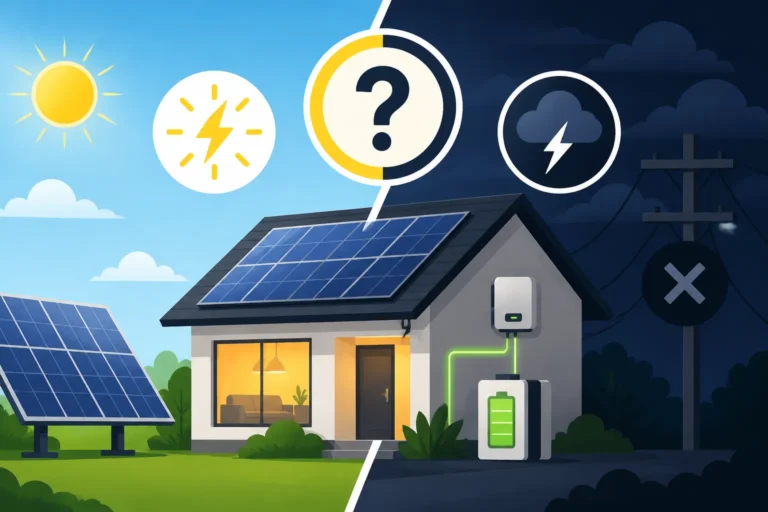
While New York's net metering policies help manage excess energy, adding a solar battery storage system can provide significant additional benefits, especially in a state prone to severe weather events. Think about those winter storms that can knock out power for days, or unexpected summer outages. A solar battery allows you to store excess solar electricity generated during the day and use it at night or during a grid outage.
For New Yorkers, batteries offer critical backup power, ensuring your essential appliances stay running when the grid goes down. Beyond resilience, batteries can also help you maximize savings, especially if future net metering policies change or if your utility introduces time-of-use rates where electricity is more expensive during peak hours. You can charge your battery when rates are low (or with your own solar) and discharge it when rates are high, reducing your reliance on the grid at its most expensive times. There are also Solar Battery Incentives in 2026 that can help offset the cost of these systems, making them an increasingly attractive option for New York homeowners seeking energy independence.
Potential Drawbacks and What to Watch Out For
While the outlook for solar in New York is overwhelmingly positive, it's crucial to maintain a realistic perspective. Like any significant investment, there are potential challenges and things you need to be aware of. Being informed about these can help you avoid pitfalls and ensure a smoother solar journey.
Upfront Costs and Financing Complexities
Let's face it: solar panels are a big investment. Even with New York's robust incentives, the initial sticker price for a complete solar system can still be substantial, often ranging from $20,000 to $35,000 or more before incentives. While incentives like the state tax credit and federal tax credit significantly reduce this, they aren't immediate cash in hand. The tax credits are applied when you file your taxes, meaning you need to either pay the full amount upfront or secure financing for the total cost, anticipating the tax credit returns.
This is where financing complexities can arise. While solar loans can make solar accessible with little to no money down, it's vital to read the fine print. Some loan products come with high interest rates, hidden dealer fees, or escalator clauses that increase your monthly payments over time. It's not uncommon for less scrupulous companies to offer "$0 down" deals that seem too good to be true, often burying additional costs in the loan terms. Always ask for the cash price of the system first, and then compare it to the total cost, including all fees and interest, of any financing option. Understand your loan terms completely to avoid any unpleasant surprises down the road, and check out our article on Solar Dealer Fees Explained Hidden Loan Costs.
Policy Changes and Future Uncertainty
The world of solar incentives and regulations is constantly evolving. While New York currently boasts some of the best incentives in the nation, policies can and do change. For example, while net metering is strong in New York right now, other states, like California with its NEM 3.0, have drastically altered their policies, impacting solar homeowners' savings. While there are no immediate signs of such dramatic changes in New York, it’s a reminder that relying solely on current policies for a 25-year investment carries some inherent uncertainty.
The NY-Sun program, while excellent, uses declining block incentives, meaning the incentives decrease as more solar is installed. This isn't a bad thing—it's designed to bring down the overall cost of solar over time—but it does mean that waiting too long might mean you miss out on the highest incentive levels. It's essential to stay informed about potential legislative changes and how they might impact the long-term value of your system. A reputable solar installer should be able to provide guidance on how current policies are structured and what to realistically expect regarding future changes. Staying current on topics like Net Metering Explained: How It Works by State is always a good idea.
New York Solar Incentive Overview
To help you get a quick grasp of the major incentives available, here’s a table summarizing the key programs and their benefits for New York homeowners:
| Incentive Program | Type of Incentive | Estimated Value/Benefit | How it Helps Homeowners | Key Considerations |
|---|---|---|---|---|
| Federal Solar Tax Credit (ITC) | Tax Credit | 30% of system cost (no cap) | Direct reduction on federal income taxes due | Must own the system; not a rebate, applied at tax filing; check eligibility. |
| New York State Solar Tax Credit | State Tax Credit | 25% of system cost (up to $5,000) | Direct reduction on New York State income taxes due | Must own the system; applied at tax filing; check NY-Sun program guidelines. |
| Net Metering (NY) | Bill Credits | Full retail credit for excess power | Offsets electricity bills when panels overproduce; reduces reliance on grid. | Policies can evolve; check with local utility for specific terms. |
| NY-Sun Program (NYSERDA) | Performance-Based Incentive (PBI) | Varies by region and funding block (declining rates) | Lowers upfront installation costs through installer rebates. | Incentives decline as more solar is installed; act sooner for higher rates. |
| Solar Property Tax Exemption | Property Tax Exemption | Exempts value added by solar from property taxes | Avoids increased property taxes due to system installation. | Varies by local jurisdiction, though widely available in NY. |
| Total Potential Savings | Combined | Tens of thousands over 25 years + increased home value | Significantly reduces energy bills and boosts asset value. | Requires careful planning and understanding of eligibility. |
Disclaimer
This article is for general informational purposes only and does not constitute professional advice. Laws, prices and regulations vary by location and change over time. Consult a qualified professional for guidance on your specific situation.