Solar Dealer Fees Explained (Hidden Loan Costs)
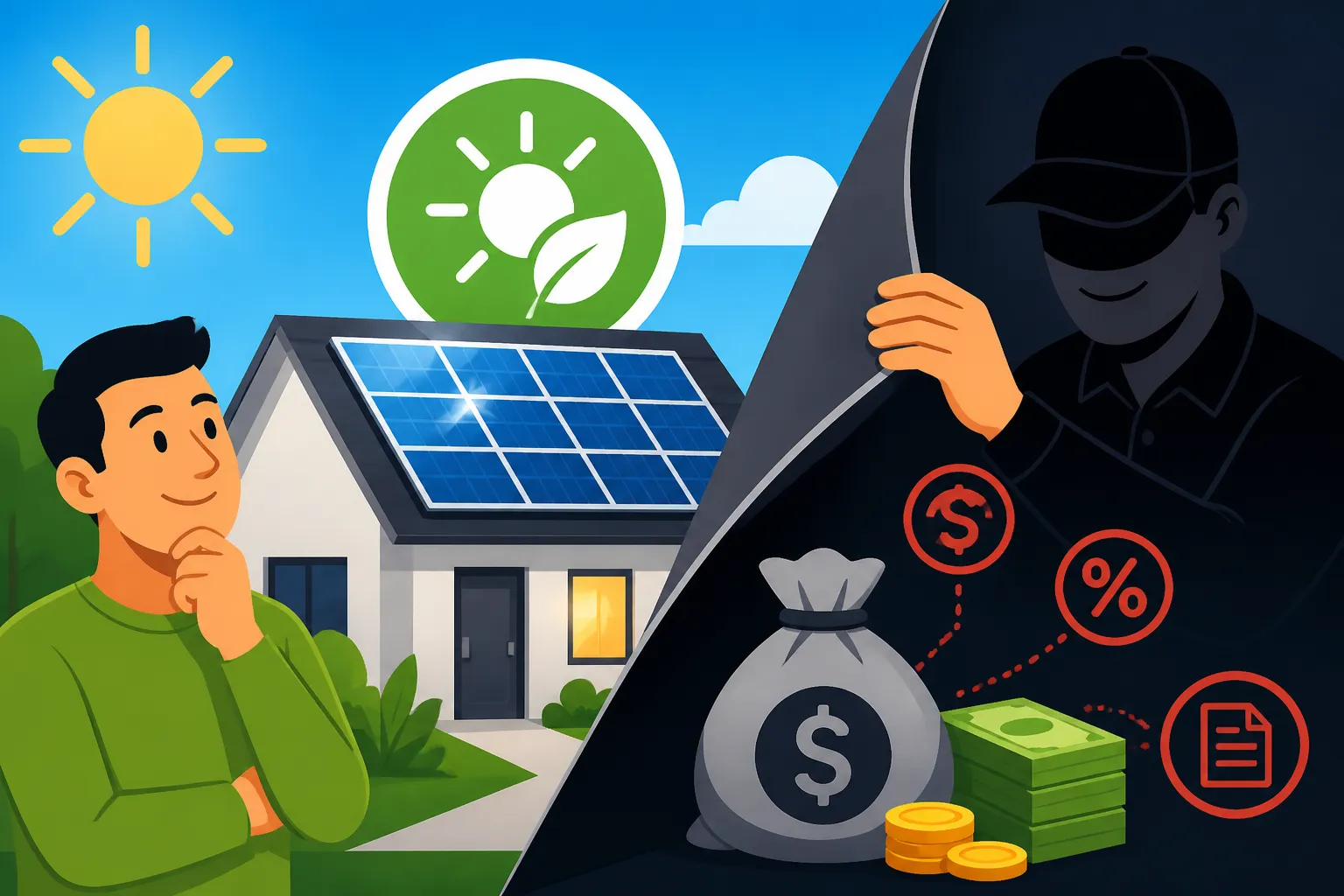
It’s incredibly frustrating when you think you've finally understood the cost of going solar, only to encounter vague line items or unexpected charges that seem to materialize out of nowhere. Many homeowners feel this confusion, especially when navigating solar financing. One of the most common culprits for these inflated costs, often misunderstood or completely hidden, are solar dealer fees. These aren't just minor administrative charges; they can significantly drive up the total price of your solar system and your monthly payments. This comprehensive guide will pull back the curtain on solar dealer fees, explaining what they are, why they exist, and most importantly, how to identify and manage them so you can secure a fair deal on your solar investment.
What Exactly Are Solar Dealer Fees?
When you’re looking into getting solar panels for your home, you’re often focused on the upfront price of the panels themselves, the installation costs, and perhaps the shiny new inverter. But there’s a whole layer of financial jargon beneath the surface, and "dealer fees" often sit right at the bottom, quietly adding to your total bill without much fanfare. Understanding these fees is crucial for anyone considering solar financing.
Unpacking the "Hidden" Costs
Dealer fees, also sometimes called origination fees, loan fees, or even simply "discount points" by some lenders, are essentially a commission or charge that a solar installer or sales company pays to the loan provider for offering you a particular loan product. Think of it like this: when a solar company offers you a "low interest" solar loan, say 2.99% or 1.99%, it might seem like an incredible deal. However, these attractive rates aren't free for the solar installer or the lender. The lender needs to make their money, and they do it by charging the installer a fee to offer that specific rate. The installer then often passes this fee directly onto you, the homeowner, by increasing the total system price.
It’s a bit of a shell game, and it can be incredibly misleading. You might see a sticker price for your solar system, then a separate line item for financing, but the true cost of the low-interest rate is often baked into the system price itself, making it seem like the panels cost more than they actually do. This can lead to quotes from different companies for seemingly identical systems varying wildly in price, even if the actual equipment and labor costs are similar. It's not always nefarious, but it certainly isn't transparent, and it’s a source of real frustration for homeowners trying to compare apples to apples.
Why Solar Companies Charge Them
The existence of solar dealer fees stems from the competitive nature of the solar market and the way financing is structured. Solar companies want to offer attractive financing options to make solar accessible to more homeowners. A low-interest loan is a powerful sales tool; it makes monthly payments seem much more manageable, drawing in customers who might otherwise be put off by the high upfront cost of a cash purchase.
Lenders, on the other hand, need to generate revenue. They could offer loans with higher interest rates and no dealer fees, but then the monthly payments would be higher, making the loan less appealing to consumers and harder for solar companies to sell. So, a compromise is often struck: the lender offers a lower advertised interest rate, but charges the solar company a fee to "buy down" that rate. This fee can sometimes be as high as 20-30% of the total system cost, depending on the loan term and advertised interest rate. Solar companies then roll this fee into the overall system price, ensuring they cover their costs and maintain their profit margins. It's a system designed to make solar appear more affordable on a monthly basis, but it masks the true total cost of the system. This often makes homeowners wonder, "Is Financing Solar Worth It With Dealer Fees?" The answer largely depends on your specific financial situation and how well you understand these underlying costs.
How Dealer Fees Inflate Your Solar Loan
The impact of dealer fees on your solar loan can be substantial, often turning a seemingly good deal into a much more expensive long-term commitment. It's a key reason why transparency in solar quotes is so vital, and why digging deep into the numbers is absolutely necessary before you sign anything.
The Impact on Your Total System Cost
Let’s say you receive a quote for a 7 kW solar system. Without any dealer fees, the cash price might be, for example, $21,000 (roughly $3.00 per watt). Now, imagine you're offered a solar loan with an incredibly low 1.99% interest rate. To offer that rate, the lender charges the solar installer a dealer fee, which could be 20% of the cash price. That's an additional $4,200. This $4,200 isn't listed as a separate fee on your loan agreement; instead, it's typically added directly to the system price. So, your new system price, for financing purposes, becomes $25,200.
This inflated system price is what your low-interest loan is based on. While your interest rate is low, you're paying interest on a higher principal amount from day one. Over the typical 20-25 year lifespan of a solar loan, that added $4,200 can easily lead to thousands of dollars in extra interest payments, even at a low rate. This directly impacts your overall savings and extends your Solar Panel Payback Period Explained. It's a clever way for the true cost of financing to be less apparent, buried within the initial system valuation.
Comparing Loan Rates With and Without Fees
Understanding the difference between an APR (Annual Percentage Rate) and a stated interest rate is paramount here. When you see a loan advertised at a super low rate (e.g., 1.99%), that's often the stated interest rate. However, the true cost of borrowing, which includes all fees, is reflected in the APR. A loan with a 1.99% stated interest rate might actually have an APR closer to 4-6% once those dealer fees are factored in, if they were to be amortized over the loan term directly.
Here’s a simplified comparison:
| Loan Type | Stated Interest Rate | System Cash Price | Dealer Fee (20%) | Inflated System Price | Monthly Payment (20-yr loan) | Total Repaid (approx.) |
|---|---|---|---|---|---|---|
| Loan A (Low Rate) | 1.99% | $21,000 | $4,200 | $25,200 | $127 | $30,480 |
| Loan B (Higher Rate) | 5.99% | $21,000 | $0 | $21,000 | $151 | $36,240 |
| Cash Purchase | N/A | $21,000 | $0 | $21,000 | N/A | $21,000 |
Note: This table is for illustrative purposes and actual monthly payments and total repaid amounts will vary based on exact loan terms, fees, and interest calculations.
As you can see, the "low rate" loan (Loan A) results in a lower monthly payment, which is its main appeal. However, the total amount repaid is significantly higher than the cash price because you're paying interest on an inflated principal amount. A higher interest rate loan (Loan B) without a dealer fee on the original cash price might even result in a lower total cost over the loan term, though with a higher monthly payment. This is why when you're looking at your Solar Loans: Complete Guide, it's crucial to look beyond just the interest rate. Always ask for the cash price of the system before financing, and compare that to the financed price to uncover any hidden dealer fees.
The Truth About "Zero Down" Solar and Dealer Fees
The promise of "$0 down solar" is incredibly attractive to many homeowners. Who wouldn't want to start saving on electricity without any upfront cost? While it sounds like a dream, it's vital to understand the financial mechanisms that make it possible, particularly the role of dealer fees.
The Allure and Reality of No Upfront Costs
For many families, the substantial upfront investment required to purchase a solar energy system outright is a significant barrier. We're talking tens of thousands of dollars, a figure that’s simply not feasible for everyone to pay in cash. This is where "zero down" financing options step in, offering a seemingly perfect solution: get solar installed, pay nothing upfront, and start saving on your utility bills from day one. Installers often highlight the immediate reduction in your monthly energy expenses, painting a picture of instant financial relief. This narrative is powerful and genuinely helps many people access clean energy.
However, the "reality" side of the "allure" is that there's no such thing as truly "free" financing. When a solar company advertises a $0 down loan with a super low interest rate, what they're doing is offsetting the cost of providing that attractive rate by incorporating a significant dealer fee into the overall system price. So, while you aren’t paying a lump sum out of pocket when the panels go on your roof, you are paying for it over time, built into your monthly loan payments. It’s a deferred cost, not an eliminated one. This is a crucial distinction that often goes unsaid in sales pitches, leaving homeowners to discover the true cost much later. Learning about what constitutes a "fair" price per watt for your system becomes even more complicated when these fees are added to the perceived base price.
How Dealer Fees Are Rolled Into Your Loan
Let's break down how this works in practice. When you agree to a $0 down solar loan with an attractive interest rate, the solar installer often works with a third-party lender. To get that low rate for you, the homeowner, the lender charges the installer a fee – the dealer fee. This fee can vary widely, but it’s often a percentage of the total project cost. For instance, if the cash price for your solar system is $25,000, and the dealer fee is 25% (which is not uncommon for very low-interest, long-term loans), that's an additional $6,250.
The solar installer won't simply absorb this cost. Instead, they will add that $6,250 directly to the system's "financed" price. So, instead of financing $25,000, you're now taking out a loan for $31,250. Your loan payments are then calculated based on this higher principal amount, even though the actual hardware and labor cost remains $25,000. So, while you genuinely pay $0 out-of-pocket on installation day, you're paying for those dealer fees, plus interest on them, for the entire life of your loan. This is the mechanism behind the promise of "$0 Down Solar: How It Really Works." Without understanding this crucial detail, you might mistakenly compare the monthly payment of a cash purchase to that of a financed system, thinking you're getting an amazing deal, when in reality, the hidden costs are simply distributed over time.
Identifying and Understanding Dealer Fees in Your Quote
Navigating solar quotes can feel like deciphering a secret code. Many homeowners get overwhelmed by the sheer volume of information and the industry-specific jargon. But knowing where to look for dealer fees and what questions to ask can empower you to make an informed decision.
Where to Look in Your Solar Proposal
Spotting dealer fees isn't always straightforward because they are rarely labeled explicitly as "dealer fees" on your initial proposal. Instead, they’re often embedded in the overall system price or presented in a way that requires careful scrutiny. Here are the key places to look and red flags to watch for:
- Discrepancy Between Cash Price and Financed Price: This is your biggest clue. Always, always ask for the explicit cash price of the solar system before any financing is applied. If the price the installer quotes you for a cash purchase (paid upfront or with your own financing) is significantly lower than the price they quote for their preferred loan option, that difference is almost certainly covering a dealer fee. A good installer, one you find through a service like Modernize, should be transparent about both options.
- "Total System Cost" vs. "Equipment & Labor Cost": Some proposals might break down the costs more granularly. Look for a line item that clearly states the cost of the equipment and installation. Compare this to the "total system cost" that your loan will be based on. Any major difference here could indicate a dealer fee.
- Loan Documents vs. Solar Proposal: Once you get to the actual loan documents, look for terms like "origination fees," "discount points," or "prepaid interest." While these might be direct lender fees rather than the installer's dealer fee, they still add to your overall cost. However, the installer's dealer fee is usually rolled into the principal amount itself, not a separate line on the loan docs.
- Comparison Across Multiple Quotes: This is perhaps the most effective method. If you get three quotes for a similarly sized solar system from different installers, and one has a significantly higher "total financed price" for an equivalent or lower interest rate, it’s a strong indicator that a dealer fee is at play. This highlights the importance of getting How to Compare Solar Installer Quotes from several reputable companies.
Remember, the goal is to understand the true cost of the hardware and labor versus the cost of financing. Don't let attractive low interest rates blind you to a higher underlying system price.
Asking the Right Questions to Your Installer
Since dealer fees are often obscured, it’s up to you to ask pointed questions. Don't be shy; a transparent installer will appreciate your due diligence. Here’s what you should ask:
- "What is the true cash price of this solar system, without any financing applied?" This is your baseline. Get it in writing.
- "If I choose your recommended loan, what is the exact dollar amount that will be added to the cash price to cover financing costs or dealer fees?" Push for a specific dollar figure, not just a percentage or a vague answer.
- "Can you provide me with an itemized breakdown of all costs included in the total system price that will be financed, distinguishing between equipment, labor, permits, and any financing-related charges?" This will help you see if those hidden costs are bundled in.
- "What is the Annual Percentage Rate (APR) of this loan, not just the advertised interest rate?" The APR reflects the true cost of borrowing, including most fees (though the specific dealer fee structure might still inflate the principal before the APR is calculated).
- "Are there any other upfront or hidden fees associated with this loan or installation that are not reflected in the cash price or clearly stated?" Sometimes, there are Hidden Costs & Adders in Solar Quotes beyond just dealer fees.
If an installer is hesitant, vague, or unable to provide clear answers to these questions, consider it a significant red flag. You have every right to understand precisely what you are paying for. A reputable company will be happy to walk you through every line item.
Negotiating and Mitigating Dealer Fees
Discovering that your dream of affordable solar is bogged down by hidden dealer fees can be disheartening. But don’t throw in the towel just yet! There are proactive steps you can take to either reduce these fees or structure your financing to minimize their impact.
Strategies for Reducing Loan Costs
Once you've identified the presence and approximate size of dealer fees, you're in a much stronger position to negotiate. Here are some strategies:
- Negotiate the Cash Price: If the dealer fee is essentially inflating the system price, you can try to negotiate the overall cash price of the system down. Even if you're taking a loan, negotiating a lower base price means a lower amount for the dealer fee to be applied to, ultimately reducing your total loan principal. Frame it as "I'm looking for the most competitive cash price, regardless of financing."
- Ask for a Higher Interest Rate with No Dealer Fee: This might sound counterintuitive, but sometimes a slightly higher interest rate with no dealer fee (or a significantly reduced one) can result in a lower total cost over the loan term. This is because you’re financing the true cash price of the system, not an inflated one. Do the math carefully for both scenarios. Request a side-by-side comparison from your installer showing total cost for a loan with dealer fees vs. a loan with a higher interest rate but no dealer fees.
- Pay a Portion of the Dealer Fee Upfront: If you have some cash available, you might offer to pay a portion of the dealer fee directly. This would reduce the amount that gets rolled into your loan, lowering your principal and thus the total interest paid over time. Again, calculate if this makes financial sense for you.
- Focus on Shorter Loan Terms: While lower monthly payments from longer loan terms (e.g., 25 years) are appealing, they often come with higher dealer fees to "buy down" the rate over such an extended period. Opting for a shorter loan term (e.g., 10 or 12 years) might mean slightly higher monthly payments but could significantly reduce the dealer fee percentage and the total interest you pay.
- Seek Out Installers Who Prioritize Transparency: Some installers are upfront about their financing structures and work to minimize dealer fees. Look for companies that clearly separate the cash price from financing costs in their proposals. A platform like Modernize can help you connect with installers who are committed to providing transparent quotes and various financing options.
The key is to understand that everything is negotiable to some extent. Don't be afraid to ask for different financing scenarios or to push back on what seems like an excessively high total financed price.
The Role of Multiple Quotes
This cannot be stressed enough: always get multiple quotes from different solar installers. This is your single most powerful tool against hidden fees and inflated prices. When you're gathering quotes, make sure you're asking the same questions about cash price, financed price, and any associated fees to every company.
Here’s why multiple quotes are essential:
- Reveals Price Discrepancies: You'll quickly notice if one installer's financed price is significantly higher for a comparable system, indicating a larger dealer fee or simply an inflated base price.
- Provides Leverage: When you have competing offers, you can use them as leverage. You can go back to your preferred installer and say, "Company B offered me a similar system for $X less. Can you match or beat that, especially regarding financing fees?"
- Offers Diverse Financing Options: Different installers work with different lenders and may have access to a wider range of loan products. Some might offer loans with higher interest but no dealer fees, while others specialize in those attractive low-rate loans with embedded fees. Getting various quotes allows you to compare not just the system, but the entire financial package. This helps you understand Cash vs Financing Solar: Which Saves More? for your specific situation.
- Helps Identify Reputable Installers: Transparent installers who are willing to openly discuss dealer fees and present clear cash vs. financed options are generally more trustworthy. Those who obfuscate or pressure you into a specific loan without full disclosure are best avoided. Remember to consult a guide on How to Choose a Solar Installer to ensure you're working with the best.
By comparing offers, you’re not just looking for the cheapest price; you're looking for the best value and the most transparent deal.
Different Financing Options and Their Fee Structures
Understanding the various ways to pay for solar panels is crucial, especially when it comes to dealer fees. Each financing method has its own implications for how and if these fees apply, and how they impact your overall investment.
Cash Purchases: No Dealer Fees Here
When you pay for your solar energy system upfront with cash, you completely bypass the world of loan interest rates, principal amounts, and, most importantly, dealer fees. This is the purest form of solar ownership. The price you are quoted for a cash purchase should directly reflect the cost of the solar panels, inverter, mounting equipment, labor, permits, and any standard administrative fees the installer charges. There's no third-party lender involved, so there's no need for the solar company to pay a fee to "buy down" an interest rate on your behalf.
Opting for a cash purchase generally results in the lowest total cost of ownership for your solar system. You own the system outright from day one, maximize your immediate savings on electricity bills, and retain full eligibility for any incentives like the federal solar tax credit (if it were still active in its previous form, or other existing incentives). While the initial outlay is significant, if you have the funds available, a cash purchase offers the fastest payback period and the highest overall return on investment. It's often considered the gold standard if your financial situation allows for it, as it eliminates all financing complexities and associated costs. For more on this, you might explore a detailed guide on How Much Do Solar Panels Cost? 2026 Guide to compare cash vs. financed prices.
Solar Loans: The Primary Source of Fees
Solar loans are where dealer fees primarily come into play. These loans are specifically designed to help homeowners purchase solar systems without needing a large upfront cash payment. They allow you to own your system while spreading the cost over a fixed period, typically 10, 15, 20, or even 25 years. There are several types of solar loans, including secured loans (like home equity loans or HELOCs) and unsecured personal solar loans.
The dealer fees we’ve been discussing are most prevalent with unsecured solar loans offered directly through solar installers. These loans are attractive because they often boast low-interest rates (sometimes as low as 0.99% to 2.99%) and require no money down. However, as we've detailed, these ultra-low rates come at a cost to the installer, who then passes that cost onto you by inflating the system's principal amount. The lender makes their profit by getting a higher overall loan amount, and the installer makes their profit by embedding that fee. This makes solar accessible to more people by making monthly payments manageable, but it's crucial for you to understand the full financial picture.
With secured loans, like a home equity loan or a HELOC (Home Equity Line of Credit), the fee structure is generally different. These loans are typically obtained directly from banks or credit unions, independent of the solar installer. While they might have their own closing costs, origination fees, or appraisal fees, they are usually separate from the "dealer fees" charged by solar installers to buy down interest rates. The interest rates on these loans are often higher than the advertised rates of installer-offered solar loans, but because there's no dealer fee inflating the system price, the total amount you're borrowing is the true cash cost of your system. This makes a strong case for evaluating a Solar Lease vs PPA vs Buy: Which Is Best? from a pure financial perspective.
Leases and PPAs: Different Cost Structures
Solar leases and Power Purchase Agreements (PPAs) represent a different model of going solar, one where you don't actually own the solar energy system. Instead, a third-party company (the developer/owner) owns, installs, and maintains the panels on your roof.
- Solar Lease: With a solar lease, you pay a fixed monthly "rent" for the use of the solar panels. This monthly payment is usually designed to be less than what you would have paid for electricity from your utility, offering immediate savings. Since you are not purchasing the system, there are typically no "dealer fees" in the traditional sense that inflate a system's purchase price. Your costs are clearly defined by the monthly lease payment.
- Power Purchase Agreement (PPA): A PPA is similar to a lease, but instead of paying a fixed monthly fee for the equipment, you agree to buy the electricity generated by the solar panels at a fixed rate per kilowatt-hour (kWh) that is usually lower than your utility's rate. Your payments fluctuate based on how much electricity the system produces. Again, because you're paying for electricity or the use of equipment, not purchasing it, there are typically no dealer fees.
While leases and PPAs avoid dealer fees, they come with their own set of considerations. You don't receive tax credits or other ownership incentives directly, and they can sometimes complicate selling your home. However, they are often a $0 down option and remove the maintenance responsibility from your shoulders. It's a trade-off that appeals to many who want to go solar without the financial complexities of ownership or the burden of maintenance. For those interested in the true long-term value, it's worth asking, "Are Solar Panels Worth It in 2026?" under these different models.
The Long-Term Impact on Your Solar ROI
Understanding solar dealer fees isn't just about the initial sticker shock; it's fundamentally about your long-term return on investment (ROI). These fees, when left unchecked, can significantly dilute the financial benefits you expect from going solar.
How Fees Affect Your Payback Period
The payback period for solar panels is the amount of time it takes for the savings you accumulate on your electricity bills to equal the initial cost of your solar system. When dealer fees are rolled into your loan, they directly inflate that "initial cost."
Let's revisit our earlier example:
- Cash Price of System: $21,000
- Financed Price with 20% Dealer Fee: $25,200
If your estimated annual electricity savings are $1,500, your payback period would look like this:
- Cash Purchase Payback: $21,000 / $1,500 = 14 years
- Financed Purchase Payback (with dealer fees): $25,200 / $1,500 = 16.8 years
As you can see, the dealer fees added nearly three years to the payback period in this hypothetical scenario. This means it takes longer for your investment to break even, and you're paying interest on that extra $4,200 for those additional years. Over the 20-25 year lifespan of a solar system, those extra years of payments on an inflated principal can equate to thousands of dollars in lost savings and a diminished overall ROI. The impact is even more pronounced when considering factors like system degradation over time, which reduces output slightly each year. Effectively managing or avoiding dealer fees ensures that your solar investment starts paying for itself sooner and generates more significant savings over its lifetime.
Maximizing Your Savings Despite Fees
While dealer fees are a reality in many solar financing scenarios, they don't have to completely derail your savings goals. With strategic planning and informed decision-making, you can still maximize your financial benefits.
-
Prioritize Transparency: Demand complete transparency from your solar installer. Insist on knowing the cash price and a clear breakdown of all financing-related costs. Don't be pressured into signing until you fully understand every line item. This is where services like Modernize can be incredibly useful, as they can help you compare transparent offers from multiple installers.
-
Evaluate Your Financial Options Thoroughly: Don't just accept the first loan offer. Explore all avenues:
- Cash: If you have the liquidity, a cash purchase remains the most cost-effective option.
- Home Equity Loans/HELOCs: Often have more straightforward fee structures and potentially lower overall costs compared to installer-offered solar loans with hidden dealer fees.
- Personal Solar Loans (without dealer fees): Some credit unions or specialized lenders might offer solar loans directly to consumers with standard interest rates but without the hidden dealer fees wrapped into the system price.
- Leases/PPAs: While not ownership, they can be a viable $0 down option for those who prefer predictability and no maintenance.
-
Harness Incentives: Maximize any available incentives. Many states still offer significant State Solar Incentives: Complete 2026 Guide that can offset costs. These can include property tax exemptions, sales tax exemptions, or even performance-based incentives (PBIs) that pay you for the electricity your system generates. While incentives won't directly eliminate dealer fees, they boost your overall savings, helping you reach your payback point faster, even if your principal was initially inflated.
-
Monitor Your System's Performance: Ensure your system is always operating at peak efficiency. Regular cleaning and monitoring can help you identify any issues promptly, ensuring you generate the maximum amount of electricity and thus maximize your savings. Every kWh produced contributes to shortening that payback period.
By being an educated consumer and taking control of your financing decisions, you can still make solar a highly valuable investment for your home, even in an environment where dealer fees are common.
State Regulations and Consumer Protections
It can feel like you’re on your own when navigating the complex world of solar financing, especially with opaque dealer fees. However, you're not entirely without protection. Many states recognize the potential for consumer confusion and have implemented regulations to promote transparency and fairness in the solar industry.
What Laws Exist to Protect Homeowners
Consumer protection laws vary significantly by state, but generally aim to ensure that homeowners receive clear and accurate information about their solar contracts and financing. Some key areas where states often provide protections include:
- Disclosure Requirements: Many states mandate that solar installers and lenders clearly disclose all costs associated with a solar purchase or loan, including any fees. For example, some states require a "Solar Consumer Protection Guide" to be provided. This might not explicitly label a "dealer fee" but requires a clear breakdown of the cash price versus the financed amount, and explanations of any associated financing charges. California, for instance, has robust consumer protection laws through the California Public Utilities Commission (CPUC) that require detailed disclosures for solar contracts and financing.
- Truth in Lending Act (TILA): At the federal level, the Truth in Lending Act (TILA) ensures that consumers receive disclosures about important loan terms, including the Annual Percentage Rate (APR), payment schedule, and total cost of credit. While TILA may not prevent dealer fees, it should ensure that the total cost of the loan, including those fees (as they inflate the principal), is accurately reflected in the APR disclosure. This helps you compare the true cost of different loan products, even if the dealer fee itself isn't itemized.
- Anti-Unfair and Deceptive Practices Acts: Most states have laws against unfair and deceptive trade practices. If a solar company actively conceals fees, misrepresents the costs, or uses high-pressure sales tactics without proper disclosure, they could be in violation of these acts. Documenting all communications and comparing quotes is crucial here.
- Licensing and Certification: Many states require solar installers to be licensed and bonded. This ensures a certain level of professionalism and provides a mechanism for recourse if an installer acts unethically. Check with your state's contractor licensing board for verification.
It's important to research the specific solar consumer protection laws in your state. Organizations like your State Attorney General's office, consumer protection agencies, or local solar advocacy groups can provide valuable resources and guidance on your rights.
Knowing Your Rights as a Solar Buyer
As a homeowner considering solar, you have fundamental rights that empower you throughout the purchasing and financing process:
- The Right to Clear and Complete Information: You have the right to receive all contract terms, prices, and financing details in an easy-to-understand language before you sign anything. This includes the cash price of the system, the financed price, the interest rate, the APR, and any fees.
- The Right to Ask Questions: Never feel rushed or intimidated. You have the right to ask as many questions as you need to fully comprehend the agreement. If an installer or sales representative cannot or will not provide clear answers, that's a red flag.
- The Right to Obtain Multiple Quotes: You are not obligated to accept the first offer. Shop around, compare proposals, and use competing offers to your advantage. This is especially critical for understanding Solar Panel Cost Per Watt Explained across different providers and financing models.
- The Right to a Cooling-Off Period (Rescission): Many states offer a "cooling-off" period (typically 3 business days) during which you can cancel a contract signed in your home, often without penalty. This gives you time to review the agreement without pressure and consult with family or legal counsel. Make sure you understand if this applies to your solar contract.
- The Right to a Written Contract: Never agree to anything verbally. Insist on a detailed, written contract that outlines all terms, costs, warranties, and responsibilities of both parties.
- The Right to Report Concerns: If you believe you’ve been subjected to deceptive practices or if an installer fails to uphold their end of the contract, you have the right to file a complaint with your state's consumer protection agency, the Better Business Bureau, or your state's licensing board for contractors.
Being an informed and assertive buyer is your best defense against unexpected costs like hidden dealer fees. Take your time, do your research, and don't hesitate to seek clarification or walk away if something doesn't feel right.
Disclaimer
The information provided in this guide is for general informational purposes only and does not constitute financial, legal, or professional advice. Solar incentives, regulations, and financing options can vary significantly by location and may change over time. Always consult with a qualified solar professional, financial advisor, or legal expert for advice tailored to your specific situation.