Is Solar Worth It in Tennessee?
Thinking about going solar in Tennessee? It's a big decision, and it’s completely understandable to wonder if it's truly worth the investment, especially when you hear so many different things about incentives and savings. High electricity bills can be a real burden, and the dream of energy independence is a powerful one. This guide will walk you through the unique landscape of solar in the Volunteer State, helping you understand the real costs, potential savings, and key factors to consider.
Understanding Tennessee's Solar Landscape
Tennessee has a charm all its own, from the rolling hills to the vibrant music scene, but when it comes to electricity, things operate a little differently than in other states. The vast majority of the state's power comes from the Tennessee Valley Authority (TVA), a federal corporation that provides electricity to a large service area through local power companies. This unique structure significantly shapes the solar landscape.
Electricity Costs and Savings Potential
One of the first things people notice when they compare Tennessee to other states is often the electricity rates. Historically, Tennessee has enjoyed some of the lowest electricity rates in the nation, thanks to TVA's hydro-power generation and its status as a government-owned utility. For instance, the average residential electricity rate in Tennessee might hover around 12-13 cents per kilowatt-hour (kWh), which is notably lower than, say, California where rates can be 25 cents/kWh or higher.
So, what does this mean for your solar savings? It means that while you'll definitely reduce your dependence on the grid and lock in your energy costs, the monetary savings per kWh might not be as dramatic as in states with exorbitant utility rates. However, every penny saved is still a penny earned! If your monthly electric bill from your local power company (like Nashville Electric Service, Memphis Light, Gas and Water, or Chattanooga EPB) is consistently high – perhaps $150 or more – solar can still provide substantial long-term relief. Imagine cutting that bill significantly, year after year, as utility rates inevitably creep up. Your solar system acts as a hedge against future price hikes, giving you financial stability that many homeowners crave.
Net Metering and Buyback Programs
This is where Tennessee’s solar landscape gets a bit nuanced. Unlike states with robust full retail net metering policies where you get credited the same rate for electricity sent back to the grid as you pay for electricity consumed, TVA's approach is different. For new solar installations, TVA has largely shifted away from traditional net metering. Instead, local power companies typically offer what's often referred to as an "avoided-cost" rate for excess solar generation.
What exactly does "avoided-cost" mean? It means your utility buys back your surplus solar electricity at a lower wholesale rate, which is usually less than the retail rate you pay for power. For example, if you pay 12 cents per kWh to buy electricity, your utility might only credit you 3-5 cents per kWh for the electricity you export. This is a critical factor for your solar payback period. It encourages homeowners to size their systems to match their consumption as closely as possible to maximize self-consumption rather than generating vast amounts of excess power for export.
For example, a homeowner in Knoxville served by the Knoxville Utilities Board (KUB) or one in Nashville with Nashville Electric Service (NES) would typically find themselves under a TVA-mandated program. While the specifics can vary slightly by local power company, the general principle of avoided-cost compensation for excess generation holds true. This makes understanding Net Metering Explained: How It Works by State incredibly important for anyone considering solar in Tennessee. It's not a deal-breaker, but it significantly influences how you calculate your return on investment and how you might choose to size your system or even consider adding battery storage.
State-Specific Incentives and Exemptions
When looking at the big picture of solar incentives, Tennessee isn't known for having a vast array of state-level programs like some of its neighbors or states further west. You won't find a statewide SRECs Explained: Selling Solar Renewable Energy Credits market here, nor will you typically encounter a state solar tax credit to stack on top of federal benefits.
However, there is one significant state-level benefit that homeowners in Tennessee can absolutely count on: the solar property tax exemption. This is huge! Normally, when you make a home improvement that increases your property value, your property taxes go up. A solar energy system, while undeniably adding value to your home, is exempt from property tax assessment in Tennessee. This means you get all the benefits of increased home value and energy savings without the additional tax burden. For a homeowner in, say, Williamson County, where property values are high, this can translate into substantial savings over the lifespan of your system, effectively lowering your overall cost of ownership. It's definitely a benefit you should factor into your calculations.
For those looking to understand the full scope of available support, resources like Modernize can help homeowners find information about local programs and connect with installers who are well-versed in Tennessee's specific policies.
Calculating Your Solar ROI in Tennessee
Deciding whether solar is "worth it" boils down to the numbers, and in Tennessee, those numbers have a few unique characteristics. We're talking about initial investment versus how much you'll save over the long haul.
Initial Investment vs. Long-Term Savings
The upfront cost of a solar panel system in Tennessee, like anywhere else, can vary widely based on system size, panel efficiency, installer fees, and even the complexity of your roof. Generally, you might expect to pay anywhere from $2.50 to $3.50 per watt for a grid-tied system before any incentives. For an average 6-8 kW system, that could mean an initial investment of $15,000 to $28,000.
While that sounds like a hefty sum, remember we’re talking about a 25-year (or more!) investment. Over that quarter-century, your solar panels will diligently produce clean electricity, offsetting what you would have otherwise paid to your utility. Even with lower electricity rates in Tennessee, those savings add up. Consider an average home paying $150 a month for electricity. Over 25 years, without any rate increases, that’s $45,000. If electricity rates increase by even a modest 2-3% annually, that number skyrockets. Your solar system essentially locks in much of your energy cost for decades, providing predictable expenses in an unpredictable energy market. This long-term perspective is crucial for understanding your true Solar ROI & 25-Year Savings Breakdown.
The Impact of the Federal Solar Tax Credit
Here’s the absolute biggest financial incentive that makes solar widely accessible and more affordable across the United States, including Tennessee: the federal solar tax credit, also known as the Investment Tax Credit (ITC). While some homeowners might hear whispers and wonder Is the Solar Tax Credit Gone in 2026?, the good news is that it’s currently a robust 30% of your total system cost. This credit is not a rebate; it directly reduces the amount of income tax you owe the federal government.
So, if your 7 kW solar system costs $21,000, that 30% credit means you'd get $6,300 back on your taxes. This significantly reduces your net out-of-pocket expense, often making solar much more feasible. It applies to both the solar panels themselves and qualifying battery storage systems. It’s incredibly powerful and can shave years off your Solar Panel Payback Period Explained. It’s vital to understand this incentive fully when planning your solar project. For many, it's the single biggest factor in making solar worth it.
Factors Influencing Payback Period
Several factors specific to your home and habits will play a significant role in how quickly your solar panels pay for themselves:
- Your Electricity Usage: If you're a high-energy user with large monthly bills, solar will offset more of your consumption, leading to faster savings and a quicker payback. If your bills are already very low, the financial incentive might be less pronounced, though other benefits still apply.
- Roof Characteristics: The orientation of your roof (south-facing is generally best), its pitch, and the amount of shading it receives throughout the day from trees or nearby structures will impact your system’s efficiency and overall production. Less shade means more sunshine, more electricity generated, and faster savings.
- System Size: A larger system will cost more upfront but will also generate more electricity. The key is to size your system appropriately to your energy needs, especially given Tennessee’s avoided-cost buyback rates. Oversizing can mean you generate a lot of power that’s bought back at a low rate, extending your payback period. Undersizing means you still rely heavily on the grid. Finding that sweet spot is essential.
- Financing Method: Paying cash upfront typically yields the fastest payback and the greatest long-term savings because you avoid interest payments and dealer fees associated with loans. However, solar loans are a popular option, and many homeowners find that their monthly loan payment is comparable to or even less than their old utility bill, creating immediate savings. Understanding Solar Loans: Complete Guide is crucial.
Here’s a quick comparison of potential payback periods based on different scenarios in Tennessee, keeping in mind these are estimates:
| Factor | Scenario 1: Optimized Conditions | Scenario 2: Average Conditions | Scenario 3: Less Ideal Conditions |
|---|---|---|---|
| Electricity Rate | $0.15/kWh (higher local utility) | $0.13/kWh (TVA average) | $0.11/kWh (lower end TVA average) |
| System Size | 8 kW (high usage) | 7 kW (average usage) | 6 kW (moderate usage) |
| Net Cost after 30% ITC | $15,000 | $13,000 | $11,000 |
| Net Metering Type | Avoided-cost (good local utility program) | Avoided-cost (typical TVA area) | Avoided-cost (less favorable program) |
| Annual Savings | $1,500 | $1,000 | $700 |
| Estimated Payback Period | 10-12 years | 13-16 years | 16-20+ years |
| Property Tax Exemption Savings | Significant, given higher home value | Moderate, standard home value | Moderate, standard home value |
Note: These are illustrative figures. Your actual costs, savings, and payback period will depend on real-time factors and quotes.
Potential Challenges and Considerations
While the benefits of solar are clear, it's also important to go into this with open eyes, especially in a unique market like Tennessee. There are a few hurdles or considerations that might make the journey a bit more complex.
Navigating Local Utility Policies
As mentioned, Tennessee's utility landscape is dominated by the Tennessee Valley Authority. This means that while your local power company (LPC) like Memphis Light, Gas and Water (MLGW), EPB of Chattanooga, or Middle Tennessee Electric (MTE) handles your billing and local service, many of the policies around solar interconnection and compensation are influenced by TVA's overarching programs.
For instance, TVA's current solar programs for residential customers often include a one-time capacity payment for connecting to the grid, but the ongoing energy credit for surplus generation is at that avoided-cost rate. This differs significantly from, say, California's NEM 3.0 which has its own complexities, but still offers a different structure. Understanding how your specific LPC implements TVA's guidelines is crucial. Some local utilities might have slightly different or additional requirements, so it's always best to check directly with them early in your process. You want to make sure you fully grasp their interconnection process and what your export credits will look like before you commit to an installation. This is why learning about What Is Permission to Operate PTO? is so vital.
Finding Reputable Installers
Choosing the right solar installer is paramount, and it can sometimes feel like a wild west out there. In Tennessee, like anywhere, you’ll find a range of companies – from large national providers to smaller, local operations. It’s not uncommon to encounter high-pressure sales tactics or confusing contract language. A common frustration is getting vastly different quotes that are hard to compare fairly.
My advice? Always get multiple quotes – at least three, if not more. Don't be afraid to ask tough questions about equipment brands (e.g., comparing a Qcells vs Jinko Solar Solar Panels setup), warranties, installation timelines, and crucially, how they handle the interconnection process with your specific local utility. Tools like Modernize can be incredibly helpful here, as they connect homeowners with pre-vetted, local solar professionals, taking some of the guesswork out of finding reliable companies. Look for installers with strong local references, proper licensing, and a transparent approach to pricing and project management. A good installer will walk you through every step, from the initial site assessment to getting your system connected and operational.
Resale Value and System Transferability
A common concern homeowners have is how solar panels will affect the resale value of their home and what happens if they need to move. In Tennessee, as in most places, studies generally show that solar panels do increase home value. Buyers are often willing to pay a premium for homes with existing solar systems, recognizing the long-term energy savings and environmental benefits. A well-maintained, owned solar system can be a significant selling point, especially if utility rates continue to rise.
However, it’s not always black and white. If you’ve financed your system with a loan, what happens to that loan when you sell? Typically, you’ll either pay off the remaining balance with the proceeds from the sale, or in some cases, the loan can be transferred to the new homeowner (though this can add complexity to the sale). If you've opted for a solar lease or Power Purchase Agreement (PPA), the transfer process can be even more involved. Potential buyers might be hesitant to take on a lease, and it can sometimes delay or even complicate a home sale. This is why it's so important to think about Selling a House With Solar Panels from the outset and choose the financing option that best aligns with your long-term plans.
Making the Decision: Is Solar Right for You in Tennessee?
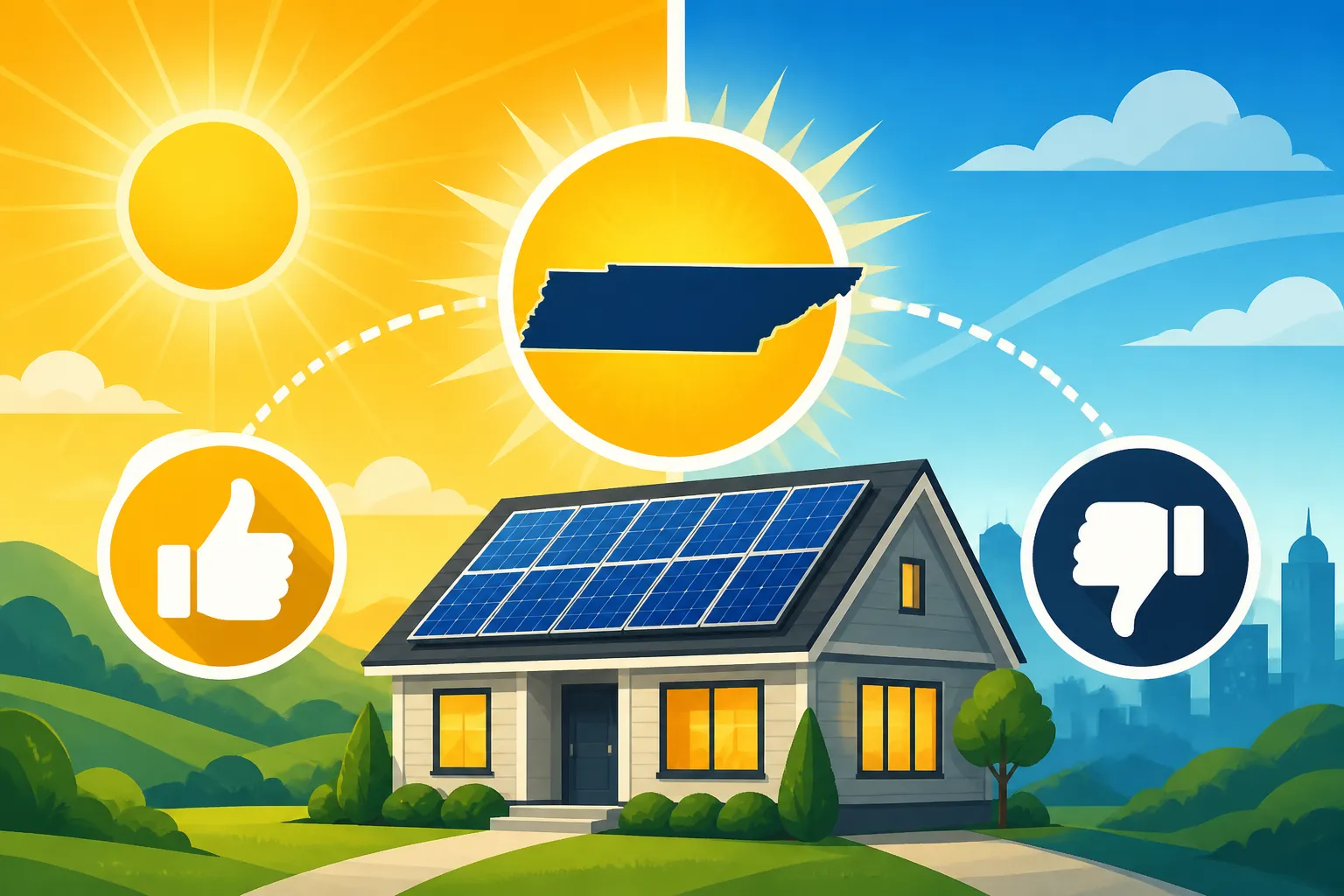
After considering all the angles – the lower electricity rates, the avoided-cost net metering, the federal tax credit, and the property tax exemption – you might still be wondering: "Is solar truly right for my home in Tennessee?" It's a valid question, and the answer isn't the same for everyone.
Who Benefits Most from Solar in Tennessee
Let's be realistic. Solar isn't a magic bullet for every single home, especially in a market like Tennessee. However, it's an excellent investment for specific types of homeowners:
- Long-Term Homeowners: If you plan to stay in your Tennessee home for 10-15 years or more, you'll be able to fully realize the system's payback period and enjoy many years of free or significantly reduced electricity bills afterward. The longer you own your system, the greater your total savings.
- High Energy Users: Even with relatively lower electricity rates, if your family uses a lot of power (think large homes, electric vehicles, older HVAC systems, or simply a big household), your monthly utility bills can still be substantial. Solar offers a direct way to curb these costs dramatically, leading to quicker returns.
- Those Seeking Energy Independence and Stability: For many, the financial savings are just one part of the equation. There's immense peace of mind in knowing you're generating your own power, reducing your carbon footprint, and insulating yourself from unpredictable utility rate hikes. If you value environmental stewardship and energy security, solar definitely holds more appeal.
- Homes with Good Solar Exposure: Unsurprisingly, homes with unshaded, south- or west-facing roofs are prime candidates for solar. Maximizing sun exposure ensures your panels generate as much electricity as possible, accelerating your savings.
Steps to Take Before Going Solar
If you're leaning towards saying "yes" to solar, here are some actionable steps to take to ensure a smooth and successful transition:
- Assess Your Energy Usage: Before anything else, understand your current electricity consumption. Review your past 12 months of utility bills to get an accurate average. This will help you and your installer size the system correctly.
- Get Multiple Quotes: I can't stress this enough. Reach out to several different solar companies in your area. Don’t just look at the bottom line; compare equipment, warranties, financing options, and the installer's experience. Companies like Modernize can streamline this process by connecting you with trusted local installers.
- Understand All Costs and Incentives: Ensure your quotes clearly break down the total system cost, the estimated federal tax credit benefit, and any local utility specific incentives or charges (like interconnection fees). Don't forget to factor in the Solar Property Tax Exemptions by State which applies statewide in Tennessee!
- Evaluate Your Roof: Make sure your roof is in good condition and has at least 10-15 years of life left. If not, consider a roof replacement before going solar. You don't want to remove and reinstall panels just a few years down the line. Check out Do I Need a New Roof Before Solar? for more details.
- Review Financing Options: Whether it's a cash purchase, a solar loan, or even considering if a lease or PPA makes sense for your specific situation (though purchasing typically offers the best ROI), fully understand the terms and long-term implications of each. It's important to understand Cash vs Financing Solar: Which Saves More?.
The Environmental and Personal Impact
Beyond the dollars and cents, going solar in Tennessee contributes to a greener future. Every kilowatt-hour you generate from the sun reduces your reliance on fossil fuels, cutting down on carbon emissions and improving air quality for everyone in the Volunteer State. There's a profound sense of satisfaction that comes with producing your own clean energy, knowing you're making a positive impact on the environment and setting a great example for your community. It's a tangible step towards a more sustainable lifestyle that many homeowners find deeply rewarding, irrespective of the financial calculations.
Disclaimer
Please remember that the information provided in this guide is for educational purposes only and should not be considered financial or tax advice. Solar incentives, utility policies, and electricity rates can change. We highly recommend consulting with qualified solar professionals, tax advisors, and your local utility provider to get the most accurate and up-to-date information for your specific situation.