What States Still Have Full Retail Net Metering?
Homeowners across the country are facing a frustrating reality: utility companies are increasingly slashing the value of the energy your solar panels produce. It feels like a bait-and-switch when you invest in a sustainable future only to find out your neighbor is getting a 1:1 credit for their excess power while your utility offers you pennies. This guide solves that confusion by identifying exactly which states still offer full retail net metering in 2026 and how you can lock in your savings before the rules change.
Understanding the Battle Over Full Retail Net Metering
If you have spent any time lurking in solar forums or talking to neighbors in places like Phoenix or Sacramento, you have heard the term "net metering" tossed around like a political football. At its simplest, full retail net metering is the gold standard for homeowners. It means that for every kilowatt-hour (kWh) of solar energy you send back to the grid, the utility credits you the exact same amount they would charge you to buy that energy back. It is essentially using the power grid as a free giant battery.
However, the landscape is shifting rapidly. Many utility giants argue that solar owners are not paying their fair share for the upkeep of the wires and poles, leading to a wave of "Net Billing" or "Avoided-Cost" policies. When you are looking into How Much Can You Save With Solar Panels? it is vital to know if your state still treats your energy as an equal trade. Without a 1:1 credit, your "payback period"—the time it takes for the system to pay for itself—can stretch from seven years to twelve or more.
Why Retail Rates Matter for Your Monthly Budget
The difference between a retail rate and a wholesale rate might seem like a few cents, but over a twenty-five-year period, it represents thousands of dollars. In a state with full retail net metering, your meter literally spins backward. If you produce 1,000 kWh and use 1,000 kWh in a month, your bill for energy is zero. In states that have moved away from this, the utility might charge you 20 cents for the power you take at night but only credit you 5 cents for the power you gave them at noon.
This "valuation gap" is the primary reason why homeowners are feeling squeezed. When you're comparing quotes through a service like Modernize, you’ll notice that installers in "1:1 states" focus on panel efficiency, while installers in "Net Billing states" focus heavily on battery storage. Understanding Net Metering Explained: How It Works by State is the first step in knowing which equipment you actually need to buy to avoid being overcharged by your local utility.
The States Still Offering the Gold Standard
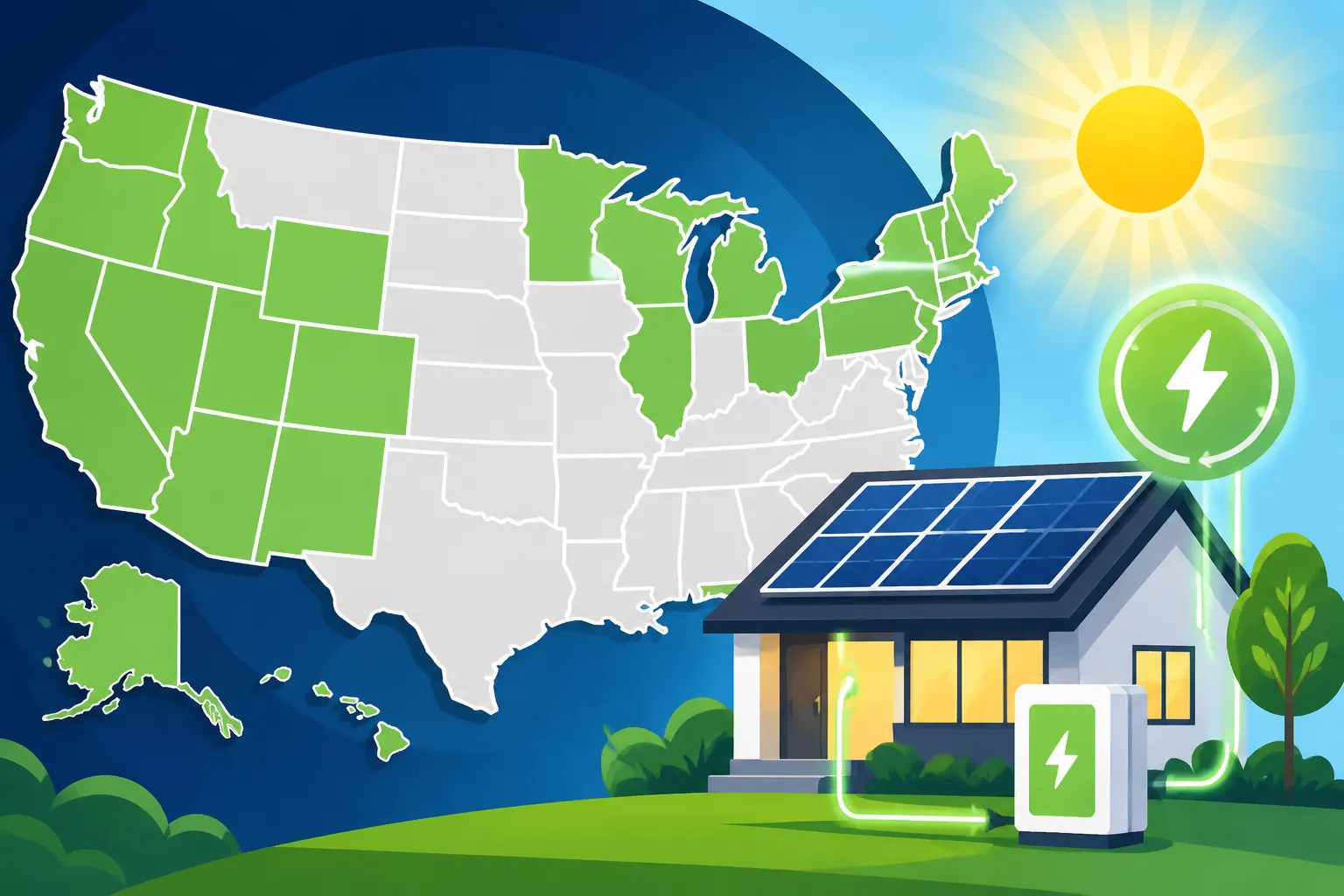
While many states have succumbed to utility lobbying, a dedicated group of states still recognizes the full value of residential solar. These states are often those with aggressive renewable energy goals or strong consumer protection laws. If you live in one of these areas, the financial argument for going solar is significantly stronger than in states like California or Florida, which have seen major policy shifts.
The Reliable Northeast Corridor
The Northeast remains a stronghold for solar-friendly policies, largely because these states are trying to reduce their reliance on aging infrastructure and expensive natural gas. Pennsylvania, for instance, still maintains a robust net metering policy that has helped thousands of families in suburbs from West Chester to Allentown stabilize their energy costs. If you are wondering Is Solar Worth It in Pennsylvania? the answer is a resounding yes, largely due to this 1:1 credit.
New Jersey and Maryland are also key players. While New Jersey has transitioned through various incentive structures like the SREC-II program, the underlying principle of fair compensation for solar exports has remained relatively intact for residential users. Homeowners in Baltimore or Bethesda can look at the Maryland Solar Incentives & SREC Guide to see how net metering pairs with other credits to create a very fast return on investment. These states understand that decentralized power makes the grid more resilient during the humid summer peaks.
The Midwest and Mountain Strongholds
Moving toward the center of the country, Ohio and Colorado stand out as beacons for solar autonomy. Ohio’s rules generally require investor-owned utilities to offer net metering at the energy-only component of the retail rate, which, while not always a "perfect" 1:1 including every single line charge, is vastly superior to the avoided-cost rates found elsewhere. Meanwhile, if you check the Solar Panel Cost in Colorado you will find that the state's commitment to net metering makes those systems some of the most profitable in the nation, especially for residents in Denver and Fort Collins who deal with high mid-day sun.
Illinois is another fascinating case. Through programs like Illinois Shines, the state has aggressively pushed for solar adoption. While there have been ongoing discussions about when the "net metering cap" will be hit, many residents still have access to favorable terms. For a deeper dive into the specific math of that region, checking What Is the Illinois Solar Incentive in 2026? can give you the most current thresholds for utility participation.
| State | Policy Type | 2026 Status | Notes |
|---|---|---|---|
| Pennsylvania | Full Retail | Active | Strong 1:1 credit for all major utilities. |
| Ohio | Retail (Energy) | Active | Includes generation and transmission components. |
| Colorado | Full Retail | Active | Excellent for high-altitude production. |
| Maryland | Full Retail | Active | Combined with high SREC values. |
| New Jersey | Transitioning | Active | Moving toward successor programs but still favorable. |
| Illinois | Full Retail | Limited | Subject to capacity caps; check with local utility. |
| Wisconsin | Mixed | Varies | Some utilities offer 1:1, others use "Inflow-Outflow." |
The Shift Toward Net Billing and NEM 3.0
It would be irresponsible not to talk about the "California effect." As the leader in solar, what happens in California often ripples across the country. The state recently moved to a policy known as NEM 3.0, which effectively ended full retail net metering for new customers. Instead, they use a complex "Net Billing" structure where the credit for exported energy is based on an "Avoided Cost Calculator." This can result in credits that are 70% to 80% lower than the retail rate.
What Is NEM 3.0 and Why Should You Care
If you are a homeowner in San Diego or San Francisco, What Is NEM 3.0 (California Net Billing)? is likely a term you’ve heard with some dread. This policy change was a massive win for utilities like PG&E and a blow to the "meter spinning backward" dream. The goal was to encourage homeowners to install batteries, shifting the burden of energy storage from the utility to the individual.
While this makes the ROI calculation harder, it doesn't make solar "worthless." It simply changes the strategy. By consulting with a pro from the Modernize network, you can learn how to "self-consume" your power. Instead of sending excess energy to the grid for a low credit, you store it in a battery and use it at night when the utility would normally charge you the highest peak rates. This strategy is becoming the blueprint for states like Arizona and Hawaii, which have already moved away from traditional net metering.
How to Maximize Savings Regardless of Your State
If you find yourself in a state that has already ditched 1:1 net metering, don't lose hope. The technology has evolved to meet these challenges. You are no longer at the total mercy of the utility's credit rates if you design your system with modern "smart" features. Using a resource like Modernize to find vetted experts can ensure you don't over-buy panels that export too much energy for too little profit.
The Role of Battery Storage
In a world without full retail net metering, a battery is no longer a luxury; it is a financial tool. When your utility refuses to give you a fair price for your solar power, you simply stop giving it to them. You store that noon-time sunshine in a lithium-ion or saltwater battery and discharge it during the "Golden Hour" when electricity prices are at their highest.
Furthermore, there are still significant Solar Battery Incentives in 2026 that can help offset the cost of adding storage to your system. Some states even offer "Demand Response" programs where the utility pays you to tap into your battery during grid emergencies. This creates a new way to "make money" with solar that doesn't rely on the traditional net metering model. Modernize can help bridge that gap by connecting you with installers who specialize in these high-tech, battery-coupled systems.
Choosing the Right Installer for Your Policy Landscape
The most common mistake homeowners make is hiring an out-of-state "trunk slammer" who doesn't understand local utility tariffs. Solar rules are hyper-local. A salesperson might promise you a zero-dollar bill based on old rules, but if your utility just switched to net billing, those promises are empty.
When you are ready to move forward, knowing How to Choose a Solar Installer who is an expert in your specific utility’s interconnection agreement is vital. They should be able to show you a line-by-line breakdown of how much energy you will export and exactly what that credit will look like on your November bill versus your July bill. If they can't explain the "Avoided Cost Rate" or the "Distribution Charge," they aren't the right partner for you.
Is Solar Still Worth It Without Full Retail Net Metering
The short answer is yes, but the "why" has changed. We are moving from an era of "selling power" to an era of "offsetting costs." Even if you only get a partial credit for your exports, every kilowatt-hour you produce and use yourself is a kilowatt-hour you didn't have to buy from a utility that is likely raising its rates by 5% to 10% every year.
If you are sitting in a state like Florida or Texas and wondering Is Solar Worth It if I Don't Have Net Metering? you have to look at the long-term hedge against inflation. Energy prices are not going down. By locking in your cost of power today—even if you have to add a battery to make the math work—you are protecting your household budget for the next three decades. The peace of mind that comes from knowing your lights will stay on when the grid fails and your bill will stay low when rates spike is something a utility credit can't fully quantify.
Disclaimer
This guide is for informational purposes only and does not constitute financial, legal, or tax advice. Solar policies, net metering rules, and utility rates are subject to frequent changes by state legislatures and public utility commissions. Always verify current local regulations with a qualified solar professional or your local utility provider before making an investment.