Is the SolarEdge Home Battery Worth It?
The thought of losing power during a major storm or facing ever-increasing utility bills can be incredibly frustrating, leaving many homeowners feeling powerless and constantly stressed about their energy supply. This guide will meticulously break down the SolarEdge Home Battery, exploring its features, benefits, potential drawbacks, and ultimately help you determine if this energy storage solution is a worthwhile investment for your home and peace of mind.
Understanding the SolarEdge Home Battery System
When you're looking into solar energy, you quickly realize that while panels generate power, storing that power for when you truly need it – like at night, during peak pricing hours, or when the grid goes down – is a game-changer. That's where a solar battery like the SolarEdge Home Battery comes into play. It’s not just a standalone battery; it’s an integral part of a larger, intelligent energy ecosystem designed by SolarEdge, one of the major players in the inverter market.
Seamless Integration with the SolarEdge Ecosystem
One of the most compelling aspects of the SolarEdge Home Battery is its tight integration. Unlike some universal batteries that can be added to almost any solar setup, the SolarEdge Home Battery is specifically engineered to work harmoniously with SolarEdge's own inverters and energy management platform. This means if you already have a SolarEdge HD-Wave or Energy Hub inverter, adding their battery is typically a very smooth process. The system is designed to communicate effortlessly, optimizing energy flow between your solar panels, the battery, and your home's electrical panel. This "one-stop-shop" approach can simplify installation, streamline warranties, and provide a unified monitoring experience through their user-friendly MySolarEdge app, which many homeowners appreciate for its comprehensive data and control features.
Key Specifications and Capacities
The SolarEdge Home Battery comes in various capacities, typically starting around 9.7 kilowatt-hours (kWh) and offering modular expansion to larger sizes, often up to 23 kWh or more with multiple units. This flexibility is really important because not every home has the same energy needs or backup requirements. For example, a smaller home might find a single 9.7 kWh unit perfectly adequate for evening use and essential circuit backup, while a larger household or one with higher energy demands during an outage might opt for two or three units to achieve a more robust backup solution.
Power output is another crucial specification. The battery provides both continuous and peak power, which dictates how many appliances it can run simultaneously and if it can handle momentary surges from things like a refrigerator compressor starting up. The specific power ratings vary by model and configuration, but generally, SolarEdge batteries are designed to support critical loads in your home, ensuring your lights, fridge, internet, and other essentials stay on. You'll want to discuss these specific numbers with your installer to ensure the battery size and power output align with your personal energy goals. You can also explore how different options compare by reading about the Solar Battery Cost: Full Breakdown to get a better sense of overall investment.
The Benefits of a SolarEdge Home Battery
Deciding to invest in a solar battery is a big step, and for many, the benefits truly outweigh the initial cost, particularly when you consider the long-term advantages it brings. The SolarEdge Home Battery is designed to address some of the most pressing concerns homeowners have about their energy supply and usage.
Enhanced Energy Independence and Backup Power
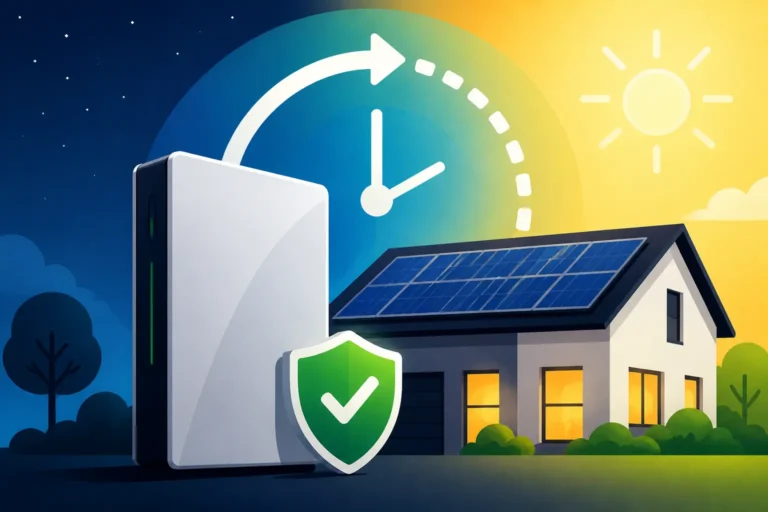
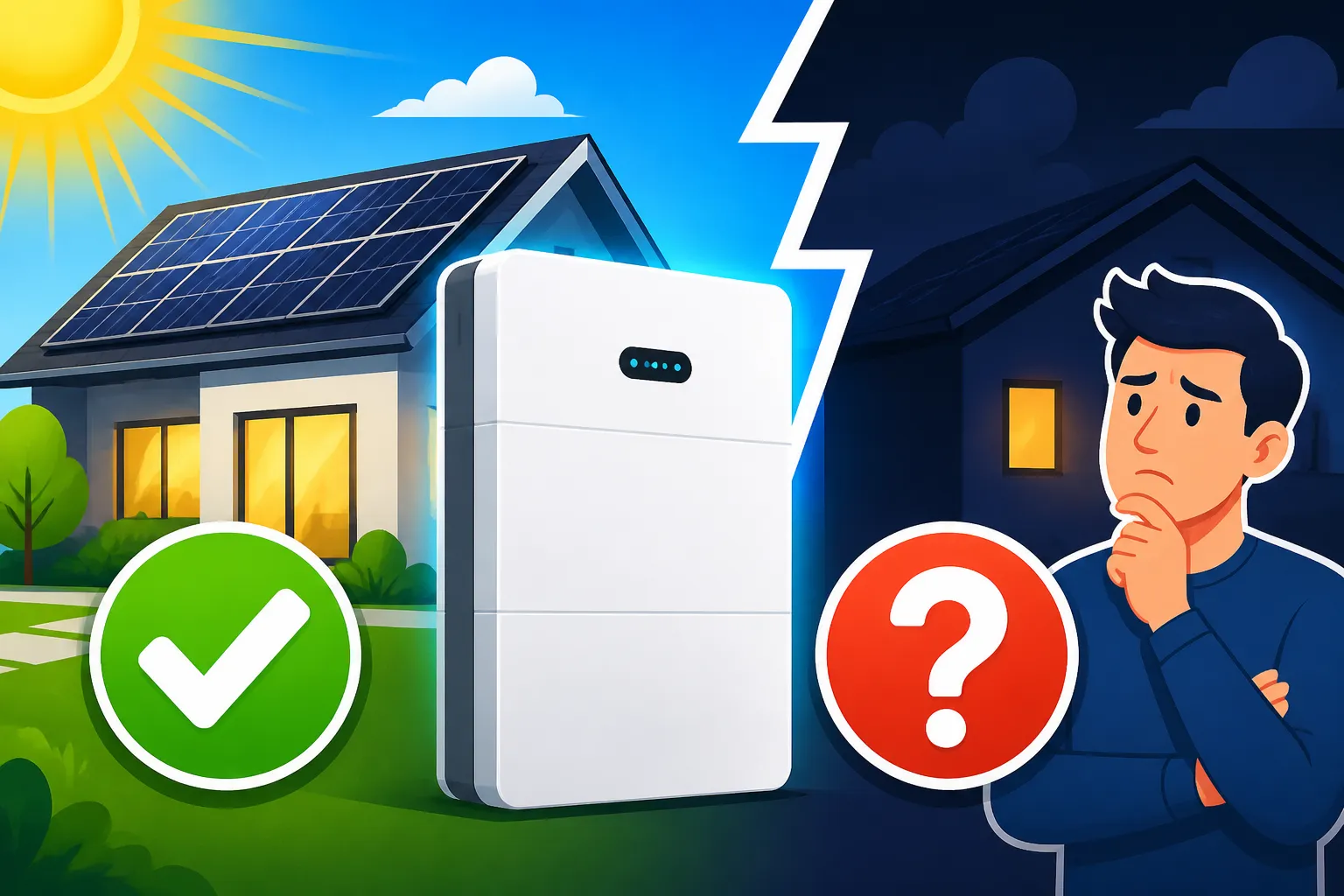
Let's face it, power outages are a nightmare. Whether it's a summer thunderstorm knocking out the grid in Florida, a winter ice storm hitting the Northeast, or planned public safety power shutoffs in fire-prone regions like California, losing power is disruptive and can even be dangerous. A key benefit of the SolarEdge Home Battery is its ability to provide reliable backup power. When the grid goes down, the battery seamlessly kicks in, often so quickly you barely notice the transition. This means your critical appliances – your refrigerator, lights, internet router, and charging stations for phones – continue to run, giving you a real sense of security and independence from grid vulnerabilities. Imagine not having to scramble for flashlights or worrying about food spoilage during a multi-hour outage; that peace of mind is invaluable for many homeowners.
Maximizing Solar Self-Consumption
Another huge advantage, especially in areas with less favorable net metering policies (like California's NEM 3.0), is the ability to maximize your solar self-consumption. Historically, net metering allowed you to send excess solar energy back to the grid for credits, essentially using the grid as a giant battery. However, as net metering rules change and compensation rates for exported power decrease, storing your own excess solar generation becomes far more financially appealing.
With a SolarEdge Home Battery, instead of sending your midday solar surplus to the utility for a low credit, you can store it in your battery. Then, in the evening when your solar panels aren't producing, you draw from your battery instead of buying expensive electricity from the utility during peak demand hours. This strategy can significantly reduce your reliance on grid electricity purchases, boosting your overall savings and making your solar investment even more effective. For a deeper dive into how this works, check out our guide on Net Metering Explained: How It Works by State.
Smart Energy Management and Monitoring
The SolarEdge Home Battery isn't just a dumb box that stores power; it's part of an intelligent energy management system. Through the MySolarEdge monitoring platform, accessible via a web portal or a handy app on your phone, you gain complete visibility and control over your home's energy flow. You can see in real-time how much solar power your panels are generating, how much energy your home is consuming, how much is being stored in or discharged from your battery, and how much you're importing or exporting from the grid.
This level of detail allows you to make informed decisions about your energy usage. You can often set customized charging and discharging schedules to take advantage of time-of-use (TOU) rates, telling the battery to charge when electricity is cheap and discharge when it's expensive. Some advanced features even allow the system to learn your consumption patterns and optimize itself automatically. This smart management is key to maximizing both your savings and your energy independence.
Potential Drawbacks and Considerations
While the allure of energy independence and lower bills is strong, it's crucial to look at the full picture when considering a SolarEdge Home Battery. Like any significant home improvement, there are important factors and potential downsides that you should be aware of before making a decision. No system is perfect for every single household, and understanding these considerations will help you determine if it's the right fit for your unique situation.
Initial Investment Cost
Let's not sugarcoat it: solar batteries represent a significant upfront investment. Adding a SolarEdge Home Battery can increase the overall cost of your solar installation by thousands of dollars, sometimes even tens of thousands, depending on the number of units and total storage capacity you need. While the long-term savings and peace of mind from backup power are undeniable, that initial price tag can be a barrier for many homeowners. It's a factor that requires careful financial planning and a clear understanding of your budget.
However, it's also worth remembering that various incentives and programs might help offset this cost. Many states offer their own solar battery incentives, and there could be local utility rebates available. It's always a good idea to research Solar Battery Incentives in 2026 to see what financial assistance might be available in your area, as these can significantly improve the return on investment.
System Compatibility Requirements
As mentioned earlier, the SolarEdge Home Battery is designed to integrate seamlessly with SolarEdge inverters. This is a huge advantage if you're already a SolarEdge customer or are planning a new SolarEdge solar installation. However, if you currently have a different brand of solar inverter – say, Enphase, SMA, or another manufacturer – adding a SolarEdge battery usually isn't a simple plug-and-play operation. You might need to replace your existing inverter with a compatible SolarEdge model, which adds complexity and cost to the upgrade. This can be a deal-breaker for homeowners who are happy with their current non-SolarEdge setup and don't want to overhaul their entire system just to add battery storage. It's an important compatibility consideration that installers will highlight early in the assessment process.
Limited Full Home Backup for Large Loads
While the SolarEdge Home Battery provides excellent backup for critical loads, it's important to set realistic expectations about what it can power during an extended outage. A typical 9.7 kWh battery, even with a strong power output, is generally not designed to run your entire home, including high-energy appliances like central air conditioning, electric heaters, or electric vehicle chargers, for prolonged periods. For instance, running a central AC unit continuously can drain a single battery unit in just a few hours.
If your primary goal is to achieve true "whole-home" backup for days on end, you'll likely need to invest in a much larger, multi-battery system or consider augmenting your setup with other solutions, like a home generator. The SolarEdge Home Battery excels at keeping essentials running and managing daily energy usage, but understanding its limitations regarding massive loads during extended grid failures is crucial. This is a common point of misunderstanding, so always clarify your specific backup needs with your solar installer to ensure your expectations align with the system's capabilities.
Is the SolarEdge Home Battery Worth It For You?
The question of whether the SolarEdge Home Battery is "worth it" isn't a simple yes or no; it really depends on your individual circumstances, priorities, and location. What makes it a fantastic investment for one family might make it less appealing for another. Let's dig into the scenarios where this battery truly shines and how you can evaluate it against other options.
Scenarios Where It Shines
The SolarEdge Home Battery truly comes into its own for specific homeowner profiles and in particular energy environments. If you live in an area prone to frequent power outages, such as parts of Texas hit by extreme weather or hurricane-prone coastal regions, the peace of mind offered by reliable backup power can be priceless. Knowing your refrigerator will keep running and your lights will stay on when the neighborhood goes dark is a huge factor.
Similarly, if your utility company has implemented time-of-use (TOU) rates, where electricity costs significantly more during peak evening hours, a battery becomes an excellent financial tool. By storing your inexpensive midday solar power and discharging it during those expensive peak times, you can drastically reduce your electricity bills. This strategy is particularly effective in places like California, where the shift to NEM 3.0 has made self-consumption and battery storage almost essential for maximizing solar savings. You might find our article on How Does California Net Billing (NEM 3.0) Affect Savings? very insightful.
Furthermore, if you're looking to minimize your carbon footprint and reduce your reliance on the grid for environmental reasons, a solar battery helps you maximize your renewable energy usage. It allows you to become more energy independent and resilient, aligning with a lifestyle focused on sustainability.
Comparing Against Other Battery Solutions
When considering the SolarEdge Home Battery, it's wise to compare it with other leading options on the market. The two primary competitors you'll often encounter are the Tesla Powerwall and the Enphase IQ Battery. Each has its own strengths and ideal use cases.
The Tesla Powerwall, for instance, is well-known for its sleek design, robust capacity, and strong integration with the Tesla ecosystem, including Tesla solar panels and electric vehicles. It's often favored by homeowners looking for a comprehensive, high-capacity backup solution. The Tesla Powerwall 3 Review & Cost can give you more details if you're considering that option.
Enphase, on the other hand, specializes in microinverter technology, and their IQ Batteries integrate seamlessly with their microinverter-based solar systems. Enphase systems are known for their modularity and per-panel optimization, which can be beneficial for shaded roofs or complex installations. You can learn more about the Enphase IQ Battery Review & Cost to see if that aligns better with your solar setup.
The SolarEdge Home Battery's key differentiator is its deep integration with SolarEdge's DC-optimized inverter technology. This means your solar panels and battery are all speaking the same "language" with the inverter, potentially leading to higher overall system efficiency by minimizing energy conversions. It's less about which one is "best" universally and more about which one integrates best with your existing or planned solar infrastructure and meets your specific energy needs.
| Feature | SolarEdge Home Battery | Tesla Powerwall 3 | Enphase IQ Battery 5P |
|---|---|---|---|
| Typical Capacity | 9.7 kWh (modular up to ~23 kWh) | 13.5 kWh usable | 5.0 kWh (modular for any size) |
| Power Output | 5 kW continuous / 7.5 kW peak (for 9.7 kWh model) | 5.75 kW continuous / 10 kW peak | 3.84 kW continuous / 7.68 kW peak |
| Integration | Seamless with SolarEdge inverters (DC-optimized) | Integrated inverter, compatible with Tesla Solar | Seamless with Enphase microinverters (AC-coupled) |
| Backup Capability | Partial to Whole Home (with multiple units & critical loads panel) | Whole Home (with Backup Gateway) | Partial to Whole Home (with IQ System Controller) |
| Smart Features | MySolarEdge app, TOU optimization, smart energy management | Tesla app, Storm Watch, TOU optimization | Enphase App, TOU optimization, grid services enabled |
| Warranty | 10 years | 10 years | 15 years |
Note: Specific capacities and power outputs can vary by model year and configuration. Always verify current specifications with an authorized installer.
Factors to Consider Before Buying
Before you commit to a SolarEdge Home Battery, ask yourself a few critical questions:
- What are your primary goals? Is it purely backup power, maximizing self-consumption to save money, or both?
- What are your local utility rates and policies? Are there high time-of-use charges? What are the net metering rules?
- How often do you experience power outages, and for how long? This will dictate how much backup capacity you truly need.
- What is your current or planned solar setup? If you don't have SolarEdge, are you willing to switch?
- What is your budget? Can you comfortably afford the upfront cost, or are incentives crucial for making it viable?
Thinking through these points will help you narrow down your options and have a more productive conversation with solar professionals. It’s a bit like buying tools on Amazon—you need to know what job you’re doing to pick the right one.
Real-World Expectations and Performance
Once you've installed a SolarEdge Home Battery, the real-world experience is where the rubber meets the road. It’s one thing to talk about specifications and benefits, but it’s another to live with the system day in and day out, especially during those critical moments when the power goes out.
What to Expect During Power Outages
During a grid outage, the transition to battery power with a SolarEdge system is generally very fast – often within milliseconds. This means that for most standard appliances, you might not even notice a flicker. However, it's important to understand what happens if the outage is prolonged. Your battery has a finite amount of energy, and its runtime depends on its capacity and how much power your home is drawing.
For example, if you have a 10 kWh battery and your essential loads (lights, refrigerator, Wi-Fi) draw an average of 1 kW per hour, you could theoretically run for about 10 hours. However, if you add in a well pump or other larger appliances, that runtime will decrease significantly. If your solar panels are still producing during the day, they can recharge the battery, extending your backup duration, but this is only possible if the sun is shining. During cloudy days or extended nighttime outages, you're relying solely on the stored energy. This is why properly sizing your battery to your "critical loads" – the absolute essentials you want to keep running – is paramount. Installers will typically help you identify these circuits and ensure they are connected to your battery's backup panel.
Long-Term Savings and ROI
The long-term financial return on investment (ROI) for a SolarEdge Home Battery comes from several avenues. First and foremost are the avoided costs of grid electricity, particularly during those expensive peak rate periods in time-of-use zones. By storing your own solar power, you're buying less from the utility. Over years, as electricity rates continue to climb (which they almost inevitably do), these savings can compound significantly.
Secondly, the value of avoided outage costs is harder to quantify but very real. Think about potential food spoilage, lost productivity if you work from home, or the expense of running a noisy, less environmentally friendly gas generator. A battery mitigates these risks. While the initial investment is substantial, when you factor in current incentives, projected electricity rate increases, and the added home value that a comprehensive solar-plus-storage system can bring, the payback period becomes clearer. Many homeowners find that their system pays for itself over 8-12 years, and then provides free or deeply discounted power for the rest of its long lifespan. For more information on this, you can look into how to calculate your Solar Panel Payback Period Explained.
Ultimately, the SolarEdge Home Battery isn't just a piece of equipment; it's an investment in your home's energy future, offering a blend of financial savings, increased independence, and genuine peace of mind.
Disclaimer
Please note that this article provides general information and should not be considered professional financial or energy advice. Specific costs, savings, incentives, and system performance can vary significantly based on your location, utility provider, home energy consumption, system design, and the ever-changing policy landscape. Always consult with qualified solar professionals and financial advisors to get personalized recommendations and detailed quotes for your specific situation.