How Much Power Does a Solar Panel Produce?
It's completely normal to feel a bit lost when you first start looking into solar panels. You hear terms like "watts," "kilowatts," and "kilowatt-hours," and it can feel like you need a science degree just to understand what kind of power you're actually getting. The truth is, figuring out exactly how much power a solar panel produces isn't always as straightforward as reading a label. This guide is here to demystify all of that, helping you understand the real-world power output of solar panels and what that means for your home.
Understanding Solar Panel Wattage and Output
When you first start looking at solar panels, you'll immediately notice that they all come with a wattage rating – maybe 350 watts, 400 watts, even 450 watts or more. This number is your starting point, but it's crucial to understand what it actually represents and how it translates to the electricity that powers your home. It’s not just a single, static number; it’s a theoretical maximum under very specific conditions, and real-world performance will always vary.
Nameplate vs. Actual Power Output
The wattage number you see on a solar panel's specification sheet, often called its "nameplate rating," is essentially its maximum potential output under perfect lab conditions. Think of it like the horsepower rating on a car – it's what it could do on a perfectly smooth test track, not necessarily what it will do on your daily commute with traffic and hills. For solar, these "perfect lab conditions" are known as Standard Test Conditions (STC).
In reality, your solar panels will rarely, if ever, operate at their full nameplate capacity. Factors like the intensity of the sun, the temperature of the panels, and even the cleanliness of the glass will all play a role in how much power is actually generated. So, while a 400-watt panel is indeed designed to produce 400 watts, it will typically produce less than that in practical, everyday scenarios. It's a bit like buying a bag of chips that says "10 servings" – you know in your heart it's probably going to be closer to two! This discrepancy is a common frustration for homeowners, but it’s entirely normal and expected in the industry.
Standard Test Conditions STC and NOCT
To help standardize how solar panel power is measured and compared, the industry uses two main sets of test conditions: Standard Test Conditions (STC) and Nominal Operating Cell Temperature (NOCT). Knowing the difference helps you interpret specifications more accurately.
STC are the most common conditions used for the nameplate wattage rating. These are defined as:
- Irradiance: 1,000 watts per square meter (W/m²). This is roughly equivalent to a very sunny day at noon.
- Cell Temperature: 25 degrees Celsius (77 degrees Fahrenheit).
- Air Mass: 1.5 AM (a measure of the path length of sunlight through the atmosphere).
While STC provides a consistent benchmark for comparison between different panels, these conditions are rarely met in the real world. Your panels often get much hotter than 25°C, especially on a sunny roof in places like Arizona or Florida. This is where NOCT comes in.
NOCT aims to simulate more realistic, albeit still idealized, outdoor operating conditions:
- Irradiance: 800 W/m² (a slightly less intense sun).
- Ambient Air Temperature: 20 degrees Celsius (68 degrees Fahrenheit).
- Wind Speed: 1 meter per second (2.2 mph), allowing for some cooling.
The power output measured under NOCT will always be lower than under STC, providing a more conservative and often more realistic estimate of a panel's performance in typical outdoor conditions. When comparing panels, it's worth checking both STC and NOCT ratings, as the NOCT can give you a better sense of how a panel might perform on your roof day-to-day.
Typical Daily and Annual Production
So, given all these variables, what can you realistically expect from a solar panel in terms of daily and annual production? It's not a fixed number, but we can talk about averages. A single 400-watt solar panel, under optimal conditions for a few hours a day, might generate anywhere from 1.5 to 2.5 kilowatt-hours (kWh) of electricity per day. This can vary wildly depending on where you live. For instance, a panel in sunny Southern California will likely produce more daily power than the same panel in Seattle.
To put this into perspective for a whole system, let's consider a typical residential solar array. Many homes aim for a 6 to 8 kilowatt (kW) system, which usually involves around 16 to 24 individual 400-watt panels. Such a system could generate anywhere from 7,000 to 12,000 kWh annually, depending heavily on your location's sunlight availability. For a deeper dive into how much electricity you might produce, you might want to read our article on How Many Solar Panels Do I Need for My Home?. This annual figure is crucial because it's what installers use to offset your yearly utility bill. Your specific production will be influenced by everything from the weather patterns in your state to the exact angle and direction your roof faces.
Factors Influencing Real-World Solar Production
Understanding the factors that influence solar panel production is key to setting realistic expectations and maximizing your system's output. It's not just about the panels themselves; it's about their environment, how they're installed, and even how well they're maintained. Many homeowners are surprised by just how many variables are at play beyond simply having "sunshine."
Sunlight and Shading
This might seem obvious, but the amount and quality of sunlight your panels receive are the primary drivers of their power production. It's not just about whether the sun is "out"; it's about how directly and consistently it hits your panels.
Geographic Location: If you live in a state like Arizona, with its abundant sunshine, your panels will naturally produce more power than if you're in a cloudier region like the Pacific Northwest. The number of "peak sun hours" per day in your area is a critical metric. For example, Phoenix, Arizona, typically sees around 6.5 peak sun hours per day, while Buffalo, New York, might only get 4.
Time of Day and Season: Solar production peaks around noon or early afternoon when the sun is highest in the sky. During mornings and late afternoons, the sun's rays are at a lower angle, passing through more atmosphere, which reduces intensity. Similarly, panels produce more power in the long, bright days of summer compared to the shorter, cloudier days of winter. This seasonal variation means your summer electricity bill offset will be much higher than in winter, which is perfectly normal.
Physical Obstructions and Shading: Trees, neighboring buildings, chimneys, or even dormers on your own roof can cast shadows on your panels. Even partial shading on just one panel in a string can significantly reduce the output of the entire string if you're using a traditional string inverter setup. This is why many modern systems use microinverters or power optimizers, like those from Enphase or SolarEdge, which allow each panel to operate independently, minimizing the impact of shading. During your initial site survey, installers will meticulously map out any potential shading issues.
Temperature and Weather
It’s a common misconception that hotter means better for solar panels. While panels need sunlight, excessive heat actually reduces their efficiency.
Heat's Impact: Solar panels are semiconductor devices, and like most electronics, their performance degrades when they get too hot. For every degree Celsius above 25°C (77°F), a typical silicon solar panel's efficiency decreases by about 0.3% to 0.5%. So, on a scorching 95°F (35°C) summer day, your panels could be operating at a few percentage points below their optimal efficiency. This effect is why the NOCT rating (Nominal Operating Cell Temperature) is often considered more realistic for actual energy production than the STC (Standard Test Conditions) rating.
Cloudy Days and Rain: Panels still produce electricity on cloudy days, just less of it. Light overcast conditions might reduce output by 10-25%, while heavy, dark clouds could drop production by 50% or more. Rain, while reducing immediate output, has a beneficial side effect: it naturally cleans your panels, washing away dust and grime that would otherwise accumulate and block sunlight. This natural cleaning can actually improve long-term performance!
Panel Orientation and Tilt
The way your solar panels are positioned on your roof dramatically affects how much sunlight they capture throughout the day and year.
Orientation: In the Northern Hemisphere, south-facing roofs are generally considered ideal for solar panels because they receive the most direct sunlight throughout the day. However, east- or west-facing arrays can also be highly effective. East-facing panels capture more morning sun, which is great for early risers who use a lot of electricity before work. West-facing panels optimize afternoon production, perfect for offsetting evening peaks when people come home and turn on appliances or air conditioning. North-facing roofs are typically the least desirable for solar due to minimal sun exposure.
Tilt Angle: The optimal tilt angle for solar panels generally matches your home's latitude. For example, in a state like Colorado, around 40 degrees might be ideal. This angle allows the panels to capture the most sunlight year-round. However, panels are usually installed flush with your roof's existing pitch, which is often a compromise. Installers will evaluate your roof's pitch and suggest the best layout to maximize production. Sometimes, they might recommend small tilt adjustments if your roof is very flat, but this adds to installation complexity and cost. Understanding these details is part of the process when considering Roof Considerations for Solar Panels.
System Components and Maintenance
Beyond the panels themselves, the other parts of your solar energy system and how well it's cared for also play a significant role in its overall output.
Inverters: These critical devices convert the direct current (DC) electricity produced by your panels into alternating current (AC) electricity that your home appliances use and that the grid accepts. The type of inverter you choose—whether it's a central string inverter, microinverters, or power optimizers—can impact efficiency and how the system handles shading. High-quality inverters have efficiency ratings well over 95%, ensuring minimal energy loss during conversion. For instance, many homeowners weigh options like Enphase vs SolarEdge: Which Inverter Is Better? to find the best fit for their home and specific sun exposure challenges.
Wiring and Installation Quality: Poorly installed wiring, incorrect sizing, or loose connections can lead to resistance and energy loss. A reputable solar installer will ensure all components are correctly sized and installed according to electrical codes, minimizing losses and maximizing safety. The quality of installation is paramount to long-term performance and avoiding costly issues down the line.
Dirt, Dust, and Debris: Over time, dirt, dust, pollen, bird droppings, and leaves can accumulate on your solar panels, blocking sunlight and reducing their output. While rain helps, occasional cleaning, especially in dusty areas or during dry spells, can significantly boost performance. Many homeowners invest in a simple cleaning kit that can be found on platforms like Amazon, or opt for professional cleaning services a couple of times a year. For more on this, check out our guide on Solar Panel Maintenance & Cleaning. Keeping your panels clean is one of the easiest ways to ensure they’re producing as much power as possible.
Calculating Your Home's Solar Power Needs
Before you even think about how many panels you need, you first need to understand your current electricity consumption. It's like going grocery shopping – you wouldn't just grab random items; you'd check your pantry first. Knowing your energy habits is the bedrock of designing an effective solar system that truly meets your needs and financial goals.
Assessing Your Electricity Consumption
The best place to start is your electricity bill. Most utility providers offer a detailed breakdown of your monthly or annual electricity usage, typically measured in kilowatt-hours (kWh).
Reading Your Electricity Bill: Look for sections that show your historical usage. Many bills will display usage data for the past 12 months, allowing you to see seasonal fluctuations. You'll likely notice higher usage in summer due to air conditioning and in winter due to heating (if electric) or extended lighting use. Take the total kWh used over a year and divide it by 12 to get your average monthly consumption. For instance, if you used 12,000 kWh last year, your average is 1,000 kWh per month. This figure is your target for solar production.
Understanding Your Appliances: Beyond the bill, consider which appliances use the most electricity. Air conditioners, electric water heaters, refrigerators, electric stoves, and clothes dryers are often the biggest culprits. If you're planning to replace any of these with more energy-efficient models soon, factor that into your future consumption estimates. You can also use smart home energy monitors, some of which are available on Amazon, to get real-time data on individual appliance usage, giving you a very granular understanding of your energy footprint.
Estimating System Size
Once you know your annual or average monthly kWh consumption, you can start to estimate the size of the solar system you'll need, measured in kilowatts (kW). This involves a bit of math, but don't worry, solar installers do this for a living!
Translating Consumption into Required kW: A general rule of thumb is that a 1 kW solar system, operating under average U.S. sun conditions, will produce roughly 1,200 to 1,500 kWh of electricity annually. However, this varies significantly by location. In a sunny state like California, a 1 kW system might produce closer to 1,500 kWh/year, while in a less sunny state like Ohio, it might be closer to 1,100 kWh/year.
So, if your home uses 12,000 kWh per year, and you're in an area where 1 kW produces 1,300 kWh annually, you'd need approximately a 9.2 kW system (12,000 kWh / 1,300 kWh/kW = 9.2 kW). This estimated system size dictates the number of panels. If you choose 400-watt panels, a 9.2 kW system would require about 23 panels (9,200 watts / 400 watts/panel = 23 panels). Remember that this is an estimate, and a professional site assessment will fine-tune these numbers based on your roof's specifics and local climate. You can explore this further by checking out content related to Solar Panel Cost by System Size (kW).
Considering Future Energy Needs
It’s easy to focus solely on your current electricity usage, but thinking ahead can save you money and headaches in the long run. Our energy needs are constantly evolving, and your solar system should be built with that in mind.
Electrification Trends: Are you considering buying an electric vehicle (EV) in the next few years? Thinking about replacing your gas furnace with a heat pump or an old water heater with an electric model? These changes can dramatically increase your electricity consumption. It's often more cost-effective to install a slightly larger solar system now to accommodate future electrification than to try and expand it later, which can involve additional permitting and installation costs.
Lifestyle Changes: Are you planning a home addition, or will your family grow in the coming years? Even subtle shifts in lifestyle can impact energy use. Discussing these potential future needs with your solar installer is crucial. They can help you design a system that not only meets your present demands but also gives you a buffer for future growth, ensuring your solar investment remains valuable for decades to come.
Comparing Solar Panel Performance and Efficiency
When you're shopping for solar panels, the sheer variety can be overwhelming. Beyond just wattage, terms like "efficiency" and "degradation" pop up, adding layers of complexity. Understanding these concepts is essential to choosing panels that are right for your home, especially considering your budget and roof space.
Panel Efficiency Ratings
Solar panel efficiency is a measure of how effectively a panel converts sunlight into electricity. It's expressed as a percentage, indicating the proportion of the sun's energy that hits the panel and gets turned into usable power.
What Efficiency Means: A panel with 20% efficiency means that 20% of the solar energy hitting its surface is converted into electricity. Modern solar panels typically range from 17% to 23% efficiency, with premium panels sometimes exceeding 23%. For example, high-efficiency brands like Maxeon (formerly SunPower) or REC are known for pushing these boundaries.
Space vs. Output: Why does efficiency matter? Primarily, it's about space. If you have a smaller roof or limited suitable area for panels, higher-efficiency panels are a game-changer. A 400-watt panel with 22% efficiency will take up less physical space than a 400-watt panel with 18% efficiency. This means you can generate the same amount of power with fewer panels, or more power with the same number of panels, optimizing your available roof real estate. If you have ample roof space, a slightly lower efficiency panel might be a more budget-friendly option, as the "cost per watt" often comes down with less efficient panels. For a deeper dive, check out our piece on Solar Panel Efficiency & Degradation Explained.
Monocrystalline vs. Polycrystalline
These are the two most common types of silicon-based solar panels, and understanding their differences can help you make an informed decision.
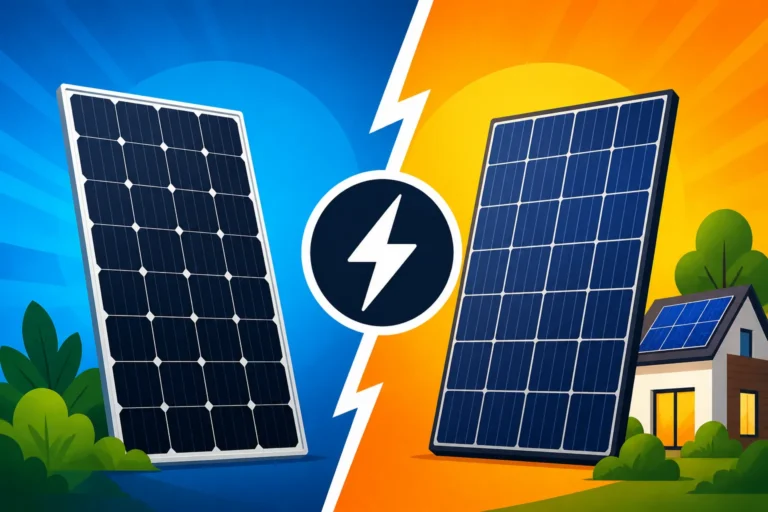
Monocrystalline Panels: These panels are made from a single, continuous crystal structure of silicon, which gives them a uniform, dark black appearance. Because of their purity, monocrystalline panels are generally more efficient (typically 19-23%) and perform better in low-light conditions. They also tend to have a sleeker aesthetic, which homeowners often prefer. The downside is that they are generally more expensive to manufacture and thus cost more per watt. Brands like Maxeon, REC, and Qcells often feature high-quality monocrystalline offerings.
Polycrystalline Panels: These panels are made from multiple silicon fragments melted together, resulting in a slightly bluer hue and a somewhat mottled appearance. The manufacturing process is simpler and less expensive, which translates to a lower price point for consumers. However, they are typically less efficient than monocrystalline panels (usually 17-20%) and may not perform quite as well in very high temperatures. While historically less efficient, advancements are closing the gap, making them a viable and cost-effective option for many homeowners, particularly those with ample roof space.
Degradation Rates and Warranties
Solar panels are built to last, but like any technology, their performance will subtly decrease over time. This is known as "degradation," and understanding it, along with panel warranties, is crucial for assessing long-term value.
What is Degradation? Solar panels typically degrade at a very slow rate, losing a fraction of a percent of their output capacity each year. The industry standard is usually around 0.5% to 0.8% per year. So, a panel with a 0.5% degradation rate would still produce about 87.5% of its original power after 25 years. This slow, predictable decline is factored into system sizing. Reputable brands will openly state their expected degradation rates.
Types of Warranties: Solar panels typically come with two main types of warranties:
- Product Warranty: This covers defects in manufacturing, materials, or workmanship. It usually lasts 10-12 years, though some premium brands offer 25-year product warranties (e.g., REC Alpha Pure or SunPower/Maxeon panels often boast longer product warranties).
- Performance Warranty: This guarantees that the panel will produce at least a certain percentage of its original rated power after a specified number of years, usually 25 years. A common guarantee is 80-85% of original power after 25 years.
When comparing solar panel options, always scrutinize the warranties. A strong product and performance warranty indicates a manufacturer's confidence in their product's longevity and reliability, offering you greater peace of mind for your investment. Our article on Solar Panel Warranties Explained can help you navigate this complex topic.
Here's a quick comparison table for typical solar panel output:
| System Size (kW) | Approximate Number of 400W Panels | Average Daily Production (kWh) | Average Annual Production (kWh) | Estimated Monthly Bill Offset (at $0.15/kWh) |
|---|---|---|---|---|
| 4 kW | 10 | 16-24 | 5,840 – 8,760 | $73 – $109 |
| 6 kW | 15 | 24-36 | 8,760 – 13,140 | $109 – $164 |
| 8 kW | 20 | 32-48 | 11,680 – 17,520 | $146 – $219 |
| 10 kW | 25 | 40-60 | 14,600 – 21,900 | $183 – $274 |
Note: Production estimates are highly variable based on geographic location, shading, weather, and specific panel efficiency. These are general averages for illustrative purposes.
Maximizing Solar Panel Power Production
Once you've made the decision to go solar, you want to ensure your system is working at its absolute best, churning out as much clean electricity as possible. It's not just about installing the panels and forgetting about them; there are proactive steps you can take to maximize your return on investment and energy independence.
Optimal Placement and Design
This is perhaps the most critical stage for maximizing your system's long-term output, and it happens even before installation. A well-designed system takes full advantage of your home's unique characteristics.
Working with Experienced Installers: The expertise of your solar installer is invaluable here. During the site survey, they will use specialized software to analyze your roof's orientation, pitch, and any potential shading issues from trees, chimneys, or neighboring structures. They'll simulate different panel layouts to find the optimal configuration that minimizes shading and maximizes sunlight exposure throughout the day and year. This precise planning can make a difference of hundreds, if not thousands, of kilowatt-hours over the lifespan of your system. You might also find it helpful to look into How to Choose a Solar Installer to ensure you're working with the best.
Considering Panel Upgrades: If your roof space is limited but your energy needs are high, investing in higher-efficiency panels might be a smart move, even if they cost a bit more upfront. These panels can produce more power per square foot, allowing you to generate more electricity from a smaller footprint. Discuss these options thoroughly with your installer to balance cost, aesthetics, and performance.
Regular Cleaning and Monitoring
Even with the best design, some ongoing attention will ensure your panels continue to perform optimally. Think of it like tuning up your car; a little maintenance goes a long way.
Keeping Panels Clean: Dirt, dust, pollen, and bird droppings can accumulate on your panels, creating a film that blocks sunlight and reduces efficiency. While rain helps, especially after a dry spell or if you live in a particularly dusty area (like parts of Texas or California), manual cleaning can significantly boost production. A gentle spray with a garden hose (early morning or late evening to avoid thermal shock) or a soft brush can often do the trick. You can easily find suitable telescopic cleaning brushes and gentle cleaning solutions on Amazon. For more detailed instructions on how to care for your system, refer to our article on Solar Panel Maintenance & Cleaning.
Monitoring Your System's Performance: Most modern solar systems come with monitoring apps or online portals that allow you to track your real-time and historical energy production. Take advantage of this! Regularly checking your output helps you spot potential issues, such as a drop in production due to a shaded area or a malfunctioning panel. Early detection of problems can prevent prolonged underperformance and maximize your savings. Your installer can usually guide you through the monitoring setup.
Adding Solar Batteries
While solar panels produce electricity, they do so most abundantly when the sun is shining. What happens to that power if you're not home or if you don't use it immediately? That's where solar batteries come in, fundamentally changing how you utilize your solar production.
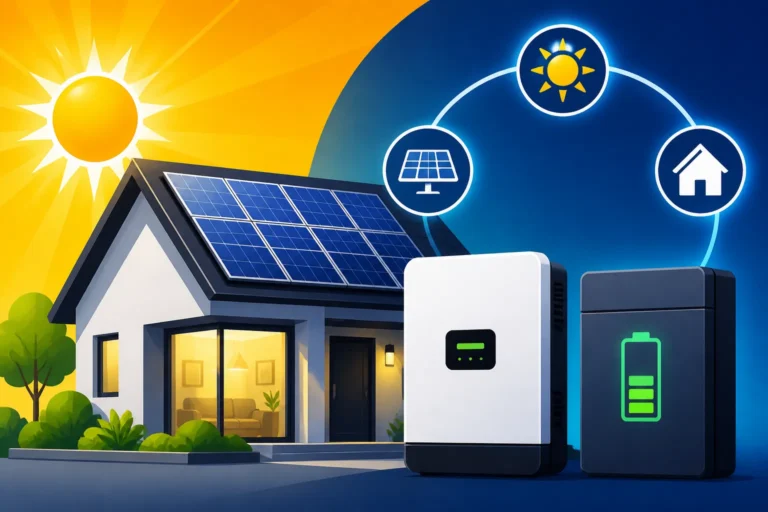
Storing Excess Energy: With a solar battery like a Tesla Powerwall or an Enphase IQ Battery, any excess electricity your panels generate during the day, beyond what your home is currently consuming, gets stored in the battery instead of being sent back to the grid for minimal credit (especially relevant with less favorable net metering policies like California's NEM 3.0). This stored energy can then be used later, such as in the evenings when the sun has set and electricity rates from your utility might be higher. This effectively extends your solar-powered hours and reduces your reliance on grid electricity. You can learn more about this by exploring Do I Need a Battery With Solar?.
Backup Power During Outages: One of the most compelling reasons to add a battery is for backup power. When the grid goes down, a solar-plus-battery system can keep your essential appliances running, providing peace of mind during storms or utility blackouts. Without a battery, most grid-tied solar systems automatically shut down during an outage for safety reasons (to prevent back-feeding the grid while utility workers are trying to repair lines). Integrating a battery helps you maximize your self-consumption of the power your panels produce, even if the utility isn't giving you full credit for sending it back.
Disclaimer
Please remember that the information provided in this guide is for general educational purposes only and should not be considered professional financial, legal, or energy advice. Solar system performance and costs can vary widely based on your specific location, energy usage, local incentives, and chosen equipment. Always consult with qualified solar professionals, financial advisors, and tax experts before making any decisions regarding solar energy investments.