Do I Need a Battery With Solar?
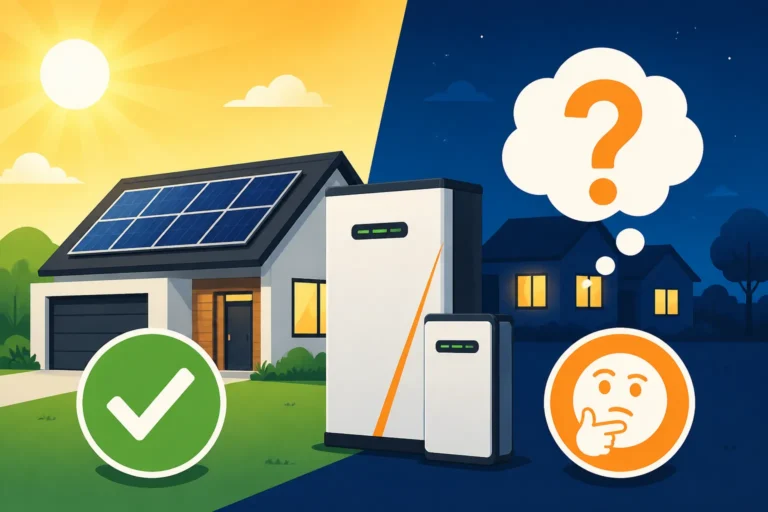
One of the biggest questions I hear from homeowners considering solar is, "Do I really need a battery with my solar panels?" It’s a completely valid concern, and honestly, the answer isn't a simple yes or no. You're looking to gain energy independence, lower your bills, and maybe even future-proof your home, but the thought of adding another significant expense like a battery can feel overwhelming. This guide is here to cut through the confusion and help you understand when a solar battery is a smart investment, and when it might be overkill for your specific situation.
Understanding Your Energy Needs and Goals
Before you even start looking at battery specs or brands, the very first step is to get real about what you want your solar system to achieve. Are you just trying to reduce your monthly electricity bill, or is it more about having power when the grid goes down? These are two very different goals that heavily influence the battery decision.
Why You're Considering Solar in the First Place
Most people explore solar for a mix of reasons: financial savings, environmental impact, and the desire for more control over their energy supply. For some, the rising cost of electricity is the primary driver. They see their utility bills creeping up year after year and want to lock in a more predictable energy expense. In these cases, a grid-tied system without a battery might perfectly meet the financial goal, especially if net metering policies in their state are favorable. You generate power, send excess back to the grid, and get credits that reduce your bill.
Others are driven by a strong desire to reduce their carbon footprint and embrace renewable energy. They want to power their home with clean energy and feel good about their contribution to a healthier planet. While a battery enhances this by allowing more self-consumption, a standard grid-tied system still significantly reduces reliance on fossil fuel-generated electricity from the grid. It’s all about aligning your investment with your personal values.
Then there's the group, which is growing rapidly, focused on energy resilience. They've experienced a few too many power outages – maybe from severe weather, an aging grid, or unforeseen circumstances – and they're tired of being left in the dark. For these homeowners, the primary motivation for solar isn't just about saving money, but about securing their home's power supply. This is where a battery truly shines and often becomes a non-negotiable part of the system.
Evaluating Your Daily Energy Consumption Patterns
Take a good look at when you use the most electricity. Does your household consume a lot of power during the day when the sun is shining, or do your peaks hit in the evenings when everyone is home, cooking, watching TV, and running the air conditioning? This is crucial because solar panels generate electricity most effectively during daylight hours. If your peak consumption aligns with peak solar production, a standard grid-tied system might be very efficient at offsetting your usage in real-time.
However, if your household is like many others, your highest energy demand typically occurs in the late afternoon and evening, after the sun has started to go down. This is often referred to as the "duck curve" phenomenon, where solar production dips as demand rises. Without a battery, you'd be drawing electricity from the grid during these high-demand, non-solar hours, even if you produced a surplus earlier in the day. A battery effectively shifts your solar power from when it's produced to when you actually need it, allowing you to use your own clean energy around the clock.
Consider also your specific appliances and their usage. Do you have an electric vehicle you charge overnight? Are you running energy-intensive appliances like a dryer or dishwasher during specific times? Understanding these patterns can help you determine if storing excess solar energy for later use will lead to significant savings, especially in areas with time-of-use (TOU) billing where electricity prices fluctuate throughout the day.
Defining Your Vision for Energy Independence
What does "energy independence" truly mean to you? For some, it's simply reducing their reliance on the utility company by generating a significant portion of their own power. They're happy to remain connected to the grid and use it as a backup or a virtual battery. This approach is often the most cost-effective way to go solar initially, leveraging incentives like Net Metering Explained: How It Works by State.
For others, true independence means being able to power their home completely off-grid, or at least having robust backup power capabilities for extended periods. This level of independence almost always requires a substantial battery bank, possibly even multiple batteries, and potentially a larger solar array to ensure consistent power supply, especially during cloudy days or longer outages. It’s a significant investment, but for those in remote areas or with critical medical equipment, it offers invaluable peace of mind.
Ultimately, your vision will dictate the scale and complexity of your solar setup. If your primary goal is to minimize your electric bill and you live in an area with good net metering, a battery might be a luxury. But if you're aiming for uninterrupted power during outages, maximum self-consumption, or to completely disconnect from the utility, a battery moves from a "nice-to-have" to an essential component of your system.
How Solar Systems Work Without a Battery (Grid-Tied Systems)
The vast majority of residential solar systems installed today are grid-tied systems that operate without a battery. This is a perfectly viable and often very economical choice for many homeowners, and it's important to understand how these systems function.
The Basics of Net Metering and Grid Connection
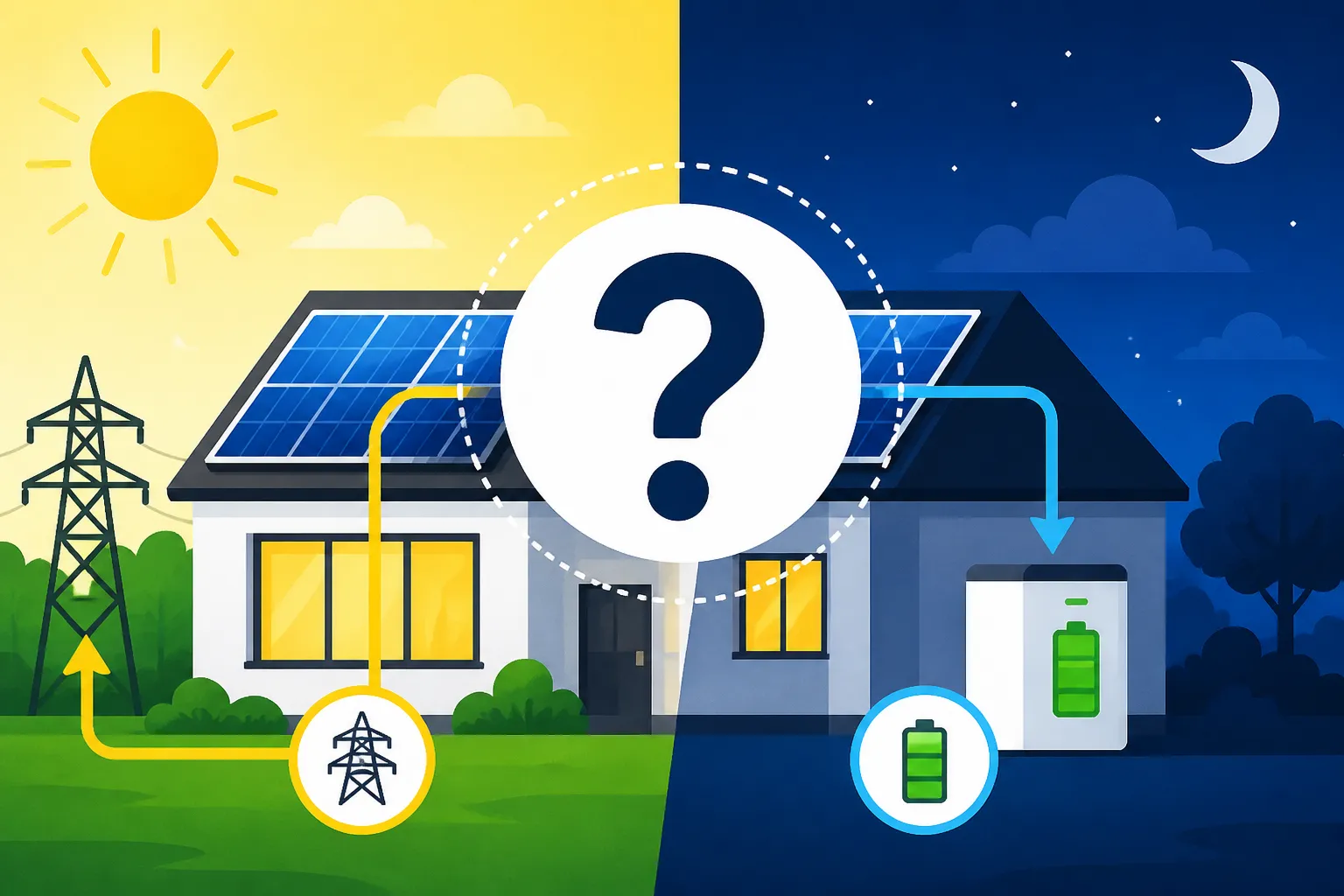
A grid-tied solar system works by connecting directly to your home's electrical panel, and then to the larger utility grid. When your solar panels produce more electricity than your home is currently using, that excess energy is automatically sent back to the grid. In return, your utility company usually provides you with credits on your electricity bill through a policy called net metering. Think of the grid as a giant, communal battery: you "store" your excess energy there, and then "withdraw" it later when your panels aren't producing enough (like at night or on cloudy days).
This arrangement is fantastic for homeowners looking to significantly reduce or even eliminate their electricity bill. Many states and utilities still offer favorable net metering programs, allowing you to be compensated at or near the retail rate for the electricity you send back. This makes the financial case for solar very strong, as you don't have to invest in expensive battery storage to handle periods of low solar production. The grid literally balances your energy consumption and production for you.
However, net metering policies are constantly evolving. Some states, like California with its What Is NEM 3.0 California Net Billing? policy, have transitioned to less favorable compensation rates for exported solar energy, or have introduced "net billing" which values exported power differently than imported power. This shift in policy can make a solar battery much more attractive, as it encourages homeowners to self-consume as much of their generated power as possible rather than sending it to the grid for lower credit.
The Catch: No Power During Outages
Here's the critical point for grid-tied systems without a battery: when the utility grid goes down, your solar panels also shut off. This isn't because the panels aren't working; it's a safety feature called "anti-islanding." If your panels were still sending power to the grid during an outage, it would create a dangerous situation for utility workers who might be trying to repair lines. So, even if the sun is shining brightly during a blackout, your home will lose power just like your neighbors.
This can be a tough pill to swallow for many people who invested in solar expecting more resilience. Imagine a sunny summer afternoon when a storm rolls through, knocking out power to your neighborhood. You look up at your gleaming solar panels, generating electricity, but your lights are out, your refrigerator is slowly warming, and your devices are dead. This is the primary frustration that drives many homeowners to consider a solar battery. They want their investment to work for them when they need it most.
If your area experiences frequent power outages, or if you have critical loads like medical equipment, a well pump, or simply want to keep your refrigerator running and your phone charged during an outage, then a grid-tied system without backup power might not meet your core needs. It's a trade-off: lower upfront cost for less independence during grid failures.
The Financial Implications of Grid-Tied Only
Financially, a grid-tied system without a battery generally has a lower upfront cost. You avoid the expense of the battery itself, as well as the additional installation labor and components required for a battery storage system. This means your Solar Panel Payback Period Explained can be shorter, and your overall return on investment (ROI) might appear higher on paper if you only consider direct electricity bill savings.
However, the financial picture gets a bit more complex when you factor in time-of-use (TOU) rates, demand charges, or less favorable net metering policies. In regions where electricity is much more expensive during peak evening hours, and you're getting minimal credit for sending power back to the grid during the day, you're essentially buying high and selling low. A battery allows you to store your "cheap" daytime solar power and use it during "expensive" evening hours, effectively increasing your savings.
It's also worth noting that the long-term value of resilience isn't always easy to quantify financially. How much is it worth to you to avoid spoiled food, loss of internet, or being unable to work from home during an outage? For some, the peace of mind and continuity of life that a battery provides far outweighs the additional investment. So while the initial cost is lower, the true financial implications need to consider your utility's specific rate structures and the value you place on uninterrupted power.
The Advantages of Adding a Solar Battery
While a grid-tied system without a battery is suitable for many, adding a solar battery opens up a whole new realm of benefits, transforming your solar array into a more powerful and versatile energy solution.
Unlocking True Energy Independence and Backup Power
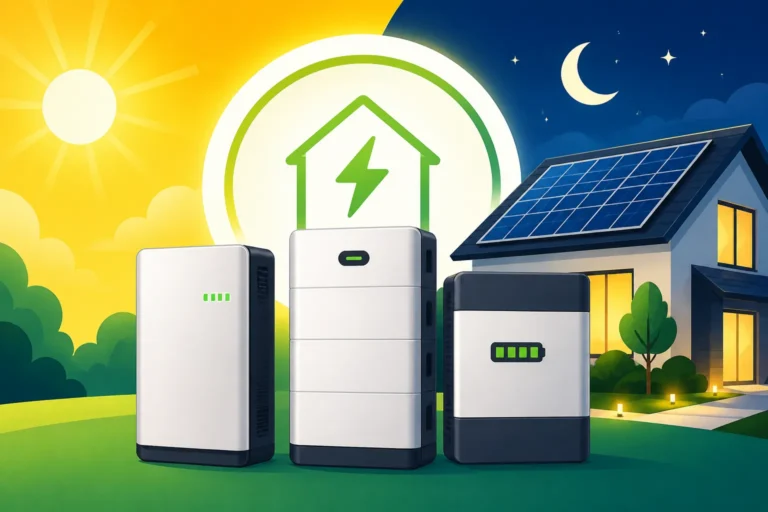
This is the big one for most homeowners: the ability to keep your lights on and critical appliances running when the grid goes down. With a solar battery like a Tesla Powerwall vs Enphase IQ Battery, your home can effectively "island" itself from the grid during an outage. Your solar panels continue to produce electricity, feeding it directly into your battery and then into your home, ensuring a seamless transition and continuous power supply. No more scrambling for flashlights or worrying about a thawing freezer.
The level of backup power you get depends on the size of your battery and the loads you choose to power. Most homeowners opt for "critical load panels" which only back up essential circuits like refrigeration, lights, Wi-Fi, and a few outlets. This approach maximizes the duration of your backup power. For those seeking whole-home backup, larger battery capacities and potentially multiple units would be necessary, but even then, careful energy management is key during extended outages.
This capability provides immense psychological relief, especially in areas prone to natural disasters or an unreliable grid. Knowing that your family will have power for essentials, communication, and comfort during an emergency is a significant advantage that many homeowners are increasingly willing to pay for. It’s about being prepared, self-sufficient, and not at the mercy of external events.
Optimizing Your Solar Investment with Time-of-Use Rates
Beyond just backup power, solar batteries are game-changers for saving money, especially if your utility uses time-of-use (TOU) rates. With TOU billing, electricity prices vary throughout the day, often being highest during peak demand hours (typically late afternoon to evening) and lowest overnight. Without a battery, your excess solar production during the day is sent to the grid for credit, and you then buy electricity back at those higher peak rates when the sun goes down.
A solar battery allows you to implement "arbitrage" or "load shifting." You store the inexpensive solar energy generated during the day, and then discharge it to power your home during those expensive peak evening hours. This strategy maximizes your savings by ensuring you're using your own cheap solar power when grid electricity is most expensive, rather than exporting it for potentially lower compensation. In regions with less favorable net metering or net billing policies, like California's NEM 3.0, this becomes almost essential to maximize your solar investment.
Furthermore, some utilities implement demand charges for commercial customers, and occasionally even for large residential users, where you're charged based on your highest power usage spike within a billing cycle. A battery can help mitigate these charges by "peak shaving" – discharging power to reduce your draw from the grid during moments of high demand. While less common for residential, it highlights the sophisticated ways batteries can optimize your energy usage and overall savings.
Increasing Your Home's Value and Resilience
Adding a solar battery can significantly enhance the value and marketability of your home. As climate change leads to more extreme weather events and grid instability, buyers are increasingly looking for homes that offer energy resilience and lower operating costs. A home with a fully integrated solar-plus-storage system is seen as a modern, high-tech, and desirable asset.
This isn't just about financial return; it's about the perceived value and peace of mind it offers future homeowners. Imagine showcasing a system that keeps critical appliances running during a hurricane or provides consistent power during a heatwave. This level of preparedness and advanced energy management system stands out in the real estate market. The value of solar itself is well-documented, with studies showing that homes with solar panels sell faster and for more money. Adding a battery further differentiates your property and underscores its long-term benefits.
Beyond resale, the battery contributes to your home's overall resilience. It's a proactive step against future uncertainties, whether they are grid failures, energy price spikes, or an evolving energy landscape. It means your home is better equipped to handle disruptions, providing a sense of security that traditional homes lack.
Factors to Consider Before Investing in a Battery
Deciding whether to add a solar battery is a multi-faceted choice, impacted by everything from local regulations to your personal energy habits. Let's break down some of the most important considerations.
Your Local Net Metering Policies and Utility Structure
This is perhaps the single most critical factor that can sway the battery decision. As discussed, net metering policies dictate how your utility credits you for excess solar electricity you send back to the grid. If your state or utility offers full retail net metering, meaning you get the same price for exported power as you pay for imported power, then the financial incentive for a battery primarily shifts to backup power and perhaps very specific time-of-use rate arbitrage. If you're compensated dollar-for-dollar, the grid is essentially your free battery.
However, many states and utilities are moving away from full retail net metering. Some, like California, have transitioned to "net billing" or programs where exported solar is valued at a much lower "avoided-cost rate." Other states might have specific caps on net metering, or introduce monthly charges for solar customers. In these scenarios, storing your excess solar power in a battery for later self-consumption becomes far more financially beneficial. It prevents you from "giving away" cheap solar power to the grid and then "buying back" expensive grid power. Understanding your local Net Metering vs Net Billing: What's the Difference? is paramount.
Additionally, some utilities are introducing demand charges, or higher time-of-use (TOU) rates that create significant price differentials between peak and off-peak hours. A battery excels at navigating these complex rate structures, allowing you to discharge stored energy during peak times and charge when rates are low. Before committing to a battery, thoroughly research your utility's current and projected rate structures and net metering rules – they are often the hidden drivers of battery value.
Battery Sizing: How Much Capacity Do You Really Need?
Once you decide a battery is right for you, the next challenge is sizing it correctly. This isn't a one-size-fits-all situation; it depends entirely on your backup power needs and your energy consumption patterns. Are you looking to power your entire home during an outage, or just critical loads like your refrigerator, lights, Wi-Fi, and maybe a few charging ports? Powering an entire home, especially with high-draw appliances like air conditioning or an electric stove, would require a significantly larger and more expensive battery system, potentially even multiple batteries.
To properly size a battery, you need to conduct an energy audit of your critical loads. Identify every appliance you want to run during an outage, note its wattage, and estimate how many hours a day you'd need it to run. This will give you a total "watt-hour" or "kilowatt-hour" requirement for your backup needs. For example, a refrigerator might draw 100-200 watts and run for about 8 hours a day, totaling around 800-1600 Wh. Add up all your essentials, and that's your baseline. Most residential batteries, like the popular Tesla Powerwall or Enphase IQ Battery 5P, offer around 10-13.5 kWh of usable capacity.
It's also important to consider your daily solar production. During an outage, your solar panels will continue to recharge your battery, extending your backup duration beyond the battery's initial capacity. However, cloudy days will reduce this recharge rate. A good solar installer will perform a detailed load analysis and recommend a battery size that balances your needs with your budget and solar production capabilities. Don't just guess; an undersized battery will leave you wanting more, while an oversized one is an unnecessary expense.
The Upfront Cost vs. Long-Term Savings and Peace of Mind
Let's be blunt: solar batteries are a significant investment. Adding a single residential battery can increase the total cost of your solar system by $10,000 to $20,000, depending on the brand, capacity, and installation complexity. This upfront cost is often the biggest hurdle for homeowners. So, is it worth it? The answer lies in weighing the tangible financial savings against the intangible value of peace of mind.
On the financial side, calculate the potential savings from time-of-use optimization, reduced grid purchases due to increased self-consumption, and any available Solar Battery Incentives in 2026 or utility rebates. In regions with high electricity prices and unfavorable net metering, these savings can be substantial, leading to a respectable return on investment over the battery's lifespan (typically 10-15 years). However, in areas with low electricity rates and excellent net metering, the financial payback from a battery might be very long, or even non-existent, unless you factor in increasing electricity rates over time.
Then there's the invaluable peace of mind. How much is it worth to you to know that your food won't spoil, your sump pump will run, your home office will stay online, or your medical devices will function during a multi-day power outage? For many, this security is priceless. The cost of a battery, in this context, becomes an insurance policy against grid failures and a pathway to a more resilient lifestyle. It's a personal calculation, but one that shouldn't be overlooked.
Types of Solar Batteries and What They Offer
The world of solar batteries has evolved rapidly, moving far beyond the clunky lead-acid setups of yesteryear. Today, most residential systems utilize advanced technologies that are more efficient, longer-lasting, and safer.
Lithium-Ion Batteries: The Industry Standard
When you hear "solar battery" today, chances are you're thinking of a lithium-ion battery. These are the undisputed champions of residential solar storage, and for good reason. They offer a high energy density, meaning they can store a lot of power in a relatively compact size. They also have a deep depth of discharge (DoD), often 90-100%, which means you can use almost all of their stored energy without damaging the battery. This is a huge advantage over older battery types.
Lithium-ion batteries also boast excellent cycle life, typically lasting for thousands of charge and discharge cycles, which translates to a lifespan of 10-15 years or more. Brands like Tesla with its Powerwall, Enphase with its IQ Battery, and FranklinWH with its aPower all utilize lithium-ion technology, specifically lithium iron phosphate (LFP) chemistry, which is considered safer and more stable than other lithium-ion variants. These batteries are designed to be integrated seamlessly with your solar inverter and home's electrical system, often featuring smart energy management software that optimizes charging and discharging based on your energy usage, solar production, and utility rates.
Their efficiency is also a major plus. They have very low self-discharge rates, so stored energy doesn't dissipate quickly, and high round-trip efficiency, meaning most of the energy put into the battery can be retrieved. While they come with a higher upfront cost than older technologies, their performance, lifespan, and safety features make them the gold standard for modern home solar storage.
Lead-Acid and Flow Batteries: Niche Solutions
While lithium-ion dominates, other battery technologies still exist for specific applications. Lead-acid batteries, the same type found in cars, were once the most common for solar storage. They are significantly cheaper upfront and are reliable in their own right, but they come with several drawbacks. They have a lower energy density, meaning they are much larger and heavier for the same amount of storage. They also have a shallower depth of discharge (typically 50%), so you can only use half their capacity without shortening their lifespan, and a shorter cycle life. They also require more maintenance, including ventilation due to off-gassing, and often need regular watering.
For these reasons, lead-acid batteries are primarily found in off-grid systems or smaller, budget-constrained backup applications where space isn't an issue and homeowners are prepared for the maintenance. You won't typically see them paired with modern grid-tied residential solar arrays.
Flow batteries, on the other hand, are a newer and more experimental technology for residential use. They use liquid electrolytes that are stored in separate tanks and pumped through a reaction chamber. Their main advantages include a very long lifespan (they don't degrade much with use), excellent safety, and the ability to scale capacity by simply increasing the size of the electrolyte tanks. However, they are currently much larger, less efficient, and significantly more expensive than lithium-ion batteries for residential applications. While promising for large-scale grid storage, they are not yet a practical or common choice for the average homeowner looking to add storage to their solar system.
Integrated vs. Standalone Battery Systems
When you consider adding a battery, you'll encounter two main approaches: integrated systems and standalone (or modular) systems. Integrated systems are designed from the ground up to work as a cohesive unit with your solar panels and inverter. A great example of this is the Enphase IQ Battery, which uses microinverters for each solar panel and directly integrates with the battery, creating a streamlined and highly efficient AC-coupled system. This often simplifies installation and allows for a single monitoring platform for your entire energy ecosystem.
Standalone battery systems, like the Tesla Powerwall, are more self-contained units that can be added to virtually any existing solar panel setup, regardless of the inverter brand. These are often DC-coupled, meaning they connect directly to your solar array's DC output before the inverter, or AC-coupled, connecting after the inverter. The advantage here is flexibility; you can add storage to an older solar system, or choose a battery brand independently of your panel and inverter manufacturer. For instance, you could have Qcells Solar Panel Review panels with a SolarEdge inverter, and still easily add a Powerwall.
Many modern batteries, including offerings from Generac and Sonnen, blur the lines between these categories, providing robust standalone units with smart integration capabilities. The choice between integrated and standalone often comes down to your existing solar setup, your preference for a single ecosystem versus mixed brands, and your installer's expertise with different solutions. Both can deliver excellent results, but understanding the differences can help you make an informed decision about system architecture.
Real-World Scenarios: When a Battery Makes Sense (and When It Doesn't)
Let's move beyond the technicalities and look at practical situations where a solar battery truly shines, and equally important, where it might be an unnecessary expense.
Navigating Frequent Power Outages and Grid Instability
If you live in an area notorious for frequent or prolonged power outages, a solar battery quickly moves from a luxury to a necessity. Think about homeowners in regions prone to severe weather like hurricanes in Florida, wildfires in California, or winter storms in the Northeast. These events can knock out power for days, sometimes even weeks. In such scenarios, a grid-tied solar system without a battery offers no protection; your panels will shut down, and you'll be without power just like everyone else.
A battery system allows your solar panels to continue powering your home's critical loads during these outages. For example, during the record heatwaves that have hit places like Phoenix, Arizona, or Austin, Texas, having a battery ensures your AC can keep running, albeit sparingly for critical areas, or at least keep your refrigerator cold and your medical equipment operational. This isn't just about comfort; it's about safety and maintaining essential services in your home. The financial cost of spoiled food, lost work, or even having to temporarily relocate during an extended outage can quickly add up, making the battery's upfront investment seem more reasonable.
Conversely, if you live in an area with a highly reliable grid and very rare, short outages, the primary benefit of a battery for backup power might be less compelling. You'd be paying a premium for a feature you seldom use. In such cases, if cost savings are your main driver, you might prioritize optimizing your solar array size and leveraging strong net metering policies.
Maximizing Savings in Areas with Unfavorable Net Metering
This is where the financial case for a battery really strengthens, especially in states where net metering policies have been significantly altered. California's NEM 3.0 is a prime example. Under this new policy, the value of excess solar energy exported to the grid has been drastically reduced. Homeowners are no longer compensated at the full retail rate; instead, they receive a much lower "export rate." This fundamentally changes the economic equation.
In such an environment, the smart strategy is to maximize self-consumption of your solar power. Instead of sending cheap daytime solar to the grid for minimal credit, a battery stores that energy to be used in the evening when grid electricity is expensive, or during any time you would otherwise draw from the grid. This allows homeowners to leverage their solar investment more effectively, turning what would have been a low-value export into high-value self-use. For instance, a homeowner in Los Angeles could charge their battery with midday solar, then power their home and electric vehicle overnight, bypassing the expensive peak rates from LADWP or Southern California Edison.
If your utility company has shifted to time-of-use (TOU) rates with significant differences between peak and off-peak prices, or if they have implemented demand charges, a battery allows you to play the system to your advantage. You can program your battery to charge when electricity is cheap (either from solar or off-peak grid power) and discharge when it's expensive. This arbitrage strategy can generate substantial savings over the lifespan of your system, making the battery an integral part of your financial plan.
Considering Future Home Upgrades and EV Charging
When you're planning your solar system, it's wise to think about your future energy needs. Are you considering purchasing an electric vehicle (EV) in the next few years? EV charging can significantly increase your household's electricity consumption, often occurring overnight when solar panels aren't producing. Adding a battery allows you to charge your EV using stored solar energy, rather than drawing expensive grid power. This means your EV runs on clean, self-generated electricity, truly maximizing its environmental and financial benefits.
Similarly, if you're thinking about adding other large electric appliances in the future – perhaps an electric heat pump for heating and cooling, an induction stove, or upgrading to more energy-efficient but electric-powered systems – these changes will increase your demand. A battery system can help manage this increased load without over-relying on grid power during peak times. It makes your home's energy infrastructure more adaptable and resilient to evolving energy demands.
Consider also the growing trend towards smart homes and home automation. Devices connected to platforms like Amazon's Alexa or Google Home can be integrated with your solar and battery system to optimize energy usage even further, automatically shifting loads to times when solar power is abundant or grid prices are low. A battery enables a more sophisticated and flexible energy management system for your entire home, preparing it for a more electrified future.
Key Brands and Technologies in the Solar Battery Market
Choosing a solar battery isn't just about capacity; it's also about reliability, integration, and manufacturer reputation. The market is full of strong contenders, each with its own strengths.
Industry Leaders: Tesla, Enphase, FranklinWH
When it comes to residential solar batteries, a few names consistently rise to the top, largely due to their innovation, widespread adoption, and robust product offerings.
Tesla Powerwall: The Tesla Powerwall is arguably the most recognizable name in solar batteries. Known for its sleek design and impressive performance, it offers 13.5 kWh of usable capacity per unit and can be stacked for larger backup needs. Its integration with the Tesla ecosystem, including solar panels and electric vehicles, is a major draw for many. The Powerwall comes with an integrated inverter and acts as a central hub for your home's energy management, offering seamless backup during outages. It's renowned for its reliability and smart software that optimizes charging and discharging. The Powerwall 3, the latest iteration, continues to push boundaries with its integrated solar inverter, simplifying installations.
Enphase IQ Battery: Enphase is a powerhouse in the microinverter market, and their IQ Batteries are a natural extension of their ecosystem. Available in various sizes (e.g., 3.36 kWh, 10.08 kWh, 10T), these batteries are modular, allowing homeowners to customize their storage capacity. Their AC-coupled design means they integrate easily with existing solar systems using Enphase microinverters. The IQ Batteries are known for their exceptional safety, robust performance, and the ability for each battery module to operate independently, increasing overall system resilience. They're particularly favored by homeowners who value a fully integrated system with single-platform monitoring.
FranklinWH aPower Battery: A newer but rapidly ascending player, FranklinWH offers a whole-home energy management solution with its aPower battery. This system is designed for maximum power output and includes an intelligent energy management system called the aGate. The aPower battery boasts impressive peak power output, capable of powering demanding appliances like air conditioners or electric vehicle chargers during an outage. Its modular design allows for flexible sizing, and it aims to provide a comprehensive, smart energy solution for the modern home. They emphasize seamless integration and robust backup capabilities.
Other notable brands include Generac with its PWRcell system, known for its emphasis on whole-home backup and generator integration, and LG Energy Solution, a long-standing electronics giant offering reliable battery storage options. Sonnen, with its ecoLinx system, focuses on intelligent energy management and premium backup power for discerning homeowners. Each brand brings a slightly different philosophy and feature set to the table, but all aim to provide reliable, efficient energy storage.
Understanding Battery Warranties and Lifespan
Just like with solar panels, a battery's warranty is a critical indicator of its expected performance and lifespan. Most reputable solar batteries come with a warranty that covers both the product itself (materials and workmanship) and its performance over a specified period or number of cycles. Typically, you'll see warranties of 10 years, with some extending to 12 or even 15 years.
A good warranty will specify a minimum percentage of original capacity the battery is guaranteed to retain after a certain number of years or cycles. For example, a warranty might state that the battery will retain at least 70% of its original capacity after 10 years or 3,000 cycles, whichever comes first. This is crucial because all batteries naturally degrade over time, losing a small percentage of their storage capacity with each charge and discharge cycle. Understanding this degradation rate and the warranty coverage helps set realistic expectations for the battery's long-term performance.
When comparing warranties, look beyond just the length of coverage. Pay attention to the cycle count, the guaranteed retained capacity, and any specific conditions or exclusions. A longer warranty with a higher retained capacity guarantee indicates a more durable and reliable product. Also, check the company's reputation and financial stability; a warranty is only as good as the company backing it.
Innovation in Battery Storage: What's Next?
The solar battery market is incredibly dynamic, with continuous innovation driving down costs and improving performance. One exciting area is the development of solid-state batteries, which promise even greater energy density, faster charging, and enhanced safety compared to current lithium-ion technologies. While not yet widely available for residential solar, they represent the next frontier.
Another trend is the increasing intelligence of battery systems. Modern batteries often come with sophisticated software that learns your energy patterns, forecasts solar production and grid prices, and optimizes charging and discharging automatically. This smart management can significantly enhance savings and system efficiency. Many systems can be controlled and monitored via smartphone apps, offering real-time data and remote control. Furthermore, integration with smart home ecosystems like those found on Amazon can allow for even more granular control and automation of energy usage.
The concept of "virtual power plants" (VPPs) is also gaining traction. In a VPP, individual home batteries are networked together by a utility or third-party provider to form a collective resource that can support the grid. Homeowners might receive incentives for allowing their battery to discharge during peak grid demand, helping to stabilize the grid and reduce reliance on fossil fuel "peaker" plants. This represents a future where your home battery not only serves your needs but also contributes to the broader energy transition.
Making the Right Decision for Your Home
Deciding whether to add a solar battery is a significant choice with long-term implications for your home's energy future. It's a blend of financial analysis, practical needs, and personal values.
Consulting with Solar Professionals for a Tailored Solution
While this guide provides a wealth of information, there's no substitute for a personalized consultation with experienced solar professionals. A reputable solar installer will perform a detailed site assessment, evaluate your roof's suitability, analyze your historical energy consumption data, and discuss your specific goals. They'll be able to tell you how many solar panels you need for your home, if your Roof Age: When to Replace Before Solar needs attention, and precisely what size solar system and battery would be ideal for your household.
They can walk you through the complexities of local utility policies, explain time-of-use rates specific to your area (like if you're in a utility service territory like Pacific Gas and Electric in California or Con Edison in New York), and help you understand how a battery would impact your bill under those rules. They should provide you with detailed proposals that clearly outline the costs, projected savings, and return on investment for both a solar-only system and a solar-plus-battery system. Don't hesitate to ask about Solar Installer Red Flags to Watch For to ensure you're working with a trustworthy company.
It's highly recommended to get multiple quotes from different installers. This not only gives you a basis for comparison on pricing (including the all-important Solar Panel Cost Per Watt Explained) but also allows you to compare different proposed system designs, battery brands, and warranty packages. A good installer will take the time to answer all your questions and educate you, rather than pushing a one-size-fits-all solution.
Weighing the Financials: ROI and Incentives
The financial aspect is often the make-or-break factor for many homeowners. When considering a battery, you need to look beyond the initial sticker shock and evaluate the long-term return on investment. This involves calculating how much the battery will save you in electricity costs over its lifespan, factoring in your local utility rates, net metering policies, and any available incentives.
Don't forget to factor in state and local incentives for solar batteries. Many states and even some utility companies offer rebates or tax credits specifically for energy storage systems, which can significantly offset the upfront cost. For example, California offers the Self-Generation Incentive Program (SGIP) for battery storage, and states like New York and Massachusetts have their own programs. These incentives, combined with potential savings from optimizing your energy usage, can drastically improve the financial viability of adding a battery. Even if the federal solar tax credit has changed, other valuable incentives often exist, making the question of Is Solar Worth It Without the Tax Credit? still yield a positive answer.
Here's a simplified table comparing typical scenarios:
| Scenario | Grid-Tied Solar Only (No Battery) | Grid-Tied Solar with Battery |
|---|---|---|
| Upfront Cost | Lower | Higher (+$10k – $20k per battery) |
| Backup Power During Outages | None (panels shut off) | Yes (powers critical loads or whole home) |
| Net Metering Savings | Maximized if full retail net metering is available | Enhanced if net metering is unfavorable (NEM 3.0, avoided-cost rates) due to self-consumption |
| Time-of-Use (TOU) Savings | Limited (buy high, sell low potential) | High (store cheap solar, use during expensive peak hours) |
| Energy Independence | Partial (reliant on grid for backup) | High (self-sufficient during outages, reduced reliance on grid for peak demand) |
| Home Value Impact | Positive, but less significant for resilience | Stronger positive impact due to enhanced resilience and modern features, potentially faster sale |
| Maintenance | Minimal | Minimal (modern lithium-ion) |
| Ideal For | Homeowners focused purely on bill reduction in areas with excellent net metering and stable grid | Homeowners prioritizing backup power, maximizing self-consumption, or in areas with unfavorable net metering/TOU rates |
The Emotional Value of Preparedness
Beyond the dollars and cents, there's a significant emotional component to having a solar battery. The peace of mind that comes from knowing your home will have power during an outage is a powerful motivator for many. It's about preparedness, security, and the comfort of your family. Imagine a hurricane bearing down on your community; while others are stressing about spoiled food and dark homes, you can feel confident that your essentials will remain powered.
For some, it's also about a deeper sense of self-sufficiency and environmental stewardship. A battery allows you to truly maximize your use of renewable energy, reducing your reliance on the fossil fuel-powered grid even further. This aligns with a lifestyle choice that values sustainability and resilience. Whether it's keeping your kids' devices charged for remote learning, ensuring your elderly parents have constant power for medical needs, or simply enjoying a movie during a neighborhood blackout, the psychological benefits are often priceless.
Ultimately, the decision to add a solar battery is a personal one. It hinges on your specific energy needs, your geographic location, your utility's policies, and your comfort level with the investment versus the tangible and intangible returns. By carefully considering all these factors, you can make an informed choice that truly benefits your home and lifestyle for years to come.
Disclaimer
The information provided in this article is for general informational purposes only and does not constitute professional advice. Solar system and battery performance, costs, savings, and incentives can vary significantly based on location, utility rates, system design, energy consumption, and policy changes. It is essential to consult with qualified solar professionals and financial advisors to determine the best solution for your specific circumstances.