What’s the Difference Between Solar Panel Brands?
Stepping into the world of home solar can feel like trying to decipher a secret language, especially when it comes to understanding the vast array of solar panel brands out there. It's easy to feel overwhelmed by the sheer number of options, the jargon, and the conflicting claims. This guide is here to cut through the confusion, helping you understand the real differences between solar panel brands so you can make an informed decision for your home.
Understanding the Solar Panel Landscape
When you start researching solar panels, you quickly realize it's not just about picking a solar panel; it's about choosing from dozens of manufacturers, each with its own unique selling points, technologies, and reputation. It's completely normal to feel a bit lost in the sea of names like Qcells, REC, Maxeon (formerly SunPower), Jinko Solar, and so many more. These aren't just arbitrary distinctions; these brands represent different approaches to solar technology, manufacturing quality, and customer support. Understanding these nuances is crucial because your solar panels are a long-term investment that will be on your roof for decades.
Why Brand Diversity Matters for Homeowners
The diversity among solar panel brands isn't just about market competition; it directly impacts your system's performance, durability, and ultimately, your savings. Think of it like buying a car: while they all get you from point A to point B, a Honda Civic, a Tesla, and a Ford F-150 offer vastly different experiences in terms of efficiency, features, lifespan, and cost. Solar panels are no different. Some brands prioritize ultra-high efficiency, others focus on robust durability for harsh climates, and some aim for an accessible price point. Knowing these differences helps you align your solar investment with your specific needs and priorities, whether that's maximizing every square inch of roof space or getting the most bang for your buck.
Common Misconceptions About Panel Brands
One of the biggest misconceptions homeowners face is that all solar panels are essentially the same, or that a "Tier 1" label is the only thing that matters. While the Tier 1 classification, typically used by BloombergNEF, indicates a manufacturer's financial stability and bankability, it doesn't necessarily speak to the actual quality or performance of their specific panels. You could have a Tier 1 manufacturer producing a good, but not cutting-edge, panel, while a smaller, highly innovative company might offer a superior product but not meet the Tier 1 financial criteria. Another common mistake is thinking that a higher wattage panel automatically means a "better" panel. While higher wattage means more power output per panel, efficiency (power per square foot) is often more important, especially for homes with limited roof space. It's about finding the right balance for your unique situation, not just chasing the biggest numbers.
Key Technical Specifications and Their Impact
Delving into the technical aspects of solar panels is where the real differences between brands become clear. These specifications dictate how much energy your system will produce, how long it will last, and how it will perform under various conditions.
Panel Efficiency and Performance in Real-World Conditions
Panel efficiency refers to how much of the sunlight hitting the panel is converted into usable electricity. A panel with 22% efficiency will generate more power from the same amount of sunlight and roof space than an 18% efficient panel. Brands like Maxeon and REC are often lauded for their high-efficiency panels, making them excellent choices for roofs with limited space or partial shading.
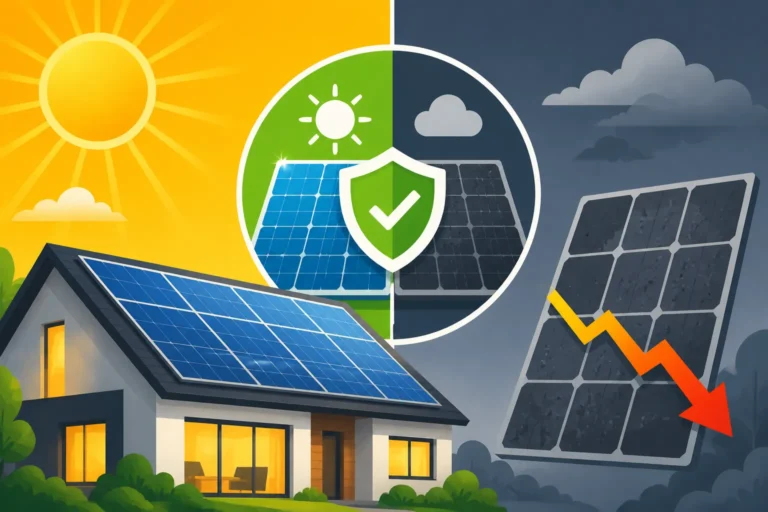
However, it's not just the lab-tested efficiency that matters. Real-world performance under less-than-ideal conditions—like hot summer days or cloudy skies—is equally important. This is where temperature coefficient comes into play. A lower temperature coefficient means the panel loses less efficiency as temperatures rise, which is a huge advantage in places like Arizona or Florida where roofs can get scorching hot. Some brands also excel in low-light performance, meaning they can start producing power earlier in the morning and continue later in the afternoon, or maintain better output on overcast days. If you live in a region with frequent cloudy weather, understanding a brand's low-light performance is paramount.
Durability, Degradation, and Warranties
Solar panels are built to withstand the elements, but not all are created equal. Durability can vary significantly, impacting how well your panels resist hail, heavy snow loads, or high winds. Look for brands that offer robust frames and tempered glass, with high load ratings. The degradation rate is another critical factor; all solar panels gradually lose a small amount of efficiency over time. Most quality panels degrade by about 0.5% per year. However, some premium brands offer lower degradation rates, meaning their panels will produce more power toward the end of their 25-year lifespan than a panel with a higher degradation rate. This subtle difference can translate into thousands of dollars in extra electricity production over the system's lifetime.
This leads us directly to warranties, which are arguably one of the most important differentiators. Most reputable brands offer two main types of warranties:
- Product Warranty: Covers manufacturing defects and panel failures, typically for 12-25 years.
- Performance Warranty: Guarantees a certain percentage of the original power output (e.g., 80-92%) after 20-30 years.
Brands like Maxeon often stand out with industry-leading 40-year product and performance warranties, which speaks volumes about their confidence in the longevity and quality of their panels. Comparing these warranties can give you a clear picture of a manufacturer's commitment to their product and its expected lifespan. You can dive deeper into this topic by reading our guide on Solar Panel Warranties Explained.
Beyond the Panels: Technology, Support, and System Integration
While the panels themselves are the stars of the show, the surrounding technology, the company's support, and how well everything integrates into a complete system are equally important brand distinctions.
Inverter Technology and Brand Ecosystems
The inverter is the brain of your solar system, converting the DC power from your panels into AC power for your home. There are three main types: string inverters, microinverters, and power optimizers. Many panel manufacturers have preferred partners or even their own integrated inverter solutions. For instance, Enphase is a leading brand in microinverter technology, and their IQ series microinverters are designed to pair seamlessly with virtually any solar panel brand, offering panel-level monitoring and performance optimization. SolarEdge, another prominent name, utilizes power optimizers at each panel coupled with a central string inverter. These "ecosystems" can offer advantages in terms of streamlined installation, unified warranties, and integrated monitoring platforms. Understanding these differences, particularly how they handle shading, is crucial. You might find it helpful to explore Solar Inverters: String vs Microinverter vs Optimizer to understand these options better.
When considering an installer's quote, they often recommend specific panel and inverter combinations. For example, if you have a roof with complex angles or significant shading, an installer might recommend a system with microinverters or power optimizers (like those from SolarEdge) paired with high-quality panels from brands like Qcells or Jinko Solar, because these setups are excellent at mitigating the impact of partial shading on overall system output. On the other hand, a simple, unshaded south-facing roof might do perfectly well with a string inverter system, potentially saving on upfront costs.
Manufacturer Reputation and Customer Support
A solar panel system is a 25-year-plus investment. You want to know that the company behind your panels will still be around to honor their warranty if you ever need it. This is where manufacturer reputation comes into play. Brands with a long history of financial stability, a proven track record of innovation, and strong customer service tend to be safer bets. Look for companies that have been in business for many years and have a global presence. It's also worth researching how responsive they are to warranty claims and how easy it is for installers to work with them. A brand might have cutting-edge technology, but if getting support for an issue is a nightmare, it detracts from the overall value. While you might find individual solar components or smaller off-grid kits through online retailers like Amazon, for a full home solar system, you'll generally rely on the manufacturer's official support channels and your chosen installer for any issues.
Choosing the Right Solar Panel Brand for Your Home
Making the final decision about which solar panel brand is right for you can still feel like a big step. It’s not about finding a universally "best" brand, but rather the best brand for your specific circumstances.
Matching Brand to Your Specific Needs
Consider what truly matters most for your home. Do you have limited roof space and need to maximize every watt? Then higher efficiency panels from a brand like Maxeon or SunPower might be worth the premium. Is budget your primary concern? Then well-regarded value brands like Qcells or Jinko Solar might be a better fit, offering solid performance at a more accessible price point. Do you live in an area with extreme weather, like frequent hail or heavy snow? Prioritizing panels known for their exceptional durability and robust construction would be wise.
It's also important to think about your long-term plans. If you plan to stay in your home for many decades, investing in panels with longer warranties and lower degradation rates will provide greater peace of mind and more significant long-term savings. For insights into how much power you might need, check out our guide on How Many Solar Panels Do I Need for My Home?.
Comparing Top-Tier vs. Value Brands
To illustrate the differences, let's look at a general comparison between what we might call "premium" and "value" oriented brands. This isn't to say one is inherently better, but they cater to different priorities.
| Feature | Premium/High-End Brands (e.g., Maxeon, REC) | Value/Mainstream Brands (e.g., Qcells, Jinko Solar) |
|---|---|---|
| Efficiency Range | 21-23%+ | 19-21% |
| Temperature Coefficient | Lower (better performance in heat) | Moderate |
| Degradation Rate | Lower (e.g., 0.25-0.4% annually) | Standard (e.g., 0.5-0.6% annually) |
| Product Warranty | 25-40 years | 12-25 years |
| Performance Warranty | 25-40 years (higher retained output) | 25 years (standard retained output) |
| Durability/Build Quality | Often features advanced cell tech, robust construction | Solid, reliable construction |
| Price Point (per watt) | Higher | Moderate to Lower |
| Ideal For | Limited roof space, long-term ROI, harsh climates, maximizing savings | Budget-conscious, good roof space, strong all-around performance |
As you can see, the differences are tangible. A premium panel from a brand like Maxeon might cost more upfront, but its superior efficiency and longer warranties could lead to greater electricity production and peace of mind over the system's lifetime. Conversely, a value brand like Qcells might offer a quicker Solar Panel Payback Period Explained due to its lower initial cost, while still providing excellent long-term performance. You can read more about what makes panels different in Solar Panel Technology: TOPCon, HJT & PERC.
The Role of Your Installer
Ultimately, your solar installer plays a pivotal role in this decision. Reputable installers often have preferred brands they work with due to established relationships, bulk purchasing agreements, and confidence in the product's reliability and warranty support. A good installer won't just push one brand; they'll explain why they recommend a particular panel for your home's specific characteristics, taking into account your roof size, sun exposure, budget, and energy goals. They are the experts who can translate the technical specifications into real-world benefits for your property.
When getting quotes, ask installers why they've chosen certain panel brands for your proposal. Don't hesitate to ask for options with different brands if you have a preference or want to compare. Sometimes, an installer might source a specific component, or even a smaller solar kit, through a vast online marketplace like Amazon, but for the main panels of a residential system, they work directly with distributors or manufacturers. Learning How to Choose a Solar Installer is just as important as choosing the panel brand itself.
By taking the time to understand these differences and working closely with a knowledgeable installer, you can confidently select the solar panel brand that best fits your home and helps you achieve your energy goals for decades to come. Keep in mind that factors like What Affects the Cost of Solar Panels? will also influence your overall investment.
Disclaimer
Please remember that the information provided in this guide is intended for general informational purposes only and should not be considered professional financial, tax, or energy advice. Solar technology, incentives, and market conditions are constantly evolving. Always consult with qualified solar professionals and financial advisors for advice tailored to your specific situation.