Solar Installer Red Flags to Watch For
It's incredibly frustrating when you're trying to do something good for your home and the planet, like going solar, only to encounter pushy salespeople or confusing information. You're looking for a reliable partner to help you navigate this significant investment, but sometimes it feels like you need a detective's badge just to figure out who you can trust. This guide is here to equip you with the knowledge to spot common solar installer red flags, helping you avoid headaches and ensure a smooth, successful transition to solar energy.
Red Flag 1: Unrealistic Promises and Aggressive Sales Tactics
One of the quickest ways to feel uneasy about a solar company is when their sales pitch feels more like a used car lot than a professional consultation. We've all been there – that feeling in your gut telling you something isn't quite right. When a salesperson uses overly aggressive tactics or makes promises that seem too good to be true, it's time to pump the brakes.
Deals That Sound Too Good to Be True
Imagine a solar representative telling you that you can get a brand-new, top-tier solar system for "zero dollars down" with guaranteed savings of 50% on your electricity bill from day one, and a bonus cash rebate that makes the whole thing practically free. While some incentives like the federal solar tax credit (or its replacement incentives in 2026) are real and can significantly reduce your costs, and reputable companies do offer legitimate $0 down financing options, extreme claims should make you wary. These "too good to be true" scenarios often gloss over crucial details like interest rates on loans, lease terms, or the true long-term costs.
For example, a company might promise incredibly low monthly payments without fully explaining the total system cost, the length of the loan, or any potential dealer fees wrapped into the financing. It’s essential to remember that even with generous incentives and smart financing, solar is an investment. Sustainable savings come from a carefully planned system, not from magic. Always dig deeper when the numbers seem unbelievable.
High-Pressure Sales and Immediate Decision Demands
Have you ever felt pressured into signing something on the spot, with phrases like "This deal expires tomorrow!" or "We only have one slot left in your area this month!"? This is a classic high-pressure sales tactic designed to bypass your critical thinking and push you into an emotional decision. A trustworthy solar installer understands that going solar is a big commitment and requires careful consideration. They should be willing to provide you with all the information you need, answer your questions thoroughly, and give you ample time to review their proposal and compare it with others.
When a salesperson insists you sign a contract immediately or lose out on an amazing offer, it’s a major red flag. They might even refuse to leave a detailed quote behind, claiming it's a "special offer" only available during that meeting. Reputable companies, like those you might find through platforms like Modernize, focus on educating you and building trust, not on strong-arming you into a commitment. Don't be afraid to assert your need for time; a legitimate company will respect it. To learn more about navigating these situations, check out our guide on how to avoid high-pressure solar sales.
Misleading Information on Savings and Incentives
Another common tactic is to inflate potential savings or misrepresent how solar incentives actually work. For instance, a salesperson might quote savings based on current utility rates, but fail to account for future rate increases or changes in net metering policies. They might also overstate the value of a Solar Renewable Energy Credit (SREC) or imply that you'll directly receive the full value of the federal tax credit as an upfront discount, rather than as a credit against your tax liability.
In California, for example, after the transition to NEM 3.0 (Net Billing Tariff), the export rates for excess solar production significantly changed. A misleading installer might still quote savings based on older, more favorable net metering terms, leading to a much lower actual return on investment for the homeowner. Always verify how solar incentives like the federal tax credit (which is still a powerful incentive, even in 2026 for those who act quickly) or state-specific programs like the Massachusetts SMART program apply to your specific situation and whether they are refundable credits or direct rebates.
Red Flag 2: Lack of Transparency in Pricing and Contracts
The contract is the backbone of your solar investment, and if it's not crystal clear, you could be setting yourself up for financial surprises down the road. Transparency is paramount when dealing with such a significant home improvement project. If an installer is hesitant to break down costs or clarify terms, consider it a warning sign.
Vague or Incomplete Quotes and Hidden Fees
A professional solar quote should be incredibly detailed. It should clearly outline the total system cost, the cost per watt, the specific equipment being used (panels, inverters, battery if applicable), labor costs, permitting fees, and estimated energy production. If you receive a quote that's just a single, lump sum number or lacks specifics about the components, that's a problem. Even worse are quotes that change dramatically after the initial consultation without clear explanations.
Be especially vigilant for hidden fees. These can include administrative charges, interconnection fees, loan origination fees, or even unexpected charges for roof repairs discovered after installation has begun. Some unscrupulous installers might even bundle in unnecessary services or inflate the cost of routine items. Always ask for a line-item breakdown of all costs. A helpful resource to understand potential added costs is our guide on hidden costs & adders in solar quotes. Before you commit, make sure you know exactly what you're paying for and what you're getting in return.
Confusing Contract Terms and Loan Structures
Solar contracts can be complex, involving not just the installation but also financing agreements, performance guarantees, and warranties. A red flag appears when the salesperson rushes through these documents, uses overly technical jargon without proper explanation, or discourages you from having a legal professional review the contract. Pay close attention to the financing terms. Are you signing a solar loan, a power purchase agreement (PPA), or a solar lease? Each has different implications for ownership, savings, and potential property value.
Some predatory lenders or installers might hide high-interest rates, steep escalation clauses in leases or PPAs, or balloon payments that kick in after a few years. It's crucial to understand the total cost of ownership, not just the initial monthly payment. For instance, some $0 down solar programs might seem attractive, but can come with a catch, such as high dealer fees that increase the total loan amount. Always compare solar loan options carefully and ensure you understand the full financial commitment.
Unclear or Weak Warranties
What happens if a solar panel fails in 10 years, or if there's a leak in your roof related to the installation? That's where warranties come in, and they are non-negotiable. There are typically three main types: equipment warranties (for the panels, inverters, and batteries), performance warranties (guaranteeing a certain level of energy production over time), and workmanship warranties (covering the installation itself).
A red flag to watch for is a company offering vague warranty terms, unusually short warranties, or claiming that their equipment is "maintenance-free" without detailing what's covered if something goes wrong. Another concern is if the warranty is not directly backed by a reputable manufacturer or if the installer's workmanship warranty is only for a year or two. Quality solar panels typically come with 25-year performance warranties and 10-12 year product warranties, while good installers offer 10-25 year workmanship warranties. If an installer dismisses the importance of robust warranties or can't provide clear documentation, walk away. Our comprehensive guide on solar panel warranties explained can help you understand what to look for.
Red Flag 3: Questionable Company Credibility and Experience
You wouldn't hire an uncertified electrician to rewire your home, so why would you trust your solar installation to an unverified company? A solar system is a long-term investment, often lasting 25 years or more, so the longevity and trustworthiness of your installer are paramount.
Limited Track Record or Sudden Business Appearance
Be cautious of solar companies that seem to have popped up overnight or have a very short history in the industry. While new businesses aren't inherently bad, a lack of an established track record means there's less public information to assess their reliability, customer service, and installation quality. The solar industry has seen its share of "fly-by-night" companies that offer low prices, complete shoddy installations, and then disappear, leaving homeowners with unsupported systems and voided warranties.
Before committing, research how long the company has been in business, especially under their current name. Check if they have a consistent history of solar installations in your region. A reputable installer will have a portfolio of past projects and a history that can be verified through business registries or industry associations. This gives you peace of mind that they'll be around to honor their warranties and provide support for decades to come.
Negative Customer Reviews and Unresolved Complaints
In today's digital age, online reviews are a powerful tool. While every company might have a few disgruntled customers, a pattern of consistently negative reviews, particularly those mentioning poor communication, shoddy workmanship, ignored warranty claims, or aggressive sales tactics, is a giant red flag. Check multiple platforms like the Better Business Bureau (BBB), Google Reviews, Yelp, and industry-specific forums.
Pay close attention to how companies respond to negative feedback. Do they ignore it? Do they offer generic apologies without real solutions? Or do they actively engage, try to resolve issues, and show a commitment to customer satisfaction? An installer with a strong reputation and transparent handling of feedback, even critical feedback, is usually a better bet. Websites like Modernize can help connect you with pre-vetted installers, but even then, your own due diligence on reviews is crucial.
Missing or Expired Licenses and Certifications
This is one of the most serious red flags. Installing solar panels involves complex electrical and structural work that requires specific licenses and permits. A legitimate solar installer must hold the appropriate general contractor and electrical licenses for your state and locality. They should also be insured (liability and workers' compensation) to protect you from any accidents or damages during the installation process.
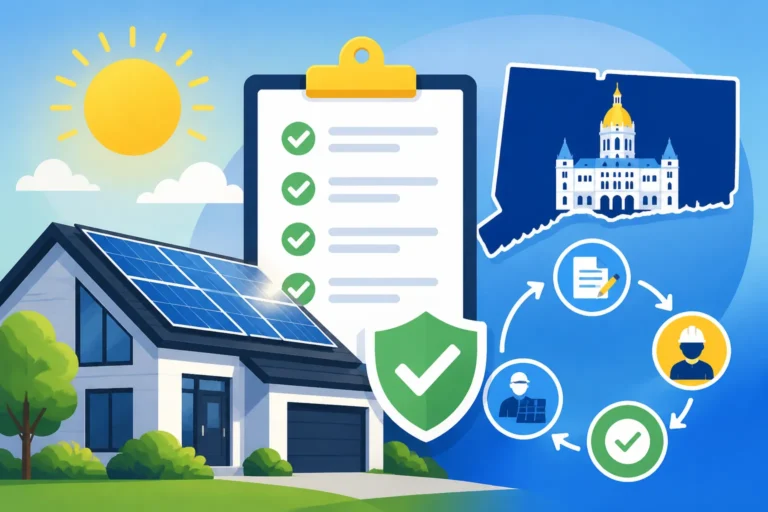
Always ask to see proof of their licenses and insurance. Don't just take their word for it. You can usually verify these credentials through your state's licensing board or local building department. If an installer cannot provide this documentation or if their licenses are expired or non-existent, they are likely operating illegally and could put your home, safety, and investment at significant risk. This also ties into the crucial step of solar permitting & interconnection (PTO) explained, which often hinges on the installer having proper credentials.
Red Flag 4: Subpar Installation Practices and Equipment Concerns
Even with the best sales pitch, if the actual installation and equipment are subpar, your solar investment won't pay off as expected. The quality of the components and the expertise of the installation team are critical for long-term performance and safety.
Skipping Crucial Site Assessments and Engineering
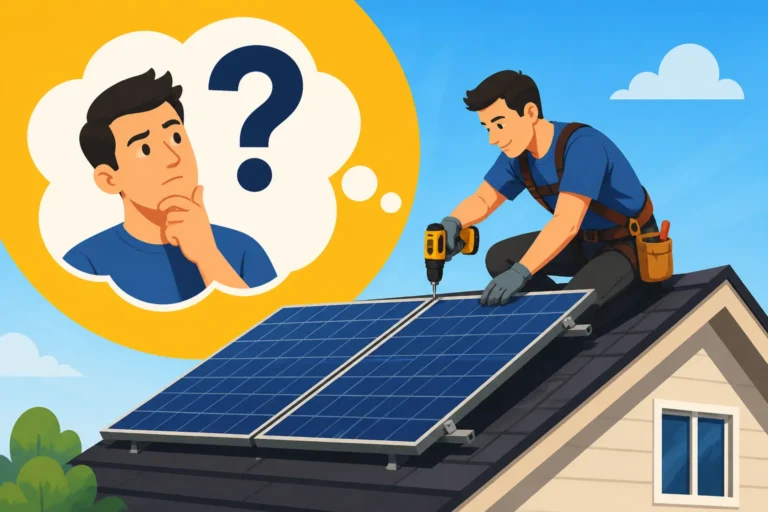
Before any proposal is finalized, a reputable solar installer will conduct a thorough site assessment. This isn't just a quick glance at your roof. It involves detailed measurements, an analysis of your roof's age, condition, and structural integrity, assessment of shading from trees or nearby buildings, and an evaluation of your home's electrical panel capacity. They'll also review your historical electricity usage to design a system that accurately meets your needs.
A red flag is an installer who provides a detailed quote without ever setting foot on your property, relying solely on satellite images or vague assumptions. While preliminary estimates can be done this way, a final design requires an in-person visit. Skipping a proper structural engineering review can lead to problems like roof leaks, damage from improper mounting, or even structural failure. Make sure they clearly explain their roof considerations for solar panels and what steps they take to ensure your roof is ready.
Generic Systems or Inferior Quality Components
Just like cars, not all solar panels and inverters are created equal. High-quality equipment from reputable brands generally performs better, lasts longer, and comes with stronger warranties. A red flag would be an installer who pushes a generic, no-name brand of panels or inverters without explaining their benefits or offering alternatives. They might also try to cut costs by using less efficient panels, which means you'd need more roof space or generate less power.
Ask about the specific brands and models of solar panels, inverters (e.g., string inverters, microinverters like Enphase, or power optimizers like SolarEdge), and batteries they plan to install. Research these components yourself. Reputable brands like REC, Qcells, or Maxeon (SunPower) are known for their quality and reliability. If an installer is vague about the equipment or insists on using brands you can't find much information about, it's worth questioning. Our guide on the best solar panels of 2026 can help you identify top-tier equipment.
Poor Communication and Project Management
Going solar involves several stages: initial consultation, site assessment, system design, permitting, installation, and final interconnection with the utility. Each stage has its own timeline and requirements. A red flag is an installer who communicates poorly, leaves you in the dark about progress, or seems disorganized. You might experience long delays without explanation, difficulty reaching your project manager, or different people telling you conflicting information.
A good installer will set clear expectations for the solar installation timeline, provide regular updates, and have a dedicated point of contact for any questions or concerns. They will proactively guide you through the permitting process, explain what to expect during installation, and clearly outline the steps for getting your system connected to the grid. If you feel like you're constantly chasing them for answers or if the process feels chaotic, it's a sign of poor project management that could lead to bigger problems.
Red Flag 5: Post-Installation Support and Warranty Avoidance
The relationship with your solar installer shouldn't end the moment the panels are on your roof. A significant part of your investment's long-term value lies in reliable post-installation support and warranty fulfillment. When installers become evasive after the sale, it's a huge warning sign.
Delays or Issues with Permitting and Interconnection
Getting your solar system legally connected to the grid (known as Permission to Operate, or PTO) involves navigating local permitting offices and your utility company. This can be a complex process, and delays are sometimes unavoidable, but a good installer manages it efficiently. A major red flag is an installer who promises an incredibly fast PTO process that seems unrealistic, or one who leaves you to handle the complex paperwork yourself after installation. Even worse is an installer who completes the installation but then drags their feet on securing the final permits and interconnection, leaving you with a system that can't legally operate or earn you credits from your utility.
When an installer is vague about the permitting and interconnection process, or if they have a history of significant, unexplained delays reported by other customers, it’s a sign that they might not have the experience or the internal processes to handle this critical phase properly. Remember, your system isn't truly "on" until you get that PTO from your utility, so clear communication and efficient handling of this step are paramount. You can learn more about the complexities in our article on solar permitting & interconnection (PTO) explained.
Lack of Clear Communication Channels After Sale
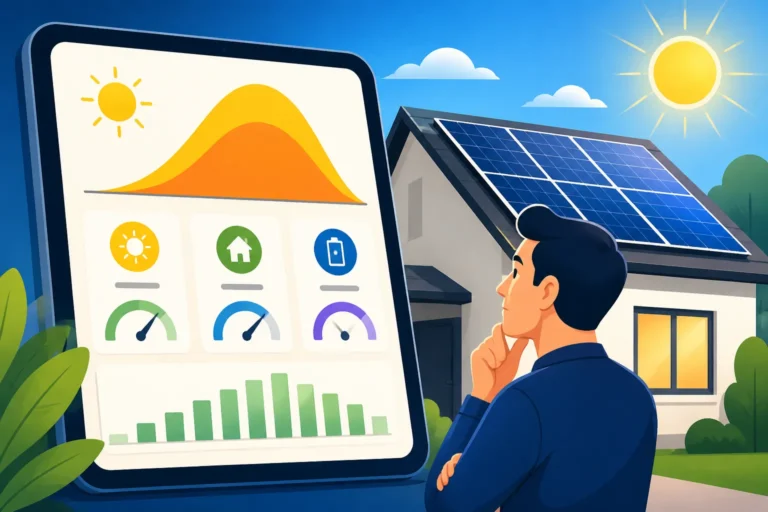
Once your system is installed and operational, you might still have questions. You might want to understand your monitoring portal, need advice on cleaning, or have a technical issue. A trustworthy installer will have clear channels for post-installation support. This could be a dedicated customer service line, an online portal, or a specific contact person.
If an installer becomes unreachable after the final payment, or if you find yourself bouncing between different departments with no one taking ownership of your concerns, this is a clear red flag. This often indicates a company that prioritizes sales over customer satisfaction and long-term relationships. You've invested a substantial amount of money; you deserve accessible and responsive support for the lifetime of your system.
Unresponsive to Service Requests or Warranty Claims
Perhaps the biggest red flag after installation is an installer who is unresponsive when issues arise or when you need to make a warranty claim. If a microinverter fails, a panel isn't producing as expected, or you notice a small roof leak, you need prompt and effective service. An installer who ignores your calls, delays scheduling service appointments indefinitely, or tries to push responsibility back to the equipment manufacturer (without facilitating the process) is not standing by their work.
This is where those strong warranties, discussed earlier, become critical. But a warranty is only as good as the company that honors it. Before signing, ask about their service department and their typical response times for warranty issues. Look for reviews specifically mentioning their post-installation support. If an installer gets a reputation for ghosting customers when problems appear, it could mean significant headaches and out-of-pocket expenses for you down the line.
How to Vet Solar Installers Like a Pro
Now that we've covered the red flags, let's talk about how to proactively protect yourself and find a truly reputable solar installer. This isn't about being overly suspicious, but about being informed and empowered.
The Power of Multiple Quotes and Independent Research
One of the most effective strategies you have is to get multiple quotes, ideally three to five, from different installers. This isn't just about price comparison; it's about comparing proposals, equipment, warranties, and the professionalism of each company. Use platforms like Modernize to connect with pre-screened installers in your area, but don't stop there. Take the time to do your own independent research.
When you have several quotes, you can easily spot discrepancies. For example, if one installer quotes significantly lower prices but uses different equipment, ask why. If another offers an unusually short payback period, dig into their assumptions. This process allows you to gain a deeper understanding of the market, the technology, and what constitutes a fair deal. Our guide on how to compare solar installer quotes can provide a structured approach to this.
Key Questions to Ask Every Potential Installer
Don't be shy about asking tough questions. A reputable installer will welcome them. Here’s a table of essential questions to arm yourself with during your consultations:
| Category | Key Questions to Ask | Why It Matters |
|---|---|---|
| Company Credibility | How long have you been in business? Can I see proof of your licenses and insurance? | Ensures stability, reliability, and proper qualifications. |
| Do you use your own installation teams or subcontractors? | Direct employees often ensure better quality control and accountability. | |
| Can you provide references from recent customers in my area? | Allows you to hear directly about real-world experiences. | |
| System Design | What specific solar panels and inverters do you recommend, and why? | Understands equipment choices and ensures quality components. |
| What is the estimated annual energy production of this system? | Helps you gauge potential savings and system performance. | |
| What is your process for site assessment and engineering review? | Ensures a customized, safe, and efficient system design. | |
| Pricing & Contract | Please provide a detailed, line-item breakdown of all costs. | Prevents hidden fees and ensures transparency. |
| What are the terms of the financing option you're recommending, including interest rates and total cost? | Clarifies financial commitment and avoids surprises. | |
| What are the specifics of your equipment, performance, and workmanship warranties? | Protects your investment against defects and installation issues. | |
| Installation Process | What is the estimated timeline from contract signing to Permission to Operate (PTO)? | Sets realistic expectations for project completion. |
| How do you handle permitting and utility interconnection? | Ensures a smooth, legal path to grid connection. | |
| What happens if my roof needs repairs or upgrades before installation? | Addresses potential additional costs and logistical challenges. | |
| Post-Installation | What kind of ongoing monitoring and customer support do you offer? | Ensures you have help if issues arise or questions come up. |
| What is your response time for service requests or warranty claims? | Gauges their commitment to post-sale support. |
For even more specific inquiries, consider reviewing our article on what questions to ask a solar installer. These questions cover everything from equipment to long-term support.
Understanding Your Contract Before You Sign
This cannot be stressed enough: Read your entire contract carefully before you sign anything. Do not let anyone rush you. If you don't understand a clause, ask for clarification. If the explanation isn't clear, ask for it in writing. It's often a good idea to have a trusted friend, family member, or even a legal professional review the contract, especially if it involves complex financing like a PPA or lease.
Look for details on:
- Total System Cost: Is it clear and final?
- Equipment Specifications: Are the exact panel and inverter models listed?
- Production Guarantees: Are there any, and what are the penalties if they're not met?
- Warranty Terms: Are all three types of warranties (product, performance, workmanship) clearly defined and documented?
- Payment Schedule: What are the milestones for payments, and are they tied to project completion phases?
- Cancellation Policy: What are your rights if you need to cancel?
- Escalator Clauses (for leases/PPAs): How much will your payments increase each year?
Understanding the solar dealer fees explained in your contract is particularly important for financed systems, as these can add thousands to your total cost. Remember, once you sign, you're bound by those terms. Taking the time upfront can save you significant stress and money later on.
Common Solar Installer Red Flags Checklist
Here's a quick reference table to help you identify potential issues when vetting solar installers. Use this as a guide during your research and consultations.
| Red Flag Category | Specific Warning Signs | Action to Take |
|---|---|---|
| Sales & Pricing |
|
Ask for detailed breakdowns, compare multiple quotes, take your time, verify incentives. |
| Contract & Warranties |
|
Read carefully, ask for clarification, get a second opinion, verify warranty details. |
| Company Credibility |
|
Check online reviews, BBB, state licensing boards, ask for local references. |
| Installation & Equipment |
|
Insist on a thorough site assessment, ask for specific equipment models, verify team credentials. |
| Post-Installation Support |
|
Ask about their service department, check reviews for post-install support, clarify PTO timeline. |
Disclaimer
The information provided in this guide is for general informational purposes only and does not constitute financial, legal, or professional advice. While we strive to provide accurate and up-to-date information, solar incentives, regulations, and market conditions can change rapidly. Always consult with qualified professionals, such as certified solar installers, financial advisors, and tax experts, to discuss your specific situation and make informed decisions. We do not endorse any specific brand or service mentioned, beyond recognizing their presence in the market.