Solar Panel Efficiency & Degradation Explained
It’s completely normal to feel a bit overwhelmed when you start looking into solar panels, especially when terms like "efficiency" and "degradation" get thrown around. You’re making a significant investment, and you want to be sure your panels will perform well for years to come. This comprehensive guide will demystify exactly what these terms mean for your home solar system, helping you understand how panels convert sunlight into electricity and how their performance might change over their long lifespan.
Understanding Solar Panel Efficiency
When you first hear "solar panel efficiency," it sounds like a straightforward concept, right? More efficient means better, faster, stronger! But there’s a little more nuance to it, and understanding it can really help you compare different options and set realistic expectations for your system's performance. It’s about how much of the sunlight hitting your panels actually gets turned into usable electricity.
What "Efficiency" Truly Means
At its heart, solar panel efficiency is simply the ratio of the electrical power produced by a photovoltaic (PV) panel to the amount of solar energy that hits its surface. Think of it like this: if the sun beams down 100 units of energy onto a panel, and that panel converts 20 of those units into electricity, then its efficiency is 20%. The higher the percentage, the more electricity a panel can generate from the same amount of sunlight and surface area. This is a critical metric, especially for homeowners with limited roof space, as higher efficiency means you need fewer panels to meet your energy needs. For example, a system using 22% efficient panels will require fewer physical panels than one using 18% efficient panels to achieve the same total power output.
This metric is typically measured under Standard Test Conditions (STC), which are carefully controlled laboratory environments: a cell temperature of 25°C (77°F), an irradiance of 1,000 watts per square meter (W/m²), and an air mass of 1.5. These conditions allow for consistent comparison between different manufacturers and models, giving you a baseline. However, your panels won't always operate under these ideal conditions in the real world.
Factors Affecting Panel Efficiency
While the lab-tested efficiency rating gives you a benchmark, many real-world factors can influence how efficiently your panels perform day-to-day. One of the biggest culprits is temperature. Solar panels, particularly silicon-based ones, actually become less efficient as their temperature rises above the optimal 25°C. On a scorching summer day in Phoenix, Arizona, a dark-colored solar panel can easily reach temperatures of 65°C (150°F) or more, leading to a noticeable drop in output compared to its STC rating. This is why good ventilation underneath your panels is important.
Shading is another significant factor. Even partial shading from a nearby tree branch, chimney, or utility pole can dramatically reduce the output of an entire string of panels if you're using a traditional string inverter system. This is where technologies like microinverters or power optimizers really shine, as they allow each panel to operate independently, minimizing the impact of localized shading. Dirt, dust, pollen, and even bird droppings accumulating on the panel surface can also block sunlight, reducing the amount of energy that reaches the PV cells and thereby decreasing efficiency. You might be surprised how much of a difference even a thin layer of grime can make! Regular maintenance and cleaning are key to preventing this issue.
The Importance of Real-World vs. Lab Ratings
It's super important to remember that the advertised efficiency rating is a snapshot taken under ideal lab conditions. While it’s a great starting point for comparison, your actual system performance will always vary. Think of it like a car's EPA mileage rating – you rarely get exactly that number in everyday driving. Factors like your local climate, the specific tilt and azimuth (direction) of your roof, the amount of shading throughout the day, and even the occasional dust storm will all play a role.
Many installers will use specialized software to model your system's expected performance based on your specific location, roof characteristics, and historical weather data. This gives you a much more realistic projection of how much electricity your solar panels will actually generate over a year, taking into account seasonal variations and typical conditions. It's often more useful to look at the total annual kilowatt-hour (kWh) production estimate than just the raw efficiency percentage when making your decision. This modeled output directly translates to your energy savings and the overall return on investment. If you're looking for the absolute best performance, researching the Best Solar Panels of 2026 and understanding how their real-world performance differs from lab ratings can be incredibly valuable.
Decoding Solar Panel Degradation
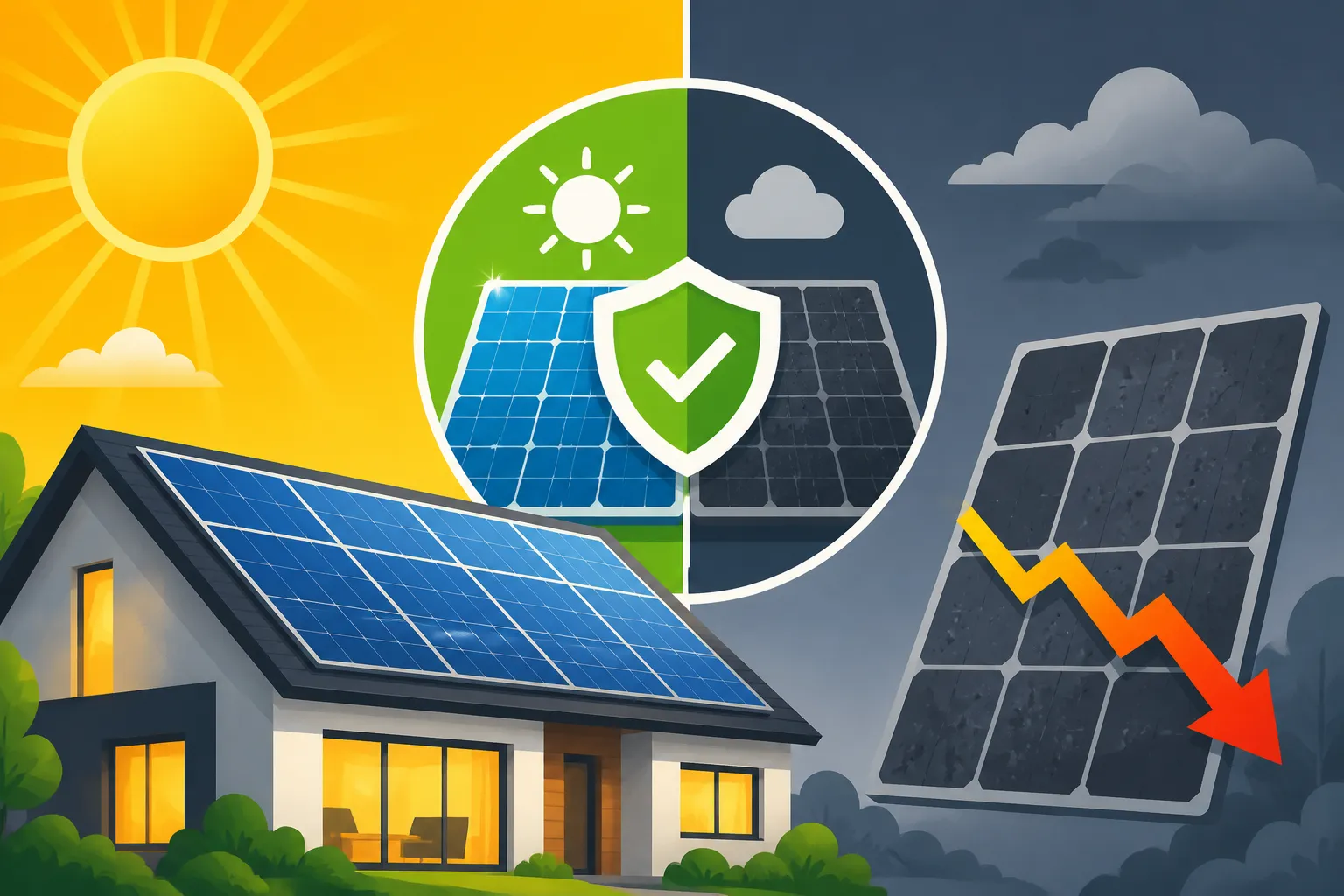
Just like any other technology or appliance in your home, solar panels don't last forever without some change in their performance. They are incredibly durable and built to withstand decades of exposure to the elements, but a natural process called degradation means their output will slowly, steadily decrease over time. It’s not a sudden cliff edge, but a gradual decline, and it's a completely normal part of owning a solar system.
What Causes Degradation?
Solar panel degradation primarily comes down to a few key culprits that chip away at the panels' ability to convert sunlight efficiently. The most significant factor is simply the prolonged exposure to sunlight itself, a phenomenon known as Light-Induced Degradation (LID). When new silicon PV cells are first exposed to sunlight, they experience a slight, initial drop in efficiency, usually within the first few weeks or months. This is often accounted for in the first-year degradation rate. After this initial dip, the degradation stabilizes.
Beyond LID, constant exposure to extreme temperatures, humidity, and UV radiation takes a toll on the materials that make up the panel. The encapsulant, often EVA (ethylene vinyl acetate), which seals the solar cells, can yellow or delaminate over many years. This reduces the amount of light reaching the cells. The backsheet, which protects the cells from moisture and UV on the back, can also crack or become brittle. These physical changes directly impact the panel's ability to maintain its original power output. Even tiny micro-cracks in the silicon cells themselves, often caused by thermal cycling (repeated heating and cooling) or minor physical stress during handling or installation, can accumulate over time and reduce performance.
Annual Degradation Rates: What to Expect
Solar panel manufacturers are very transparent about expected degradation rates, and they back these expectations with performance warranties. Typically, you can expect solar panels to degrade by about 0.5% to 0.8% per year after the initial first-year drop (which might be around 2-3%). So, if you install a panel with a 0.5% annual degradation rate, after 10 years, it will still be producing about 95% of its original power. After 25 years, it would be at roughly 87.5% of its initial output.
To give you a clearer picture, here’s a table with typical degradation expectations:
| Year | Cumulative Degradation (0.5% rate) | Performance (Remaining % of original output) |
|---|---|---|
| 1 | 2.0% (initial LID + 0.5%) | 98.0% |
| 5 | 4.0% (2.0% + 4 * 0.5%) | 96.0% |
| 10 | 6.5% (2.0% + 9 * 0.5%) | 93.5% |
| 15 | 9.0% (2.0% + 14 * 0.5%) | 91.0% |
| 20 | 11.5% (2.0% + 19 * 0.5%) | 88.5% |
| 25 | 14.0% (2.0% + 24 * 0.5%) | 86.0% |
These numbers are an industry standard, and top-tier panels often boast even lower degradation rates, sometimes as low as 0.25-0.3% per year. When you're comparing quotes, understanding the projected performance over the life of the system, based on these degradation rates, is crucial for calculating your long-term savings. For a deeper dive into how long you can expect your system to maintain its output, check out our guide on How Long Do Solar Panels Last?.
Impact of Environmental Factors
While inherent material science largely dictates degradation rates, environmental factors can certainly accelerate or mitigate the process. Areas with consistently high temperatures, strong UV radiation (like the desert Southwest), or high humidity can potentially see slightly faster degradation over very long periods compared to cooler, less intense climates. However, modern panels are rigorously tested to withstand these conditions. Hailstorms, while rare, can cause physical damage leading to premature failure, though panels are built to be incredibly resilient against impacts.
Conversely, some factors can help slow down perceived degradation. Keeping your panels clean, for instance, can help them perform at their best throughout their life, preventing temporary dips in output that might be mistaken for degradation. A good quality installation with proper airflow underneath the panels helps keep them cooler, which can slightly reduce temperature-related stress on the materials. Ultimately, reputable manufacturers design panels to perform reliably even in harsh environments, and the degradation rate is an averaged expectation across a wide range of conditions.
Efficiency vs. Degradation: How They Relate
It's easy to confuse solar panel efficiency and degradation, but they're distinct concepts that work together to define your system's overall performance. Think of efficiency as how good your panel is today at turning sunlight into electricity, and degradation as how that "goodness" slowly, naturally decreases over tomorrow and all the years after.
Initial Efficiency and Long-Term Performance
The initial efficiency rating of a solar panel is a measure of its peak performance under ideal conditions right out of the box. A higher initial efficiency means that for every square foot of roof space, you’ll be able to generate more power from the get-go. This is particularly valuable for homeowners with limited roof area who want to maximize their energy production. For instance, if you have a smaller roof, investing in panels with 22% efficiency versus 19% efficiency might mean the difference between generating 80% and 100% of your home's electricity needs.
However, this initial impressive number is only one piece of the puzzle. The long-term performance of your solar system is where degradation enters the picture. A panel might start at a fantastic 23% efficiency, but if it degrades at 0.7% per year, it might produce less power after 20 years than a panel that started at 21% efficiency but degraded at only 0.3% per year. So, while initial efficiency is important for the immediate output and system sizing, the degradation rate is crucial for understanding the true, sustained value and power production over the decades you'll own the system. You're not just buying power for today; you're investing in power for the next 25-30 years or more.
Warranty Guarantees for Performance
This is where the rubber meets the road! Understanding the warranty is absolutely paramount when considering solar panels, especially concerning degradation. Almost all major solar panel manufacturers offer a "performance warranty" that specifically addresses degradation. This warranty guarantees that your panels will produce a certain percentage of their original rated power after a specified number of years, usually 20 or 25 years. A common guarantee is 90% performance after 10 years and 80-85% performance after 25 years. This provides a strong safety net, reassuring you that your investment is protected against excessive degradation.
For example, a company like Qcells might offer a 25-year linear performance warranty that guarantees at least 98% of nominal power output in the first year, and then a maximum 0.5% annual degradation, ensuring 86% power output by year 25. If your panels degrade faster than this guaranteed rate, the manufacturer is obligated to replace or repair the faulty panels, or compensate you for the lost production. This is distinct from a "product warranty," which covers defects in manufacturing, materials, and workmanship – essentially, if the panel itself breaks or malfunctions. For a deep dive into the specifics, our guide on Solar Panel Warranties Explained can walk you through all the details.
Choosing Panels for Longevity
When you're sifting through different solar panel options, it's really smart to consider both high initial efficiency and low degradation rates together. Don't just pick the panel with the highest efficiency number; look at the whole package. Panels with advanced technologies like TOPCon or Heterojunction (HJT) cells often boast not only higher initial efficiencies but also lower degradation rates compared to older PERC technology. This is because these newer cell architectures are inherently more stable and less susceptible to some forms of degradation.
Investing in panels from reputable, established manufacturers generally provides greater peace of mind. These companies have extensive track records, robust R&D, and stand behind their products with strong warranties. While a slightly cheaper, less-known brand might offer a decent initial efficiency, a higher degradation rate or a less reliable warranty could negate those initial savings over time. It's about finding the sweet spot where upfront cost, efficiency, and long-term durability align with your budget and energy goals. Thinking about Monocrystalline vs Polycrystalline Solar Panels can also influence your choice, as monocrystalline often offers higher efficiency and better degradation performance.
Maximizing Your Solar Panel Performance
Getting solar panels is a big step towards energy independence, but simply having them on your roof isn't the end of the story. To truly get the most out of your investment, it's crucial to understand how to maximize their performance over their entire lifespan. This means everything from how they're installed to how you look after them year after year.
Proper Installation and System Design
The foundation of a high-performing solar system starts long before the panels even arrive on your roof. Proper installation and meticulous system design are paramount. A skilled solar installer will carefully assess your home's energy needs, your average electricity consumption, and the unique characteristics of your roof, including its size, pitch, and orientation. A south-facing roof in the Northern Hemisphere is generally ideal, but experienced designers can optimize systems for east or west-facing roofs too, sometimes by deploying panels on multiple roof facets.
The layout of the panels, the choice of inverter technology – whether it's a string inverter, microinverters (like those from Enphase), or power optimizers (like SolarEdge) – all play a critical role. For instance, if your roof experiences partial shading at different times of the day, microinverters or optimizers can ensure that shaded panels don't drag down the performance of the entire system. Proper wiring, secure mounting, and adherence to local building codes are also non-negotiable for safety and optimal function. A well-designed system, from the initial consultation to the final Permission to Operate (PTO), ensures that every panel contributes its maximum potential from day one.
Regular Maintenance and Cleaning
Unlike a car or a traditional HVAC system, solar panels require relatively little maintenance, which is one of their big selling points. However, "little" doesn't mean "none." The most common form of maintenance is simply keeping them clean. Over time, dust, pollen, leaves, and bird droppings can accumulate on the panel surfaces, creating a physical barrier that blocks sunlight and reduces output. In drier climates, dust accumulation can be particularly impactful.
Most homeowners find that natural rainfall does a pretty good job of keeping panels reasonably clean. However, if you live in an area with prolonged dry spells, heavy agriculture, or frequent construction, a periodic cleaning might be beneficial. This can often be a DIY task using a soft brush, a garden hose, and plain water (avoid harsh chemicals or abrasive materials). You can find specific solar panel cleaning brushes and squeegees on sites like Amazon that make the job easier and safer, especially for panels within reach. For panels on steep roofs or multi-story homes, it's usually best to hire a professional cleaning service to ensure safety. Beyond cleaning, it’s a good idea to periodically check for any visible damage, loose wiring, or excessive shading from new tree growth. Our article on Solar Panel Maintenance & Cleaning provides a much more detailed guide.
Monitoring Your System's Output
One of the best ways to ensure your solar system is performing at its peak is to actively monitor its output. Modern solar systems typically come with sophisticated monitoring software, often accessible via a smartphone app or a web portal provided by your inverter manufacturer (like Enphase or SolarEdge). This software allows you to track your system’s real-time electricity production, daily generation, monthly totals, and even compare it to historical data.
Consistent monitoring helps you quickly identify any dips in performance that could signal an issue. For example, if you notice a sudden, sustained drop in production that isn't explained by weather, it could indicate a problem like a shaded panel, a faulty optimizer, or even an inverter issue. Early detection allows you to address problems promptly, preventing prolonged periods of underperformance and maximizing your long-term energy savings. Many systems also provide alerts for significant events, giving you peace of mind that your solar investment is continuously working hard for you. For more on this, check out How to Monitor Solar Panel Performance.
Common Myths and Misconceptions About Solar Panel Lifespan
The world of solar energy can be ripe with myths and misunderstandings, especially when it comes to how long panels actually last and what kind of commitment you're making. It’s easy to get caught up in outdated information or hear anecdotal horror stories that don’t reflect today’s advanced technology. Let’s clear up some of the most common misconceptions.
The "Panels Die After X Years" Myth
One of the most persistent myths is that solar panels "die" or completely stop working after a set number of years, typically 20 or 25, which corresponds to the length of most warranties. This couldn't be further from the truth! While performance warranties typically cover 25 years, this doesn't mean the panels suddenly quit on day 9,126. What the warranty guarantees is that the panels will still be producing a minimum percentage of their original output at that 25-year mark (e.g., 80% to 85%).
In reality, solar panels are built to last much longer. Many panels installed in the 1980s and 1990s are still generating electricity today, albeit at a reduced capacity. The materials used in modern panels – tempered glass, durable aluminum frames, and advanced encapsulants – are designed to withstand decades of harsh weather. While their efficiency will slowly degrade, they'll continue to produce power for 30, 40, or even 50 years. It's more about a gradual decline in output than a sudden failure. Think of it like an old car that still runs but maybe not quite as fast or efficiently as it once did.
Comparing Solar to Other Home Investments
Some homeowners worry about the long-term return on investment (ROI) for solar, comparing it to other home upgrades like a new roof or kitchen remodel. The truth is, solar panels often offer a more tangible and predictable financial return. While a new kitchen might increase your home's aesthetic appeal and market value, it doesn't actively put money back in your pocket every month by reducing or eliminating your utility bill. Solar panels, on the other hand, do exactly that.
The financial benefits of solar accumulate year after year through reduced electricity costs, and in many regions, through mechanisms like Net Metering Explained: How It Works by State or by selling SRECs Explained: Selling Solar Renewable Energy Credits. Over 25-30 years, the cumulative savings can be substantial, often outweighing the initial investment multiple times over. Furthermore, solar panels significantly increase your home's value, making it more attractive to future buyers, and often come with Solar Property Tax Exemptions by State to sweeten the deal. Our article, Is Solar a Good Investment in 2026?, dives deep into these financial aspects.
Extreme Weather Concerns
Another common concern is whether solar panels can withstand extreme weather events. People often picture fragile glass panels shattering in a hailstorm or flying off the roof in a hurricane. While no structure is entirely impervious to the most severe natural disasters, modern solar panels are surprisingly robust. They are typically engineered to withstand heavy snow loads, high winds (often up to 140 mph or more), and impacts from hailstones of a certain size. Most panels undergo rigorous testing by independent certification bodies like UL (Underwriters Laboratories) to meet stringent safety and durability standards.
In areas prone to hurricanes, such as Florida or the Gulf Coast, installations are often required to meet specific wind load certifications. Panels are securely mounted to your roof using heavy-duty racking systems, making them an integral part of your home’s structure. While an exceptionally strong, rare event might cause damage, the likelihood of typical weather events destroying your panels is very low. This resilience is a key factor in their long lifespan and continued performance.
The Role of Technology in Efficiency and Degradation
The solar industry is a dynamic field, constantly pushing the boundaries of what's possible. Advances in technology aren't just making panels more powerful; they're also making them more durable and better equipped to resist the natural processes of degradation. Staying updated on these innovations can help you make an informed decision when choosing a system for your home.
New Cell Technologies TOPCon, HJT, and PERC
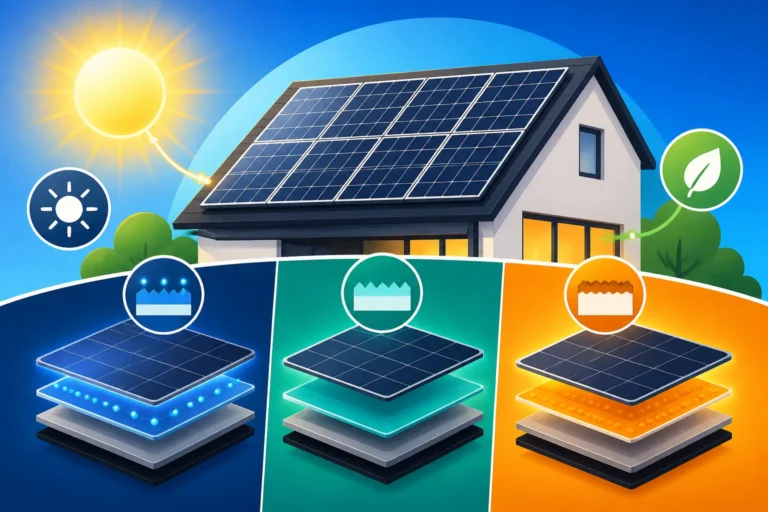
The heart of a solar panel lies in its photovoltaic cells, and this is where some of the most exciting technological advancements are happening. For years, Passivated Emitter and Rear Cell (PERC) technology was the standard, offering efficiency gains over traditional cells. However, newer technologies like Tunnel Oxide Passivated Contact (TOPCon) and Heterojunction (HJT) are now leading the charge. TOPCon cells, for example, build upon PERC technology by adding an ultra-thin layer of silicon oxide and a doped polysilicon layer, which significantly improves electron capture and reduces recombination losses. This results in higher efficiency (often exceeding 22-23% in commercial modules) and, crucially, lower degradation rates, typically around 0.4% or less annually.
HJT cells, used by brands like REC Solar, are even more complex, combining amorphous and crystalline silicon layers to create a "hybrid" cell. These cells boast even higher efficiencies, sometimes reaching 24% or more, and are known for their excellent performance in hot temperatures and extremely low degradation rates. The move towards N-type silicon wafers in both TOPCon and HJT cells also contributes to better performance by reducing Light-Induced Degradation (LID) and Potential Induced Degradation (PID) compared to older P-type PERC cells. This means the panels maintain more of their initial power over their extended lifespan. For a detailed comparison, explore our guide on Solar Panel Technology: TOPCon, HJT & PERC.
Improved Encapsulation and Materials
It's not just the cells that are getting smarter; the entire construction of the solar panel is evolving to enhance durability and combat degradation. The encapsulant material, which is the clear layer that protects the solar cells from moisture and physical damage, has seen significant improvements. Older encapsulants were more prone to yellowing or delaminating over time, reducing light transmission. Modern encapsulants are designed with better UV resistance and adhesion properties, ensuring clearer light pathways to the cells for longer.
Similarly, advancements in backsheet materials, which are the protective layers on the rear of the panel, have led to enhanced moisture barrier properties and greater resistance to environmental stressors like heat, cold, and UV radiation. Even the aluminum frames and junction boxes are engineered for greater durability and weather resistance. Manufacturers are also increasingly adopting technologies like bifacial panels, which can capture sunlight from both sides, increasing energy yield, and often feature robust glass-on-glass constructions that offer superior protection against micro-cracks and degradation compared to traditional glass-on-backsheet designs. These material science improvements are critical in delivering on those 25+ year performance warranties.
Smart Inverters and Monitoring Systems
While panels generate the power, the inverters are the brains of the operation, converting the DC electricity from the panels into usable AC power for your home. Modern smart inverters and associated monitoring systems play a vital role in optimizing performance and mitigating the effects of degradation. Microinverters, for example, allow each panel to operate independently, ensuring that if one panel is partially shaded or experiences slightly higher degradation, it doesn't drag down the output of the entire system. This maximizes overall energy harvest, even as individual panels age at slightly different rates.
Advanced monitoring platforms track the performance of each individual panel or string, providing granular data that can highlight even small issues. This allows homeowners and installers to quickly identify and address problems like a malfunctioning microinverter or excessive degradation in a particular panel. Early detection means you can replace a component before it significantly impacts your long-term savings. Furthermore, these smart systems can often integrate with solar batteries, allowing for optimized energy storage and usage, which can become even more important as the grid evolves and net metering policies change, like the transition to What Is NEM 3.0 California Net Billing?
Evaluating Solar Panel Warranties
When you're making a significant investment like a home solar system, understanding the warranties that come with your panels isn't just important—it's absolutely critical. These warranties are your assurance that your system will perform as promised for decades, and they represent a manufacturer's confidence in their product's longevity and quality. Ignoring the fine print here could lead to unexpected costs down the line.
Product Warranties vs. Performance Warranties
It’s essential to distinguish between two main types of warranties you'll encounter: product warranties and performance warranties. A product warranty (also sometimes called an equipment or materials warranty) covers defects in the manufacturing of the physical panel itself. This includes issues like faulty wiring, frame defects, problems with the glass or encapsulant, or any other component that might fail due to a manufacturing flaw. Typically, product warranties for solar panels range from 10 to 25 years, with leading brands like Maxeon (SunPower) and REC offering some of the longest product warranties, often up to 25 years. This warranty protects your initial investment against things that simply shouldn't break.
The performance warranty, on the other hand, addresses the gradual degradation of the panel's power output over time. This is where the discussion about degradation rates truly comes into play. It guarantees that your panels will produce at least a certain percentage of their original rated power after a specified period, usually 20 or 25 years. For instance, a common performance warranty guarantees 90% power output after 10 years and 80-85% after 25 years. This warranty is crucial because it protects you against panels degrading faster than expected. If your panels fail to meet these guaranteed output levels, the manufacturer is responsible for repairing, replacing, or compensating you for the lost power production.
Typical Warranty Lengths and Coverage
As mentioned, product warranties typically range from 10 to 25 years. A 12-year product warranty is fairly standard in the industry, while 15, 20, or even 25 years indicates a premium product from a highly confident manufacturer. Performance warranties are almost universally 25 years, reflecting the expected operational lifespan of solar panels. Some newer, cutting-edge panels might even offer 30-year performance warranties. It's important to look for "linear" performance warranties, which specify a maximum annual degradation rate (e.g., no more than 0.5% per year after the first year), rather than just two lump-sum percentages (e.g., 90% at year 10, 80% at year 25). Linear warranties offer more consistent protection against excessive degradation throughout the panel's life.
Beyond the panels themselves, don't forget the inverter warranty (typically 10-12 years for string inverters, 20-25 years for microinverters like Enphase), and the workmanship warranty from your installer (usually 10 years, covering the installation quality). A robust set of warranties across all components and the installation itself provides comprehensive protection for your entire solar investment. When considering how much your system might save you, understanding your Solar Panel Cost Per Watt Explained in relation to these warranties becomes a clearer calculation.
What Happens if a Panel Fails Early?
If a solar panel fails prematurely, whether due to a manufacturing defect (covered by the product warranty) or excessive degradation (covered by the performance warranty), the process for resolution typically involves contacting your solar installer first. They will usually diagnose the issue and, if it falls under warranty, facilitate the claim with the manufacturer. Depending on the terms, the manufacturer might send a replacement panel, provide a credit, or dispatch a technician for repair.
It's important to keep all your documentation—contracts, warranty certificates, and system specifications—in a safe place. Reputable installers will handle the legwork of warranty claims for you. However, if your installer goes out of business, you might have to deal directly with the panel manufacturer. This is another reason why choosing panels from well-established, financially stable brands is a wise decision. Knowing that you're backed by a solid warranty from a company that will likely still be around in 20 years offers invaluable peace of mind.
Real-World Examples of Solar Panel Longevity
It’s one thing to talk about degradation rates and warranties in theory, but it’s another to see how solar panels perform in the real world over decades. Thankfully, solar technology isn't new, and there are plenty of examples of systems installed long ago that continue to generate clean electricity, proving their impressive durability.
Case Studies of Older Systems
While modern panels come with 25-year performance warranties, many older installations demonstrate that panels can last much longer. For instance, some of the very first grid-connected solar systems, installed in the early 1980s, are still partially operational today. A famous example is the system installed at the Solar Energy Research Institute (now NREL) in Golden, Colorado, which included panels from various manufacturers. Many of these panels, despite being decades old and based on much less advanced technology, continue to produce power, often exceeding their initial long-term performance estimates.
Another compelling case study comes from Germany, a pioneering country in solar adoption. Studies on systems installed in the 1990s and early 2000s have shown that many panels exceed the 80% output mark even after 30 years, often experiencing average degradation rates lower than the 0.5% predicted. These real-world examples from diverse climates—from the arid conditions of the American Southwest to the temperate and often cloudy skies of Germany—underscore the inherent robustness and enduring power production capabilities of solar photovoltaic technology. They serve as tangible proof that your investment isn't just for a decade or two, but for the very long haul.
Factors Contributing to Extended Lifespan
While the quality of the panel itself is fundamental, several other factors contribute significantly to a solar system's ability to exceed its warranted lifespan. A high-quality installation is critical. This means proper mounting that allows for adequate ventilation to prevent overheating, secure wiring that isn't exposed to unnecessary wear and tear, and protection against environmental factors like moisture ingress. An installation that adheres to the highest industry standards will inherently lead to a longer-lasting system.
The local climate also plays a role, though modern panels are designed for resilience across various conditions. Panels in areas with less extreme temperature fluctuations or lower levels of UV radiation might experience slightly slower degradation. Regular, albeit minimal, maintenance, such as occasional cleaning to remove heavy dirt buildup, ensures that the panels can always operate at their best. Finally, choosing reputable brands with a long history and strong financial backing means that if an issue does arise, their warranties are more likely to be honored, contributing to the system's longevity. Brands like Maxeon, Qcells, and REC are known for their quality and standing behind their products.
Resale Value and Long-Term Investment
Beyond the electricity savings, the extended lifespan of solar panels contributes directly to the long-term investment value of your home. A solar system that continues to perform well beyond its 25-year warranty adds significant value and appeal to a property. Potential homebuyers are increasingly seeking homes with solar, recognizing the immediate and ongoing savings on utility bills. A well-maintained system with a proven track record of performance is a major selling point. Our article on Do Solar Panels Increase Home Value? explores this in greater detail.
Even if you decide to sell your home before the 25-year mark, a solar system with many years of guaranteed performance remaining will be a strong asset. The ability to demonstrate decades of low-cost energy generation translates into tangible savings for the next homeowner, often commanding a higher selling price and a quicker sale. Thus, understanding efficiency and degradation isn't just about how much electricity you'll make, but also about securing a valuable, long-term asset that benefits both your wallet and your property's marketability.
Disclaimer
Please note that the information provided in this guide is intended for general informational purposes only and does not constitute professional financial, tax, or energy advice. Solar system performance, savings, incentives, and degradation rates can vary significantly based on your specific location, local regulations, energy usage, system design, and product choices. Always consult with certified solar professionals and financial advisors to determine the best solution for your individual circumstances. While efforts are made to keep information current, the solar industry and related policies are subject to change.