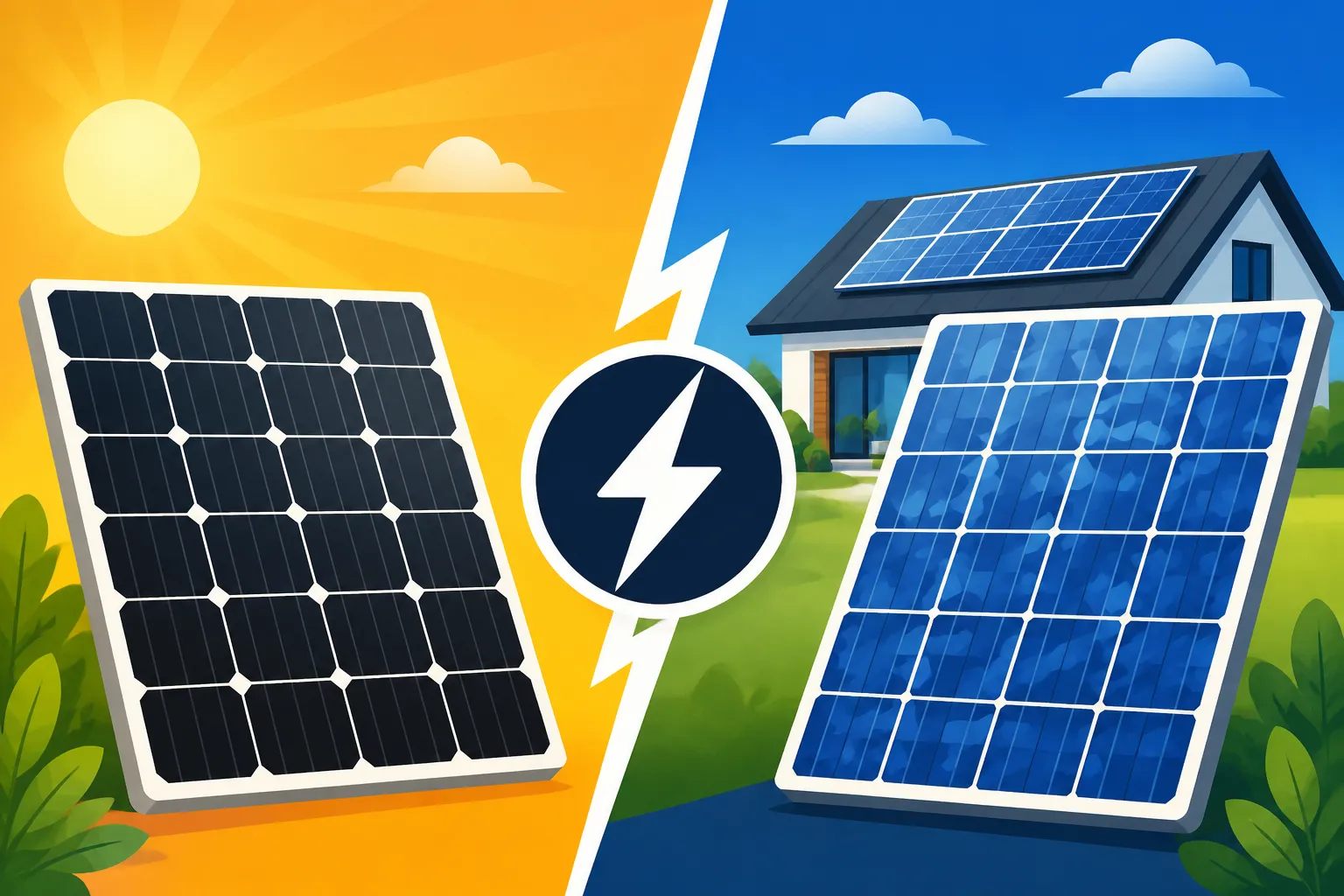
Monocrystalline vs Polycrystalline Solar Panels
Deciding to go solar is a fantastic step, but once you start looking into it, you quickly realize there's a whole world of options and jargon that can make your head spin. One of the first big choices you'll face is understanding the difference between monocrystalline and polycrystalline solar panels. It feels like a big, technical decision, and frankly, it can be intimidating to figure out what's best for your home and budget. This guide is here to break down these two primary types of solar panels, helping you understand their core differences, so you can make an informed, confident choice without feeling overwhelmed.
Understanding the Core Differences: Monocrystalline vs. Polycrystalline
When you're first diving into the world of home solar, terms like "monocrystalline" and "polycrystalline" can sound incredibly technical and frankly, a bit daunting. But at their heart, the difference lies in how the silicon cells within the panel are manufactured. This fundamental distinction impacts everything from their appearance to their efficiency and even their cost. It's not just about one being "better" than the other, but rather which one is "better for you."
The Crystal Conundrum: How Cells Are Made
The core of any solar panel is its photovoltaic (PV) cells, which are typically made from silicon. It's how that silicon is processed into cells that truly defines whether a panel is monocrystalline or polycrystalline. Think of it like baking a cake: the ingredients are similar (silicon), but the preparation and cooling process yield entirely different results.
For monocrystalline panels, the silicon is grown into a single, large, incredibly pure crystal ingot. This is achieved through a meticulous process called the Czochralski method, where a seed crystal is dipped into molten silicon and slowly pulled upwards, allowing a large, cylindrical crystal to form. Once cooled, this ingot is then sliced into thin wafers, which become the individual solar cells. Because they come from a single, uniform crystal, these cells have a consistent atomic structure, making them very efficient at converting sunlight into electricity. You'll recognize them by their uniform dark black color and rounded edges, as the wafers are cut from a cylindrical ingot and then trimmed to a square shape, leaving small gaps.
Polycrystalline panels, on the other hand, are a bit more rustic in their origin. Instead of growing a single, pure crystal, manufacturers melt raw silicon fragments and pour them into a square mold. As this silicon cools, multiple silicon crystals form and grow together, creating a mosaic-like structure. These blocks are then also sliced into wafers. Because these cells contain multiple crystals with different orientations, they have a less uniform appearance, often appearing blue with visible grain boundaries, and typically have perfectly square edges as they are cut directly from a rectangular block. This multi-crystal structure is less uniform than a single crystal, which affects its efficiency.
Visual Cues: Telling Them Apart at a Glance
Aside from the technicalities of their manufacturing, one of the easiest ways to distinguish between monocrystalline and polycrystalline panels is their appearance. This might seem like a superficial detail, but aesthetics can be a significant factor for homeowners considering rooftop installations, especially if curb appeal is important to you.
Monocrystalline panels are typically characterized by their sleek, dark black color. This uniform hue comes from the high purity and single-crystal structure of the silicon. When you look closely, you might notice that the individual cells often have slightly rounded corners, which is a remnant of being cut from a cylindrical silicon ingot. The overall effect is very cohesive and often considered more aesthetically pleasing, blending in seamlessly with many modern rooflines. This uniform appearance is why many homeowners prioritize them for visible rooftop installations.
Polycrystalline panels, in contrast, usually have a distinct blue hue. This color comes from the way the multiple silicon crystals reflect light. You can often see the visible grain boundaries within each cell, creating a somewhat mottled, mosaic-like texture. The cells themselves are perfectly square, as they are cut from a square silicon block. While still very effective, some homeowners find the blue color and textured look less appealing than the uniform black of monocrystalline panels. However, for many, the slight aesthetic difference is a minor trade-off for other benefits, which we'll explore.
Delving Deeper into Monocrystalline Solar Panels
Monocrystalline panels have long been considered the premium option in the solar market, known for their distinct look and high performance. When you see those sleek, black panels adorning a modern home, chances are you're looking at monocrystalline technology. Understanding the intricate details of their creation, their inherent advantages, and the few drawbacks can help you appreciate why they often command a higher price point.
The Czochralski Method: Crafting Pure Silicon
The creation of monocrystalline solar cells begins with an incredibly precise and energy-intensive manufacturing process known as the Czochralski method. This isn't just a simple melting and pouring; it's a careful cultivation of a single silicon crystal. Imagine slowly dipping a tiny seed crystal into a vat of superheated, molten silicon, almost like pulling taffy. As the seed is slowly rotated and pulled upwards, the silicon atoms from the melt align themselves perfectly with the crystal structure of the seed, forming a large, cylindrical ingot of extraordinarily pure, single-crystal silicon.
This ingot can be several feet long and is essentially one giant, flawless silicon crystal. The purity and consistency of this crystal are paramount. Impurities or breaks in the crystal structure would impede the free flow of electrons, reducing efficiency. Once the massive crystal has cooled, it's carefully sliced into incredibly thin wafers, typically between 160 to 200 micrometers thick – thinner than a human hair! These wafers are then treated and processed to create the individual photovoltaic cells that harness sunlight. Because each cell is cut from a single, unbroken crystal, electrons can move through them with minimal resistance, leading to their superior efficiency. This meticulous process contributes significantly to their higher production cost and, subsequently, their retail price.
Advantages of Monocrystalline Panels
The careful craftsmanship of monocrystalline panels translates directly into several significant advantages, making them a top choice for many homeowners. These benefits often justify their higher initial investment, especially in certain scenarios.
Firstly, higher efficiency rates are the hallmark of monocrystalline panels. Thanks to their single, pure crystal structure, electrons move more freely, allowing them to convert a greater percentage of sunlight into electricity. Most monocrystalline panels today boast efficiency ratings typically ranging from 17% to over 22%, with some premium brands pushing even higher. This means you need fewer panels to achieve the same power output as a system using less efficient panels. For homes with limited roof space, like those in urban areas of New York or Boston, this higher power density can be a game-changer, allowing them to maximize energy production in a smaller footprint.
Secondly, monocrystalline panels tend to have better performance in low-light conditions. While no solar panel produces optimally on a heavily overcast day, the superior purity of monocrystalline silicon allows it to capture and convert more diffuse light. This can be particularly beneficial in regions that experience frequent cloudy weather, or for roofs that might have some partial shading during parts of the day. They can start producing power earlier in the morning and continue later into the evening compared to their polycrystalline counterparts, extending their effective operational hours.
Lastly, longevity and aesthetics are also key advantages. Monocrystalline panels are known for their durability and long lifespan, often backed by 25-year performance warranties. The uniform black appearance is often preferred by homeowners who want their solar array to blend seamlessly with their roof and maintain curb appeal. This sleek look is a definite plus for many, enhancing the overall aesthetic of their home rather than detracting from it. For a deeper dive into how different technologies affect system output, you might want to read about Solar Panel Efficiency & Degradation Explained.
Potential Drawbacks to Consider
While monocrystalline panels offer impressive performance, they do come with a few considerations that homeowners should be aware of. No technology is without its trade-offs, and understanding these can help set realistic expectations and ensure they align with your overall solar goals.
The most notable drawback is their higher upfront cost. The sophisticated Czochralski manufacturing process requires more energy and produces less silicon waste compared to polycrystalline methods, which translates to a higher price per watt. For a typical residential solar installation, this difference can add thousands of dollars to the total system cost. While the long-term savings from higher efficiency might offset this, it's a significant factor for those working with a tighter budget or if your priority is simply the lowest initial investment. This higher initial outlay means a longer Solar Panel Payback Period Explained for many homeowners.
Another minor point, though less common in modern panels, is their performance in extreme heat. Historically, monocrystalline panels could experience a slightly larger drop in efficiency as temperatures climbed very high, for instance, in scorching Arizona summers. While this effect has been significantly mitigated by advancements in solar cell technology and mounting techniques that allow for better airflow, it's still a factor that some older generations of monocrystalline panels might exhibit more prominently than their polycrystalline cousins. For optimal performance, proper ventilation behind the panels is crucial regardless of type.
Exploring Polycrystalline Solar Panels in Detail
Polycrystalline solar panels represent a slightly different approach to harnessing the sun's energy, one that prioritizes cost-effectiveness and a simpler manufacturing process. Often recognized by their distinctive blue hue, these panels have been a workhorse in the solar industry, making renewable energy more accessible to a wider range of consumers. Understanding their unique production, advantages, and the specific scenarios where they shine can help you appreciate their value in the diverse solar landscape.
A Simpler Process: From Melt to Mold
The manufacturing of polycrystalline solar cells is, in many ways, more straightforward and less energy-intensive than that of monocrystalline panels. Instead of growing a single, perfect crystal, the process involves melting raw silicon fragments, which are typically recycled silicon scraps or lower-grade silicon. This molten silicon is then poured into a square or rectangular mold and allowed to cool slowly and naturally. As it cools, multiple silicon crystals nucleate and grow together, creating a block that contains many individual crystals, rather than one uniform crystal.
Once the block of silicon has solidified and cooled, it is precisely cut into thin wafers, much like the monocrystalline process. These wafers, with their multi-crystalline structure, are then processed into photovoltaic cells. Because the silicon doesn't have to be as pure, and the crystal growing process is less complex and energy-intensive, the overall cost of producing polycrystalline cells is lower. This translates directly into a more budget-friendly solar panel for consumers. The visible grain boundaries within each cell are a direct result of these multiple crystals forming and growing together during the cooling process, giving them their characteristic textured appearance and blue color.
Key Advantages of Polycrystalline Panels
Polycrystalline panels bring several compelling benefits to the table, making them an excellent choice, particularly for homeowners looking for a cost-effective solar solution without sacrificing too much performance.
The primary advantage of polycrystalline panels is their lower manufacturing cost, which directly translates to a more affordable purchase price for consumers. Since the production process is less complex and requires less energy and slightly lower-purity silicon, these panels are generally less expensive per watt than monocrystalline panels. For many homeowners, especially those with ample roof space who aren't concerned with maximizing every square inch for efficiency, this cost saving can be a significant factor in making solar energy more attainable. Lower upfront costs can mean a quicker path to financial return, though it's always wise to calculate your potential Solar Panel Payback Period Explained based on specific quotes.
Another benefit often cited is their performance in high temperatures. While modern monocrystalline panels have largely closed this gap, older generations of polycrystalline panels were sometimes noted for being slightly more tolerant to heat. This means they might experience a slightly smaller drop in efficiency when temperatures on your roof soar during hot summer days. This characteristic can be particularly relevant for installations in very warm climates, such as parts of Texas or Florida, where panels are regularly subjected to intense heat.
Finally, the environmental footprint of polycrystalline panel production can be considered marginally lower than monocrystalline panels due to the less energy-intensive manufacturing process and the use of slightly less refined silicon. While both types of solar panels are excellent for reducing carbon emissions once installed, some environmentally conscious consumers might appreciate this subtle difference in their initial production phase.
Understanding the Downsides
While polycrystalline panels offer an attractive balance of cost and performance, they do come with a few inherent characteristics that are worth considering. These aren't necessarily deal-breakers, but they are important factors in deciding if they are the right fit for your home.
The most significant disadvantage is their lower efficiency rate. Due to the presence of multiple crystals and grain boundaries within each cell, electrons face slightly more resistance as they move through the material. This means polycrystalline panels typically convert between 15% and 17% of sunlight into electricity, though newer models can reach closer to 19%. While this is still a very respectable conversion rate, it's generally lower than what you'd find in monocrystalline panels. This lower efficiency means you might need more polycrystalline panels to achieve the same total power output for your home. If your roof space is limited, or if you live in an area with particularly high electricity consumption, this could be a limiting factor.
Another point to consider is their slightly less optimal performance in low-light conditions. Because of their multi-crystalline structure, polycrystalline panels are sometimes less effective at capturing and converting diffuse light compared to their monocrystalline counterparts. This means they might not start producing power as early in the morning or continue as late in the evening on cloudy days, potentially leading to slightly less overall energy production over the course of a year, depending on your local climate.
Lastly, the aesthetic appeal is often subjective. The distinctive blue color and visible grain patterns of polycrystalline panels are not universally preferred. While some homeowners don't mind the look or even prefer it, others find the uniform black of monocrystalline panels to be more modern and visually appealing, especially on prominent roof sections. This is a personal preference, but it’s worth noting if curb appeal is a high priority for your solar installation.
Efficiency and Performance: A Head-to-Head Comparison
When it comes to solar panels, "efficiency" is often the buzzword that captures everyone's attention, and for good reason. It dictates how much power your system can generate from the sunlight it receives. While both monocrystalline and polycrystalline panels are excellent at converting sunlight, there are nuanced differences in their performance characteristics that can impact your overall energy production and savings. Understanding these distinctions is crucial, particularly when considering your home's unique energy needs and environmental factors.
The Numbers Game: Typical Efficiency Ratings
At its core, efficiency refers to the percentage of sunlight that a solar panel can convert into usable electricity. This isn't just an abstract number; it directly translates to how much power you get from each square foot of panel on your roof. When comparing monocrystalline and polycrystalline, a clear hierarchy generally emerges.
Monocrystalline panels, thanks to their single, pure silicon crystal structure, are consistently the efficiency leaders. You'll typically find commercial monocrystalline panels ranging from 17% to over 22% efficiency, with cutting-edge models pushing even higher, sometimes exceeding 23-24%. This means that a monocrystalline panel of a given size can produce more electricity than a polycrystalline panel of the exact same dimensions. For example, if you have a roof that can only accommodate a certain number of panels, choosing monocrystalline can help you maximize the total wattage output of your system within that limited space. This is a crucial consideration for homeowners in densely populated areas or those with complex roof designs, where every inch matters. If you're wondering how many panels you might need, exploring How Many Solar Panels Do I Need for My Home? may be helpful.
Polycrystalline panels, due to their multi-crystalline structure and less refined silicon, generally have lower efficiency ratings. They typically range from 15% to 17%, though newer technological improvements are allowing some manufacturers to reach closer to 19%. While this difference might seem small in percentage points, it accumulates over a large array of panels and over the 25+ year lifespan of a solar system. If you have a very large, unobstructed roof and prioritize a lower upfront cost, the slightly lower efficiency of polycrystalline might be a perfectly acceptable trade-off. However, if space is at a premium, the higher power density of monocrystalline becomes a clear advantage.
Performance in Various Conditions
Beyond the laboratory-tested efficiency ratings, how panels perform in real-world conditions – under varying sunlight, temperatures, and shading – is equally important. It's not always sunny and 75 degrees, and your panels need to work hard regardless of what Mother Nature throws at them.
In low-light conditions, such as overcast days, early mornings, or late afternoons, monocrystalline panels generally hold an edge. Their purer silicon structure is slightly better at capturing and converting diffuse sunlight, meaning they can start generating power earlier and continue later than polycrystalline panels. This doesn't mean polycrystalline panels stop working, but their output might be slightly reduced compared to a mono panel in similar conditions. For regions with frequent cloud cover, like Seattle or parts of the Northeast, this incremental advantage can add up to more kilowatt-hours (kWh) over the year.
When it comes to temperature performance, the difference has become less pronounced with modern advancements. Historically, polycrystalline panels were thought to handle heat slightly better, experiencing a smaller drop in efficiency at higher temperatures. However, contemporary monocrystalline panels, especially those using technologies like PERC (Passivated Emitter Rear Cell) or TOPCon, have significantly improved their temperature coefficients. Both types will see a slight decrease in efficiency as panel temperatures rise above 77°F (25°C), but the rate of this decrease is now very similar across high-quality panels of both types. Proper installation, ensuring good airflow beneath the panels, is more critical for mitigating heat-related performance drops than the panel type itself.
Lastly, partial shading is a universal challenge for any solar array. If even a small portion of a panel is shaded, it can significantly reduce the output of the entire string of panels. While neither panel type is immune to this, the system's inverter technology (like microinverters or power optimizers, commonly paired with monocrystalline panels) often plays a larger role in mitigating shading losses than the panel type itself.
Degradation Over Time
Another vital aspect of performance is degradation, which refers to the gradual decrease in a solar panel's power output over its lifespan. All solar panels degrade; it's a natural process. The good news is that modern panels are incredibly durable, and their degradation rates are quite low.
Both monocrystalline and polycrystalline panels typically come with performance warranties that guarantee they will still produce a certain percentage of their original output after 25 years – usually around 80-85%. For example, a common warranty might state 90% power output after 10 years and 80% after 25 years. The annual degradation rate for most reputable brands is usually around 0.5% to 0.7% per year.
While there might be slight variations between specific models and manufacturers, there isn't a significant, consistent difference in degradation rates between monocrystalline and polycrystalline panels from reputable brands. What's more important than the crystal type is the overall quality of the panel's manufacturing, the materials used, and the robustness of its product and performance warranties. High-quality panels from established brands like REC, Qcells, or Maxeon (SunPower) tend to have excellent long-term performance regardless of whether they are monocrystalline or polycrystalline. To learn more about this, check out Do Solar Panels Lose Efficiency Over Time?.
Cost and Value Proposition
For many homeowners, the cost of going solar is a primary concern, and rightly so. It's a significant investment, and understanding how monocrystalline and polycrystalline panels compare on price and long-term value is crucial for making a financially sound decision. It's not just about the sticker price; it's about the cost per watt, installation expenses, and the overall return on your investment over the system's lifetime.
Initial Purchase Price and Cost per Watt
Historically, and generally still true today, monocrystalline solar panels come with a higher upfront cost compared to their polycrystalline counterparts. This difference stems directly from the more complex, energy-intensive, and material-pure manufacturing process of monocrystalline cells.
When you look at the cost per watt, which is a standardized metric for comparing solar panel prices, monocrystalline panels will typically be priced slightly higher. For instance, if you're looking at solar panel costs, a high-efficiency monocrystalline panel might come in at $2.80 – $3.50 per watt (before incentives), while a good quality polycrystalline panel might be closer to $2.50 – $3.00 per watt. These numbers fluctuate based on market demand, technological advancements, and regional pricing from installers.
While the cost per watt might seem like a small difference on an individual panel, it adds up quickly for a whole home solar system. A typical 7-kW (7,000-watt) system could see a price difference of several hundred to over a thousand dollars purely based on the panel type chosen. This initial investment is a key factor for homeowners, and for those on a tighter budget, polycrystalline panels can offer a more accessible entry point into solar energy. If you're curious about detailed pricing, you might want to look into Solar Panel Cost Per Watt Explained or How Much Do Solar Panels Cost? 2026 Guide.
Long-Term Savings and ROI
The initial purchase price is just one piece of the puzzle. What truly matters in the long run is the overall value and how much you save on your electricity bills over the 25-30 year lifespan of your solar system. This is where the higher efficiency of monocrystalline panels can start to pay dividends.
Because monocrystalline panels generate more electricity per square foot, they can offset a larger portion of your energy bill, potentially leading to greater long-term savings. This is particularly true if your electricity rates are high, or if your state offers attractive net metering programs where you get credit for excess energy sent back to the grid. The higher output can mean fewer panels are needed to achieve your desired energy offset, which can sometimes reduce labor costs or material costs for racking, though this saving is usually minimal compared to the panel cost difference.
However, polycrystalline panels, with their lower upfront cost, often have a competitive return on investment (ROI) as well. While they might generate slightly less power, their lower initial price can mean a faster payback period, especially for homeowners with ample, unshaded roof space. The financial benefits of solar don't solely hinge on maximum efficiency; they also depend on local electricity rates, available incentives, and how effectively the system is sized to your household's consumption. For a comprehensive financial analysis, exploring Are Solar Panels Worth It in 2026? could provide valuable insights.
Impact of Incentives and Rebates
It's also important to remember that the true "cost" of solar panels is significantly impacted by various incentives and rebates. These can drastically alter the value proposition for both monocrystalline and polycrystalline systems.
Federal, state, and local incentives, such as the federal solar tax credit (currently 30% for systems installed through 2032), state-specific tax credits, or Utility Solar Rebates: How to Find Yours, can reduce the net cost of your solar system, making both types of panels more affordable. These incentives are usually calculated based on the total system cost, so a higher-priced monocrystalline system would technically yield a higher dollar amount in tax credits or rebates, but the percentage reduction remains the same.
For example, in Massachusetts, you might have access to programs like the SMART Program that offer performance-based incentives, where you get paid for every kilowatt-hour your system produces. In such a scenario, a more efficient monocrystalline system that generates more electricity could lead to greater incentive payments over time. However, in states with less generous performance-based incentives, the initial cost savings of polycrystalline panels might be more impactful. It's crucial to research the specific incentives available in your area to understand their full financial impact on your chosen panel type.
Aesthetics and Physical Characteristics
While performance and cost are undoubtedly major factors, the visual impact of solar panels on your home is also a significant consideration for many homeowners. After all, a solar array will be a prominent feature on your roof for decades. Understanding the aesthetic differences and physical attributes of monocrystalline and polycrystalline panels can help you choose a system that not only performs well but also enhances your home's curb appeal.
Visual Appearance on Your Roof
This is perhaps the most immediately noticeable difference between the two panel types. The aesthetic quality of solar panels often comes down to personal preference, but there are clear distinctions.
Monocrystalline panels are known for their sleek, uniform appearance. The individual cells are a deep, consistent black or dark grey, and when assembled into a panel, they create a smooth, sophisticated look. The slightly rounded corners of the cells, a remnant of their manufacturing process, are usually covered by the panel's white or black backsheet, making the overall panel appear seamless. This dark, uniform color tends to blend in very well with most dark-colored roofs (like charcoal grey or black asphalt shingles) and is often favored by homeowners who desire a modern, understated look that doesn't draw too much attention away from their home's architectural style.
Polycrystalline panels, on the other hand, have a distinct blue hue. This color arises from the way the multiple silicon crystals within each cell reflect light. You can often see the visible grain boundaries where different silicon crystals meet, giving the cells a somewhat mottled or mosaic-like texture. The cells themselves are perfectly square, fitting together without gaps. While still functional and effective, the blue color and textured appearance might not appeal to everyone and can stand out more on certain roof colors. However, for some, the blue is a classic and recognizable symbol of solar energy, which they appreciate.
Size, Weight, and Roof Integration
Beyond color, the physical dimensions and weight of the panels can also play a role, particularly when considering factors like roof capacity, available space, and ease of installation.
Generally speaking, for a given wattage output, monocrystalline panels tend to be slightly smaller due to their higher efficiency. This means if you need a 7 kW system, you might require fewer monocrystalline panels, or they might occupy a slightly smaller footprint on your roof compared to a polycrystalline system of the same output. This compactness is a huge advantage for homes with limited or complex roof space. A smaller footprint might mean more flexibility in panel layout, easier navigation around vents or chimneys, and potentially less visible impact on your roofline.
Polycrystalline panels, because of their lower efficiency, might require a few more panels or slightly larger panels to achieve the same total wattage. If you have a large, unobstructed roof, this might not be an issue. However, if your roof space is tight, a polycrystalline system might struggle to meet your energy demands within the available area.
In terms of weight, both types of panels are quite similar. A standard residential solar panel, whether mono or poly, typically weighs between 40-50 pounds. Most modern roofs are designed to easily support this additional weight, especially when distributed across the racking system. However, it's always critical to have a qualified solar installer assess your roof's structural integrity before installation. If you're concerned about your roof, you might want to look into Can My Roof Hold Solar Panels? to ensure your home is ready for solar.
Roof integration also extends to mounting systems. Both panel types use similar racking systems that lift them slightly off the roof surface to allow for air circulation, which helps with cooling and performance. The choice between flush mounts or tilted mounts, for example, is usually independent of the panel's crystal type but depends on roof pitch and desired aesthetic.
Environmental Impact and Manufacturing Footprint
When we talk about going solar, a huge part of the motivation for many homeowners is environmental stewardship. The goal is to reduce carbon emissions and rely on a cleaner energy source. While the operational phase of both monocrystalline and polycrystalline panels is incredibly clean, it's worth taking a moment to consider their "embodied energy" – the energy consumed and the environmental impact generated during their manufacturing process. Understanding these nuances helps paint a fuller picture of their overall green credentials.
Energy Consumption in Production
The production of solar cells, regardless of whether they are monocrystalline or polycrystalline, involves several energy-intensive steps, primarily related to purifying silicon and shaping it into wafers. The initial stages of silicon refinement (mining and metallurgical-grade silicon production) are the most energy-intensive. However, the subsequent steps differ, leading to variations in the overall energy footprint.
The Czochralski method used for monocrystalline silicon is known to be more energy-intensive than the casting process for polycrystalline silicon. Growing that single, large, high-purity crystal requires sustained high temperatures and precise control over a longer period. This means that, on a per-watt basis, monocrystalline panels generally have a slightly higher embodied energy and a larger carbon footprint during their initial manufacturing phase compared to polycrystalline panels. However, it's a difference that has been steadily shrinking due to continuous improvements in manufacturing efficiency and the increasing use of renewable energy in solar panel factories themselves.
Polycrystalline panels, because they use less pure silicon and a less intricate crystallization process (simply melting and casting into a block), typically have a lower embodied energy during manufacturing. This often makes them appear slightly more "green" in their production footprint. However, it's important to keep this in perspective. The energy payback time for both types of panels – the time it takes for a solar panel to generate enough clean electricity to offset the energy used in its own production – is usually between 1 to 4 years. Considering that panels typically last for 25-30 years, they generate clean energy for decades after paying back their initial energy debt.
Material Use and Waste
Beyond energy consumption, the use of raw materials and the generation of waste are also important environmental considerations. Silicon is a common element, but its processing requires careful management.
In terms of silicon purity, monocrystalline panels demand a higher grade of silicon. This means more rigorous purification processes are needed, which can be resource-intensive. Historically, the cylindrical shape of monocrystalline ingots also meant that when they were trimmed to square cells, small amounts of silicon were wasted, leading to lower material utilization efficiency. However, modern cutting techniques and the recycling of silicon scraps have significantly reduced this waste.
Polycrystalline panels can utilize a slightly lower grade of silicon and their square casting process often results in less waste when cutting cells from the block, theoretically leading to better material utilization. Furthermore, the manufacturing process for polycrystalline panels is more amenable to using recycled silicon, further reducing the demand for virgin silicon. Many manufacturers, regardless of panel type, are increasingly focused on closed-loop systems to recycle silicon scraps and improve overall sustainability.
It's also worth noting that the broader environmental impact of solar panels includes the manufacturing of other components like aluminum frames, glass, and wiring, as well as the chemicals used in cell processing. Reputable solar panel brands are increasingly transparent about their supply chains and environmental practices. When considering a brand, look for certifications like ISO 14001 (Environmental Management) or Cradle to Cradle certifications, which indicate a commitment to sustainable manufacturing. These considerations are part of a larger conversation about the Environmental Impact of Solar Panels.
Making the Right Choice for Your Home
Choosing between monocrystalline and polycrystalline solar panels isn't about finding a universally "better" option; it's about finding the best option for your specific home, budget, and energy goals. There are several factors unique to your situation that will heavily influence which panel type provides the most value and satisfaction for you. Don't let the technical jargon intimidate you; break it down into what truly matters for your lifestyle.
Factors to Consider for Your Decision
When weighing your options, think about these practical considerations that directly relate to your home and how you live:
First and foremost, consider your available roof space. If your roof is relatively small, has significant obstructions (like chimneys, skylights, or vents), or experiences partial shading from nearby trees or buildings, then the higher efficiency of monocrystalline panels becomes a strong advantage. You'll be able to generate more power from a smaller footprint, maximizing your energy production within those constraints. If, however, you have a sprawling, unshaded roof with plenty of room, the slightly lower efficiency of polycrystalline panels might not be a deal-breaker, as you can simply install a few more panels to reach your desired output.
Next, think about your budget and desired payback period. Monocrystalline panels typically have a higher upfront cost, while polycrystalline panels are generally more affordable. If your primary goal is to minimize the initial investment and get into solar with the lowest possible entry price, polycrystalline might be more appealing. However, if you're looking at the long-term return on investment, the higher efficiency of monocrystalline panels could lead to greater cumulative savings over the system's 25+ year lifespan, potentially balancing out the higher initial cost over time. It's a balance between upfront expenditure and long-term energy generation.
Your aesthetic preferences also play a significant role. Do you prefer the sleek, uniform black look of monocrystalline panels that tend to blend seamlessly with most roof types? Or are you comfortable with the distinct blue hue and visible crystal patterns of polycrystalline panels? While this might seem superficial, a solar array is a long-term fixture on your home, and you want to be happy with its appearance. For some, the look is secondary to performance and cost, but for others, especially those with prominent rooflines, aesthetics are a top priority.
Lastly, consider your local climate and electricity rates. In areas with high electricity rates, maximizing energy production with high-efficiency monocrystalline panels can lead to more substantial savings. In regions with frequent cloudy weather, the better low-light performance of monocrystalline panels could also be an advantage. However, in sun-drenched areas with average electricity rates, the cost-effectiveness of polycrystalline panels can still offer excellent value. The specific Solar Panel Cost by State will also influence your overall economic decision, as prices and incentives vary widely.
When Monocrystalline is the Clear Winner
There are definite scenarios where monocrystalline panels truly shine and are often the preferred choice, even with their higher price tag.
If you have limited roof space, monocrystalline panels are your go-to. Imagine a home in a densely populated area like Brooklyn, New York, where every square foot of roof space is precious. With monocrystalline panels, you can generate more power per panel, meaning you can achieve your energy goals with fewer panels, leaving more roof area clear or simply getting more out of what you have. This high power density is a critical advantage when space is a constraint.
Similarly, if maximum energy production is your absolute top priority, monocrystalline panels deliver. If you're aiming for near-100% energy offset, or if you live in a region with excellent net metering policies where you get compensated generously for excess power, the higher efficiency of monocrystalline panels will help you achieve those goals more effectively. They simply convert more sunlight into electricity, maximizing your system's output.
Finally, for homeowners who prioritize aesthetics and want their solar array to have a modern, sleek appearance that blends seamlessly with their home's design, monocrystalline panels are the clear winner. Their uniform dark color is often considered more attractive and less obtrusive than the blue, patterned look of polycrystalline panels.
When Polycrystalline Offers Better Value
While monocrystalline panels have their strong points, there are many situations where polycrystalline panels present an excellent, often more financially prudent, choice.
If you have ample, unobstructed roof space, polycrystalline panels can offer fantastic value. If you have a large south-facing roof that gets sun all day, the slight difference in efficiency between panel types becomes less critical. You can simply install a few more polycrystalline panels to meet your energy needs, and their lower upfront cost will lead to significant savings on the initial installation. This is common in many suburban or rural areas.
When budget is a primary concern, polycrystalline panels are often the more accessible option. They allow homeowners to go solar and start saving on electricity bills without the higher initial investment associated with monocrystalline panels. For many, getting any solar installed and starting to produce clean energy is more important than achieving peak efficiency at a higher cost.
Furthermore, if your local electricity rates are moderate to low, the economic argument for paying a premium for the absolute highest efficiency might be less compelling. In such scenarios, the lower cost of polycrystalline panels often leads to a faster payback period and a very respectable return on investment, even with slightly lower overall production.
Ultimately, the best panel for you depends on a holistic evaluation of these factors. It's also worth noting that technological advancements are constantly blurring the lines between these two types, with efficiency gaps narrowing and costs becoming more competitive. Many solar installers offer both options, and a reputable one can provide a detailed comparison based on your home's specific characteristics and your energy goals. You can even find individual panels of both types for smaller projects (like RV setups or sheds) on online retailers like Amazon, if you're exploring DIY options or simply wanting to see the visual differences firsthand.
| Feature | Monocrystalline Solar Panels | Polycrystalline Solar Panels |
|---|---|---|
| Manufacturing | Grown from a single, pure silicon crystal (Czochralski method) | Melted silicon fragments poured into a mold, forming multiple crystals |
| Appearance | Uniform dark black/grey, sleek, often rounded cell corners | Distinct blue hue, visible crystal grains, perfectly square cells |
| Efficiency Range | 17% – 22%+ (often higher in premium models) | 15% – 19% |
| Cost | Higher upfront cost per watt | Lower upfront cost per watt |
| Space Required | Less roof space needed for same power output | More roof space needed for same power output |
| Low-Light Performance | Generally better | Slightly less optimal |
| Temperature Performance | Excellent (with modern tech) | Good (historically considered slightly better at high temps) |
| Aesthetic Appeal | Often preferred for modern, discreet look | Classic solar blue, more noticeable |
| Environmental Footprint (Prod.) | Slightly higher embodied energy in production | Slightly lower embodied energy in production |
| Ideal For | Limited roof space, high energy goals, aesthetic priority | Ample roof space, budget-conscious, good overall value |
Disclaimer
Please note that the information provided in this article is intended for general guidance and informational purposes only. While we strive to offer accurate and up-to-date content, the solar industry is dynamic, with constant technological advancements, fluctuating costs, and evolving government incentives. The suitability of monocrystalline or polycrystalline solar panels, their efficiency, cost-effectiveness, and available incentives can vary significantly based on your specific location, energy consumption, roof characteristics, local regulations, and current market conditions. We highly recommend consulting with multiple qualified local solar professionals to receive personalized assessments, detailed quotes, and the most current information relevant to your specific situation before making any purchasing decisions.