How Many Solar Panels for a 3,000 Sq Ft House?
Trying to figure out exactly how many solar panels your sprawling 3,000 square foot home needs can feel like a daunting math problem with too many variables. It's not as simple as multiplying square footage by a magic number, and it's easy to get overwhelmed by conflicting information or high-pressure sales pitches. This comprehensive guide will walk you through the realistic factors that genuinely determine your solar panel needs, helping you understand your home's unique energy profile so you can get an accurate estimate and make informed decisions.
Understanding Your Home's Energy Appetite
When you're thinking about going solar for a larger home, like a 3,000 sq ft house, the square footage is just one piece of a much larger puzzle. It's a common misconception that a bigger house automatically means a linear increase in solar panels. While larger homes tend to use more energy, what truly dictates your solar needs is your household's actual electricity consumption. It's like asking how many gallons of gas a car needs – it depends on how much you drive, not just how big the car is.
Beyond Square Footage: Factors Influencing Panel Needs
Your actual energy usage is far more nuanced than simply the size of your house. Think about it: a small, inefficient home with old appliances and a pool pump running constantly might use more electricity than a well-insulated, energy-conscious 3,000 sq ft home with modern, efficient appliances.
Here are some of the key factors that really influence how many solar panels you'll need:
- Household Size and Habits: Do you have a family of five constantly running laundry and computers, or is it just two people who are often away? Are you diligent about turning off lights, or do you leave them on? These daily habits add up significantly.
- Appliance Efficiency and Usage: This is huge. Old refrigerators, energy-hogging air conditioners, electric water heaters, multiple TVs, gaming consoles, and even pool pumps can dramatically increase your electricity bill. Newer, ENERGY STAR-rated appliances are designed to be much more efficient.
- HVAC System: Heating and cooling are often the biggest energy consumers in any home. The efficiency of your HVAC system, how often you run it, and your thermostat settings play a massive role. If you crank the AC down to 68°F in a Texas summer, your energy demand will be vastly different from someone who sets it to 75°F in a milder climate.
- Climate and Insulation: Where you live matters. A 3,000 sq ft home in Phoenix will have much higher cooling needs than a similar home in Portland. Good insulation, energy-efficient windows, and proper sealing can drastically reduce your heating and cooling loads, thereby reducing your solar panel requirements.
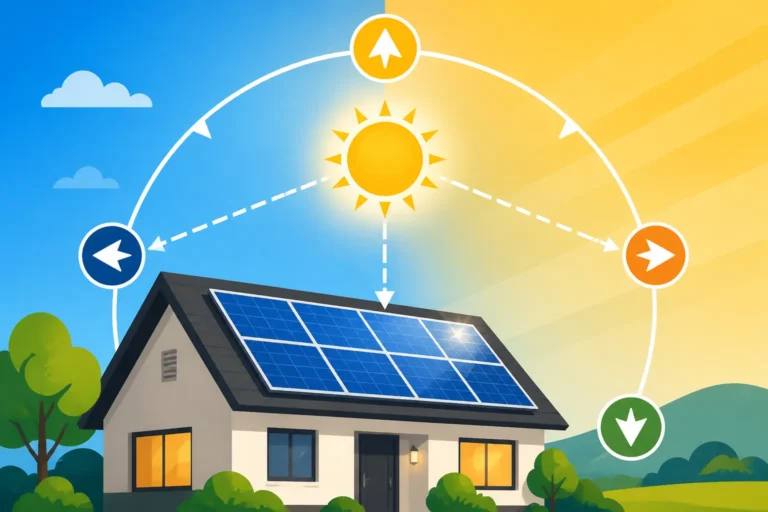
- Roof Characteristics: The physical attributes of your roof impact how many panels can actually be installed and how much sun they'll get. This includes its size, shape, pitch, and most critically, its orientation (south-facing is generally best) and any shading from trees or neighboring buildings.
The Importance of Your Electricity Bills
Your past electricity bills are gold. They provide a precise, historical record of your home's actual energy consumption, measured in kilowatt-hours (kWh). This data is far more accurate than any generalized estimate based on square footage alone.
Here’s how to analyze them:
- Look for kWh Usage: Most utility bills clearly state your monthly or daily kWh consumption. Don't just look at the dollar amount, as rates can vary. The kWh figure tells you the actual amount of electricity you used.
- Track Annual Consumption: Gather at least 12 months' worth of bills. This allows you to see seasonal peaks and valleys. You'll likely use more electricity in summer for air conditioning and in winter for heating (if electric) or extended lighting. Averaging this out gives you a solid baseline for your annual energy needs.
- Identify Anomalies: Did you have an unusually high bill one month because you hosted a long-term guest or bought a new hot tub? Note these spikes so you can adjust your expectations or explain them to a solar professional.
Without knowing your actual kWh usage, any estimate for a 3,000 sq ft home is just a guess. For example, a 3,000 sq ft home with a high energy demand might consume 2,000-3,000 kWh per month, while a very efficient one might be closer to 1,000-1,500 kWh. This huge range directly impacts the size of the solar system you’ll need.
Calculating Solar Panel Needs for a 3,000 Sq Ft Home
Now that we understand why simply stating a square footage isn't enough, let's dive into how to actually calculate the number of solar panels for your 3,000 sq ft home based on its real energy demands. This involves understanding average consumption and then applying a step-by-step method to your specific situation.
Average Consumption for Homes This Size
While we've established that actual consumption varies wildly, it's helpful to have a general idea of what a 3,000 sq ft home might use. Homes of this size typically fall into the "medium to high" energy consumption category, especially if they have modern amenities and a family living in them.
In the United States, the average home uses about 880 kWh per month. However, for a 3,000 sq ft home, this average can be significantly higher. Depending on the factors discussed above (climate, number of occupants, insulation, appliances), a 3,000 sq ft house could easily consume anywhere from 1,500 kWh to 2,500 kWh per month, or even more. This range translates to an annual consumption of 18,000 kWh to 30,000 kWh. This is why digging into your own utility bills is so crucial, as it provides a personalized baseline.
Step-by-Step Calculation for Your Specific Needs
Let's break down how to go from your monthly electricity usage to an estimated number of solar panels.
Step 1: Determine Your Average Daily Kilowatt-Hour (kWh) Usage
Take your total annual kWh consumption (from 12 months of electricity bills) and divide it by 365 days.
Example: If your annual usage is 24,000 kWh, your average daily usage is 24,000 kWh / 365 days = 65.75 kWh per day.
Step 2: Find Your Peak Sun Hours
Peak sun hours refer to the number of hours per day when the sun's intensity is sufficient to generate the most electricity. This isn't just sunrise to sunset; it's a measure of solar irradiance. This number varies significantly by location and time of year. You can find average peak sun hour data for your specific area online (e.g., from the National Renewable Energy Laboratory or by asking local solar installers). For the sake of this example, let's assume you live in an area with an average of 5 peak sun hours per day.
Step 3: Calculate Your Required System Size (in Kilowatts – kW)
To figure out the size of the solar system you'll need to offset your usage, use this formula:
Required System Size (kW) = Average Daily kWh Usage / Peak Sun Hours
Example: 65.75 kWh / 5 peak sun hours = 13.15 kW.
This means you'd need a roughly 13.15 kilowatt (kW) solar system to cover 100% of your current electricity usage. You can learn more about how system size affects pricing in our guide on Solar Panel Cost by System Size kW.
Step 4: Account for System Losses and Efficiency
No solar system is 100% efficient. Factors like panel degradation, wiring losses, temperature, and inverter efficiency mean that the actual output will be slightly less than the theoretical maximum. A common efficiency factor used is around 75-80%. So, you'll need a slightly larger system than your initial calculation to compensate.
Adjusted System Size (kW) = Required System Size (kW) / System Efficiency Factor
Example: 13.15 kW / 0.80 (assuming 80% efficiency) = 16.44 kW.
So, for our example, a 3,000 sq ft home with these consumption patterns might need a system closer to 16.5 kW to cover 100% of its energy needs.
Step 5: Determine the Number of Panels
Modern solar panels typically range from 300 watts (W) to 450 watts (W), with 400W and 450W panels being very popular right now for their efficiency and power output. The specific wattage of the panels you choose will impact how many you need. For more details, check out our Solar Panel Wattage Guide 400W, 450W & More.
To find the number of panels, convert your adjusted system size to watts (multiply by 1,000) and divide by the wattage of a single panel.
Number of Panels = (Adjusted System Size in kW * 1,000) / Individual Panel Wattage (W)
Example (using 400W panels): (16.44 kW * 1,000) / 400 W = 16,440 W / 400 W = 41.1 panels.
Since you can't install a fraction of a panel, you'd round up to 42 solar panels.
Example (using 450W panels): (16.44 kW * 1,000) / 450 W = 16,440 W / 450 W = 36.5 panels.
Rounding up, you'd need 37 solar panels.
As you can see, the specific panel wattage makes a notable difference in the total count, even for the same system size. This is why getting multiple quotes from installers who offer different brands and models is always a smart move.
Sizing Your Solar System and Number of Panels
Once you've done the preliminary calculations, you'll have a good grasp of the system size in kilowatts (kW) that your 3,000 sq ft home needs. This kW figure is crucial because it drives everything from the cost to the physical footprint of your solar array.
Determining System Size (kW)
The system size, measured in kilowatts (kW), represents the total power output capacity of all your solar panels combined. As we saw in the previous section, this number directly correlates to your average electricity consumption. For a 3,000 sq ft home, covering 100% of your energy needs could mean a system anywhere from 10 kW to over 20 kW, depending heavily on your lifestyle and geographic location.
When determining your optimal system size, you also need to consider a few other things:
- Future Energy Use: Are you planning to purchase an electric vehicle (EV) in the next few years, install a heat pump, or add a large appliance like a hot tub? These additions will significantly increase your future electricity demand. It's often more cost-effective to oversize your system slightly now than to add panels later, as expansions can involve additional permitting and labor costs.
- Budget: While going 100% solar is ideal for many, it might not always be feasible due to budget constraints. You might opt for a smaller system that covers 70-80% of your usage, still resulting in substantial savings.
- Net Metering Policies: Your utility's net metering policy can also influence your ideal system size. In states with robust net metering, you might aim for 100% offset or even slightly more, selling excess power back to the grid for credits. In states with less favorable policies, or in areas with high grid access fees, you might prioritize a system that minimizes exports and instead pair it with a Do I Need a Battery With Solar?. Understanding Net Metering Explained How It Works by State is critical here.
Translating System Size to Panel Count
The exact number of panels for a given system size depends on the individual wattage of each panel. A higher wattage panel (e.g., 450W) will mean you need fewer panels to reach your target kW, while lower wattage panels (e.g., 300W) will require more.
Here's a quick reference table showing typical panel counts for various system sizes, assuming common panel wattages:
| System Size (kW) | Est. Daily kWh (5 peak sun hrs) | Number of 400W Panels (approx.) | Number of 450W Panels (approx.) |
|---|---|---|---|
| 10 kW | 50 kWh | 25 | 22 |
| 12 kW | 60 kWh | 30 | 27 |
| 14 kW | 70 kWh | 35 | 31 |
| 16 kW | 80 kWh | 40 | 36 |
| 18 kW | 90 kWh | 45 | 40 |
| 20 kW | 100 kWh | 50 | 45 |
Note: These numbers are approximate and assume optimal conditions and an 80% efficiency factor.
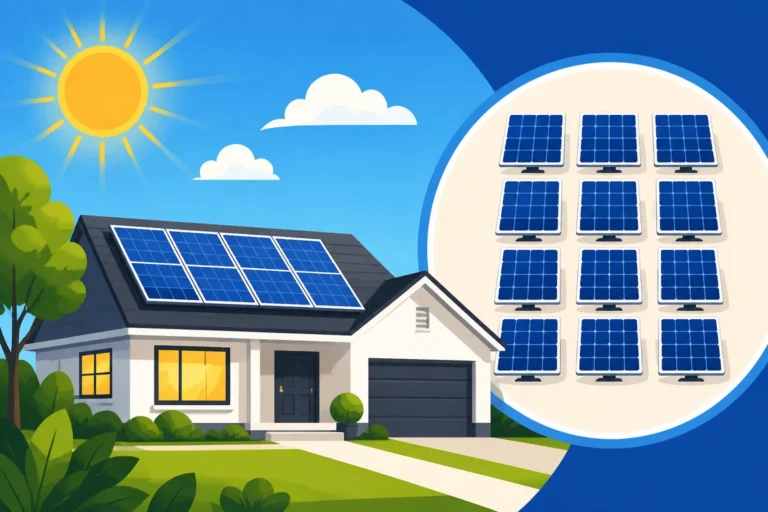
For a 3,000 sq ft home, it's not uncommon to see systems requiring anywhere from 30 to 50+ panels, depending on the factors we've discussed. This also highlights the importance of your available roof space. A larger number of panels means more roof area is needed, and that's where considerations like shading and roof orientation become paramount. A smaller, highly efficient panel might be preferred if you have limited roof space, even if it costs a bit more per panel. When considering the overall How Much Do Solar Panels Cost? 2026 Guide, remember that panel count is a significant driver, but so is the Solar Panel Cost Per Watt Explained.
Real-World Considerations and Expert Advice
Getting an accurate estimate for solar panels on a 3,000 sq ft home isn't just about crunching numbers; it's also about understanding the physical realities of your property and leveraging expert knowledge. Your home's unique characteristics, combined with professional guidance, will ensure you get a system that performs optimally and meets your energy goals.
Roof Space, Orientation, and Shading
Even if your calculations suggest you need 40 panels, if your roof can only physically accommodate 30, you've got a problem. This is where real-world roof characteristics come into play:
- Available Roof Area: A 3,000 sq ft home certainly has a large footprint, but not all of that roof space might be suitable for solar. Chimneys, vents, skylights, dormers, and complex rooflines can all reduce the usable area. Each solar panel typically measures about 65 inches by 39 inches (about 17.5 sq ft), so 40 panels would require roughly 700 sq ft of unobstructed roof space.
- Orientation: South-facing roofs receive the most direct sunlight throughout the day, making them ideal for solar panel placement. East and west-facing roofs can still be viable, especially if your utility has time-of-use rates that reward afternoon generation, but they might require more panels to achieve the same output. North-facing roofs are generally avoided for solar in the Northern Hemisphere due to their significantly lower production.
- Shading: This is a big one. Trees, adjacent buildings, or even parts of your own home (like a tall chimney) can cast shadows on your panels at various times of the day, drastically reducing their efficiency. Even partial shading on one panel can affect the performance of an entire string of panels if you're using a string inverter. This is where technologies like microinverters (like those from Enphase) or power optimizers (like SolarEdge) shine, as they allow each panel to operate independently, mitigating the impact of shading. Understanding the differences between Solar Inverters String vs Microinverter vs Optimizer and comparing Enphase vs SolarEdge Which Inverter Is Better? can be crucial here.
It's paramount that a solar professional conducts a thorough site assessment to evaluate these factors. They'll use specialized tools to map out shading patterns and determine the best placement for maximum sun exposure.
Working with a Professional Solar Designer
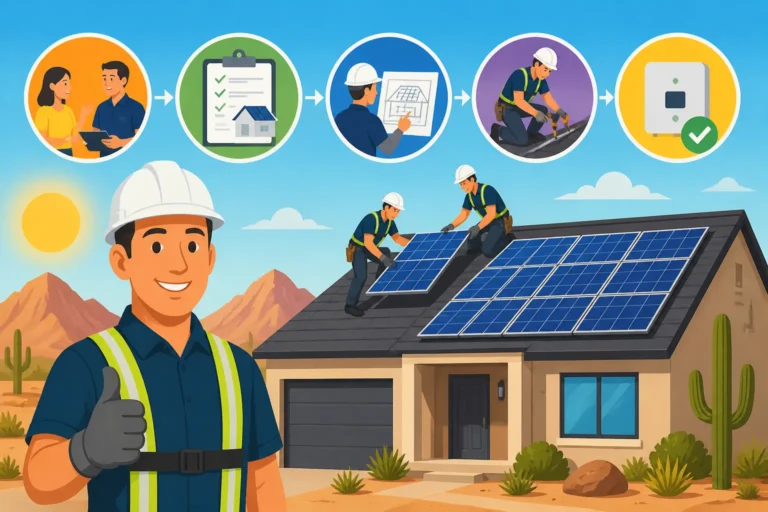
While our step-by-step calculation gives you a solid estimate, nothing replaces the expertise of a qualified solar designer or installer. They bring practical knowledge and experience to the table that DIY calculations simply can't match.
Here's why their input is invaluable:
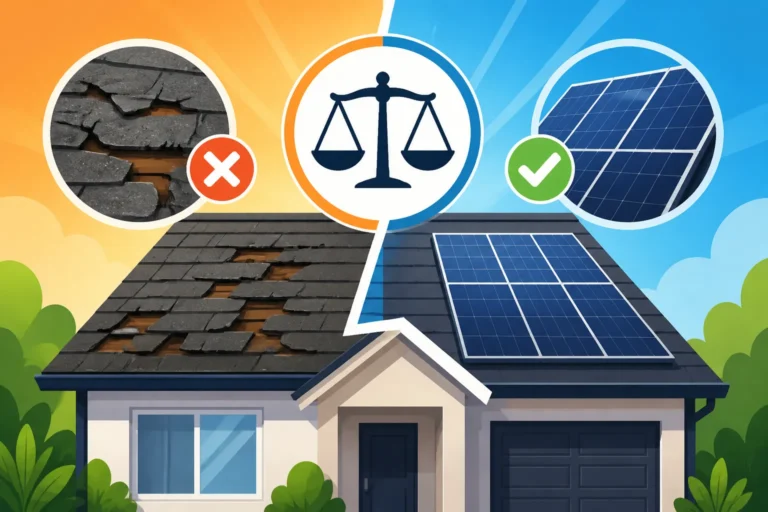
- Accurate Site Assessment: They'll physically inspect your roof, assess its structural integrity, measure available space, and analyze shading with precision. They can tell you if your roof needs repairs or replacement before solar installation, which is a common consideration.
- System Optimization: A good designer will not just meet your energy needs but optimize your system for performance, aesthetics, and cost-effectiveness. They'll factor in local building codes, permit requirements, and interconnection standards.
- Knowledge of Local Incentives: Solar incentives vary widely by state and even by municipality. Professionals are up-to-date on federal programs, state solar tax credits, utility rebates, and other local incentives that can significantly reduce your overall cost and improve your Are Solar Panels Worth It in 2026? analysis.
- Customized Solutions: Your 3,000 sq ft home is unique. A professional can design a system that fits your specific roof, energy goals, and budget, recommending the best panel brands, inverter types, and battery storage options. Finding the right professional is key, and platforms like Modernize can help homeowners connect with reputable, local solar installers who understand the specific challenges and opportunities in your area. They can provide multiple quotes, which is always recommended to compare options and pricing. Our guide on How to Choose a Solar Installer provides further tips.
Adjusting for Future Needs
Going solar is a long-term investment, typically lasting 25-30 years or more. It's smart to think ahead about your family's future energy consumption.
Consider these potential changes:
- Electric Vehicles (EVs): If you anticipate purchasing an EV, remember that charging it at home can add thousands of kilowatt-hours to your annual electricity consumption. Sizing your system to accommodate this future load can save you money and hassle down the road.
- Heat Pumps: Many homeowners are switching from fossil fuel heating to electric heat pumps for more efficient heating and cooling. This transition will also increase your electricity demand.
- Family Growth: An expanding family often means more lights, more laundry, more electronics, and more hot water usage.
- Home Additions or Renovations: Adding square footage, a pool, or a detached garage can all change your energy footprint.
Discussing these future plans with your solar designer is crucial. They can help you decide whether to size your system slightly larger today or plan for a future expansion if your needs drastically change. This forward-thinking approach ensures your solar system remains adequate for your household's evolving lifestyle, helping you maximize your Solar Panel Payback Period Explained and overall savings.
Disclaimer
Please note that the information provided in this guide is for general educational purposes only and should not be considered professional financial, tax, or energy advice. Solar system sizing, costs, and savings can vary significantly based on your specific location, energy consumption, chosen equipment, available incentives, and installer. Always consult with qualified solar professionals to obtain accurate quotes and assessments tailored to your home's unique situation.