DIY Solar Panels: Is It Worth It?
The thought of installing solar panels yourself, cutting out the middleman, and slashing those upfront costs is incredibly tempting, isn't it? Many homeowners, facing rising electricity bills and the significant investment required for a solar system, naturally wonder if a DIY approach could be their ticket to energy independence. This comprehensive guide will meticulously explore every facet of DIY solar, helping you understand the true scope of the project, its hidden complexities, and whether it’s genuinely a viable or even smart option for your home.
The Allure of DIY Solar: Why Homeowners Consider It
It's easy to see why the idea of a do-it-yourself solar panel installation captures the imagination of so many homeowners. In a world where everything seems to be getting more expensive, taking control of a major home improvement project like this can feel incredibly empowering. The promises often bandied about – huge cost savings, complete system customization, and the sheer satisfaction of building something with your own two hands – are powerful motivators.
The Promise of Significant Savings
The most obvious and compelling reason for many to consider DIY solar is the potential for significant financial savings. When you receive a quote from a professional solar installer, a substantial portion of that cost is attributed to labor, project management, and the company's overhead and profit margins. It's not uncommon for these "soft costs" to represent 50% or more of the total price. Imagine you're looking at a $30,000 solar system; theoretically, cutting out the installation crew could save you $15,000 or more.
This perceived savings is a powerful driver. Many homeowners are skilled at other DIY projects – they've renovated kitchens, built decks, or even tackled plumbing and electrical work. They look at a roof full of solar panels and think, "How hard can it really be?" The allure of keeping those thousands of dollars in their own pocket, rather than paying an installer, feels like a no-brainer at first glance. It taps into that very human desire to be resourceful and maximize every dollar, especially when making a large investment in something like renewable energy.
A Sense of Empowerment and Control
Beyond the financial incentives, there's a deep-seated satisfaction that comes from being truly hands-on with a project that directly impacts your home and lifestyle. For many, a DIY solar project isn't just about saving money; it's about a profound sense of empowerment and gaining a thorough understanding of their home's energy system. You're not just a consumer; you're the architect and the builder.
This level of control means you get to pick every component, understand exactly how it works, and troubleshoot issues yourself if they arise. It's the ultimate expression of being an informed homeowner, someone who doesn't just defer to experts but genuinely grasps the intricate details. For those who enjoy tackling complex challenges, much like someone who might build their own computer or restore a vintage car, the intellectual and practical journey of a DIY solar installation holds immense appeal. It's about owning the process from start to finish, and for some, that's a reward in itself.
Understanding the DIY Solar Landscape: What's Involved?
Before you even think about hoisting a solar panel onto your roof, it's critical to understand the sheer breadth and depth of what a DIY solar project truly entails. This isn't just about screwing some panels down; it's a multi-faceted endeavor that touches on electrical engineering, construction, regulatory compliance, and meticulous planning. Overlooking any one of these areas can lead to significant problems, from safety hazards to a system that simply doesn't work – or worse, isn't even legal.
Essential Components and Sourcing
Let's talk hardware. A complete solar energy system is more than just the sleek panels you see on roofs. You'll need the solar panels themselves, of course, chosen based on efficiency, wattage, and your aesthetic preferences. Then there's the inverter system, which converts the direct current (DC) electricity generated by the panels into alternating current (AC) that your home appliances use. This might be a central string inverter or individual microinverters attached to each panel, each with its own pros and cons (you can learn more about Enphase vs SolarEdge: Which Inverter Is Better? if you're curious about options).
You'll also need a robust racking system to secure the panels to your roof or ground mount, a dizzying array of electrical wiring, conduits, junction boxes, disconnect switches, and possibly even a solar battery for energy storage. If you're considering adding a battery for backup or maximizing self-consumption, check out our guide on the Best Solar Batteries of 2026. Sourcing these components effectively can be a project in itself. While some online retailers like Solar Wholesale or Unbound Solar cater to DIYers, you'll need to ensure compatibility between all parts, understand their warranties, and often navigate bulk purchasing, shipping logistics for heavy items, and ensure everything meets local codes. Missing a single specialized connector or type of wire can bring your entire project to a grinding halt.
System Design and Sizing
This is where the rubber truly meets the road. Designing a solar system isn't a "guesstimate" activity; it requires precise calculations to ensure your system generates enough electricity to offset your usage, but not so much that it's over-sized and inefficient. You'll need to conduct a thorough energy audit of your home, understanding your daily, monthly, and annual electricity consumption patterns. This involves poring over past utility bills to identify peak usage times and overall demand.
Next comes the intricate process of system sizing. This involves using online tools like the National Renewable Energy Laboratory's (NREL) PVWatts Calculator, which can help estimate the energy production of a hypothetical system based on your location, panel characteristics, and tilt. However, these tools are often basic. You'll need to factor in your specific roof's orientation, pitch, and crucially, any potential shading from trees, chimneys, or neighboring buildings throughout the day and across seasons. A good design maximizes solar exposure and minimizes energy loss. Overlooking critical design elements here can lead to underperformance, wasted money, or even system failure. This level of detailed planning is precisely what professional installers spend extensive time doing, often with sophisticated software and specialized expertise.
Permitting, Interconnection, and Grid Requirements
Perhaps the most daunting aspect of DIY solar, and one that often catches aspiring self-installers off guard, is the bureaucratic gauntlet of permitting and interconnection. You can’t just install solar panels and plug them into the grid. Every solar installation requires permits from your local municipality or county, which often involve submitting detailed engineering plans, electrical schematics, and structural analyses. These plans must demonstrate compliance with local building codes, fire codes, and the National Electrical Code (NEC), which are complex and constantly evolving. You'll likely need stamped drawings from a licensed electrician and a structural engineer, even if you do the physical work yourself.
Once your system is permitted and installed, you'll then need to apply for interconnection with your utility company. This process ensures your system can safely connect to the grid, that your meter is properly configured for net metering (if available in your area), and that your system won't pose a hazard to utility workers or the broader electrical infrastructure. This typically culminates in a final inspection by both the local building department and the utility company, leading to what's known as Permission to Operate (PTO). If your DIY installation doesn't meet their stringent requirements, you could face delays, costly modifications, or even be denied the ability to connect to the grid, completely negating your efforts. This entire process is a prime example of why professional installers often spend weeks or months on project management before ever touching a tool on your roof.
The Real Costs of DIY Solar: Beyond the Sticker Price
While the upfront appeal of saving on labor costs is strong, the true financial picture of DIY solar is far more nuanced. Many aspiring DIYers only see the price of panels and inverters, failing to account for a myriad of other expenses that can quickly erode their projected savings. It's crucial to look beyond the basic hardware and consider all the potential drains on your wallet and your time.
Hidden Costs and Unexpected Expenses
The "sticker price" of solar panels and inverters is just the beginning. For a DIY project, you'll inevitably encounter a range of hidden and unexpected costs that professional installers typically bundle into their quotes. For example, specialized tools are often required that most homeowners don't have: heavy-duty lifting equipment or scaffolding for safe roof access, specialized torque wrenches, crimping tools for electrical connections, and high-quality electrical testing equipment. Renting or buying these items can add hundreds or even thousands of dollars to your budget.
Then there are the fees. Permit application fees, inspection fees, utility interconnection fees, and potentially fees for structural engineering reports or electrical plan reviews can quickly accumulate. If your plans aren't perfect, you might pay for multiple resubmissions. Furthermore, mistakes are costly. A miswired component could burn out an expensive inverter, or a dropped panel could be a total loss, forcing you to repurchase materials at retail prices. These unexpected repairs or replacements can easily wipe out any perceived labor savings.
Time Investment and Labor Value
Time, as they say, is money. While you might not be paying someone else for labor, your own time has value. A professional solar installation, from initial consultation to flipping the switch, can take anywhere from 2-6 months, with the actual physical installation usually completed in just a few days. For a DIY project, multiply that significantly. You'll spend countless hours on research, comparing components, navigating supplier websites, preparing detailed plans, filling out permit applications, scheduling inspections, and waiting for approvals.
The physical installation itself will likely take weeks, especially if you're doing it alone or with limited help, spread out over weekends and evenings. Consider the physical demands: working on a hot roof, lifting heavy panels, intricate wiring. What is your time worth? If you're taking time off work, or sacrificing valuable family time, those hours have an opportunity cost that needs to be factored into your "savings" calculation. It's a grueling process, and many who start with enthusiasm find themselves bogged down by the sheer volume of work and the constant problem-solving required.
Warranty Implications and Insurance Challenges
This is a critical, often overlooked, area where DIY solar can significantly fall short. Most solar panel and inverter manufacturers offer excellent warranties (often 25 years for panels, 10-12 for inverters), but these warranties are frequently contingent on professional, certified installation. If you install the system yourself and a component fails, the manufacturer might deny your warranty claim, arguing that improper installation was the cause. You'll be left bearing the full cost of replacement and re-installation.
Furthermore, many professional installers offer their own labor warranties, guaranteeing their workmanship for several years. With DIY, you are your own warranty department. If something goes wrong, you're solely responsible for troubleshooting, sourcing parts, and fixing the issue. From an insurance perspective, an improperly installed electrical system could pose a fire hazard. Your homeowner's insurance policy might have clauses that exclude coverage for damages resulting from unpermitted or non-professionally installed electrical work. Before embarking on a DIY project, it's absolutely crucial to consult with your insurance provider to understand any potential implications.
Technical Expertise and Safety: A Non-Negotiable Foundation
When it comes to solar panel installation, safety isn't just a suggestion; it's an absolute requirement. You're dealing with high-voltage electricity and working at significant heights, often on sloped surfaces. The risks involved are substantial, and a lack of proper technical expertise can lead to serious injury, electrocution, fire, or catastrophic damage to your home. This is not the kind of project where you can learn as you go without putting yourself and your property in considerable jeopardy.
Electrical Work and National Electrical Code (NEC)
Let's be blunt: working with electricity, especially high-voltage DC current from solar panels, is inherently dangerous if you don't know exactly what you're doing. Solar arrays can generate lethal levels of electricity, even on a cloudy day. Improper wiring, incorrect grounding, or failure to use appropriate overcurrent protection can lead to electrical fires, system damage, or fatal shocks. The National Electrical Code (NEC) dictates stringent requirements for all electrical installations, including solar. These codes cover everything from wire sizing and conduit types to grounding methods and rapid shutdown mechanisms.
Understanding and adhering to the NEC is a full-time job for licensed electricians, and it's not something you can just pick up from a few YouTube videos. Inspectors are meticulous about compliance because lives are at stake. DIYers often struggle with correctly sizing circuits, ensuring proper arc fault and ground fault protection, and correctly installing all the necessary disconnects. Without a deep understanding of these principles, you're not just risking your project; you're risking your life and the safety of your home.
Roof Work and Structural Integrity
The roof is the foundation of most residential solar systems, and working on it presents its own set of dangers and complexities. First and foremost is the risk of falls. Lifting heavy, bulky solar panels (often 40-50+ pounds each) onto a sloped roof and maneuvering them into place is physically demanding and requires specialized safety equipment like harnesses, ropes, and anchor points. One slip can lead to severe injury or worse.
Beyond personal safety, you need to be absolutely certain your roof can structurally support the added weight of the solar panels and racking, especially if you live in an area prone to heavy snow loads or high winds. Many municipalities require a stamped structural engineering report to confirm this. Simply mounting panels without proper structural assessment can lead to roof damage, leaks, or even structural collapse over time. Our guide on Can My Roof Hold Solar Panels? delves into this crucial topic in more detail. You'll also need to ensure your mounting points are correctly flashed and sealed to prevent roof leaks, a common issue with improperly installed systems. For a deeper dive into what your roof needs, explore Roof Considerations for Solar Panels.
Understanding System Components and Troubleshooting
A modern solar energy system is a sophisticated network of interconnected components, each playing a vital role. Panels, inverters, charge controllers (if you have batteries), and monitoring systems all need to communicate and function harmoniously. A DIY installer must not only understand how to physically install each piece but also how they interact electrically and digitally. This includes understanding the specific requirements for wiring different types of inverters, configuring monitoring software, and integrating with your home's existing electrical panel.
When (not if) an issue arises, whether it's a dip in production, an error code on an inverter, or a connection problem, a DIYer is solely responsible for troubleshooting. This requires a diagnostic mindset and a deep understanding of each component's operational parameters. Professional installers have training, specialized diagnostic tools, and direct lines to manufacturer support. As a DIYer, you'll be relying on online forums and potentially patchy technical support, which can be incredibly frustrating and time-consuming, leading to prolonged system downtime.
Incentives, Resale Value, and Long-Term Performance
While the immediate cost savings of DIY solar might seem appealing, it's crucial to look at the broader financial landscape, including available incentives, how it impacts your home's value, and the system's long-term performance and reliability. Often, what you "save" in upfront labor can be quickly offset by missed financial opportunities and potential headaches down the line.
Eligibility for Solar Incentives
One of the biggest financial drivers for going solar is the availability of various incentives, both federal and state. The federal solar tax credit (ITC) currently offers a substantial percentage (often 30%) off the cost of your solar system. However, for a DIY installation, accurately claiming this credit can be tricky. You can only claim expenses for materials and equipment, not your own labor. Documenting eligible costs meticulously is essential for IRS purposes.
Beyond the federal credit, many states and local utilities offer additional incentives, such as State Solar Incentives: Complete 2026 Guide, SRECs Explained: Selling Solar Renewable Energy Credits, and Utility Solar Rebates: How to Find Yours. The catch? Many of these programs require installation by a licensed and certified professional, or they might stipulate that the equipment used is on an approved list that only accredited installers can access. This means that by choosing the DIY route, you could inadvertently disqualify yourself from thousands of dollars in potential savings, significantly eroding your overall return on investment. It's vital to research your specific state and local programs carefully to understand their requirements before committing to a DIY approach.
Impact on Home Value and Future Sales
Professionally installed solar panels are generally considered a valuable home improvement, often increasing property value and making a home more attractive to environmentally conscious buyers. Studies have shown that homes with owned solar systems sell faster and for more money. Our detailed article, Do Solar Panels Increase Home Value?, explores this phenomenon.
However, a DIY solar installation can present challenges when you decide to sell your home. Potential buyers might be wary of a system not installed by a certified professional. They may question the quality of the workmanship, the validity of warranties, and whether the system adheres to all codes and regulations. A home inspector might flag the system as a potential concern, requiring further professional evaluation or even costly modifications before a sale can close. This uncertainty can deter buyers or lead to demands for price reductions, ultimately diminishing or even negating any perceived value added by your DIY efforts. The desire for peace of mind and professional assurance is a strong factor for most homebuyers.
Performance, Maintenance, and Longevity
The goal of any solar system is to reliably produce clean electricity for decades. Professional installers optimize system design for maximum energy harvest, considering factors like precise panel orientation, tilt, and shading mitigation. They also ensure components are correctly installed to maximize their lifespan and efficiency. While a DIY system can be installed correctly, without professional expertise, there's a higher chance of suboptimal performance due to less-than-ideal panel placement or wiring inefficiencies. This means your system might generate less electricity than it could, leading to smaller utility bill savings over time.
Long-term maintenance is also a consideration. While solar panels require relatively little maintenance, occasional cleaning might be necessary, especially in dusty areas, and regular monitoring for performance issues is recommended. You can find more details in our guide on Solar Panel Maintenance & Cleaning. A DIY system means you are fully responsible for any and all maintenance, troubleshooting, and repairs for the lifetime of the system. If an inverter fails after ten years, you're on your own to diagnose, replace, and reinstall it. Professional installations, on the other hand, often come with comprehensive service agreements and easily transferable warranties, providing a level of ongoing support and peace of mind that a DIY approach simply cannot match.
Hybrid Approaches and Alternatives to Full DIY
So, if a full DIY solar installation feels too overwhelming or risky, but you're still determined to save money and be involved, what are your options? Thankfully, the solar industry offers several paths that allow for varying degrees of homeowner involvement without requiring you to become a fully licensed electrician and roofer overnight. These hybrid approaches or simply choosing a trusted professional can often deliver the best of both worlds: savings and peace of mind.
DIY-Friendly Kits and Pre-Engineered Systems
The market has responded to the DIYer's desire for involvement by offering "DIY-friendly" or pre-engineered solar kits. These kits typically come with all major components – panels, inverters (often microinverters for simpler wiring), racking, and basic electrical components – designed to work together seamlessly. Companies like EcoFlow and Renogy offer smaller, more portable systems, but even larger, whole-home kits can be found through suppliers such as Northern Arizona Wind & Sun or Wholesale Solar. The idea is that much of the complex design and component matching is done for you, simplifying the purchasing process.
However, even with these kits, you’re still responsible for the physical installation, which includes securing the racking, mounting the panels, and crucially, doing all the high-voltage electrical wiring. You'll still need to navigate local permitting, secure necessary inspections, and safely connect to your home's electrical panel and the grid. While these kits reduce some of the complexity, they don’t eliminate the need for electrical knowledge, roofing expertise, or understanding regulatory compliance. They're more about simplifying component selection than completely removing the technical challenges of installation.
Professional Consultation and Partial DIY
For those who want to be involved but recognize their limitations, a partial DIY approach, often called "owner-builder" or "owner-managed" solar, might be a good compromise. In this scenario, you, the homeowner, take on the role of project manager, handling tasks like researching components, submitting permit applications, and perhaps even installing the racking or mounting the panels. However, you bring in licensed professionals for the critical, high-risk tasks.
For instance, you might hire a licensed electrician to handle all the DC and AC wiring, connect to your main service panel, and ensure compliance with the National Electrical Code. You might also engage a structural engineer to perform the necessary roof assessment and sign off on your racking plans. This approach significantly mitigates safety risks and ensures that the most complex and dangerous aspects are handled by experts. While it won't be as cheap as a full DIY, it will likely be less expensive than a full-service professional installation, and you'll benefit from the peace of mind that critical elements meet professional standards and are insured. It’s about intelligently delegating the highest-risk portions of the project.
The Professional Installation Advantage
For the vast majority of homeowners, opting for a professional solar installation remains the most reliable, safest, and ultimately, most cost-effective path in the long run. Professional installers offer a seamless, start-to-finish service that includes everything from initial energy audits and system design to handling all permitting, installation, and interconnection with the utility. They have the expertise to select the right components for your specific needs, negotiate bulk pricing, and ensure your system is optimized for maximum performance.
Beyond the initial setup, professional installers typically provide comprehensive warranties covering both the equipment and their workmanship. This means if something goes wrong, you have a single point of contact for resolution, rather than having to troubleshoot and potentially void warranties yourself. Moreover, professional installations ensure eligibility for all available federal, state, and local incentives, which can amount to tens of thousands of dollars in savings that DIYers might miss out on. Companies like Modernize can connect you with multiple certified, reputable local installers, allowing you to compare quotes and choose the best fit without the headache of managing the entire complex process yourself. This often leads to a quicker payback period and greater long-term savings, making the initial investment truly worthwhile.
Making an Informed Decision: Is DIY Solar Right for You?
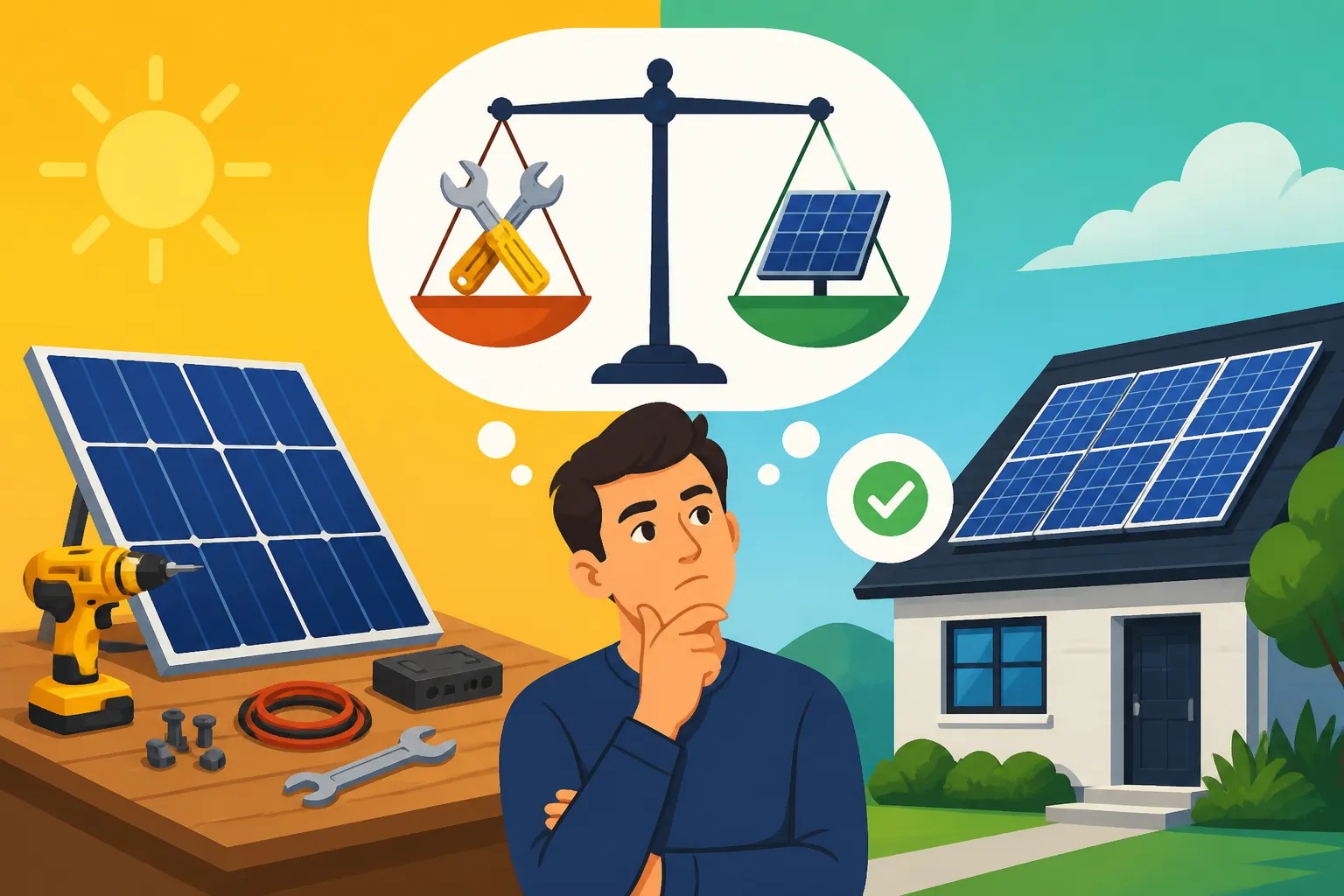
Deciding whether to tackle a solar installation yourself or hire professionals is a significant choice with long-lasting implications for your wallet, your home, and your peace of mind. It's not a decision to be made lightly, and it requires a brutally honest assessment of your skills, resources, and risk tolerance. There's no single "right" answer for everyone, but by carefully weighing the pros and cons, you can determine the best path for your unique situation.
Self-Assessment: Skills, Time, and Risk Tolerance
Before you buy a single solar panel, take a moment for some serious introspection. Do you have a strong background in electrical work, specifically with high-voltage DC systems? Are you intimately familiar with the National Electrical Code (NEC) and your local building codes? Do you have experience working safely and efficiently on roofs, especially steep ones, and with heavy equipment? These aren't just "nice-to-haves"; they are fundamental requirements for a safe and compliant installation.
Beyond skills, consider your available time. A DIY solar project is not a weekend warrior endeavor. It requires significant time for research, design, permitting, sourcing, installation, and troubleshooting. Do you have weeks or even months of dedicated time to commit, or will other responsibilities constantly pull you away? Finally, how is your risk tolerance? Are you comfortable with the potential for serious injury, costly mistakes, or the possibility of voiding warranties and missing out on incentives? If any of these questions give you pause, a full DIY approach might not be your best bet.
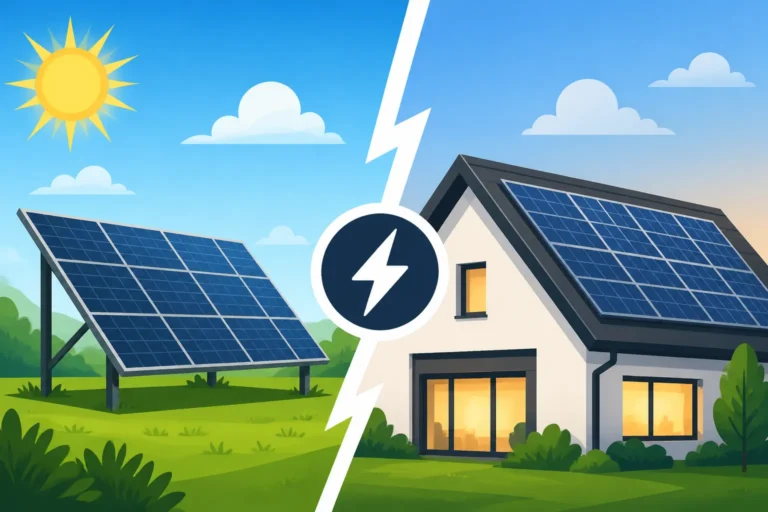
Comparing DIY Savings to Professional Value
While DIY promises significant upfront savings on labor, it's crucial to compare those potential savings against the comprehensive value offered by professional installation. To truly understand the full cost of solar, including both direct and indirect expenses, you can refer to our guides on How Much Do Solar Panels Cost? and Solar Panel Cost Per Watt Explained.
Let's break down the comparison in a table:
| Feature | DIY Installation | Professional Installation |
|---|---|---|
| Upfront Cost | Lower (no labor costs, but tool/permit expenses) | Higher (includes labor, overhead, profit) |
| Total Lifetime Cost | Potentially higher (missed incentives, repairs, time) | Often lower (maximized incentives, warranties, efficiency) |
| Time Investment | Very High (research, design, permitting, install) | Low (you manage, professionals do the work) |
| Expertise Required | Very High (electrical, roofing, code knowledge) | None (professionals handle it) |
| Safety Risks | High (electrocution, falls, fire) | Low (trained, insured professionals) |
| Warranty & Support | Limited (component only, no labor) | Comprehensive (product, performance, workmanship) |
| Incentive Eligibility | Potentially limited or difficult to claim | Full eligibility, handled by installer |
| Home Value Impact | Potentially negative (buyer concerns) | Positive (proven to increase value) |
| Permitting & Utility | Your responsibility (complex, time-consuming) | Handled by installer (streamlined process) |
When you factor in the potential for missed incentives, the cost of unexpected repairs, the value of your time, and the peace of mind that comes with a professionally installed system, the perceived "savings" from DIY often diminish significantly, and can even turn into a financial loss over the system's lifetime.
When Professional Installation is the Clear Choice
For the vast majority of homeowners, professional installation is not just a convenience but a sound financial and safety decision. If you prioritize peace of mind, want to maximize your long-term savings through all available incentives, and ensure your system is installed safely and correctly, then a professional installer is the clear choice.
They possess the necessary licenses, insurance, and expertise to handle every aspect of the project, from initial design and permitting to final installation and interconnection. They can navigate the complexities of local regulations, ensure your system meets all safety standards, and provide warranties that protect your investment for decades. Companies like Modernize can be an invaluable resource, connecting you with pre-vetted, certified solar professionals in your area. These platforms simplify the process of getting multiple quotes, allowing you to compare options and find an installer who meets your budget and needs, without having to undertake the massive, high-risk project yourself. Ultimately, while DIY solar is an admirable concept for certain niche scenarios, for most residential applications, the value, safety, and long-term benefits of a professional installation far outweigh the perceived upfront savings of going it alone.
Disclaimer
Please note that this article is intended for informational purposes only and does not constitute professional advice. Solar panel installation involves complex electrical and structural work and carries significant risks. Always consult with licensed and certified professionals, including electricians, structural engineers, and solar installers, before undertaking any solar project. Local regulations, incentives, and building codes vary widely by location and change frequently. We recommend doing thorough research and seeking expert guidance specific to your situation.