Is It Worth Going Solar Just for Backup Power?
Experiencing a power outage, whether it's from a summer storm, an unexpected grid issue, or an aging infrastructure, can be incredibly disruptive and frustrating. Many homeowners find themselves wondering if investing in solar panels solely for the peace of mind during these blackouts is a financially sound decision. This comprehensive guide will delve into the complexities of using solar primarily for backup power, exploring the costs, benefits, and practical considerations to help you decide if it’s the right move for your household.
The Core Question: Is Solar Just for Backup Power Worth It?
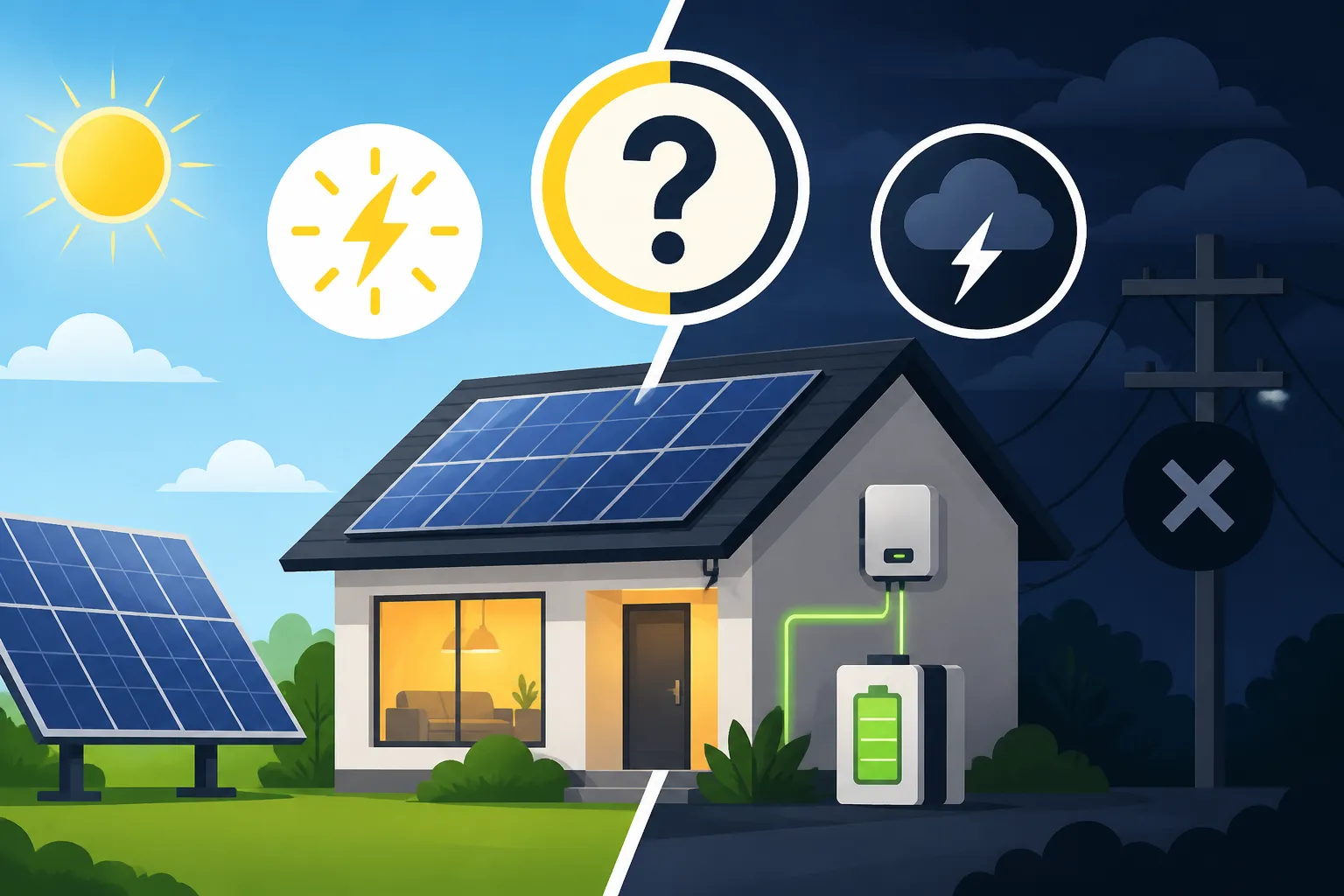
It's a common dream: the lights go out in the neighborhood, but your home remains a beacon of warmth and light, silently powered by the sun. While this vision is absolutely achievable with solar-plus-battery systems, the question of whether it's "worth it" just for backup power is a nuanced one. The answer isn't a simple yes or no, as it heavily depends on your specific priorities, local electricity rates, and the frequency and duration of power outages in your area.
The Allure of Power Outage Protection
The primary driver for many considering solar exclusively for backup is the desire for uninterrupted power. Think about the feeling when a severe thunderstorm rolls through, and suddenly, everything goes dark. For families with young children, those who work from home, or individuals with critical medical equipment, a reliable power source during an outage isn't just a convenience; it's a necessity. In regions prone to extreme weather events, like the hurricane-prone coastlines of Florida or the icy winters of the Northeast, the frequency of outages can make this peace of mind invaluable.
Beyond just keeping the lights on, backup power from solar can maintain critical systems like refrigerators (saving hundreds in spoiled food), internet routers (keeping you connected), and heating or cooling systems (maintaining comfort and safety). It means not having to scramble for flashlights, worry about perishable groceries, or endure a silent, cold house in the dead of winter. For some, this security transcends pure financial metrics, offering an intrinsic value that's hard to quantify in dollars and cents.
Realistic Expectations vs. Ideal Scenarios
While the idea of perpetual power is enticing, it's crucial to set realistic expectations. A solar system designed only for backup will typically be paired with a robust battery storage solution. During an outage, these systems don't necessarily power your entire home as if the grid were still up and running. Instead, they usually support a select number of "critical loads" – essential appliances and circuits that you designate beforehand. This might include your refrigerator, a few lights, a charging station for devices, and perhaps a well pump or a small HVAC unit.
You won't be running your central air conditioning, electric oven, or hot tub for days on end during a grid outage unless you invest in a significantly larger, and much more expensive, battery bank and solar array. The size and capacity of your backup system directly correlate to what you can power and for how long. Understanding this distinction is key to evaluating if the investment meets your actual backup needs without overspending or being disappointed by limitations. Many homeowners find that a combination of daily energy offset and backup is the most cost-effective and practical approach.
The Financial Realities Without Daily Savings
Here's where the "worth it" question gets tricky. If your primary goal is just backup power, you're essentially investing in an insurance policy against outages. Unlike a full solar installation that aims to significantly reduce or eliminate your monthly electricity bill, a backup-only system doesn't generate substantial daily savings to offset its cost. This means your payback period, if you can even calculate one, would be entirely contingent on how often and how long you experience outages, and the cost avoided during those specific events.
Consider a scenario where you rarely experience outages, perhaps only once a year for a few hours. In such a case, the upfront cost of a solar-plus-battery system could take decades, if ever, to "pay for itself" through avoided electricity costs during those brief interruptions. However, if you live in an area like California, where Public Safety Power Shutoffs (PSPS) are becoming more common, or Texas, which has faced severe grid challenges, the financial value of uninterrupted power might be higher. It's often more financially prudent to design a solar system that covers a significant portion of your daily electricity consumption and provides backup, allowing you to maximize the investment through continuous bill savings and resilience. You can explore the concept of Solar Panel Payback Period Explained to understand how these calculations usually work for systems providing daily savings.
How Solar and Battery Backup Systems Work for Resilience
Understanding the mechanics of a solar and battery backup system is crucial for evaluating its suitability for your home. It’s not just about slapping some panels on your roof; it’s about an integrated system designed to seamlessly transition and provide power when the grid fails.
Components of a Backup Solar System
A true solar backup system isn't just solar panels. It's a symphony of several key components working in harmony:
- Solar Panels: These are your energy collectors, converting sunlight into direct current (DC) electricity. The size and number of panels will determine how much energy you can generate daily, which in turn dictates how quickly your battery can recharge after an outage, or how much excess energy you can send back to the grid (if not backup-only).
- Inverter: This critical device converts the DC electricity from your solar panels into alternating current (AC) electricity, which is what your home appliances use. For backup systems, you’ll typically have a hybrid inverter or a grid-tied inverter paired with a separate battery inverter. During an outage, the inverter, along with a special "automatic transfer switch" (ATS) or "smart switch," disconnects your home from the grid to prevent backfeeding power to utility lines (a safety requirement for utility workers).
- Solar Battery Storage: This is the heart of any backup system. Batteries store the excess energy produced by your solar panels during the day. When the grid goes down, or when your panels aren't producing (like at night), the battery discharges to power your designated critical loads. Popular options include the Tesla Powerwall 3 Review & Cost or the Enphase IQ Battery Review & Cost. The capacity of your battery (measured in kilowatt-hours, or kWh) directly determines how long you can power your home during an outage. Many homeowners wonder Do I Need a Battery With Solar, and for backup, the answer is a resounding yes!
- Automatic Transfer Switch (ATS) / Smart Switch: This device automatically senses a grid outage and safely disconnects your home from the utility grid, preventing dangerous backfeeding. It then switches your home's power supply to the solar-plus-battery system. When grid power is restored, it seamlessly switches back.
These components work together to ensure that when the grid falters, your home has a reliable, independent power source. When researching options, platforms like Modernize can connect you with experienced solar installers who can design a system that includes all necessary components for robust backup.
Understanding Grid-Tied vs. Off-Grid Backup
When considering solar for backup, it's important to differentiate between grid-tied systems with backup and truly off-grid systems.
- Grid-Tied with Backup: This is the most common and practical approach for most homeowners. Your solar panels are connected to the main utility grid, and you typically benefit from programs like Net Metering Explained: How It Works by State where you can send excess power back for credits. During an outage, your system automatically disconnects from the grid and uses stored battery power, supplemented by any real-time solar production, to power critical loads. Once grid power is restored, your system reconnects and resumes normal operation, often switching back to using grid power and feeding excess solar back.
- Off-Grid Systems: These systems are completely independent of the utility grid. They rely entirely on solar generation (and often a backup generator) and substantial battery storage to meet all electricity needs 24/7. While they offer complete energy independence, they are significantly more complex and expensive to install, requiring larger solar arrays and much larger battery banks to handle every conceivable load. For most suburban or urban homes, going completely off-grid just for backup is overkill and far more costly than a grid-tied system with backup. Most homeowners aren't looking to cut ties with the grid entirely, but rather to ensure continuity when the grid temporarily fails.
What Happens During an Outage?
Let's walk through a typical scenario:
- Grid Outage Detection: Your solar system's smart switch or hybrid inverter immediately detects a loss of power from the utility grid.
- Automatic Disconnection: Within milliseconds, the system safely disconnects your home from the grid. This crucial step prevents your solar power from flowing onto the utility lines, protecting utility workers who might be repairing lines.
- Battery & Solar Take Over: Your inverter redirects the solar power being generated (if it's daytime and sunny) and/or draws power from your fully charged solar battery. This power is then supplied to the critical circuits in your home that you've pre-selected.
- Powering Your Home: Your essential appliances, lights, and devices continue to run. The duration depends on your battery capacity and how much power your panels are generating versus what your critical loads are consuming. If it's cloudy or nighttime, you'll rely solely on the battery. If it's sunny, your panels can continue to power your critical loads and potentially even recharge your battery.
- Grid Restoration: When the utility grid comes back online, your system detects it, safely reconnects your home to the grid, and typically switches back to drawing power from the utility while continuing to produce solar power and charge the battery. The transition is often so seamless you might not even notice the grid coming back on.
This seamless operation is precisely what makes solar-plus-battery systems so appealing for backup. The Solar Installation Timeline: What to Expect can give you a better idea of how long it takes to get such a robust system up and running.
Cost-Benefit Analysis: The Price of Peace of Mind
Deciding if solar for backup is "worth it" boils down to a personal cost-benefit analysis. The financial investment is significant, but the peace of mind and protection it offers can be invaluable, especially if you face frequent or prolonged power outages.
Initial Investment for Backup-Only Systems
When you're installing solar panels primarily for backup, you're not just paying for the panels themselves. The cost includes the panels, inverters (often hybrid or battery-specific models), and crucially, the battery storage system. A basic whole-home solar system for daily energy offset might cost anywhere from $15,000 to $30,000 before incentives, depending on size and location. Adding a robust battery backup solution, like a Tesla Powerwall or an Enphase IQ Battery, can easily add another $10,000 to $20,000+ to that total, covering both the battery unit and the associated installation and hardware like the smart switch. For a deeper dive into the price tag, you might look at articles like Solar Plus Battery Cost and How Much Do Solar Panels Cost?.
So, for a system sized to provide meaningful backup, you're looking at a total investment that could range from $25,000 to $50,000 or more, without the primary goal of aggressively reducing monthly utility bills. If your local utility rates are low, or if you don't use much electricity daily, the "savings" from your solar panels might not fully offset the upfront investment if your main intent is only backup. This is why many experts suggest that if you're going to make the investment in solar, it's almost always more advantageous to size the system to also offset a significant portion of your daily electricity use. This way, you're getting continuous financial returns in addition to the backup functionality.
Long-Term Savings and Indirect Benefits
Even if your primary goal isn't daily bill reduction, there are still long-term financial and indirect benefits to consider:
- Avoided Outage Costs: This is the most direct financial benefit. Think about the cost of spoiled food in a refrigerator or freezer during a multi-day outage (which can easily be hundreds of dollars), or the expense of lodging elsewhere if your home becomes uninhabitable. For a small business operating from home, an outage could mean lost income. A solar backup system mitigates these risks.
- Increased Home Value: While the primary motivation isn't ROI, homes with solar panels, especially those with battery backup, often see an increase in property value. Buyers are increasingly valuing resilience and lower energy costs, making solar an attractive feature. Studies often show that Do Solar Panels Increase Home Value is generally true.
- Eligibility for Incentives: Even if you're not maximizing daily savings, you might still qualify for various incentives. For instance, while the main federal solar tax credit largely expired, many states and local utilities still offer programs, especially for battery storage. It's worth researching State Solar Incentives: Complete 2026 Guide and specific Solar Battery Incentives in 2026 in your area. These incentives can significantly reduce the net cost of your system.
- Energy Independence & Environmental Impact: While harder to quantify financially, the feeling of energy independence and contributing to a greener future holds significant value for many. You're reducing your reliance on a sometimes fragile grid and lowering your carbon footprint.
Comparing Costs: Solar Battery vs. Generators
When considering backup power, solar-plus-battery systems aren't the only option. Many homeowners also consider traditional standby generators. Let's compare them:
| Feature | Solar + Battery Backup System | Traditional Standby Generator |
|---|---|---|
| Fuel Source | Sunlight (renewable), stored in batteries | Natural gas, propane, or diesel (fossil fuels) |
| Operation During Outage | Silent, automatic, no emissions | Loud, emissions (carbon monoxide), requires fuel |
| Installation Cost | Higher upfront ($25,000 – $50,000+), depends on size | Lower upfront ($5,000 – $20,000+), depends on size |
| Running Costs | Minimal (free sunlight), utility bill reduction (if sized for daily use) | Fuel costs (can be significant during long outages), maintenance |
| Maintenance | Low, panels need occasional cleaning, battery monitoring | Regular maintenance (oil changes, spark plugs), fuel storage/delivery |
| Environmental Impact | Zero emissions during operation | Produces greenhouse gases and pollutants |
| Power Output | Limited by solar generation & battery capacity; quiet | Can power more appliances; noisy |
| Recharge Capability | Recharges daily from solar panels (if sunny) | Requires fuel refills/replenishment |
| Utility Grid Benefits | Can reduce daily utility bills, supports grid stability | No impact on daily utility bills; purely emergency backup |
As you can see, generators have a lower upfront cost but come with ongoing fuel and maintenance expenses, noise, and emissions. Solar-plus-battery systems are a larger initial investment but offer cleaner, quieter operation, potential daily savings, and the ability to recharge themselves as long as the sun shines. When consulting with professionals through platforms like Modernize, make sure to discuss both options to determine which best fits your budget and backup needs.
Exploring Your Options Beyond Full Solar Installation
If the thought of a full solar-plus-battery system primarily for backup feels like a stretch for your budget or needs, don't worry—you have other options for achieving some level of power independence during outages.
Standalone Battery Storage Solutions
You don't always need solar panels to have battery backup. You can actually install a standalone battery storage system that charges directly from your utility grid. In this setup, the battery acts much like a large, sophisticated UPS (Uninterruptible Power Supply) for your home. It's connected to your home's electrical panel via a smart switch. When the grid is up, it charges. When the grid goes down, it kicks in to power your designated critical loads.
This approach significantly reduces the upfront cost compared to adding solar panels, as you're eliminating a major component. You still get the silent, automatic backup power, but you won't have the benefit of recharging the battery with free sunshine during a prolonged outage. Instead, you'd rely on the battery's stored capacity until grid power is restored. This can be a great option for homeowners who experience infrequent, short-duration outages but still want the peace of mind. It's also an excellent choice for those who might already have solar panels installed but lack battery backup, considering if Is It Worth Adding a Battery to My Solar System is a good investment.
Traditional Backup Generators
As mentioned in the comparison table, traditional generators remain a viable and often more budget-friendly solution for backup power. These typically run on natural gas or propane, with some larger units using diesel. A professional installer can connect a standby generator directly to your home's electrical system with an automatic transfer switch. When an outage occurs, the generator starts automatically, powering your home until the grid comes back online.
Pros:
- Lower Initial Cost: Generally cheaper to install than a full solar-plus-battery system.
- Higher Power Output: Many generators can power a larger portion, if not all, of your home's appliances, including high-demand items like central air conditioning, for extended periods, as long as fuel is available.
- Reliability: Once installed and regularly maintained, they are very reliable.
Cons:
- Fuel Dependency: Requires a continuous supply of natural gas or a stored supply of propane/diesel. Fuel can be scarce or expensive during widespread emergencies.
- Noise and Emissions: Generators are loud and produce exhaust fumes, which means they need to be placed a safe distance from your home.
- Maintenance: Requires regular servicing (oil changes, filter replacements) and occasional testing to ensure readiness.
- No Daily Savings: Offers no financial benefit when the grid is operational.
For those in areas with infrequent, yet potentially long-lasting outages, and who prioritize powering a greater number of appliances, a generator can be a practical solution.
Smaller, Portable Power Solutions
For very minimal backup needs, such as keeping a phone charged, running a single lamp, or powering a medical device for a few hours, smaller, portable power stations or uninterruptible power supplies (UPS) can be incredibly useful. These are essentially large batteries with AC outlets and USB ports. Some can even be recharged by small, portable solar panels.
Pros:
- Affordable: Much less expensive than whole-home solutions, ranging from a few hundred to a couple of thousand dollars.
- Portable: Can be moved wherever needed.
- Simple to Use: Plug-and-play operation.
Cons:
- Limited Capacity: Can only power a few small devices for a limited time. Not suitable for major appliances.
- Manual Operation: Requires manual plugging in and management.
- No Automatic Transfer: Won't seamlessly take over when power goes out.
These solutions are ideal for those who primarily worry about keeping essential communication and small personal electronics powered during brief outages, or for supplementing a larger system with localized power.
Ultimately, the decision to go solar for backup power is a personal one, weighing the cost against the comfort and security it provides. For many, integrating backup into a system that also offsets daily energy costs offers the best value proposition. Consulting with multiple solar installers, perhaps found through services like Modernize, will allow you to get tailored quotes and advice based on your home's specific energy needs and your priorities for resilience.
Disclaimer
This article is intended for informational purposes only and does not constitute financial, tax, or legal advice. Always consult with qualified professionals for personalized guidance. Information regarding incentives, costs, and regulations is subject to change.