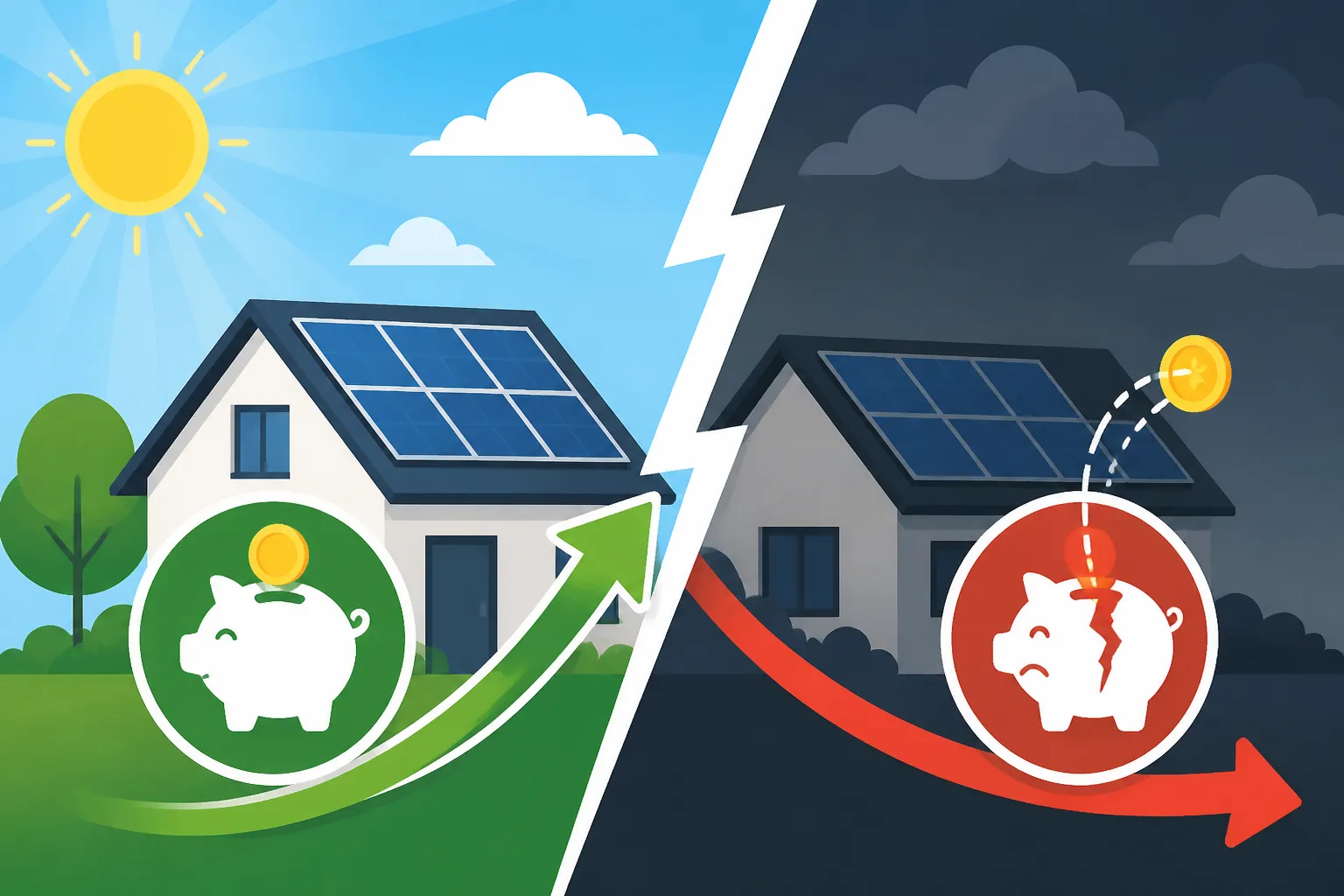
How Does the Tax Credit Loss Change Solar Payback?
It's completely understandable to feel a pang of worry when you hear talk about solar incentives changing, especially something as significant as the federal solar tax credit. For so long, that credit has been a foundational pillar for making solar accessible and financially attractive, and the idea of it being "gone" or reduced naturally brings up questions about whether solar panels are still a smart investment. This comprehensive guide is designed to cut through the confusion and explain precisely how changes to tax credits, both federal and state, truly influence your solar payback period.
Understanding the Federal Solar Tax Credit's Real Status
For many years, the federal solar tax credit, officially known as the Investment Tax Credit (ITC), has been a monumental force in helping homeowners embrace solar energy. It has consistently been one of the most substantial financial incentives available, directly reducing the total cost of installing a solar panel system on your home. The concern that this credit might be "lost" or significantly diminished is a very real one for people planning their solar journey.
What the Federal ITC Was and How It Evolved
For a long stretch, the federal ITC offered a generous 30% tax credit on the cost of a new residential solar energy system. Think about it: if your entire system cost $30,000, that meant a $9,000 credit you could claim on your federal income taxes. This wasn't a deduction; it was a direct reduction in the amount of tax you owed. If you didn't owe enough tax in one year to claim the full amount, you could often roll over the remaining credit to subsequent years. This mechanism was incredibly powerful because it immediately shaved a significant chunk off the overall investment, making solar much more attainable for the average family.
However, there was a planned step-down, and many people were bracing for the credit to eventually dwindle and expire. This created a sense of urgency for some homeowners, feeling like they needed to "get in" before the deadline. It’s important to understand that the initial legislative plan did indeed include a phase-out, leading to some of the anxiety about a potential "loss" of the credit.
The Inflation Reduction Act and the ITC's Extension
Here's the crucial clarification: the federal solar tax credit did not disappear. In fact, thanks to the Inflation Reduction Act (IRA) of 2022, the Residential Clean Energy Credit (the new name for the solar ITC) was not only extended but also brought back up to a full 30% for systems installed from 2022 through 2032. This was a massive win for homeowners and the solar industry, providing long-term stability and making solar more attractive than ever from a federal incentive standpoint.
So, when people ask, "Is the Solar Tax Credit Gone in 2026?", the answer is a resounding no for federal purposes. It’s very much alive and well, offering the same 30% incentive that has been so impactful. This extension effectively ensures that for the foreseeable future, a significant portion of your solar investment will be offset by the federal government. This really helps keep solar within reach for many families who might have otherwise thought it was out of their budget. You can dive deeper into what specific Federal Solar Incentives That Still Exist in 2026 are available to you.
Impact of Actual Incentive Changes on Solar Payback
While the federal tax credit is stable, the landscape of state-level incentives can be more dynamic. States, counties, and even local utilities often offer their own rebates, tax credits, or other programs that can significantly sweeten the deal for going solar. When these local incentives change, expire, or are reduced, that's when you'll truly see an alteration in your solar payback period.
How State-Specific Incentives Influence Your Investment
Many states have historically offered their own solar tax credits, cash rebates, or performance-based incentives (PBIs) to encourage adoption. For instance, New York has its NY-Sun program, and Massachusetts has the SMART program, both designed to accelerate solar growth. These programs, when combined with the federal ITC, can dramatically reduce the net cost of your system and shorten the time it takes to recoup your investment.
Imagine living in a state that, for a few years, offered an additional 10% state tax credit on top of the 30% federal credit. That 40% combined incentive could easily shave years off your solar payback period. When such a state-level incentive expires, homeowners essentially lose that additional discount. This means that, all else being equal, the initial net cost of the system increases, and consequently, the time it takes for the energy savings to offset that cost will extend. It’s a bit like buying a car with a special manufacturer's rebate – when that rebate ends, the price effectively goes up for the consumer.
Understanding the Financial Shift When an Incentive Ends
Let's look at a hypothetical scenario to illustrate this point. Suppose you live in a state that used to offer a $2,000 upfront rebate for solar installations, but that program has now run out of funds or expired. For a $30,000 solar system, your initial net cost (after the 30% federal tax credit) would be $21,000. With the $2,000 state rebate, that drops to $19,000.
If that rebate is no longer available, your net cost remains at $21,000. This $2,000 difference needs to be covered by additional energy savings over time. If your annual energy savings are, say, $1,500, losing that $2,000 rebate would mean it takes roughly an additional 16 months (2000/1500 * 12) to reach your payback point. While it might not seem like a huge amount in the grand scheme of a 25-year system lifespan, it does push out the point at which your system becomes "free" from an investment perspective. It’s why staying informed about State Solar Incentives: Complete 2026 Guide is so vital for homeowners.
Calculating Your Solar Payback Period
The payback period for solar panels is the length of time it takes for the money you save on electricity bills and earn from incentives to equal the total cost of your solar system. When incentives change, this calculation obviously shifts. Understanding the factors involved can help you estimate your own return on investment.
Key Factors That Influence Payback
Several critical components feed into the payback period calculation:
- System Cost: This is the total upfront cost of your solar panels, inverter, mounting hardware, and installation labor, before any incentives. Remember, companies like Modernize can help you gather competitive quotes from local installers, which is crucial for getting the best initial price.
- Incentives and Rebates: This includes the 30% federal tax credit, any state tax credits (if they still exist in your area), local utility rebates, and other programs like SRECs Explained: Selling Solar Renewable Energy Credits or Net Metering Explained: How It Works by State. These directly reduce your net cost.
- Electricity Rates: The higher your current electricity rates, and the more they are projected to increase over time, the faster your solar savings will accumulate. This is because every kilowatt-hour (kWh) your solar system produces means a kWh you don't have to buy from your utility.
- System Production: This refers to how much electricity your solar panels generate. Factors like panel efficiency, roof orientation, local weather, and shading all play a role. A higher-producing system saves you more money faster.
- Financing Costs: If you finance your solar system with a loan, the interest payments will affect your overall cost and thus your payback period. It's important to look at all aspects of Solar Loans: Complete Guide to understand the full financial picture.
Step-by-Step Payback Calculation with Changing Incentives
Let's walk through a simplified example to see how the "loss" of a state incentive can affect your payback.
Scenario A: With a State Rebate
- System Cost: $25,000
- Federal Tax Credit (30%): $7,500
- State Rebate: $1,500 (this is the incentive that is "lost" in Scenario B)
- Net System Cost (after incentives): $25,000 – $7,500 – $1,500 = $16,000
- Annual Electricity Savings: $1,800
- Payback Period: $16,000 / $1,800 = approximately 8.9 years
Scenario B: Without the State Rebate (due to expiration/loss)
- System Cost: $25,000
- Federal Tax Credit (30%): $7,500
- State Rebate: $0 (this incentive is now "lost")
- Net System Cost (after incentives): $25,000 – $7,500 – $0 = $17,500
- Annual Electricity Savings: $1,800
- Payback Period: $17,500 / $1,800 = approximately 9.7 years
As you can see from this table, losing even a moderate state rebate can add almost a full year to your payback period. This small shift in the initial cost means it takes longer for your accumulated savings to catch up. This is a clear demonstration of how sensitive your Solar Panel Payback Period Explained can be to changes in available incentives.
| Factor | Scenario A: With State Rebate | Scenario B: Without State Rebate |
|---|---|---|
| Total System Cost | $25,000 | $25,000 |
| Federal Tax Credit (30%) | -$7,500 | -$7,500 |
| State Rebate | -$1,500 | $0 |
| Net Out-of-Pocket Cost | $16,000 | $17,500 |
| Annual Electricity Savings | $1,800 | $1,800 |
| Estimated Payback Period | 8.9 years | 9.7 years |
It's important to note that this is a simplified example. Real-world calculations also factor in property tax exemptions, potential increases in property value, and the degradation rate of solar panels over time. However, this table clearly illustrates the direct impact of an incentive's absence.
Strategies to Improve Solar Payback After Incentive Shifts
Even if some state or local incentives become less generous or disappear, solar remains a strong investment for most homeowners, especially with the robust federal tax credit still in place. The key is to be proactive and strategic in how you approach your solar project. You might even find that Is Solar Worth It Without the Tax Credit? is still a positive answer for your situation.
Maximizing Remaining Federal and State Programs
Since the federal tax credit is firmly at 30% through 2032, ensuring you qualify for and properly claim this incentive is paramount. This credit is available for owned systems, whether purchased outright with cash or financed through a solar loan. You'll claim it when you file your federal income taxes.
Beyond federal, don't overlook other state and local programs that might still be active. These can include:
- Net Metering: This allows you to send excess electricity your panels produce back to the grid for credits on your utility bill, significantly boosting your savings. Rules for Net Metering Explained: How It Works by State vary widely, so it's essential to understand your local regulations.
- Solar Renewable Energy Credits (SRECs): In some states, you can earn and sell credits for the clean energy your system generates. These markets fluctuate, but SRECs can provide a substantial additional revenue stream. Learn more about SRECs Explained: Selling Solar Renewable Energy Credits.
- Utility Rebates: Many local utilities still offer one-time cash rebates for installing solar. These vary by utility company and location, so check what your specific provider offers. Find out how to discover Utility Solar Rebates: How to Find Yours.
- Property Tax Exemptions: Some states prevent the increased value of your home from solar panels from raising your property taxes. This is a hidden but valuable incentive.
Optimizing System Design and Installation Costs
The initial cost of your system has the biggest impact on your payback period, especially if incentives are less abundant. This means getting the best possible price for a high-quality, efficient system.
- Get Multiple Quotes: This is non-negotiable. Don't settle for the first offer you receive. Contact several reputable solar installers in your area and compare their proposals. Tools like Modernize can connect you with local, pre-screened professionals, making this process much easier and ensuring you get competitive pricing. By comparing different proposals, you can see how What Affects the Cost of Solar Panels? and how various companies price their services. Always ask for itemized quotes to see how much each component costs.
- Choose Efficient Components: While top-tier, high-efficiency solar panels might have a slightly higher upfront cost, they can generate more electricity over their lifetime, leading to greater savings and a potentially faster payback. Similarly, advanced inverters or solar optimizers can improve system performance, especially on roofs with partial shading.
- Right-Size Your System: An experienced installer will help you determine the optimal system size to meet your home's electricity needs. Installing a system that's too small won't maximize your savings, while one that's too large could be an unnecessary expense, especially in areas with less favorable net metering policies.
Exploring Alternative Financial Mechanisms
Even without generous state tax credits, there are still excellent ways to make solar affordable and achieve a good payback.
- Solar Loans: Many homeowners choose to finance their solar purchase through a dedicated solar loan. These loans often have favorable terms and allow you to own your system while paying it off monthly, much like a mortgage. The key here is to scrutinize loan terms, including interest rates and any hidden dealer fees, which can impact your overall cost.
- Cash Purchase: If you have the capital, paying for your solar system upfront with cash will almost always result in the shortest payback period and the highest long-term savings. You avoid all interest payments and immediately begin reaping the full financial benefits. This is often the most straightforward path to maximizing your return.
- Considering a Solar Battery: While adding a battery increases the upfront cost, it can be a smart move, especially if your utility has unfavorable net metering or if you frequently experience power outages. A battery allows you to store excess solar energy for use at night or during an outage, reducing reliance on the grid and maximizing self-consumption. Plus, solar batteries often qualify for the 30% federal tax credit as well.
By combining the powerful federal tax credit with diligent research into remaining state and local incentives, smart purchasing decisions, and careful financial planning, going solar can still be an incredibly rewarding financial decision. Don't let the noise about "lost" incentives deter you from exploring how much you can save in your own home.
Disclaimer
Please remember that the information provided in this guide is for educational purposes only and should not be considered financial or tax advice. Solar incentives, policies, and market conditions can change, and their applicability varies based on your specific location and individual circumstances. We highly recommend consulting with a qualified tax professional and several reputable local solar installers to get personalized advice and the most accurate information for your home and financial situation.