Do Solar Panels Pay Off in Cold or Cloudy States?
It's completely understandable to wonder if solar panels are truly worth the investment when you live in a state that isn't exactly famous for its year-round sunshine. Many homeowners in places with long winters or frequent cloudy days often feel discouraged, thinking solar is only for the sunny coasts. But here's the good news: the "sunshine ceiling" for solar panels is much higher and broader than you might imagine, and they absolutely can pay off in colder or cloudier states, often in surprising ways. This guide will break down how solar panels perform in less-than-ideal climates, the factors that make them a smart investment despite the weather, and how you can ensure a strong return on your solar journey.
Debunking the Sunshine Myth: How Solar Really Works in Colder Climates
When you picture solar panels, you probably envision a bright, clear, sunny day, right? That's the ideal, of course, but it's far from the only condition in which solar panels generate power. Modern solar technology is remarkably resilient and efficient, capable of performing well even when the sun isn't blazing down. This often comes as a pleasant surprise to folks living outside the "sun belt."
Understanding Solar Panel Performance in Varying Conditions
The core misconception is that solar panels only work with direct, scorching sunlight. In reality, solar panels generate electricity from light, not heat. This means they can still produce power on cloudy days, albeit at a reduced capacity, from what's called diffuse sunlight. Think of it like taking a photo on a cloudy day – there's still light, just not direct glare. Advanced photovoltaic (PV) cells are quite good at capturing this ambient light.
What's even more interesting is how cold temperatures actually improve solar panel efficiency. Heat can reduce the efficiency of solar panels; for every degree above 77°F (25°C), a panel's output slightly decreases. So, while you might have fewer peak sun hours in a northern state like Minnesota or Vermont, the cooler temperatures can mean the panels operate at their optimal efficiency for more of the time they are exposed to light. This effect helps to offset some of the lower light availability. Many countries known for their renewable energy, like Germany, aren't exactly tropical paradises, yet they've been incredibly successful with solar adoption, proving that consistent, moderate light combined with cooler temps can be highly effective.
The Role of Snow and Cloud Cover
The worries about snow and cloud cover are perfectly valid, and they're some of the first questions people ask. Let's tackle them head-on.
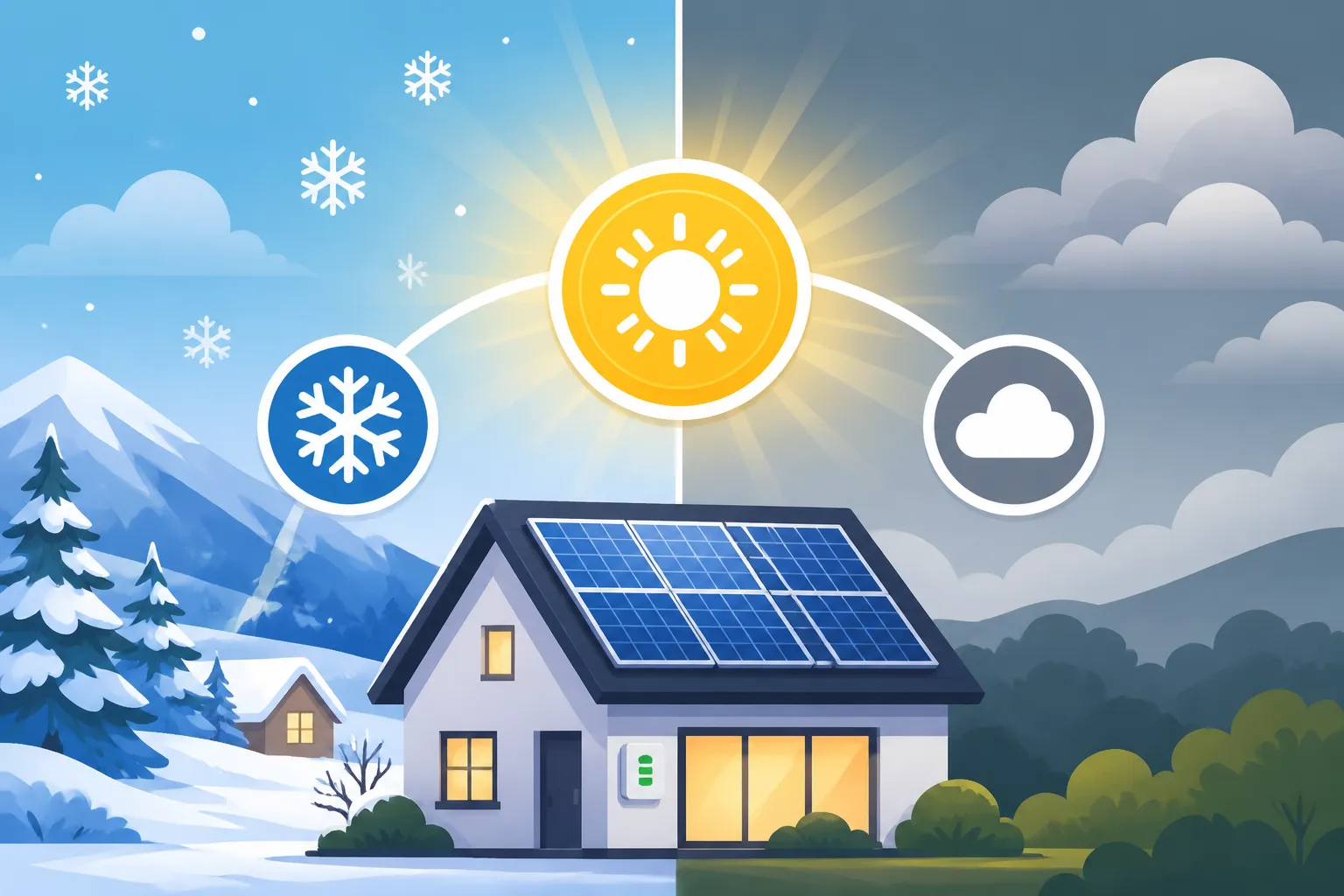
Snow Accumulation: Yes, snow on your panels will temporarily stop them from producing power. However, there are several reasons why this isn't usually a deal-breaker. First, solar panels are dark and designed to absorb sunlight, which means they tend to heat up slightly, helping snow to melt and slide off relatively quickly. Many residential solar arrays are also installed at a tilt, further aiding snow shedding. Most importantly, professional solar installers in snowy regions factor this into their system design. They often orient panels to maximize winter sun exposure and ensure good snowmelt. For homeowners, a few days or weeks of reduced production during the deepest winter months don't typically negate the year-round savings, especially given how strong other factors, like incentives, can be. Plus, you can often gently clear snow yourself with a soft brush if it becomes a persistent issue, though many systems are designed for self-clearing.
Cloud Cover: Cloudy days definitely reduce solar output compared to bright, sunny days. But again, it's not a complete shutdown. As mentioned, modern panels are adept at capturing diffuse light. Furthermore, the overall solar payoff is calculated based on annual production averages. A few cloudy weeks here and there get averaged out over the course of the year with sunnier periods. Many states with surprisingly robust solar markets, such as Massachusetts or New York, experience plenty of cloudy weather, yet homeowners there are still seeing excellent returns on their solar investment thanks to a combination of moderate annual sunlight, system design, and crucial state-level support. Understanding your local solar resource is key, and an experienced installer will be able to provide accurate estimates based on historical weather data for your specific location.
Key Factors Influencing Solar Payoff in Northern Regions
It's clear that solar can work in colder or cloudier states, but what makes it pay off? It's often a combination of economics and technology that tips the scales in your favor, even more so than just abundant sunshine. These factors are critical to consider when evaluating your potential return on investment.
Electricity Rates and Local Incentives
Perhaps the single biggest driver for solar panel payoff in less-sunny states isn't the sun itself, but the cost of not having solar. Many states with challenging climates also happen to have some of the highest electricity rates in the country. For example, homeowners in New England states like Connecticut or Massachusetts, or in parts of California, face utility bills that can be double or triple what someone in a state like Idaho or Louisiana might pay. When your electricity is expensive, every kilowatt-hour your solar panels produce saves you significantly more money, drastically shortening your Solar Panel Payback Period Explained.
Beyond high rates, the incentives available in these states are often incredibly generous, designed specifically to encourage solar adoption. These can include:
- Net Metering Programs: This is a game-changer. Net Metering Explained: How It Works by State allows you to send excess electricity your panels produce back to the grid and receive credits on your bill, essentially running your meter backward. While policies like What Is NEM 3.0 California Net Billing are changing in some areas, many states still offer favorable net metering or similar export compensation that makes self-consumption and grid interaction highly beneficial.
- State and Local Solar Incentives: Beyond the federal incentives that still exist, many states offer their own programs, ranging from state tax credits (like the New York NY-Sun & State Solar Tax Credit (25%) ) to performance-based incentives (PBIs) like those in the Massachusetts SMART Program Explained. Some states, particularly in the Northeast, have robust Solar Renewable Energy Credit (SREC) markets where you can sell credits generated by your system for significant income. States like New Jersey with its SREC-II / SuSI Program Guide are prime examples of how strong state-specific incentives can make solar highly lucrative despite less sunshine. You can find a complete overview in our State Solar Incentives: Complete 2026 Guide.
- Utility Rebates: Many local utility companies offer direct rebates for installing solar, further reducing your upfront costs. Checking for Utility Solar Rebates How to Find Yours is a crucial step in the planning process.
- Solar Property Tax Exemptions: In some areas, adding solar panels won't increase your property taxes, which is a fantastic long-term saving. Our guide on Solar Property Tax Exemptions by State can give you more details on this.
These financial boosts are often the secret sauce that makes solar an undeniable investment in places that might initially seem unsuitable. A company like Modernize can help you navigate these complex incentive structures and connect you with local installers who are experts in maximizing these benefits for their customers.
System Sizing and Panel Efficiency
In regions with less abundant sunlight, strategic system design becomes even more crucial. Instead of simply aiming for "enough" panels, installers in these areas will focus on optimizing your system for maximum output given the conditions.
Larger Systems: One common approach is to install a slightly larger system than you might in a sunnier climate. This means more panels or panels with higher wattage (e.g., 400W or 450W), which can capture more of the available light, compensating for shorter daylight hours or more frequent cloud cover. This doesn't necessarily mean a disproportionately higher cost, as the overall cost-per-watt has become very competitive.
High-Efficiency Panels: Investing in high-efficiency solar panels can also make a significant difference. Panels utilizing technologies like TOPCon, HJT, or PERC cells are designed to convert a higher percentage of sunlight into electricity, even in suboptimal conditions. Brands like Maxeon (SunPower), REC, or Qcells are known for their efficiency and performance, and while they might have a slightly higher upfront cost, their increased output can lead to faster payback periods and greater long-term savings, especially when every bit of captured light counts. Your installer can recommend the best panels for your specific climate and budget.
Installation Quality and Orientation
The expertise of your solar installer is paramount, particularly in climates with unique challenges. A reputable, experienced installer will not only understand the best equipment for your region but also how to optimize its placement for maximum energy harvest throughout the year.
Optimal Tilt and Azimuth: In northern latitudes, a slightly steeper panel tilt can be beneficial to capture more of the lower-angle winter sun. Additionally, ensuring the panels face the true south (or slightly southeast/southwest depending on your specific shading and local conditions) is crucial. A skilled installer will conduct a thorough site survey to assess your roof's pitch, orientation, and any potential shading from trees or surrounding buildings. They'll use specialized software to model the sun's path throughout the year and design a system that maximizes your energy production, balancing seasonal variations.
Understanding Local Conditions: An installer with a strong local presence will also understand specific permitting requirements, interconnection processes, and the nuances of working with local utilities. For example, they'll know about the best racking systems to handle heavy snow loads in Michigan or the specific requirements for hail resistance in Colorado. Don't underestimate the value of local expertise in ensuring your system is installed safely, efficiently, and to code, giving you peace of mind and maximizing your long-term return. Resources like Modernize can connect you with pre-vetted local installers who have a proven track record in your specific climate.
Calculating Your Solar ROI in Challenging Climates
When you're trying to figure out if solar will truly save you money in a cold or cloudy state, it's about looking at the bigger picture, not just comparing your system's output to a desert installation. The return on investment (ROI) isn't solely about how many peak sunshine hours you get; it's a dynamic calculation involving a mix of factors.
Beyond Simple Payback Period
While the Solar Panel Payback Period Explained is a popular metric, it's only one piece of the puzzle. For homeowners in colder or cloudier states, the ROI extends beyond simply recouping your initial investment. Consider these long-term benefits:
- Long-Term Savings: Once your system is paid off, you're essentially generating free electricity for the remaining 15-20+ years of its lifespan. With electricity rates consistently rising across the country, those savings will only become more significant over time. Imagine what your utility bill will look like in 10 or 20 years without solar compared to having minimal or no electricity costs.
- Increased Home Value: Studies consistently show that solar panels increase home value, often by a significant amount. A solar-equipped home is more attractive to buyers, especially in areas where energy costs are high. This added value isn't just a bonus; it's a tangible return on your investment, making your home more appealing if you decide to sell. Our guide on Do Solar Panels Increase Home Value dives deeper into this topic.
- Energy Independence and Predictability: In an era of unpredictable energy markets and increasing grid instability, having your own power source offers invaluable peace of mind. You're less vulnerable to utility rate hikes, unexpected outages, or geopolitical events affecting energy prices. This financial stability and security are significant, even if they're harder to quantify in dollars and cents.
- Environmental Impact: While not a financial return, the positive environmental impact of reducing your carbon footprint is a powerful motivator for many homeowners. Contributing to a cleaner energy future is a significant return in its own right.
To truly calculate your savings and ROI, you need a personalized estimate that takes into account your specific electricity consumption, local utility rates, available incentives, and the estimated production of a system sized for your home and climate. Getting multiple quotes from different solar providers is crucial for a realistic assessment, and comparing those offers on a platform like Modernize can simplify this process.
Real-World Examples and Case Studies
Let's imagine some hypothetical scenarios to illustrate how solar can pay off in colder, cloudier states.
Consider a homeowner in Rochester, New York. They experience significant snowfall and cold winters. However, electricity rates in New York are higher than the national average, and the state offers robust programs like NY-Sun and a state solar tax credit. With a well-designed 8 kW solar system, strategically tilted to shed snow and capture winter sun, and taking advantage of net metering, this homeowner might see an average monthly saving of $100-$150. Even with a 10-12 year payback period, the subsequent 13-15 years of near-free electricity, coupled with the increased home value and state incentives, make it a financially sound decision.
Another example could be a family in Boston, Massachusetts. Massachusetts has one of the highest electricity rates in the U.S. and a strong SREC market. Even with cloudy days, a 7 kW system here can generate substantial SRECs annually, which can be sold for hundreds, if not thousands, of dollars. Combined with high utility bill savings and the state's SMART program, the overall financial benefits can be very compelling. Many homeowners in these regions are actively making money from their solar systems through these incentives. The Massachusetts SMART Program Explained provides a great example of this. These scenarios demonstrate that while the direct sun resource might be lower, the financial levers in place can more than compensate.
| Factor | Sunny State (e.g., Arizona, California) | Cloudy/Cold State (e.g., Massachusetts, Minnesota) |
|---|---|---|
| Peak Sun Hours | High (5-6+ hours/day average) | Moderate (3-4 hours/day average, seasonal variation) |
| Panel Efficiency | May decrease slightly due to high heat | May increase slightly due to cooler temperatures |
| Electricity Rates | Often moderate to high, but can vary widely | Often higher than national average (e.g., New England, California, New York) |
| State Incentives | Strong, but sometimes transitioning (e.g., California NEM 3.0) | Often very strong (SRECs, state tax credits, performance-based incentives) |
| Net Metering | Varies by state; some are less favorable (e.g., CA NEM 3.0) | Can be very favorable, offering significant bill credits |
| Snow/Cloud Impact | Minimal | Temporary reduction in winter, managed by design, often self-clearing |
| System Sizing Strategy | Optimized for direct sun, potentially smaller footprint | Often slightly larger system, higher efficiency panels to compensate |
| Overall ROI Drivers | Direct energy savings, strong solar resource | High electricity rates, robust state incentives, long-term savings |
Navigating the Solar Journey in Colder States
Deciding to go solar in a colder or cloudier state isn't just about the numbers; it's also about making smart choices throughout the process. The right installer and a proactive approach to understanding your system are crucial for maximizing your investment.
Finding the Right Installer for Your Specific Needs
This cannot be stressed enough: the success of your solar project, especially in challenging climates, heavily relies on the expertise of your installer. You're not just buying panels; you're investing in a partnership with a company that will design, install, and potentially maintain your system for decades.
- Local Experience is Key: Look for installers with a proven track record in your specific region. They should be intimately familiar with local weather patterns, permitting regulations, and utility interconnection requirements. Ask them about their experience with snow management, roof types common in your area, and how they optimize systems for lower winter sun angles. Don't be shy about asking for references from neighbors who have gone solar with them.
- Comprehensive Site Assessment: A top-notch installer will conduct a thorough What Is a Site Survey for Solar to evaluate your roof's condition, shading, orientation, and structural integrity. They'll use sophisticated software to model your expected annual production, taking into account seasonal variations specific to your climate.
- Transparency in Quoting: A good installer will provide clear, detailed quotes that break down all costs, including equipment, labor, permitting fees, and estimated savings over time. They should also clearly explain all available incentives and how they apply to your project. Beware of high-pressure sales tactics or quotes that seem too good to be true. Comparing multiple quotes is always a wise strategy. Services like Modernize can streamline this by connecting you with several qualified, local installers, allowing you to compare their proposals side-by-side without the hassle of finding them all yourself.
Maximizing Your System's Performance Year-Round
Once your solar panels are installed and you've received your What Is Permission to Operate PTO, your job isn't over. Understanding how to get the most out of your system throughout the year is important.
- Monitoring Your System: Most modern solar systems come with monitoring apps that allow you to track your energy production in real time. This isn't just a cool gadget; it helps you understand how your system performs on sunny days versus cloudy days, and how production fluctuates seasonally. This knowledge empowers you to adjust your energy usage if needed and to quickly identify any performance issues.
- Understanding Seasonal Cycles: Accept that winter months will naturally have lower production due to shorter daylight hours and lower sun angles. Your system is designed for year-round performance, and the higher production in spring, summer, and fall will compensate for the lower winter output. It’s all about the annual average.
- Considering Solar Batteries: In states where net metering policies are less favorable or shifting (like in California with NEM 3.0, or other states exploring "avoided-cost" rates), or if you simply want more energy independence and backup power, adding a Solar Battery Cost Full Breakdown can be a fantastic investment. Batteries store your excess solar energy for use during cloudy periods, at night, or during power outages. There are even Solar Battery Incentives in 2026 available to help offset the cost.
- Maintenance and Cleaning: While solar panels are generally low-maintenance, a quick annual check for debris or excessive dirt can be beneficial. In snowy regions, if snow accumulates for extended periods and isn't self-clearing, gently removing it can boost winter production. However, exercise caution and never put yourself at risk. Often, routine rainfall is enough to keep your panels clean.
By carefully selecting your installer, understanding the financial landscape, and proactively managing your system, solar panels can absolutely be a worthwhile and financially rewarding investment, even if you live in a colder or cloudier state. The energy independence and long-term savings often outweigh the initial concerns about the weather, proving that solar is truly for everyone, not just those in the perpetual sunshine.
Disclaimer
This article is intended for informational purposes only and does not constitute financial, legal, or professional energy advice. The availability and specifics of solar incentives, electricity rates, and regulations can change frequently and vary significantly by location and utility provider. Always consult with qualified solar professionals and financial advisors to assess your individual situation and ensure accurate, up-to-date information for your specific project.