Solar Payback Period in New York
One of the biggest questions on every New York homeowner's mind when considering solar panels isn't just "how much do they cost?" but rather, "how long until they pay for themselves?" It's a completely fair question, especially with rising electricity bills and the significant upfront investment solar can represent. You want to know when you'll start seeing that sweet return on your hard-earned money. This guide is here to break down the solar payback period specifically for homes in the Empire State, explaining what it means, what influences it, and how you can make your solar investment pay off faster.
Understanding the Solar Payback Period
Let's be real, the idea of getting solar panels can feel a bit daunting. You hear about big numbers, installation processes, and then the promise of saving money "eventually." The "eventually" part is where the solar payback period comes in. It's not just a fancy term; it's a crucial metric that helps you understand the financial journey of your solar investment.
What Exactly Is the Solar Payback Period?
Simply put, the solar payback period is the amount of time it takes for the savings you accumulate from your solar panel system to equal the initial cost of installing it. Think of it like this: you spend money to install solar, and every month, you save money on your electricity bill (or even earn credits). The payback period is the point where those cumulative savings catch up to and then exceed your initial outlay. After that point, every dollar saved is pure profit, directly benefiting your household budget. It's a clear benchmark that helps you assess the financial viability of going solar. It's not just about doing good for the environment; it's about making a smart financial move for your home.
How Is the Payback Period Calculated?
Calculating your solar payback period isn't rocket science, but it does involve a few key pieces of information. At its core, it's a division problem:
Payback Period (Years) = Net Cost of Solar System / Annual Savings from Solar
Let's break down those components:
- Net Cost of Solar System: This isn't just the sticker price. This is the total upfront cost after you've factored in any incentives, rebates, and tax credits. For example, if your system costs $30,000, but you receive a state tax credit and a utility rebate totaling $6,000, your net cost is $24,000. For New York homeowners, understanding New York NY-Sun & State Solar Tax Credit (25%) is absolutely critical for figuring out this net cost. These programs can significantly reduce your initial investment, making your system pay for itself much quicker.
- Annual Savings from Solar: This is where the magic happens. Your annual savings are primarily derived from the electricity you no longer have to buy from your utility company. If your average monthly electricity bill is $150, and your solar system offsets 100% of that, you're saving $1,800 a year. This also includes any money or credits you earn through programs like Net Metering Explained: How It Works by State. If your system produces more electricity than you consume, and your utility offers good net metering, those credits add to your savings.
It's important to remember that this calculation is an estimate. It relies on assumptions about future electricity rates (which tend to rise!), system performance, and ongoing incentives. A good installer, perhaps found through platforms like Modernize, will help you run these numbers with realistic projections.
Solar Payback in New York: What to Expect
New York is a unique place with its own set of rules, incentives, and energy landscapes. This means the solar payback period here will differ from, say, Arizona or Florida. It's crucial to look at the local context to get a realistic picture.
Average Payback Period in the Empire State
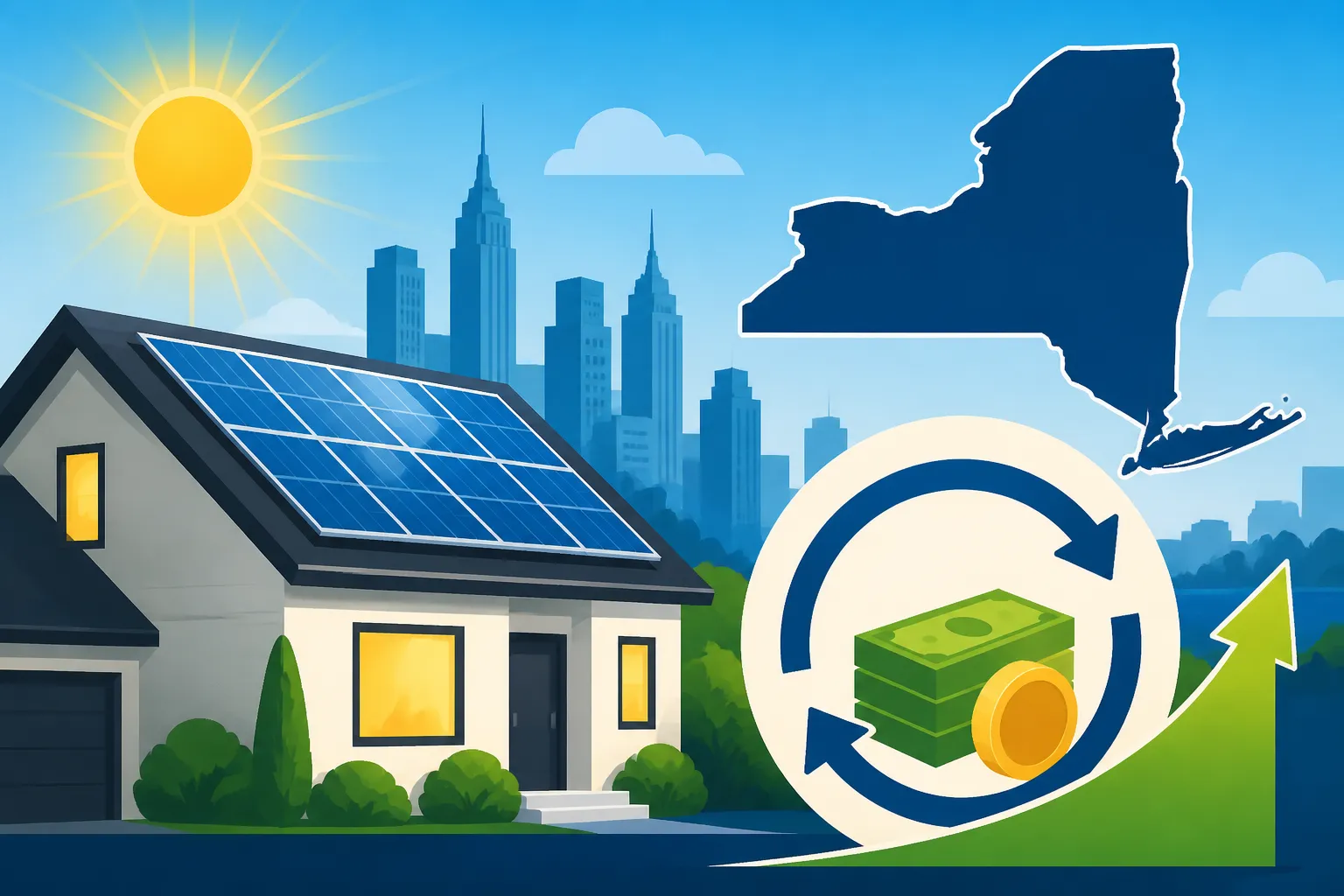
When you're looking at going solar in New York, you're generally looking at a payback period that falls somewhere in the range of 8 to 12 years. Now, I know that might sound like a significant chunk of time, especially compared to some sun-drenched states down south. But here's the thing: New York offers some pretty robust incentives, and our electricity rates are among the highest in the nation, which actually helps shorten that payback time considerably.
For instance, homeowners in areas served by Con Edison often see faster paybacks due to their very high electricity prices compared to, say, National Grid customers upstate. This range is an average, and your specific circumstances—like your exact location, roof characteristics, and how much power you use—will ultimately determine where you fall within it. Don't let the longer average discourage you; the long-term savings are still substantial, and property values often increase with solar. You can also explore Is Solar Worth It in New York? for a deeper dive into the overall value proposition.
New York Specific Factors That Influence Payback
So, what makes the New York solar experience distinct when it comes to getting your money back? A few key elements truly stand out:
- High Electricity Rates: This is arguably the biggest driver for a faster payback period in New York. We consistently rank among the top states for residential electricity costs. When you're paying upward of $0.20 per kilowatt-hour, every bit of solar energy you produce saves you significantly more than if you lived in a state with cheap power. Your savings snowball faster because you're avoiding a higher cost per unit of energy.
- Strong State Incentives: New York is committed to renewable energy, and it shows in its incentive programs. The state offers generous programs through NY-Sun, which can provide upfront financial support. There's also a significant state tax credit – often 25% of your system cost, capped at $5,000 – that directly reduces your tax liability. These incentives drastically lower your net upfront cost, directly shortening your payback time. Understanding the nuances of State Solar Incentives: Complete 2026 Guide is essential for maximizing these benefits.
- Net Metering Policies: While policies can shift, New York generally has favorable net metering rules. This means that if your solar panels generate more electricity than your home consumes, your utility credits you for that excess power at or near the retail rate. These credits can then offset your usage during times when your panels aren't producing as much (like at night or on cloudy days), further enhancing your overall savings.
- Solar Irradiance: Let's face it, New York isn't exactly the desert Southwest. We have four distinct seasons, and winter can bring shorter days and more cloud cover. However, modern solar panels are incredibly efficient, even on cloudy days, and the longer, sunny days of summer more than make up for it. While our solar resource isn't as intense as some other states, it's still more than sufficient for solar to be highly effective and economically sound.
These factors combine to create a compelling case for solar in New York, even if the payback period isn't as short as in some other regions. The consistent savings from high electricity rates, coupled with strong financial support from the state, make solar a sound long-term investment.
Key Factors Influencing Your New York Solar Payback
The average payback period is a good starting point, but your specific home and situation will have unique characteristics that can significantly shift that number. Let's dig into what truly moves the needle.
System Size and Cost Per Watt
One of the most immediate impacts on your payback period is the size of your solar system and its overall cost. You might think "bigger is better" for savings, but it's really about optimization.
- Matching System Size to Consumption: The ideal system size for your home aims to offset 100% of your electricity usage, or as close to it as possible given your roof space and budget. If you install a system that's too small, you'll still have a significant electricity bill, reducing your annual savings. If it's too large and you're not fully utilizing net metering credits, you might be over-investing in panels you don't truly need, stretching out the payback. Understanding How Many Solar Panels Do I Need for My Home? is critical here. An experienced installer, like those you might find through Modernize, will conduct a thorough energy audit and propose a system designed to meet your specific needs.
- The Price Tag: The upfront cost of your system, before incentives, plays a huge role. Costs vary based on the quality of panels, inverters (like Enphase or SolarEdge), labor rates, and installer overhead. The national average cost per watt generally hovers between $2.50 and $4.00, but in New York, it might be slightly higher due to labor costs and specific market conditions. Always compare multiple quotes to ensure you're getting a competitive Solar Panel Cost Per Watt Explained. A lower net cost, achieved through careful shopping and maximizing incentives, will always lead to a quicker payback.
Your Energy Consumption and Utility Rates
This is where your personal habits and local geography really come into play.
- How Much Electricity Do You Use? Homeowners with higher electricity consumption tend to see a faster payback period. Why? Because they're avoiding more expensive utility power. If your annual electricity bill is consistently high (say, over $200/month), the financial incentive to go solar is stronger, and your system will offset more expensive electricity, leading to greater annual savings. Conversely, if you have a very energy-efficient home with low bills, your dollar savings will be smaller, potentially extending the payback time.
- Your Local Utility's Rates: As mentioned, New York's electricity rates vary significantly by utility. Homeowners in New York City and Westchester County, typically served by Con Edison, face some of the highest electricity rates in the nation. This means their solar savings per kilowatt-hour are exceptionally high, pushing their payback periods to the lower end of the 8-12 year range. In contrast, customers of utilities like National Grid or NYSEG in upstate areas might have slightly lower rates, which could add a year or two to their payback. It's a simple equation: the more expensive the electricity you avoid buying, the faster your system pays for itself.
System Performance and Efficiency
The actual amount of electricity your system produces directly affects your annual savings.
- Solar Irradiance and Shading: Your home's specific solar resource matters. A south-facing roof with minimal shading will naturally produce more power than a west-facing roof with significant tree cover. Even in New York, where overall sunlight is good, localized shading from trees, chimneys, or neighboring buildings can reduce output. It's why a detailed site assessment is crucial during the Solar Installation Timeline: What to Expect.
- Panel and Inverter Efficiency: Higher efficiency panels (e.g., from brands like Maxeon or REC) can convert more sunlight into electricity, especially valuable if you have limited roof space. Modern microinverters (like Enphase) or power optimizers (like SolarEdge) can also boost performance by optimizing output from individual panels, especially beneficial on roofs with partial shading. While premium equipment might have a higher upfront cost, the increased production could lead to greater savings and a slightly shorter payback over the long term.
Financing Method and Loan Terms
How you pay for your solar system is just as important as the system itself when considering payback.
- Cash Purchase: This almost always results in the shortest payback period. You avoid interest payments and dealer fees, meaning your initial investment is purely the net cost of the system. All your annual savings go directly towards recouping that upfront capital.
- Solar Loans: Financing with a solar loan can make solar accessible for many. However, the interest you pay on the loan effectively increases your total cost of ownership, which can extend your payback period. Look for loans with low interest rates and reasonable terms. Be wary of hidden Solar Dealer Fees Explained (Hidden Loan Costs) that can inflate your loan amount. While your monthly loan payment might be less than your previous electricity bill, the true payback calculation needs to consider the total amount paid over the life of the loan.
- Leases and PPAs: With a solar lease or Power Purchase Agreement (PPA), you don't own the system. You pay a fixed monthly rate for electricity (PPA) or for the use of the panels (lease). While these options often come with $0 down, they don't have a traditional "payback period" for you as the homeowner, because you're not buying the system. You do save money immediately on your electricity bill, but you won't fully own the asset or realize the full long-term financial return. These options are more about immediate savings than an investment return.
Strategies to Shorten Your Solar Payback Period in New York
While some factors are fixed (like the sun's path), there are definite steps you can take to make your solar investment in New York pay off faster and put more money back in your pocket sooner.
Maximizing Available Incentives
This is your golden ticket to a quicker payback. New York has some fantastic programs, but you have to know how to leverage them.
- Leverage NY-Sun and State Tax Credits: The NY-Sun program, administered by NYSERDA (New York State Energy Research and Development Authority), offers incentives that decrease the upfront cost of solar installations. These are often performance-based, meaning they're tied to the amount of electricity your system is expected to produce. On top of that, the New York NY-Sun & State Solar Tax Credit (25%) is a direct credit against your state income tax liability, significantly reducing your net cost. Make sure your installer helps you apply for all eligible programs. Missing out on these could add years to your payback. A good first step is often to connect with reputable installers through platforms like Modernize, who are well-versed in navigating these state-specific programs.
- Explore Local and Utility Rebates: Beyond statewide programs, many individual utilities in New York offer their own solar rebates. For example, some municipal utilities or smaller co-ops might have incentives that complement state programs. Always check with your specific electric utility to see what's available. Sometimes, these are first-come, first-served, so acting promptly can be beneficial. Additionally, specific local governments, particularly in larger cities or counties, might offer their own localized grants or property tax abatements for solar installations. Don't leave any money on the table!
Optimizing Your Solar System Design and Equipment
Choosing the right system configuration and components can directly impact production and, thus, your savings.
- Match System Size to Your Needs: As discussed, avoiding oversized or undersized systems is key. A reputable installer will perform a detailed energy audit of your past 12 months of electricity bills to design a system that closely matches your consumption patterns. If you plan to add an EV charger or more energy-intensive appliances in the future, communicate this upfront so they can factor it into the design. Overproducing electricity without robust net metering policies might not yield the best financial return.
- Consider High-Efficiency Panels: If your roof space is limited, investing in higher-efficiency solar panels might be a smart move. While they might cost a bit more per panel, they produce more electricity from a smaller footprint. This means you can generate more power without expanding your array or being limited by roof constraints, leading to greater overall savings and a better return on investment. Brands like SunPower (Maxeon) or REC are known for their high efficiency, though many Tier 1 manufacturers offer excellent options.
- Choose the Right Inverter Technology: Microinverters (like those from Enphase) or power optimizers (from SolarEdge) can be particularly beneficial for New York homes that might experience partial shading from trees or nearby buildings. These technologies allow each panel to operate independently, preventing a single shaded panel from dragging down the performance of the entire array. While string inverters are often more cost-effective for perfectly unshaded roofs, the individual panel optimization can lead to higher overall system production in less-than-ideal conditions, thus boosting your annual savings.
Enhancing Home Energy Efficiency
Sometimes, the best way to shorten your solar payback isn't just about making more electricity, but about needing less in the first place!
- Reduce Your Overall Energy Consumption: Before even thinking about solar, take a good look at your home's energy habits. Simple things like upgrading to LED lighting, sealing air leaks, improving insulation, or using energy-efficient appliances can drastically reduce your baseline electricity usage. The less electricity you consume, the smaller the solar system you'll need to achieve a 100% offset, which means a lower upfront cost and a faster payback. Think of it as putting your home on an "energy diet" before installing solar.
- Prioritize Energy-Efficient Upgrades: If you're planning a home renovation anyway, consider energy-efficient windows, a high-efficiency HVAC system, or smart thermostats. These upgrades can significantly lower your long-term energy demand. Many state and utility programs in New York, separate from solar, also offer incentives for these types of energy-saving home improvements. Combining energy efficiency with solar is often the most cost-effective path to energy independence and a quick return on your investment.
Smart Energy Management Practices
Once your solar system is up and running, how you use the power it generates can also influence your payback.
- Shift Consumption to Peak Production Hours: If your utility has time-of-use (TOU) rates, where electricity costs more during certain peak hours (e.g., late afternoon/early evening), try to shift your heavy energy consumption to when your solar panels are producing the most, typically midday. Running your dishwasher or washing machine in the afternoon rather than at dinner time can save you money by using your own "free" solar power during what would otherwise be expensive peak utility hours.
- Consider a Solar Battery for Grid Services: While adding a solar battery (like a Tesla Powerwall or Enphase IQ Battery) adds to the upfront cost, it can offer benefits beyond just backup power. In some areas, batteries can participate in "grid services" programs, where your utility might pay you for allowing them to draw power from your battery during peak demand times. This extra revenue stream, combined with arbitrage opportunities (charging when electricity is cheap/solar is abundant and discharging when it's expensive), can help offset the battery's cost and potentially shorten your overall payback period, especially as Solar Battery Incentives in 2026 continue to evolve. This is particularly relevant in areas like Long Island, where grid resilience is a major concern.
These strategies, when applied thoughtfully, can significantly improve the financial performance of your solar investment in New York, ensuring you reach that payback point sooner rather than later.
New York Solar Payback Period Comparison Table
To give you a clearer picture, here's a hypothetical comparison of solar payback periods across different regions and scenarios within New York State, highlighting the impact of various factors. Please remember these are illustrative estimates, and your actual results may vary.
| Scenario / Region | Average Monthly Bill (Pre-Solar) | System Size (kW) | Est. Net System Cost (after incentives) | Est. Annual Savings | Estimated Payback Period | Key Influencing Factors |
|---|---|---|---|---|---|---|
| NYC / Con Edison (High Usage) | $250 | 8 | $22,000 | $3,000 | 7.3 years | Very high electricity rates, strong incentives. |
| Upstate / National Grid (Average Usage) | $150 | 7 | $19,000 | $1,800 | 10.5 years | Moderate electricity rates, good incentives. |
| Long Island / PSEG LI (Average Usage) | $200 | 7.5 | $20,500 | $2,400 | 8.5 years | High electricity rates, favorable net metering. |
| Rochester / RG&E (Low Usage) | $100 | 5 | $14,000 | $1,200 | 11.7 years | Lower electricity rates, smaller savings pool. |
| Anywhere with High Shading | $180 | 7 | $19,500 | $1,500 | 13+ years | Reduced system performance, lower annual savings. |
| Cash Purchase (Average NY) | $180 | 7 | $19,000 | $2,000 | 9.5 years | No loan interest or dealer fees. |
| Financed (Average NY) | $180 | 7 | $19,000 (plus interest) | $2,000 (less loan payments) | 10-14 years | Loan terms and interest rates extend effective payback. |
This table vividly illustrates how critical your specific utility rates, energy consumption, and how you finance your system are in determining your payback timeline. Notice how the highest electricity rates in NYC significantly cut down the payback period, even with a larger system. Meanwhile, factors like significant shading can quickly push that period beyond the state average.
What Happens After the Payback Period?
Okay, so you've hit that magical point where your solar panels have officially paid for themselves. What now? This is where the true long-term financial benefits of solar in New York really start to shine.
Pure Savings and Increased Property Value
Once your system is paid off, every single kilowatt-hour of electricity it generates represents pure savings. You're no longer incurring costs for that energy, and you're no longer paying off the initial investment. For the remaining 15-20+ years of your solar panels' lifespan, you'll be enjoying drastically reduced (or even $0) electricity bills. Over decades, this can amount to tens of thousands of dollars in your pocket – money that isn't going to the utility company. This predictable, long-term savings is a major reason why many homeowners see solar as a smart financial move. You can read more about How Much Can You Save With Solar Panels? to get a sense of these numbers over the system's lifetime.
Beyond direct savings, your solar panel system also adds significant value to your home. Studies consistently show that homes with owned solar panels sell for more and often sell faster than comparable homes without solar. Buyers are increasingly recognizing the value of lower utility bills and energy independence. This increased property value contributes to your overall return on investment, even if it's not a direct cash saving. Explore Do Solar Panels Increase Home Value? for more details on this often-overlooked benefit.
Long-Term Performance and Maintenance
Modern solar panels are built to last. Most come with performance warranties that guarantee they'll still be producing at 80-85% of their original capacity after 25 years. This means that even after the payback period, your system will continue to generate substantial electricity for many years to come.
Maintenance for solar panels is surprisingly minimal. Generally, a yearly visual inspection and occasional cleaning (especially after heavy snow or dust) are all that's needed. Inverters, which typically have a shorter lifespan (10-15 years for string inverters, often 25+ for microinverters or optimizers), might need replacement during the system's lifetime, but this is a relatively minor cost compared to the overall savings. The long lifespan and low maintenance ensure that your system continues to be a money-saving asset long after its initial cost is recouped.
Final Thoughts on Your Solar Payback in New York
Deciding to go solar in New York is a big step, and understanding the payback period is a critical part of making an informed decision. While the upfront costs can seem substantial, New York's robust incentives, coupled with some of the highest electricity rates in the nation, create a compelling financial case for homeowners. Expect a payback period typically ranging from 8 to 12 years, but remember that factors like your specific utility, energy consumption, and the quality of your installation can shift that timeline.
By actively researching incentives, optimizing your system design, and even improving your home's overall energy efficiency, you can significantly shorten that payback period. And once your system has paid for itself, you're not just saving money; you're enjoying predictable, long-term energy independence and increasing your home's value. It's an investment that truly pays dividends for decades to come, offering peace of mind against fluctuating energy prices.
Disclaimer
Please remember that the information provided in this guide is for informational purposes only. The actual solar payback period for your home will depend on numerous specific factors, including your location, energy consumption, chosen equipment, available incentives at the time of installation, and utility rate structures. We strongly recommend consulting with multiple qualified local solar installers for a personalized assessment and accurate financial projections tailored to your specific circumstances.