Is Solar Worth It in Washington?
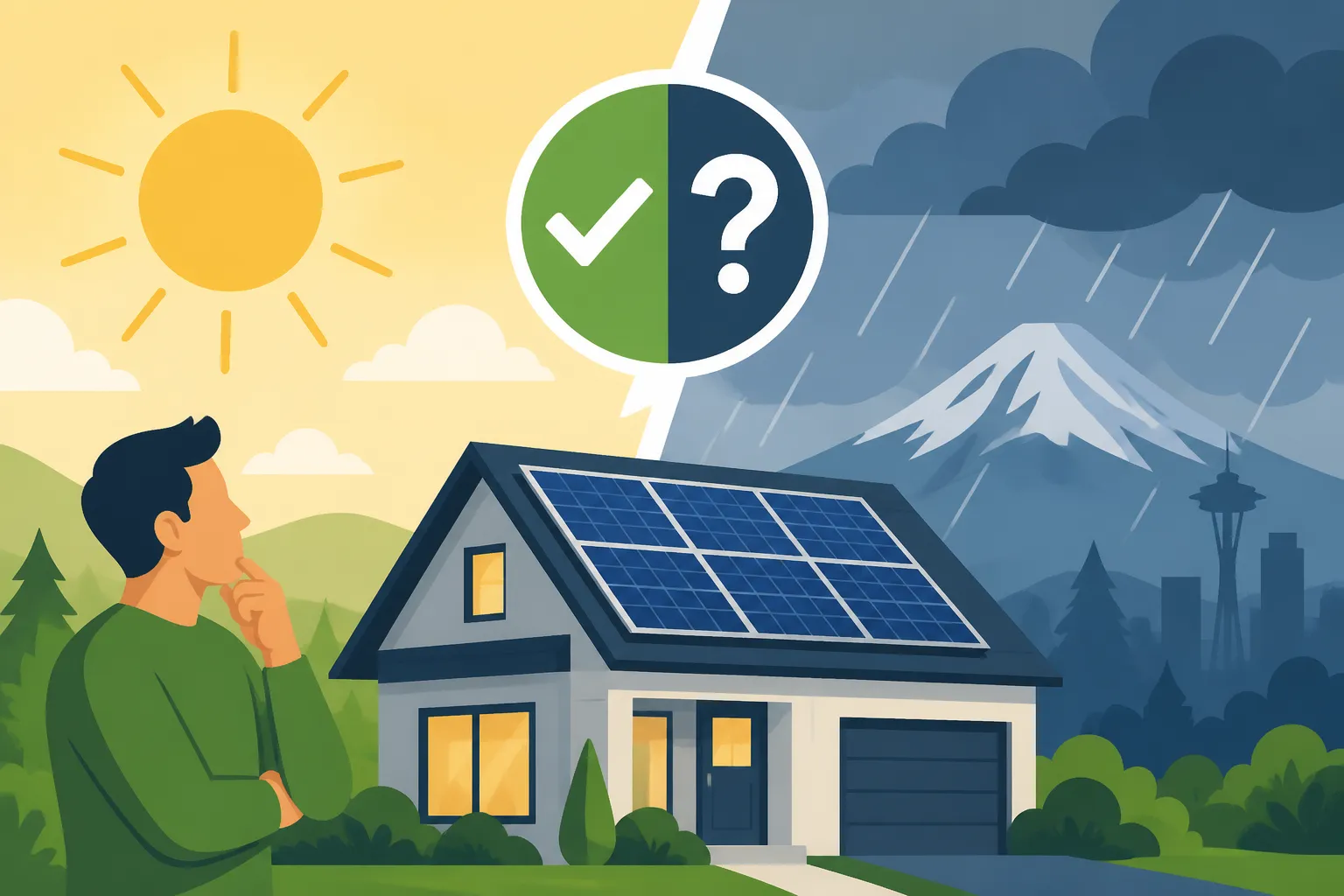
The idea of going solar can be really appealing when you look at soaring electricity bills and the desire to live a greener lifestyle. But for many homeowners in Washington state, a common concern quickly arises: is solar truly worth it here, especially with our reputation for gray skies and the often-confusing landscape of incentives? This guide is designed to clarify the realities of residential solar in the Evergreen State, helping you understand the genuine value and financial viability of making the switch.
Understanding Washington's Unique Solar Landscape
Washington is undeniably beautiful, but our weather isn't always thought of as "solar-friendly." This perception often creates hesitation, yet the truth about solar viability in our state is far more nuanced. It’s not just about the sunniest days; it’s about overall energy capture and how your local electricity rates factor into the equation.
Solar Resource and Weather Realities
Let's address the elephant in the room: our clouds. It’s a completely fair question to wonder if solar panels can actually perform well when so many of our days are overcast, especially west of the Cascades. While it's true that states like Arizona or California will undoubtedly see more hours of direct, intense sunshine, modern solar panel technology is incredibly efficient at capturing diffuse sunlight. This means that even on a cloudy day, your panels are still generating electricity, just not at their absolute peak capacity. Think of it like a cloudy day still being bright enough to read outside – that light is still energy. In fact, many parts of Washington, especially Eastern Washington in areas like the Tri-Cities or Yakima, boast excellent sunshine metrics, making the case for solar even stronger there.
Furthermore, solar performance is measured over an entire year. While our winter days are shorter and grayer, our long summer daylight hours more than compensate, contributing to significant annual electricity production. Many sources indicate that Washington's solar resource is comparable to, or even better than, major solar markets in Europe, such as Germany, which has one of the highest solar adoption rates in the world. So, don't let the idea of constant gloom deter you entirely; solar technology has evolved to perform admirably in diverse climates.
Electricity Costs and Savings Potential
Perhaps an even more compelling reason to consider solar in Washington is the cost of electricity itself, and how those costs are trending. Historically, Washington has benefited from some of the lowest electricity rates in the nation, largely thanks to our abundant hydroelectric power. However, those days of ultra-cheap power are becoming a thing of the past. Electricity rates across the state, from major providers like Puget Sound Energy (PSE) and Seattle City Light to smaller Public Utility Districts (PUDs) like Snohomish PUD or Tacoma Power, have been steadily increasing. It’s not uncommon to see residential rates in the $0.10 to $0.15 per kilowatt-hour (kWh) range, and these are projected to continue their upward trajectory.
When you install a solar energy system, you effectively lock in your electricity costs for the next 25 to 30 years. Instead of being subject to the whims of utility rate increases, you're generating your own clean power. This not only provides immediate savings by reducing or even eliminating your monthly electricity bill, but it also acts as a powerful hedge against future inflation. Imagine knowing exactly what your energy costs will be for decades to come – that kind of financial predictability is a huge advantage. For households with high energy consumption, the cumulative savings over the lifespan of a solar system can be truly substantial, making solar an increasingly intelligent investment. Our article on How Much Can You Save With Solar Panels? dives deeper into these savings.
Key Solar Incentives and Programs in Washington
While Washington might not always make national headlines for aggressive solar incentives like some other states, it offers a thoughtful mix of programs that significantly enhance the financial appeal of going solar. These incentives, ranging from statewide tax breaks to local utility programs, are crucial for reducing your upfront investment and improving your overall return.
State-Level Financial Benefits
Washington state has actively supported renewable energy through various legislative efforts, and one of the most impactful for homeowners considering solar is the state's sales tax exemption. This means you are exempt from paying state sales tax on the purchase and installation of your solar energy system. This can immediately reduce your total project cost by thousands of dollars, depending on the system size and local sales tax rates, which can climb as high as 10.4% in some parts of the state. For a system that might cost $20,000 before incentives, this could translate to savings of $1,500 to over $2,000 right away. This isn't a federal incentive; it’s a direct financial boost from the state itself.
Beyond the sales tax exemption, Washington previously had a robust production incentive program that paid solar owners for the electricity their systems generated. While this specific program has largely phased out or has been significantly scaled back for new installations, it's a testament to the state's historical support for solar. Homeowners should always keep an eye on new legislative initiatives, as state policies can evolve. Crucially, don't forget the federal Investment Tax Credit (ITC), often referred to as the federal solar tax credit. This national incentive allows you to claim a percentage of your solar system's cost as a credit on your federal income taxes, offering a substantial reduction in your net cost. Even without past production incentives, the combination of the state sales tax exemption and the federal ITC makes solar a compelling financial choice. For a complete picture of what's available, our guide on State Solar Incentives: Complete 2026 Guide is a great resource.
Local and Utility Programs
In addition to statewide incentives, many local utilities across Washington offer their own unique programs and policies that can significantly boost the value of going solar. These can range from direct rebates and grants to favorable net metering arrangements. Net metering, in particular, is a vital component of solar economics. It allows you to send any excess electricity your solar panels produce back to the grid and receive credits on your utility bill, which can then be used to offset consumption during times when your panels aren't producing as much (like at night or during cloudy winter months). Washington’s net metering policies are generally quite favorable, essentially allowing the grid to act as a large battery for your home. Understanding Net Metering Explained: How It Works by State is critical here, as specific rules can vary.
It's highly advisable to contact your specific electricity provider – whether it's Seattle City Light, Puget Sound Energy, Avista, or a local PUD – to understand their current net metering rules, any specific solar rebates, or other incentives they might offer. These programs sometimes have limited funding or specific eligibility criteria, so getting the most up-to-date information is key. Platforms like Modernize can be a valuable tool in this process, connecting you with local solar installers who are deeply familiar with all the regional programs and can factor them into your quotes. These localized benefits can play a significant role in determining your overall Utility Solar Rebates: How to Find Yours and improve your system's financial performance.
Calculating Your Solar Return on Investment in Washington
When considering a solar investment in Washington, it’s essential to move beyond the sticker price and understand the long-term financial picture. By breaking down the initial costs, potential savings, and various factors that influence your system's performance, you can accurately assess your return on investment (ROI).
Initial Investment and Long-Term Savings
The upfront cost of installing solar panels is often the first thing people think about, and it's a valid concern. In Washington, the average gross cost for a residential solar system typically falls within the range of $2.80 to $3.50 per watt before any incentives are applied. This means a standard 7-kilowatt (7,000-watt) system could have a gross price tag of roughly $19,600 to $24,500. However, this is where the power of incentives kicks in. The federal solar tax credit can reduce this net cost by 30%, and the state sales tax exemption provides additional savings, bringing the out-of-pocket expense down significantly. Our detailed guide on How Much Do Solar Panels Cost? 2026 Guide offers a broader perspective on these figures.
Once your system is up and running, the financial benefits begin immediately. You’ll start seeing a direct reduction in your monthly electricity bills. The extent of these savings will depend on your household's energy consumption habits and your utility's specific rates. Over the typical 25-30 year lifespan of a solar panel system, these accumulated savings can amount to tens of thousands of dollars, often far exceeding the initial net investment. More than just current savings, solar also acts as a powerful shield against future electricity rate hikes. This long-term financial stability and energy independence are cornerstones of a strong ROI, making your home more resilient to an unpredictable energy market.
Factors Impacting Your Payback Period
The payback period – the time it takes for your solar savings to equal your initial investment – is a key metric for assessing solar's worth. In Washington, typical payback periods can range from 8 to 14 years, though this timeframe is highly individual and depends on several critical factors:
- System Sizing and Efficiency: A system that is appropriately sized to offset your household's annual electricity usage will typically offer the best return. Investing in higher-efficiency panels, while potentially costing a bit more upfront, can be particularly beneficial for homes with limited roof space, as they generate more power per square foot.
- Sunlight Exposure and Roof Characteristics: Even within Washington, different regions and even different homes will have varying levels of optimal sunlight. A south-facing roof with minimal shading from trees or adjacent structures will maximize energy production. While our state has its share of clouds, proper panel orientation and tilt can make a significant difference.
- Current Electricity Rates and Future Increases: Homeowners paying higher electricity rates, or those in areas with a history of frequent rate increases, will generally experience a quicker payback. Robust net metering policies further enhance savings by crediting you fairly for surplus energy.
- Incentives Utilized: Maximizing all available incentives, especially the federal solar tax credit and the Washington state sales tax exemption, is paramount. These can dramatically reduce your net cost, directly shortening your payback period. Understanding Solar Panel Payback Period Explained can help you calculate this for your situation.
- Financing Method: Paying for your solar system with cash usually leads to the fastest payback and the highest overall ROI because you avoid interest payments and any associated dealer fees from loans. However, solar loans are a popular option and can often result in positive cash flow from day one, meaning your monthly loan payment is less than what you previously paid for electricity. Our guide on Solar Loans: Complete Guide details the various financing options.
To give you a clearer picture, here's a table summarizing key solar factors for homeowners in Washington State:
| Factor | Washington State (Typical) | Impact on ROI |
|---|---|---|
| Average Electricity Rate | ~$0.11 – $0.12/kWh (varies by utility) | Moderate to high; rising rates improve long-term ROI |
| Solar Resource (Peak Sun Hrs) | Moderate (3-4.5 hrs/day, region-dependent) | Good for significant annual production with modern tech |
| State Sales Tax Exemption | Yes (on equipment & installation) | Directly reduces upfront cost by 7-10% |
| State Production Incentives | Largely phased out; check local PUDs | Primary value now from bill savings and federal ITC |
| Net Metering | Generally favorable (check local utility rules) | Critical for maximizing credits for excess energy |
| Federal Solar Tax Credit | 30% of gross system cost | Major reduction in net cost, substantially boosts ROI |
| Typical Payback Period | 8-14 years (highly variable by factors above) | Solid investment timeframe compared to utility increases |
Note: These figures are estimates and can vary significantly based on individual circumstances, chosen utility, specific market conditions, and changes in policy.
Making the Decision: Is Solar Right for Your Washington Home?
Deciding whether to go solar is a big decision, a home improvement that impacts your finances and lifestyle for decades. In a state like Washington, it comes with specific considerations, but by carefully weighing the pros and cons and choosing the right partners, you can confidently determine if solar is the right move for your household.
Weighing the Pros and Cons
For many Washingtonians, the benefits of solar energy are compelling and often outweigh the challenges. On the positive side, you stand to gain substantial long-term savings on your electricity bills, especially as rates continue their steady climb. You'll achieve a greater degree of energy independence, reducing your reliance on utility companies and fossil fuels. Furthermore, installing solar panels significantly reduces your carbon footprint, contributing directly to a cleaner, more sustainable environment. Solar panels also tend to increase your home's value, often dollar-for-dollar or even more than the system's cost, and in many areas, Solar Property Tax Exemptions by State mean this added value won't lead to higher property taxes. Modern solar systems are robust and durable, typically backed by 25-year performance warranties, ensuring your investment is protected for a long time.
However, it’s important to acknowledge the drawbacks. The initial upfront cost, even with the various incentives, is a significant investment. While financing options like solar loans or power purchase agreements (PPAs) can make it more accessible, they come with their own terms and interest costs. Washington's variable weather does mean that winter months will see lower production, although effective net metering policies are designed to balance this out by crediting your summer surpluses. Finally, the process of finding a reputable, experienced installer who understands local regulations and can provide accurate quotes can feel daunting to some homeowners.
Finding the Right Installer in Washington
Choosing the right solar installer is, without exaggeration, one of the most crucial steps in your entire solar journey. A top-notch installer will not only design and install a high-quality, efficient system but will also expertly guide you through the complex permitting process, ensure you capitalize on all available incentives, and handle a seamless interconnection with your local utility grid. When you're looking for a partner in Washington, prioritize companies with a solid reputation, verifiable positive customer reviews, and relevant certifications (such as those from the North American Board of Certified Energy Practitioners, or NABCEP). It’s never a good idea to settle for the first quote you get; always seek at least three competitive bids. This allows you to compare not just the price, but also the quality of equipment (like the panels from Qcells or REC and inverters from Enphase or SolarEdge), warranty terms, and the level of customer service. Our guide on How to Choose a Solar Installer provides excellent advice on this front.
As you evaluate installers in Washington, make sure they have a deep understanding of local regulations, particularly concerning net metering rules from specific utilities like Seattle City Light, Tacoma Power, or Puget Sound Energy. Ask detailed questions about the panel brands they recommend, the inverter technology they use, and how they handle ongoing monitoring and maintenance. Many homeowners find that using platforms like Modernize is incredibly helpful for connecting with pre-vetted, local solar installers who are experts in the Washington market. These services can streamline the process of gathering multiple, comparable quotes, helping you find a reliable company that aligns perfectly with your specific needs and budget. Making a well-informed decision now will truly pay dividends over the decades, ensuring your solar investment is genuinely worth it for your Washington home.
Disclaimer
Please note that the information provided in this guide is for general informational purposes only and does not constitute financial, legal, or professional advice. Solar incentives, electricity rates, and policies can change rapidly. We strongly recommend consulting with a qualified solar professional and financial advisor to evaluate your specific situation and obtain the most accurate, up-to-date information relevant to your home in Washington state.