Is Solar Worth It in Maine?
Dreaming of solar panels for your Maine home? It's totally natural to wonder if going solar truly makes sense here, given our unique weather and electricity landscape. Many homeowners worry about the upfront cost, how well panels perform in winter, and if the long-term savings are realistic. This guide will meticulously unpack whether solar is worth it in Maine, covering everything from local incentives to real-world financial benefits, helping you make an informed decision for your household.
The Maine Solar Landscape: Weather and Energy Realities
Maine, often called the "Pine Tree State," has a distinctive climate and energy market that homeowners need to consider when contemplating solar energy. It's not just about how much sun we get; it's also about how our local utilities operate and what policies are in place to support renewable energy. Understanding these factors is the first step in determining if solar panels are a smart investment for your specific situation.
How Maine's Climate Impacts Solar Production
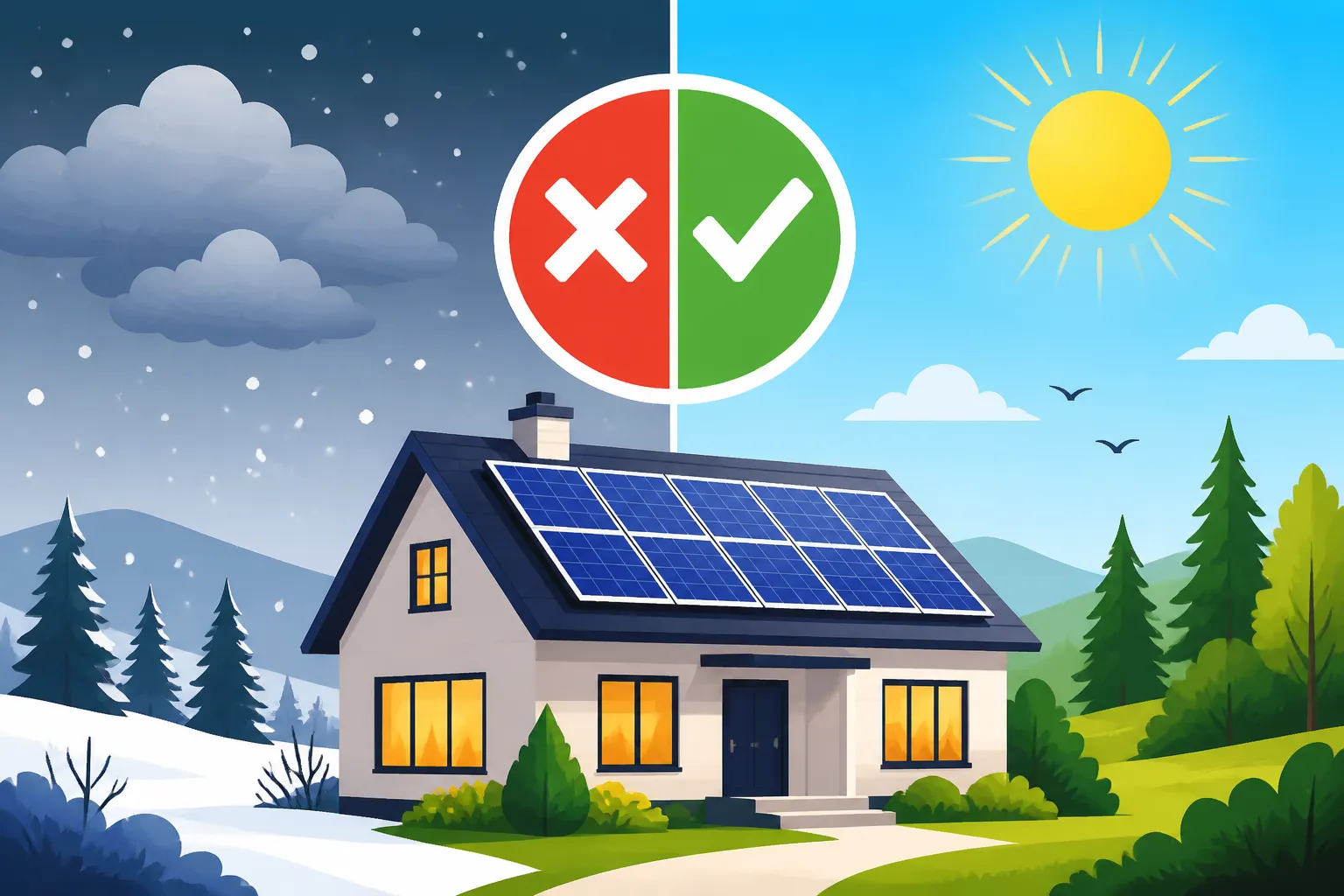
It's a common misconception that Maine doesn't get enough sun for solar panels to be effective. While we certainly have our share of cloudy days and long winters, modern solar technology is remarkably efficient even in less-than-ideal conditions. Panels are designed to capture sunlight, not just direct heat, meaning they still generate power on overcast days. In fact, cooler temperatures can actually improve panel efficiency compared to scorching hot climates, as extreme heat can slightly reduce a panel's output. Snow cover is a temporary issue; most systems are installed at an angle that allows snow to slide off, especially with a bit of melting. Moreover, Maine experiences surprisingly bright, reflective days after fresh snowfall, which can boost production.
The real consideration isn't a lack of sun, but rather the seasonal variation. You'll naturally produce more electricity during the long, sunny days of summer and less during the shorter, cloudier winter months. This is where concepts like net metering become incredibly important, allowing you to bank excess summer generation for use when your panels are producing less. It's a system designed to balance your annual energy production with your consumption, ensuring you get the most out of your investment year-round. Don't let the thought of a Maine winter deter you from exploring solar; the technology is far more robust than many realize.
Understanding Maine's Electricity Market
Maine's electricity market is primarily served by two major utilities: Central Maine Power (CMP) and Versant Power (formerly Emera Maine). Both operate under state regulations that dictate how solar energy is handled, particularly concerning net metering. Our electricity rates, while fluctuating, have seen a steady increase over the years, making the prospect of generating your own power increasingly attractive. This upward trend in utility rates is a significant driver for many homeowners considering solar, as it directly impacts the long-term savings and your system's overall return on investment.
Unlike some states with robust competitive retail markets, Maine's structure means homeowners mostly deal with their traditional utility for power delivery and billing. However, this doesn't mean you're without options. The state has implemented policies designed to encourage solar adoption, recognizing its benefits for energy independence and environmental sustainability. It's essential to understand your specific utility's current rates, fees, and how they interact with solar generation to accurately project your savings. This forms the bedrock of your financial calculations and helps paint a clear picture of what going solar truly means for your monthly budget.
Financial Incentives and Savings for Maine Homeowners
The financial aspect is often the biggest deciding factor for homeowners in Maine looking at solar. It's not just about the upfront cost, but the various incentives, savings, and long-term financial benefits that make the investment worthwhile. Thankfully, Maine offers a mix of state-specific programs and federal incentives that significantly reduce the net cost of installation and accelerate your payback period.
Key State and Local Programs
While Maine might not have as many direct cash rebates as some other states, it offers crucial support through net metering and property tax exemptions. Net metering is a game-changer here, allowing you to send excess electricity your panels produce back to the grid in exchange for credits on your utility bill. For Mainers, the specific rules for net metering allow residential customers to be compensated at the "standard offer" rate for excess generation, rather than full retail. This means that while you still get value for your excess power, it might not be a one-to-one credit against your consumption at peak retail rates. Understanding these specifics is vital, and you can learn more about how it works by state at Net Metering Explained: How It Works by State.
Beyond net metering, Maine provides significant property tax benefits for homeowners who install solar. The state offers a property tax exemption for solar energy equipment, meaning the value added to your home by a solar system will not increase your property tax assessment. This is a huge win, as it removes a potential barrier to investment and ensures that while your home value may increase, your annual tax bill won't solely because of your new panels. You might also find some municipal-level programs or even specific utility rebates. It always pays to check with your local town office and utility providers, like Central Maine Power or Versant Power, to see if there are any hyper-local incentives available that could further reduce your installation costs. These smaller, often overlooked programs can sometimes make a significant difference. You can typically find information on these via a service like Modernize, which connects homeowners with local installers who are well-versed in all available incentives. For a deeper dive into statewide programs, our guide on State Solar Incentives: Complete 2026 Guide offers a broader perspective.
Net Metering in Maine
Maine's net metering policy is designed to give homeowners fair compensation for the electricity they feed back into the grid. When your solar panels produce more electricity than your home consumes, that surplus energy is exported to the utility grid. Your electric meter effectively runs backward, crediting you for that excess generation. The details of how this credit is valued are important: under Maine's standard offer, these credits are typically at the utility's avoided-cost rate, which is usually lower than the full retail rate you pay for electricity. This means while you are still saving money and reducing your overall bill, it's not always a dollar-for-dollar swap.
For example, if you produce 500 kWh of excess energy in July when your panels are working overtime, that energy is credited to your account. Then, in the darker, colder months of winter, when your panels might only produce 200 kWh but your home uses 600 kWh, you can draw from those banked credits. This "banking" system helps you smooth out your electricity costs over the year. It incentivizes sizing your system appropriately to cover your annual energy needs, rather than focusing solely on immediate consumption. If you're looking to understand the mechanics of net metering in more detail, especially in different regulatory environments, check out our piece on Net Metering Explained: How It Works by State.
Comparing Solar Costs vs. Savings
The upfront cost of a solar panel system in Maine can vary widely depending on factors like system size, equipment chosen, and installer. On average, a typical residential solar system in Maine might range from $15,000 to $25,000 before any incentives, though this is a broad estimate. This might seem like a hefty sum, but it's crucial to look at the net cost after applying the federal solar tax credit and considering the long-term savings. The federal solar tax credit, known as the Investment Tax Credit (ITC), currently offers a significant percentage of your system cost back as a tax credit. This is a major incentive that greatly reduces your out-of-pocket expenses. You can learn more about how this credit works and what's available in Federal Solar Incentives That Still Exist in 2026.
However, the savings don't stop there. By generating your own electricity, you effectively insulate yourself from rising utility rates. Maine, like many states, has seen a steady increase in electricity prices over the past decade. Every unit of electricity your panels produce is a unit you don't have to buy from CMP or Versant Power at their ever-increasing rates. Over the 25-30 year lifespan of a solar system, these avoided costs can add up to tens of thousands of dollars. When you factor in the initial incentives, the avoided electricity costs, and the property tax exemption, the long-term financial picture for solar in Maine often looks very appealing, transforming that upfront investment into significant savings.
| Cost/Saving Factor | National Average (Estimated) | Maine Specifics (Estimated) | Impact on ROI |
|---|---|---|---|
| System Cost (10kW) | $25,000 – $35,000 | $22,000 – $32,000 (slightly lower average per watt) | Initial investment, impacts payback period |
| Federal Solar Tax Credit | 30% | 30% | Direct reduction in net cost |
| Electricity Rate | $0.16 – $0.25/kWh | $0.18 – $0.28/kWh (varies by utility/supplier) | Higher rates mean greater savings from solar |
| Net Metering | Varies by state (often full retail) | Avoided-cost rate (lower than full retail) | Compensates for excess; affects credit value |
| Property Tax Exemption | Varies by state (some none) | Yes (exempts value added by solar) | Prevents property tax increase |
| Annual Savings | $800 – $2,000 | $900 – $2,200 (due to higher rates and good sun angles) | Accelerates payback, increases lifetime savings |
| Payback Period | 8-12 years | 9-13 years (can be longer with avoided-cost net metering) | Time until system pays for itself |
Note: All figures are estimates and can vary significantly based on individual circumstances, system size, specific utility, and market conditions.
Calculating Your Solar ROI and Payback Period in Maine
When considering any significant home improvement, understanding the return on investment (ROI) and the payback period is paramount. For solar in Maine, these metrics help you quantify the financial benefits over the lifespan of your system. While the initial investment is substantial, the long-term savings and property value increase can make it a very smart financial decision.
Factors Affecting Your Return on Investment
Several key factors will influence your specific solar ROI in Maine. First, your household's electricity consumption plays a huge role. Homes with higher electricity bills stand to save more by going solar because they offset a larger portion of expensive utility power. Think about it: if you're spending $250 a month on electricity, a solar system that cuts that by 80% offers far more savings than if you're only spending $80 a month. This is why a comprehensive energy audit before going solar can be incredibly insightful to understand your baseline usage.
Second, the orientation and shading of your roof directly impact how much electricity your panels can produce. A south-facing roof with minimal shading from trees or adjacent buildings will maximize production and, consequently, your savings. Even roofs facing southeast or southwest can be excellent candidates, but heavy shading will undoubtedly diminish performance. An experienced solar installer, perhaps one you connect with through Modernize, will perform a detailed site assessment to determine your roof's solar potential. Lastly, the specific solar equipment you choose matters. High-efficiency panels from brands like Maxeon or Qcells may cost a bit more upfront but can generate more power in limited space, potentially leading to better long-term returns, especially in areas with seasonal sunlight. You might want to explore our guide on Best Solar Panels of 2026 for more information on different panel types and brands.
Typical Payback Periods
The payback period for solar panels in Maine generally falls within the range of 9 to 13 years. This means that, on average, it takes about a decade for the cumulative savings from your solar system to equal its upfront net cost (after incentives). This figure can fluctuate based on all the factors we just discussed: your electricity usage, the cost of your system, available incentives at the time of installation, and future electricity rate increases. For example, if Maine's electricity rates continue their upward trend, your payback period could actually shorten, as the value of the power your panels generate becomes even greater.
It's crucial to remember that the payback period isn't the end of the financial benefits. Most quality solar panels come with a performance warranty of 25 years or more, guaranteeing a certain level of output for decades. This means that after your system has paid for itself, you're enjoying virtually free electricity for another 12-16 years, or even longer. That's pure savings directly back into your pocket. If you’re curious about how this compares nationwide or how to calculate your own specific timeline, our article on Solar Panel Payback Period Explained provides a comprehensive breakdown. Additionally, solar panels typically increase your home's value, which is another significant long-term financial benefit, as discussed in Do Solar Panels Increase Home Value?. So, while the payback period is a good benchmark, it’s just one piece of a much larger financial puzzle.
Navigating the Solar Process in Maine
Deciding to go solar is just the first step; the actual process involves several stages, from initial consultation to final installation and activation. Knowing what to expect can help you navigate this journey smoothly and ensure you get the best system for your Maine home. It's not always a quick process, but with the right preparation and the right partners, it's certainly manageable.
What to Look for in a Solar Installer
Choosing a reputable solar installer in Maine is arguably one of the most critical decisions you'll make. A good installer will guide you through the entire process, from designing a system tailored to your energy needs and roof specifics to handling permits and interconnection with your utility. When you're interviewing potential companies, make sure they have a strong track record of installations specifically in Maine. They should be deeply familiar with local regulations, permitting processes in towns like Portland, Bangor, or Augusta, and the net metering rules of Central Maine Power or Versant Power.
Look for installers who offer comprehensive warranties – both on the equipment (product warranty) and on their workmanship (labor warranty). Transparency is key; they should provide detailed quotes that clearly break down costs, equipment, and projected savings without hidden fees. Don't be afraid to ask for references from past customers in your area and check online reviews. A service like Modernize can be incredibly helpful here, as they can connect you with pre-screened, local solar installers who meet these criteria, saving you a lot of legwork. It's worth getting at least 2-3 quotes to compare not just price, but also system design, equipment proposed, and the overall customer service experience. Our guide on How to Choose a Solar Installer offers more detailed advice on this critical step.
Common Pitfalls to Avoid
Even with the best intentions, homeowners can sometimes encounter challenges when going solar. One common pitfall is falling for high-pressure sales tactics or extremely low, too-good-to-be-true bids. Remember, a solar system is a significant investment in your home, and quality often comes at a fair price. Be wary of installers who push you to sign a contract on the first meeting or don't provide ample time for you to review the details. Always read the fine print, especially regarding financing terms, warranties, and estimated production.
Another mistake is not fully understanding Maine's specific net metering policies or other local incentives. An unscrupulous installer might overpromise on savings without accurately accounting for the avoided-cost rate, for example. Always verify the information provided by your installer with independent sources, such as the Maine Public Utilities Commission or your local utility provider. Furthermore, ensure your chosen installer handles all necessary permits and interconnection applications. This complex paperwork can be daunting, and delays can arise if not managed correctly. Choosing an experienced, local installer with a solid reputation, who often uses platforms like Modernize to reach customers, can help you sidestep these potential headaches and ensure a smooth transition to solar power.
Is Solar Worth It in Maine? The Verdict
So, after all this, is solar worth it in Maine? For many homeowners, the answer is a resounding yes, though with a few caveats. While our winters are long and sunlight can be variable, modern solar technology is well-equipped to handle Maine's climate, and the financial incentives, particularly the federal tax credit and state property tax exemptions, significantly offset the initial investment. The increasing electricity rates from utilities like Central Maine Power and Versant Power mean that generating your own power becomes more valuable with each passing year, making your solar investment a powerful hedge against future energy costs.
The key to maximizing your return on investment in Maine lies in careful planning, understanding the specifics of net metering, and choosing a reliable, experienced local installer. While the payback period might be slightly longer than in some sunnier states with full retail net metering, the decades of free, clean electricity that follow make it a financially sound decision for those planning to stay in their homes for the long haul. Factor in the environmental benefits and increased home value, and solar in Maine certainly looks like a bright idea. If you're ready to take the next step, getting multiple, detailed quotes from trusted local installers can help you determine the exact costs and savings for your unique property.
Disclaimer
Please note that the information provided in this guide is for general informational purposes only and does not constitute financial, tax, or legal advice. Solar incentives, electricity rates, and regulations can change frequently. We recommend consulting with a qualified solar professional, financial advisor, and tax expert to determine the best course of action for your specific situation.