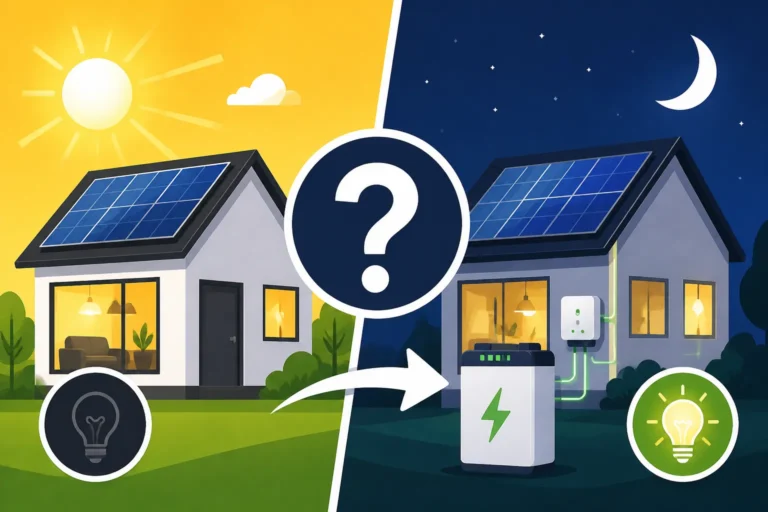
What Is a Solar PPA and How Does It Work?
Navigating the world of home solar can feel like deciphering a secret code, especially when it comes to financing. Many homeowners are intrigued by the idea of solar but get overwhelmed by terms like "cash purchase," "solar loans," "leases," and the often-misunderstood "Power Purchase Agreement," or PPA. This comprehensive guide is here to untangle the complexities of solar PPAs, helping you understand exactly what they are, how they function, and if this financing path might be the right fit for your home and budget.
What Exactly Is a Solar PPA?
A Solar Power Purchase Agreement (PPA) is one of those terms that often gets thrown around, sometimes even interchangeably with a solar lease, causing a lot of confusion. But at its core, a PPA is a service agreement where you, the homeowner, agree to purchase the electricity generated by a solar panel system installed on your roof, but you don't actually own the system itself. Think of it less like buying the car, and more like paying for every mile you drive, with someone else handling all the maintenance and gas.
The Basic Concept of a Power Purchase Agreement
When you enter into a solar PPA, a solar provider – often an installer or a dedicated solar financing company – installs and maintains a solar energy system on your property. This system remains their property. In exchange, you agree to buy the electricity produced by those panels at a predetermined rate per kilowatt-hour (kWh) for a specified contract term, typically 20 to 25 years. This rate is usually lower than what your traditional utility company charges, which is where your savings come in. You're essentially locking in a price for your electricity for decades, protecting yourself from unpredictable utility rate hikes. It’s a bit like buying groceries from a community-supported agriculture (CSA) program: you don't own the farm, but you get a steady supply of its produce at a set price.
Key Players in a Solar PPA
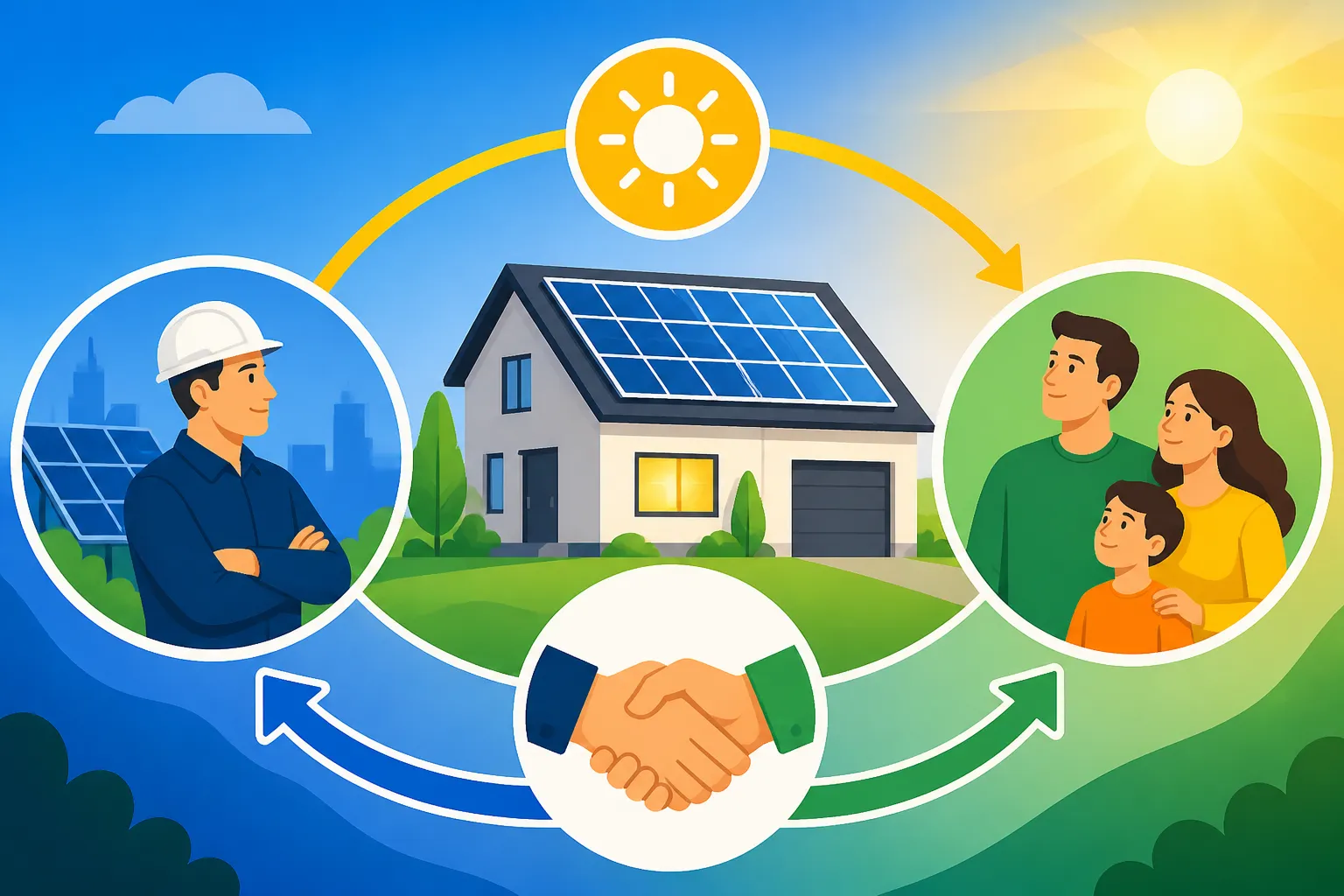
Understanding a PPA means knowing who's involved. It's not just you and the sun! There are usually a few key entities that make a PPA work, each with a distinct role. First, there's you, the homeowner. Your role is straightforward: you provide the roof space, use the clean electricity generated, and pay for that electricity according to the PPA rate. Second, there's the Solar Provider or Developer. This is the company that designs, installs, owns, operates, and maintains the solar panel system on your property. They handle everything from securing permits to making sure the panels are working efficiently, even cleaning them if necessary. Companies like Sunrun or certain local installers often offer these types of agreements.
Then, there's often a Financier or Investor in the background. These are the institutions or companies that provide the capital for the solar provider to purchase and install all the equipment (panels, inverters, racking) on a large scale across many homes. They're motivated by the long-term, predictable revenue streams from all the individual PPA contracts. Lastly, your Utility Company remains a player. You're still connected to the grid, so when your solar panels aren't producing enough (like at night or on very cloudy days), you'll draw power from the utility. And, depending on local regulations like Net Metering Explained: How It Works by State, you might still be sending excess solar power back to the grid, though how you're compensated for that can vary greatly.
The "No Upfront Cost" Appeal
One of the biggest draws of a solar PPA, and why it appeals to so many homeowners, is the promise of "zero upfront cost." In an era where home improvements often come with hefty price tags, the idea of getting a state-of-the-art solar system installed without paying anything out of pocket is incredibly attractive. For many, the initial investment required to purchase a solar system outright, which can run tens of thousands of dollars, is simply too high, acting as a major barrier to adopting solar.
With a PPA, the solar provider takes on all those installation costs. They purchase the panels, inverters, and all the necessary hardware, paying for the labor to get it all set up. This means you don't need to dip into your savings, secure a large loan, or worry about your credit score impacting your ability to go solar in the same way you might with a direct purchase. It democratizes access to solar energy, making it available to a broader range of households who want to save on their electricity bills and reduce their carbon footprint without the financial strain of an initial investment. It’s a powerful incentive that opens doors for many who might otherwise think solar is out of reach.
How Does a Solar PPA Work in Practice?
Once you’ve got a handle on the basic concept and the players involved, it's helpful to walk through the actual process of getting and living with a solar PPA. It's more than just signing a paper; it's a multi-step journey from initial inquiry to generating your own clean power.
Initial Assessment and Agreement
The journey to a solar PPA begins much like any other solar installation: with an assessment. A solar company will typically conduct a site visit or use satellite imagery and your past electricity bills to determine your home’s solar potential and energy needs. They'll look at your roof's size, angle, shading, and structural integrity. Based on this, they'll design a system tailored to your specific electricity consumption, aiming to offset a significant portion, if not all, of your current usage. They will then present you with a proposed PPA contract. This contract will outline the system size, the per-kilowatt-hour rate you'll pay for the solar energy, the length of the agreement (usually 20 to 25 years), and any annual rate escalators (which we'll discuss later).
This is a crucial stage where you need to be diligent. Don't rush into signing. Read every clause carefully, ask questions about anything you don't understand, and compare offers from different providers. While the "no upfront cost" is appealing, the long-term implications of the contract rate and escalator are significant. Reputable companies will ensure transparency, and tools available through platforms like Modernize can help you connect with installers who offer clear, competitive PPA terms.
Installation and System Activation
Once you've signed the PPA, the solar provider takes over the heavy lifting. They're responsible for everything related to the installation. This includes handling all the necessary permits with your local municipality and ensuring the system complies with all local building codes and electrical standards. This can be a complex and time-consuming process, so having the provider manage it is a major benefit for homeowners. After permits are secured, the physical installation of the panels and inverters on your roof begins, followed by the electrical wiring connecting the system to your home's main electrical panel and the utility grid.
After installation, your system will undergo inspections by both local authorities and your utility company. The final step is obtaining "Permission to Operate" (PTO) from your utility. Only after PTO is granted can your system be officially turned on and start generating electricity that offsets your usage. Throughout this entire process, the solar provider typically handles all communication and coordination with the relevant parties, keeping you informed but taking the stress off your plate. This full-service approach, from permits to PTO, is a key differentiator of PPAs compared to owning a system outright.
Monthly Billing and Savings
This is where the rubber meets the road for your PPA. Once your system is active, you'll start receiving two bills: one from your solar provider for the electricity generated by your panels, and one from your utility company for any grid electricity you still use (like at night) or any fixed connection fees. The solar bill is calculated based on the actual amount of electricity (in kWh) your system produced and that you consumed, multiplied by the agreed-upon PPA rate. For example, if your system produced 500 kWh in a month and your PPA rate is $0.15/kWh, your bill would be $75.
Your savings come from the difference between what you would have paid your utility for that 500 kWh and what you paid the PPA provider. If your utility charges $0.20/kWh, you'd have paid $100, so you saved $25. While the overall goal is to reduce your total energy expenditure, it's important to remember that your PPA rate might have an annual escalator. This means your per-kWh rate will increase by a small percentage each year, typically between 1% and 3%. This is designed to keep the PPA provider's revenue stable over the long term, accounting for inflation and operational costs. However, it's crucial to compare this escalator to the historical rate increases of your local utility. If your utility's rates tend to rise faster than your PPA escalator, your savings could grow over time. If not, your savings might shrink.
The Pros and Cons of a Solar PPA
Deciding on a solar PPA means weighing its unique advantages against its potential drawbacks. Like any financial agreement, it's not a one-size-fits-all solution, and what works wonderfully for one homeowner might not be ideal for another.
Advantages for Homeowners
The appeal of a solar PPA is strong for many reasons. First and foremost is the zero upfront cost. This removes the most significant financial barrier to going solar, making clean energy accessible without a major investment or the need for excellent credit to secure a loan. For many families, paying tens of thousands of dollars for solar simply isn't feasible, and a PPA offers a way around that.
Secondly, you get peace of mind with no maintenance worries. Since the solar provider owns the system, they are entirely responsible for its performance, maintenance, repairs, and even cleaning. If an inverter breaks or a panel needs replacement, it's their problem, not yours. This eliminates the stress and potential costs associated with upkeep, which can be a huge relief. Think about the average lifespan of solar panels and inverters; knowing someone else is on the hook for any issues that arise over 20+ years is a significant benefit.
Third, PPAs offer predictable energy costs. You lock in a per-kWh rate for the duration of the contract, or at least a predictable annual escalator. This helps buffer you against the volatile and often rising rates from your traditional utility company. For instance, in states with rapidly increasing electricity costs, having a fixed or slowly escalating solar rate can lead to substantial long-term savings and more stable household budgeting. This benefit makes solar financially accessible and offers a sense of security against future energy price shocks. Finally, you get to use clean, renewable energy and reduce your carbon footprint without the complexities of ownership.
Potential Drawbacks to Consider
While PPAs offer clear advantages, it's crucial to understand their downsides. The most significant is that you don't own the solar system. This means you are not eligible for any of the financial incentives typically associated with solar ownership. For example, the substantial federal solar tax credit, which provides a significant percentage of the system cost back as a tax credit, goes to the system owner – in this case, the PPA provider. Similarly, you won't be able to claim state-specific incentives like SRECs Explained: Selling Solar Renewable Energy Credits or many local utility rebates, which can significantly reduce the overall cost and improve the Solar Panel Payback Period Explained for owners.
Another major consideration is the escalator clause. While the initial PPA rate might be lower than your utility's, most PPAs include an annual escalation, often between 1% and 3%. While this might seem small, over a 20-25 year contract, it can add up and potentially erode your savings if your utility rates don't rise as quickly. It’s a gamble on future electricity prices. Moreover, the long contract terms can be restrictive. If you plan to sell your home, transferring a PPA to a new homeowner can sometimes be a hurdle. Some buyers are hesitant to take on an existing PPA, which could complicate or delay the sale of your property, or even impact your home's perceived value, though this varies by market and the specific PPA terms. This is a common concern that can be mitigated by clearly understanding the transferability clauses with your PPA provider or seeking advice from a real estate professional familiar with solar properties.
PPA vs. Other Solar Financing Options
When you're thinking about going solar, the PPA is just one of several paths you can take. Understanding how it stacks up against other popular financing methods like solar loans, cash purchases, and even leases can help you pinpoint the best option for your unique situation. Each method has its own set of benefits and trade-offs.
PPA vs. Solar Loan
This is a classic comparison in the solar world. With a solar loan, you are actually buying the solar system. This means you take out a loan, typically from a bank or a specialized solar lender, and use that money to pay for the system installation. The system then becomes your property. This immediate ownership is a huge differentiator. Because you own the system, you are eligible for all available financial incentives, including the federal investment tax credit (ITC) and any state or local programs. For instance, while the Solar Tax Credit 2026: What Happened to the Federal Credit might have specific eligibility criteria, as an owner, you're the one who can potentially claim it, unlike with a PPA.
With a loan, you make fixed monthly payments, much like a car loan or a mortgage. These payments typically cover the principal and interest, and they don't fluctuate based on how much electricity your panels produce. In contrast, a PPA's monthly bill depends on your actual solar energy consumption. While a loan requires you to manage any maintenance issues (though most systems come with excellent warranties), it often results in greater long-term savings because you capture all the benefits of ownership. To learn more about this route, you can explore resources like Solar Loans: Complete Guide.
PPA vs. Cash Purchase
Buying your solar system outright with cash is, hands down, the option that yields the highest return on investment (ROI) and the quickest Solar Panel Payback Period Explained. When you pay cash, you eliminate interest payments associated with loans and the long-term commitments of PPAs or leases. The system is entirely yours from day one, giving you maximum control.
Just like with a solar loan, a cash purchase makes you fully eligible for all available tax credits, rebates, and incentives. This can significantly reduce your net cost and accelerate your savings. For example, the substantial federal tax credit (when available) directly reduces your tax liability, a benefit that goes to the PPA provider, not you. The main barrier, of course, is the significant upfront capital required, which can be tens of thousands of dollars, depending on your system size and location. If you have the available funds and want to maximize your long-term financial benefits, a cash purchase is often the most lucrative. You can delve deeper into this comparison with articles like Cash vs Financing Solar: Which Saves More?.
PPA vs. Solar Lease
Many people use "solar PPA" and "solar lease" interchangeably, but there's a subtle yet important distinction. With a solar lease, you agree to pay a fixed monthly payment for the use of the solar panel system, regardless of how much electricity it produces. It's like renting an apartment: you pay the same amount each month, whether you're home or on vacation. The solar provider still owns, installs, and maintains the system, and you don't receive the incentives.
A solar PPA, on the other hand, charges you based on the actual amount of electricity generated by the system and consumed by your home, at a specific rate per kilowatt-hour. So, if your panels produce more in a sunny month, your PPA bill might be higher, but you're also offsetting more of your utility bill. If they produce less in a cloudy month, your PPA bill will be lower. Both leases and PPAs offer zero upfront costs and eliminate maintenance worries, but the billing structure is different. To get a more detailed comparison of these options, check out Solar Lease vs PPA vs Buy: Which Is Best?.
What to Look For in a Solar PPA Contract
A solar PPA is a long-term commitment, often spanning two decades or more. Because of this, it's absolutely critical to understand every aspect of the contract before you sign on the dotted line. Skimming the document could lead to unwelcome surprises down the road, especially regarding costs and flexibility.
Understanding the PPA Rate and Escalator
The heart of any solar PPA contract is the per-kilowatt-hour (kWh) rate you'll be charged for the solar energy your system produces. This is the rate that will determine your monthly bill for the solar portion of your electricity usage. It’s vital to compare this initial rate to your current utility rates. The goal is for your PPA rate to be lower, providing immediate savings. However, most PPAs include an annual escalator, which is a percentage by which your per-kWh rate will increase each year. This typically ranges from 1% to 3%.
While a 2.9% annual increase might sound minor, over 20 or 25 years, it can significantly impact your long-term savings. You need to project how this escalator will affect your payments over the contract term and compare it to the historical electricity rate increases from your local utility. If your PPA escalator consistently outpaces your utility’s rate hikes, your savings could diminish over time. Always ask for a detailed financial projection that clearly shows your anticipated costs and savings year-over-year. This kind of transparency is key to making an informed decision, and a good installer will be happy to walk you through it.
Contract Term and Buyout Options
Solar PPA contracts are designed for the long haul, commonly lasting 20 to 25 years. This lengthy commitment means you need to consider your long-term plans for your home. What if you decide to move before the contract is up? This is where understanding the transferability clause becomes crucial. A well-written PPA contract should clearly outline the process for transferring the agreement to a new homeowner. Often, the new buyer must qualify and agree to assume the remaining terms of the PPA. If they don't, you could be on the hook for an early termination fee, which can be substantial. This is a common pain point for homeowners trying to sell, so clarify these terms upfront. Reputable providers, sometimes found through platforms like Modernize, will have clear policies around contract transfers.
Many PPAs also offer buyout options, allowing you to purchase the system outright at certain points in the contract (e.g., after 5 or 10 years). The contract should specify the methodology for calculating this buyout price, which often involves the fair market value of the system at that time or a predetermined schedule. Knowing your buyout options provides flexibility if your financial situation changes or if you simply decide you want to own the system later to capture all the long-term benefits and boost your Do Solar Panels Increase Home Value? potential.
Performance Guarantees and Maintenance
Since you don’t own the system, the PPA provider is responsible for its performance and upkeep. A good PPA contract will include a performance guarantee, which states that the system will produce a certain amount of electricity annually. If it underperforms due to equipment failure or other issues (not related to shading from new trees on your property, for example), the provider might be obligated to reimburse you for the shortfall or make repairs. This protects you from having a system that doesn't deliver the promised savings.
Furthermore, the contract should explicitly detail the provider's responsibilities for maintenance and repairs. This typically covers everything from routine inspections and cleaning to the replacement of faulty equipment like panels or inverters. You shouldn't have to pay extra for these services. Clarify what exactly is covered, the response time for repairs, and any warranties that apply to the equipment or workmanship. This comprehensive coverage is a significant advantage of a PPA, as it removes all operational headaches from your plate and ensures your system continues to generate electricity efficiently over its lifespan.
Is a Solar PPA Right for You?
Deciding whether a solar PPA is the right choice for your home involves a careful evaluation of your financial situation, your goals for going solar, and your long-term plans. There's no universal answer, as what's perfect for one household might be less ideal for another.
Ideal Candidates for a PPA
A solar PPA is often an excellent choice for homeowners who want to go solar but cannot or do not wish to pay any upfront costs. This is the primary demographic that PPAs serve so well. If you don't have significant savings to put towards a cash purchase, or if you'd rather not take on a loan, a PPA provides a pathway to clean energy without the immediate financial burden. It's particularly appealing for those who want to save on their monthly electricity bills right away without any initial investment.
Another key group are those not eligible for, or who don't have sufficient tax liability to fully utilize, the federal solar tax credit or other ownership-based incentives. Since the PPA provider owns the system, they claim these valuable incentives. If your tax situation means you wouldn't benefit much from the tax credit anyway, then forgoing it with a PPA might not be a significant loss. Furthermore, homeowners who prefer predictability and absolutely no maintenance hassle will find a PPA very appealing. The provider handles everything from installation and monitoring to repairs and performance guarantees, offering complete peace of mind. This hands-off approach makes solar simple and worry-free.
When to Explore Other Options
On the flip side, a PPA might not be your best bet if your primary goal is to maximize your long-term financial savings and overall return on investment (ROI). Because you don't own the system, you miss out on substantial incentives like the federal tax credit and any state-level SRECs or rebates. Over the 20-25 year lifespan of a system, these incentives, combined with potentially lower total costs from a cash purchase or a well-structured loan, often lead to greater cumulative savings. If you're looking for the absolute best financial outcome, owning your system is generally the way to go.
Secondly, if you anticipate moving in the short to mid-term, a PPA can present challenges. As discussed, transferring a PPA to a new homeowner can complicate the sale of your property, and potential buyers might be wary of taking on a long-term contract. While many PPAs have transfer provisions, it's an extra step in the selling process that can deter some buyers. If you expect to move within 5-10 years, it's worth thoroughly evaluating the PPA's transfer clauses or considering options like loans or cash purchases that give you full ownership and typically add value to your home.
Finally, if you have the capital for a cash purchase or qualify for a low-interest solar loan, these options will almost always result in greater overall savings and a better Solar Panel Payback Period Explained. Before settling on a PPA, it's always wise to get multiple quotes across different financing types. Platforms like Modernize can help you compare various options, ensuring you find the solution that best fits your financial objectives and ensures that Are Solar Panels Worth It in 2026? for your specific circumstances.
PPA Comparison Table
To help summarize the differences between a PPA and other common solar financing options, here's a quick overview:
| Feature | Solar PPA (Power Purchase Agreement) | Solar Lease | Solar Loan | Cash Purchase |
|---|---|---|---|---|
| System Ownership | Provider owns system | Provider owns system | Homeowner owns system | Homeowner owns system |
| Upfront Cost | Typically $0 | Typically $0 | Low to $0 (depending on loan terms) | Full system cost (highest upfront) |
| Monthly Payment | Varies by production (per kWh) + utility | Fixed monthly payment + utility | Fixed monthly loan payment + utility | Only utility charges (for grid power/fees) |
| Eligibility for Incentives | No (provider claims them) | No (provider claims them) | Yes (homeowner claims federal, state, local) | Yes (homeowner claims federal, state, local) |
| Maintenance & Repairs | Provider's responsibility | Provider's responsibility | Homeowner's responsibility (covered by warranties) | Homeowner's responsibility (covered by warranties) |
| Long-Term Savings | Good, but often less than ownership | Good, but often less than ownership | Excellent (after loan paid off, factoring incentives) | Best (highest ROI, fastest payback) |
| Impact on Home Sale | Can complicate transfer; new buyer assumes contract | Can complicate transfer; new buyer assumes contract | Loan transfers with seller or paid off; adds home value | Adds home value; no transfer needed |
| Predictability of Cost | High (rate escalators apply) | High (fixed monthly payment) | High (fixed loan payments) | High (no ongoing system costs) |
Disclaimer
The information provided in this guide is intended for general informational purposes only and does not constitute financial, tax, or legal advice. Solar incentives, costs, and regulations can vary significantly by location, utility provider, and time. We strongly recommend consulting with a qualified solar professional, financial advisor, and tax expert to assess your individual circumstances and make informed decisions.