Is Solar Worth It in Indiana?
For many Hoosiers, the rising cost of keeping the lights on feels like a constant battle. You open your electricity bill each month, see those ever-increasing charges, and can't help but wonder if there's a better way to power your home. Solar energy often comes up as a potential solution, but then the questions start: Is it truly viable in Indiana with our winters? What about our state's policies? This comprehensive guide will dive deep into whether solar panels are a worthwhile investment for homeowners in the Hoosier State, covering everything from costs and incentives to long-term savings.
Understanding Indiana's Solar Landscape
It's completely normal to feel a bit skeptical about solar in a state known for its four distinct seasons, including those notoriously cloudy winter days. However, the truth about solar viability in Indiana might surprise you. Let's break down the realities of our energy environment.
Electricity Rates and Trends for Indiana Residents
One of the primary drivers for homeowners considering solar anywhere is the ever-climbing cost of traditional electricity. In Indiana, we've seen a consistent upward trend in electricity rates over the past decade. Utilities like Duke Energy, AES Indiana (formerly Indianapolis Power & Light), and NIPSCO have all adjusted their rates, often citing infrastructure upgrades, fuel costs, and environmental compliance as reasons.
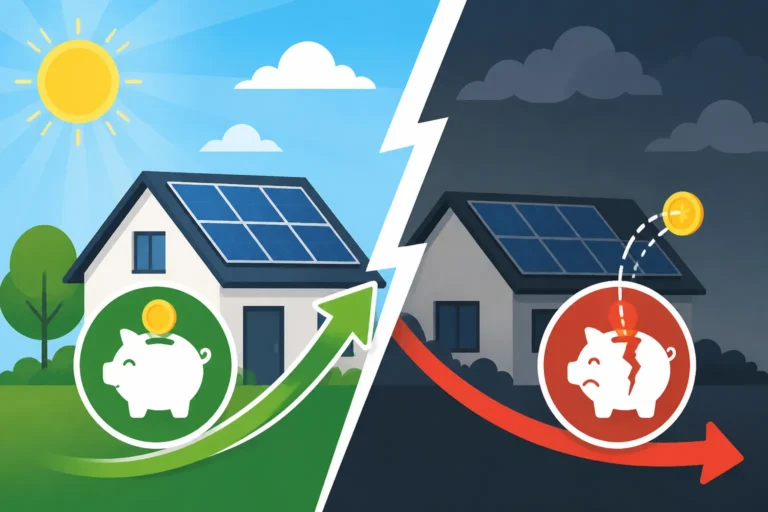
This isn't just a slight bump; it's a significant factor in your household budget. When your utility company announces another rate hike, it directly impacts your wallet, making it harder to predict and control your monthly expenses. Imagine knowing that a substantial portion of your electricity usage is now generated from your own rooftop, effectively shielding you from future rate increases. That's the core appeal of solar, and it's a very real frustration for many Indiana families who are tired of playing guessing games with their power bills. Historically, Indiana's electricity rates have hovered around the national average or slightly below, but the trend is undeniably upwards, making the stability offered by solar increasingly attractive.
Solar Resource Potential in Indiana
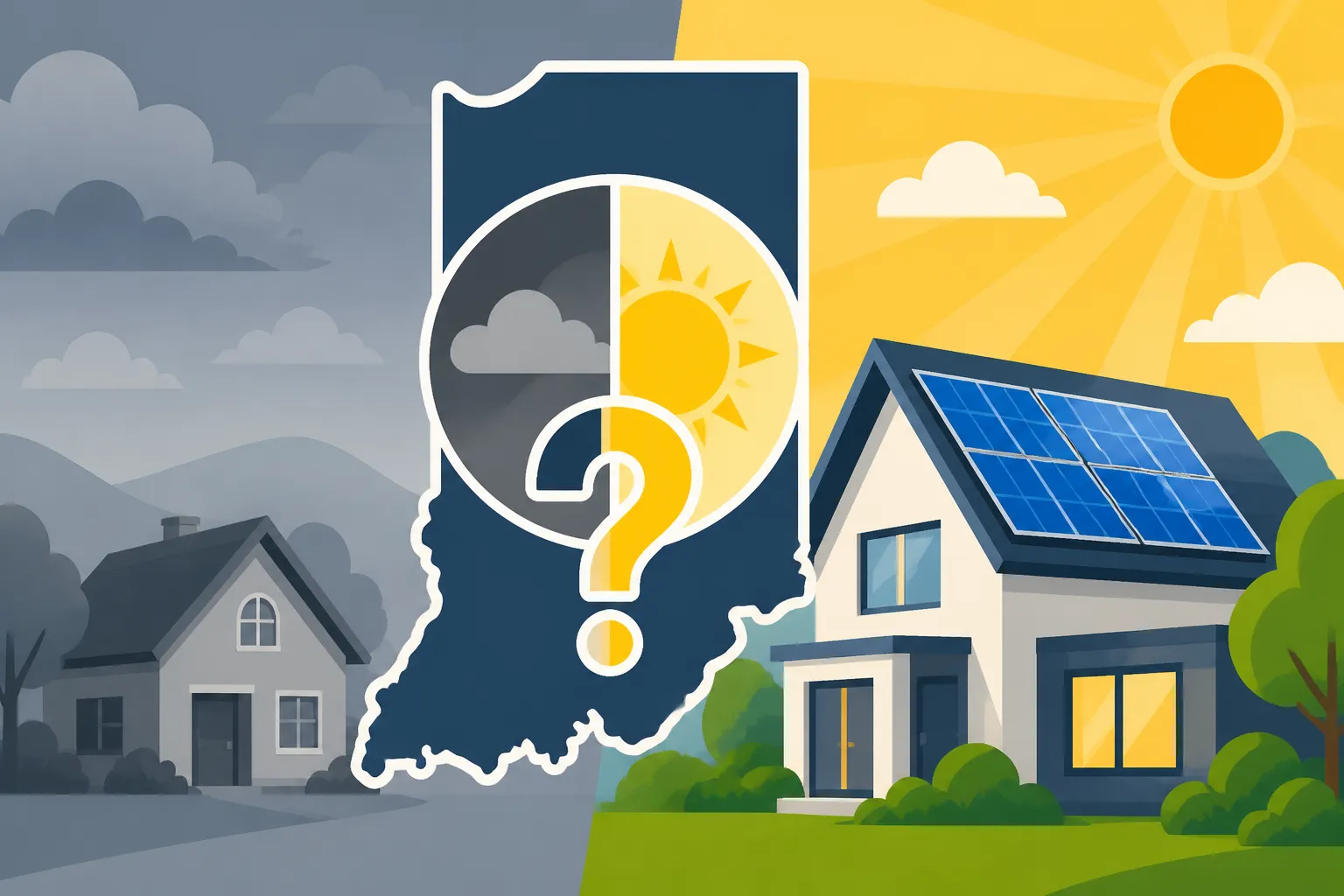
When people think of solar power, they often picture sunny states like California, Arizona, or Florida. So, it's easy to assume that Indiana, with its share of grey skies, might not be the best fit. However, that assumption often overlooks the facts. While we do experience cloudy periods, Indiana actually receives a sufficient amount of sunlight throughout the year to make solar panels highly effective.
Think of it this way: solar panels don't need direct, blazing sunshine every single second to generate power. They can still produce electricity on cloudy days, albeit at a reduced rate. Modern solar technology is incredibly efficient at capturing diffuse sunlight. In fact, states like Germany, which has a climate comparable to or even cloudier than parts of Indiana, are global leaders in solar adoption. The National Renewable Energy Laboratory (NREL) has consistently shown that Indiana has good enough solar irradiance levels to support residential solar installations with excellent returns. So, while you might not have the constant sunshine of the desert, you certainly have enough to make solar panels a smart investment over their 25+ year lifespan.
Average Solar Costs in the Hoosier State
Let's be real: one of the biggest initial hurdles for anyone considering solar is the upfront cost. It's a significant investment, and it's natural to wonder, "How much do solar panels cost?" The good news is that solar panel costs have decreased dramatically over the last decade, making them more accessible than ever before. In Indiana, the average cost for a typical residential solar system can vary based on size, equipment, and installer.
For instance, a standard 6 kW to 8 kW system, which is often suitable for an average Indiana home, might range anywhere from $15,000 to $25,000 before incentives. These numbers are just averages, of course, and can fluctuate. Factors like the type of panels (monocrystalline tend to be more efficient but slightly pricier than polycrystalline), the complexity of your roof, and whether you add a solar battery system will all influence the final price. It's really important to get detailed quotes from multiple reputable installers to understand the specific costs for your home. Keep in mind that these figures don't account for incentives, which can significantly reduce your out-of-pocket expenses.
Key Solar Incentives and Policies in Indiana
Navigating the world of solar incentives can feel like trying to solve a complicated puzzle. Policies change, and what applies in one state might not apply in another. Indiana has a unique set of circumstances, especially concerning how excess solar energy is credited.
Net Metering in Indiana and the Transition to Export Credits
This is probably one of the most critical topics for any Indiana homeowner considering solar, and it's a source of significant confusion and frustration for many. Indiana's net metering policy underwent a major shift with Senate Enrolled Act 309 in 2017, effectively phasing out full retail net metering for new solar customers. If you're installing solar now, you won't be under the old 1:1 retail rate net metering program unless you interconnected before the cutoff dates (which varied by utility, but generally ended by mid-2022).
Instead, new solar installations in Indiana operate under what's often referred to as an "excess distributed generation" (EDG) tariff. What this means is that when your solar panels produce more electricity than your home consumes, that excess power is sent back to the grid. However, instead of being credited at the full retail rate you pay for electricity, you're now compensated at an "avoided-cost rate" – which is significantly lower. This rate is usually determined by the utility and reflects what it would have cost them to generate that electricity themselves, often just a few cents per kilowatt-hour. This change fundamentally alters the financial calculations for solar, as you're no longer getting full value for all the excess energy you produce. This is why understanding Net Metering Explained: How It Works by State is crucial.
State and Local Solar Incentives for Hoosiers
While the net metering changes have been a blow to some potential solar adopters, Indiana still offers a few helpful incentives at the state and local levels that can make solar more attractive.
One significant benefit is the Solar Property Tax Exemption. This state law prevents the added value of your solar energy system from increasing your property taxes. Normally, if you make a home improvement that increases your property's value, your taxes go up. With this exemption, the state acknowledges the environmental and energy independence benefits of solar, ensuring you won't be penalized financially for making such a positive upgrade. This is a huge relief for homeowners, as it means you get to enjoy the increased home value and energy savings without a corresponding tax hike. You can learn more about this by reading Solar Property Tax Exemptions by State.
Beyond that, specific local utility rebates can sometimes pop up. While not universally available, it's always worth checking with your specific utility provider—whether it's AES Indiana, Duke Energy, NIPSCO, or a smaller municipal utility or electric cooperative—to see if they offer any one-time rebates or programs. These can vary greatly, might be capacity-limited, or change from year to year, so direct inquiry is your best bet. A great resource for finding these local programs is often your installer or the Database of State Incentives for Renewables & Efficiency (DSIRE).
The Enduring Federal Solar Tax Credit (ITC)
Here's some genuinely good news that applies to Indiana just as it does to every other state: the federal Investment Tax Credit (ITC), often simply called the federal solar tax credit, is still very much alive and well. It's a powerhouse incentive that significantly reduces the cost of going solar. In 2026, and for many years to come, this credit allows you to deduct 30% of the cost of your solar energy system from your federal income taxes.
Think about that for a moment: if your solar system costs $20,000, you could get a $6,000 tax credit. This isn't a deduction from your taxable income, but a dollar-for-dollar reduction in the amount of tax you owe. It’s important to remember that this is a non-refundable credit, meaning you need to have a sufficient tax liability to claim the full amount in the year you install. If you don't use it all, you can usually carry forward any unused credit to future tax years. This federal incentive alone is a massive boost to the financial viability of solar, significantly shortening your payback period and making the overall investment much more appealing. Don't forget to check out Federal Solar Incentives That Still Exist in 2026 for more details.
Calculating Your Solar Return on Investment in Indiana
Understanding the upfront costs and available incentives is only half the battle. What truly matters is the long-term return on your investment. In Indiana, calculating your solar ROI involves considering several key factors, especially given the state's unique net metering situation.
Factors Affecting Your Solar Payback Period
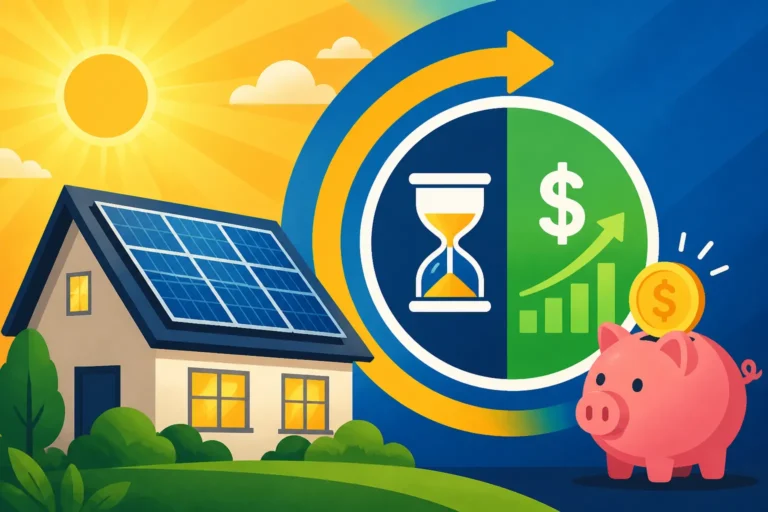
The "payback period" is essentially how long it takes for your energy savings and incentives to equal the initial cost of your solar system. Once you hit that point, every dollar you save on electricity bills is pure profit. Several factors directly influence this timeline in Indiana:
- System Size and Your Electricity Consumption: A larger system costs more, but if it's perfectly sized to your household's electricity usage, you'll maximize your savings. If your system is too small, you'll still buy power from the grid. If it's too large, you'll be exporting a lot of power for a low avoided-cost rate, which isn't ideal. The goal is to optimize self-consumption. Understanding How Many Solar Panels Do I Need for My Home?, helps with this.
- Initial System Cost After Incentives: The lower your out-of-pocket expense after applying the federal ITC and any state or local programs, the faster your system will pay for itself.
- Electricity Rates: The higher your current electricity rates, the more you'll save by generating your own power. If utility rates continue to rise, your solar investment becomes even more valuable over time.
- Financing Method: Paying with cash typically offers the shortest payback period because you avoid interest charges. Solar loans will extend the payback slightly due to interest, but still offer significant long-term savings. Solar leases or Power Purchase Agreements (PPAs) often have no upfront cost but don't provide the same level of ownership or long-term financial return. We'll delve deeper into these options in other guides, such as Cash vs Financing Solar: Which Saves More?.
- Impact of Excess Distributed Generation (EDG): As discussed, Indiana's compensation for excess energy is lower than full retail net metering. This means that maximizing self-consumption (using the power as you generate it) or pairing your system with a battery becomes more important to achieve a faster payback.
Real-World Savings Scenarios for Indiana Homeowners
Let's look at some hypothetical scenarios to illustrate potential savings for Indiana homeowners. Keep in mind these are estimates, and your actual savings will depend on your specific circumstances.
Scenario 1: Average Indiana Homeowner (Indianapolis)
- System Size: 7 kW
- Total Cost (before ITC): $21,000
- Federal ITC (30%): -$6,300
- Net Cost: $14,700
- Estimated Annual Savings (based on current AES Indiana rates and EDG): ~$900 – $1,200 (assuming good self-consumption)
- Estimated Payback Period: 12-16 years
In this scenario, after your system pays for itself, you could be looking at another 10-13+ years of free or significantly reduced electricity. Over the 25-30 year lifespan of your panels, that adds up to substantial savings, potentially well over $20,000-$30,000, even with the current EDG rates.
Scenario 2: High Electricity User (Fort Wayne)
- System Size: 10 kW (for a larger home or higher energy needs)
- Total Cost (before ITC): $30,000
- Federal ITC (30%): -$9,000
- Net Cost: $21,000
- Estimated Annual Savings (based on NIPSCO rates and EDG): ~$1,300 – $1,700
- Estimated Payback Period: 12-16 years
For those with higher energy consumption, the savings can be even more pronounced, as you're offsetting a larger portion of a more expensive bill. In both cases, the federal tax credit plays a pivotal role in making the numbers work.
Increasing Home Value with Solar in Indiana
Beyond the direct energy savings, another significant financial benefit of installing solar panels is their positive impact on your home's resale value. Numerous studies, including those by the National Renewable Energy Laboratory (NREL) and Zillow, have shown that homes with solar panels tend to sell for more and often sell faster than comparable homes without solar.
In Indiana, this holds true. Even with the change in net metering policy, a home with a fully paid-off solar system offers a clear advantage to potential buyers: predictable, lower energy costs for decades to come. This is a powerful selling point, especially as utility rates continue their upward trajectory. Buyers are increasingly aware of energy efficiency and sustainability, and a solar-equipped home directly addresses these concerns. Remember the property tax exemption? That means your home's value can increase due to solar without increasing your annual property tax bill, making it a win-win situation. For more insights, consider reading Do Solar Panels Increase Home Value?.
Is Solar Worth It for YOU in Indiana? Personalizing the Decision
Deciding whether solar is right for your home in Indiana isn't a one-size-fits-all answer. It comes down to your specific circumstances, priorities, and long-term goals.
Ideal Candidates for Solar in Indiana
Even with the shift in net metering, certain homeowners in Indiana are still excellent candidates for solar:
- High Electricity Users: If your monthly electricity bills from Duke Energy, AES Indiana, or NIPSCO are consistently high, you have more potential savings to gain from generating your own power. The more power you consume, the more you can offset, and the less you rely on exporting at the lower EDG rate.
- Long-Term Homeowners: Solar is a long-term investment. If you plan to stay in your home for at least 10-15 years, you'll have ample time to reach your payback period and then enjoy years of free electricity. If you're planning to move sooner, while solar can still add value, the financial benefits might not fully materialize for you.
- Homeowners with Good Solar Exposure: A south-facing roof with minimal shading from trees or other structures is ideal. While other orientations can work, optimal sun exposure maximizes production and, therefore, your savings.
- Those Seeking Energy Independence and Stability: If you're fed up with unpredictable utility bills and want more control over your energy costs, solar offers a fantastic hedge against future rate hikes. It provides a sense of security and environmental contribution.
- Homeowners Considering a Solar Battery: Pairing solar panels with a battery storage system like a Tesla Powerwall or Enphase IQ Battery significantly enhances the value of solar in an EDG environment. A battery allows you to store your excess solar generation instead of sending it to the grid for a low credit, and then use that stored energy later when rates are higher or when the sun isn't shining. This maximizes your self-consumption and greatly improves your economic return. You can learn more about Solar Battery Incentives in 2026.
Considerations and Potential Hurdles
While solar offers many advantages, it's also important to be realistic about potential challenges:
- Roof Suitability: Not all roofs are ideal for solar. Factors like age, condition, size, pitch, and orientation can all play a role. An old roof might need replacement before solar installation, adding to the upfront cost. Heavy shading from trees or nearby buildings can also significantly reduce efficiency. It's vital to have a professional assessment. Understanding Roof Considerations for Solar Panels can help you prepare.
- Upfront Investment: Even with the federal tax credit, the initial cost is substantial. While financing options are available, they come with interest, which impacts your overall ROI.
- Installer Selection: Choosing the right solar installer is crucial. You want a reputable company with a strong track record, good warranties, and excellent customer service. Unfortunately, high-pressure sales tactics and unreliable companies exist. Always get multiple quotes and thoroughly vet your installer. A platform like Modernize can help connect you with vetted installers in your area, making the process of comparing quotes and finding reliable professionals much smoother.
- The EDG Rate: As mentioned, the lower compensation rate for exported energy in Indiana means your savings model relies heavily on self-consumption. If you regularly produce far more than you consume and don't have a battery, your financial returns won't be as high as in states with full net metering. This is why careful system sizing is more important than ever.
The Growing Importance of Solar Batteries in Indiana
Given Indiana's current net metering policy, solar batteries are becoming an increasingly critical component of a truly optimized home solar system. Here's why:
When your solar panels are producing more electricity than your home is using—which often happens in the middle of a sunny day—that excess power is typically sent back to the grid. Under Indiana's EDG tariff, you receive a lower "avoided-cost" credit for this exported power. This isn't ideal for maximizing your savings.
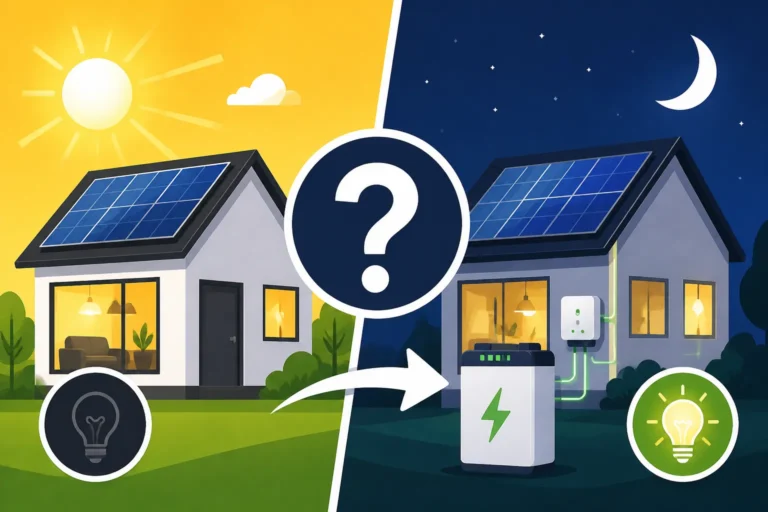
This is where a solar battery, like a Tesla Powerwall or an Enphase IQ Battery, steps in. Instead of sending that valuable excess energy back to the grid for a low credit, your battery can store it. Then, when your panels aren't producing (like in the evenings or on cloudy days) or when electricity rates from the grid might be higher, your home can draw power directly from your battery. This "time-shifting" of your solar production means you're consuming more of your own generated electricity, reducing the amount you need to buy from the utility at retail rates and minimizing the amount you export at lower rates. It effectively supercharges your solar savings by allowing you to maximize the value of every electron your panels produce. Plus, a battery offers the added peace of mind of backup power during grid outages, a benefit many homeowners find invaluable. You can explore Do I Need a Battery With Solar?.
Comparing Solar Scenarios in Indiana
To help you visualize the potential financial outcomes, let's put some numbers into a comparative table, highlighting how system size and battery storage can influence your experience in Indiana. These are simplified estimates for illustrative purposes.
| Factor | Scenario A: Basic Solar (7 kW) | Scenario B: Solar + Battery (7 kW + 10 kWh Battery) |
|---|---|---|
| Initial Cost (before ITC) | ~$21,000 | ~$32,000 |
| Federal ITC (30%) | -$6,300 | -$9,600 |
| Net Out-of-Pocket Cost | ~$14,700 | ~$22,400 |
| Annual Electricity Savings | ~$900 – $1,200 (moderate self-consumption) | ~$1,300 – $1,800 (high self-consumption, peak shaving) |
| Estimated Payback Period | 12 – 16 years | 9 – 14 years |
| Energy Independence | Reduced reliance on grid | Significantly reduced reliance, backup power |
| Exported Energy Value | Compensated at EDG rate | Minimized, excess stored for self-consumption |
| Outage Protection | None (unless grid-tied inverter with specific tech) | Full or partial home backup during outages |
Note: These are illustrative figures. Actual costs and savings will vary based on your specific location, utility rates, system design, and electricity usage patterns.
Conclusion: Making the Decision to Go Solar in Indiana
So, is solar worth it in Indiana? The answer, like many things in life, is nuanced, but overwhelmingly, yes, for many homeowners, it absolutely is. While Indiana's transition from full retail net metering to the EDG tariff has certainly changed the financial dynamics, it hasn't eliminated the benefits of going solar.
The strong federal solar tax credit remains a powerful incentive, slashing your upfront costs by 30%. Add to that the state's property tax exemption, and you're already starting on solid financial footing. For Hoosiers who are tired of escalating utility bills from companies like Duke Energy or AES Indiana, solar offers a fantastic hedge against future rate hikes, providing long-term predictability and control over your energy expenses. The ability to increase your home's value without increasing your property taxes is another significant bonus.
Crucially, with the current EDG policy, incorporating a solar battery system into your installation becomes a much smarter investment. It allows you to maximize the value of every kilowatt-hour your panels produce by storing excess energy for your own use, rather than selling it back to the grid for a lower rate. This significantly improves your return on investment and provides invaluable backup power during outages.
Ultimately, going solar in Indiana is a strategic decision that offers financial savings, increased home value, and a step towards energy independence. It requires careful planning, selecting a reputable installer, and understanding the specific policies in place, but the long-term benefits for your wallet and the environment are well within reach.
Disclaimer
The information provided in this article is for general informational purposes only and does not constitute financial, tax, or legal advice. Solar incentives, policies, and costs can change rapidly. Readers should consult with a qualified solar installer, tax professional, and financial advisor to determine the best course of action for their individual circumstances.